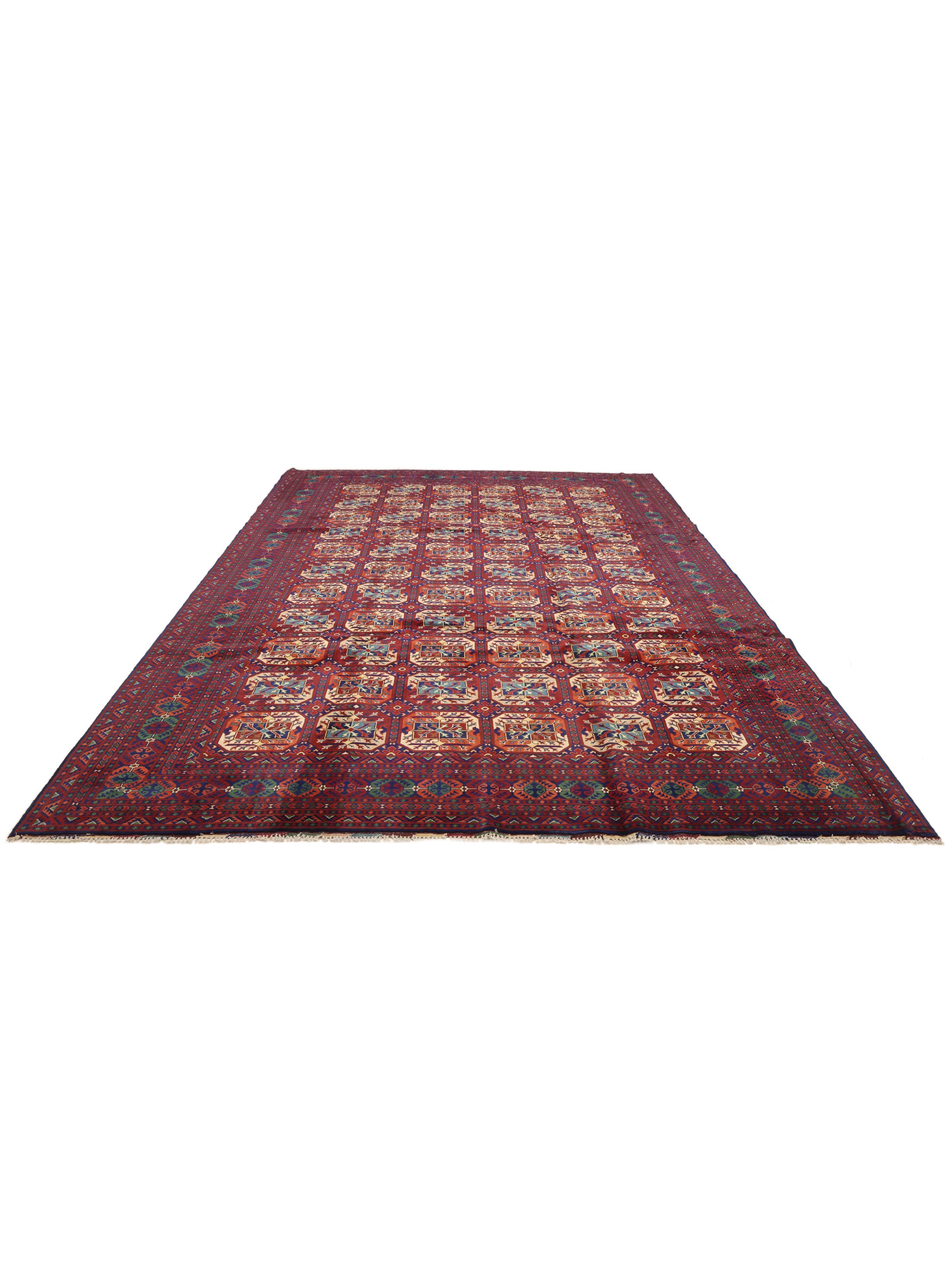
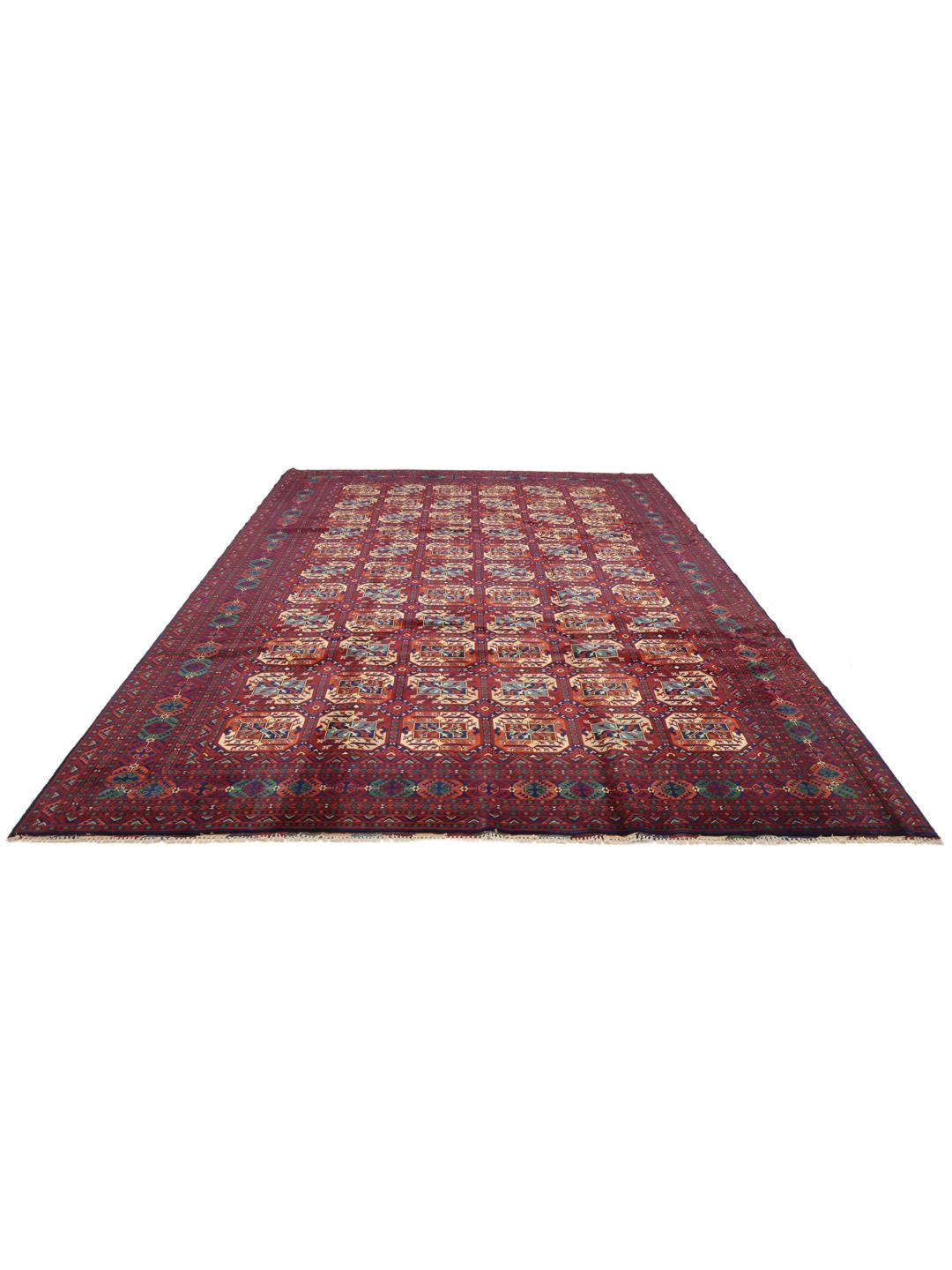
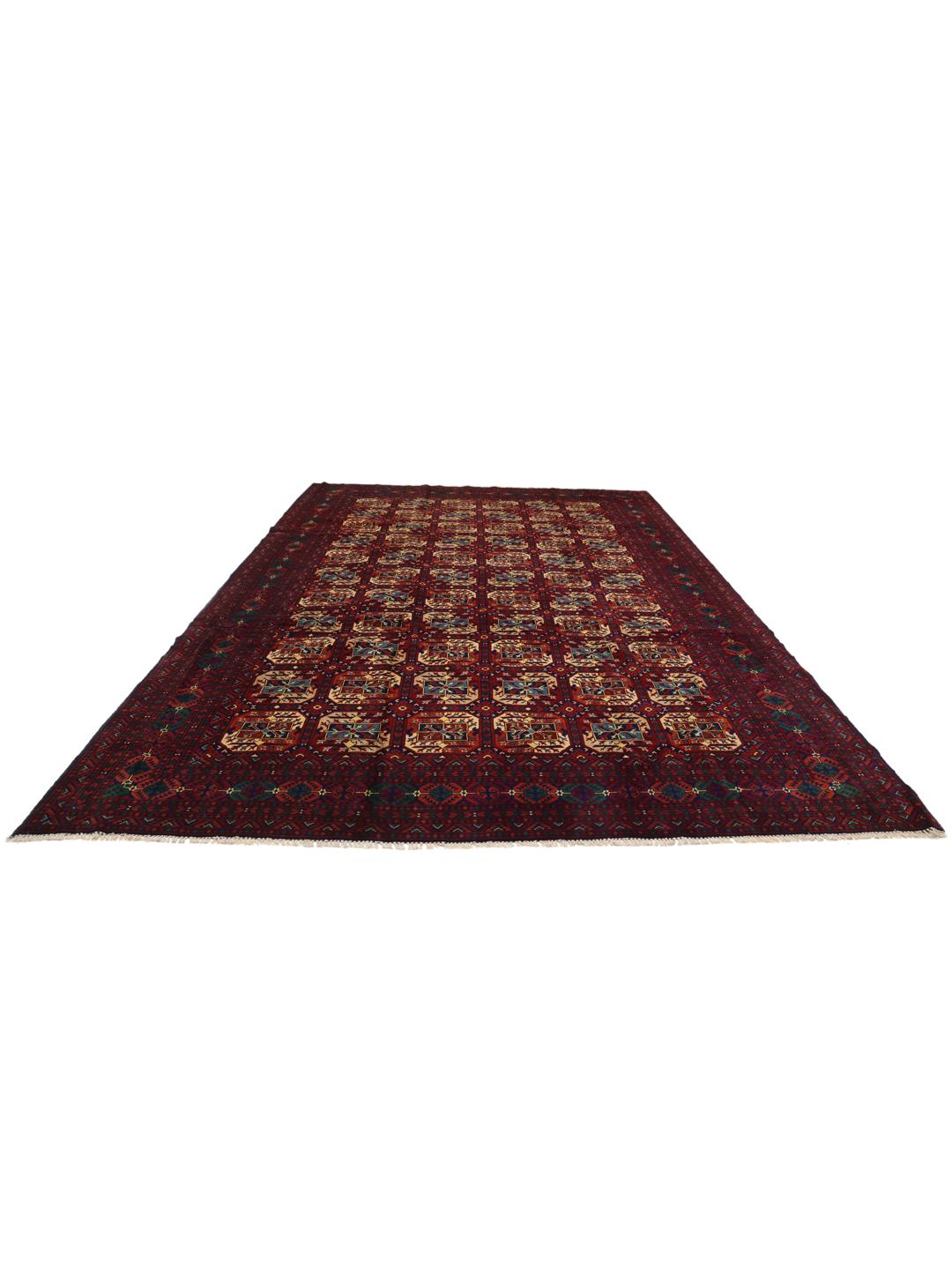
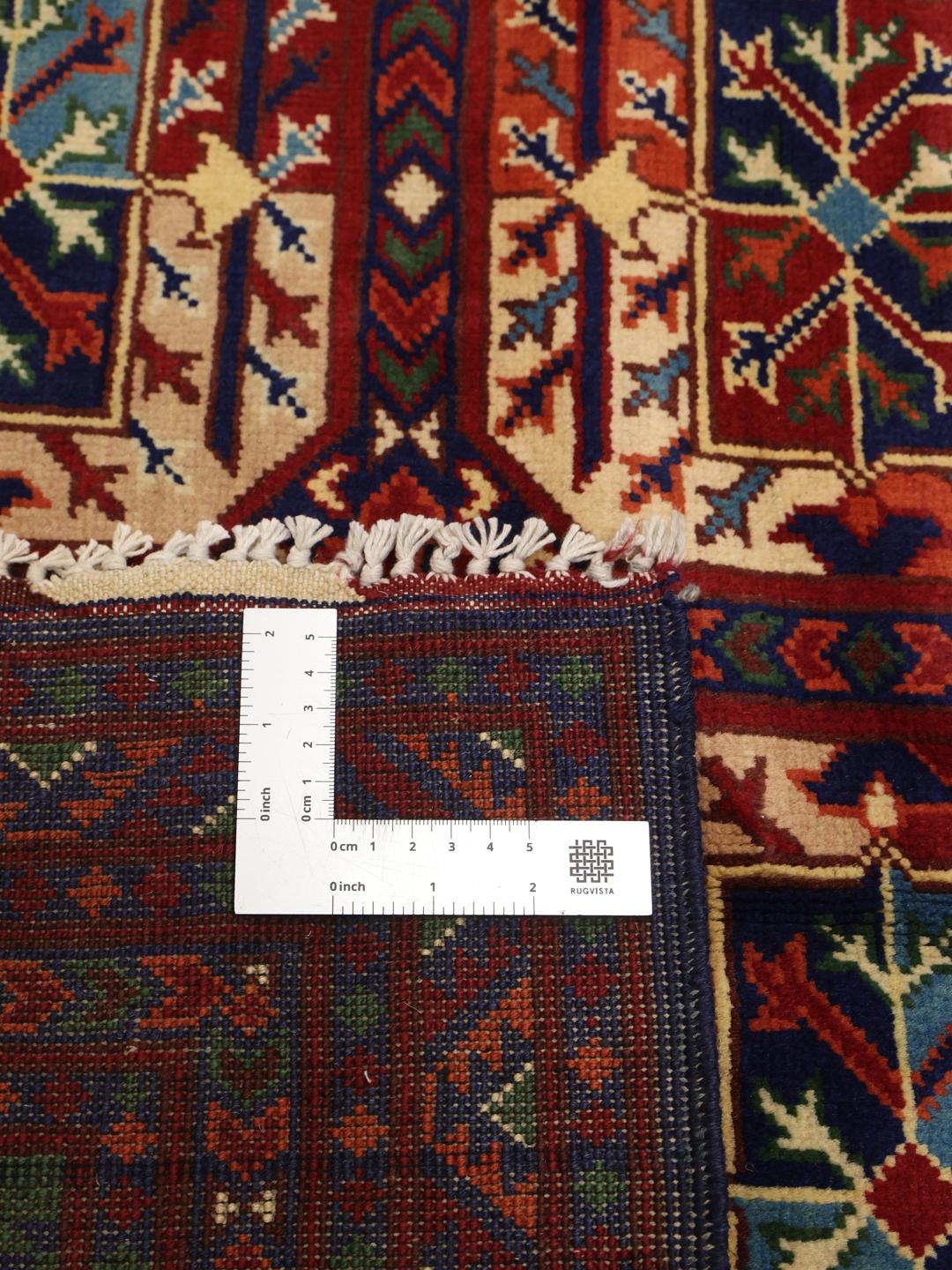
Kunduz rugs trace their roots to northern Afghanistan, a region renowned for its rich history of nomadic weaving and vibrant trade along Central Asian market routes. Named after the historic city of Kunduz, these rugs reflect the shared heritage of Turkmen and neighboring ethnic weavers who settled across the area.
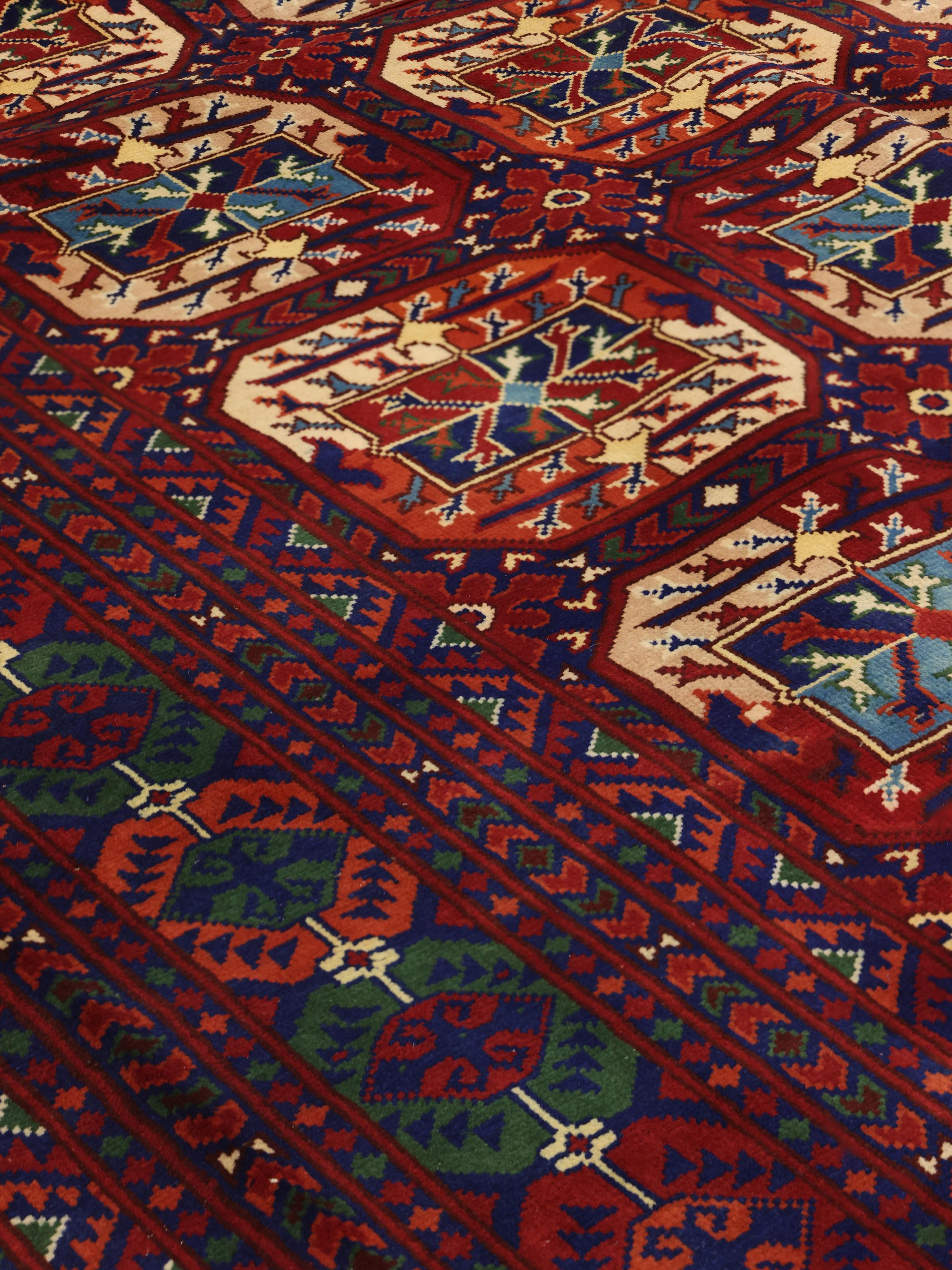
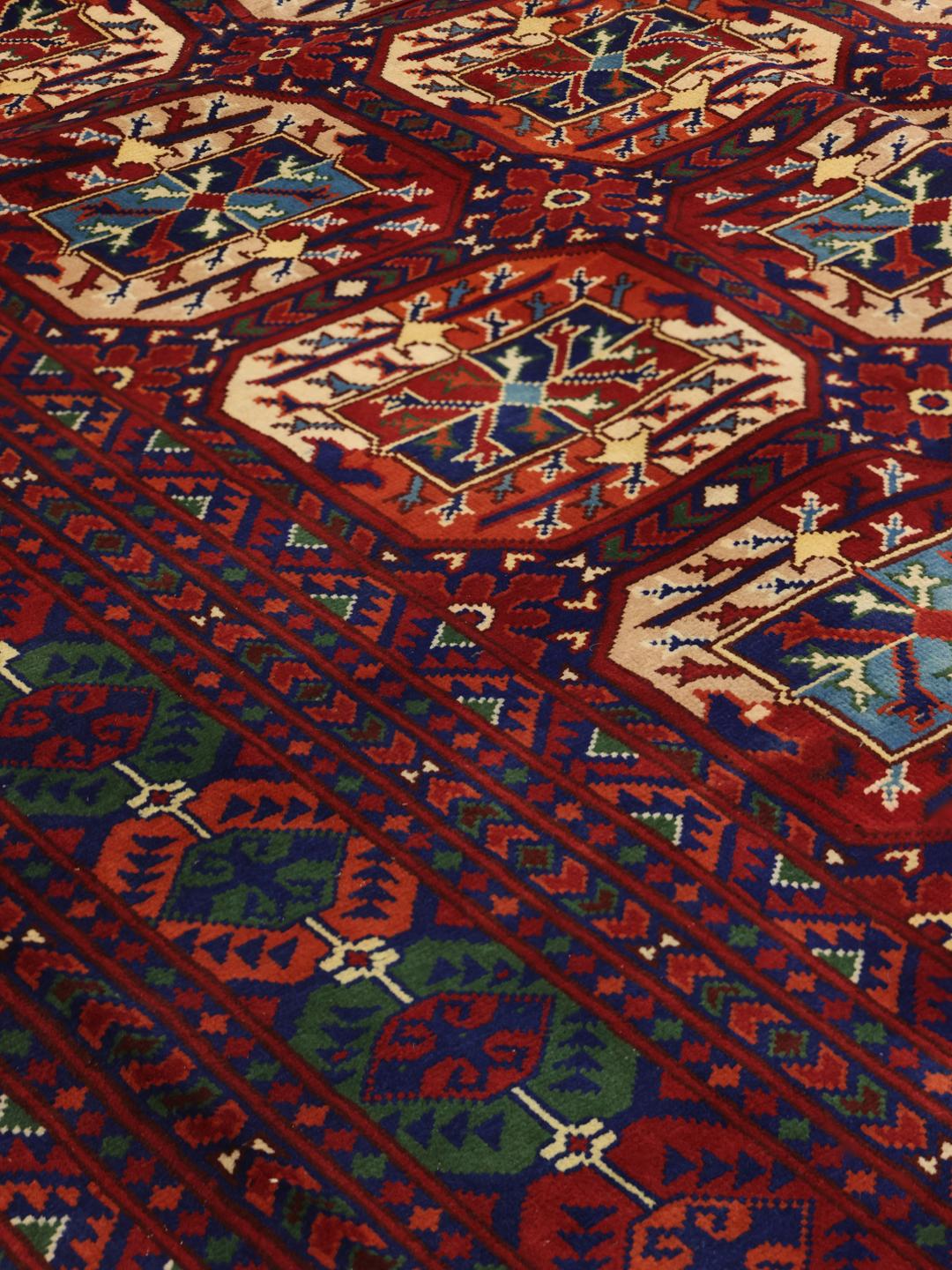
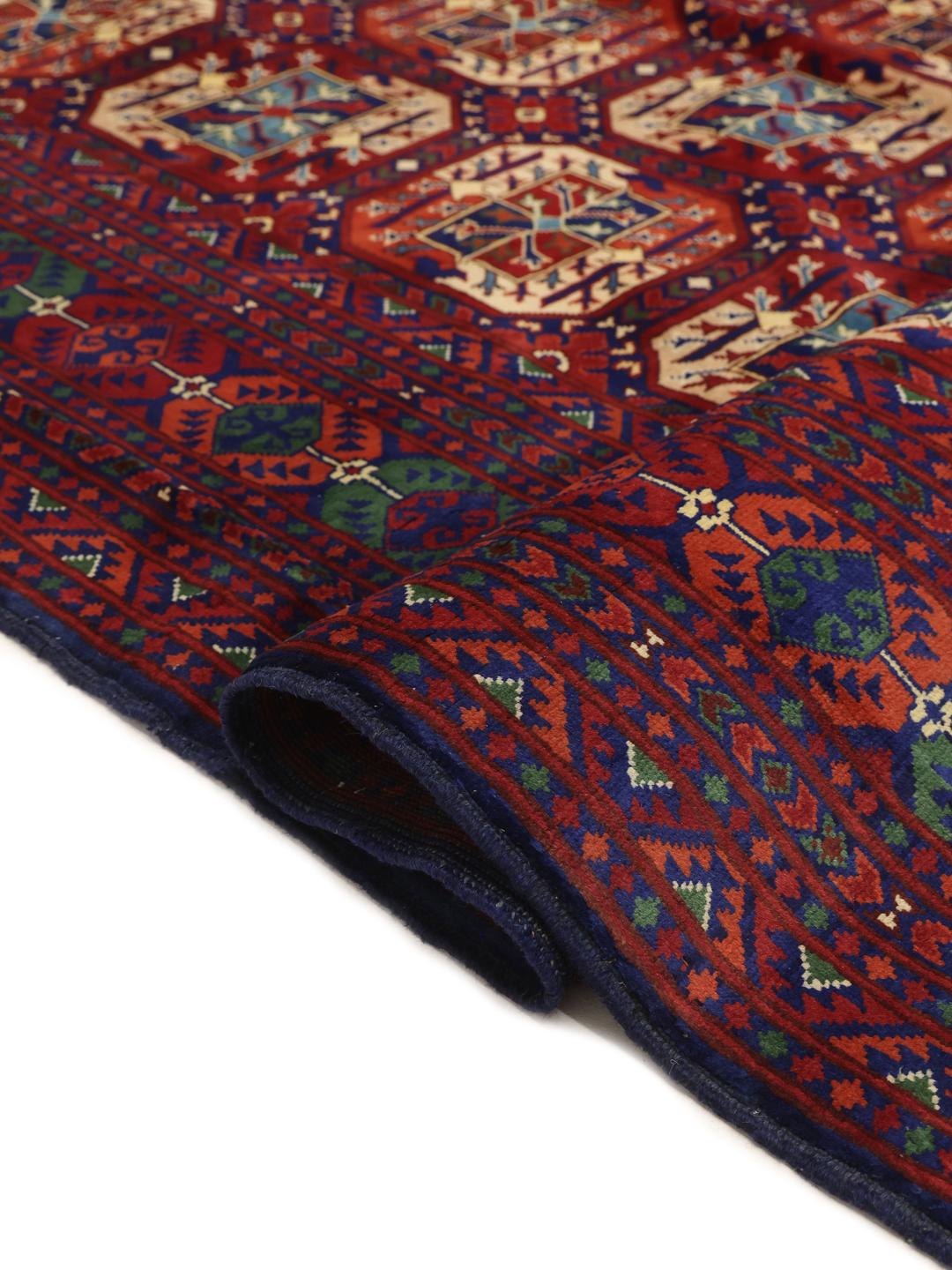
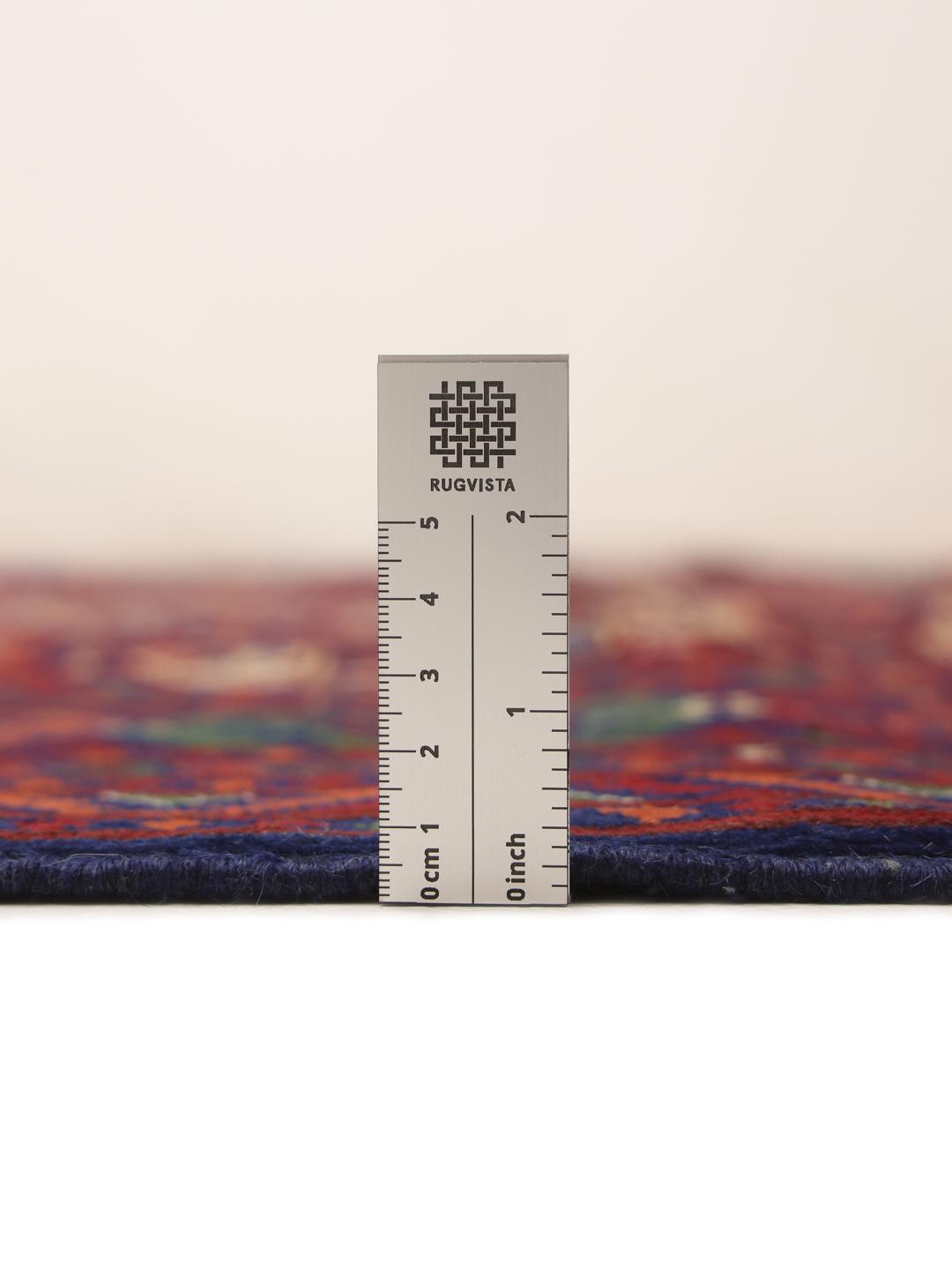
Hand knotting is the hallmark of traditional Kunduz rug making. Artisans manually wrap strands of wool around vertical threads, packing them down row by row. This process yields a tight, sturdy pile that retains crisp motif outlines while holding up remarkably well to foot traffic over decades.
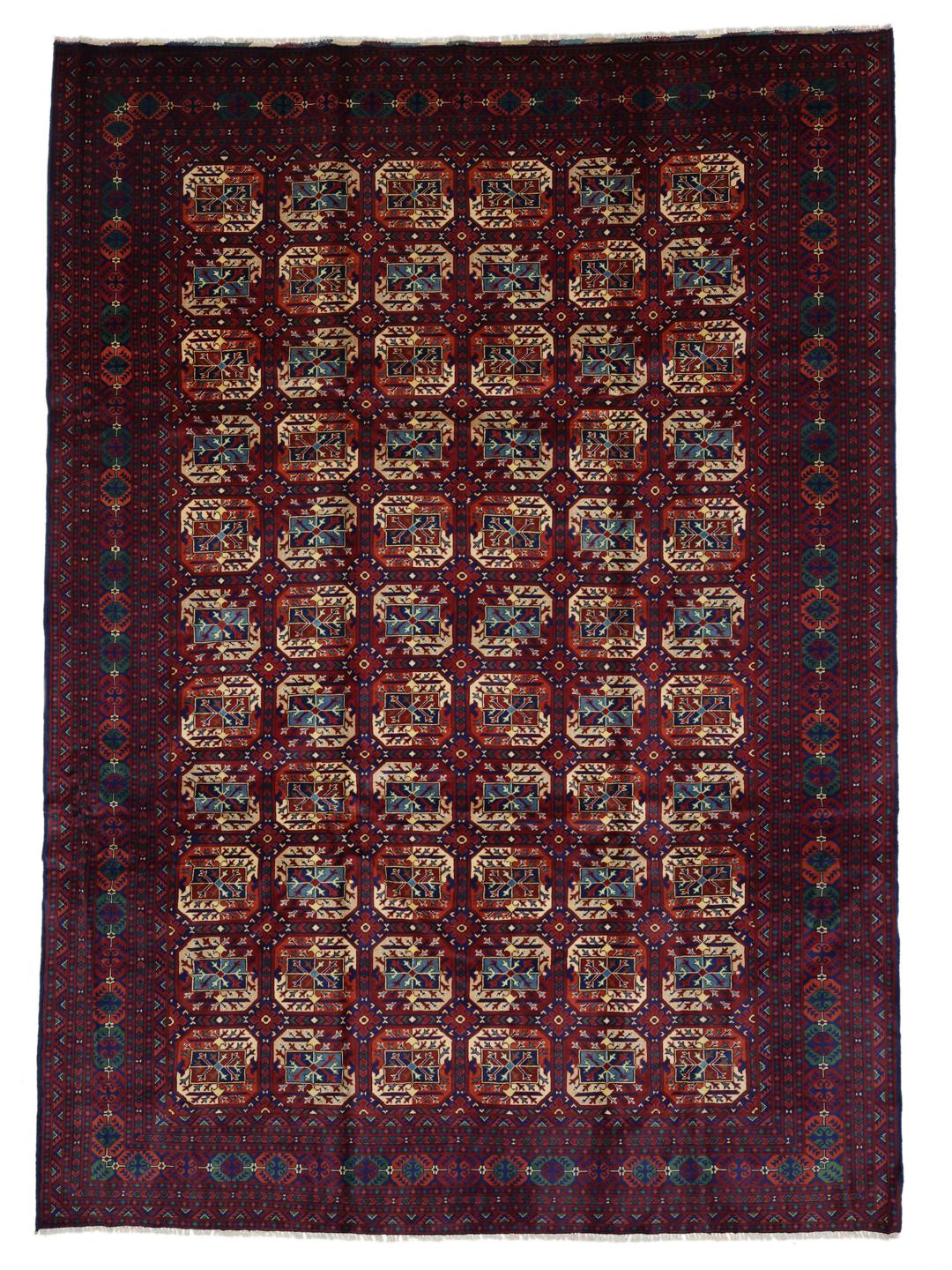
Visually, Kunduz rugs are famous for their deep dark red and rust fields adorned with rows of repeating octagonal medallions, often called guls. Framing the central field is a series of intricate geometric and floral borders, providing visual harmony through structured repeat patterns.
Prized by collectors and homeowners alike, Afghan Kunduz rugs represent an enduring textile craft. Their rich vegetable-dyed tones, robust materials, and historical design language bring a sense of history, authenticity, and grounded depth to contemporary interiors.