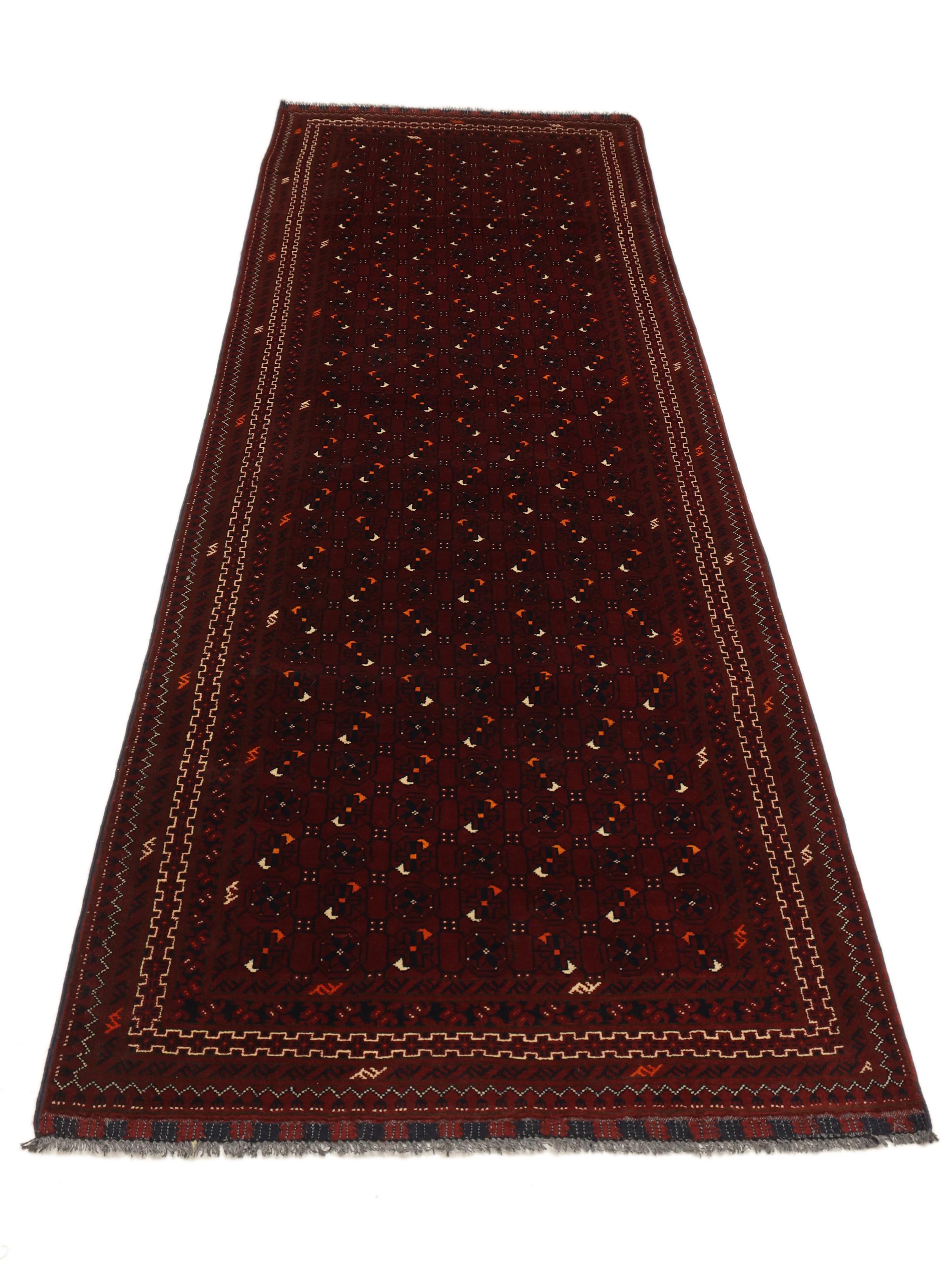
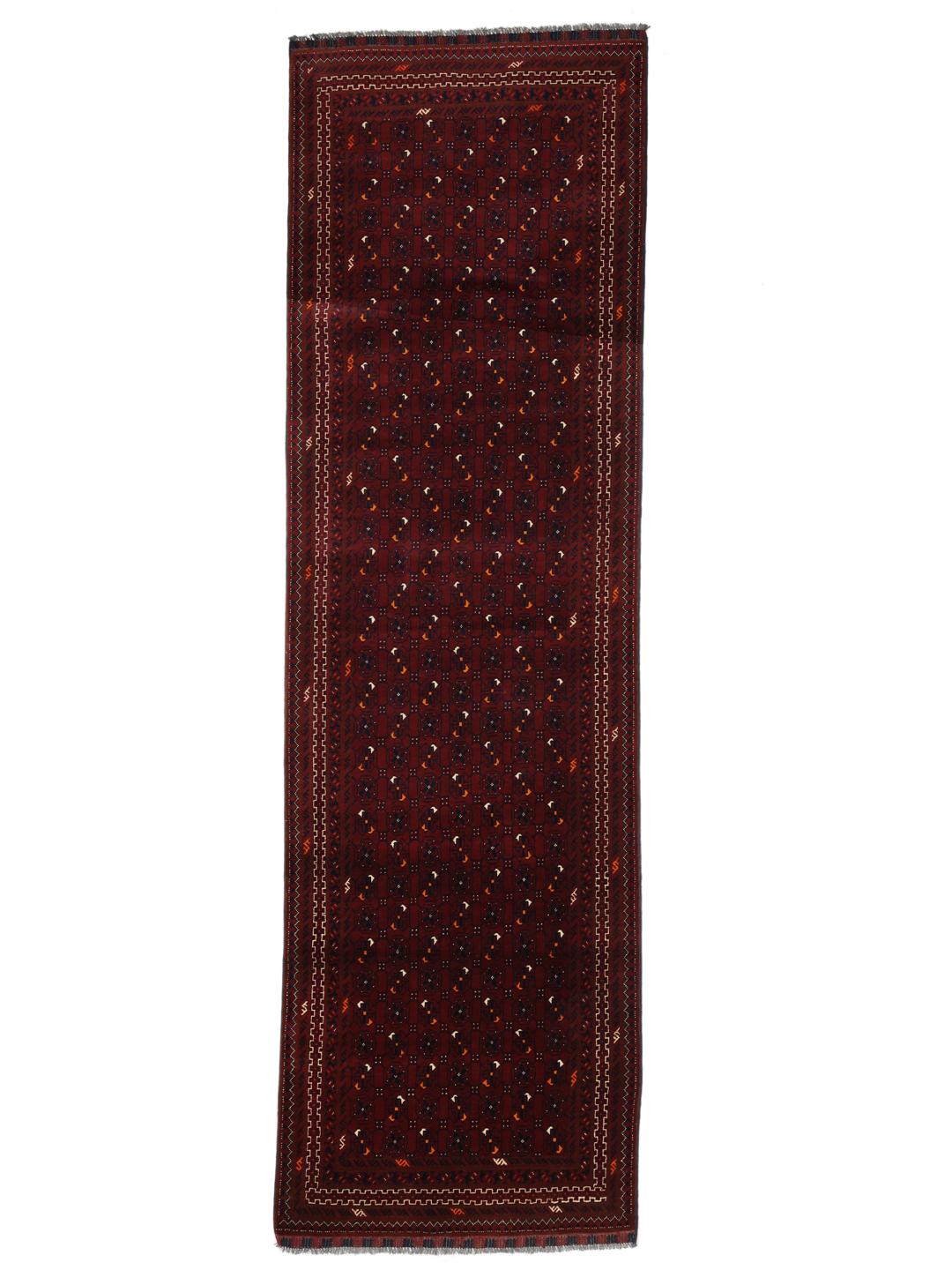
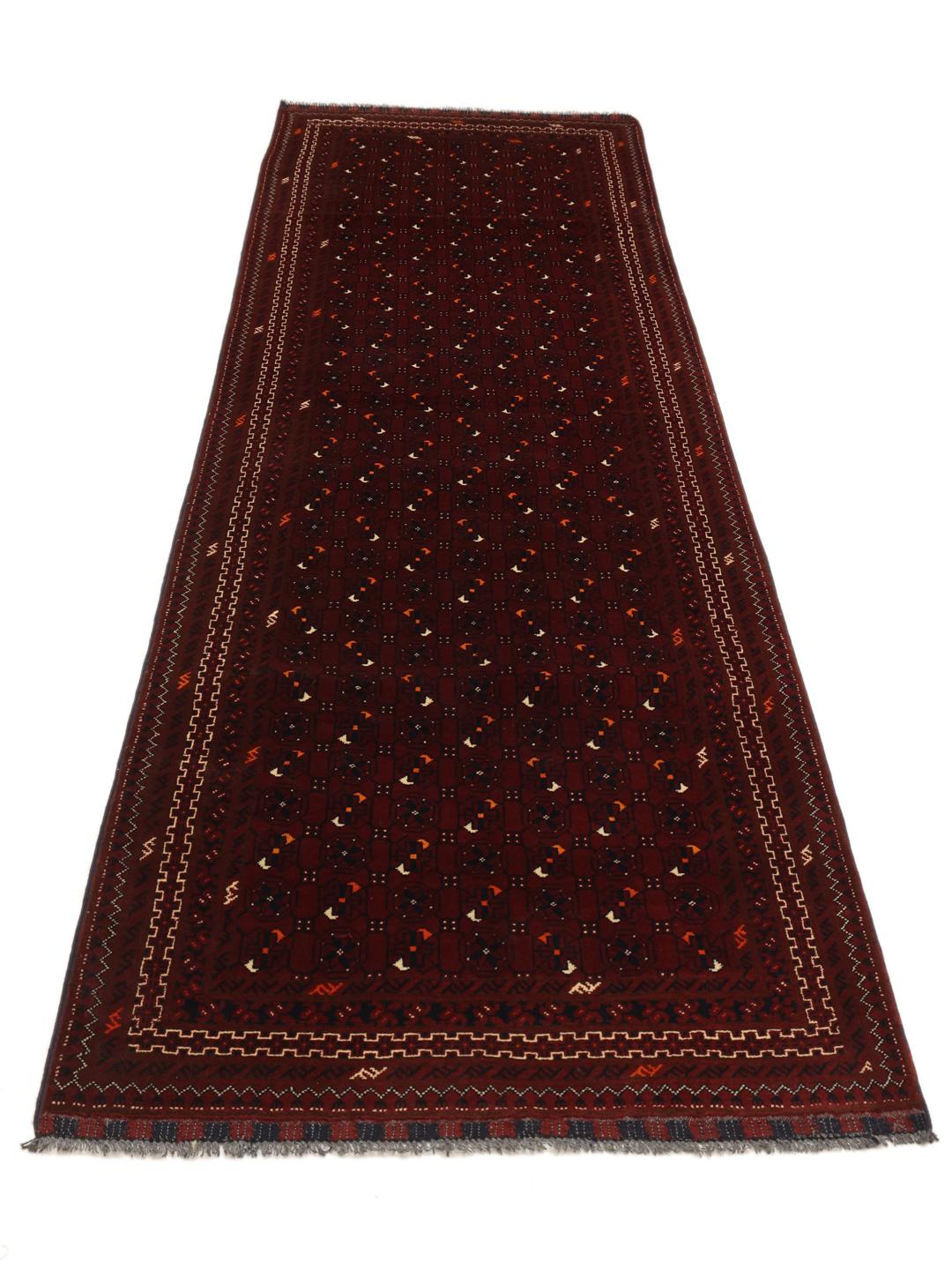
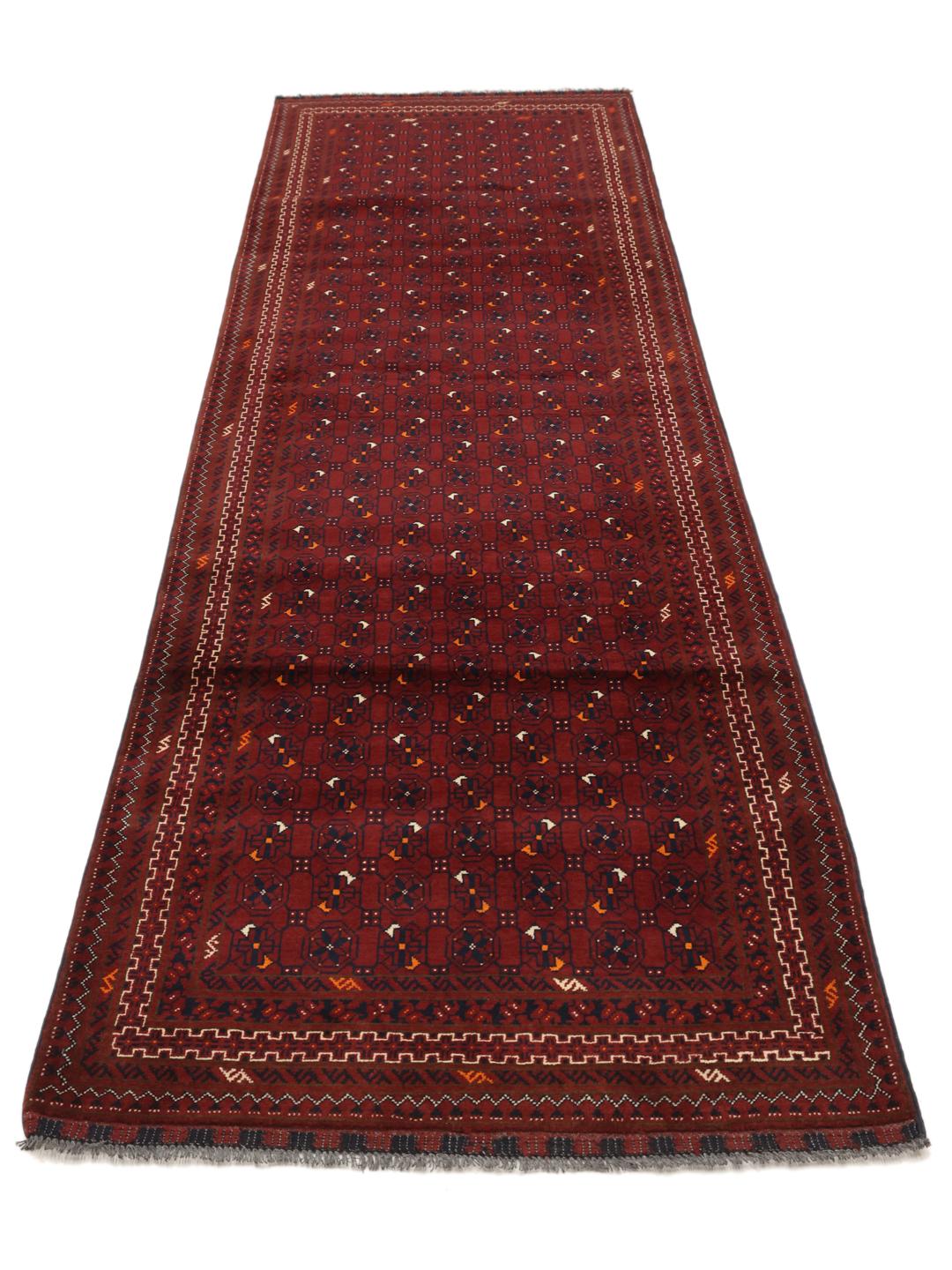
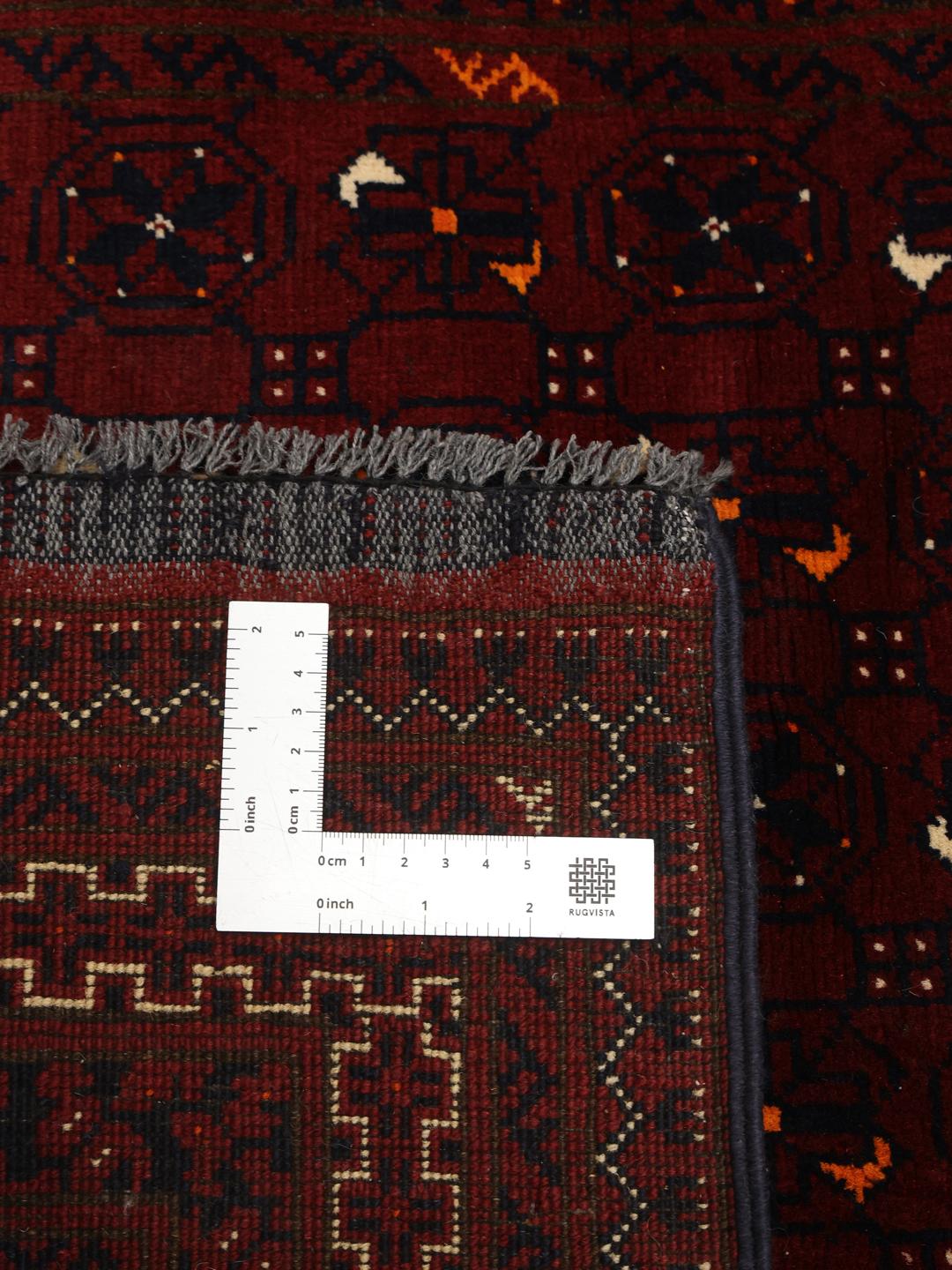
Kunduz rugs take their name from the northern province and city of Kunduz in Afghanistan, a region long recognized for its rich weaving heritage. Positioned along historical trade routes, northern Afghanistan became a melting pot of regional weaving techniques, where Turkmen, Uzbek, and Tajik communities contributed to a distinct local rug tradition.
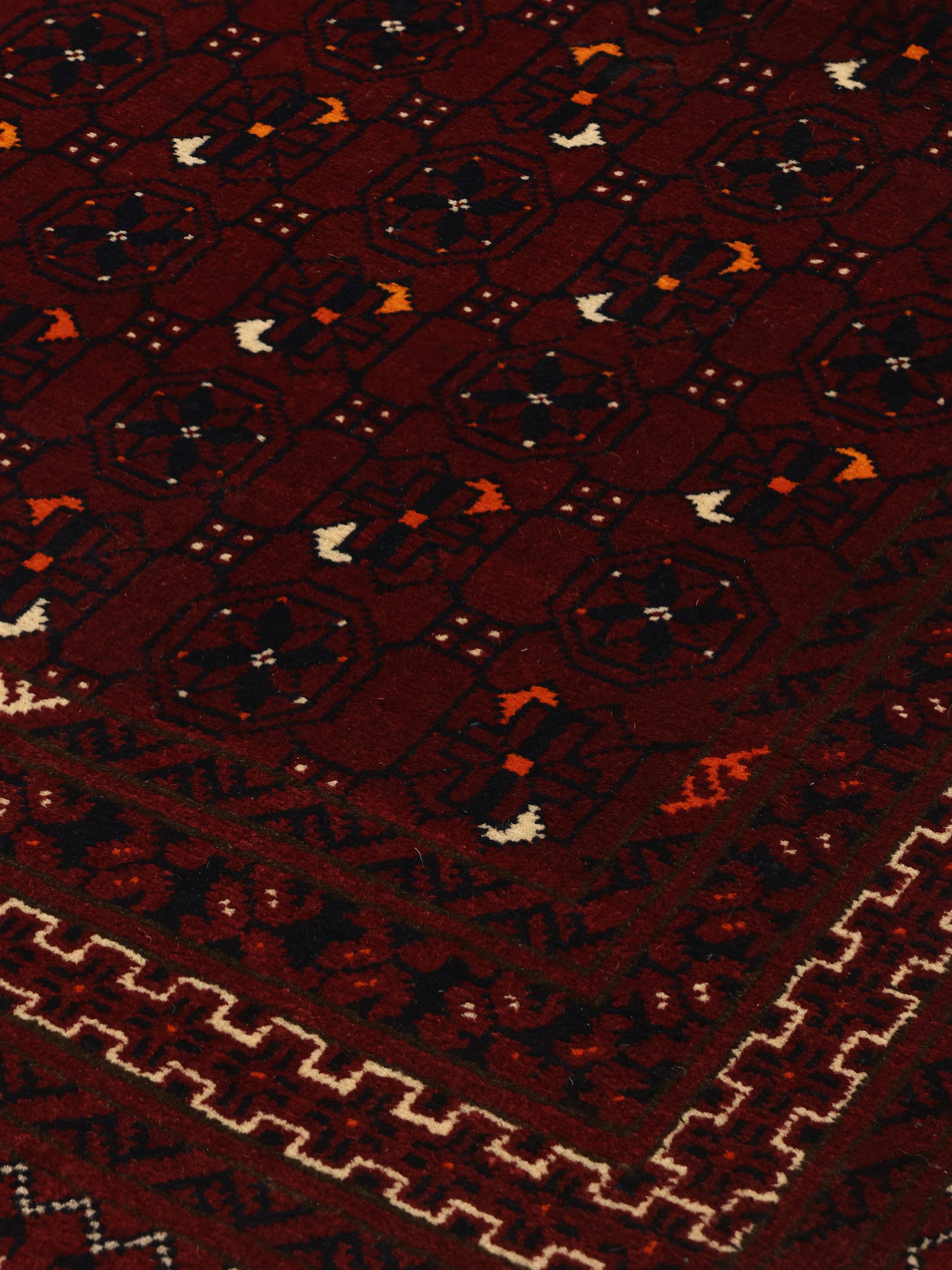
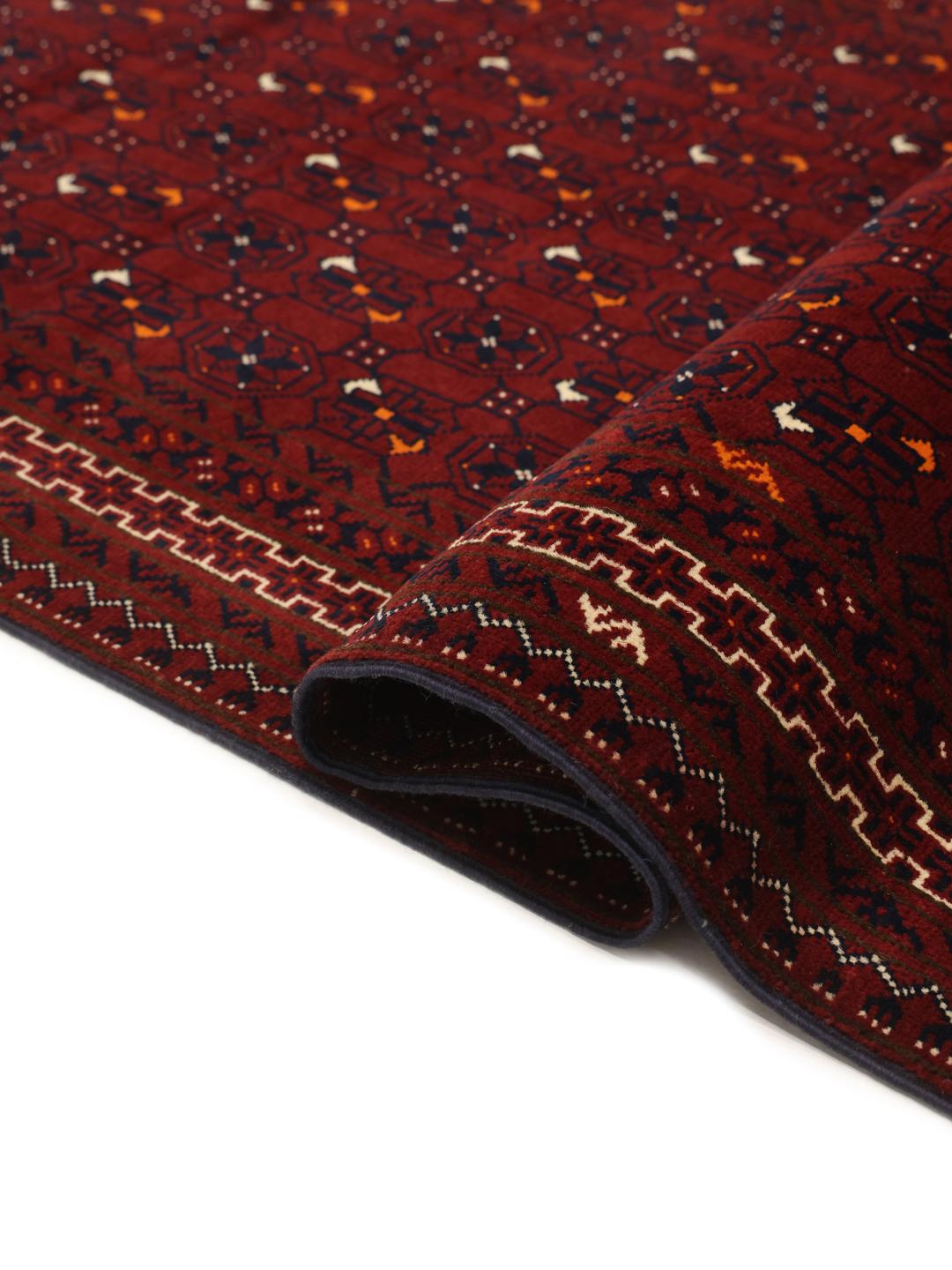
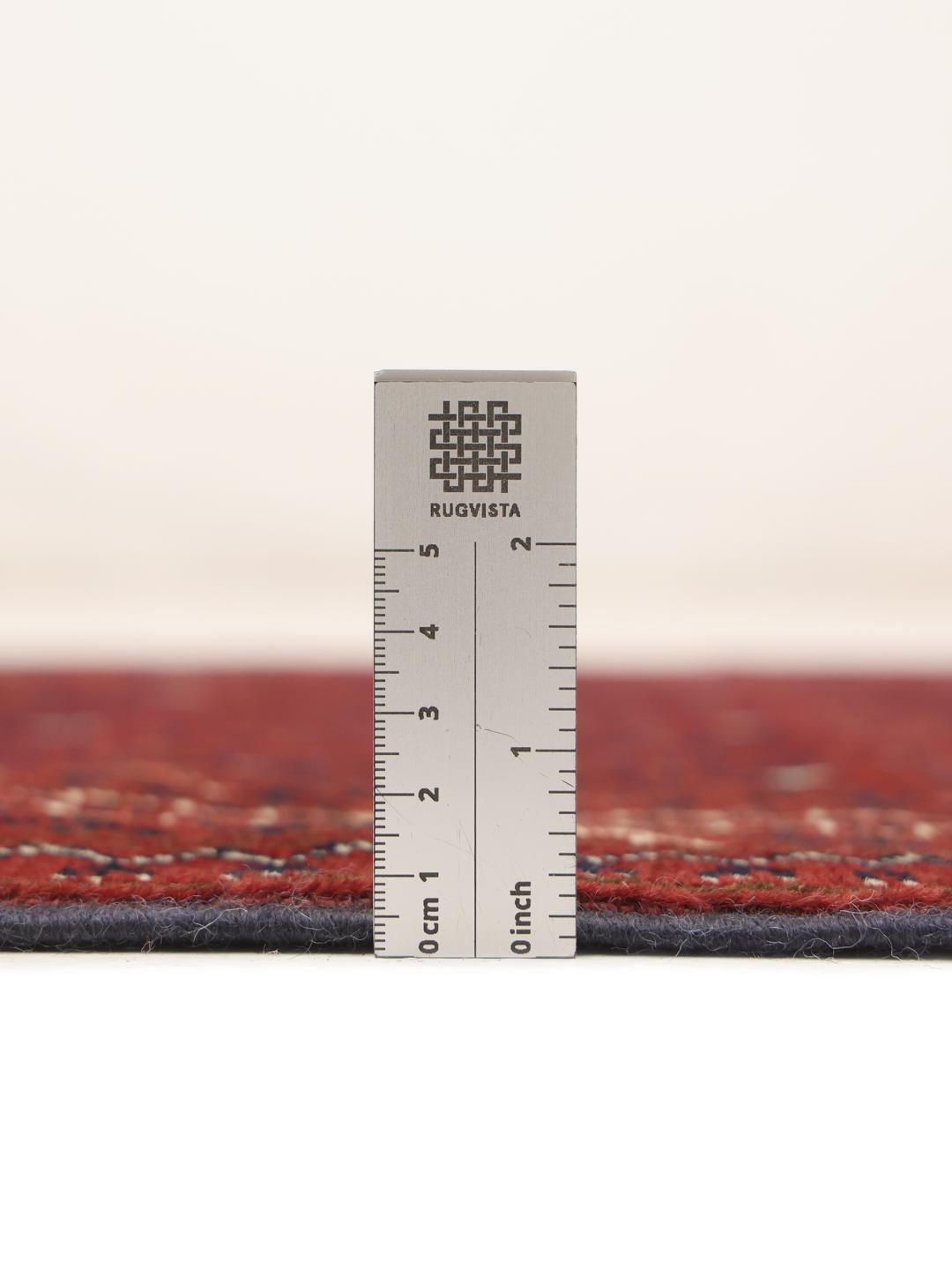
Hand-knotted construction remains the defining craft standard of Kunduz rugs. By tying individual yarn loops by hand onto a cotton warp, weavers produce a remarkably dense and resilient surface that withstands daily foot traffic while retaining sharp pattern definition and rich color over many years.
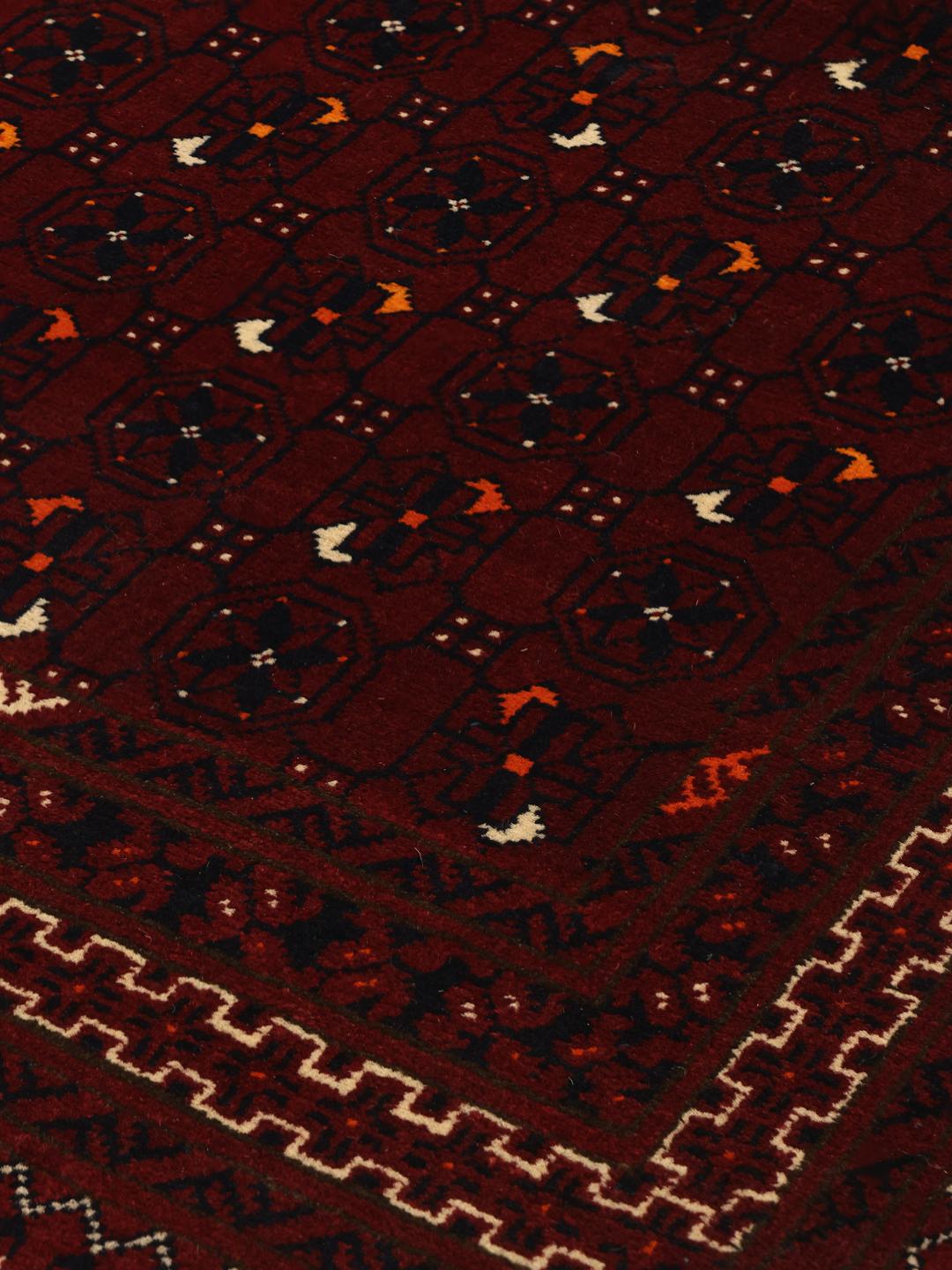
Visually, Kunduz rugs are known for their deep red and dark-toned palettes, usually filled with geometric gul motifs, diamonds, and repeating tribal emblems. A framed decorative border encloses the central field, balancing the structured geometry and creating a grounded visual harmony suited to long spaces like hallways.
Appreciated globally for their honest craftsmanship and traditional tribal aesthetics, Kunduz rugs hold substantial value for homeowners looking for authentic heritage pieces. Owning a hand-knotted Kunduz rug connects your home directly to centuries of northern Afghan weaving skill.