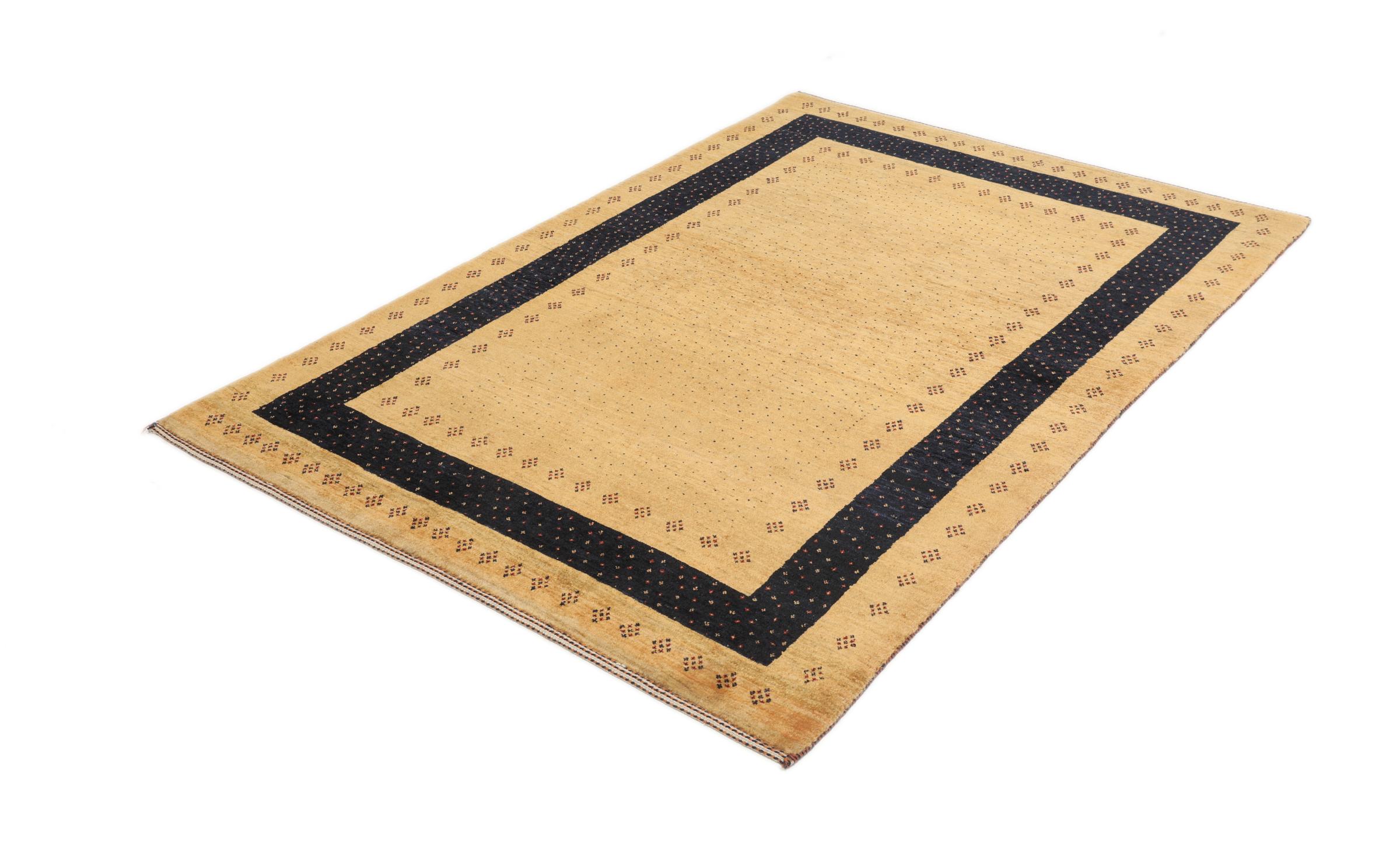
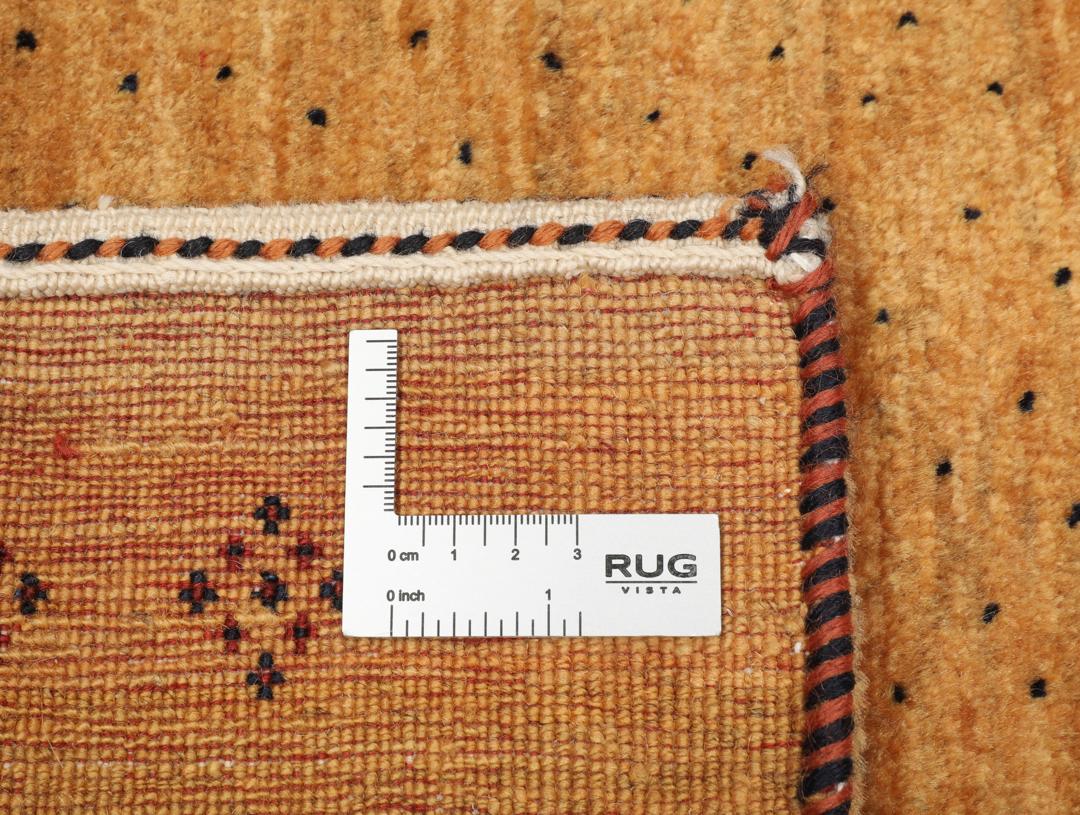
The Loribaft and Kashkooli traditions are deeply intertwined with the semi-nomadic tribes of the Middle East. These rugs were historically woven by tribal artisans who drew inspiration from their surrounding landscapes, utilising locally sourced materials to create pieces that were both functional floor coverings and expressions of cultural identity.
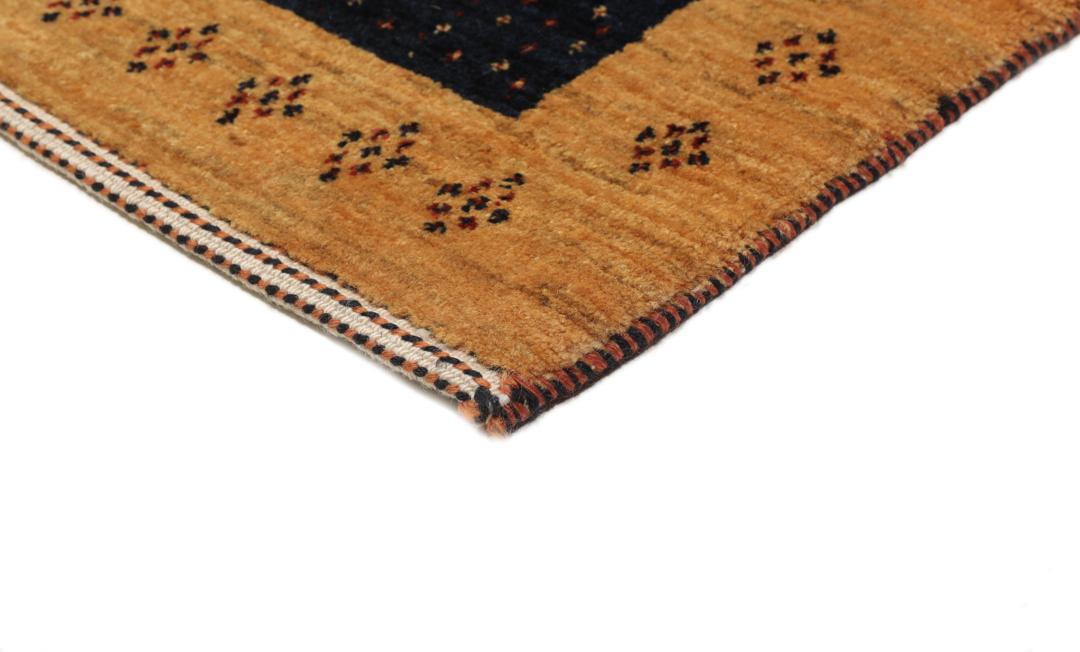
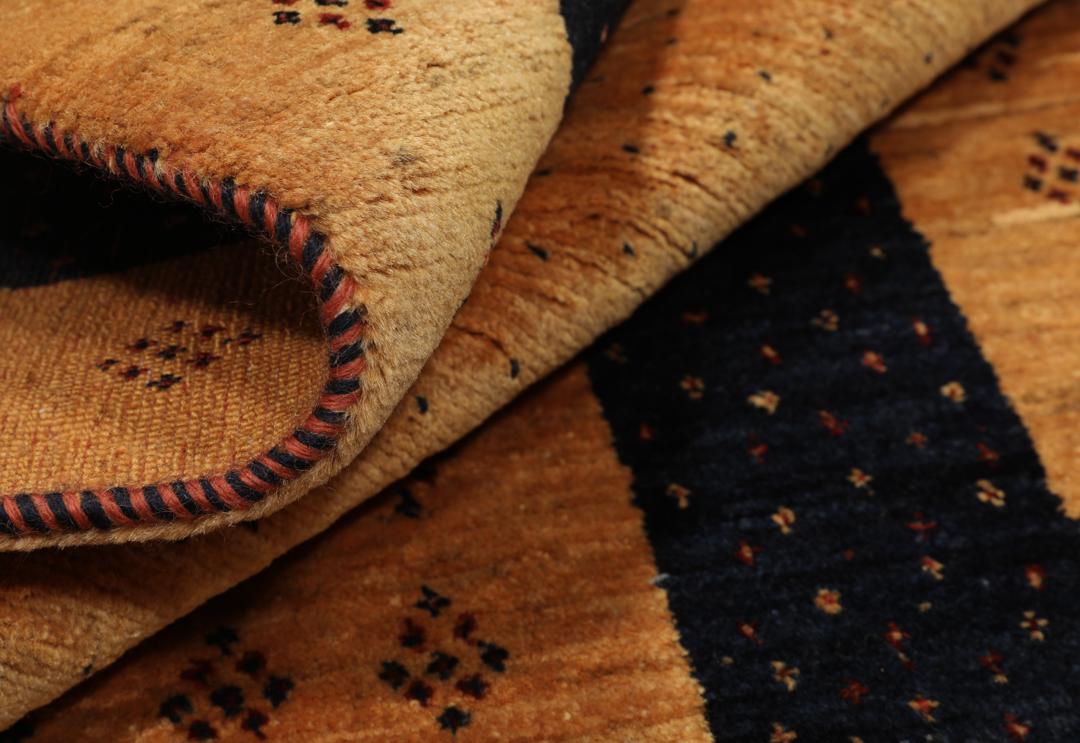
The term 'Fine' in this context refers to the elevated level of precision involved in the knotting process. While traditional tribal rugs were often coarser, the fine variation involves a more complex knotting technique that allows for a smoother, more refined pile and a greater depth of character, bridging the gap between rustic tribal art and sophisticated interior design.
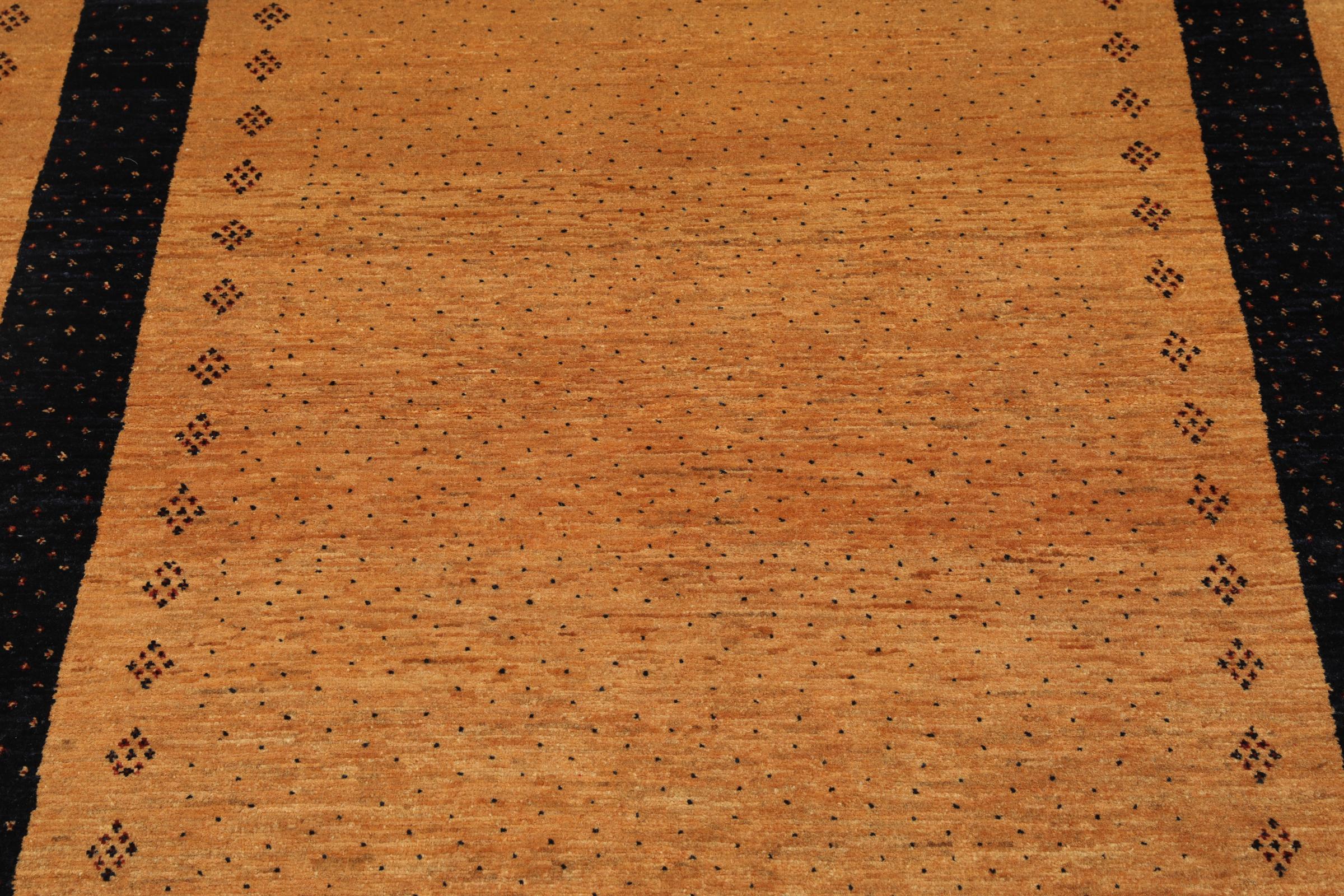
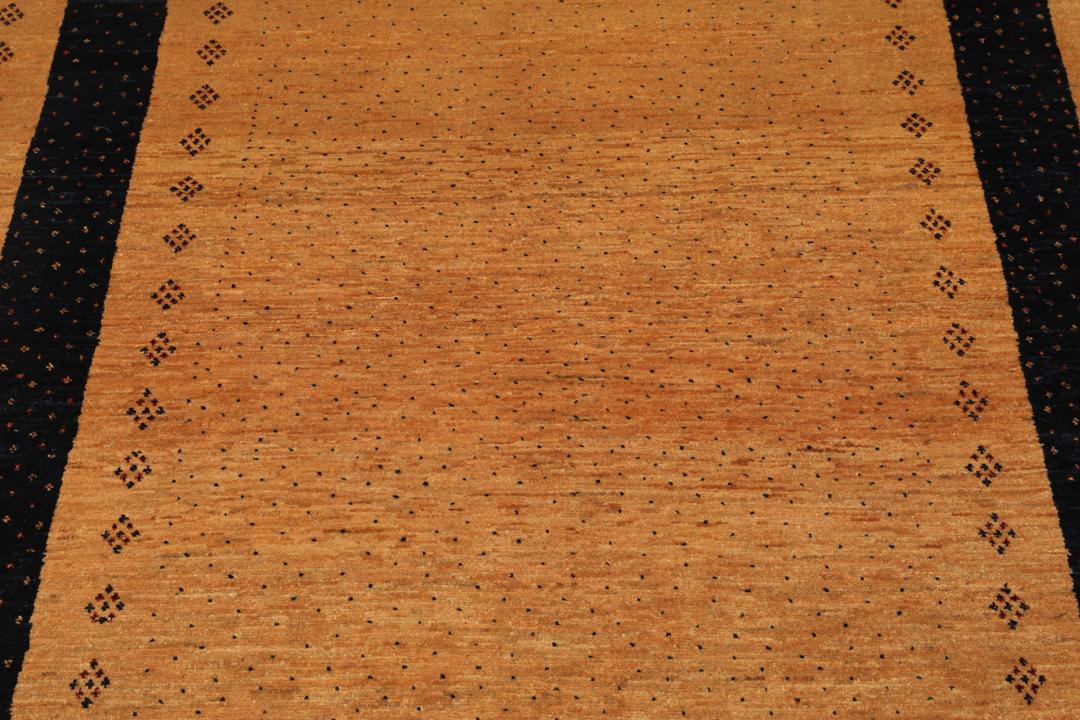
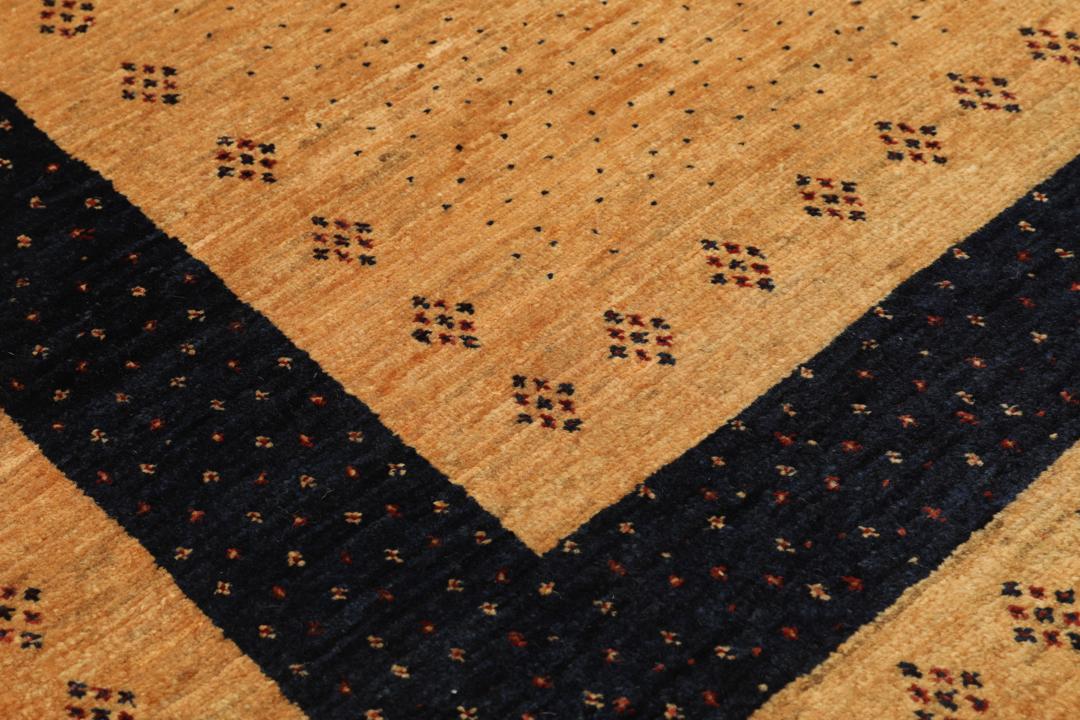
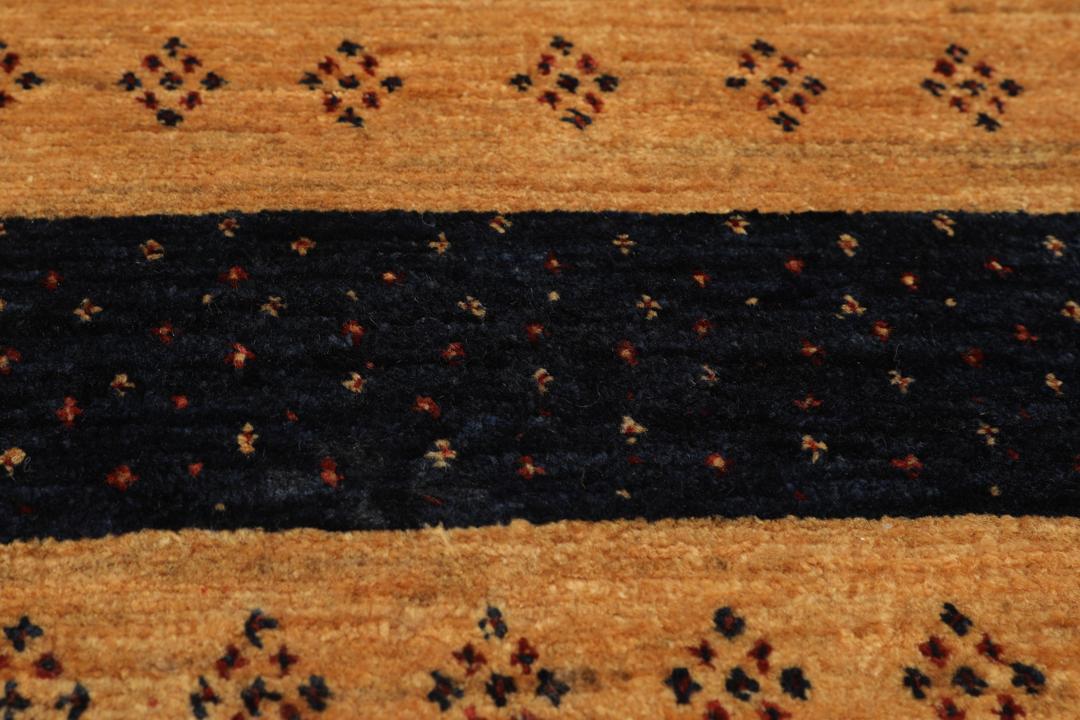
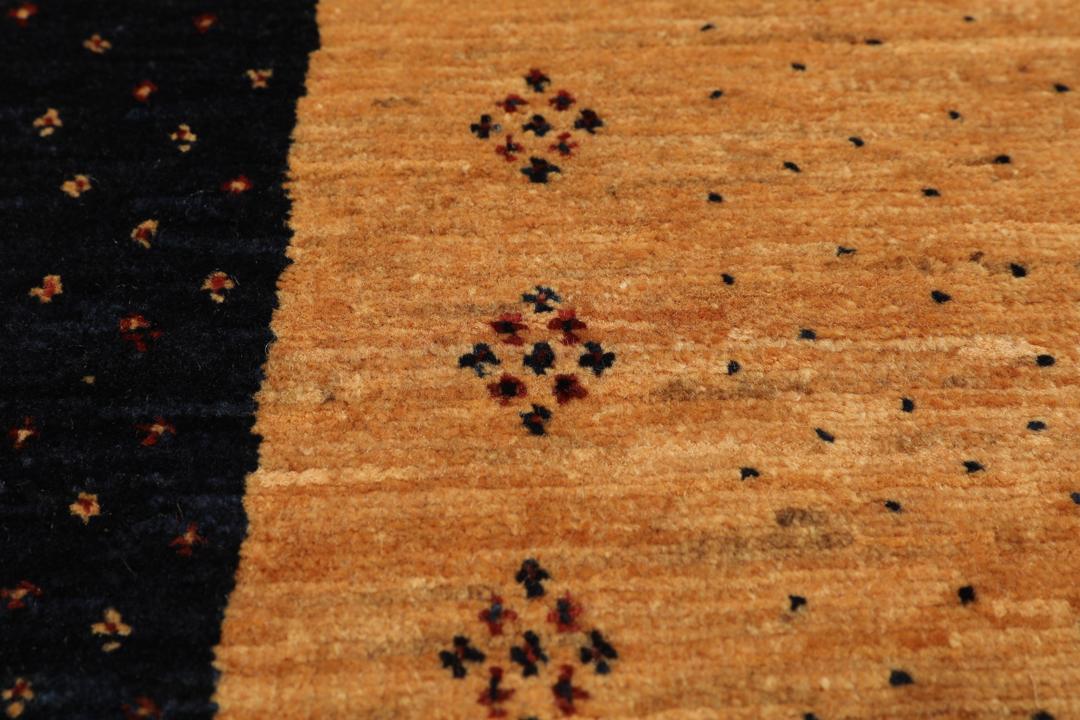
The design of this rug features a minimalist approach, often characterised by vast, open fields of colour punctuated by small, symbolic motifs. The bold, dark border framing the warm central field is a hallmark of this style, providing a structured contrast that highlights the natural variations in the wool, which often take on a subtle, luminous quality when dyed.
Owning a piece from this tradition is an investment in human skill and regional history. These rugs are highly valued by collectors not just for their beauty, but for their ability to tell a story of migration, craftsmanship, and the enduring connection between a people and their craft.