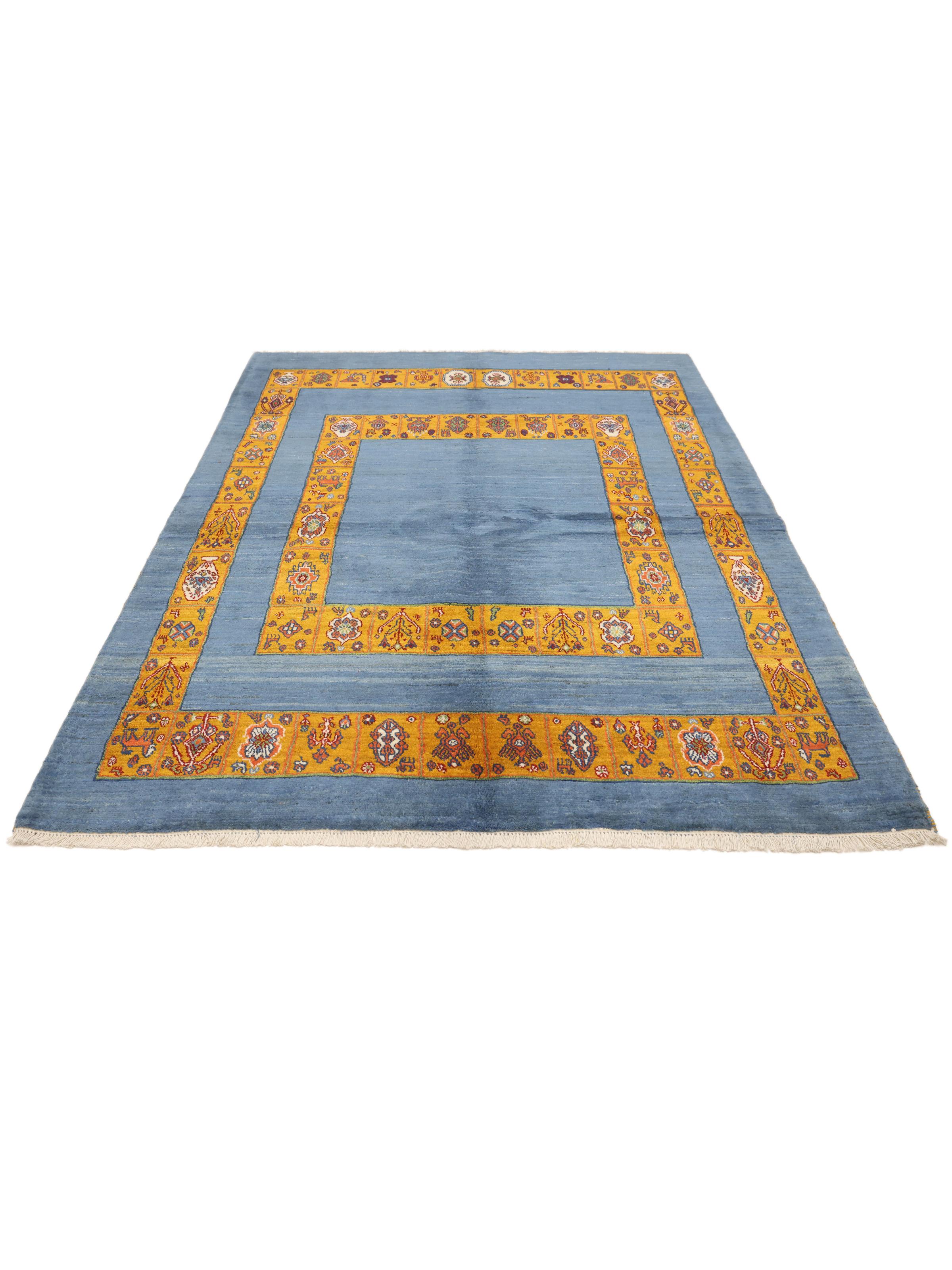
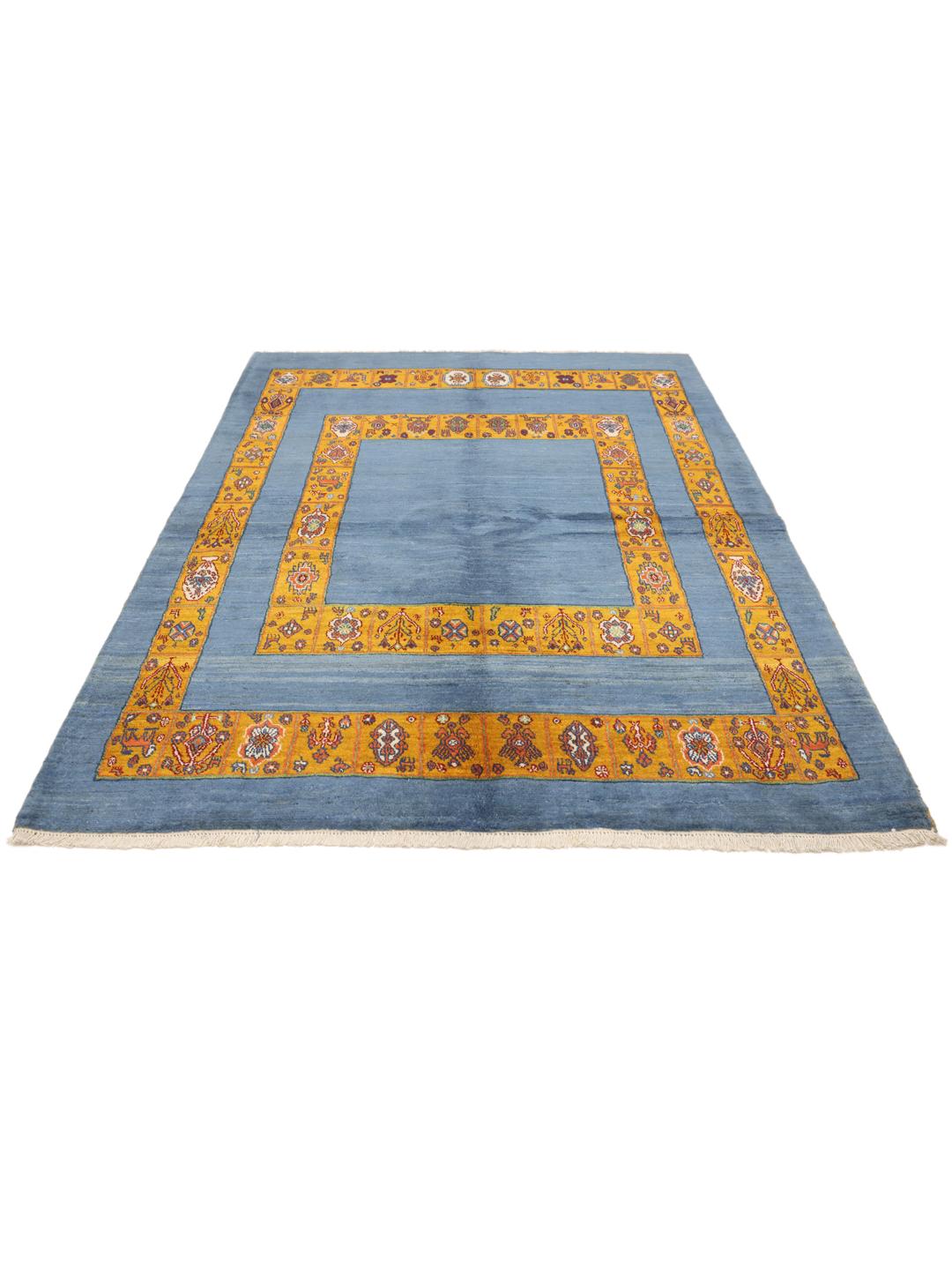
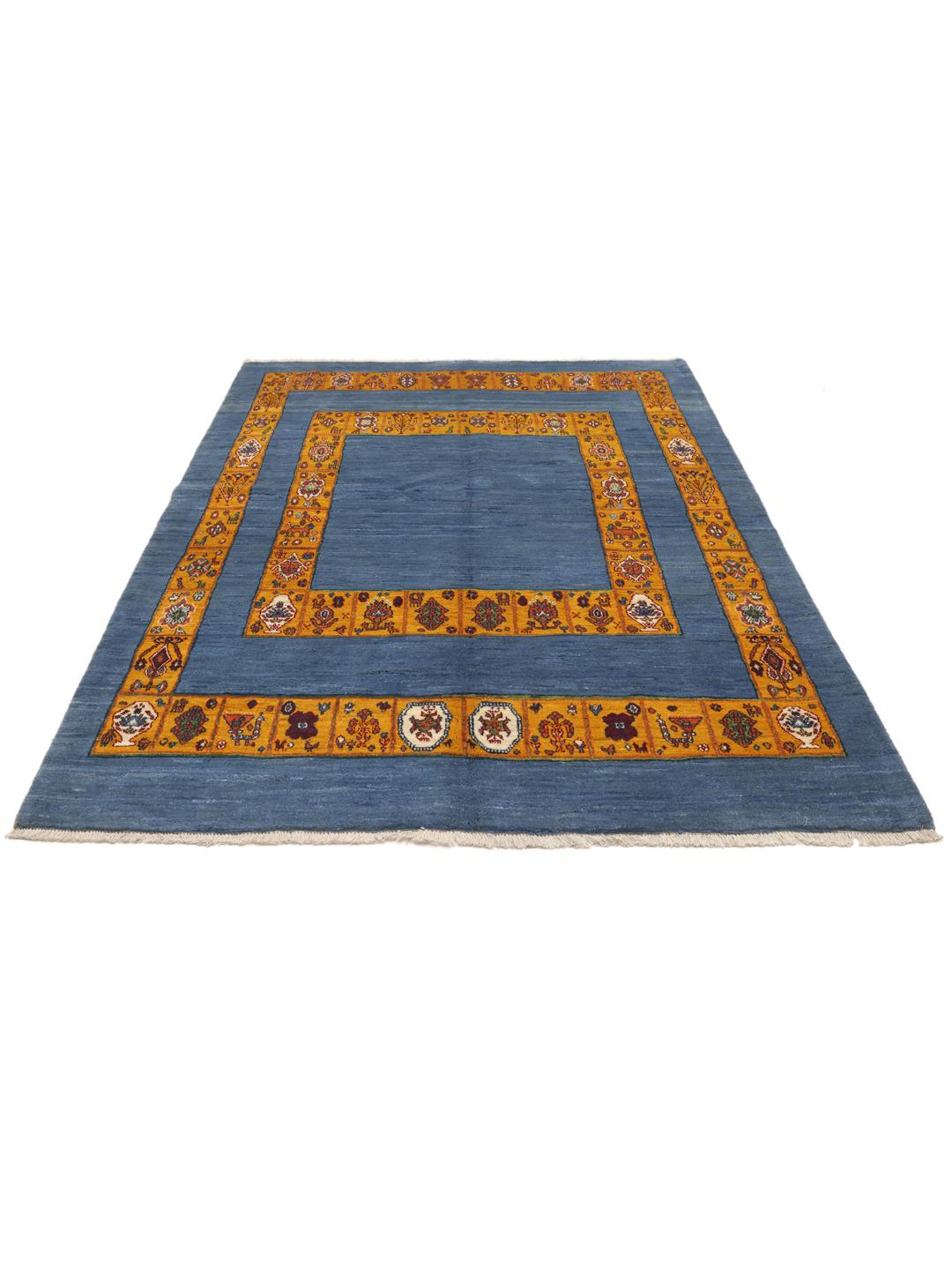
The Loribaft rug tradition finds its roots in the nomadic cultures of the Middle East, specifically among the Luri and Bakhtiari tribes. These rugs were historically crafted for personal use, designed to provide warmth and protection in harsh mountain environments, and their aesthetics reflect the natural beauty of the landscapes inhabited by these nomadic weavers.
The term 'Baft' refers to the weaving process itself, while 'Lori' identifies the tribal origin. Unlike more formal, city-based rug traditions that rely on pre-drawn blueprints, these rugs are often woven from memory, allowing the weaver to express individual creativity and cultural storytelling through the placement of motifs and the selection of vibrant, often naturally dyed Wool.
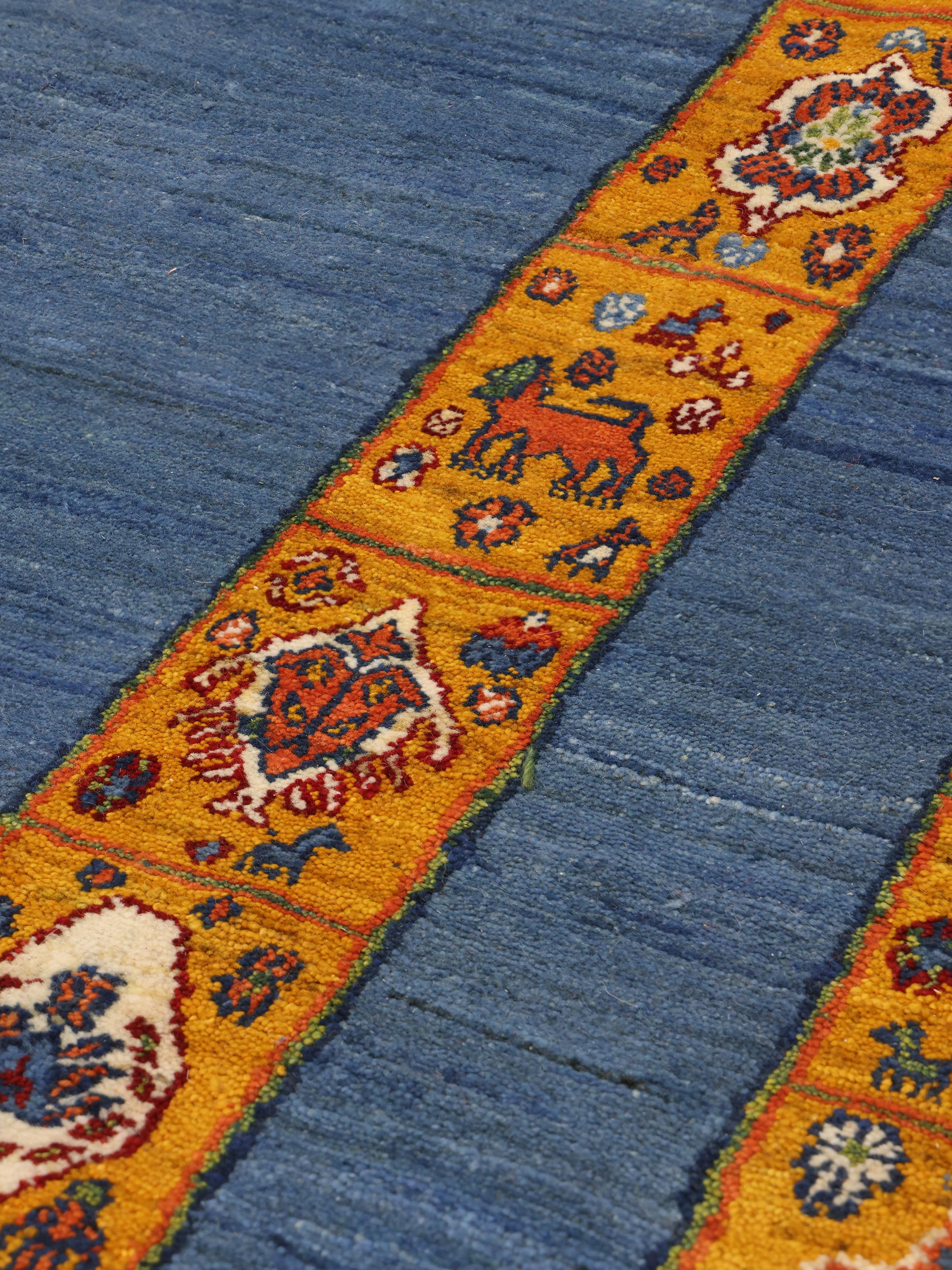
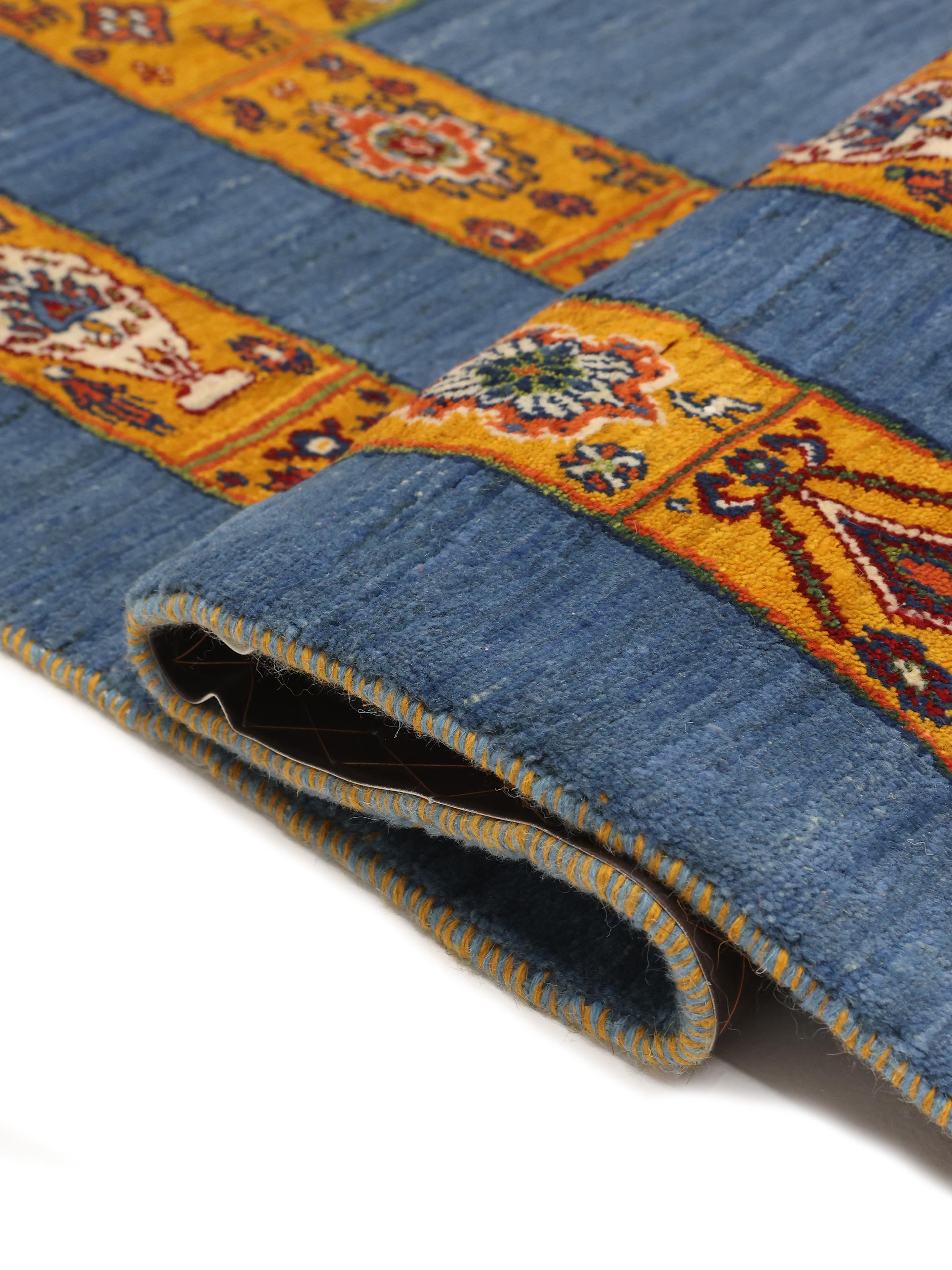
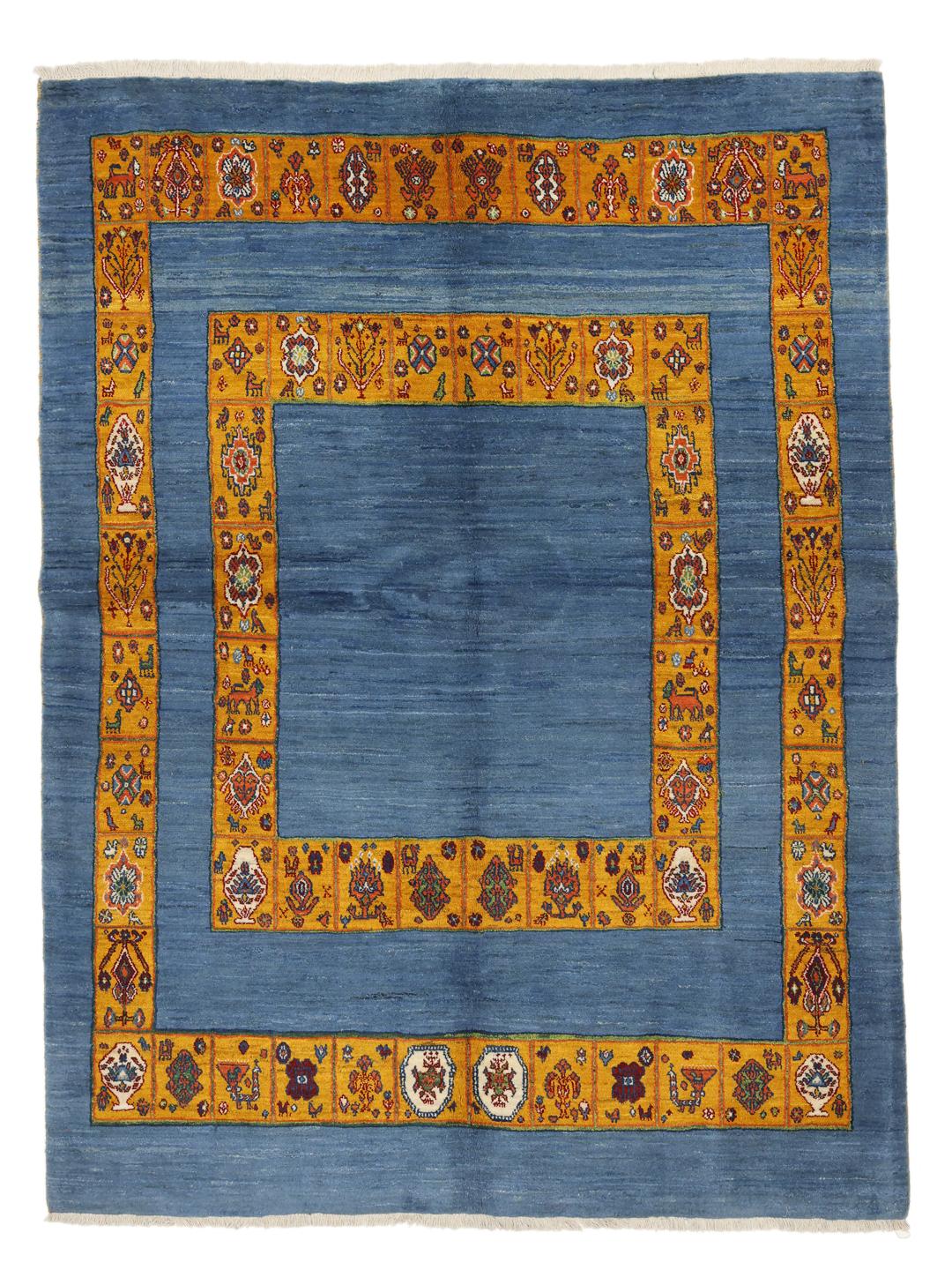
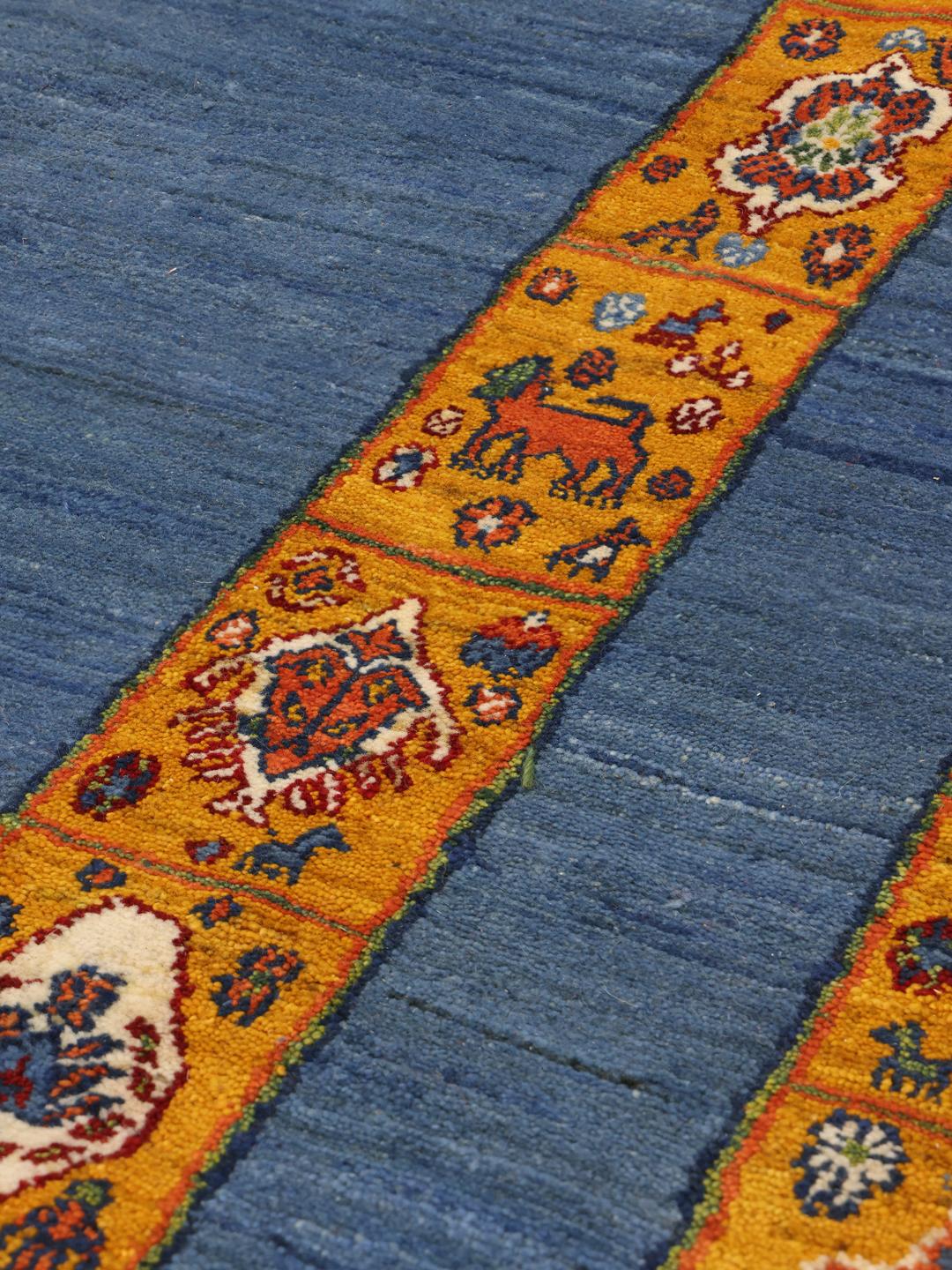
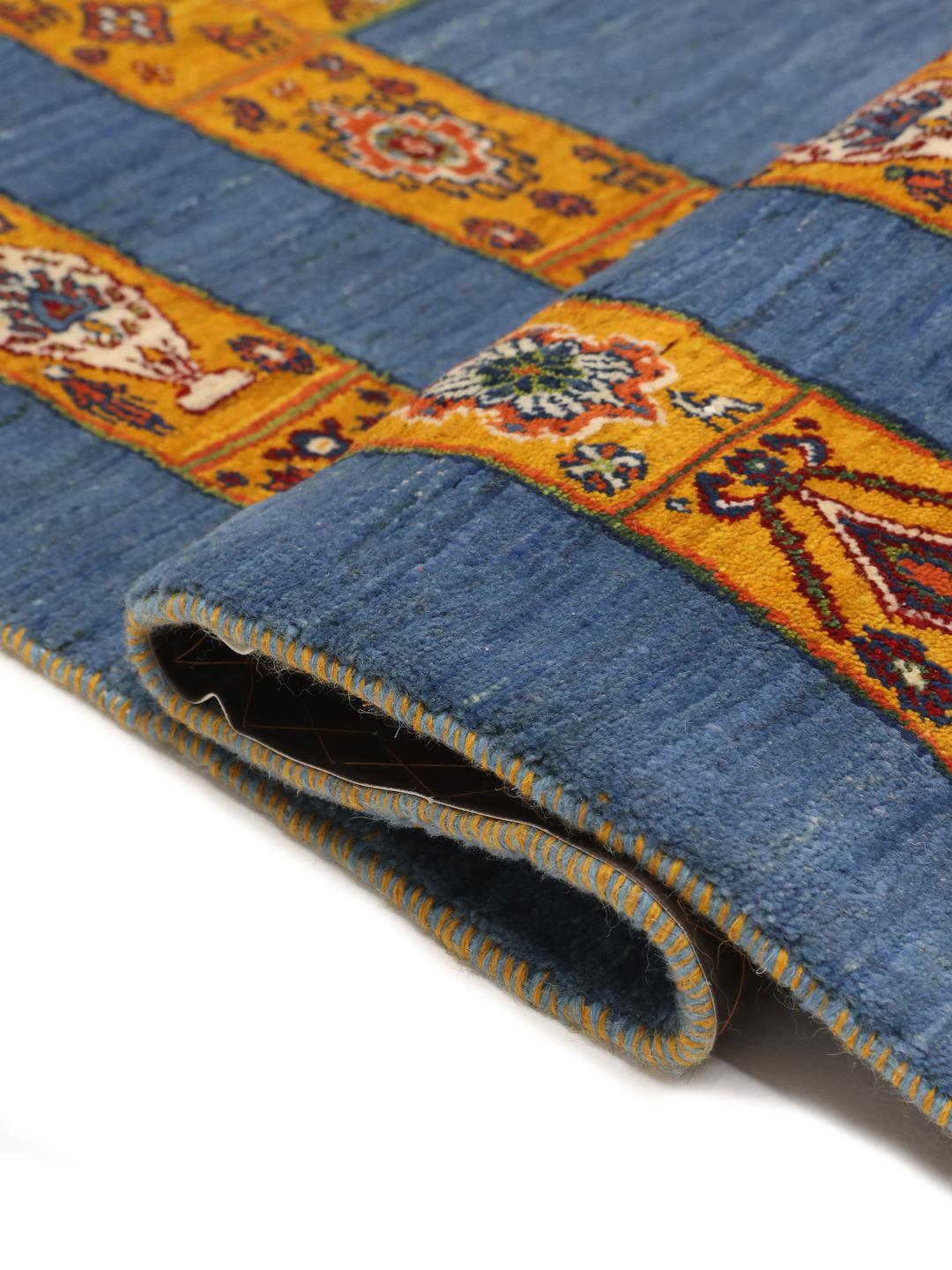
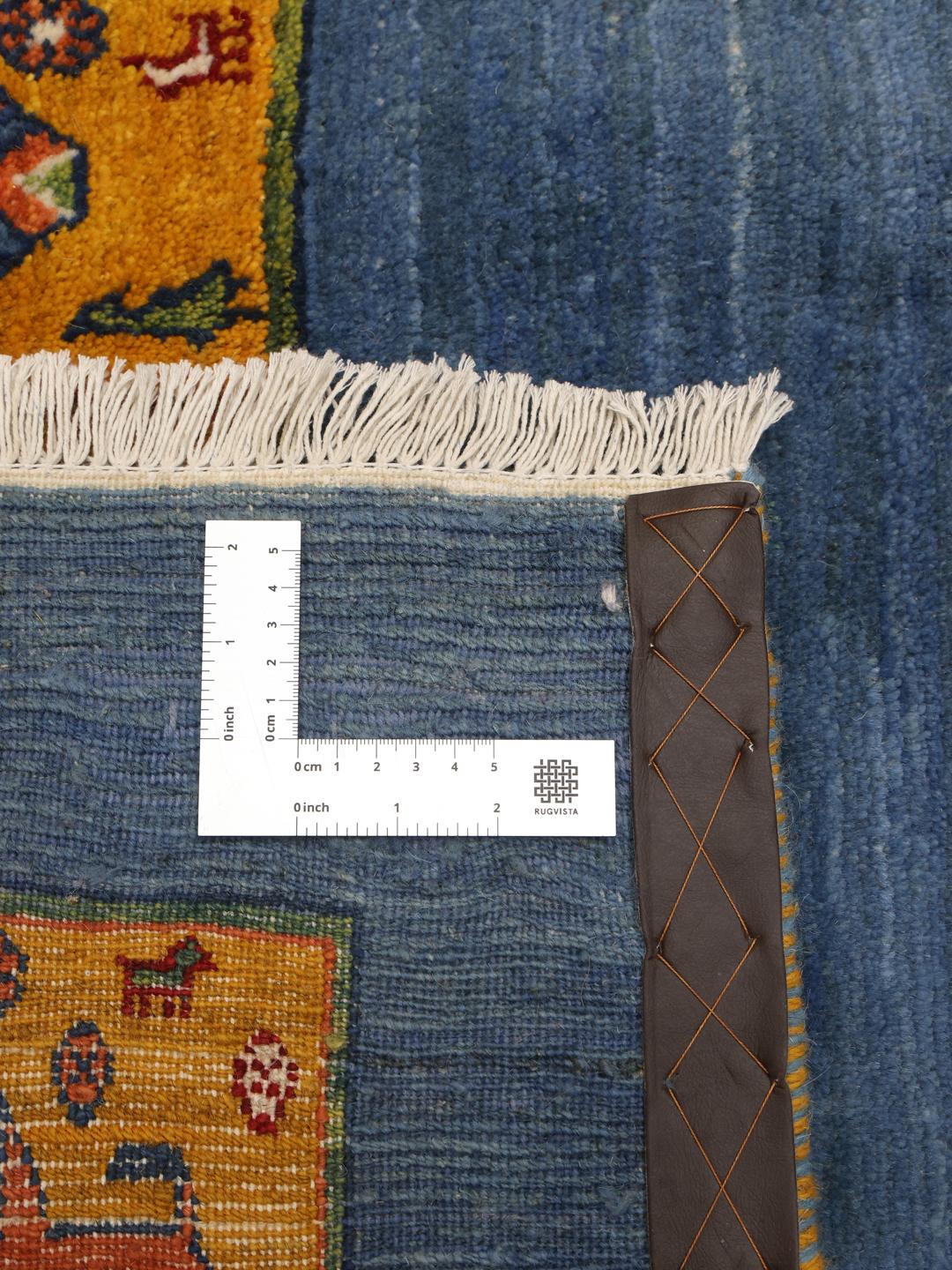
Signature design elements in Loribaft rugs typically include a simplified, bold aesthetic compared to more intricate styles. You will often see repeating geometric motifs, stylized flora, and animal figures that carry deep symbolic meaning within the tribe. This specific piece stands out for its deep blue field and the highly detailed, narrative-driven yellow border, which showcases a sophisticated departure from more minimalist tribal designs.
Owning a Loribaft rug is akin to acquiring a piece of living history. These rugs are highly valued by collectors not only for their durability and the quality of their Wool but for the human connection they represent. They are a testament to a craft that has survived through centuries of migration and cultural change, representing a level of skill and artistic freedom that is increasingly rare in the modern world.