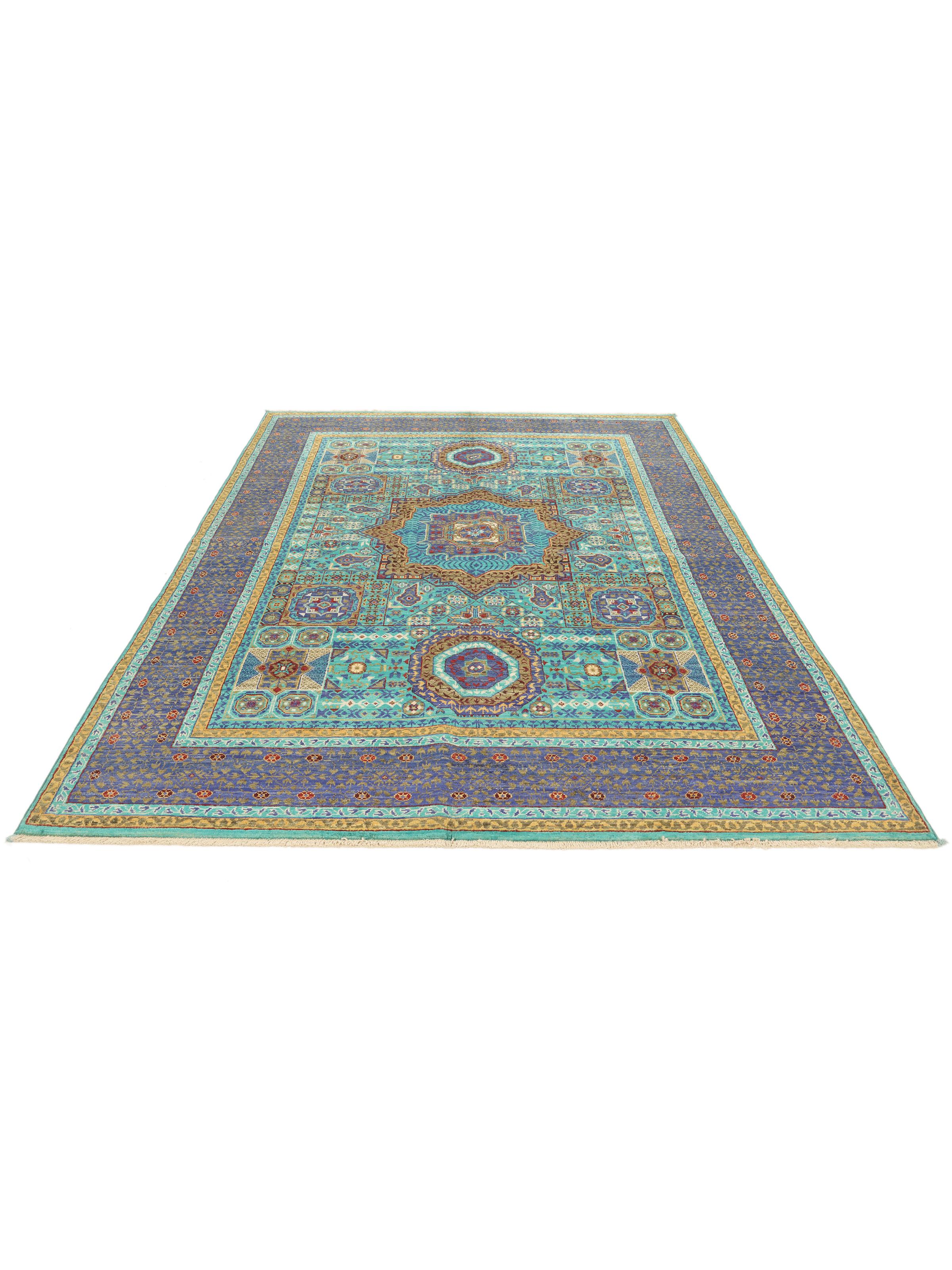
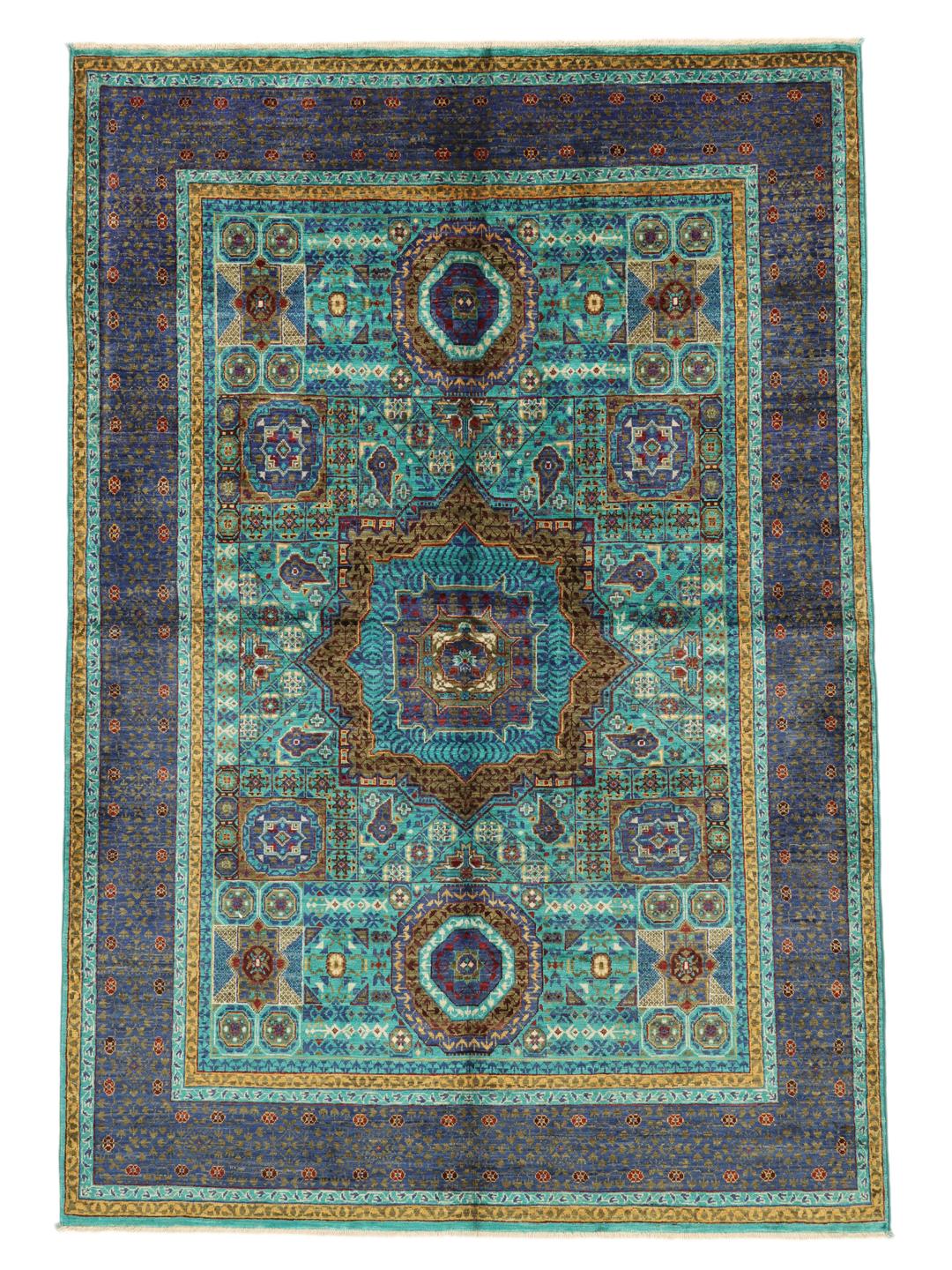
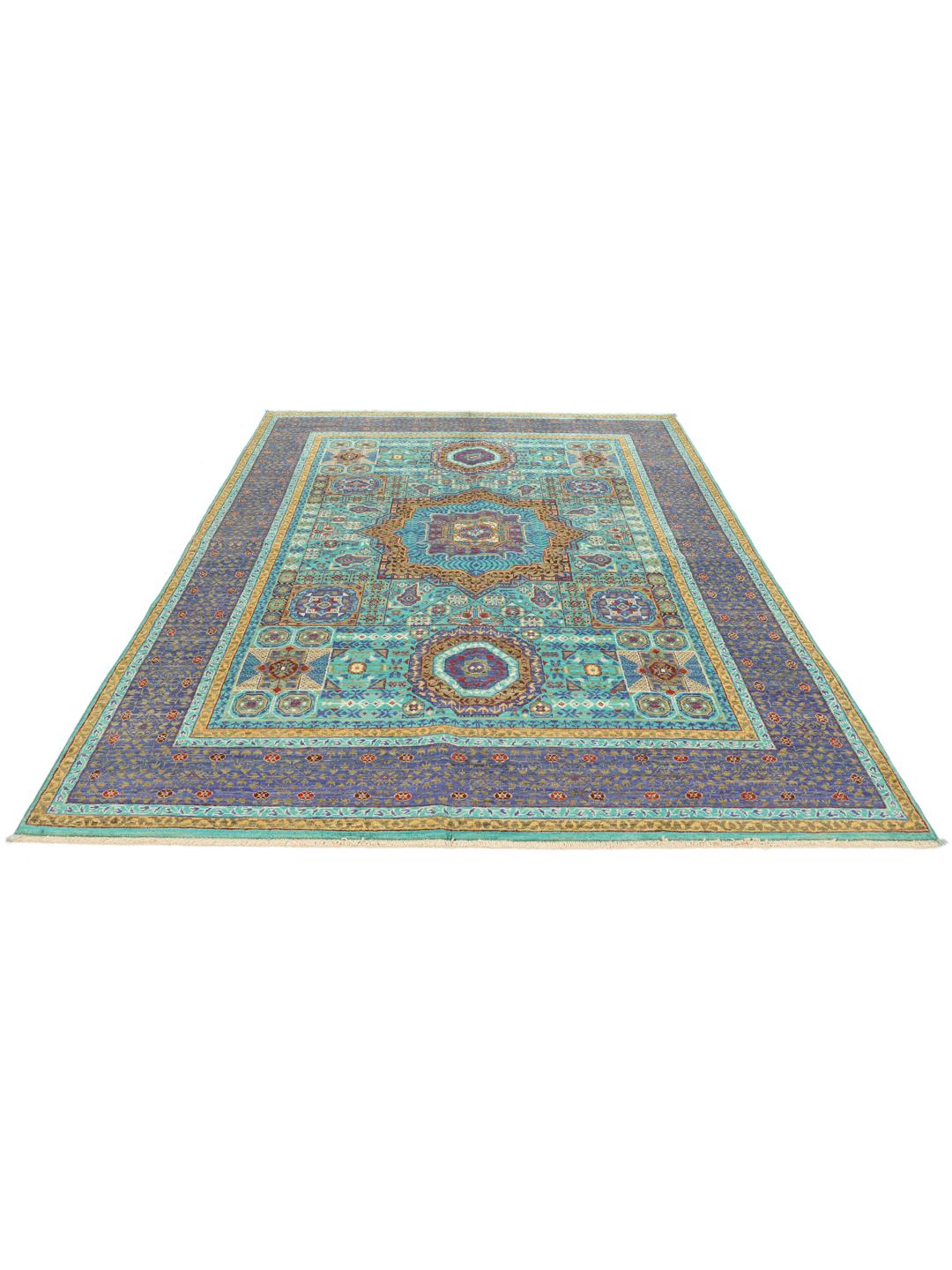
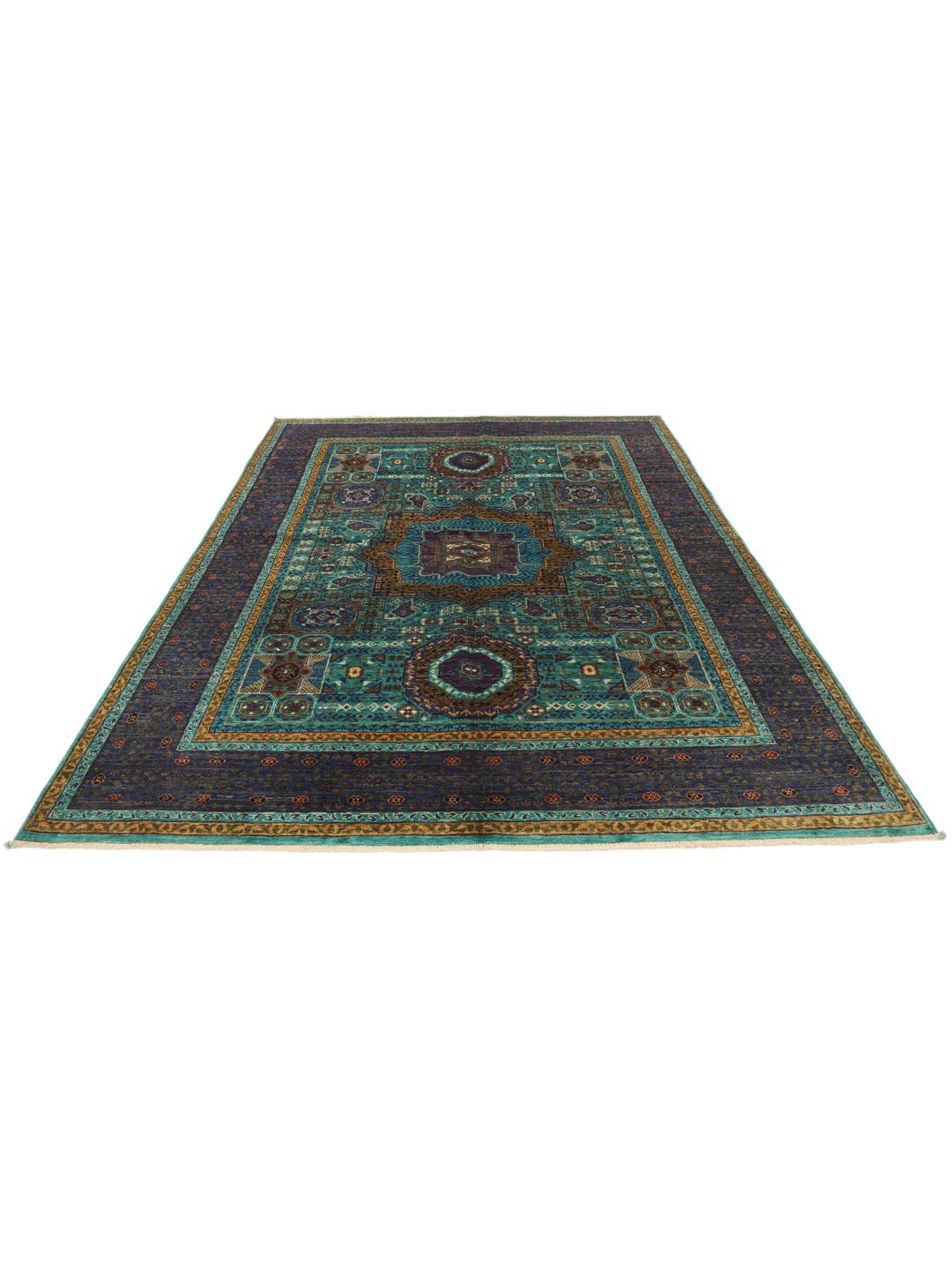
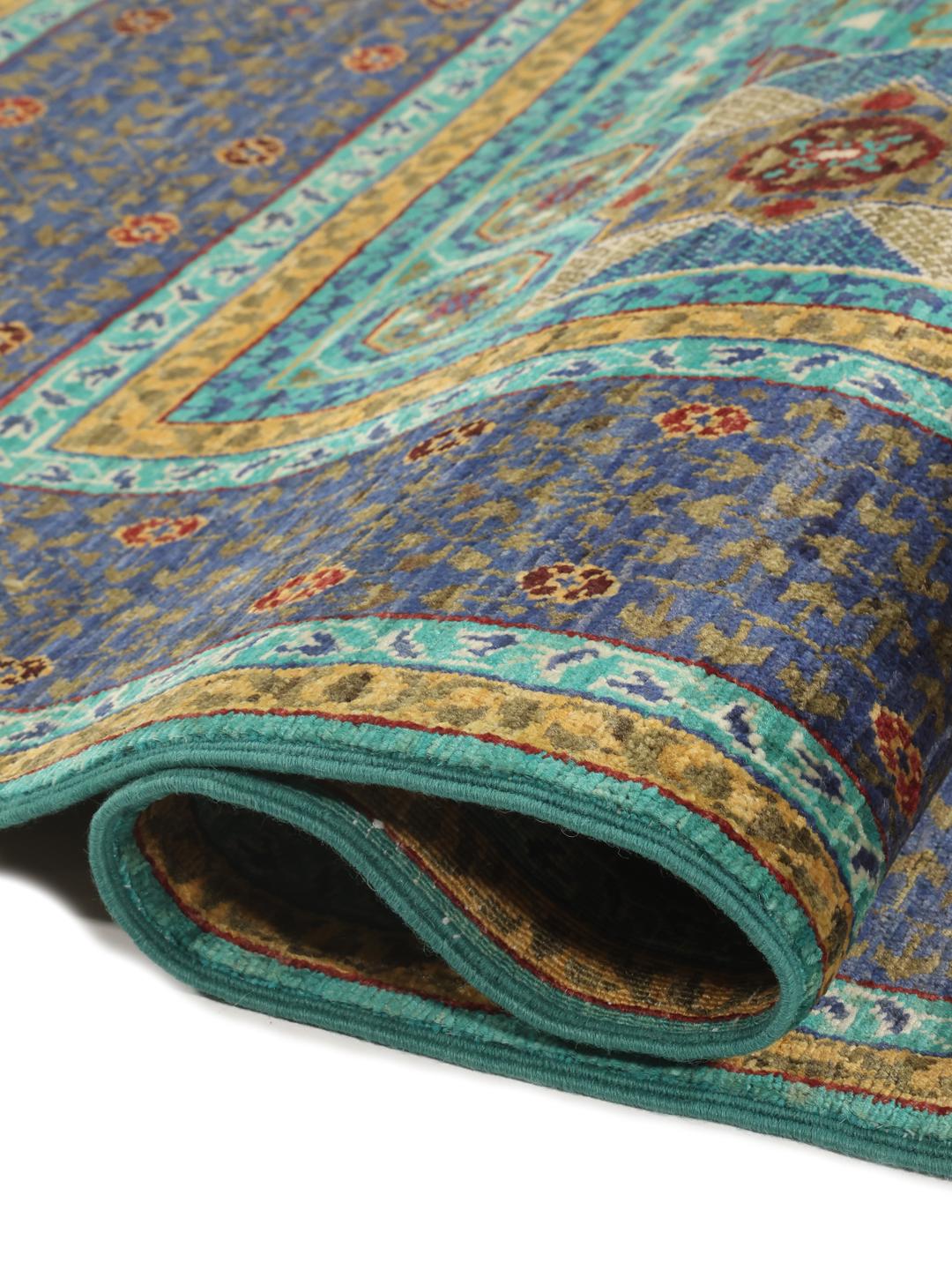
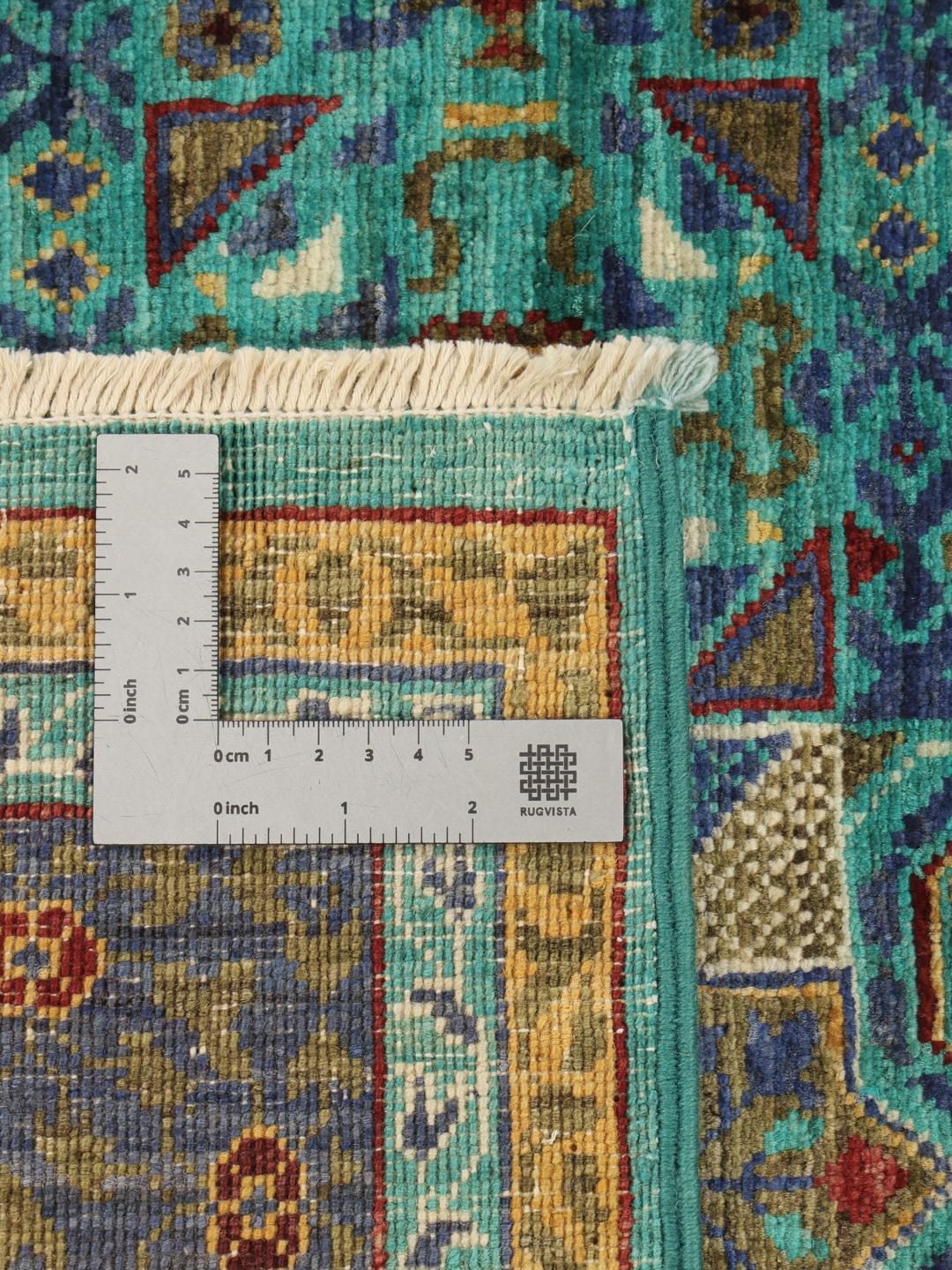
The Mamluk style of rug weaving is deeply rooted in the historical prestige of the Mamluk Sultanate, which ruled over Egypt and the Levant from the 13th to the 16th centuries. These rugs are celebrated for their sophisticated geometric patterns, often featuring complex medallions and star motifs that reflect the mathematical precision and artistic refinement of that golden era of Islamic art.
While the style originated in the Middle East, its legacy has been kept alive and evolved by master weavers in Afghanistan. Today, these rugs represent a fusion of ancient design principles and modern craftsmanship. The term Mamluk refers specifically to this unique aesthetic, characterised by its formal, orderly layout and the use of a distinct, often jewel-toned colour palette that remains unmistakable to those familiar with textile history.
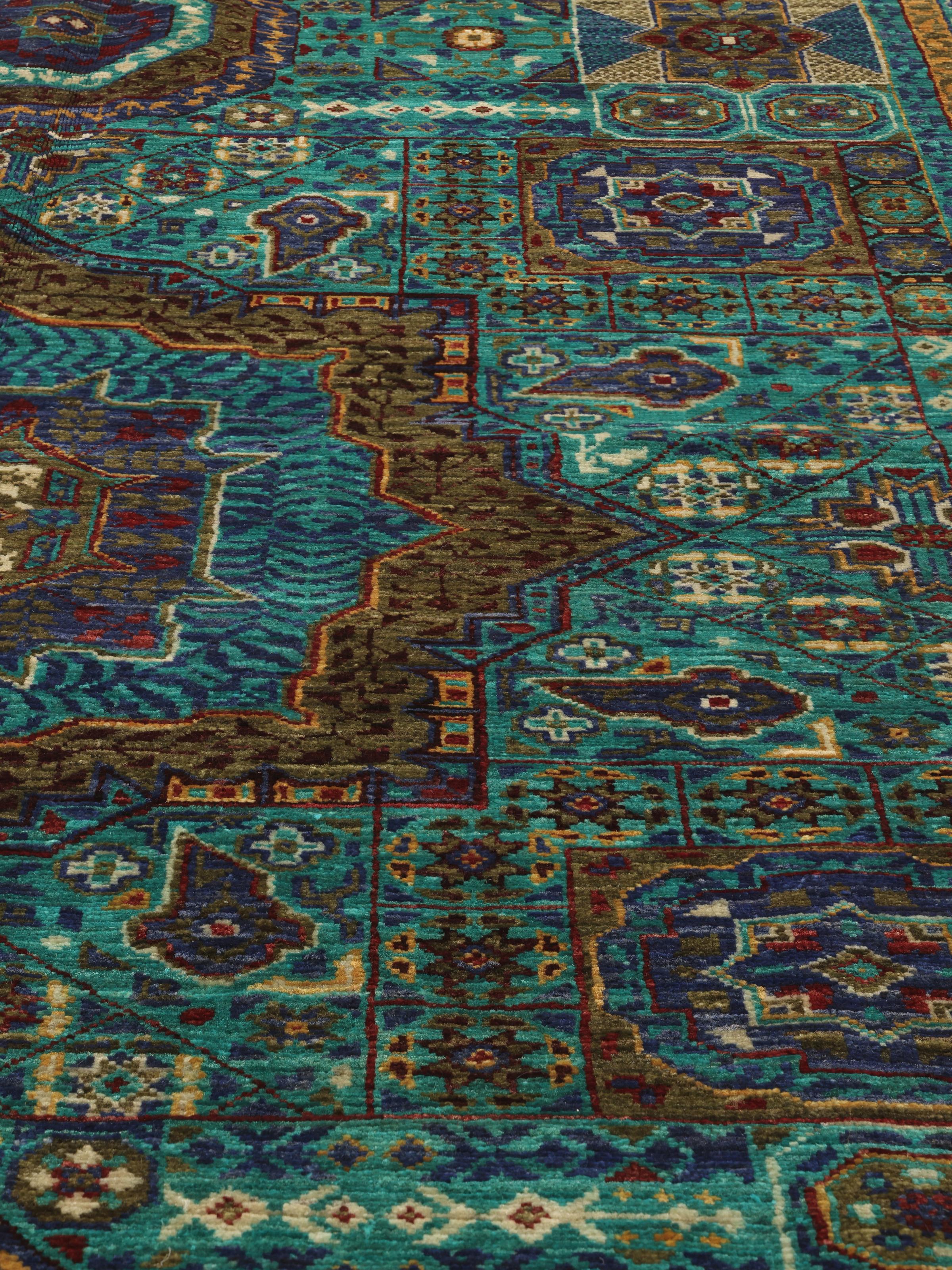
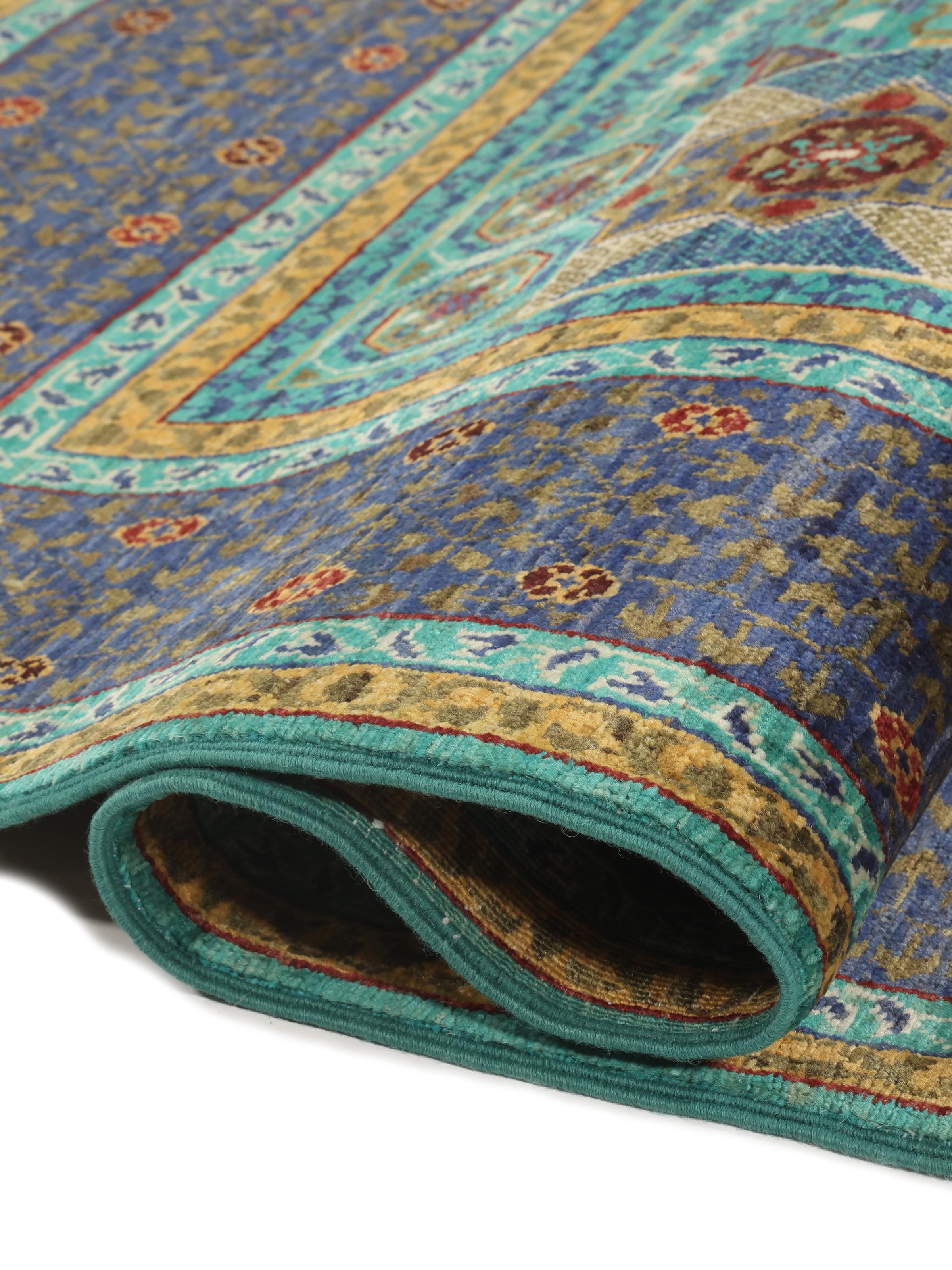
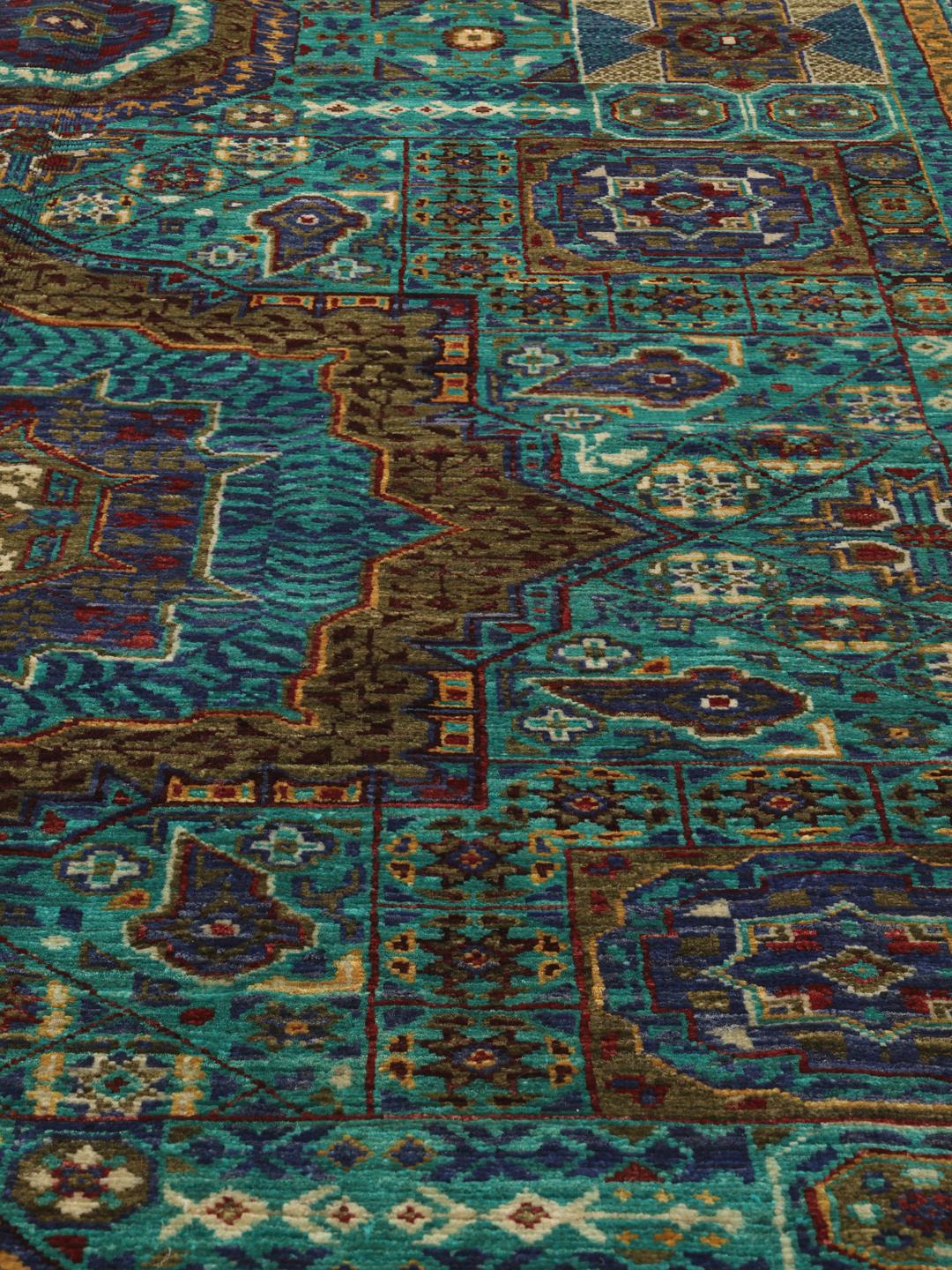
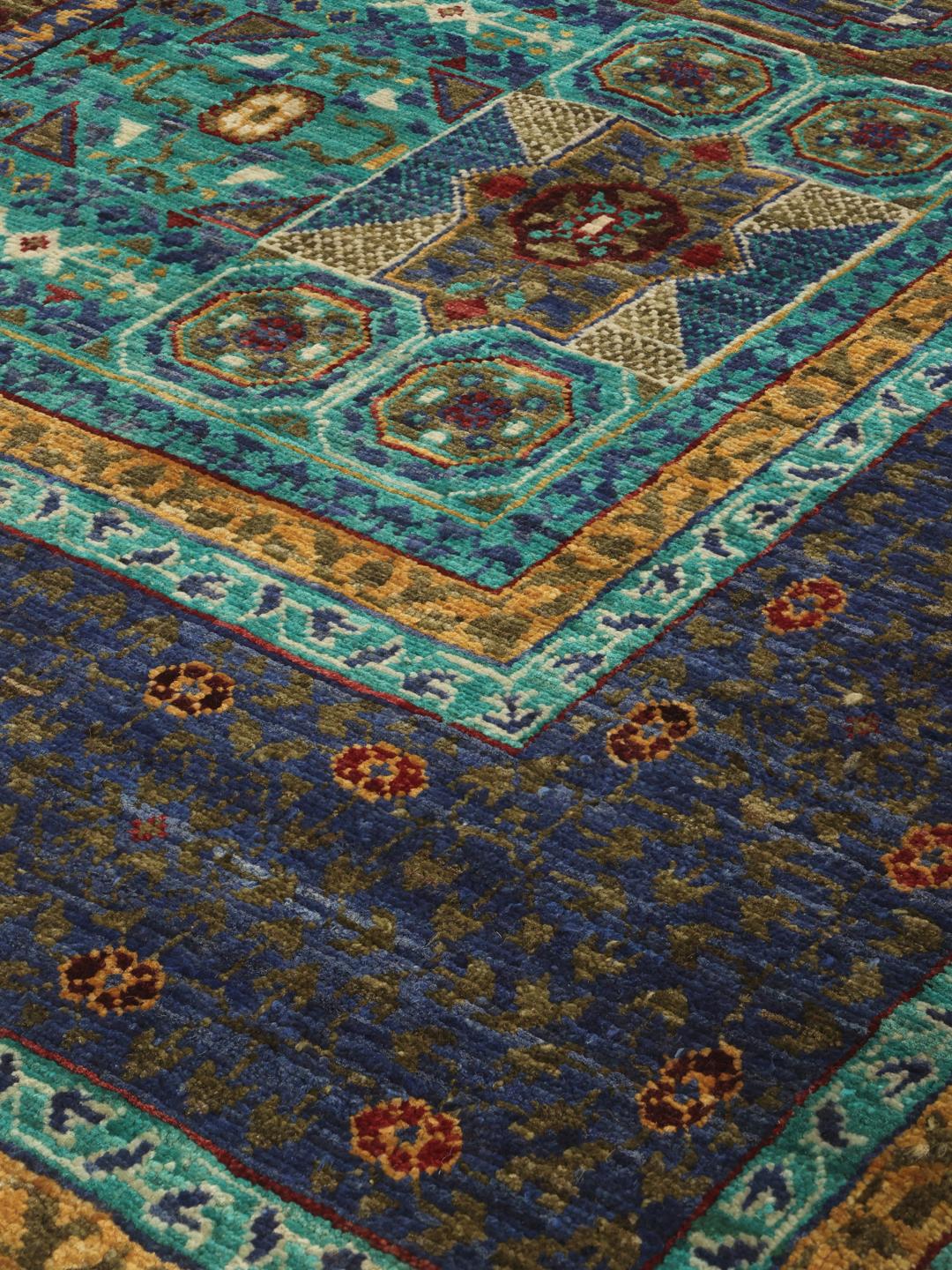
The signature design of a Mamluk rug typically centres around a large, multifaceted medallion surrounded by intricate borders filled with smaller geometric ornaments. This rug follows this tradition, utilising a harmonious interplay of shapes that creates a balanced, rhythmic visual effect. The use of vibrant blue and teal shades is a hallmark of this tradition, evoking the rich mosaics and architectural details found in historical monuments of the region.
Owning a Mamluk rug is more than just a decor choice; it is an acquisition of a tradition that has spanned centuries. These rugs are highly valued by collectors and enthusiasts for their ability to bridge the gap between historical grandeur and contemporary living. By preserving these traditional designs, the weavers honour a cultural narrative that values skill, patience, and the pursuit of aesthetic perfection.