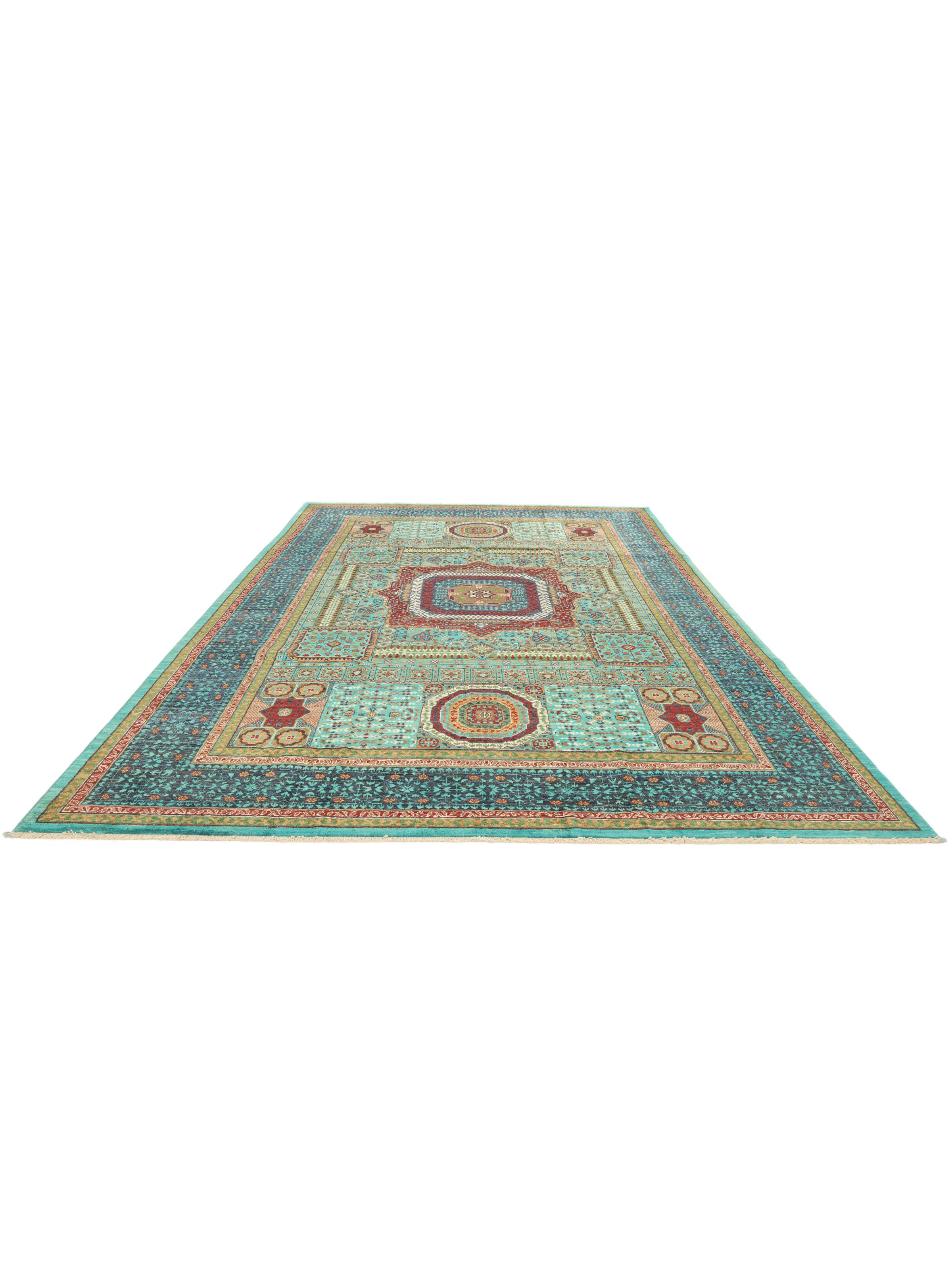
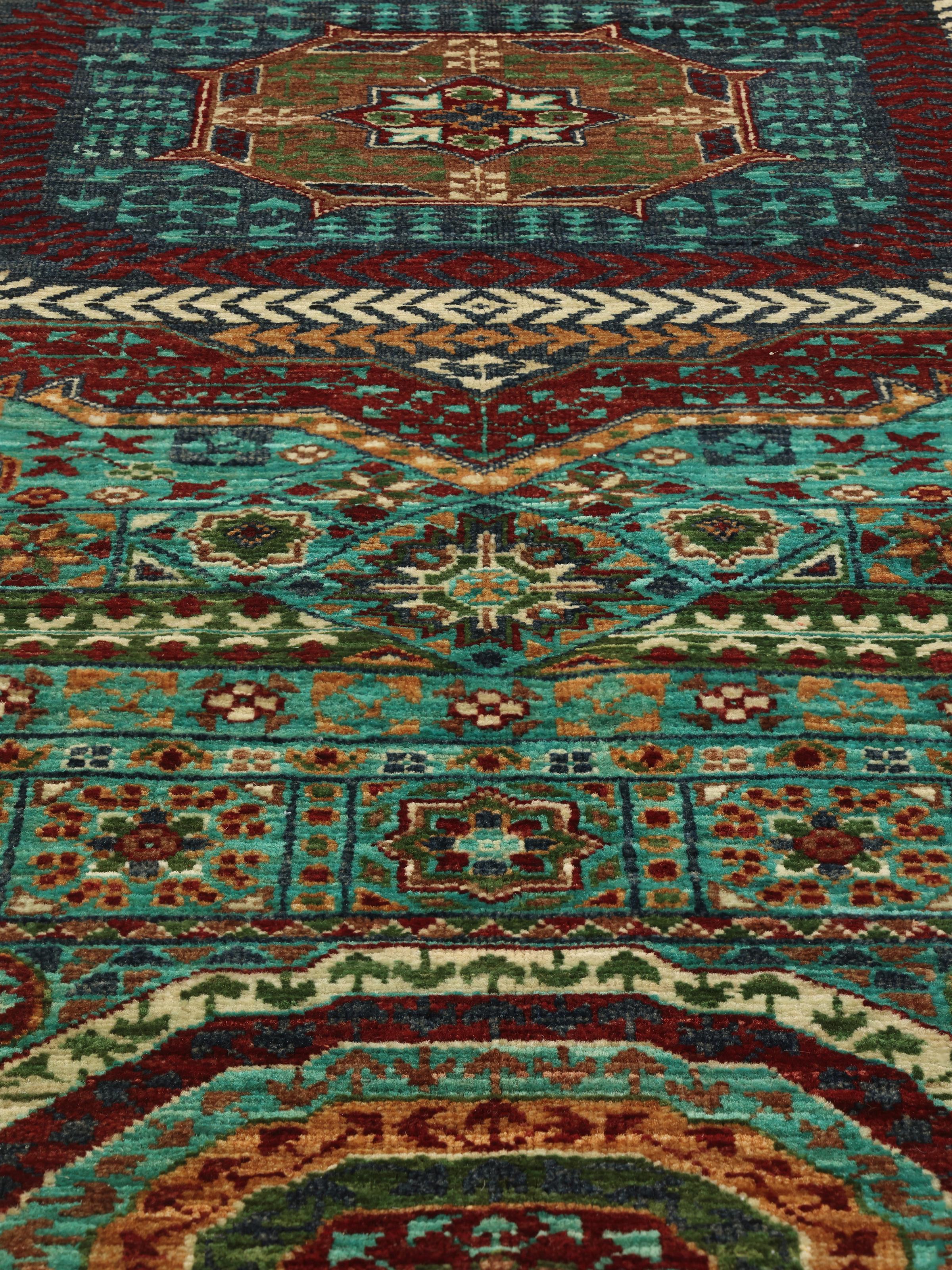
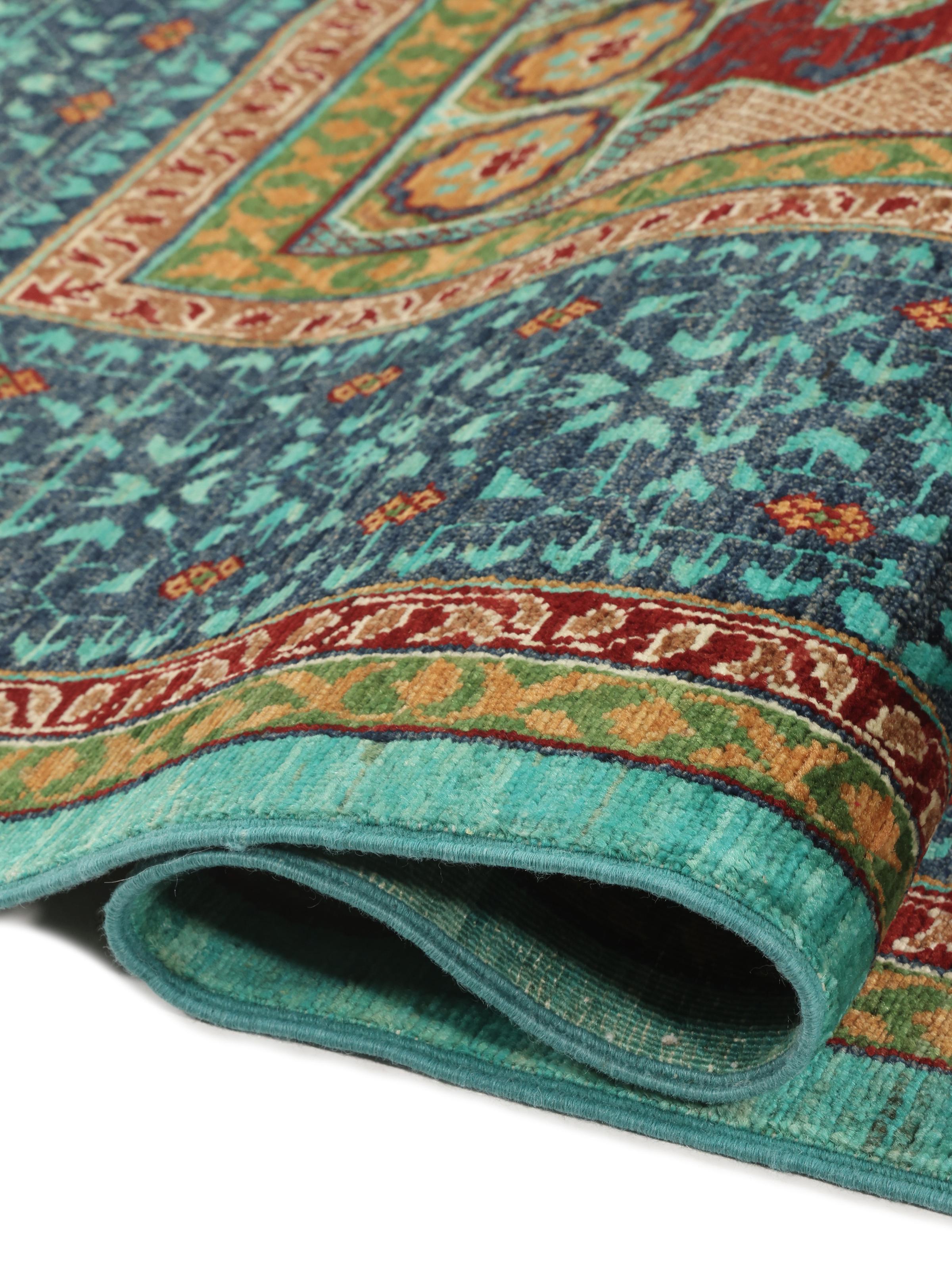
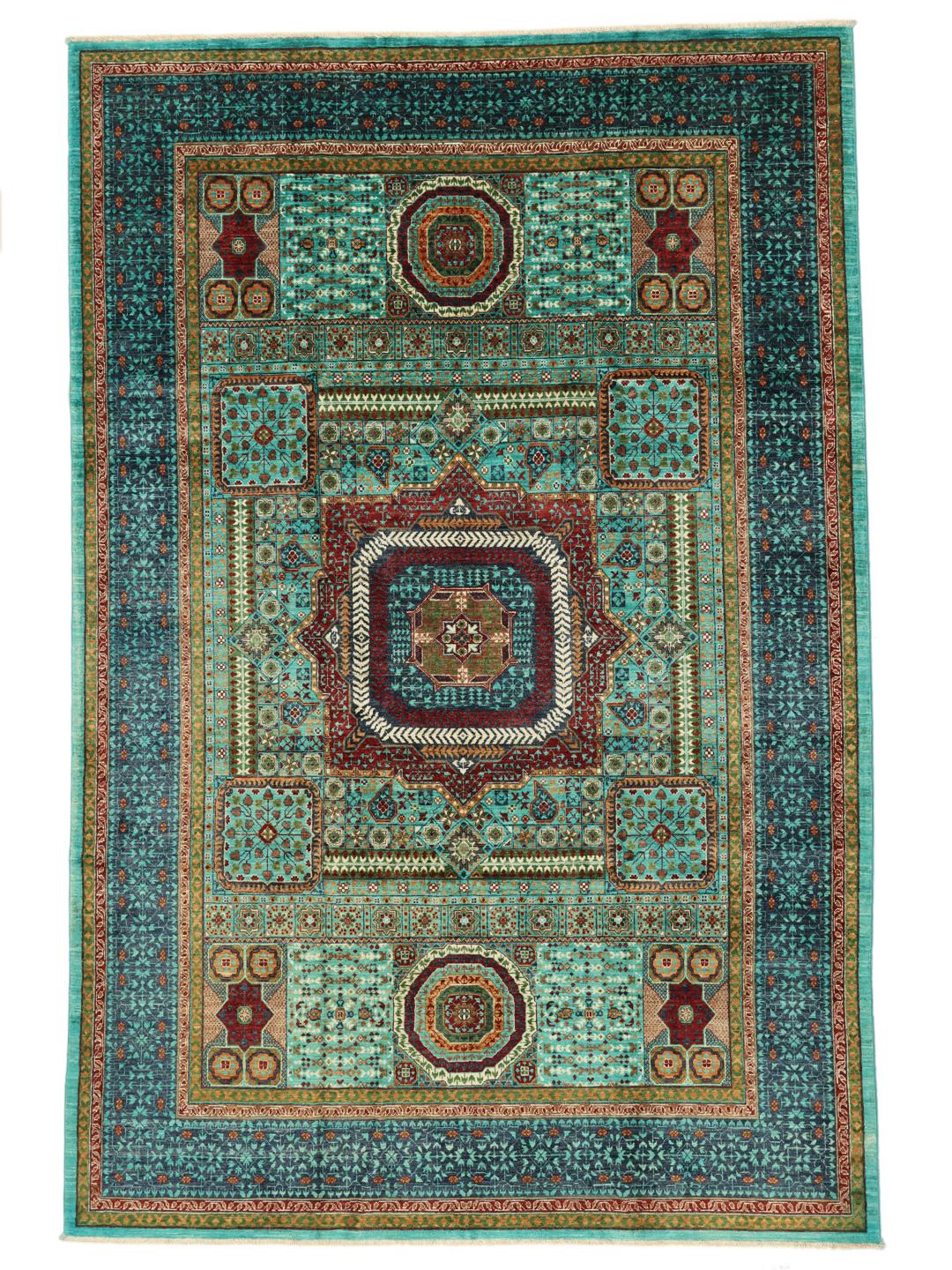
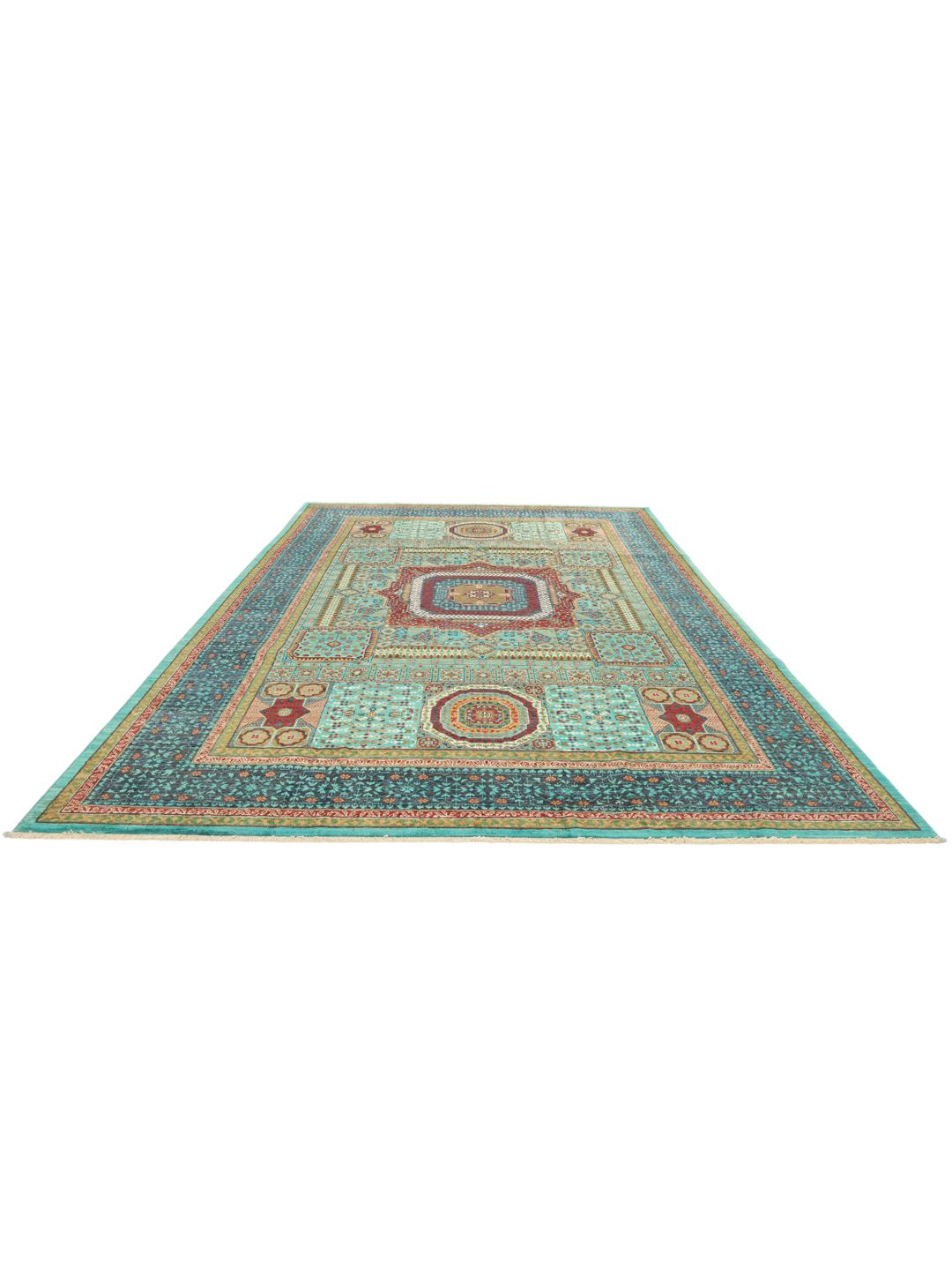
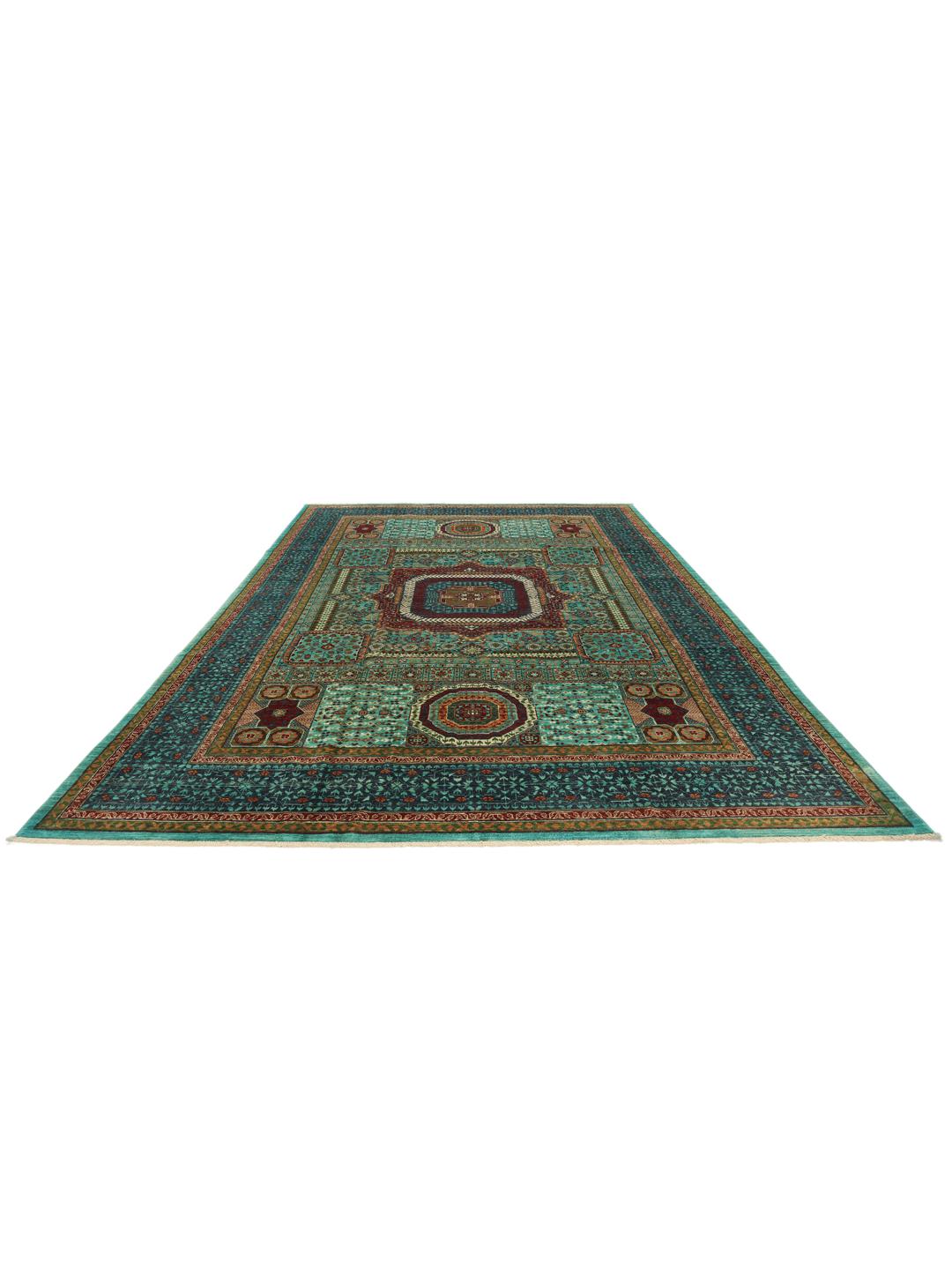
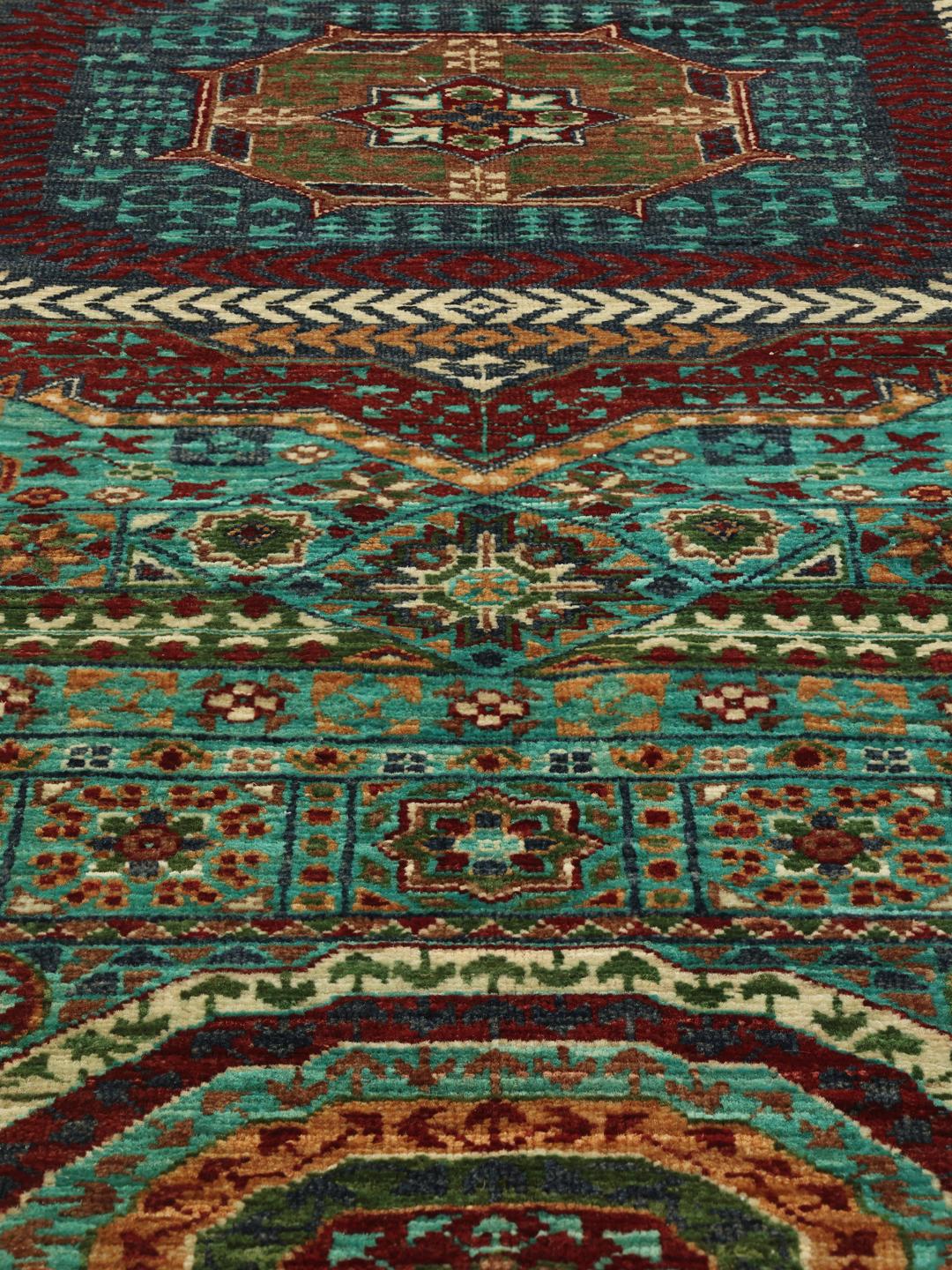
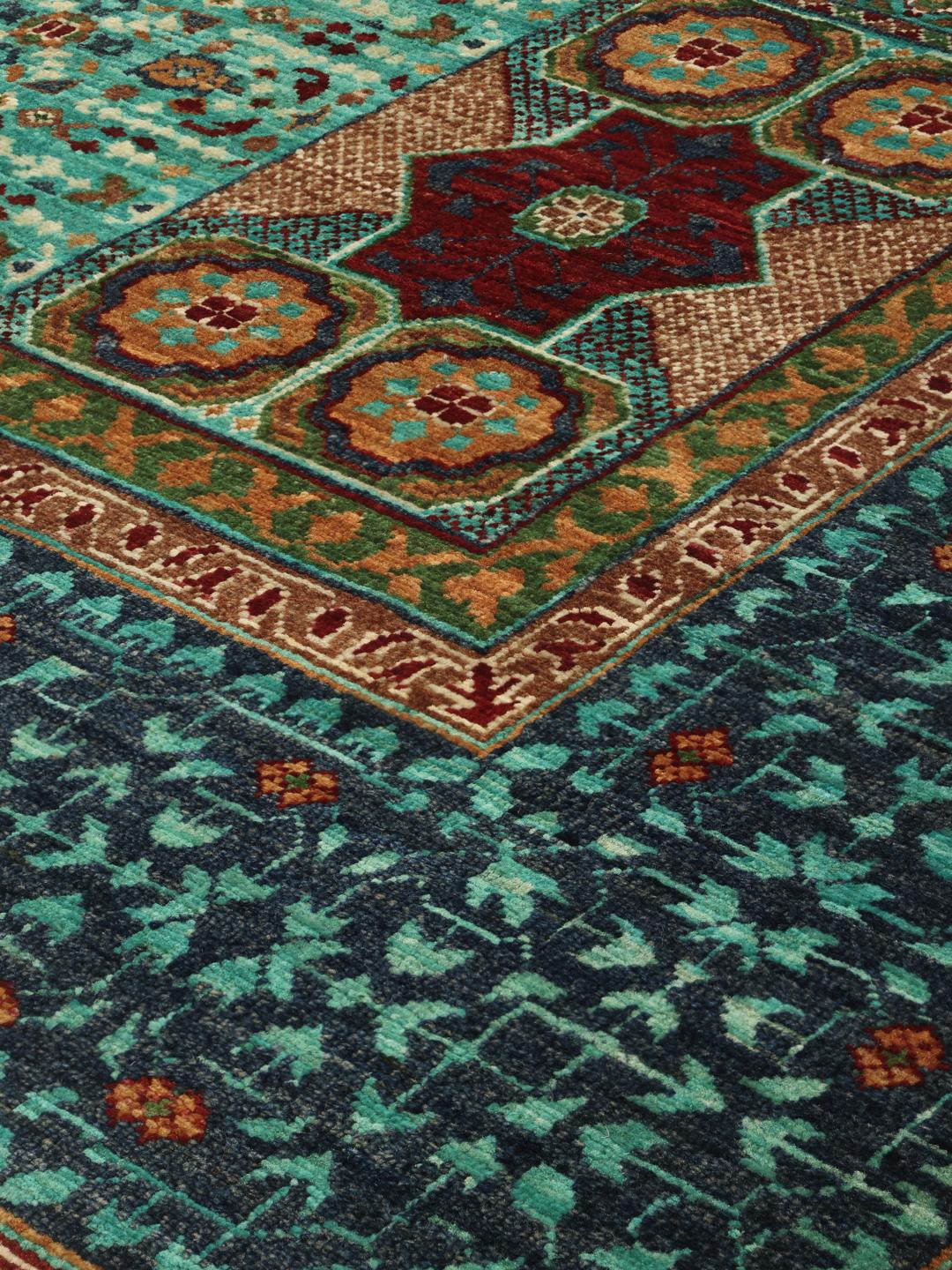
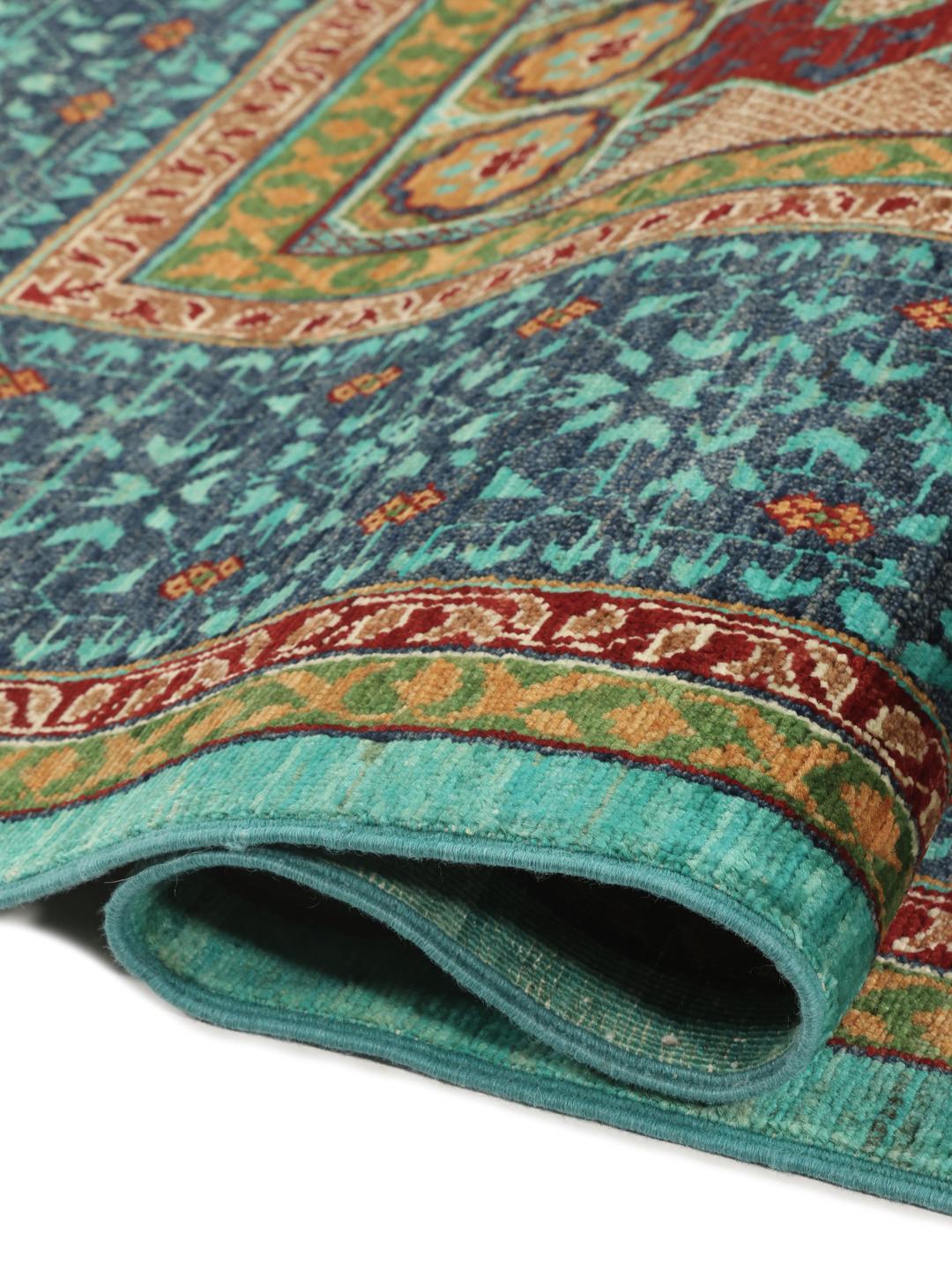
Mamluk rugs are celebrated for their deep historical roots, originating from a tradition that flourished under the Mamluk Sultanate in Egypt during the 15th and 16th centuries. These rugs are renowned for their sophisticated geometric language, which often features large, centralised medallions and complex, interlocking star and polygon patterns that reflect the mathematical precision of Islamic art.
The distinctive aesthetic of the Mamluk style is characterised by a unique approach to colour and composition. While traditional examples often utilised a primary palette of red, blue, and green, the designs are famous for their ability to create an illusion of depth, where smaller geometric elements seem to float within larger, more expansive fields.
The skill required to execute a Mamluk design is considerable, as the patterns demand a high degree of technical accuracy to maintain the integrity of the interlacing motifs. These rugs are often considered collector's items because they represent a pinnacle of classical design, bridging the gap between historical textile art and contemporary interior sensibilities.
Owning a Mamluk rug today means participating in a centuries-old dialogue about beauty and order. These pieces are highly valued not just for their aesthetic impact, but for the immense skill and cultural history they represent, making them a significant addition to any collection of fine, hand-knotted textiles.