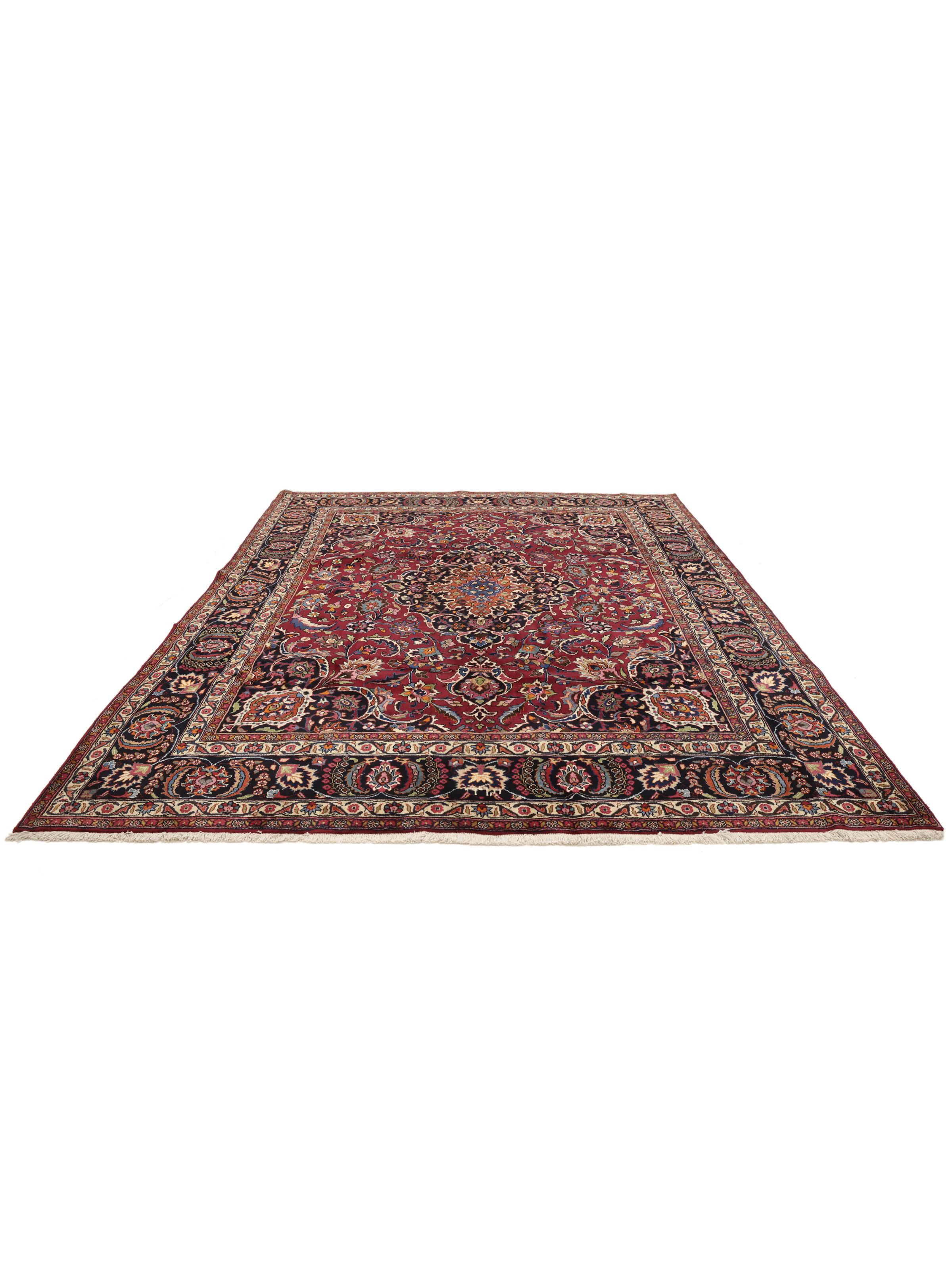
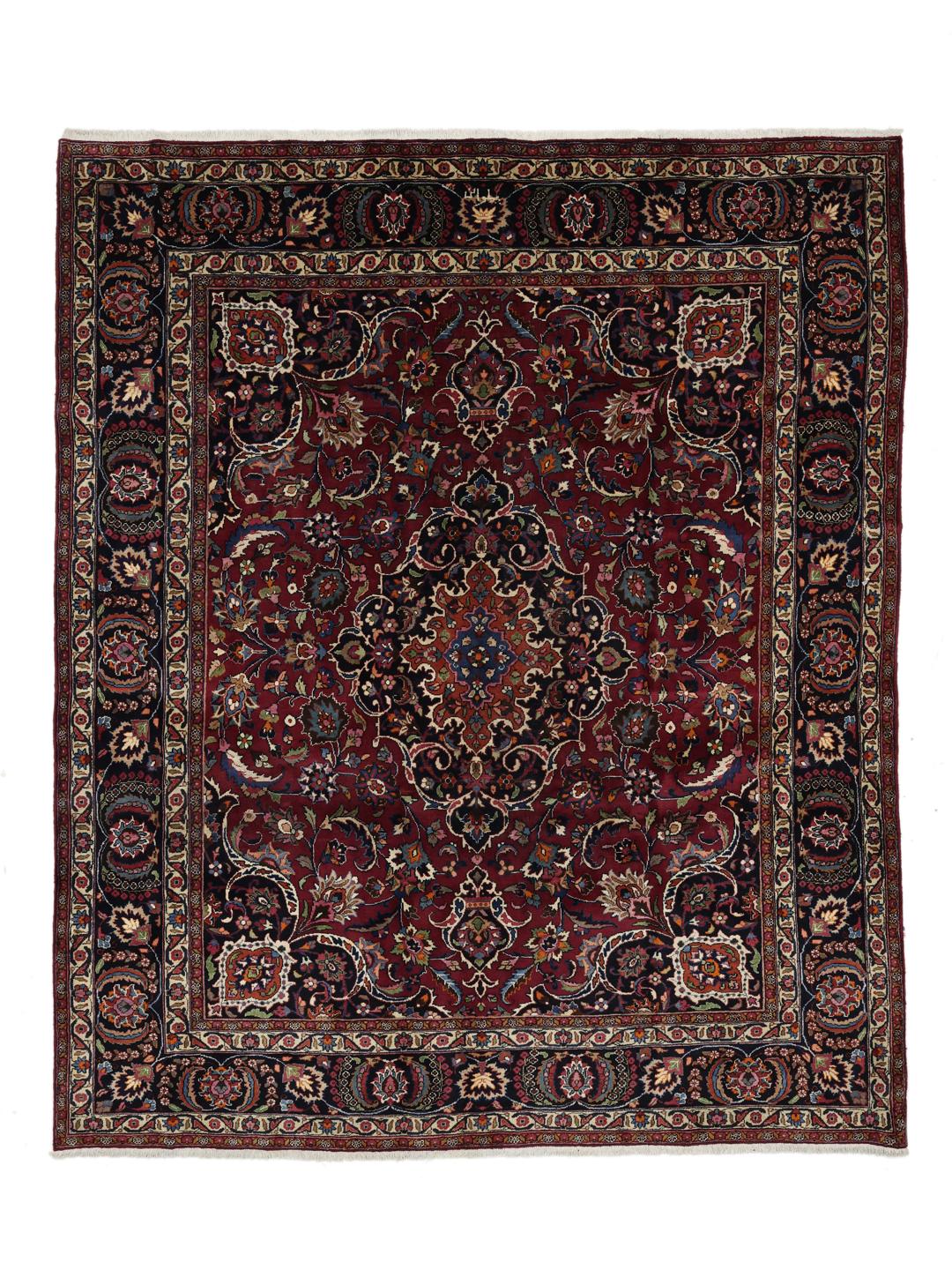
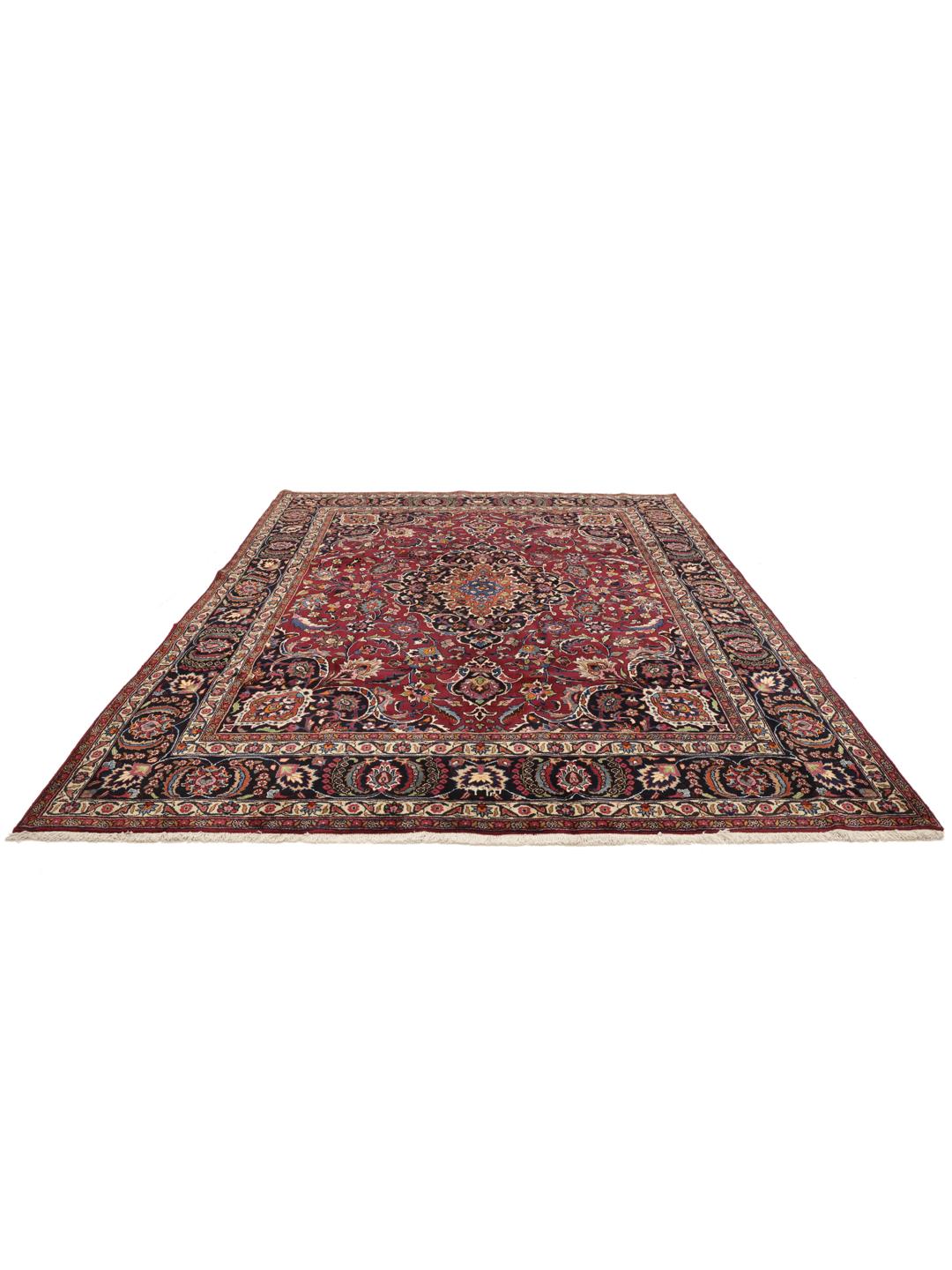
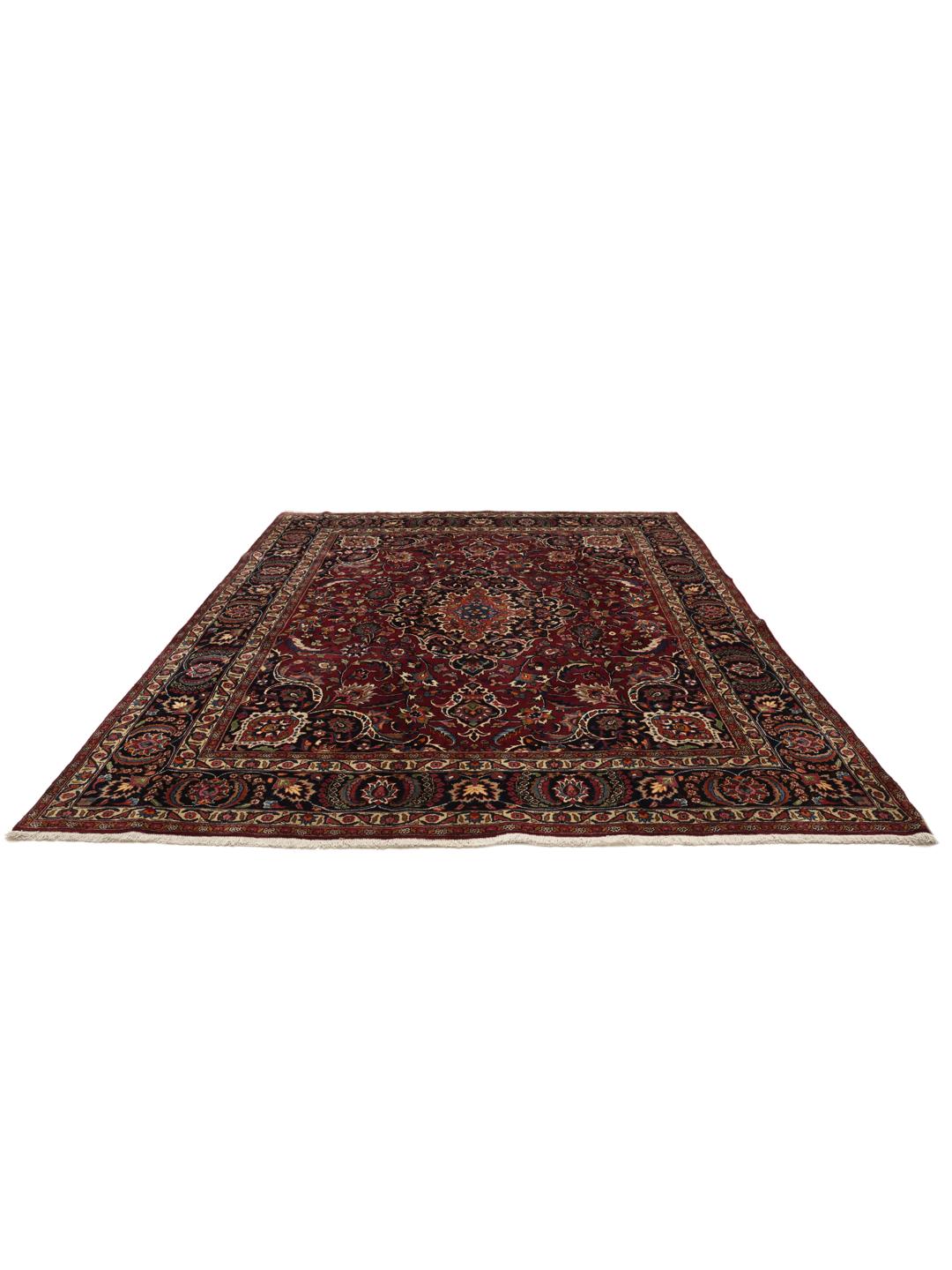
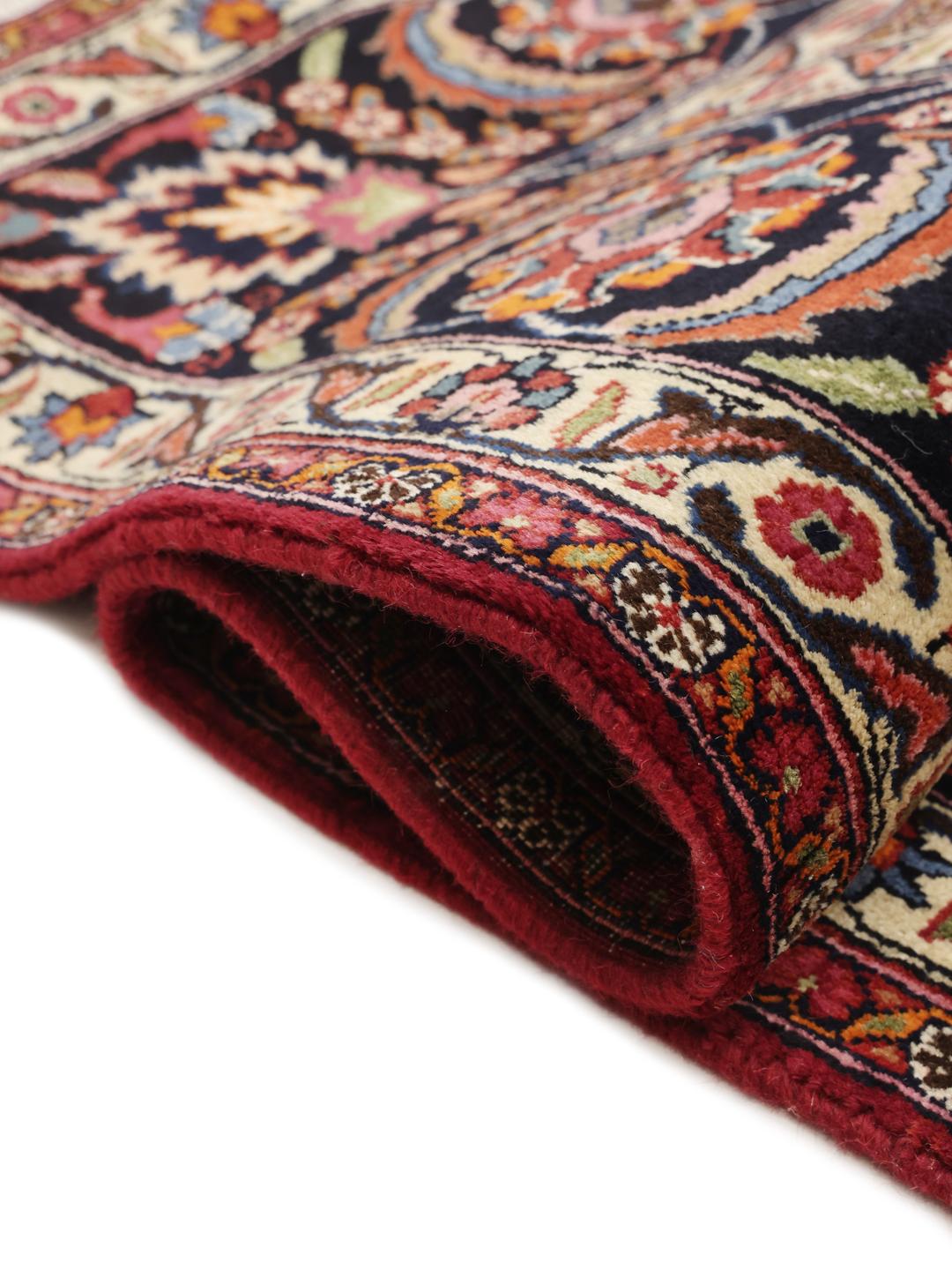
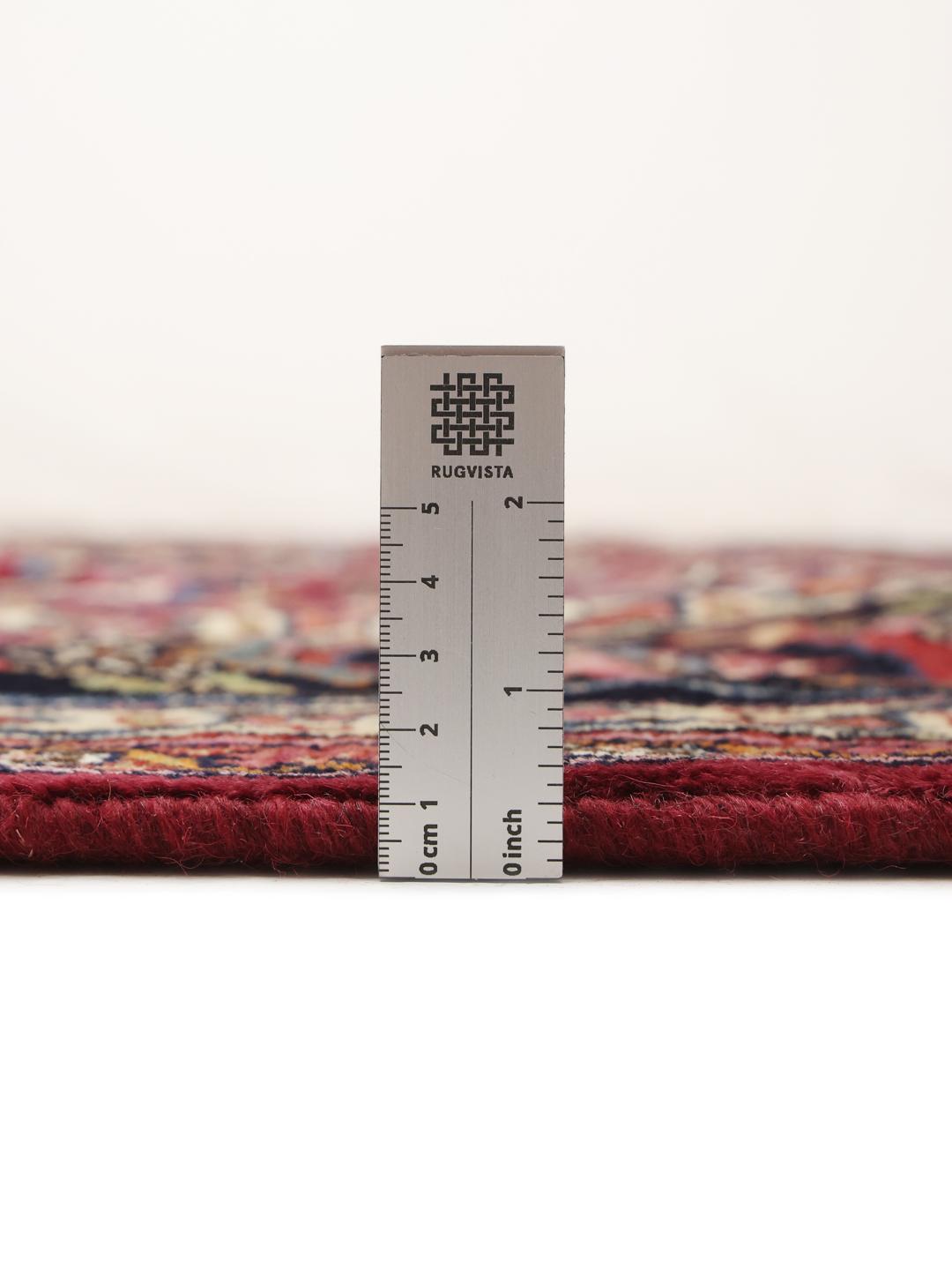
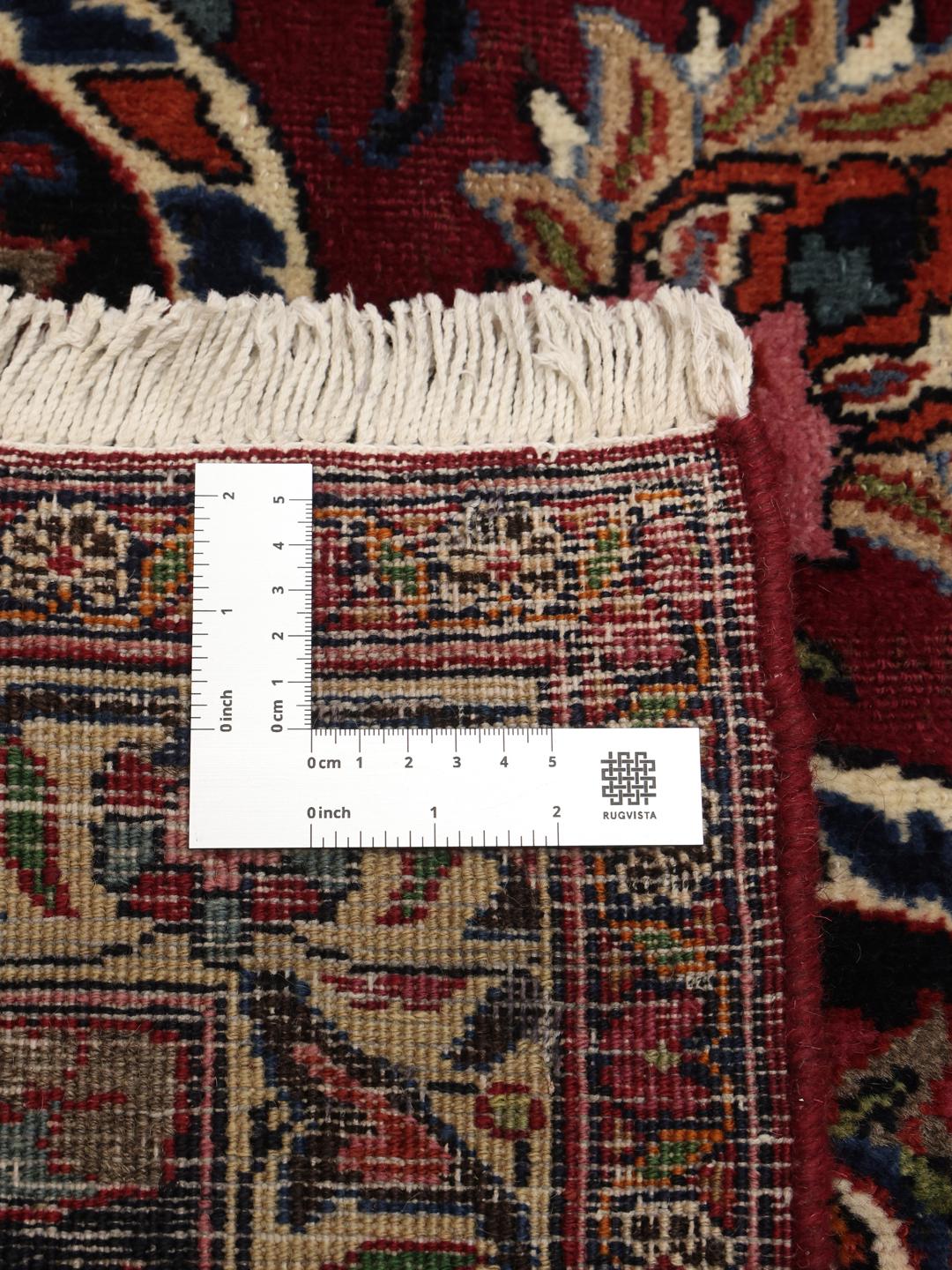
Mashad rugs originate from the city of Mashad, one of the most important centres for weaving in the eastern part of the Middle East. Historically, this city has been a hub for high-quality carpet production, drawing on a tradition that spans several centuries and involves some of the most skilled artisans in the region. The rugs produced here are often characterised by their large scale and their ability to incorporate complex, curvilinear designs that showcase a high degree of technical mastery.
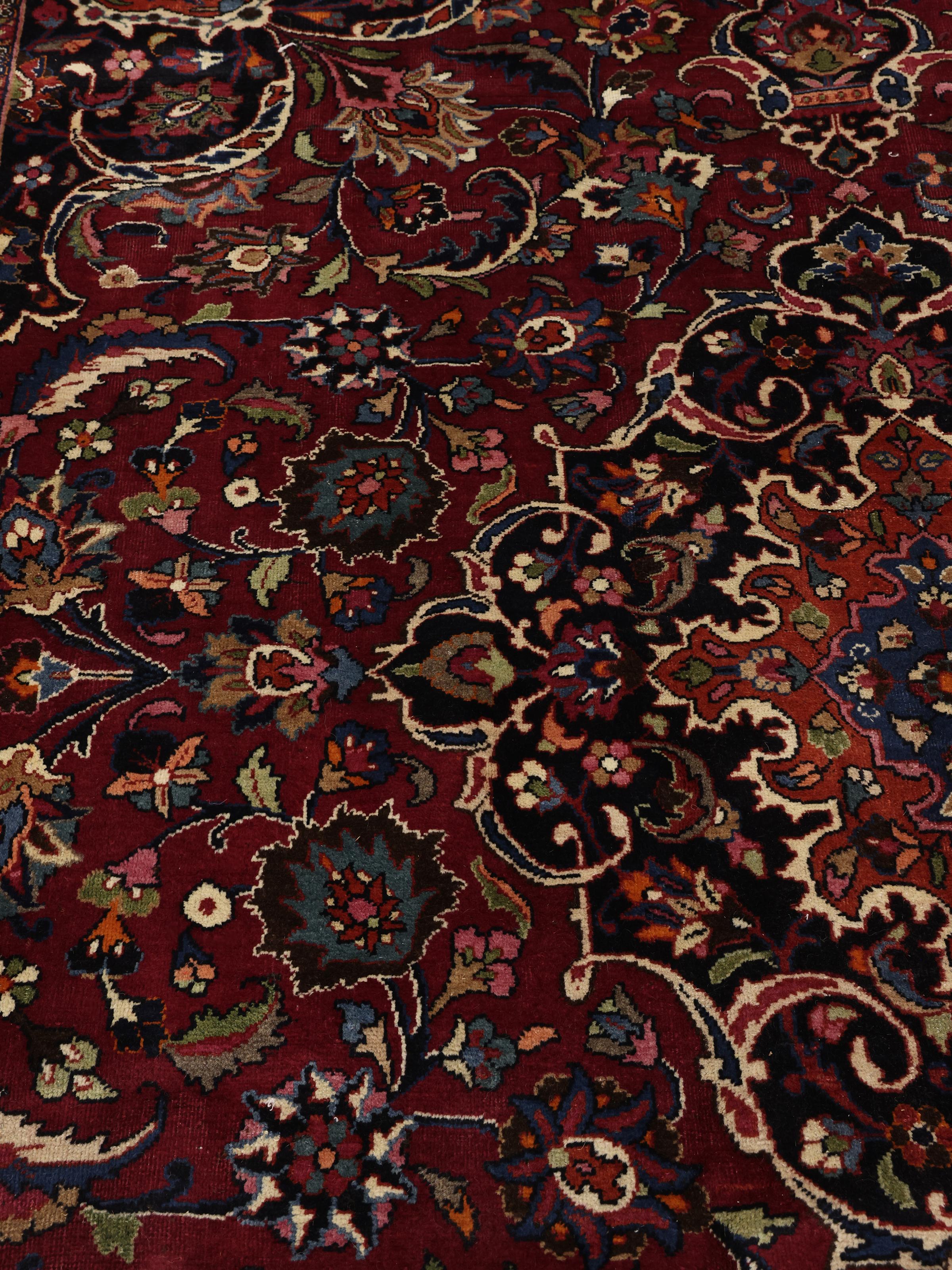
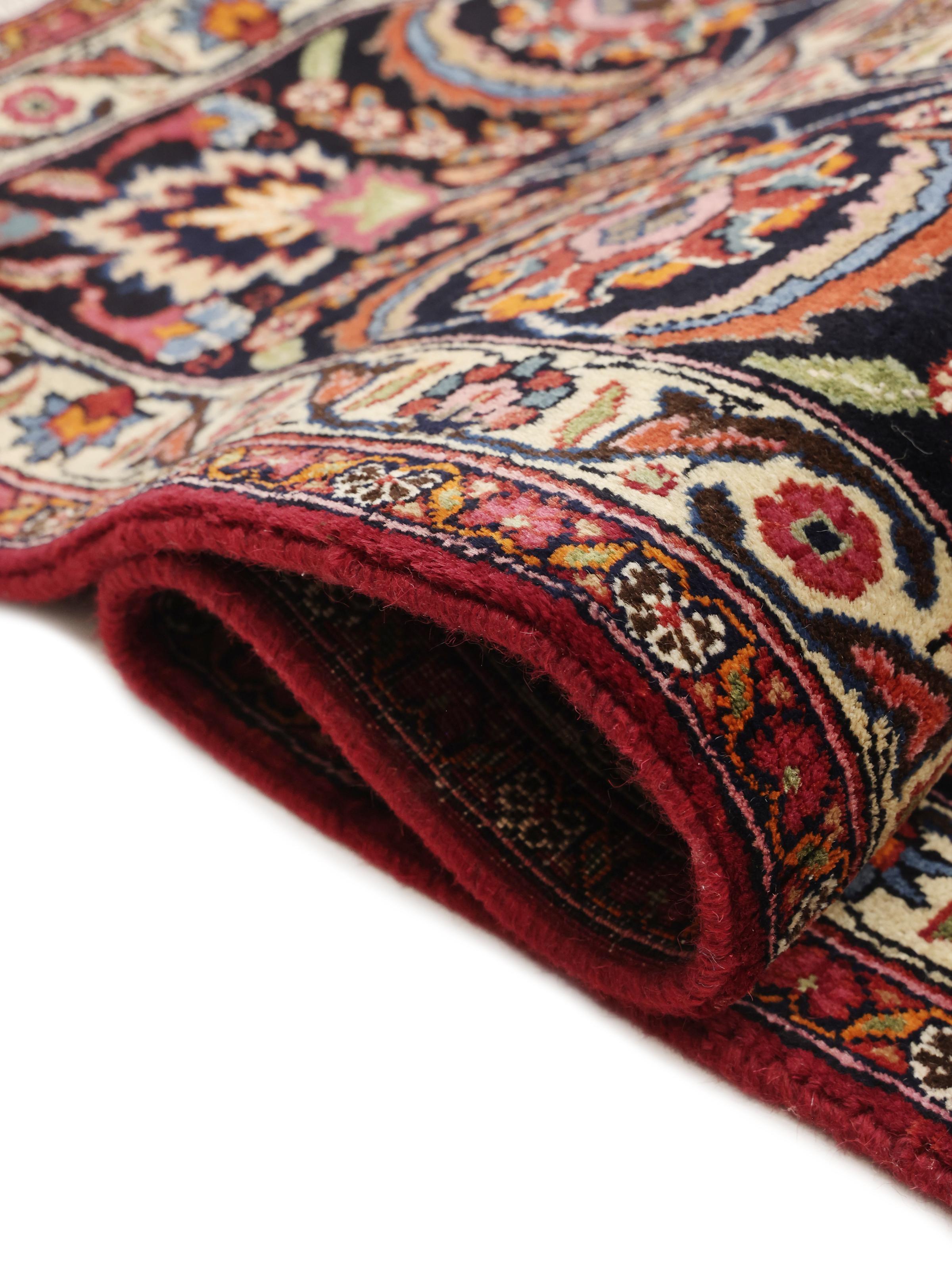
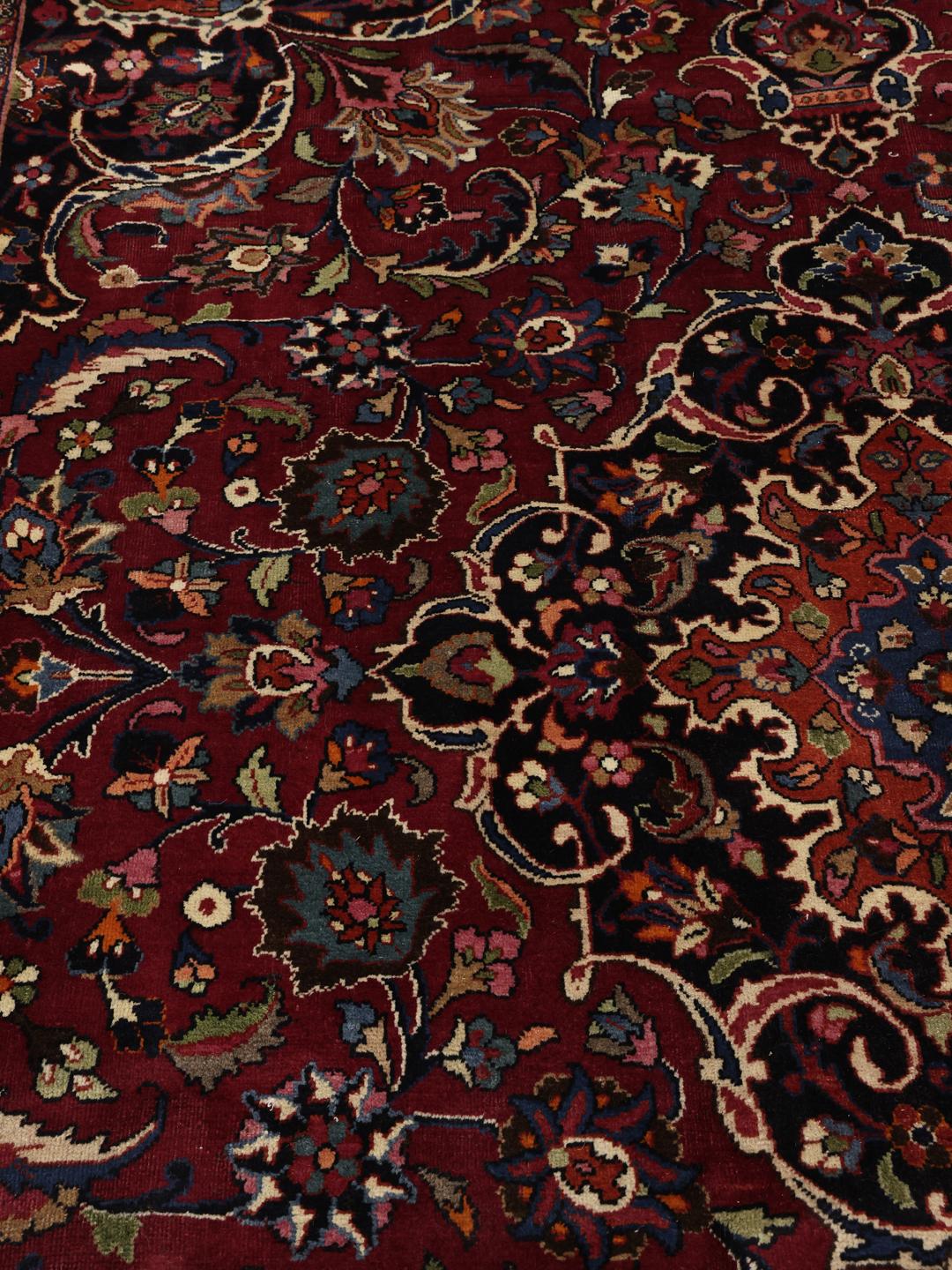
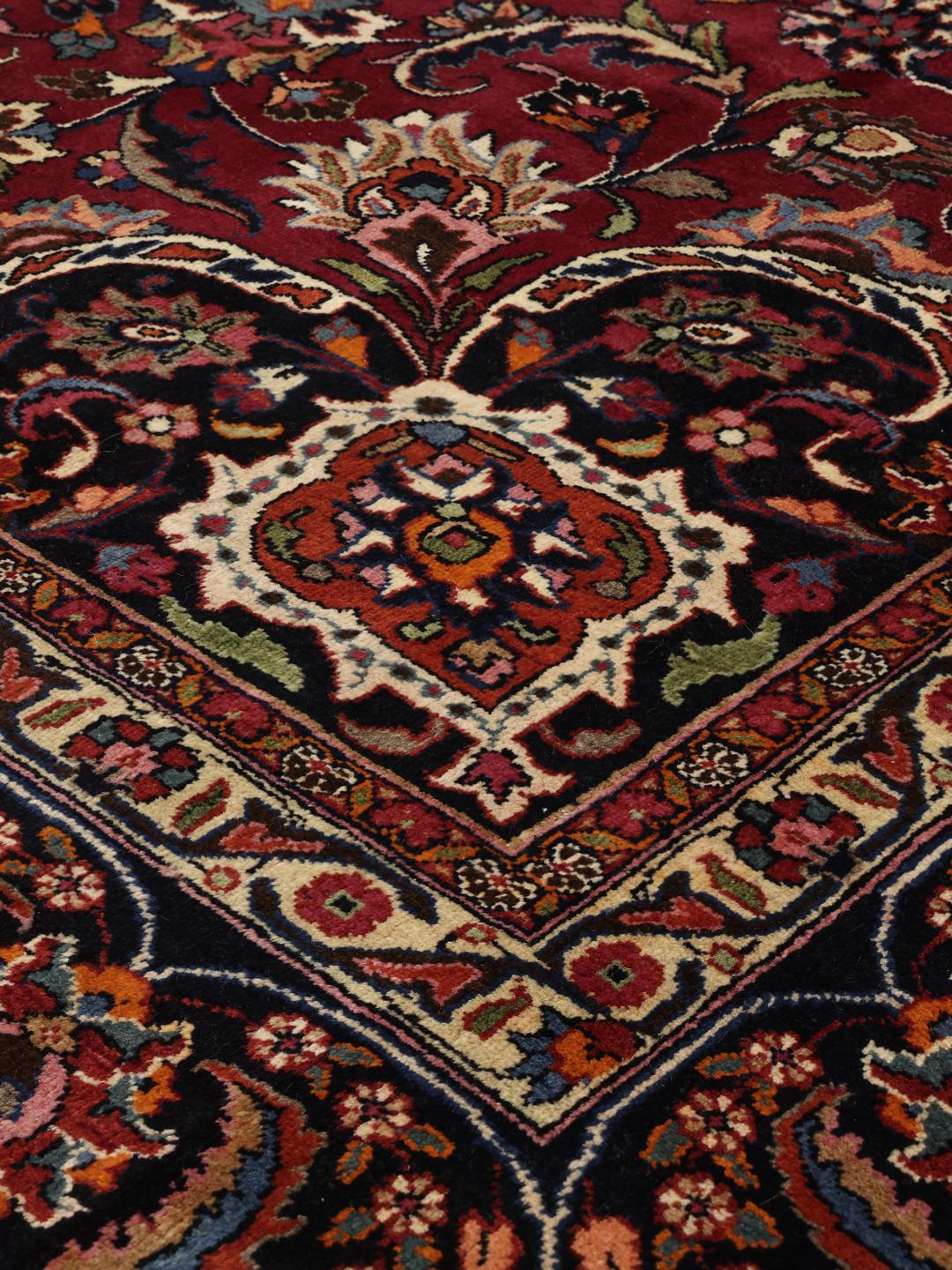
The term Mashad refers not only to the origin but also to a specific style of construction that emphasises durability and intricate detailing. These rugs are known for their use of high-quality wool, which is often sourced from local mountain flocks to ensure a resilient and lustrous pile. The technique involves a sophisticated approach to knotting, allowing for the fine rendering of the elaborate floral and medallion patterns that have become the hallmark of this weaving tradition.
Signature design elements for a Mashad rug typically include a large, prominent central medallion, often surrounded by 'Shah Abbasi' floral patterns, which are stylised, elegant depictions of blossoms and vines. The borders are usually broad and heavily decorated, providing a frame that complements the central field. The colour palette is famously deep and saturated, often dominated by rich reds and dark blues, which are achieved through traditional dyeing methods that have been refined over generations.
Collectors and enthusiasts value Mashad rugs for their blend of artistic ambition and practical longevity. Owning one of these rugs is considered a commitment to preserving a significant piece of Middle Eastern craft heritage. They are appreciated not just for their immediate visual impact, but for the skill and cultural narrative embedded in every square metre, making them a cornerstone of any collection focused on authentic, hand-crafted textiles.