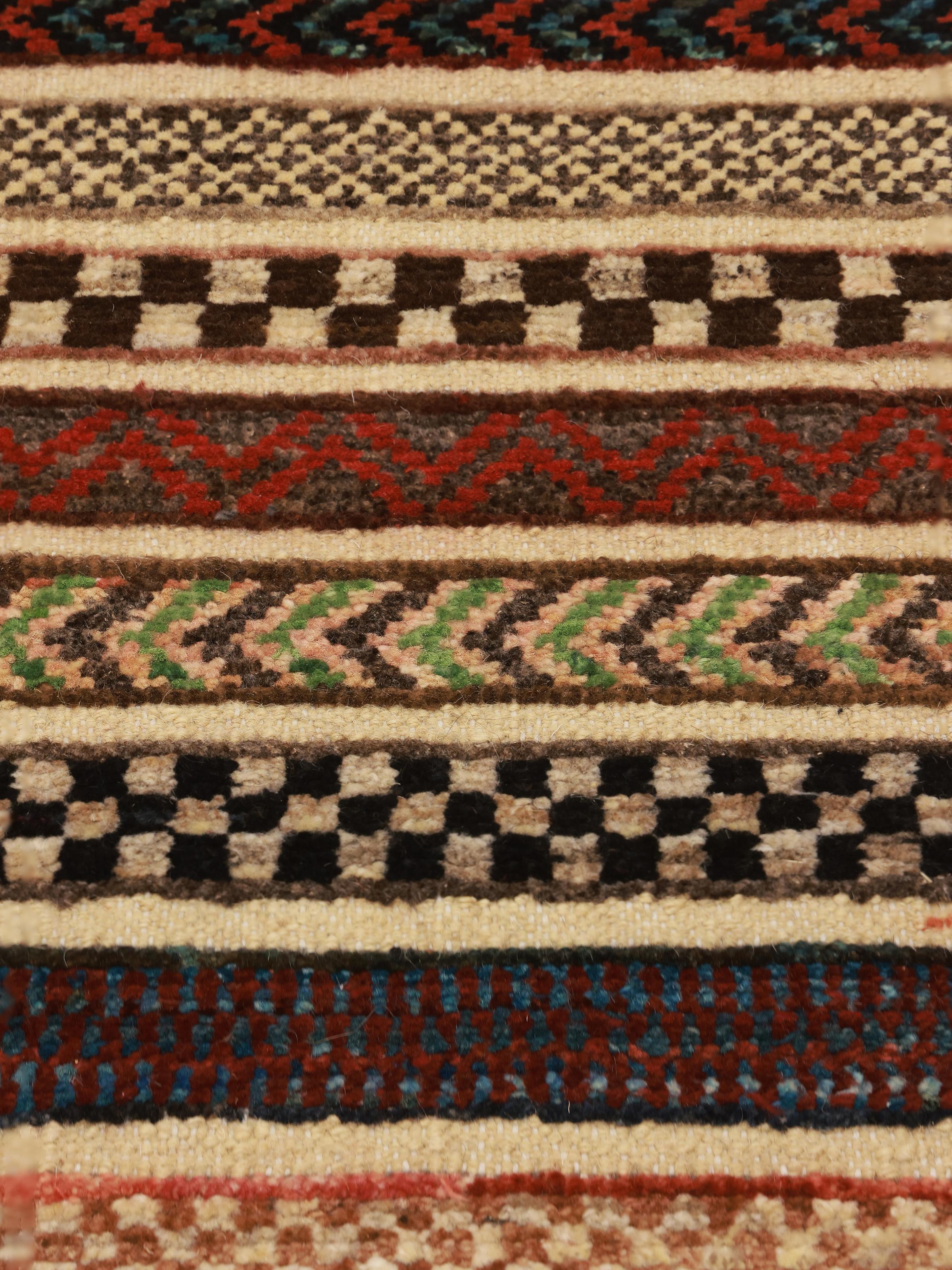
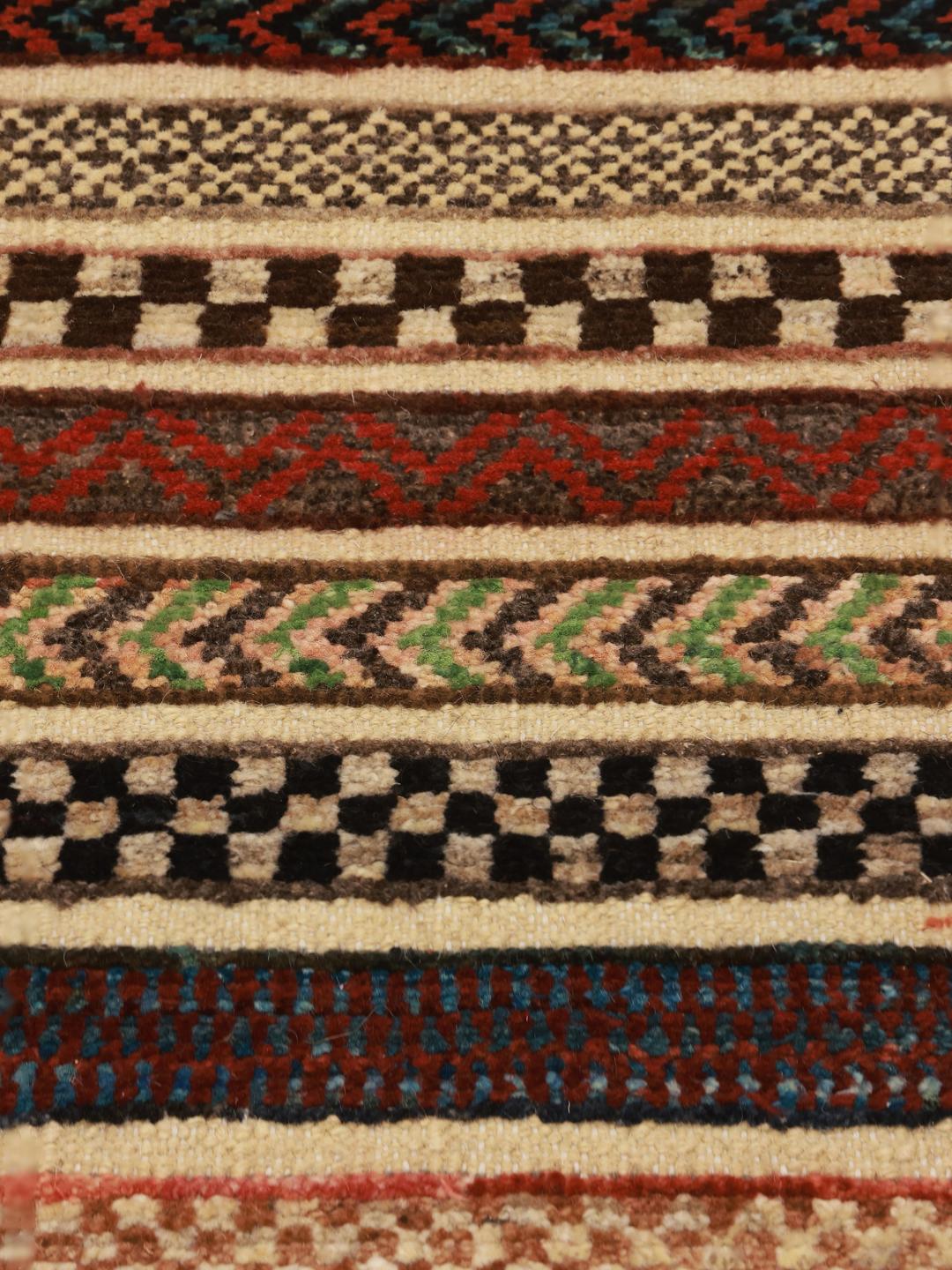
Afghan rug weaving is a tradition deeply rooted in the cultural history of the Middle East, reflecting a long lineage of nomadic and village craft. These rugs are renowned for their strength and the use of high-quality, locally sourced wool, which is often hand-spun to maintain its natural lanolin content, providing a soft yet incredibly durable finish.
The term Gabbeh typically refers to a style of rug traditionally woven by nomadic tribes, known for its thicker pile and more simplified, artistic designs. In the context of modern Afghan production, this tradition has evolved, blending the raw, expressive energy of classic tribal weaving with more contemporary layouts and colour palettes to suit modern living environments.
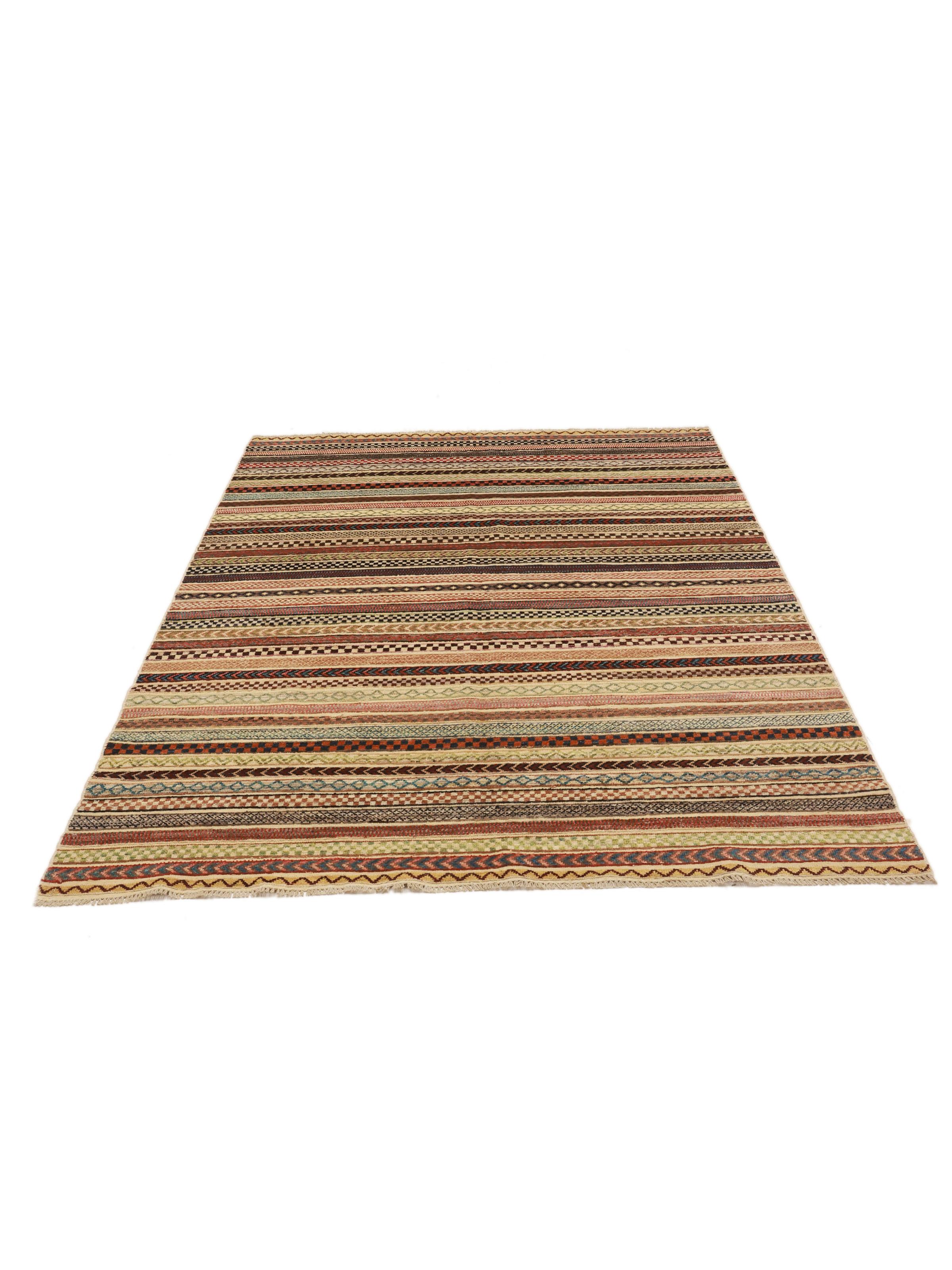
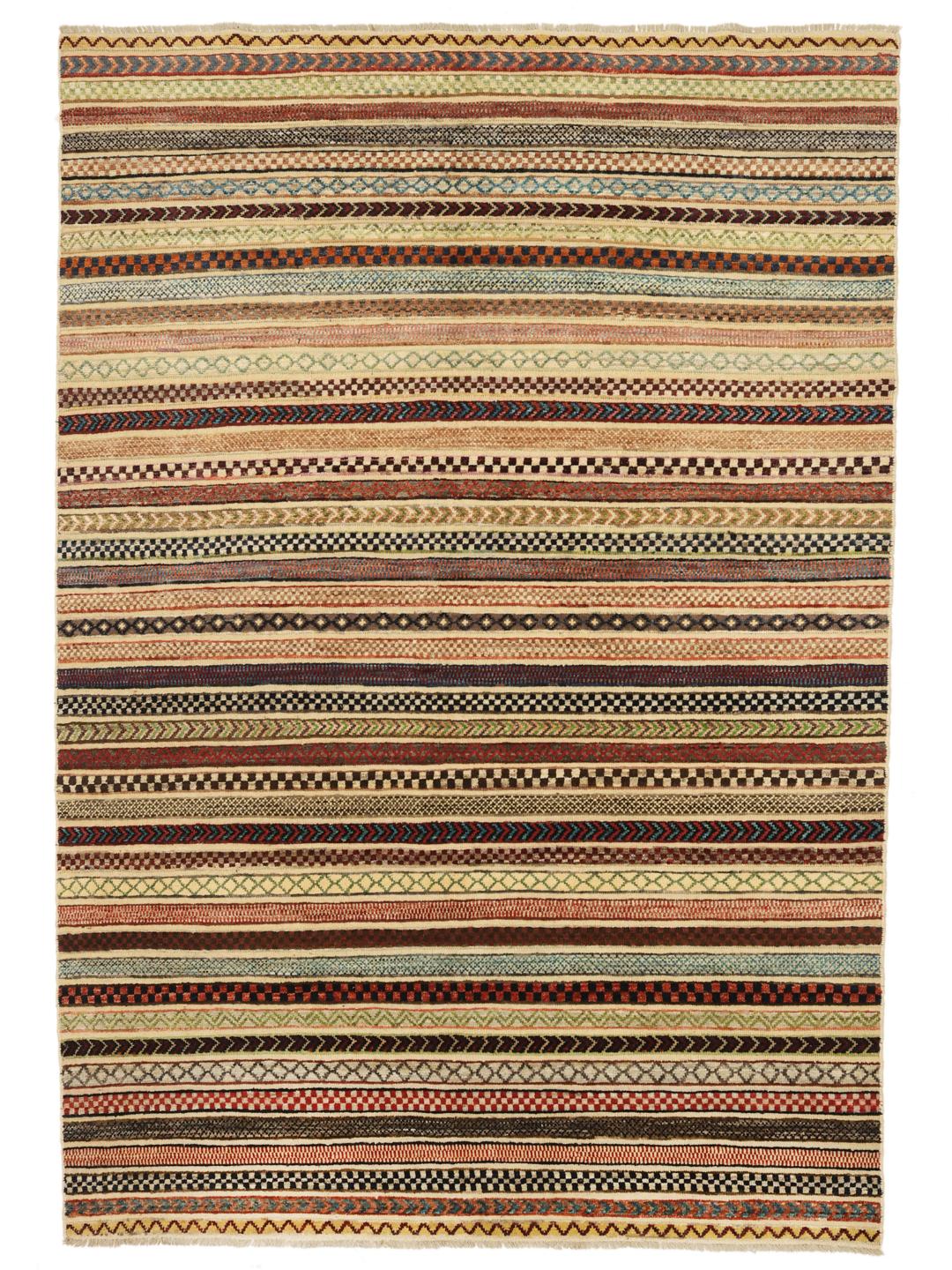
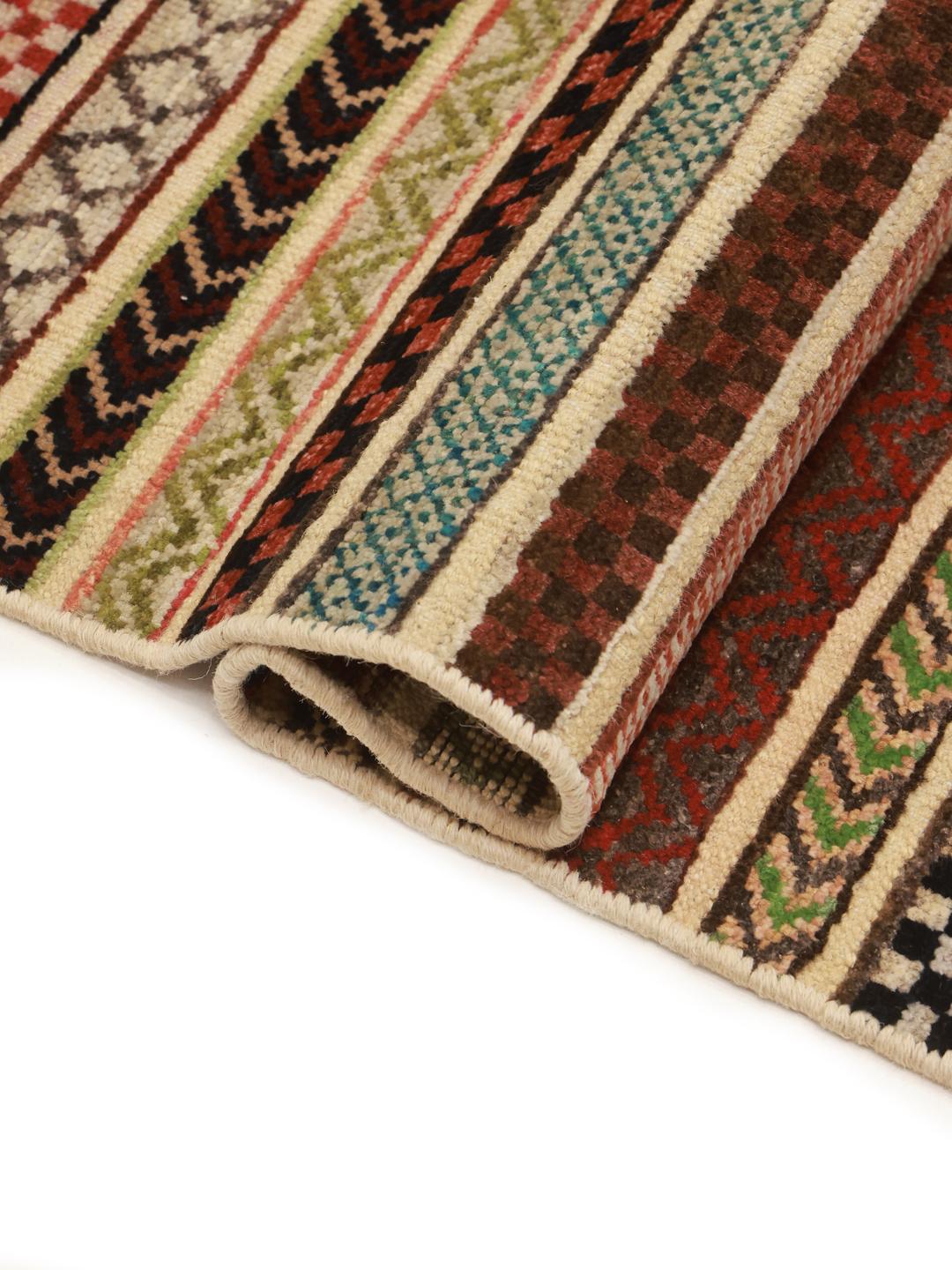
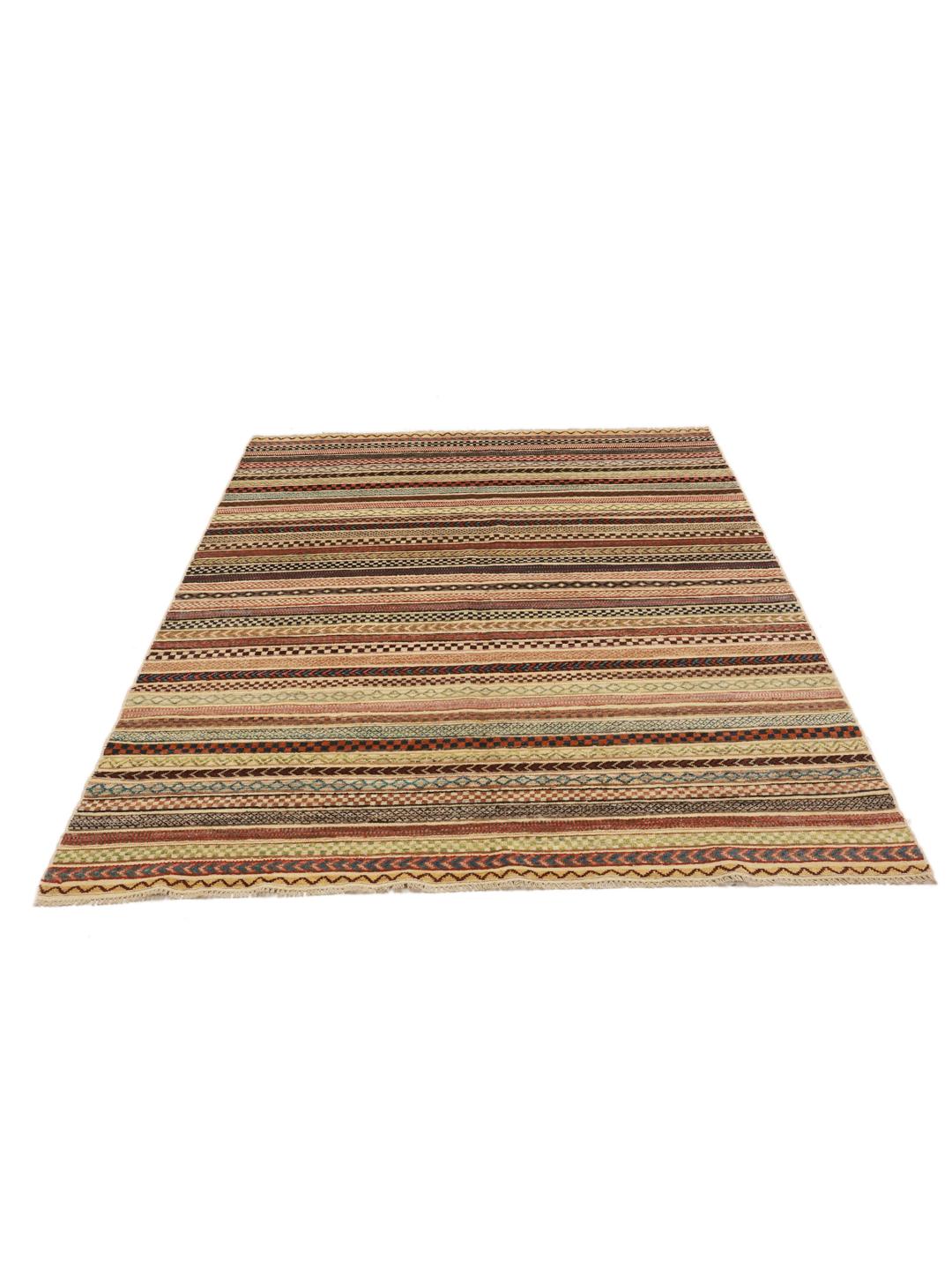
The visual language of this rug relies on the power of geometric motifs and stripes. In many Middle Eastern weaving traditions, these patterns are not merely decorative but often hold symbolic meaning, representing the weaver's environment, beliefs, or family history. The use of repetitive geometric bands creates a structured, rhythmic aesthetic that is highly prized for its ability to bring visual order to a room.
Collecting a hand-knotted rug from Afghanistan is an investment in cultural heritage and human skill. Each piece serves as a physical record of the artisan's technique and the evolving design sensibility of the region. By bringing such a rug into your home, you are not just purchasing a floor covering, but a piece of history that continues the legacy of a craft perfected over centuries.