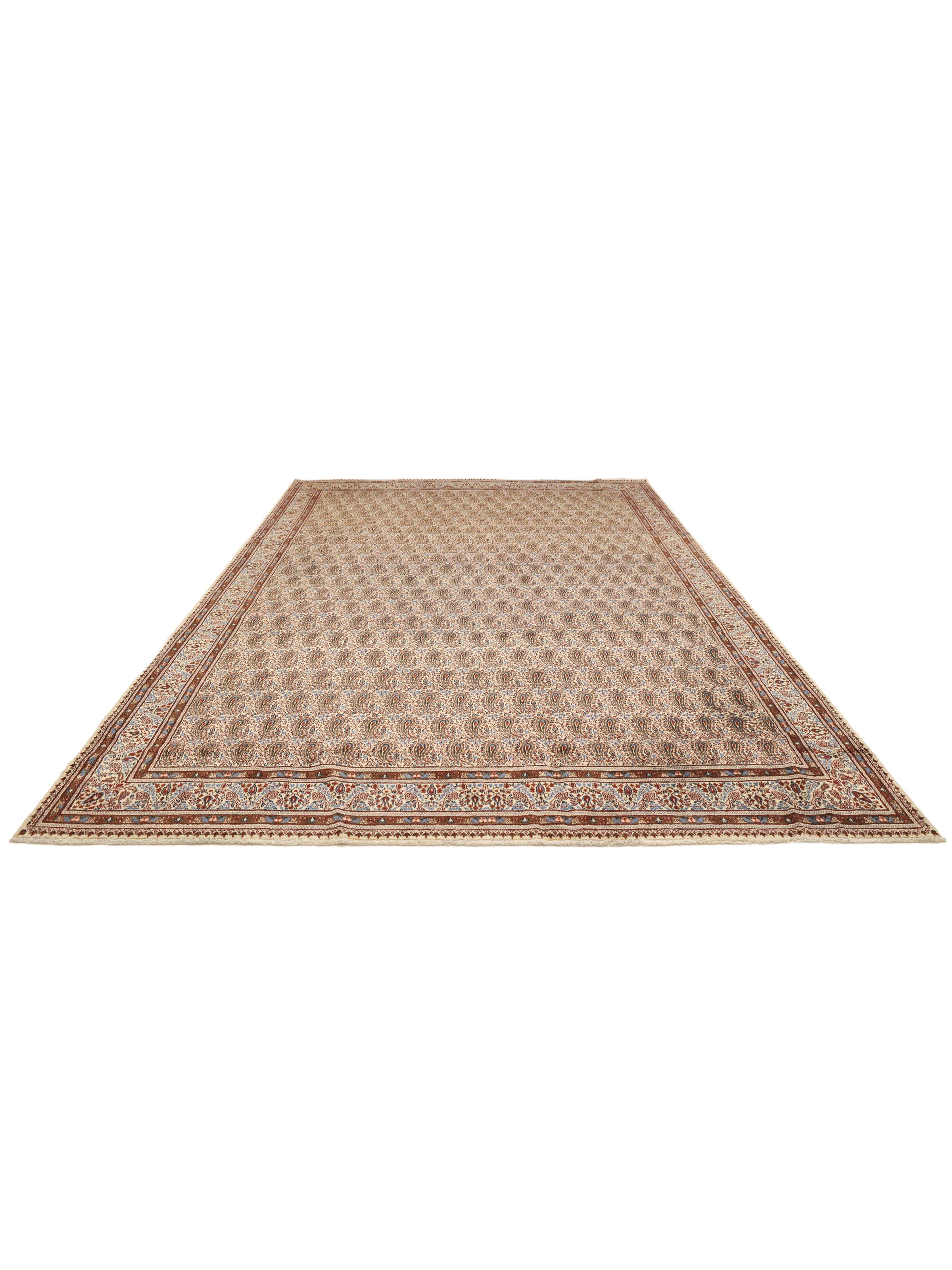
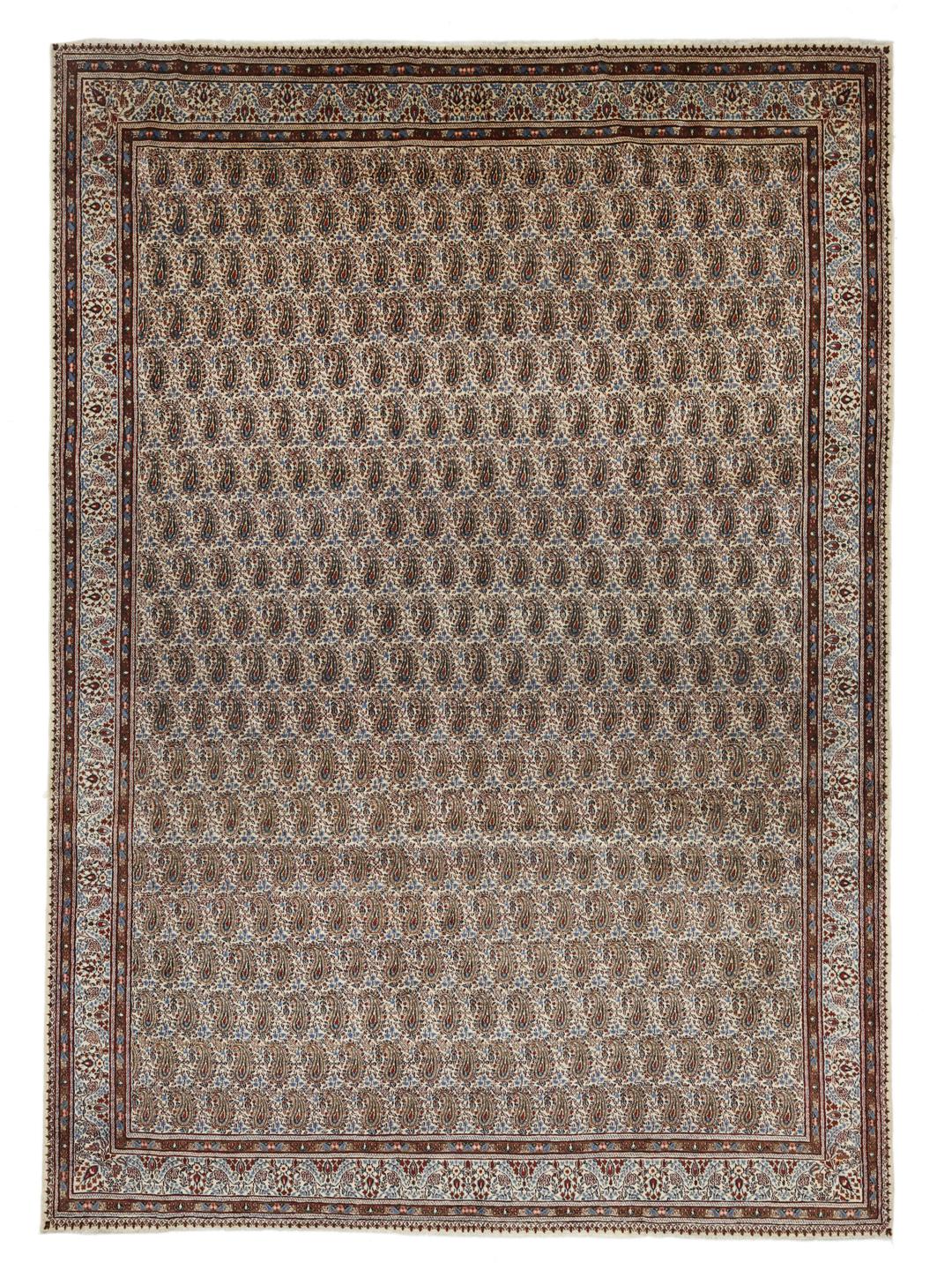
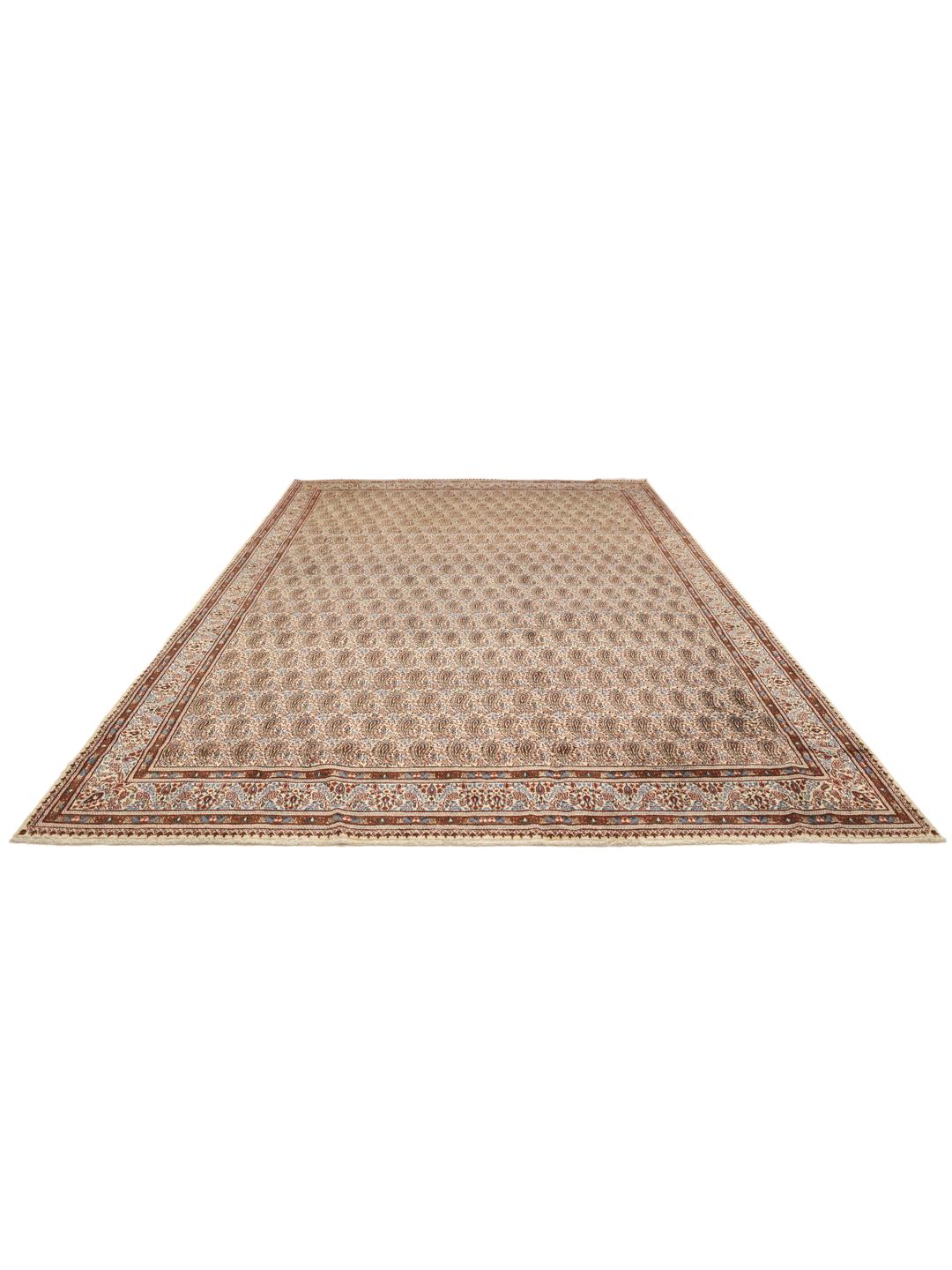
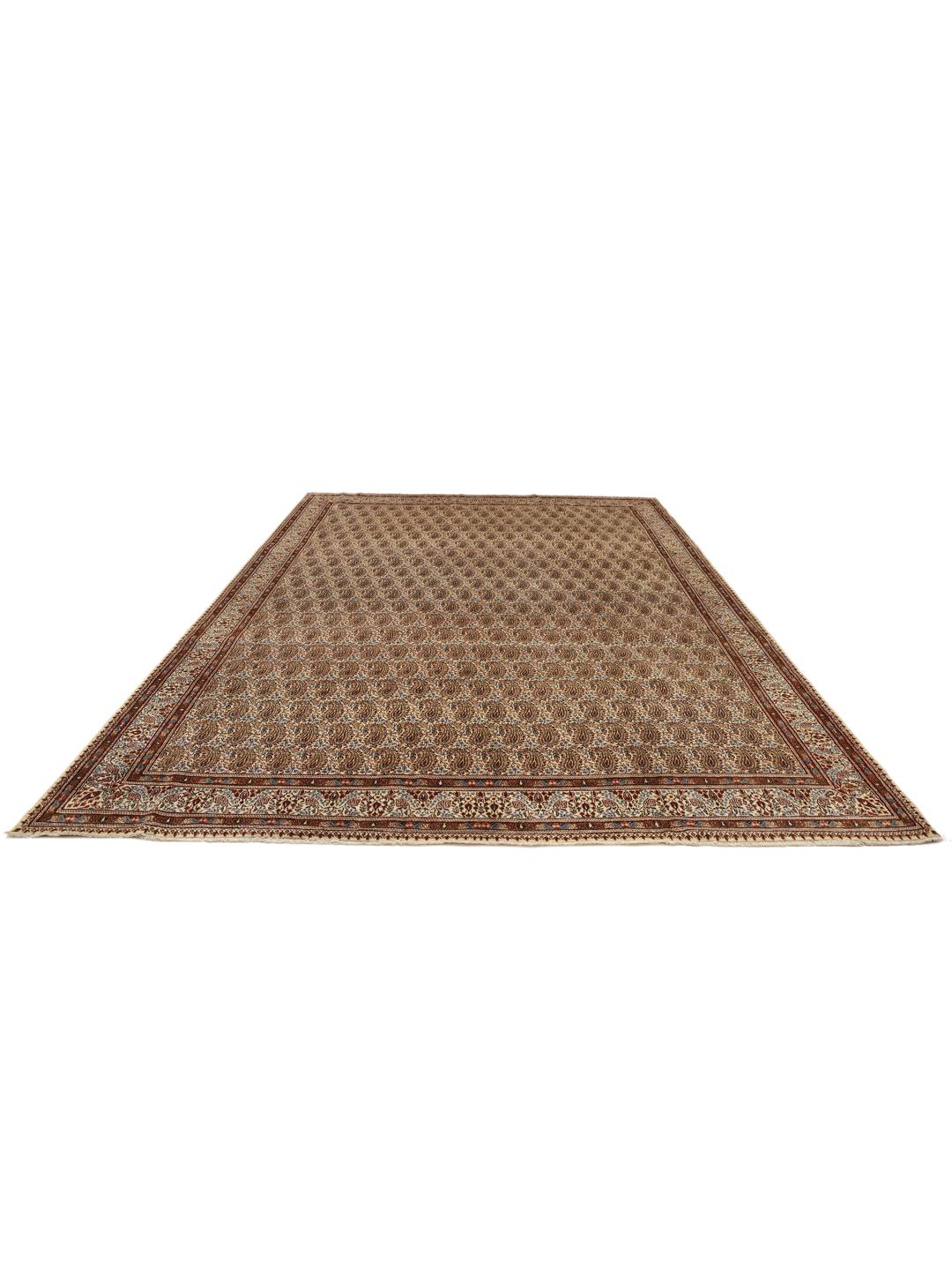
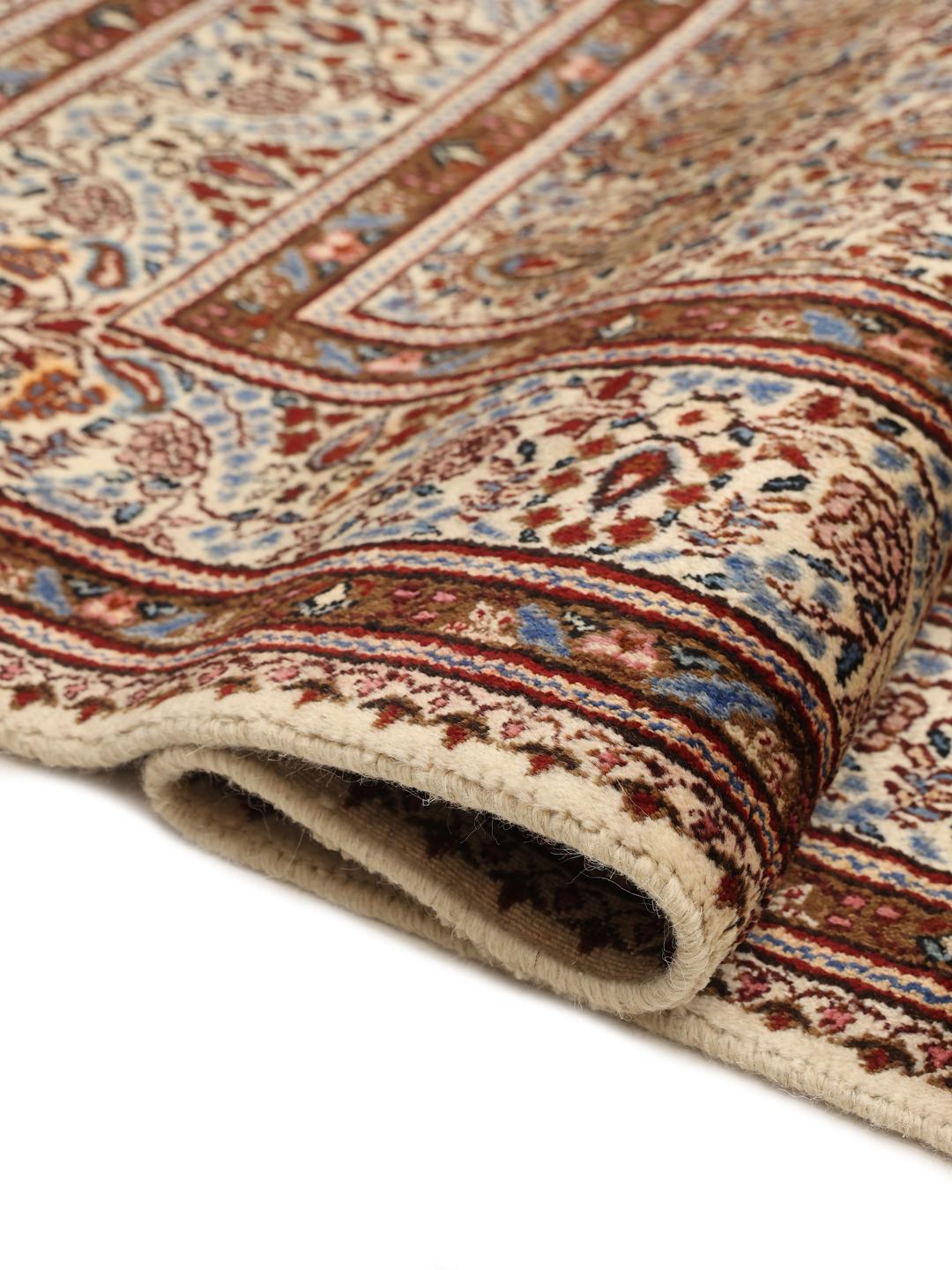
Moud rugs originate from the small town of Moud, located in the Khorasan province of the Middle East. This region has a long and storied history of rug weaving, often characterised by a distinct approach that blends local traditions with sophisticated floral and geometric influences. The town is particularly famous for its ability to produce pieces that feel both traditional and highly decorative, often serving as a bridge between nomadic tribal artistry and more formal, court-inspired designs.
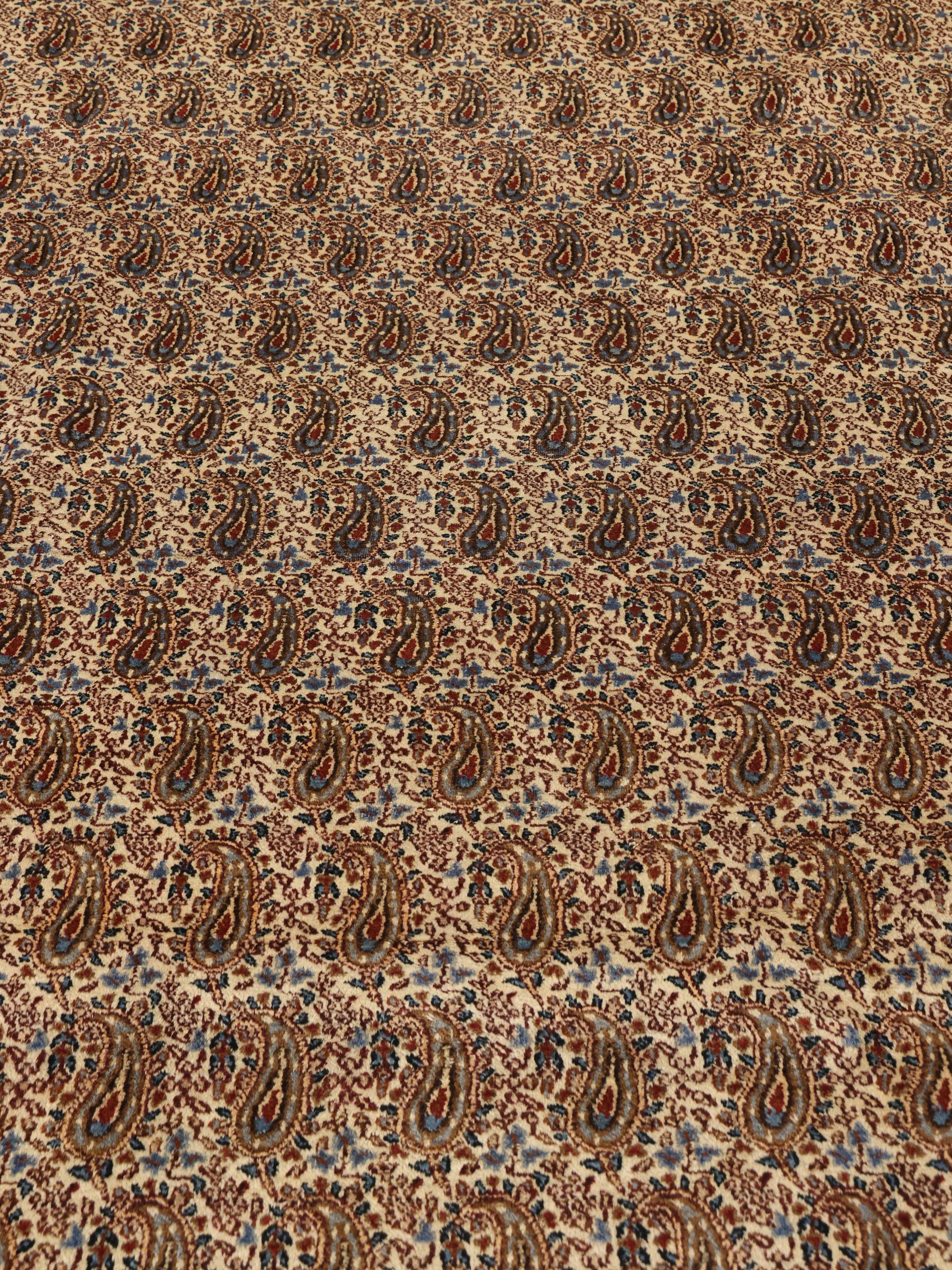
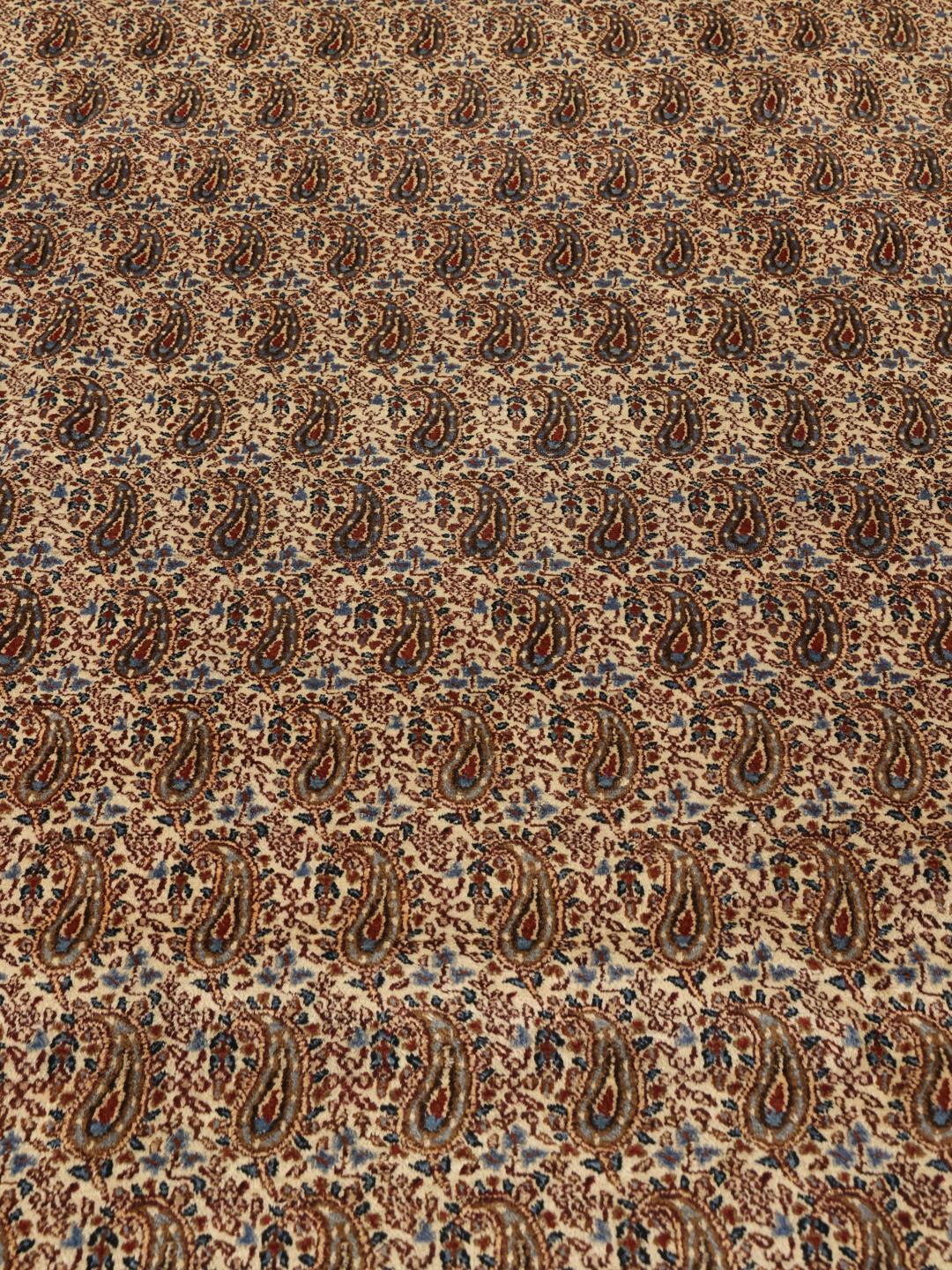
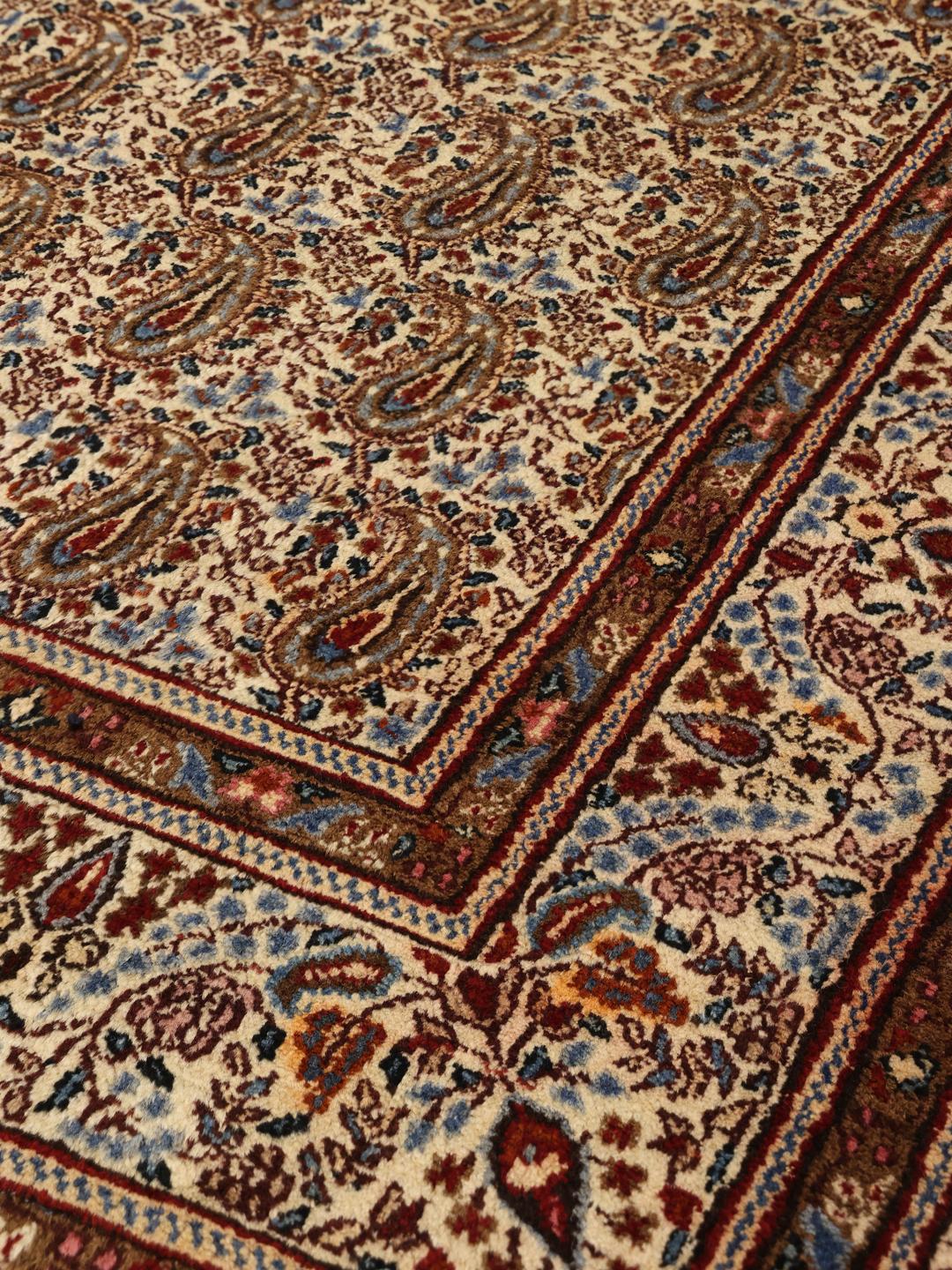
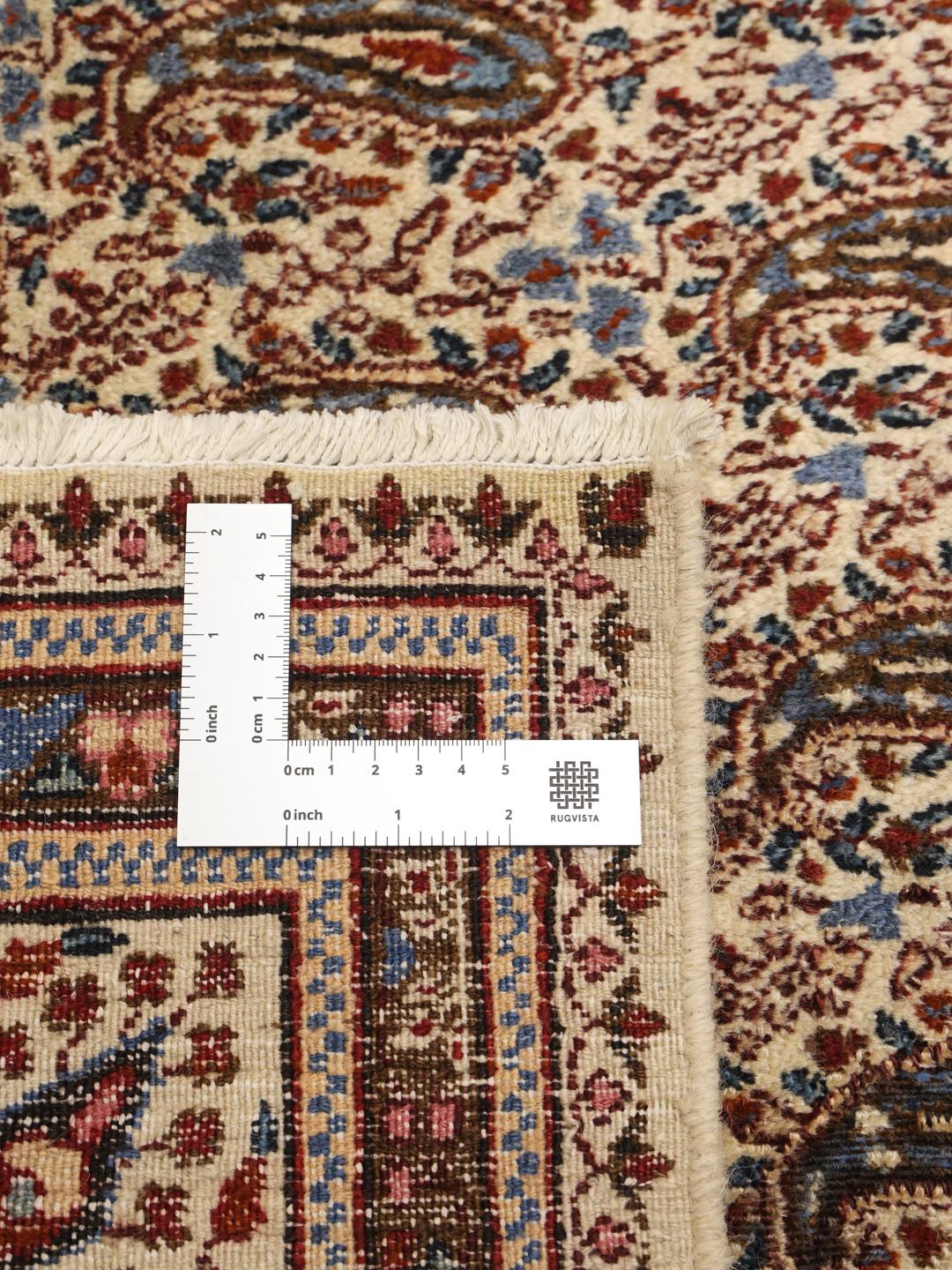
The term 'Moud' often refers to the specific style of pattern found in these rugs, which frequently includes the 'Herati' or 'Mahi' design—a small floral motif surrounded by leaves—or the intricate paisley motifs seen here. These patterns are achieved through a high knot density, which is essential for rendering such small, complex shapes with clarity. This technical precision is what gives these rugs their signature crispness and refined appearance.
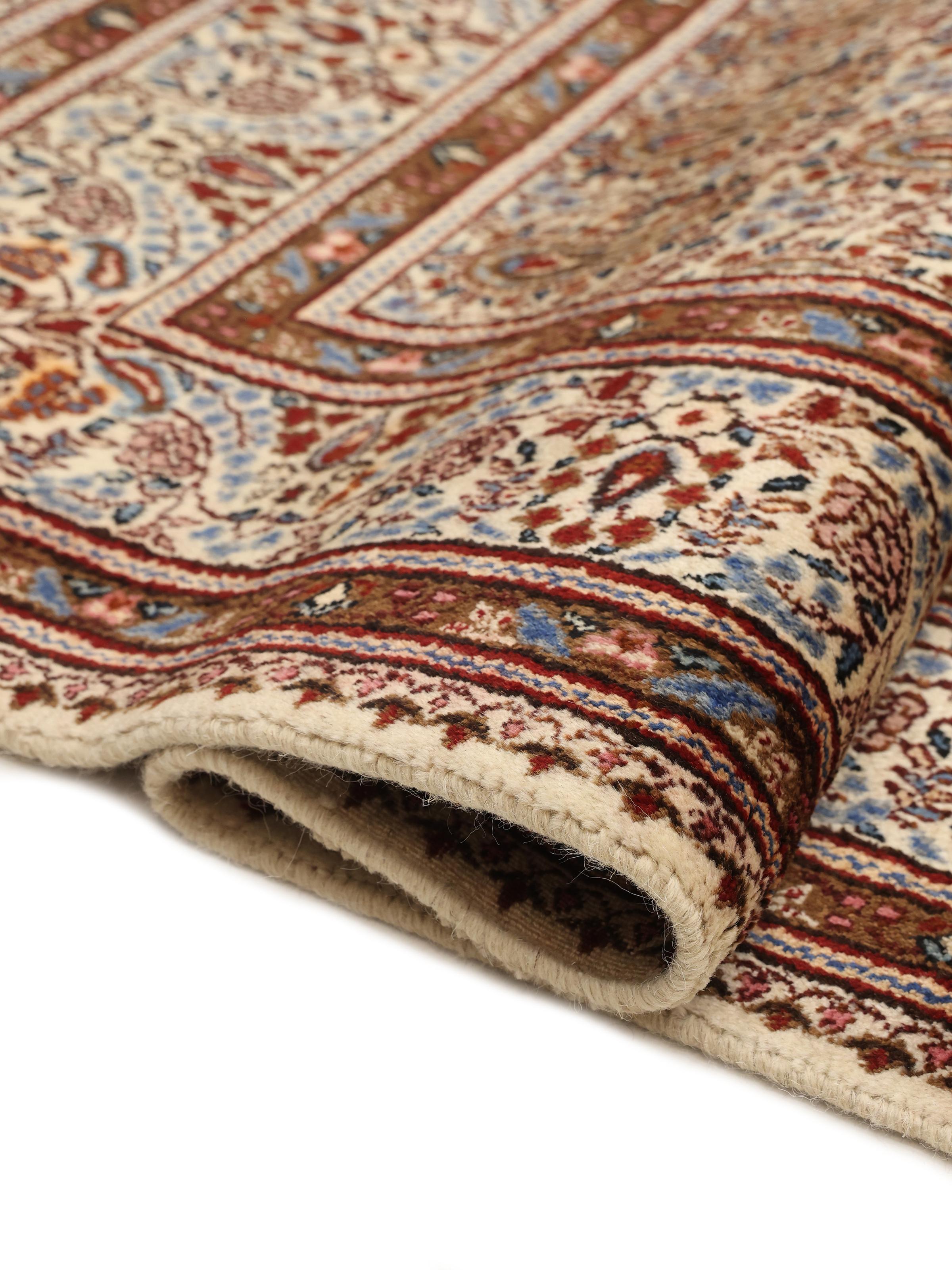
The paisley design, or 'Boteh', is a motif with deep historical roots, symbolising life and eternity in many cultures. In this particular rug, the repetition of these motifs across the field creates a sense of rhythmic movement. The presence of a formal border further emphasises the structural balance of the piece, a hallmark of traditional weaving where the geometry of the frame is as important as the narrative of the field.
Collecting a Moud rug is an investment in a specific regional legacy. These pieces are highly valued not only for their beauty but for the immense skill required to execute such repetitive, detailed work. To own one is to participate in a centuries-old craft that has been refined over generations, ensuring that the rug remains a cherished heirloom that brings character and cultural depth to a modern home.