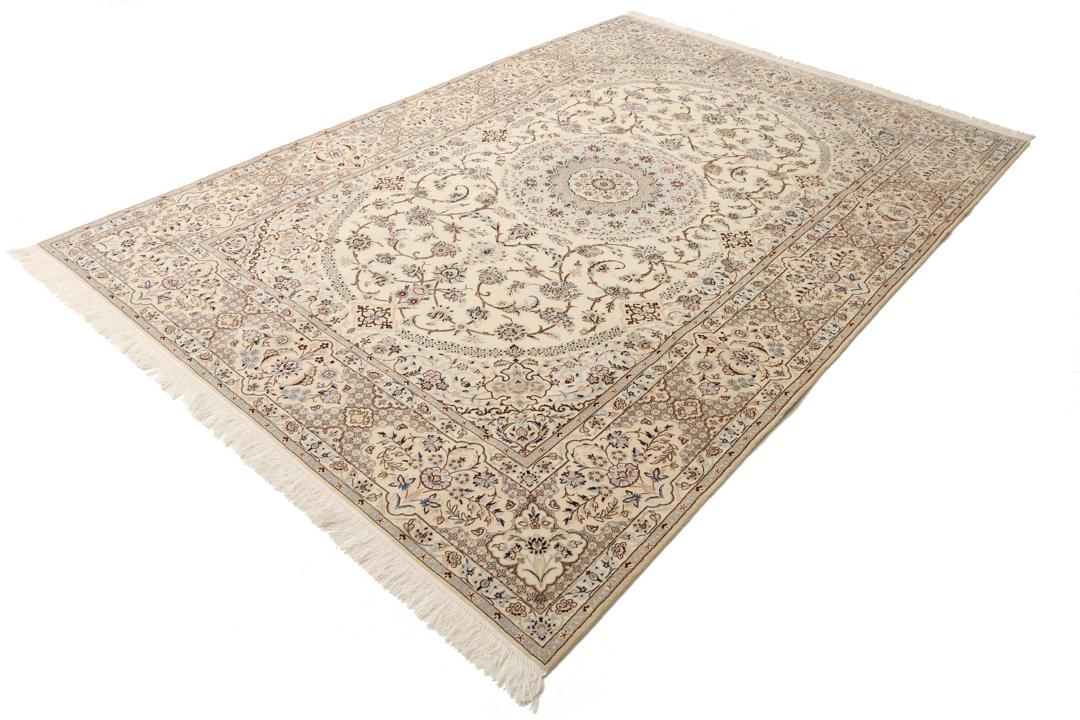
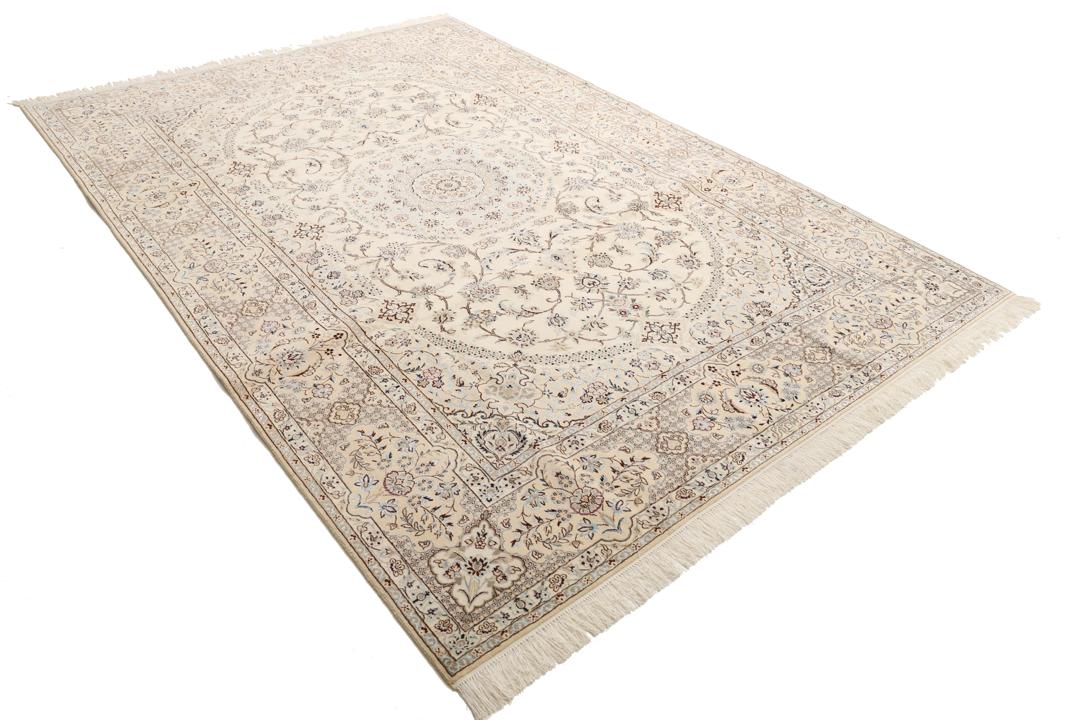
The Nain rug tradition originates from the town of Nain, located in the heart of the Middle East. Historically known for producing high-quality wool textiles, the region evolved in the 20th century to become one of the most prestigious centres for fine rug weaving. The rugs from this area are celebrated for their sophisticated aesthetic and the exceptional technical skill required to produce them.
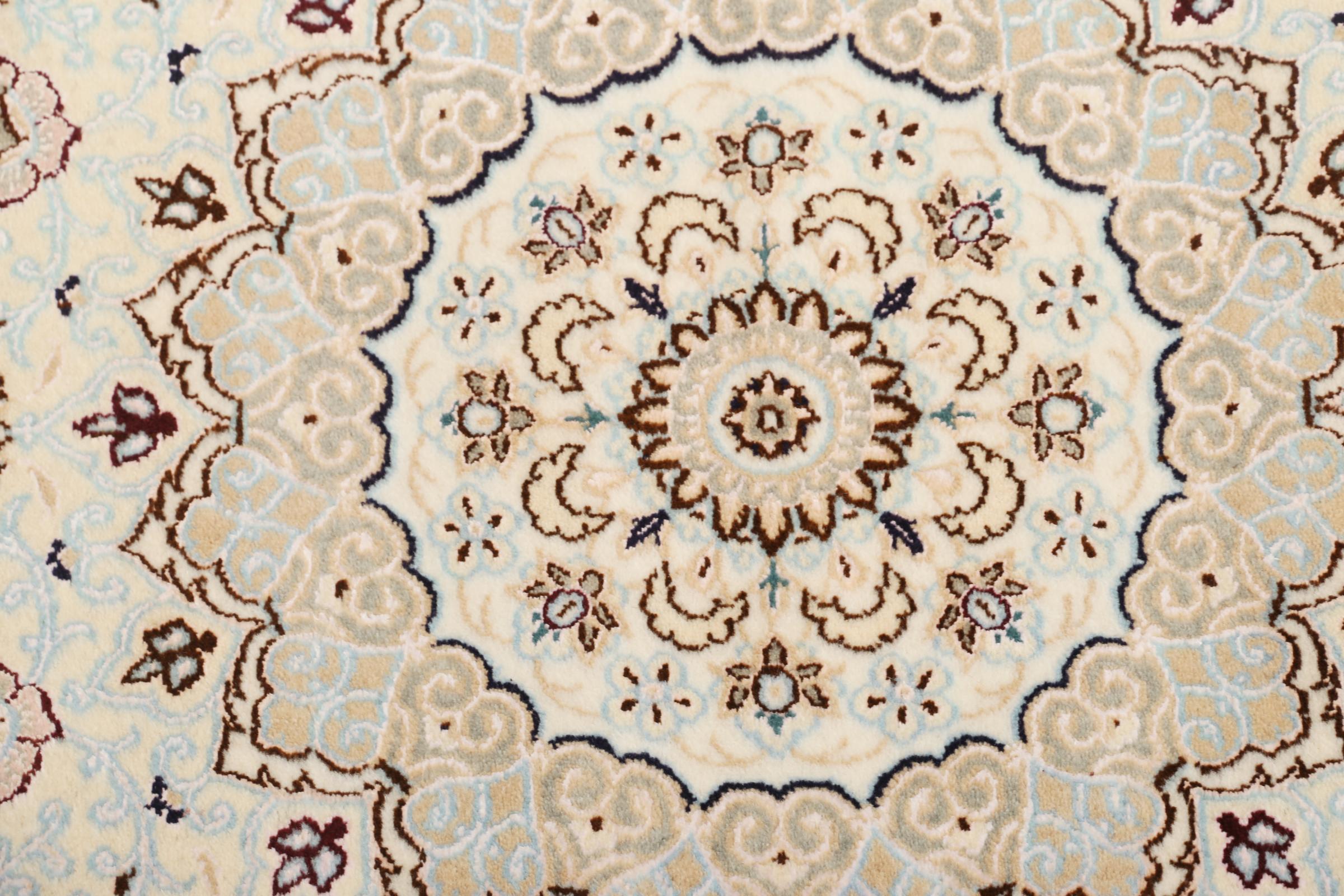
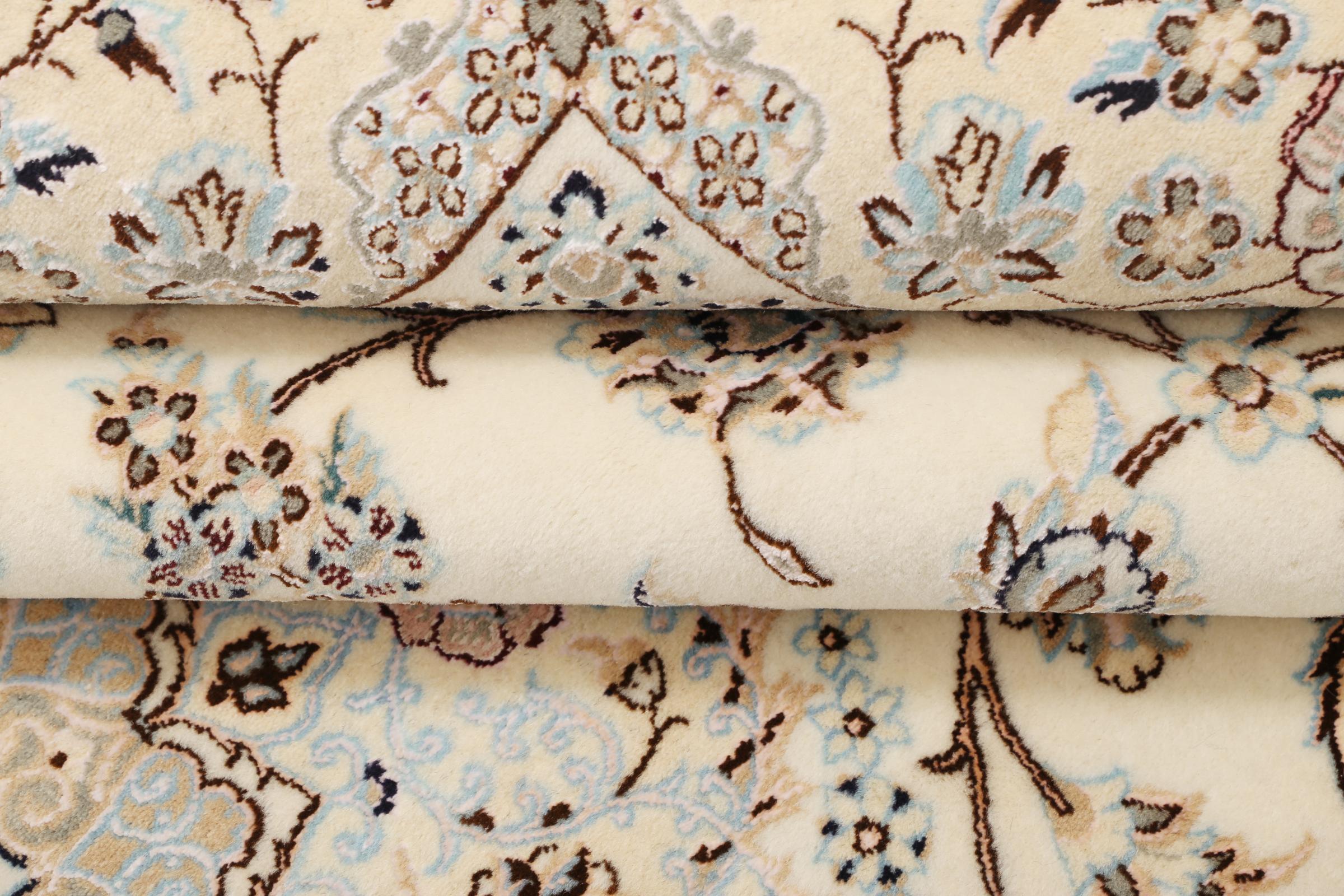
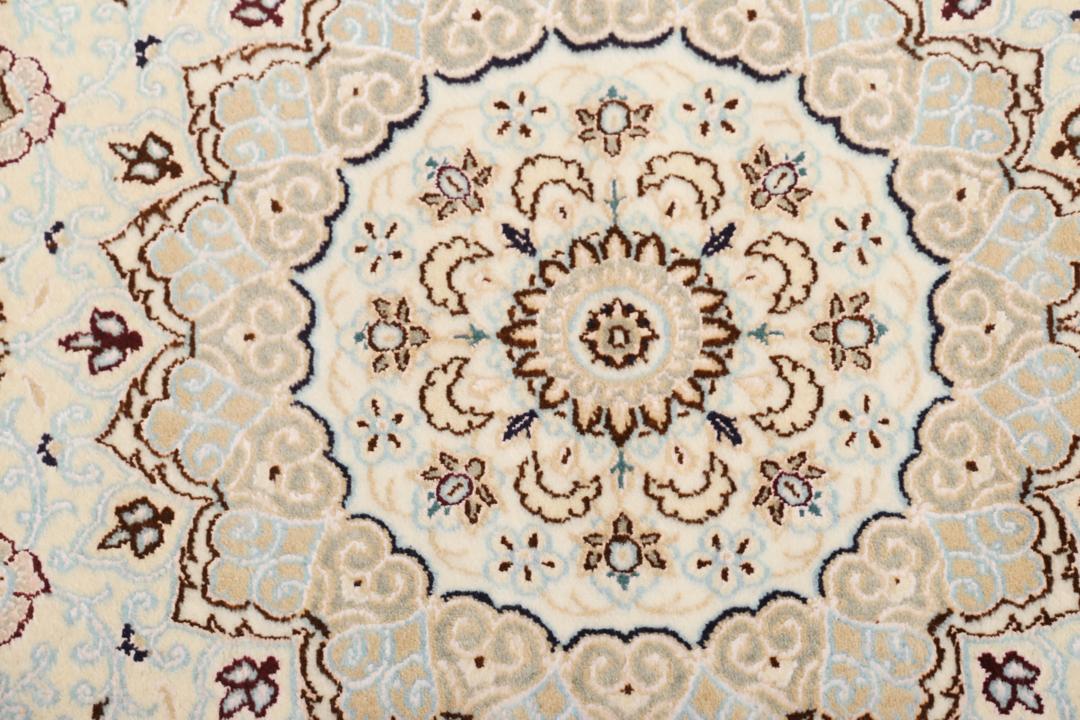
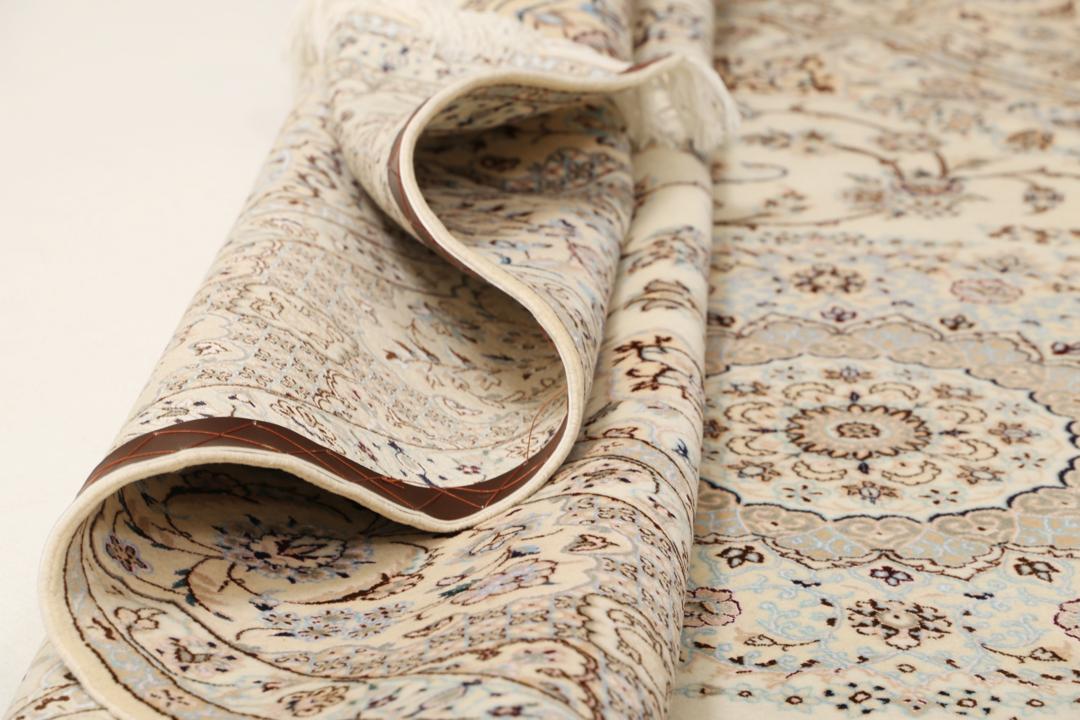
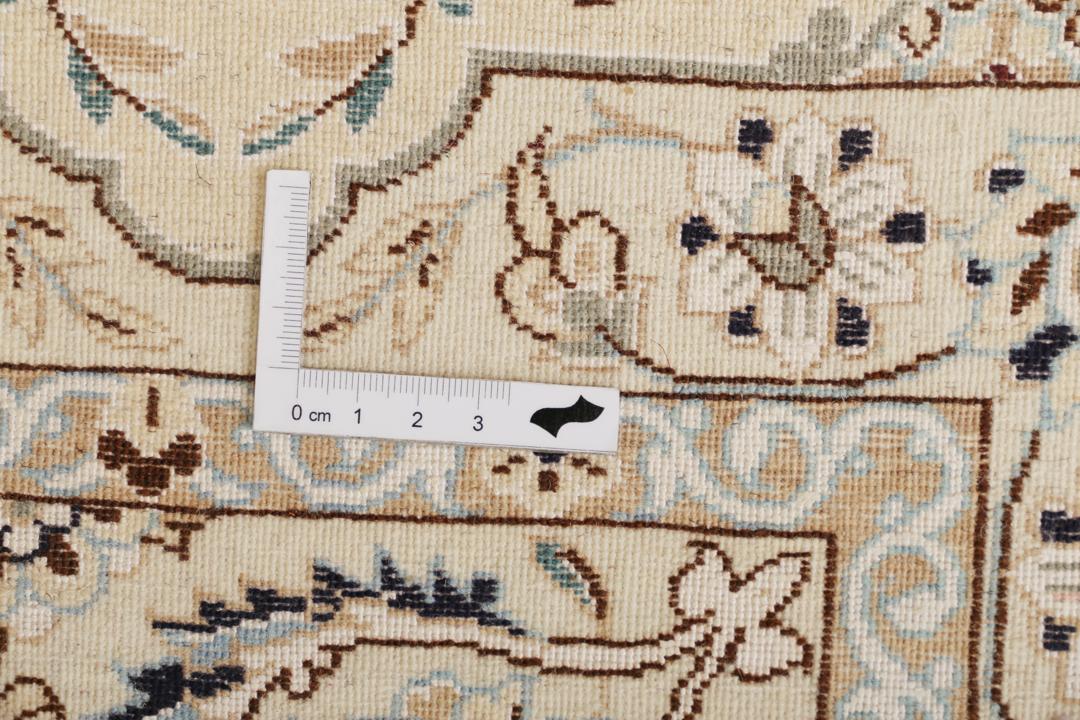
The designation '6La' refers to the thickness of the foundation threads used in the construction of the rug. In the traditional Nain system, the 'La' count indicates the number of strands twisted together in each warp thread. A lower number, such as 6La, indicates a finer, thinner thread, which allows for a much higher knot density and more intricate pattern work compared to rugs with a higher 'La' count.
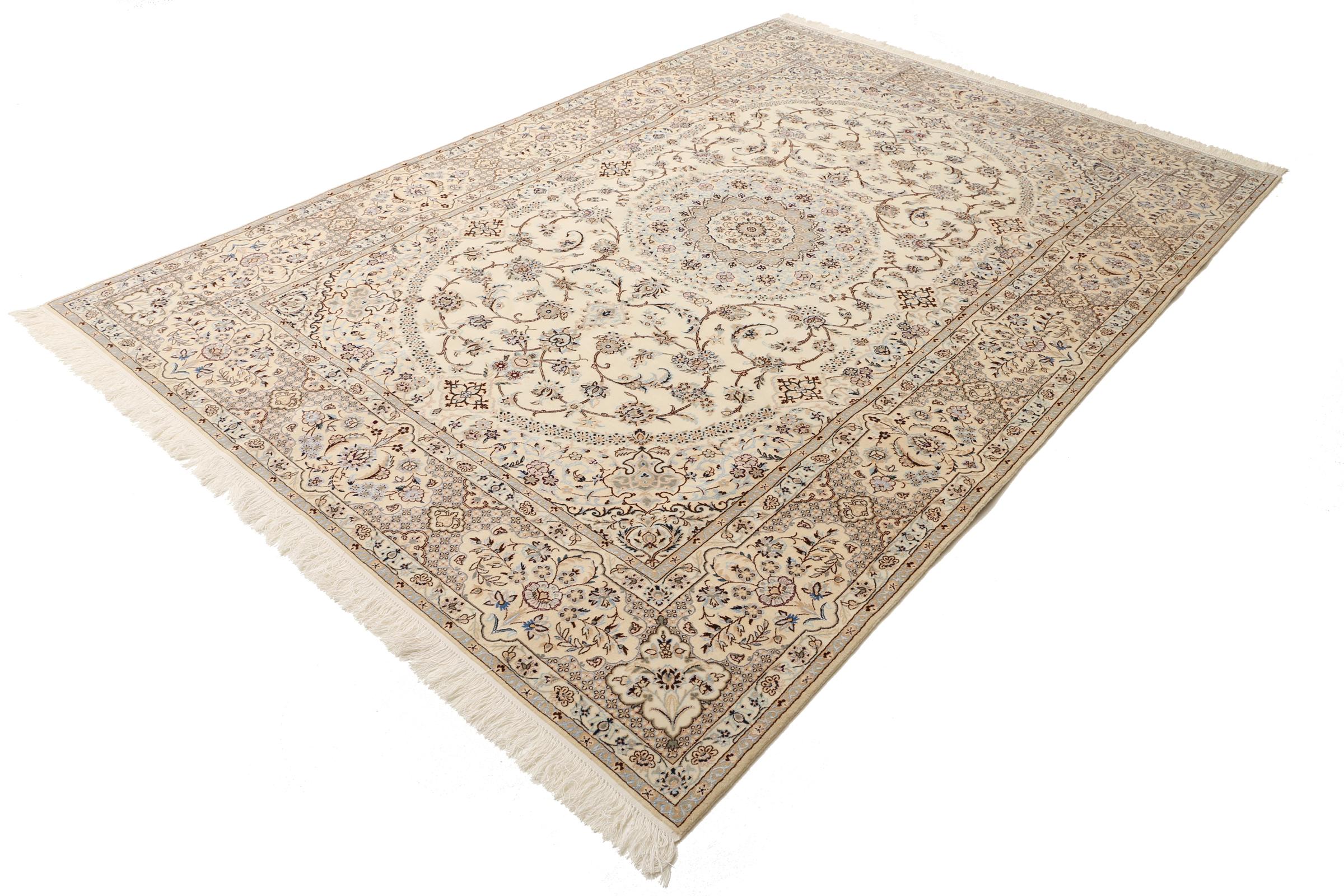
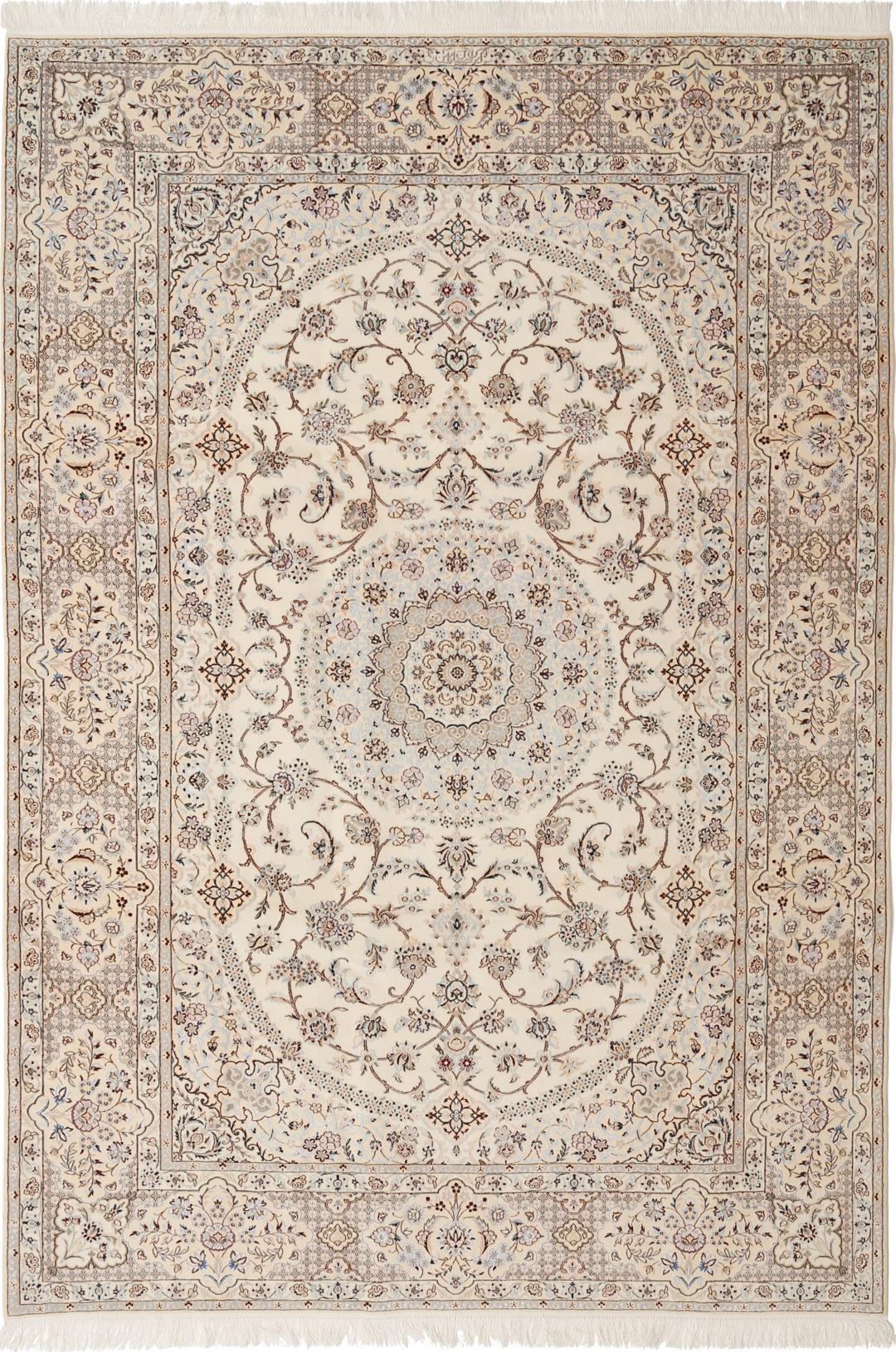
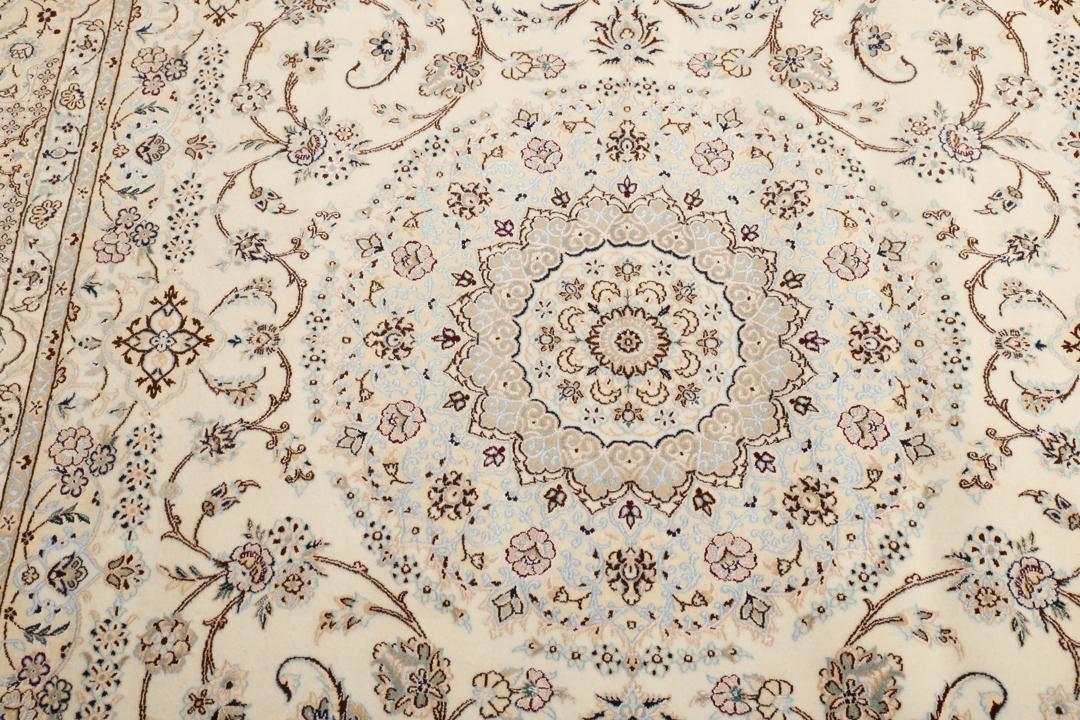
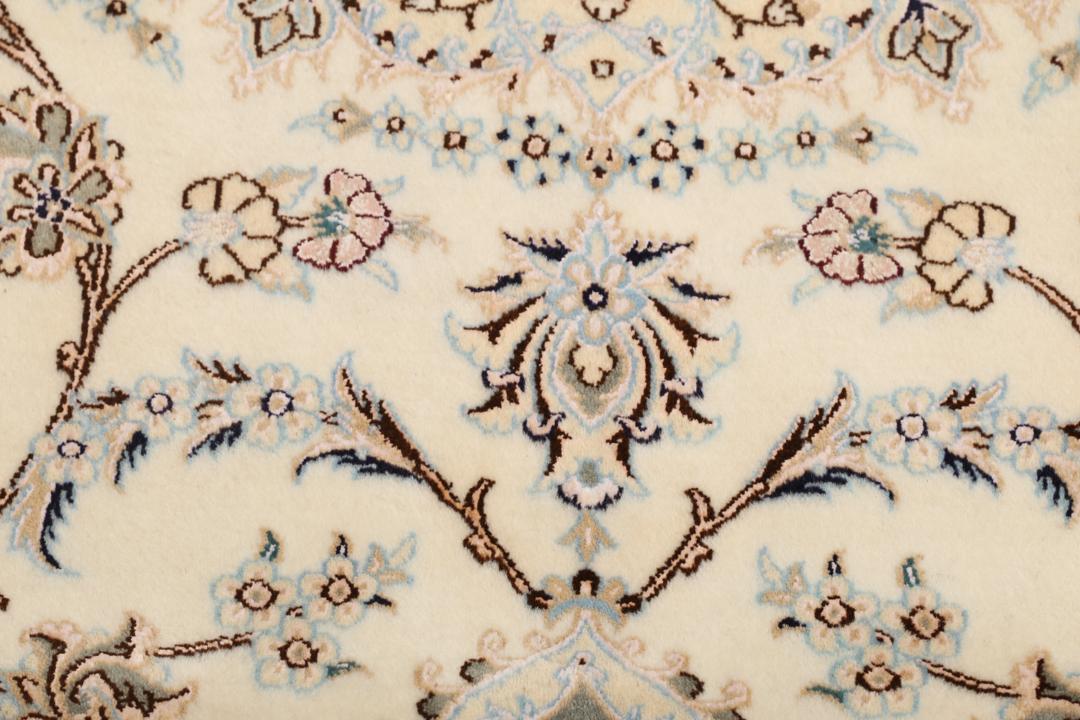
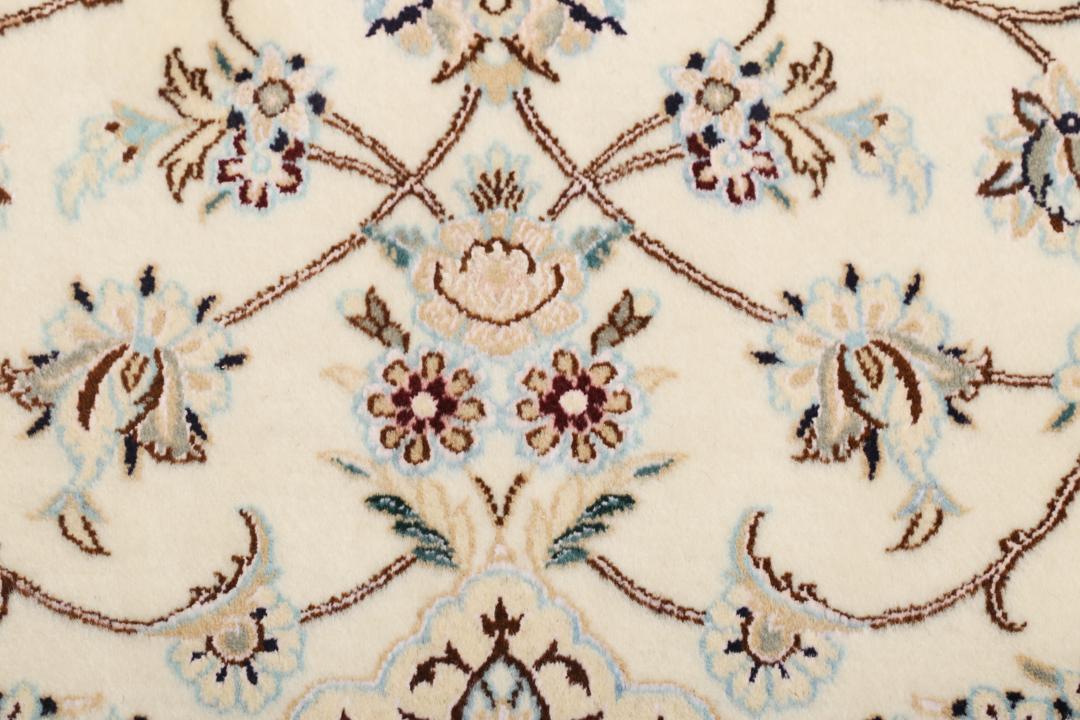
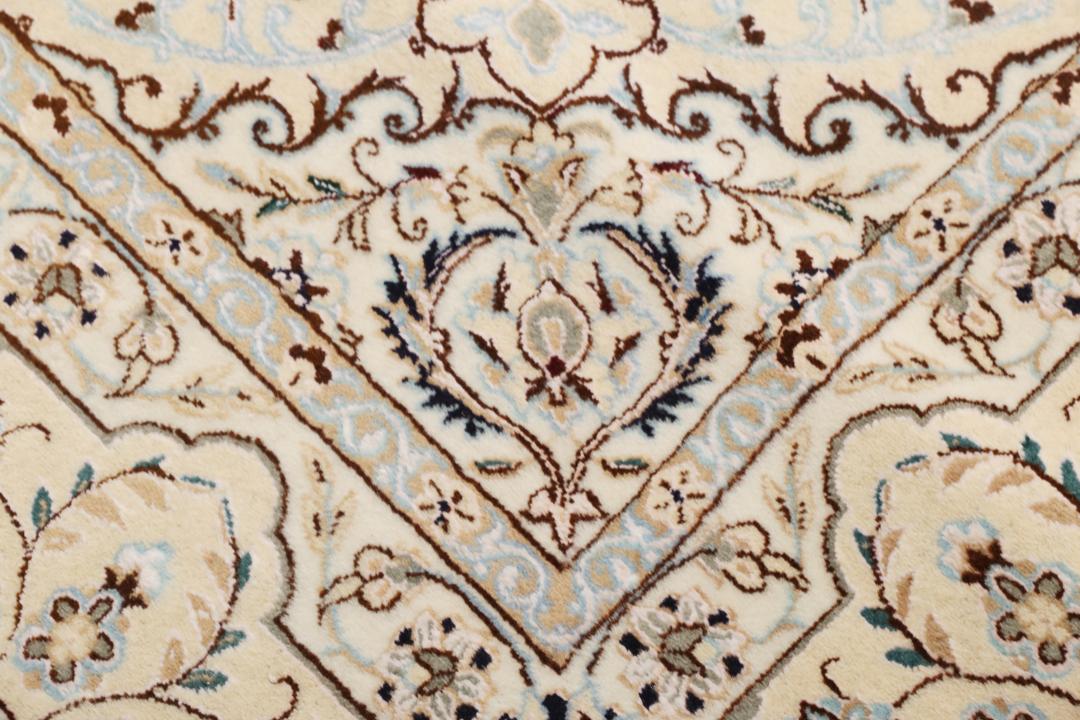
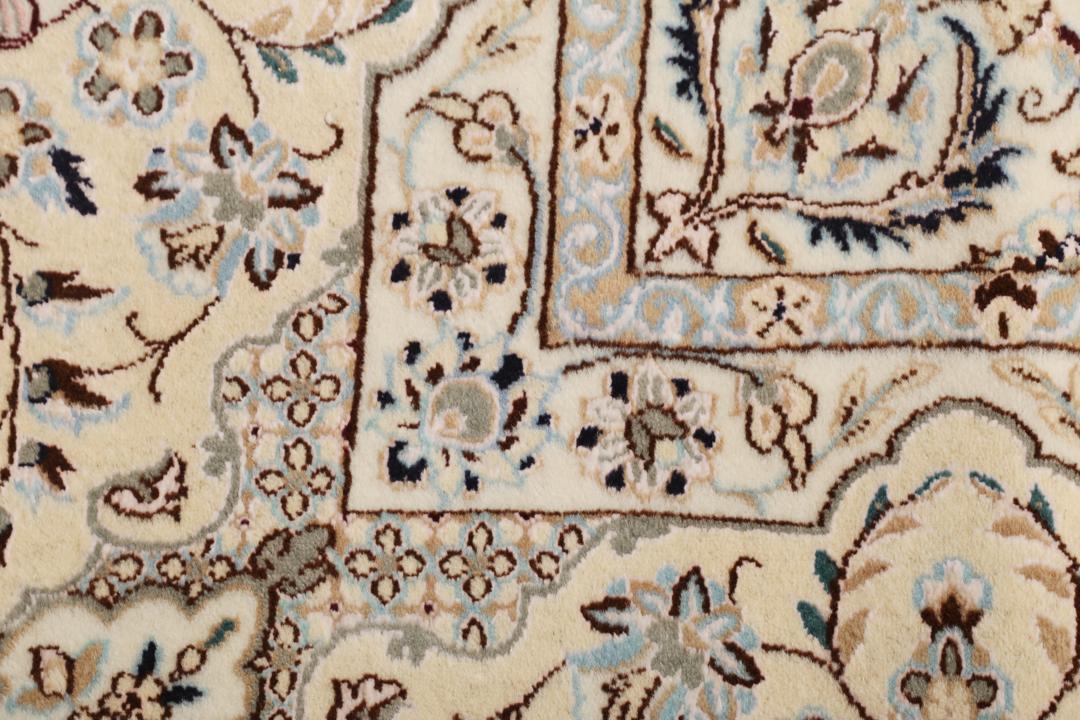
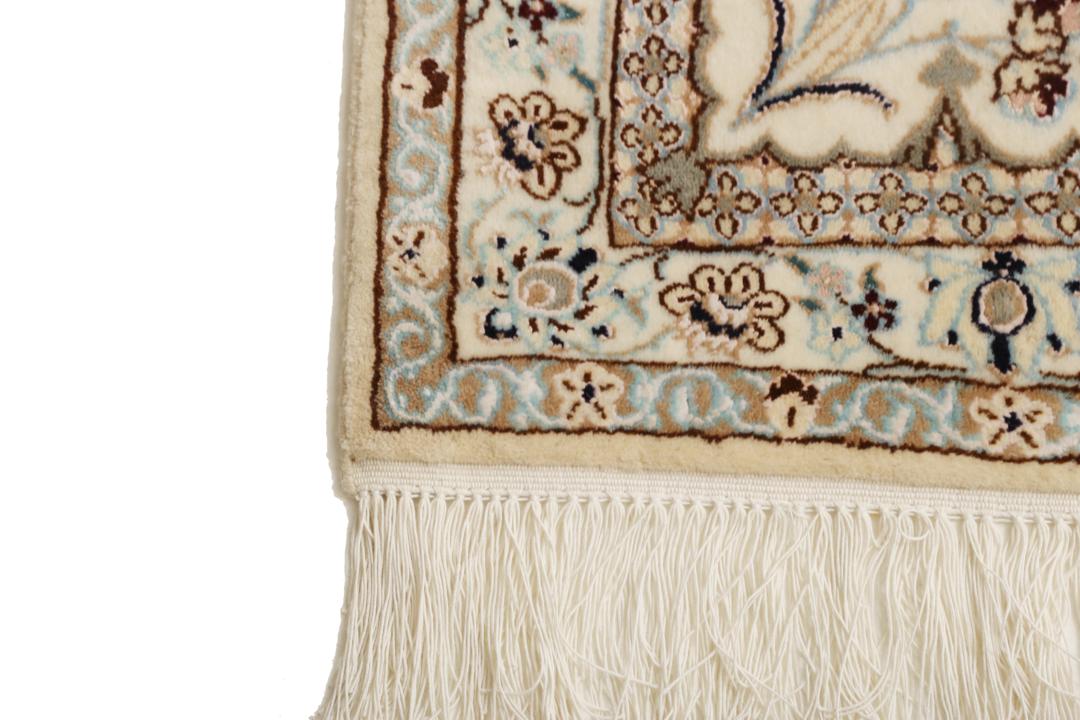
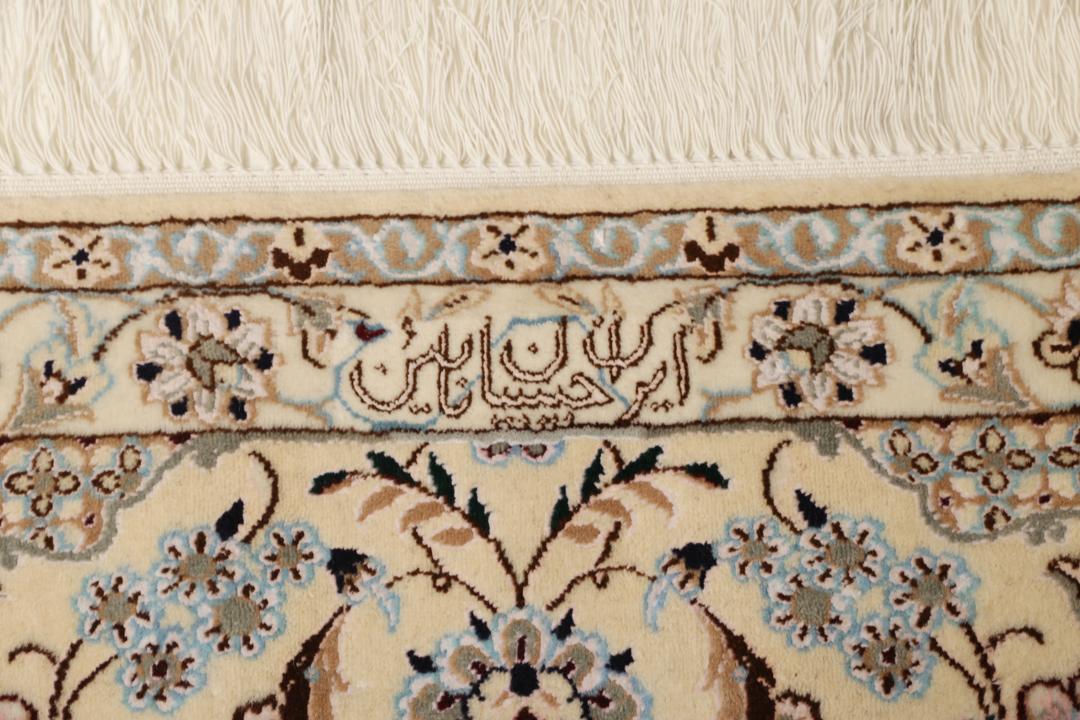
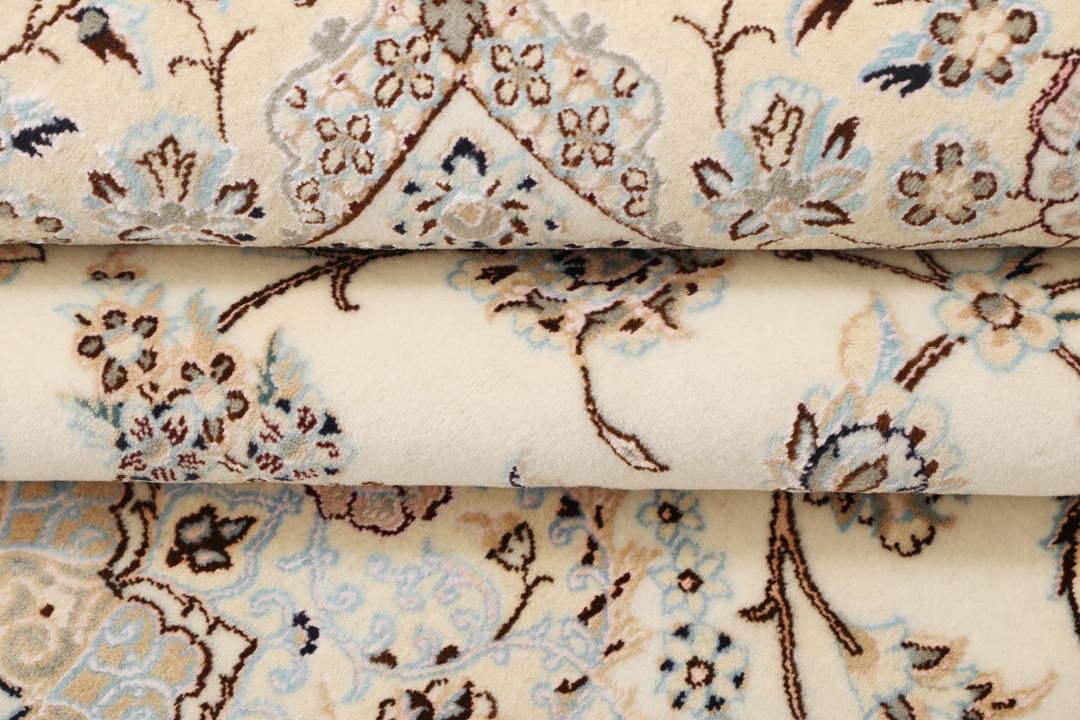
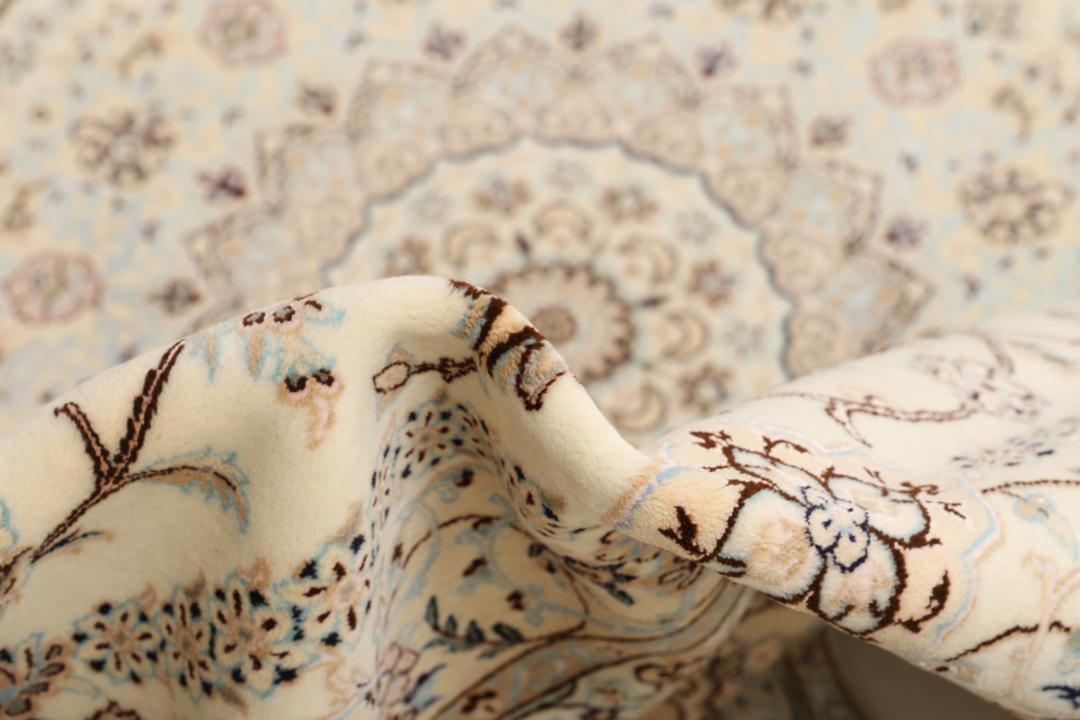
Visually, Nain rugs are defined by their elegant, often curvilinear designs. You will frequently find a central medallion surrounded by dense floral scrolls, arabesques, and palmettes. The colour palette is typically restrained, often featuring shades of cream, beige, and soft blues, which highlights the precision of the pattern rather than relying on high-contrast, vibrant colours. This subtlety is a hallmark of the Nain style.
Owning a Nain 6La rug is considered a significant acquisition for collectors and enthusiasts alike. Because they represent such a high tier of weaving proficiency, they are valued not just as floor coverings, but as cultural artefacts. They embody a heritage of patience and precision, and they are cherished for their ability to bring a sense of history and quiet luxury to any interior.