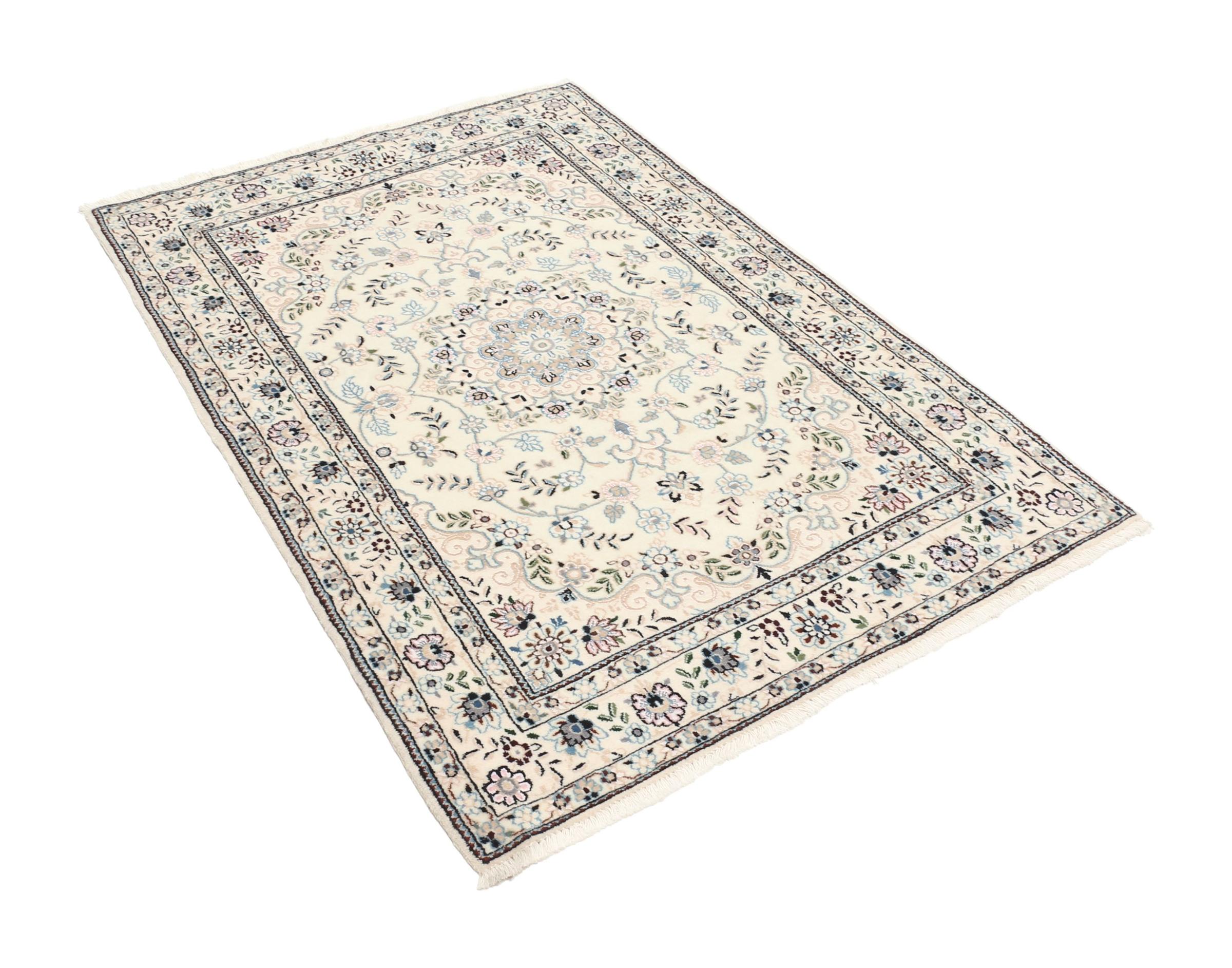
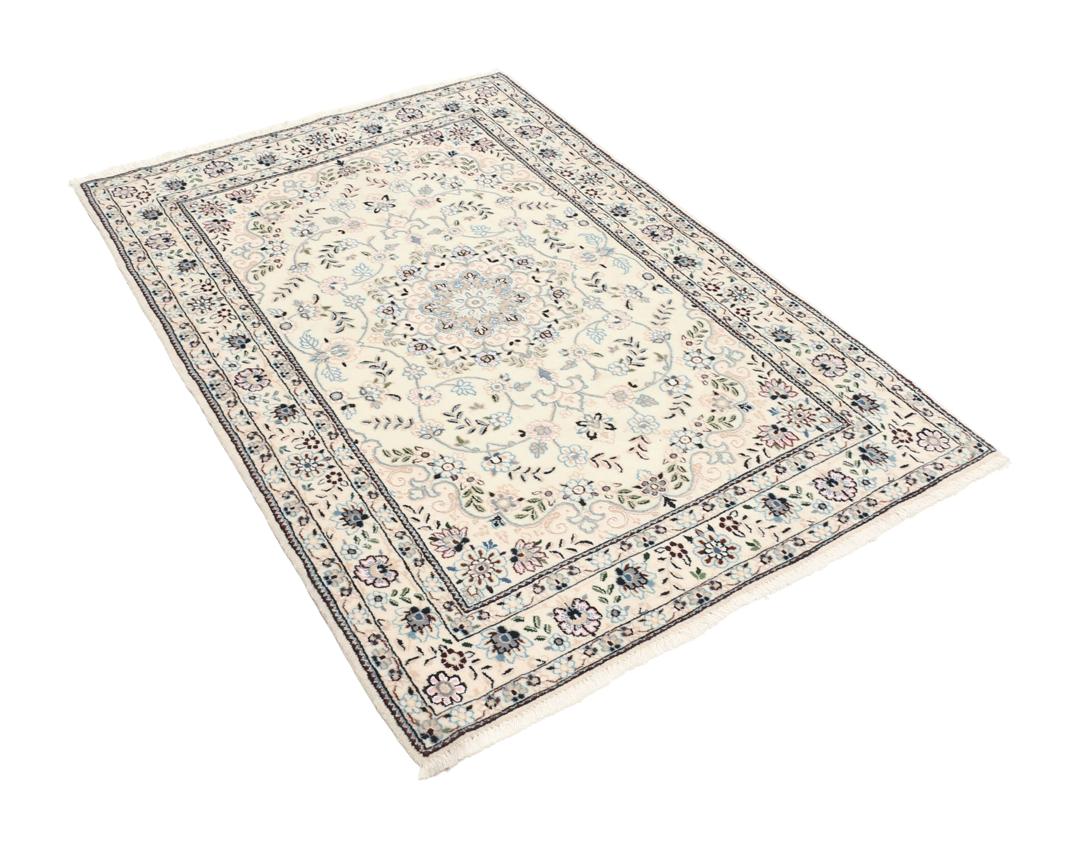
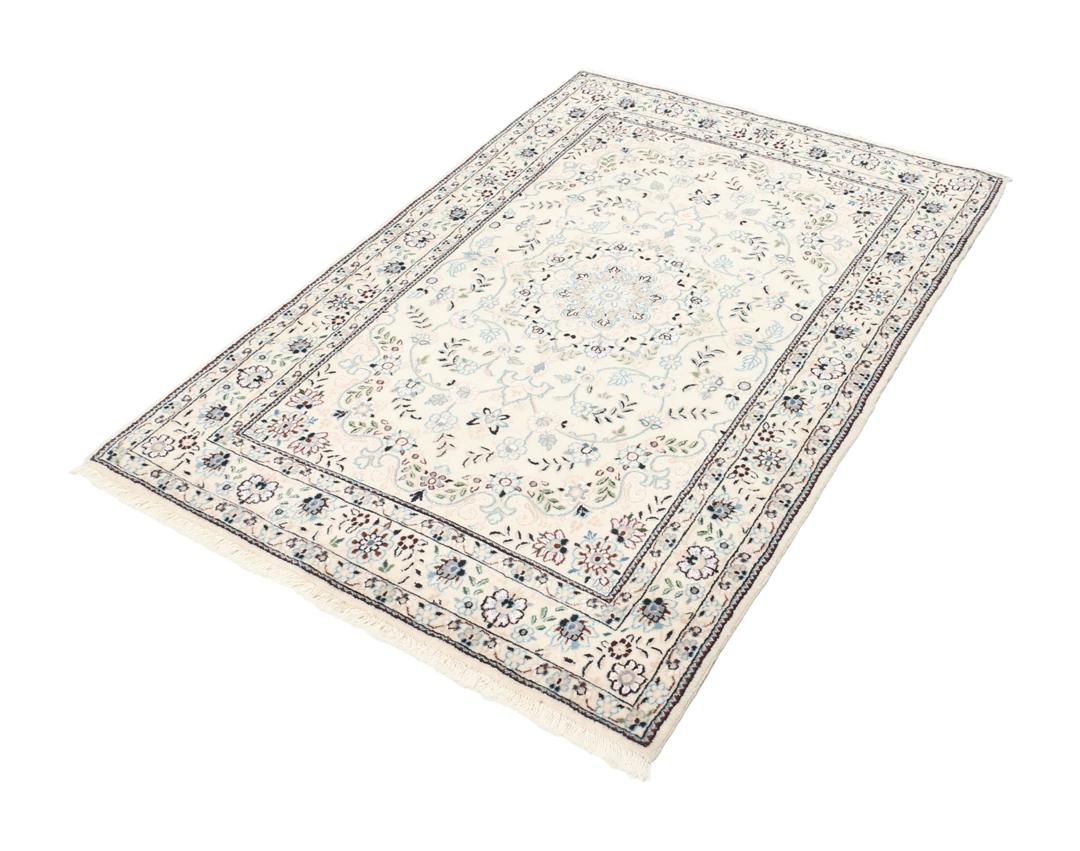
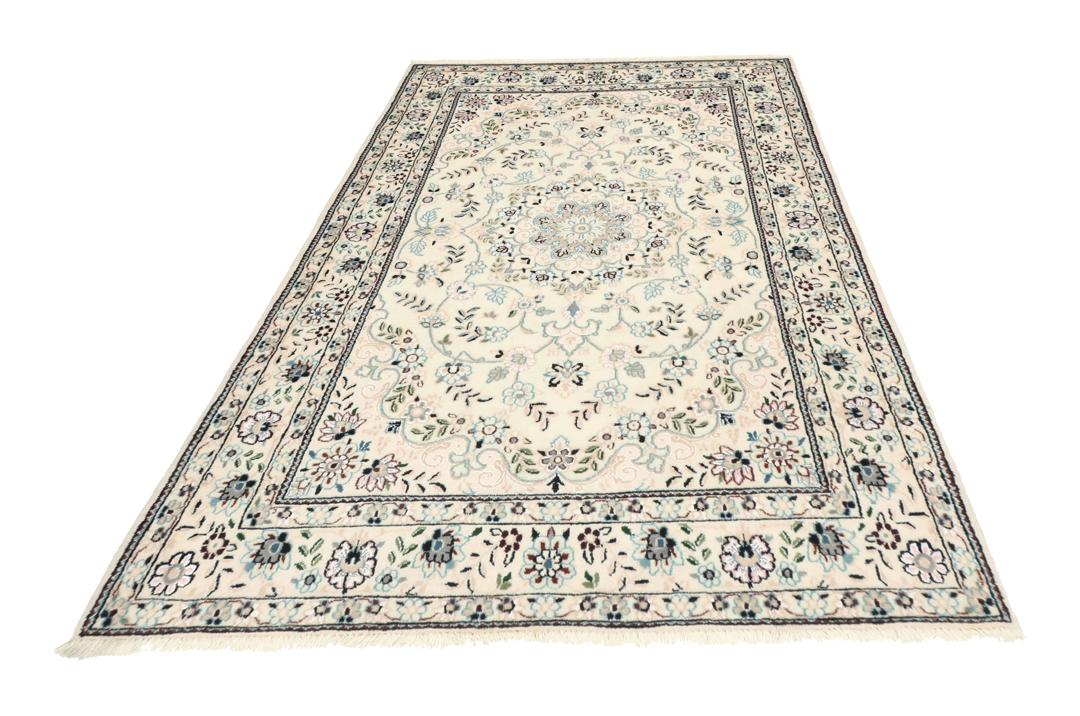
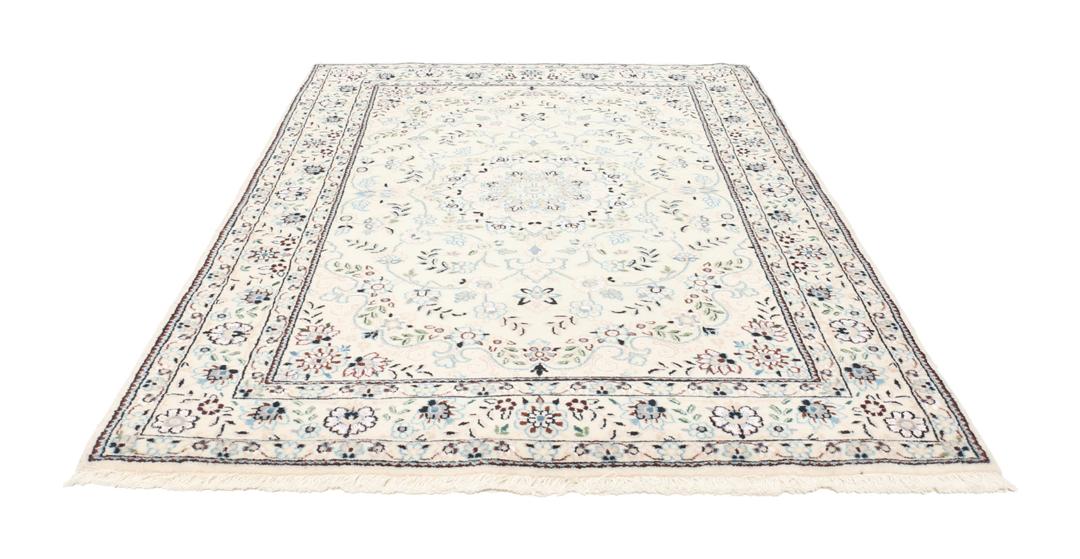
Nain rugs originate from the city of Nain, located in the heart of the Middle East. Historically, this region was famous for its high-quality wool textiles and cloaks, but in the early 20th century, the local weaving community shifted its expertise toward the production of fine, decorative floor coverings. This evolution was fuelled by a desire to create rugs that mirrored the elegance and sophistication of the finest historical weaving traditions.
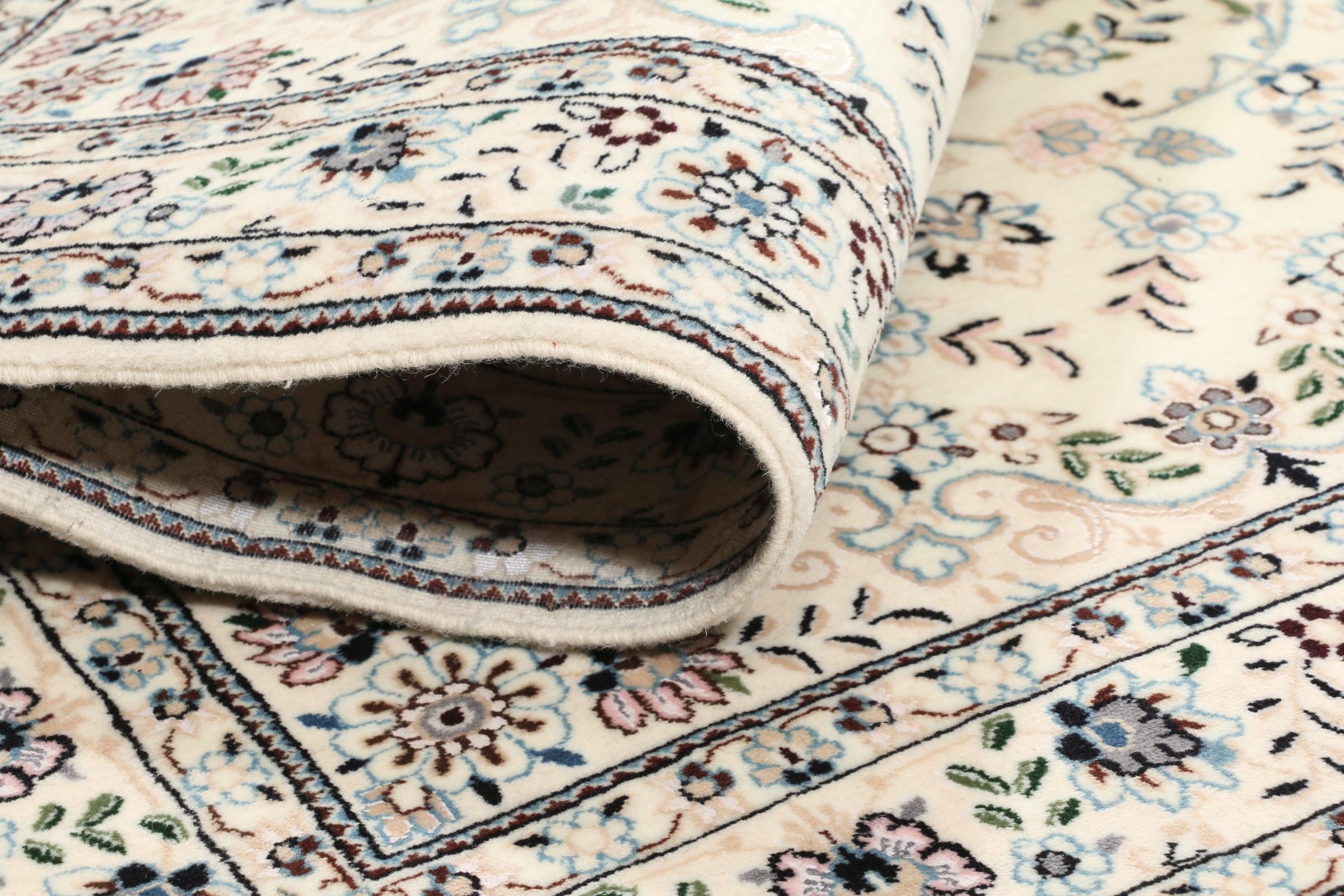
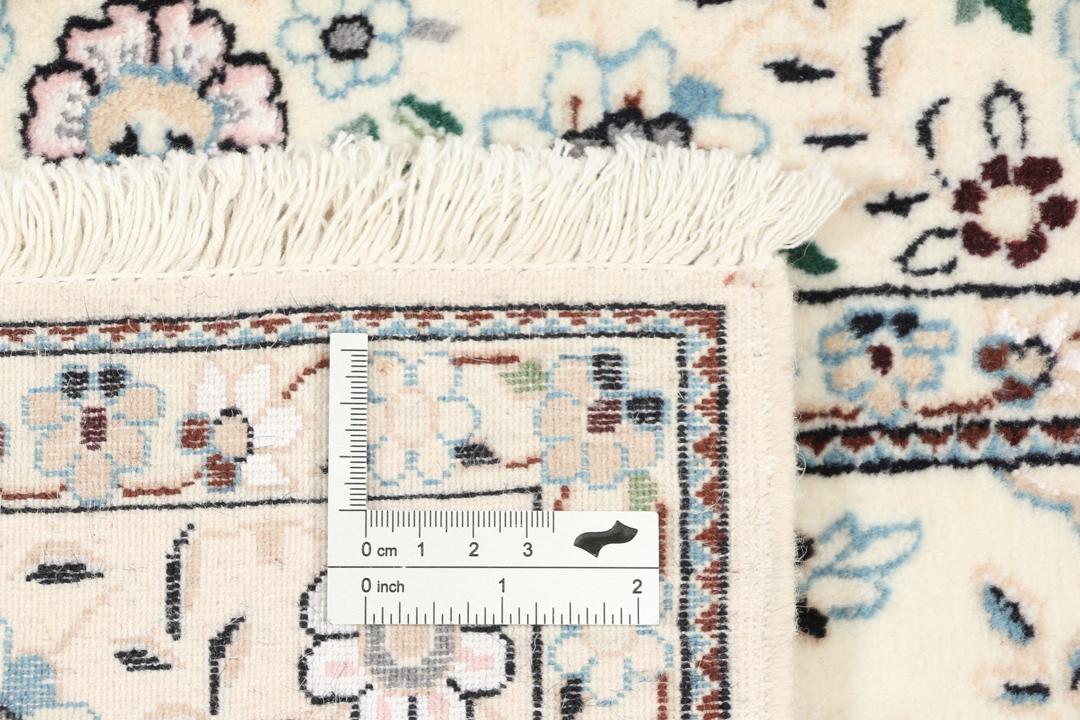
The designation '6La' refers to the number of strands of thread used in the warp of the rug. In the world of Nain weaving, the 'La' count is a crucial indicator of quality and fineness. A lower number, such as 6, signifies a thinner, more complex thread construction, which allows for a significantly higher knot density. This technical choice is what gives these rugs their signature crispness, allowing for detailed, curvilinear designs that remain sharp and clear over decades of use.
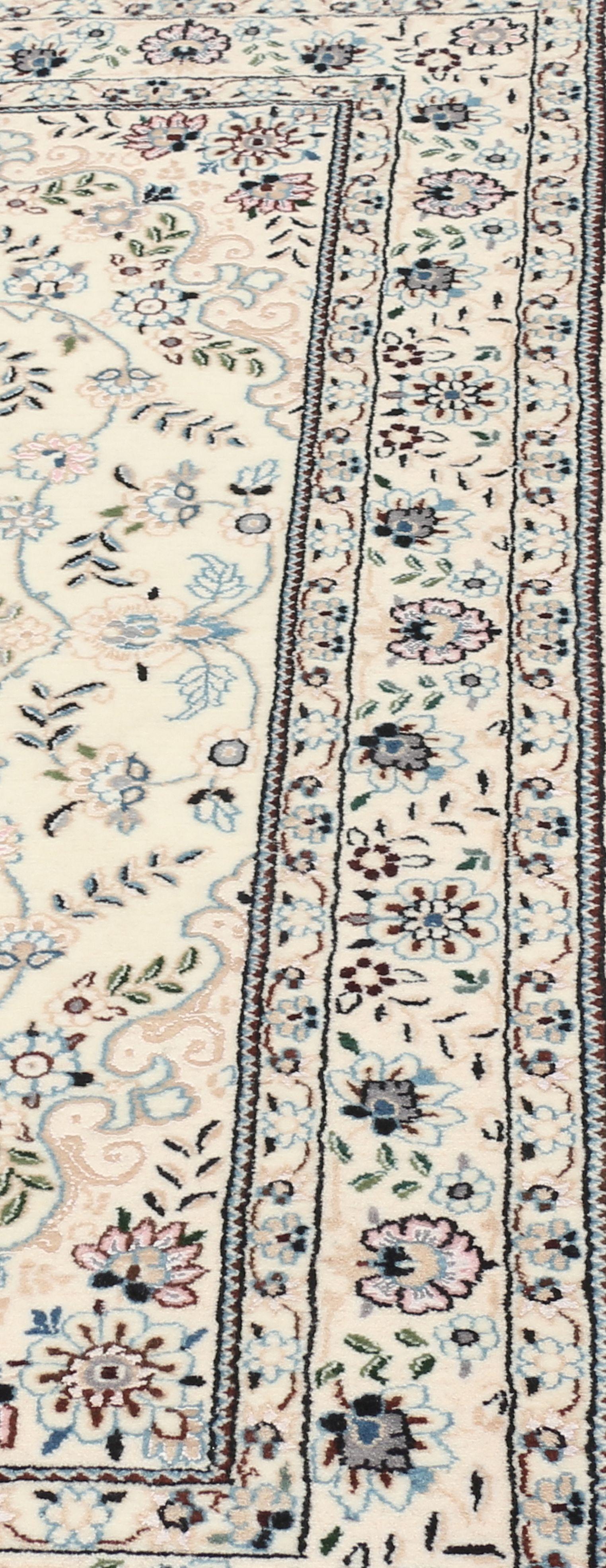
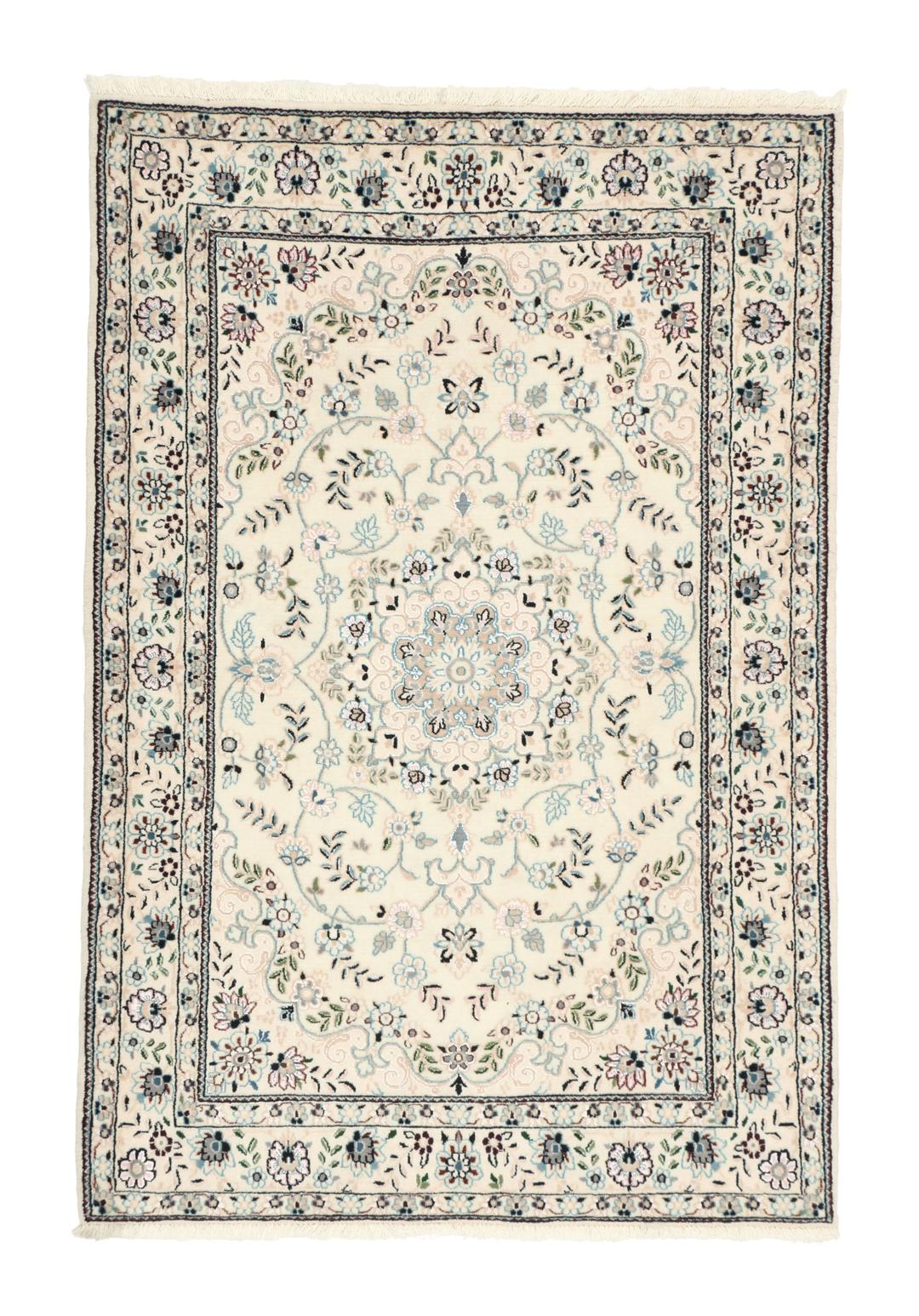
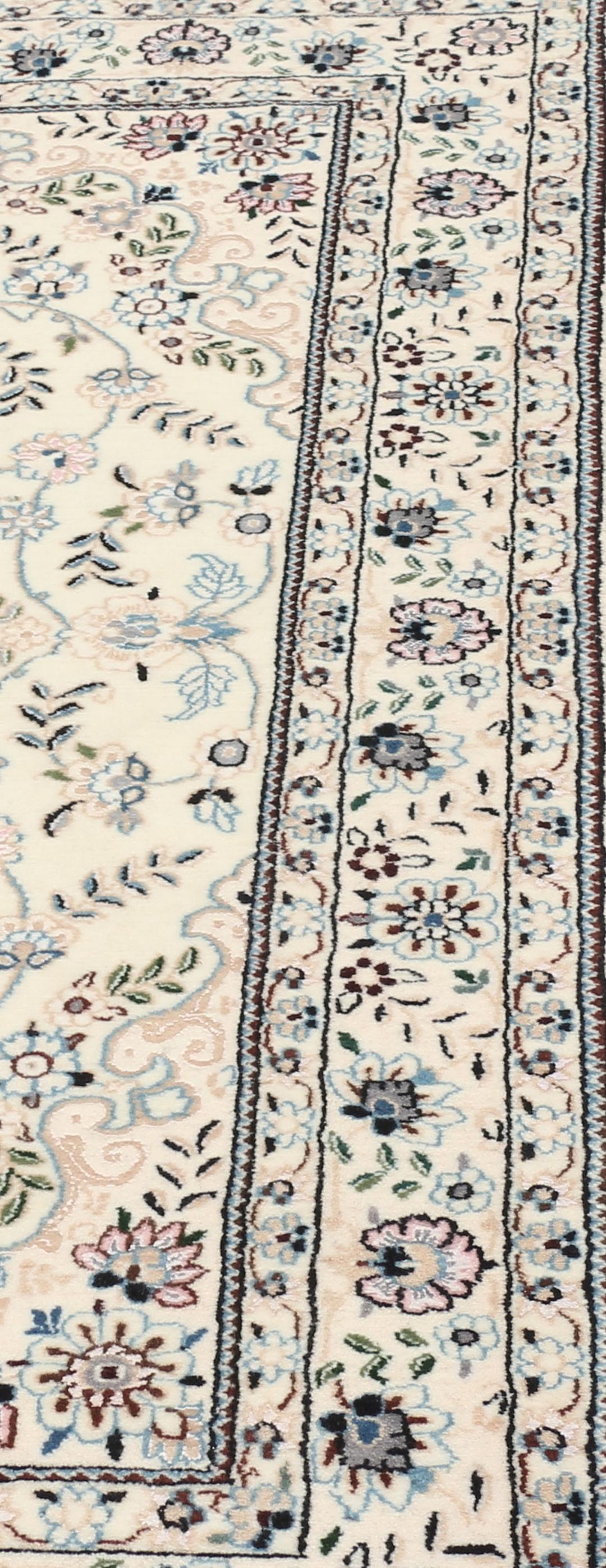
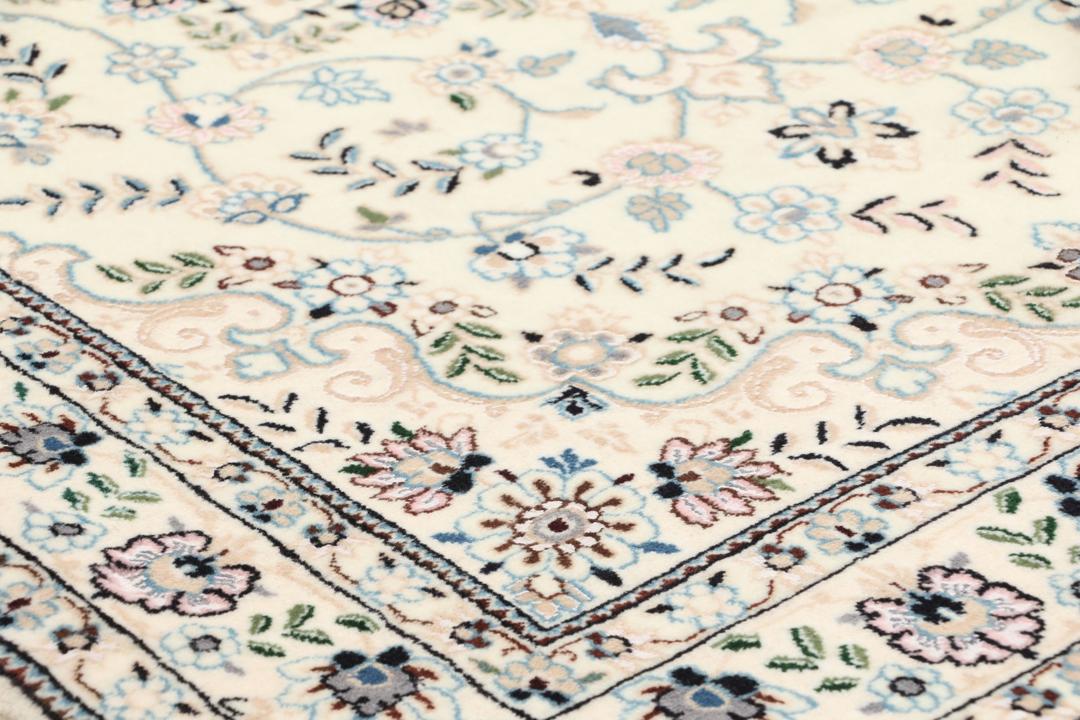
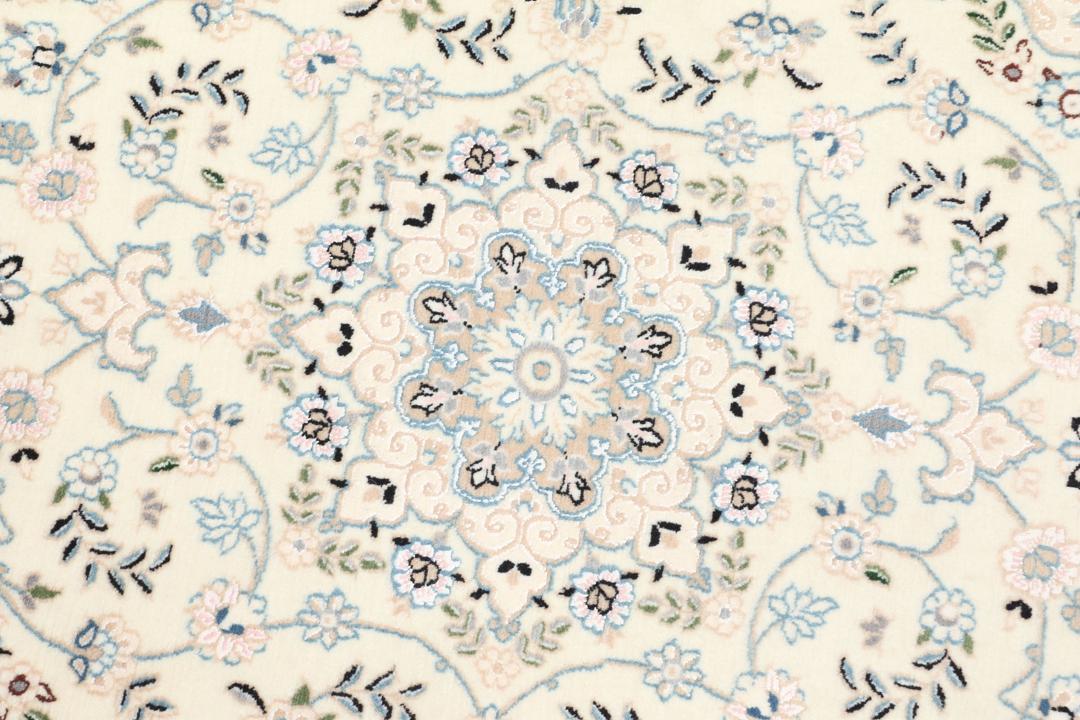
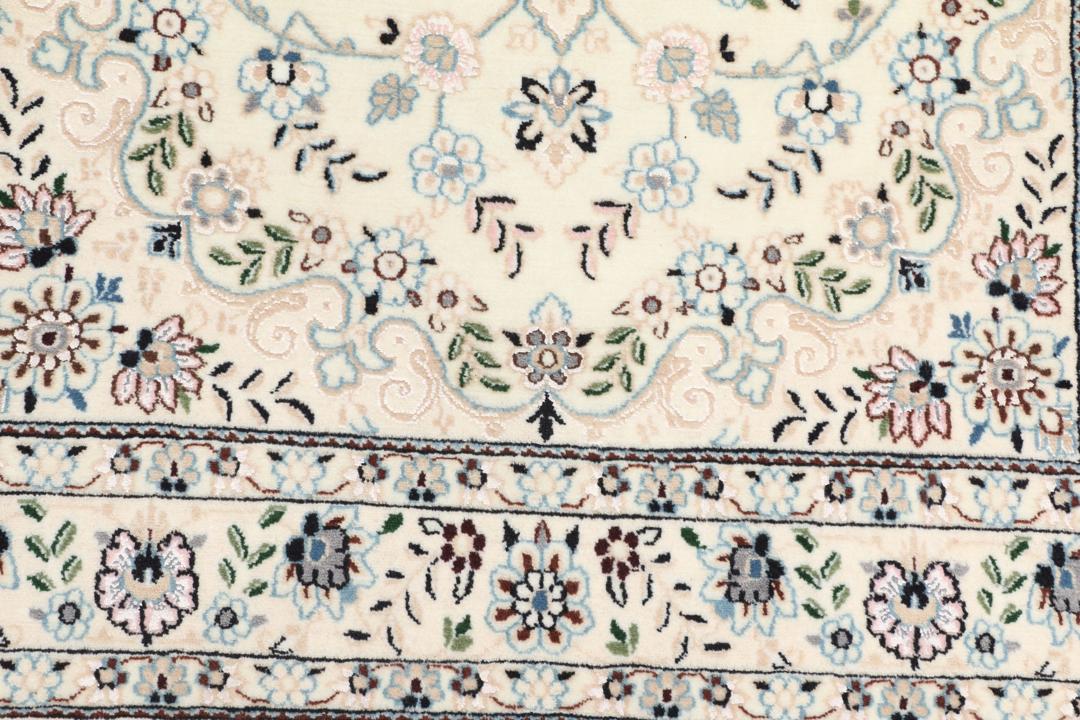
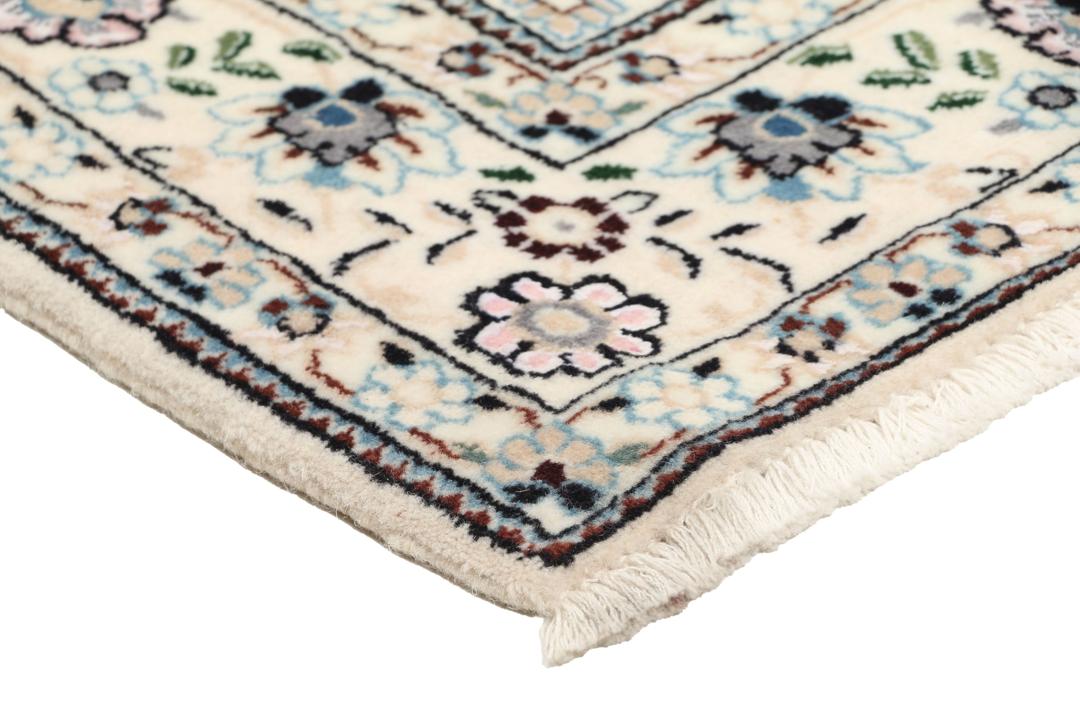
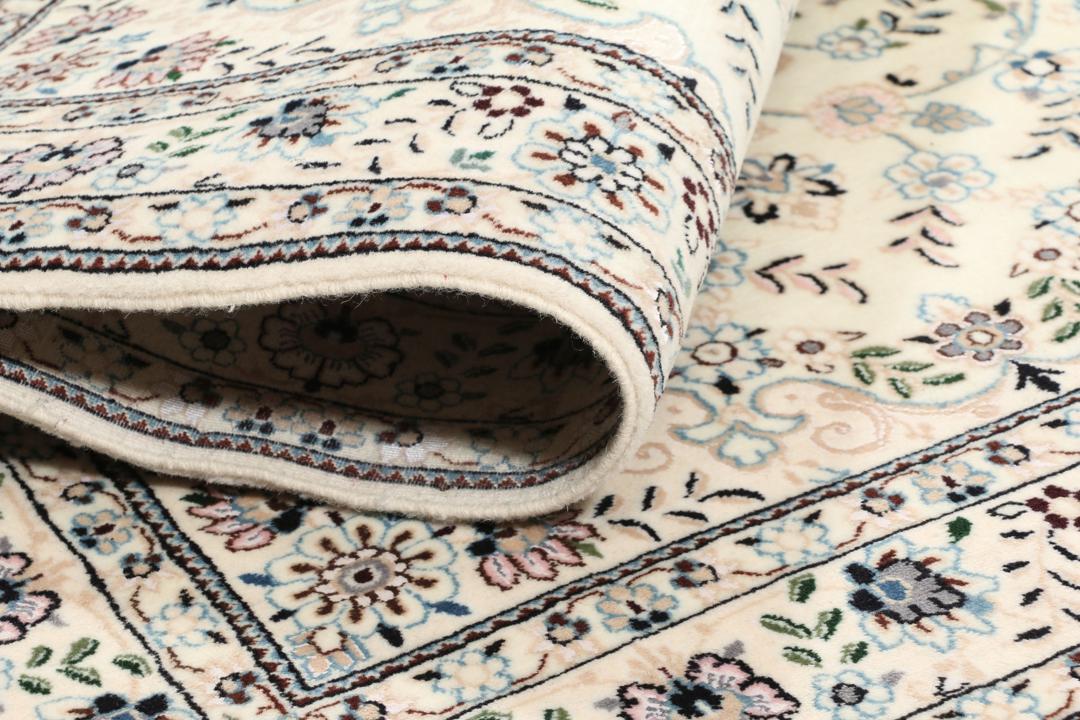
Visually, these rugs are defined by their characteristic use of a neutral, light-toned field, often featuring ivory or beige, contrasted with delicate floral patterns in shades of blue, cream, and soft green. The designs frequently centre around a complex medallion, surrounded by winding vines, palmettes, and intricate floral sprays. This aesthetic is a hallmark of the Nain style, emphasising balance and grace rather than bold, contrasting colours.
Collecting a Nain rug is an entry into a legacy of refined craftsmanship. Because they are produced in limited numbers and require such a high degree of technical skill, these pieces are highly prized by collectors and homeowners alike. Owning one is a mark of appreciation for the patience and artistry required to produce such a dense, intricate textile. It is a piece of cultural heritage that brings a sense of permanence and cultivated beauty to any environment.