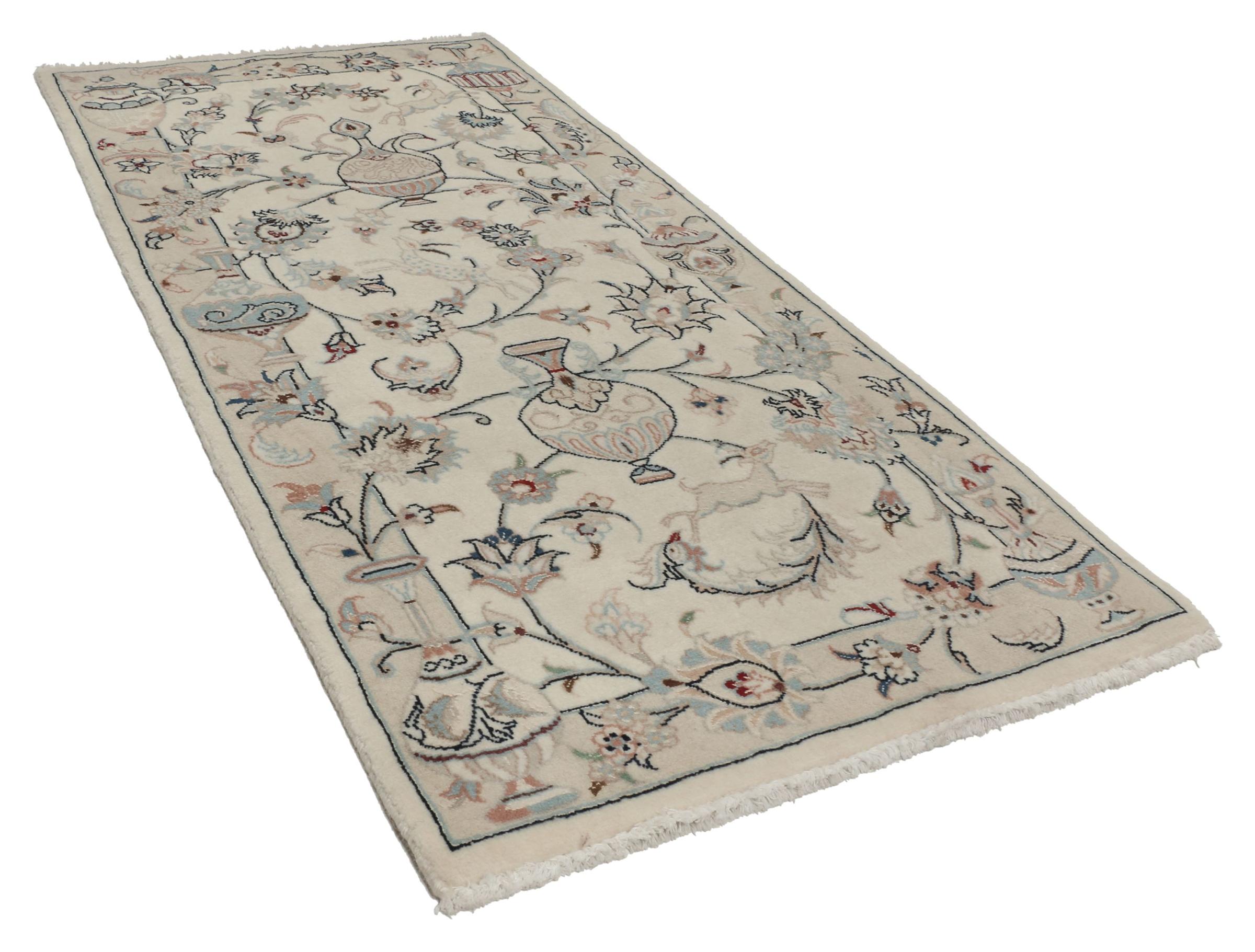
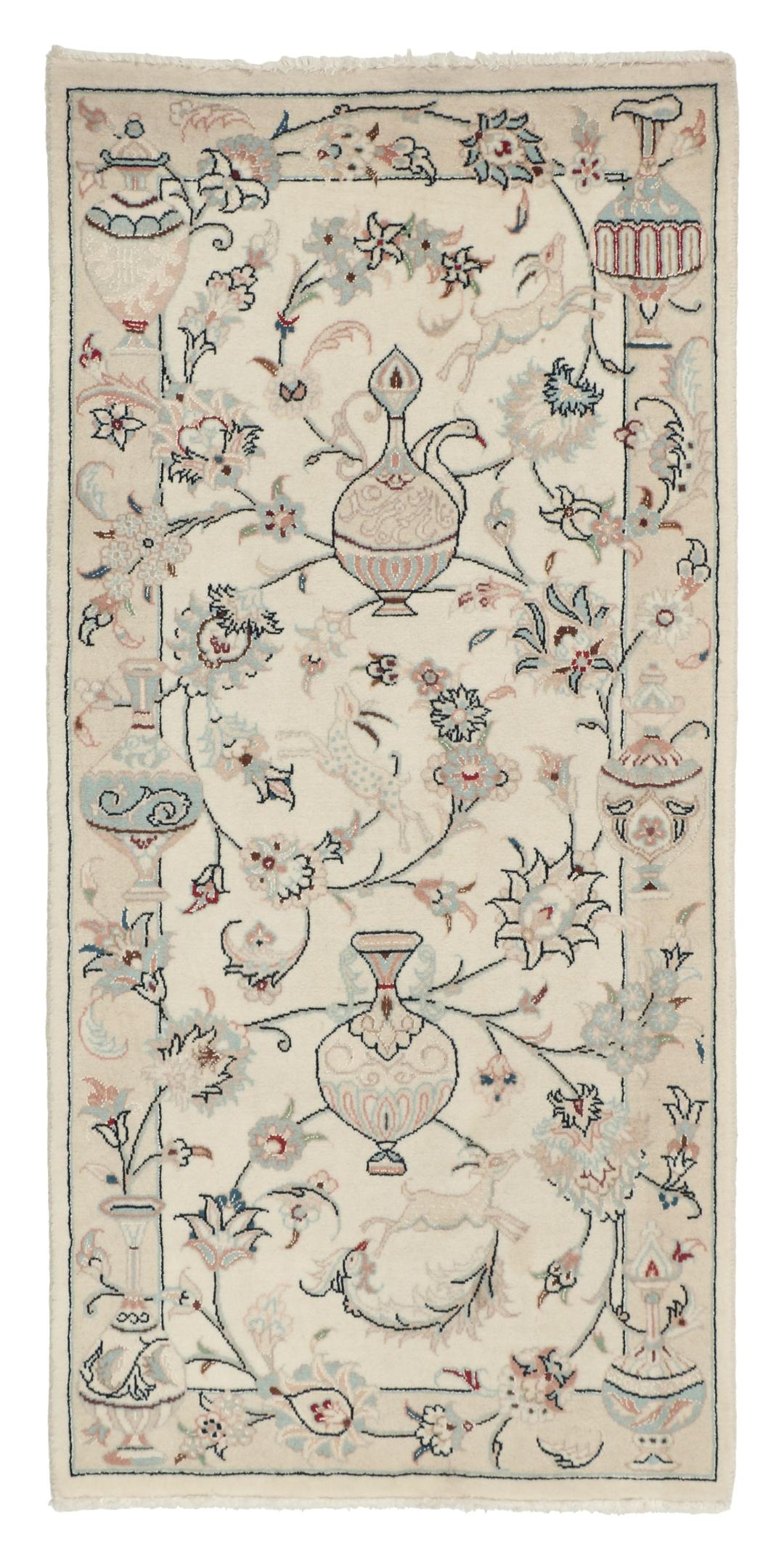
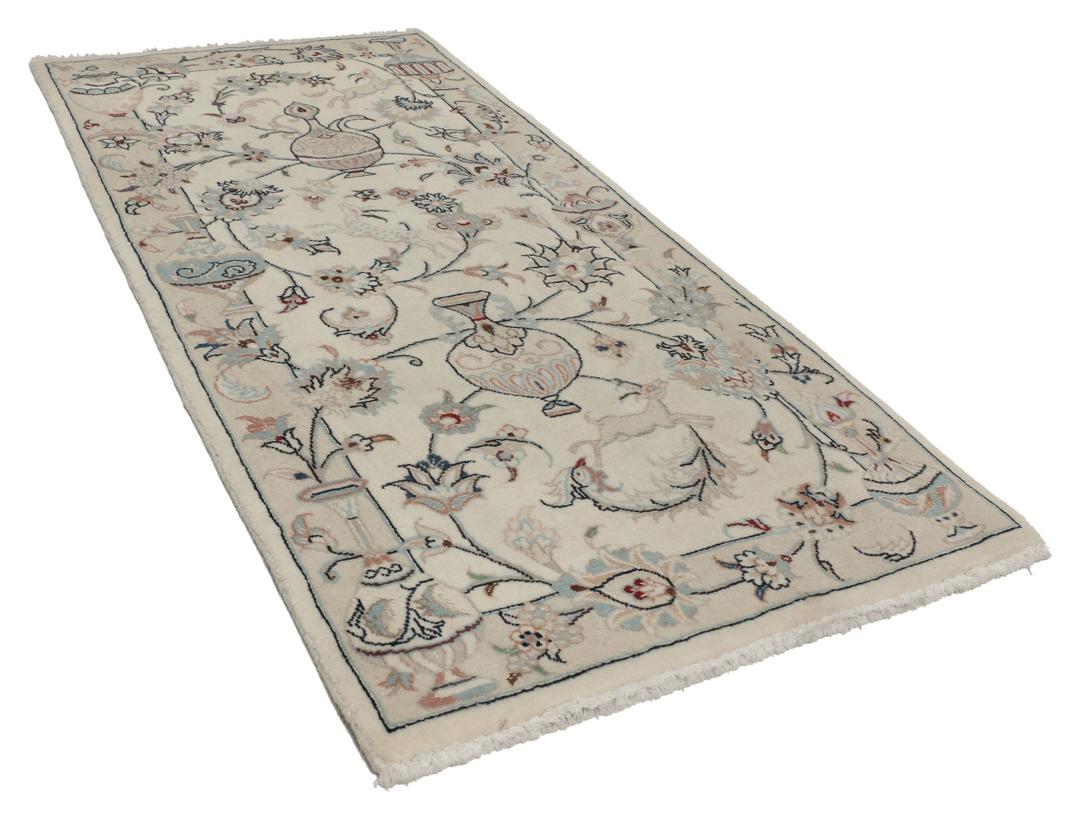
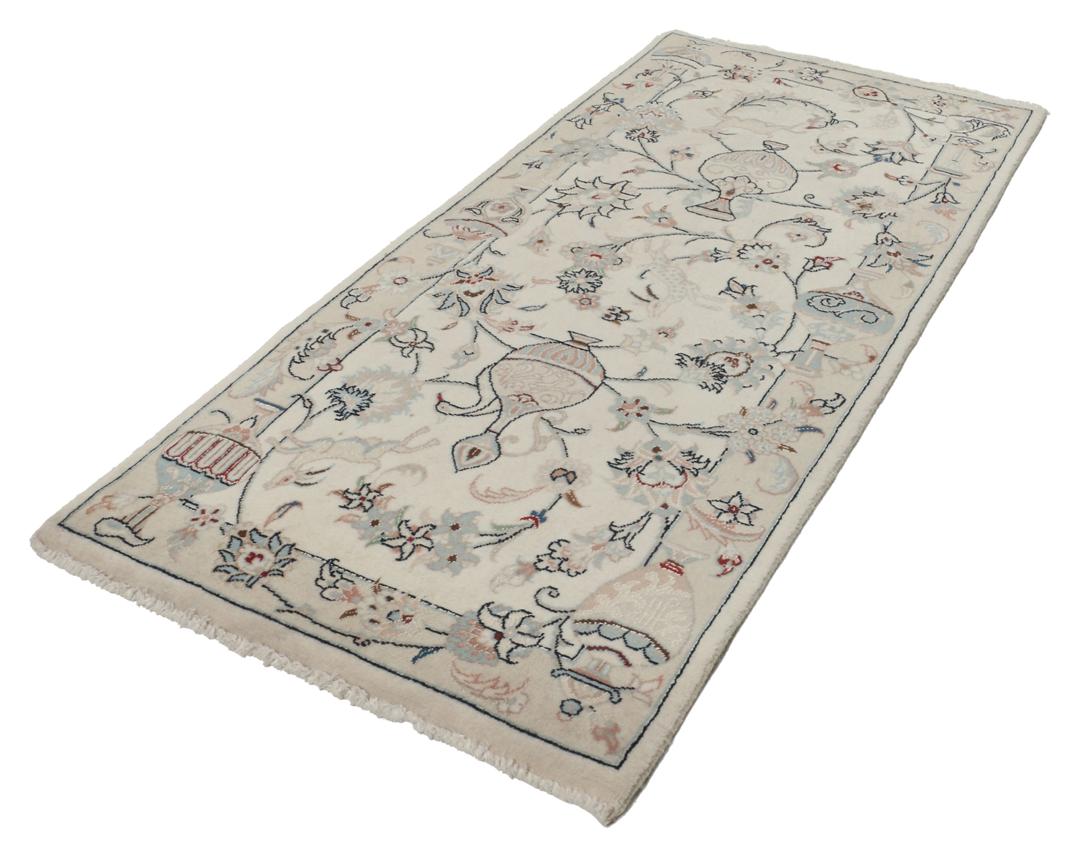
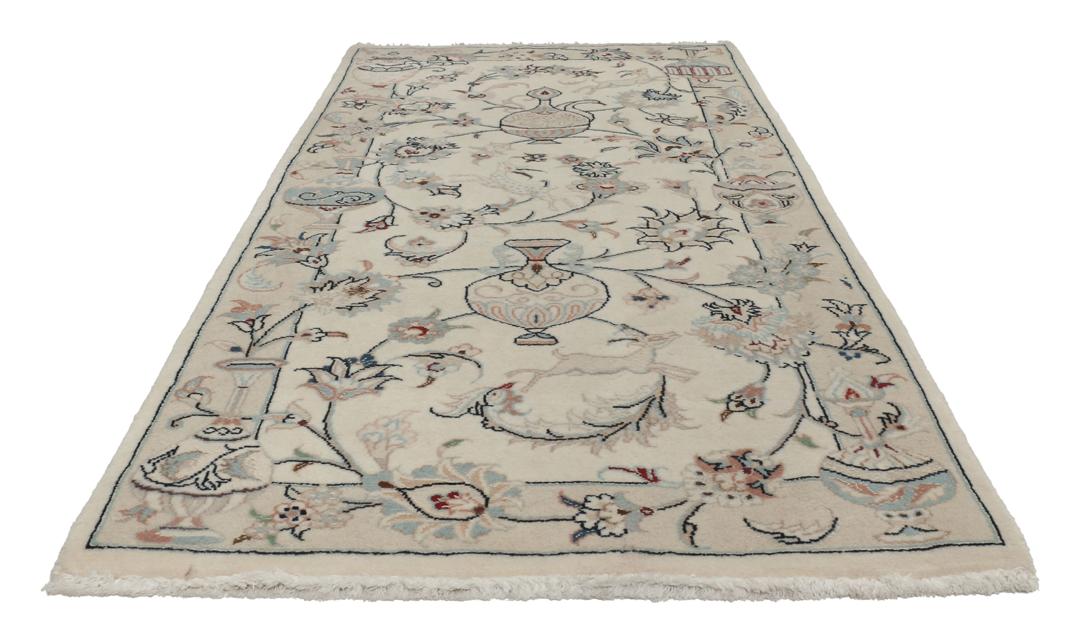
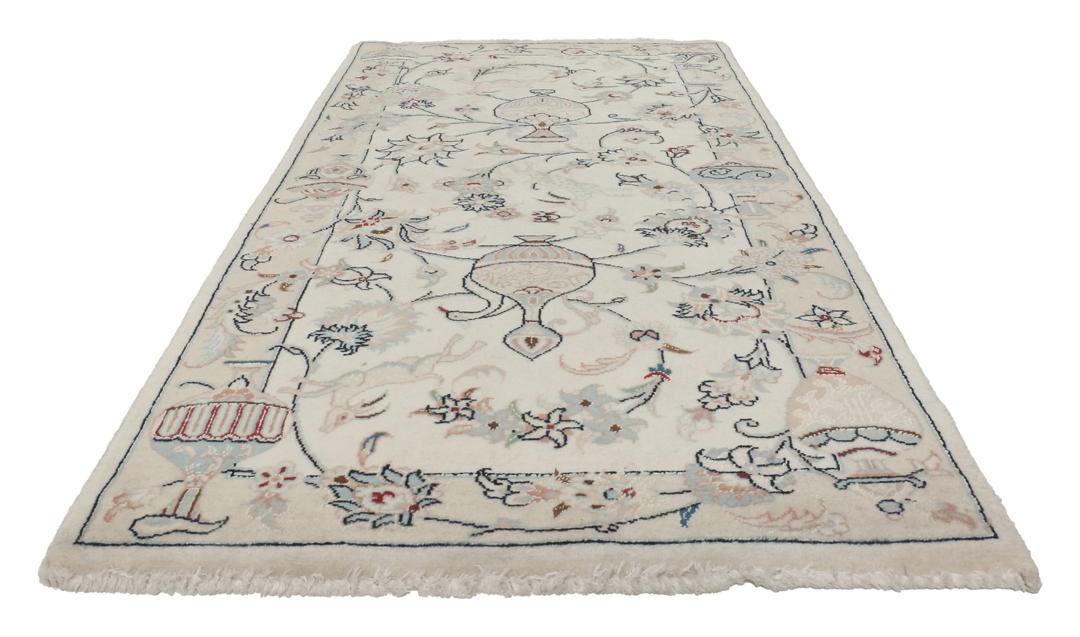
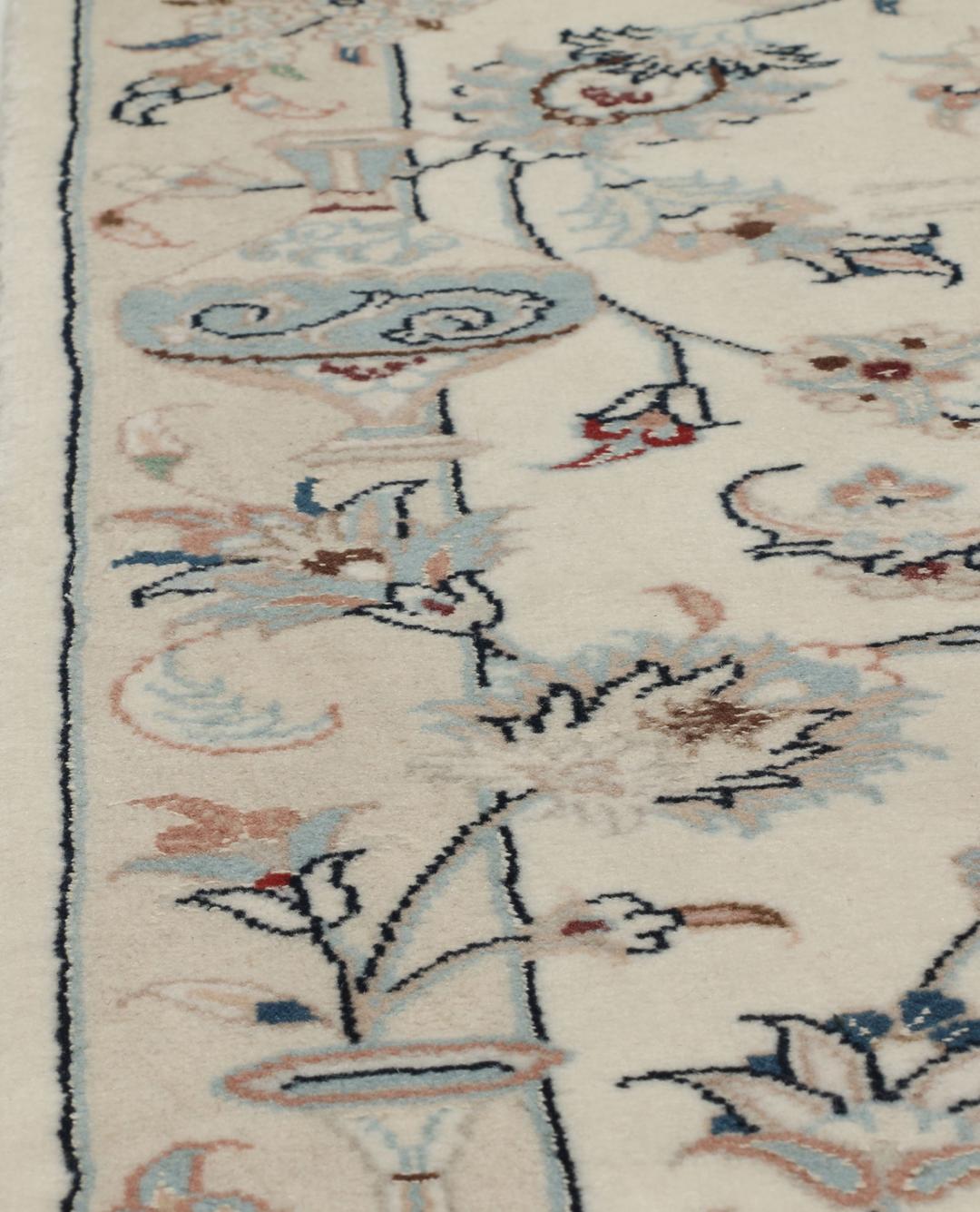
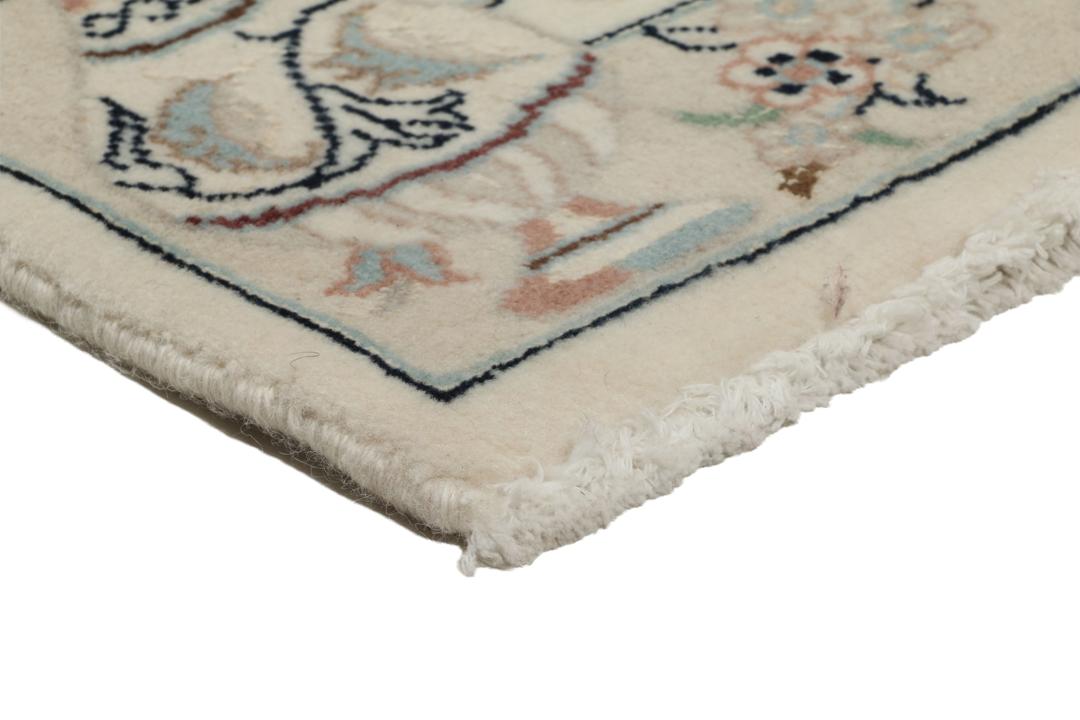
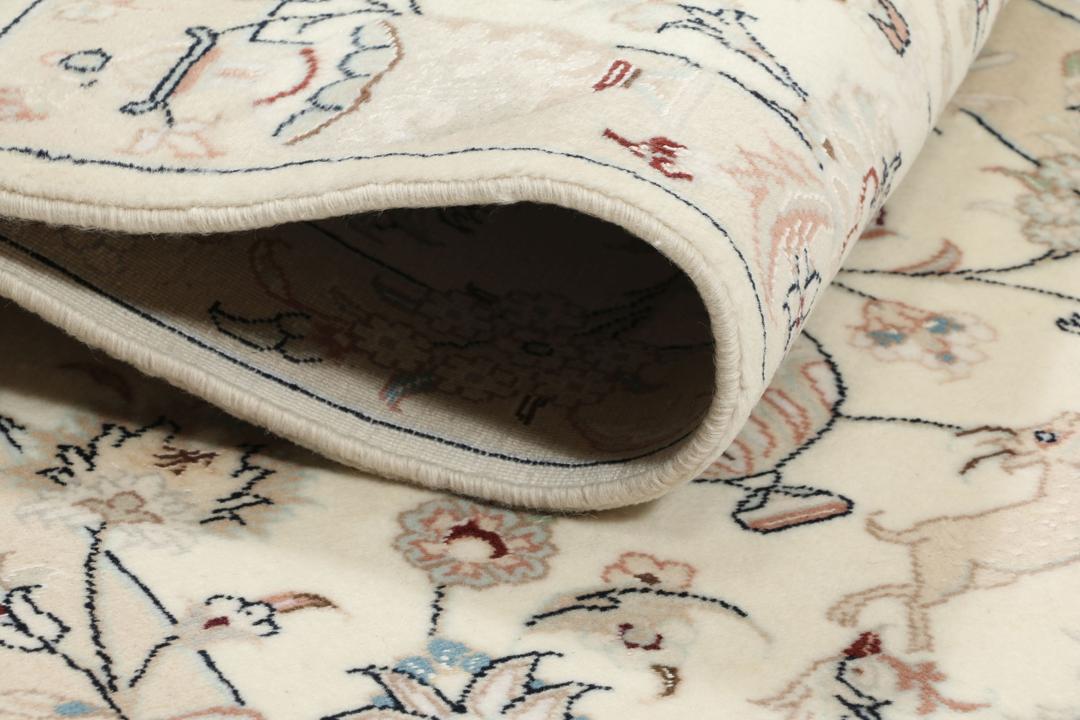
Nain rugs originate from the historic town of Nain, located in the heart of the Middle East. Once famous for its high-quality wool textiles and religious cloaks, the region transitioned into rug weaving during the early 20th century. Over time, these rugs gained international renown for their sophisticated designs, often featuring soft, muted colour palettes that distinguish them from the more vibrant traditions found elsewhere in the region.
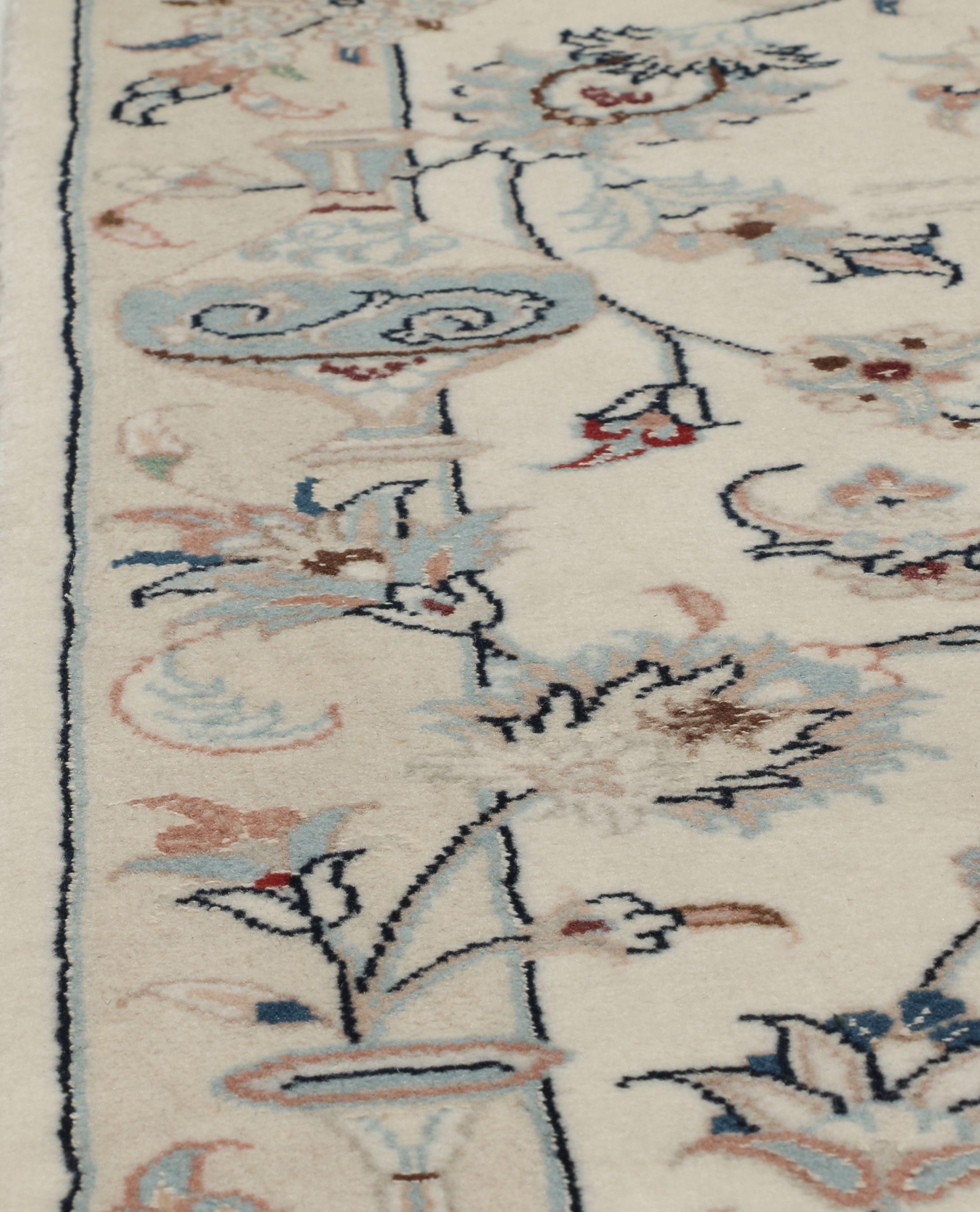
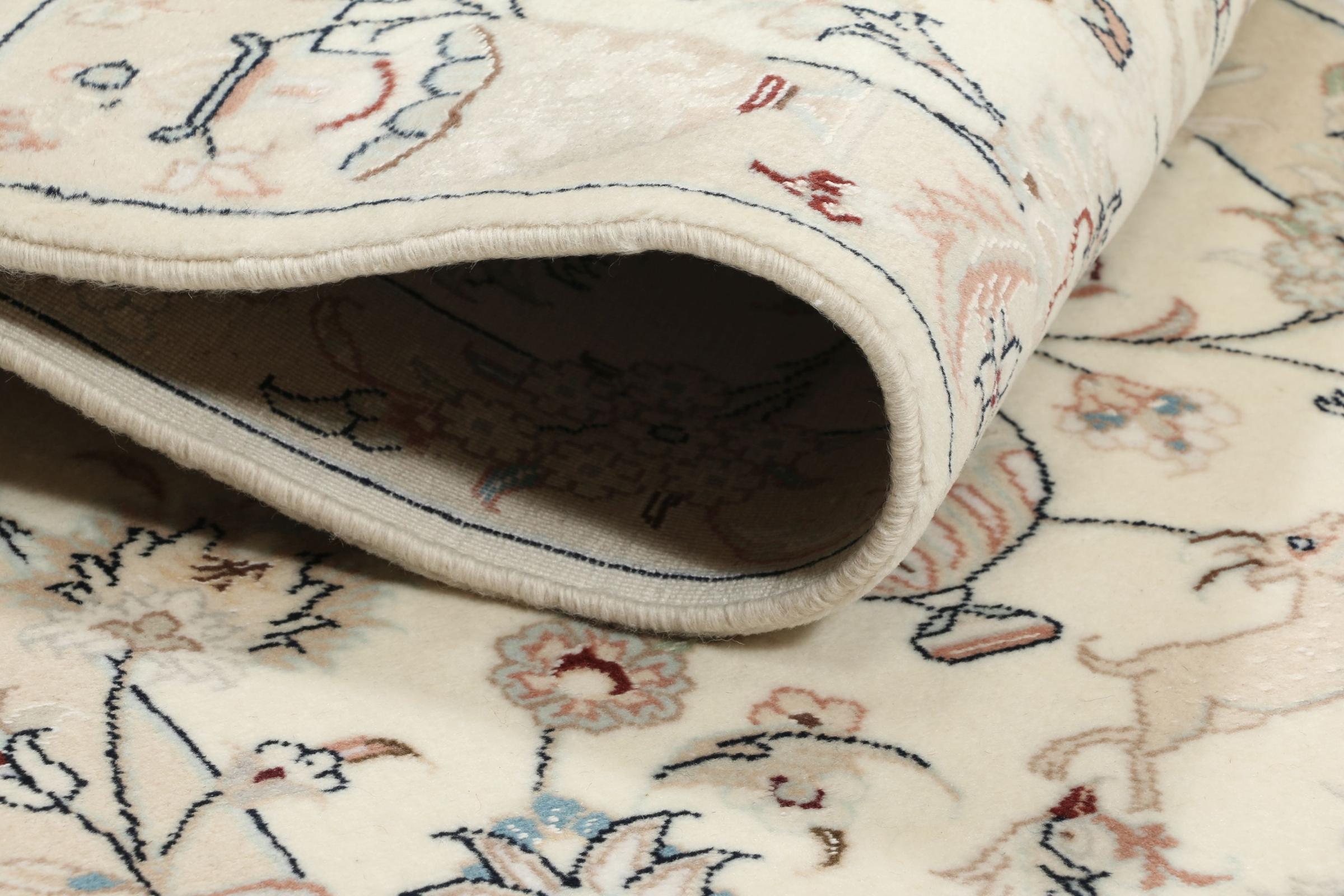
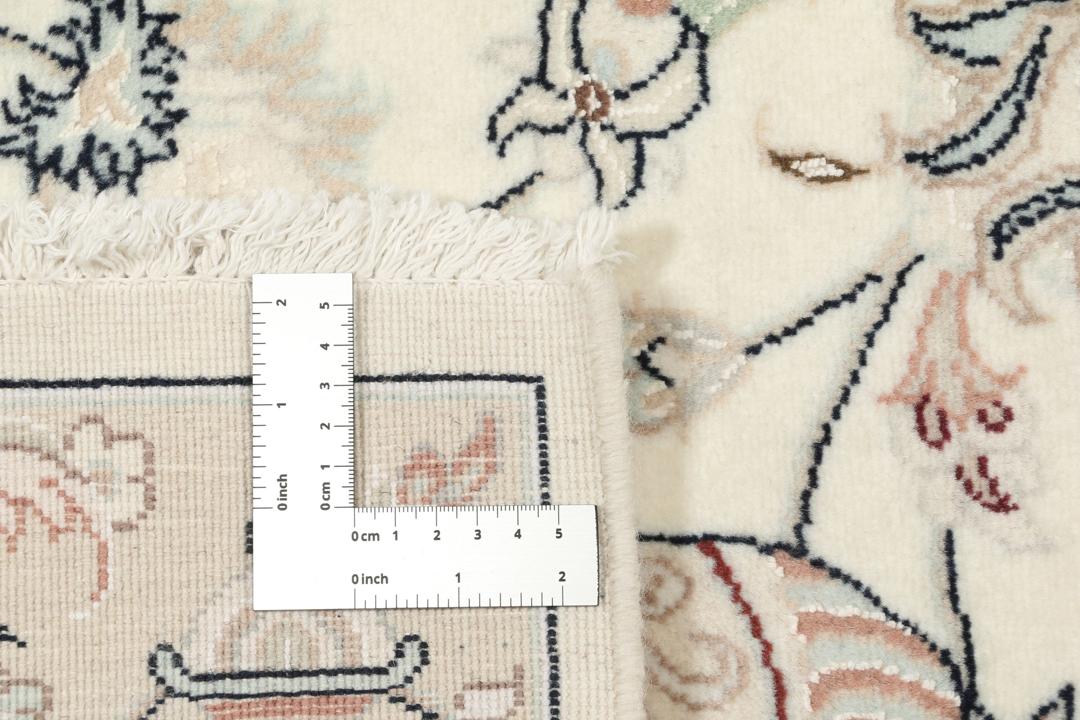
The '9La' designation is a vital piece of technical terminology for collectors and enthusiasts. It refers to the number of threads used in the warp, which directly influences the fineness of the rug. A 9La classification indicates a high level of intricacy, as it allows for a finer weave that translates into sharper, more detailed patterns. This technical precision is what gives the rug its signature crisp appearance.
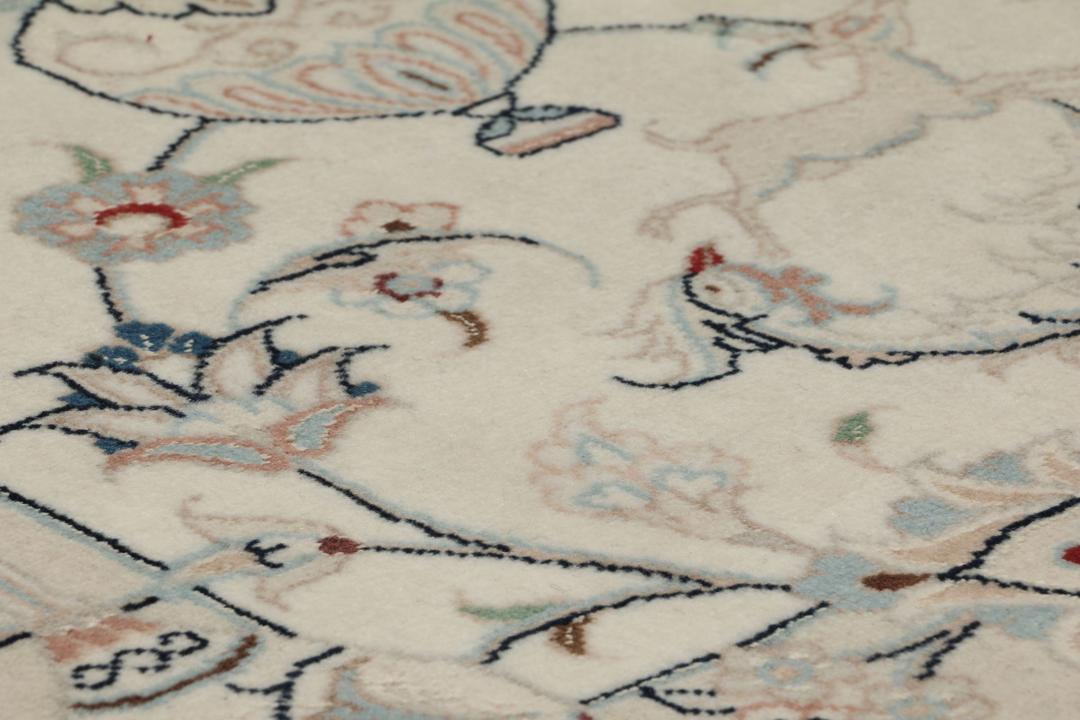
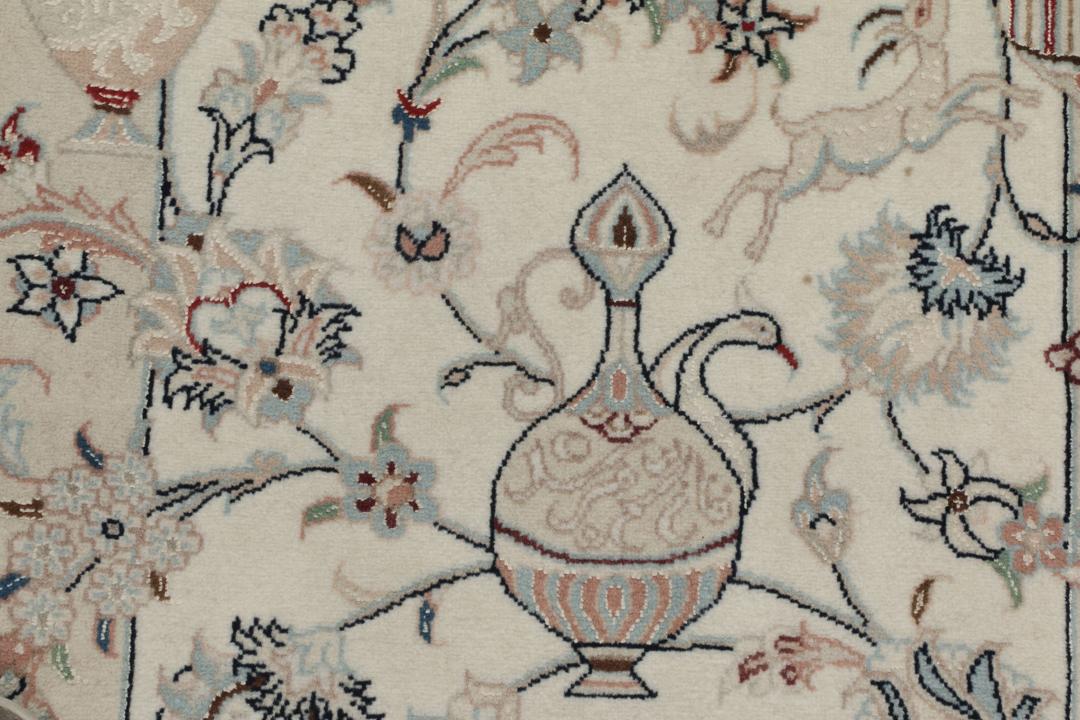
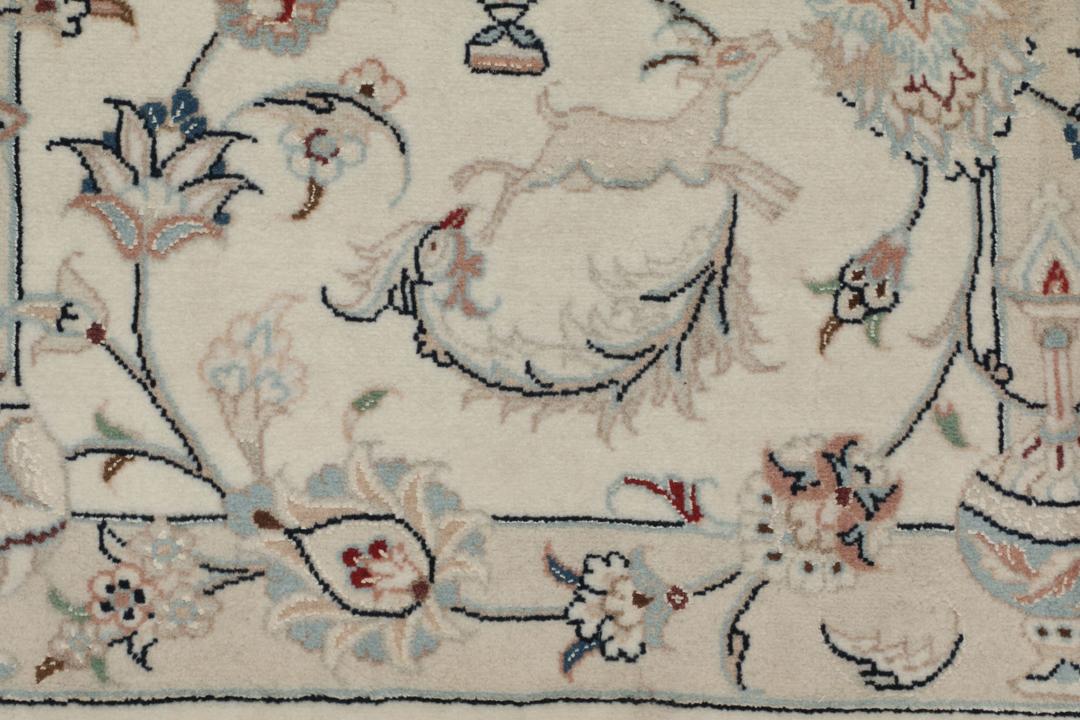
Signature design elements of the Nain tradition typically include central medallions, intricate floral arabesques, and elegant vases. These motifs are often rendered with a sense of airy openness, allowing the background to breathe. While many traditional rugs are heavily saturated with colour, the Nain style often leans into a more subtle approach, using shades of cream, blue, and soft red to create a sense of harmony and light.
Owning a Nain rug is considered a mark of appreciation for fine craftsmanship and heritage. These rugs are highly valued for their enduring quality and the artistic legacy they represent. By bringing a piece of this tradition into your home, you are not just acquiring a floor covering, but a reflection of a centuries-old dedication to beauty, precision, and the refined art of the knot.