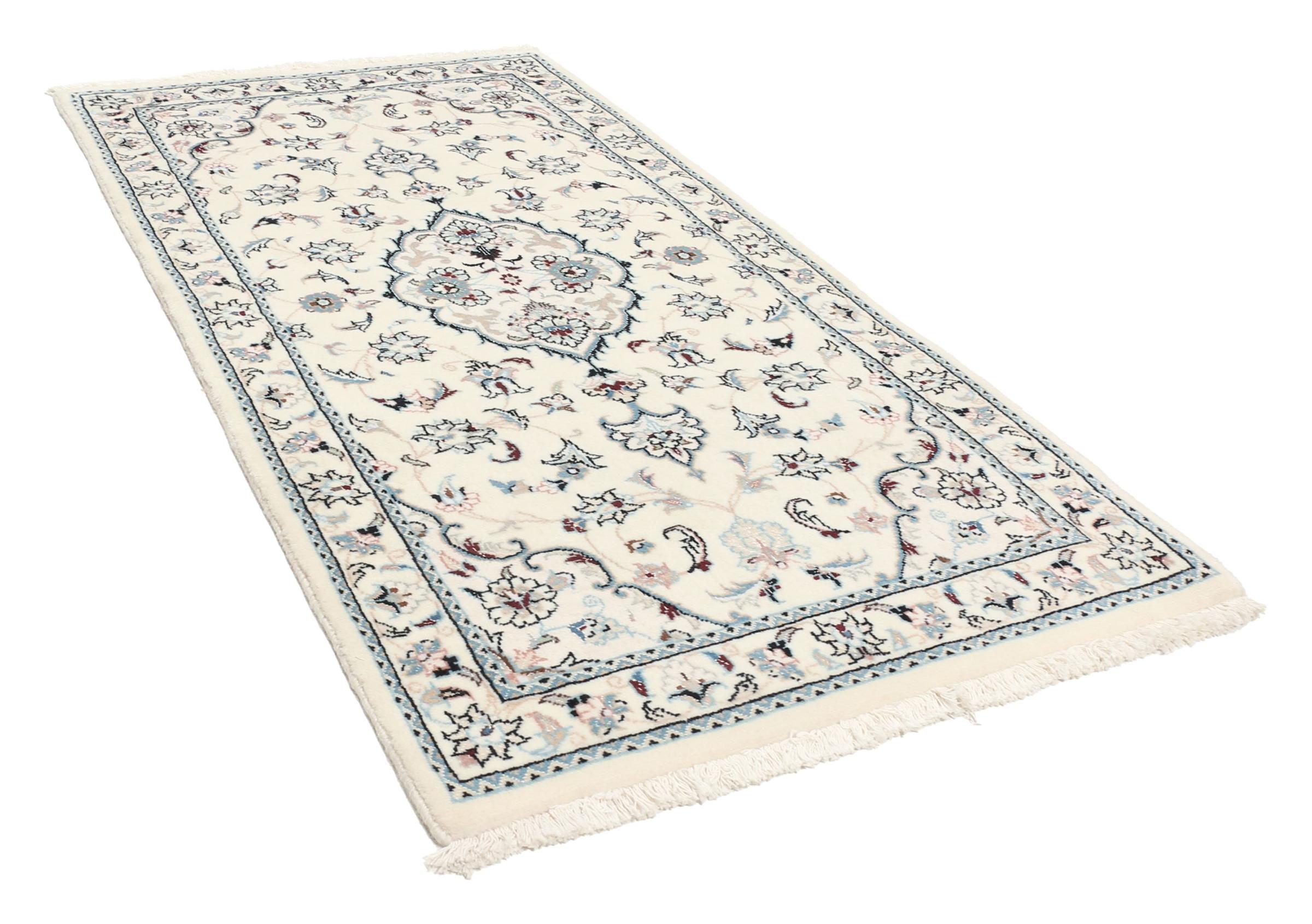
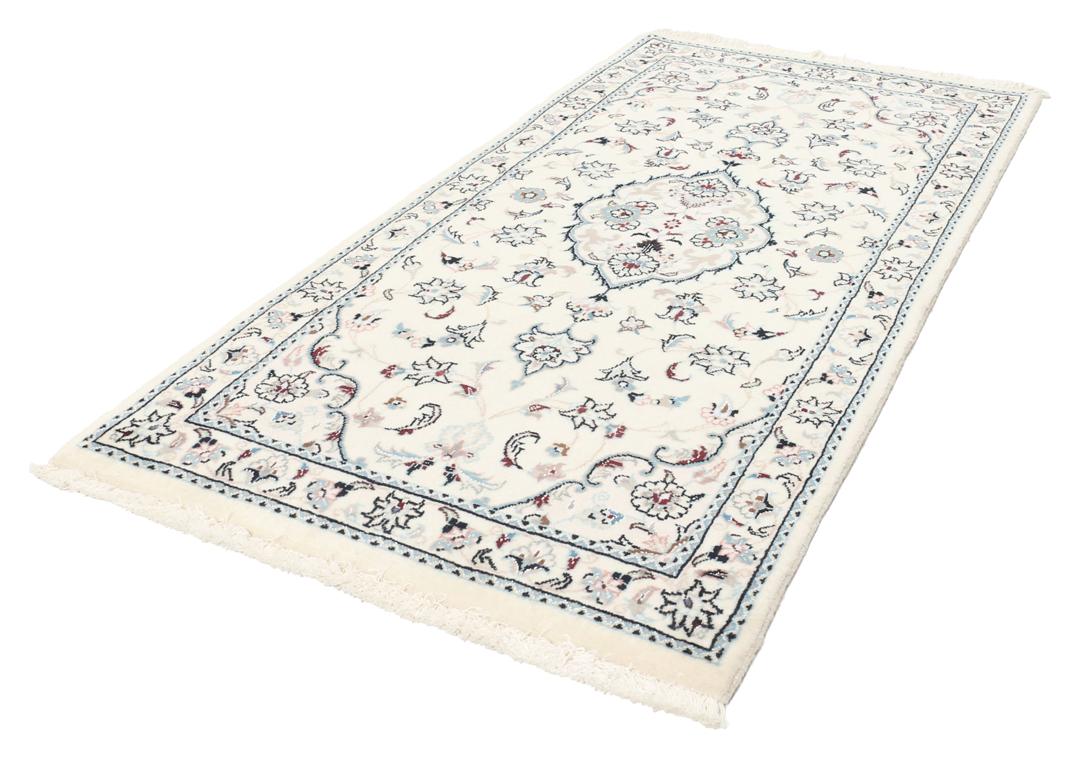
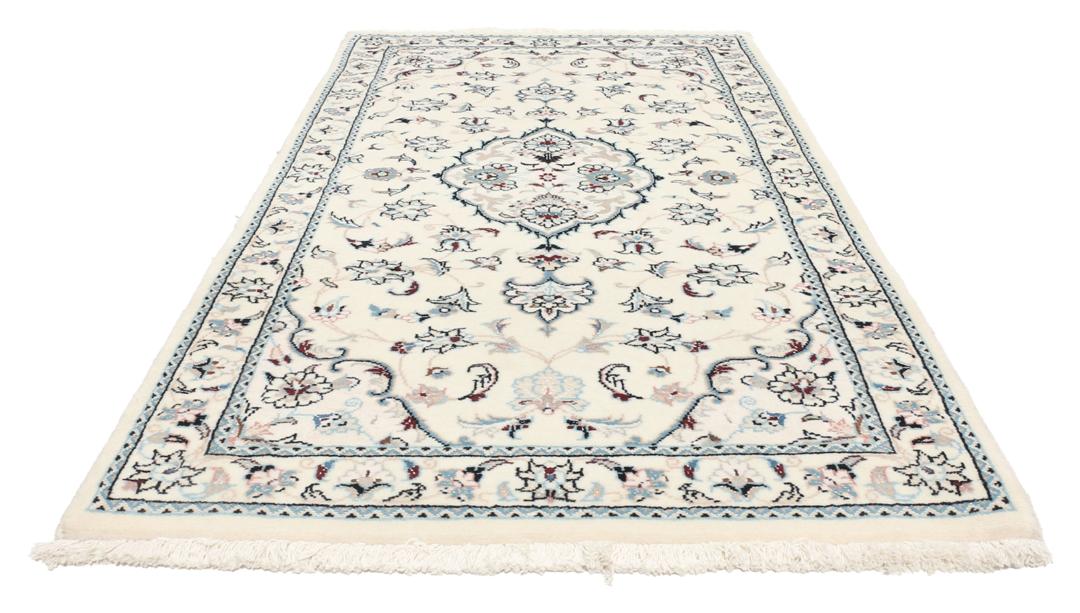
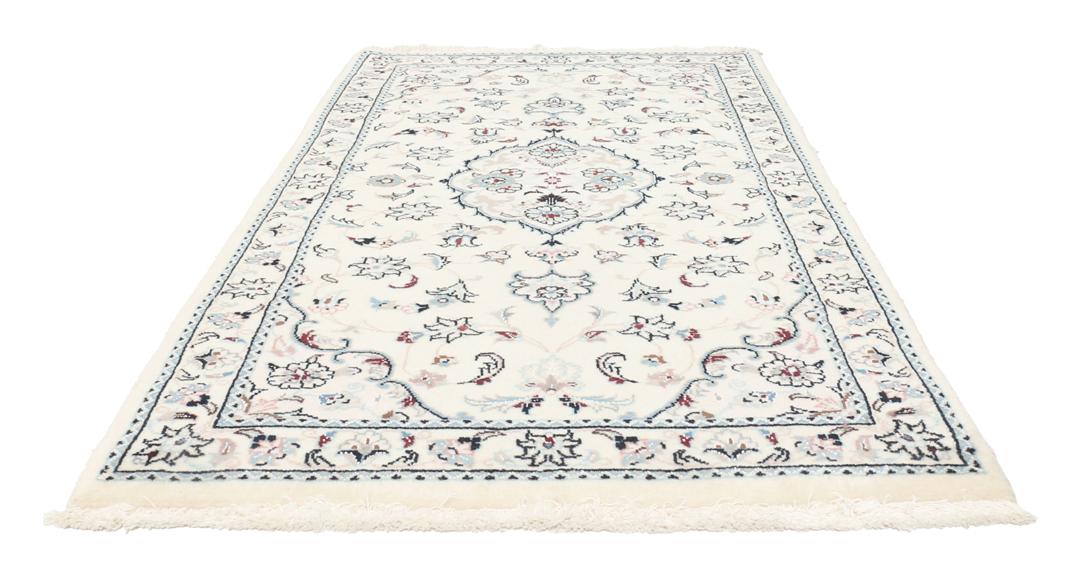
The Nain rug tradition hails from the central Middle Eastern region, where the city of Nain—originally famous for its high-quality wool textiles and religious garments—transitioned into rug weaving during the early 20th century. While many regions relied on older, more tribal design languages, Nain quickly developed its own signature style that drew heavily on the artistic heritage of larger, more established weaving centres.
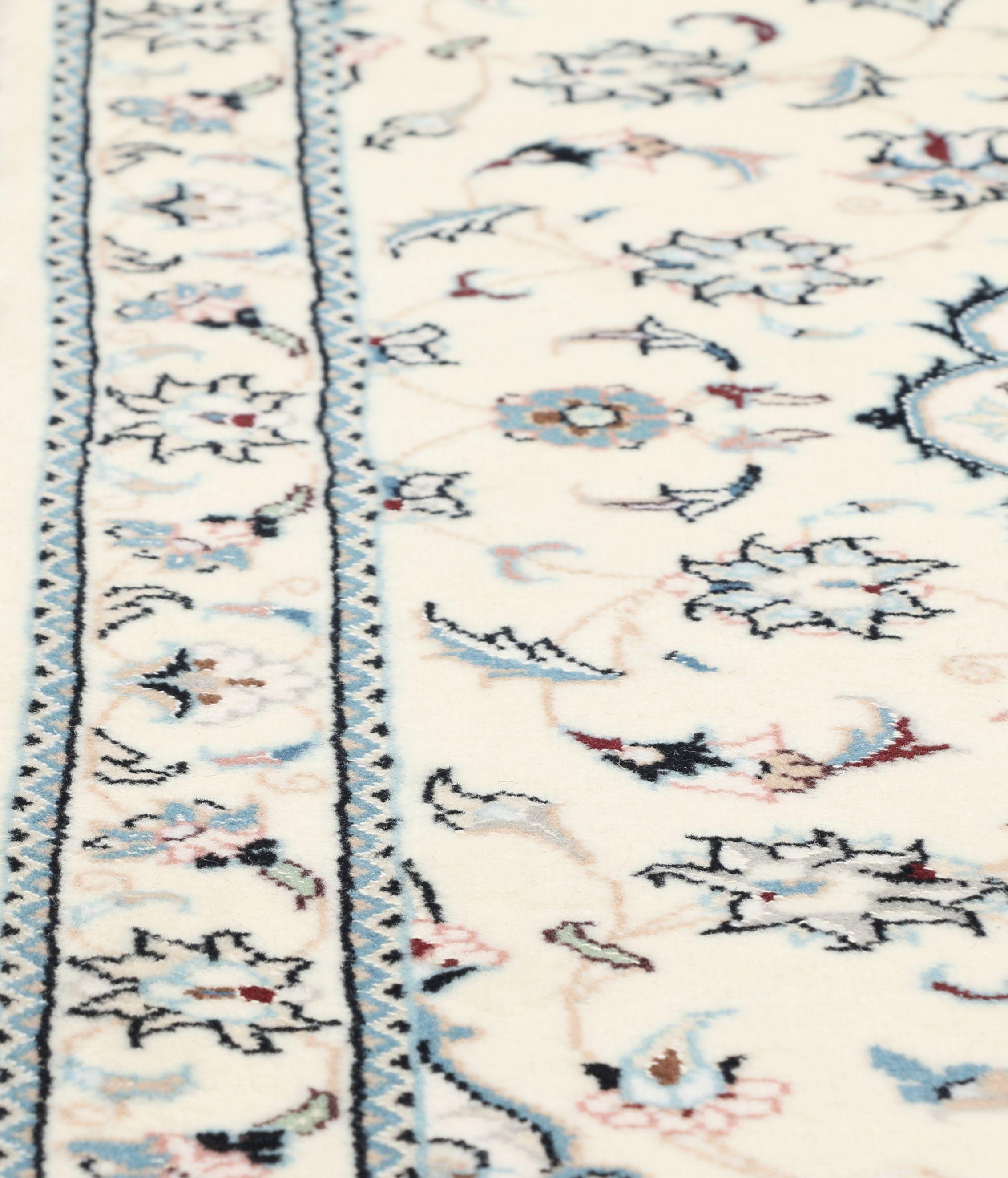
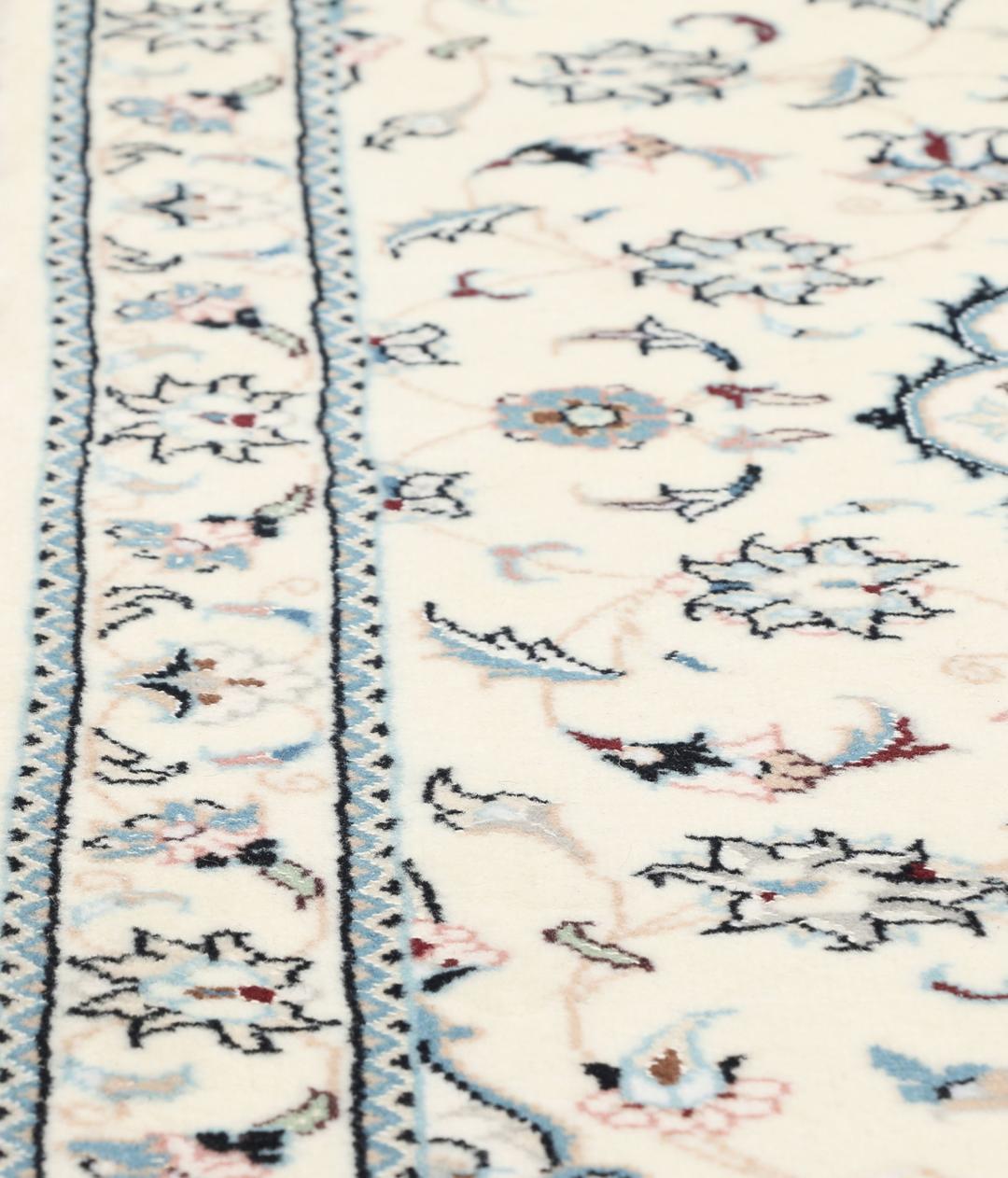
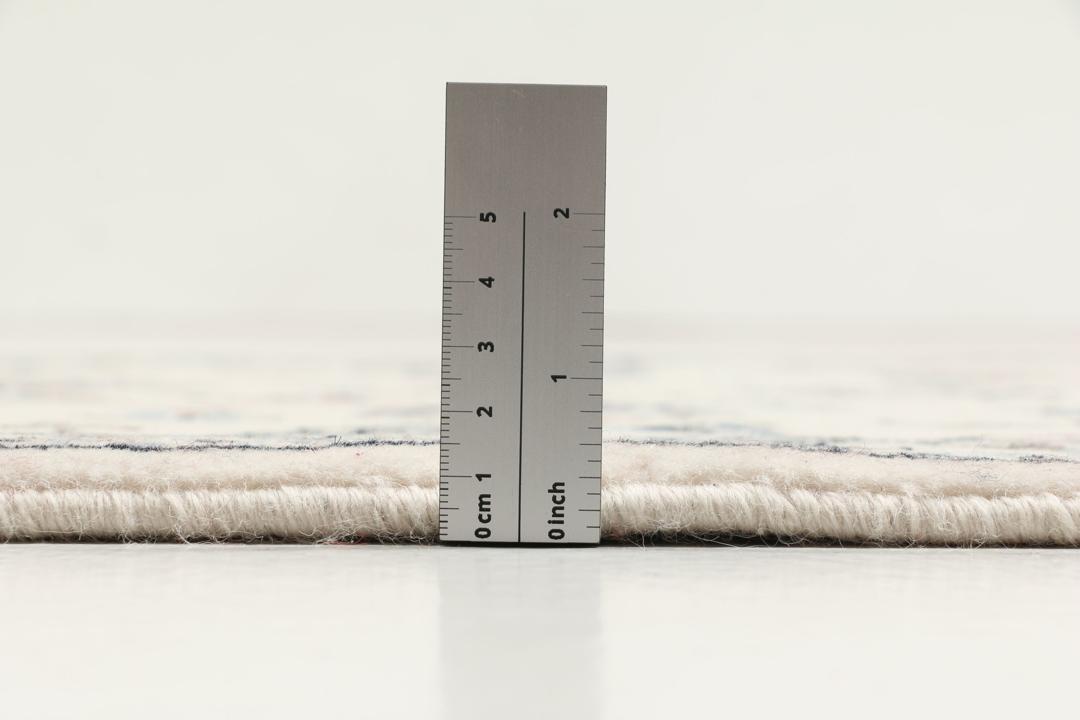
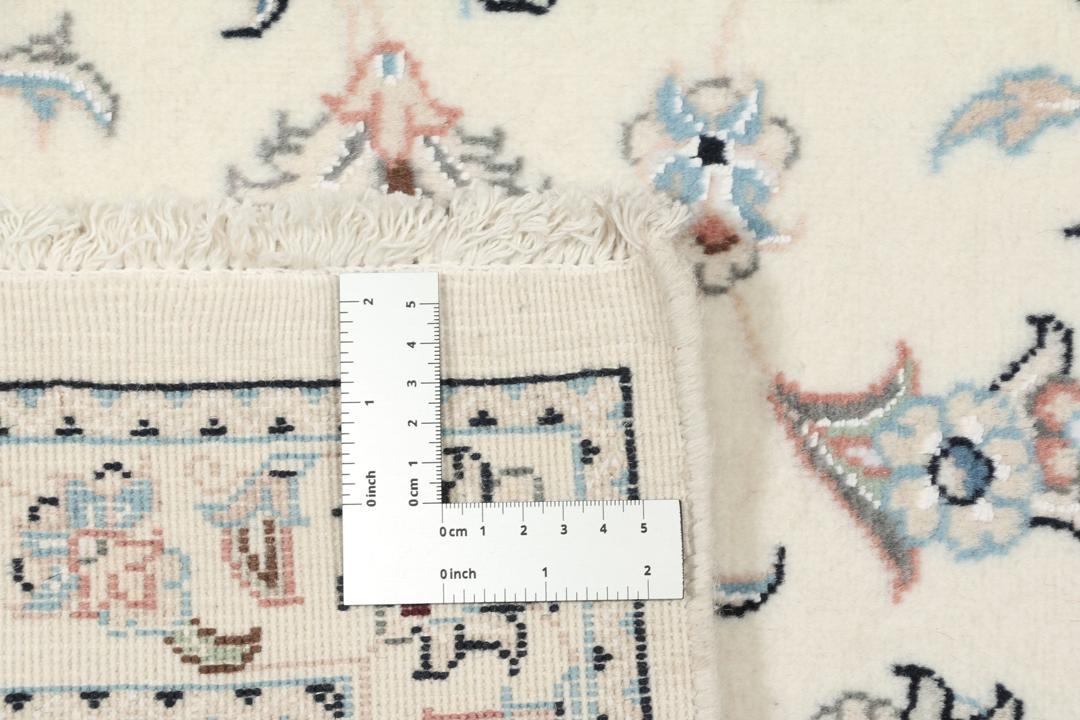
The designation '9La' refers to the thickness and fineness of the rug, determined by the number of strands of yarn twisted together in the warp. In the context of Nain rugs, the 'La' system is a vital indicator of quality; a lower number typically signifies a higher density of knots and a finer, more delicate pile. This specific construction method is what gives Nain rugs their reputation for being among the most refined and sophisticated floor coverings in the world.
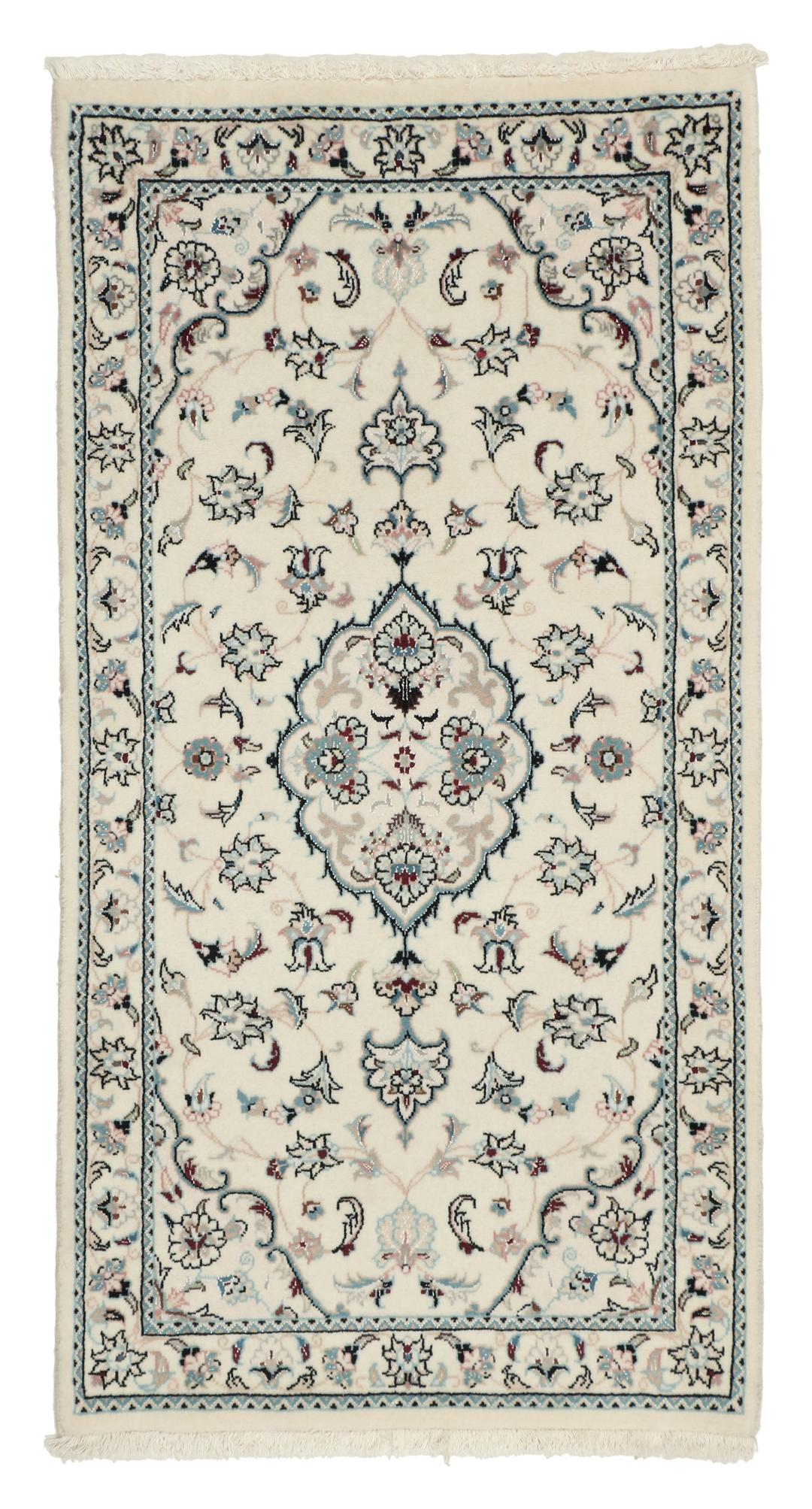
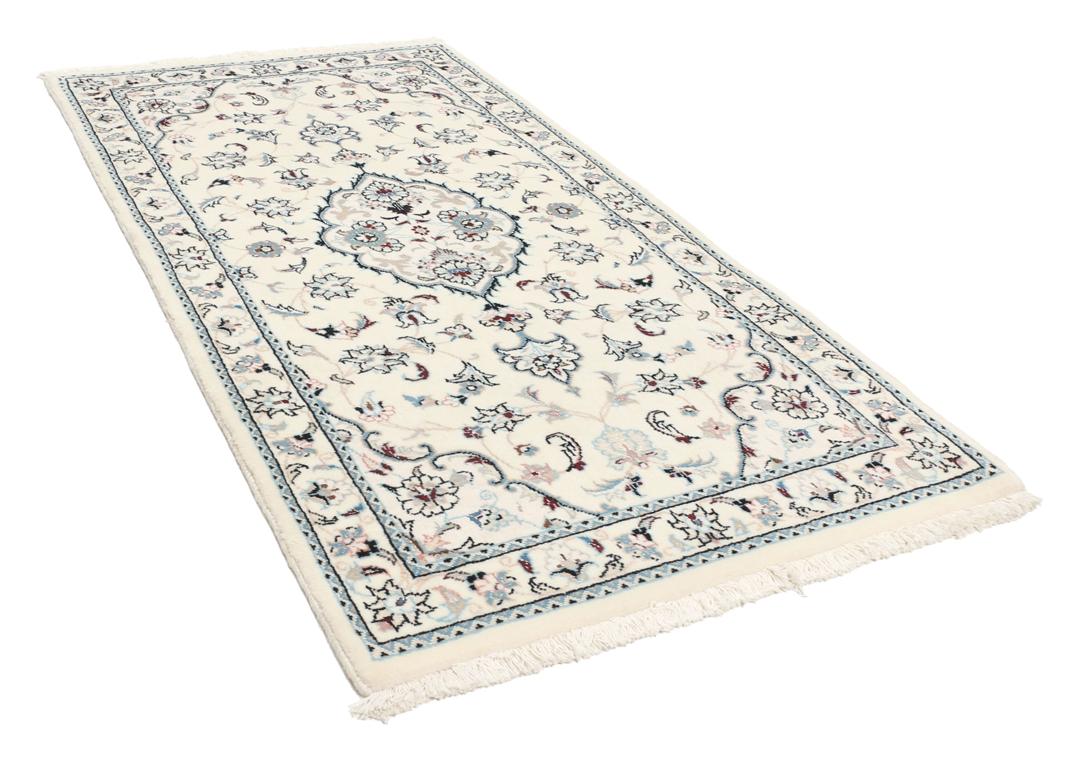
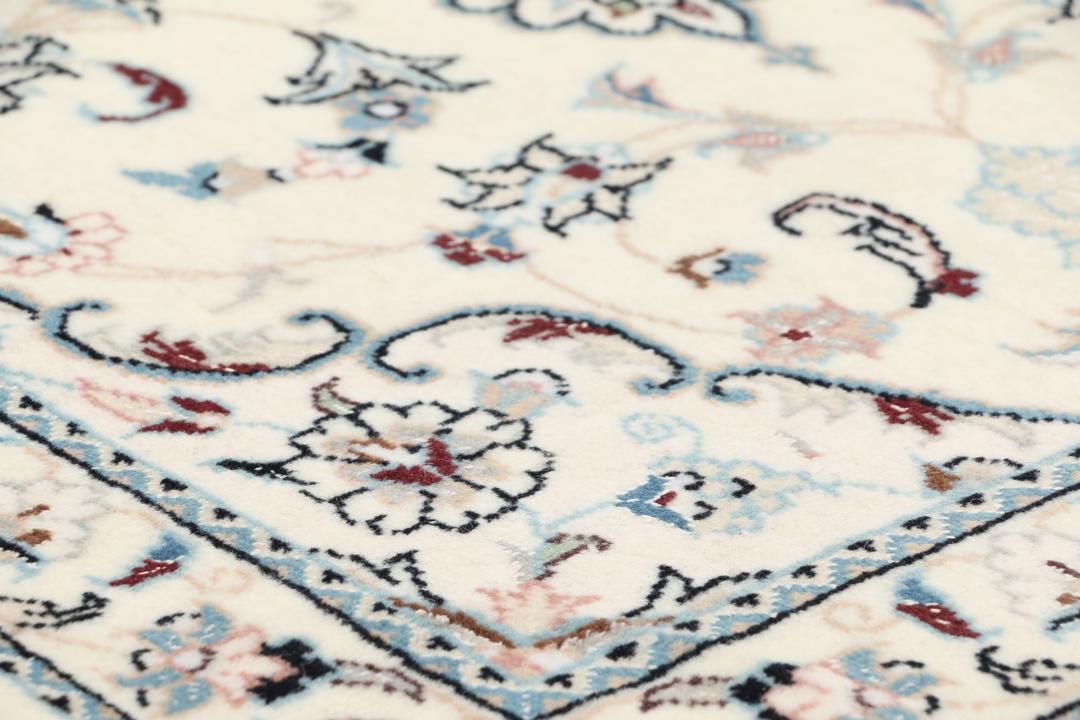
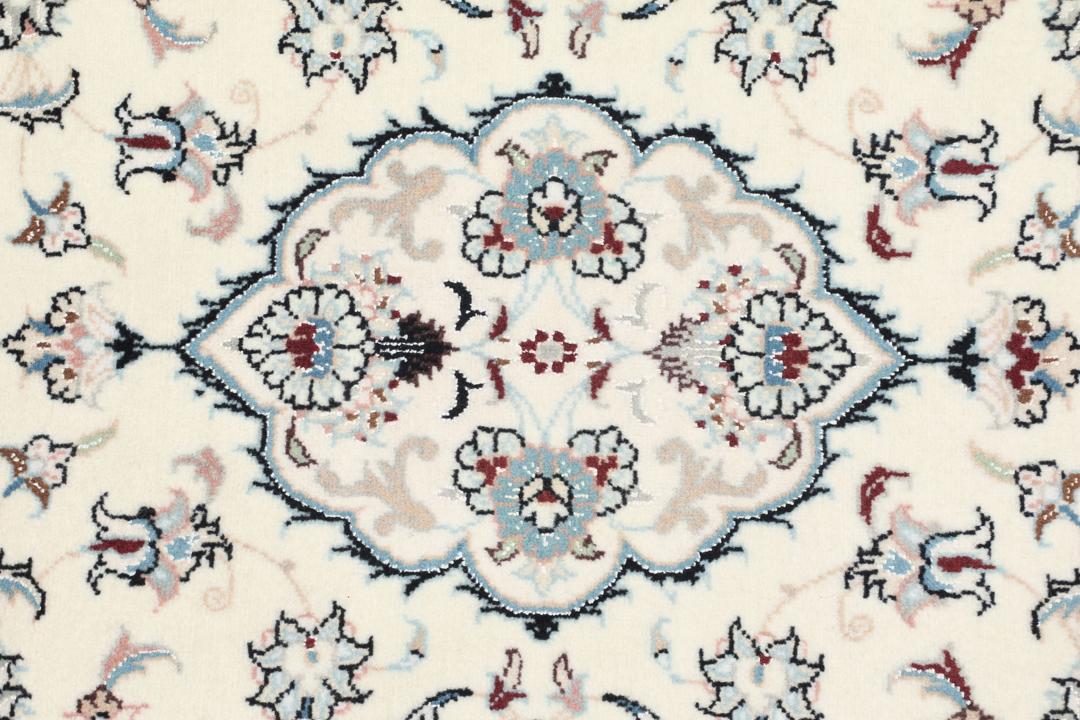
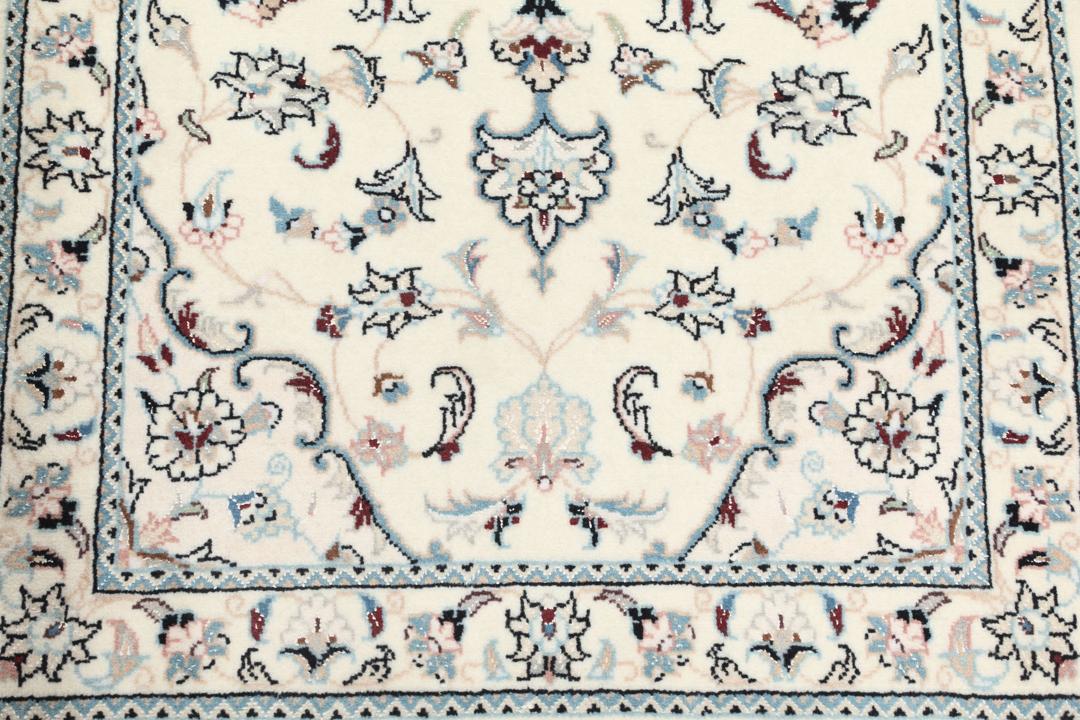
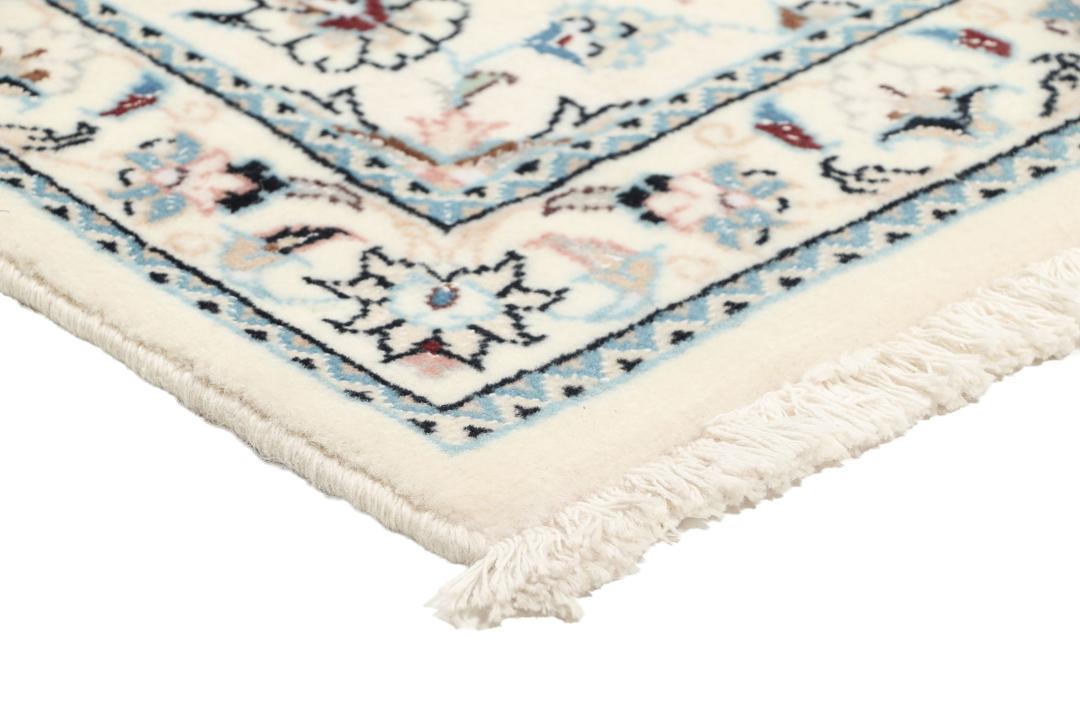
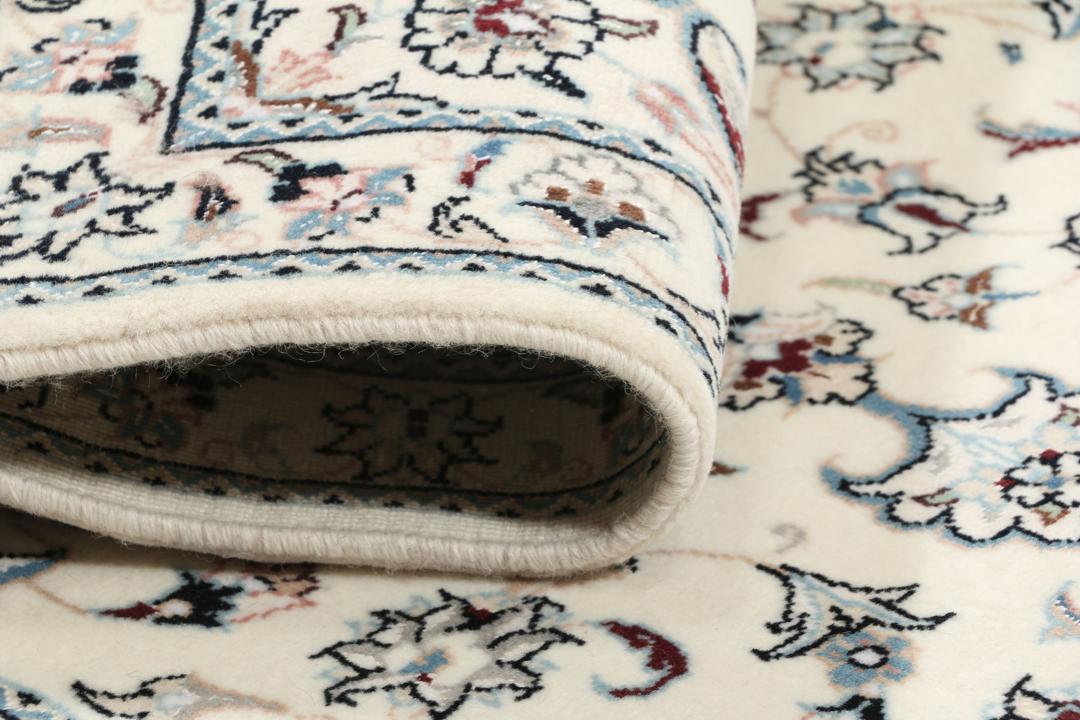
Visually, these rugs are defined by their elegant, curvilinear floral motifs, arabesques, and central medallions. They often favour a muted, sophisticated palette, frequently incorporating cream, white, and various shades of blue. This aesthetic is designed to reflect the architectural beauty and decorative arts of the region, emphasising balance and grace rather than the bold, geometric patterns found in more nomadic traditions.
Collectors value Nain rugs for their consistent quality and the immense skill required to produce them. Owning a piece from this tradition is an act of preserving a specialised craft that balances historical depth with a timeless, formal beauty. It is a choice that speaks to an appreciation for human labour, artistic heritage, and the enduring appeal of traditional design.