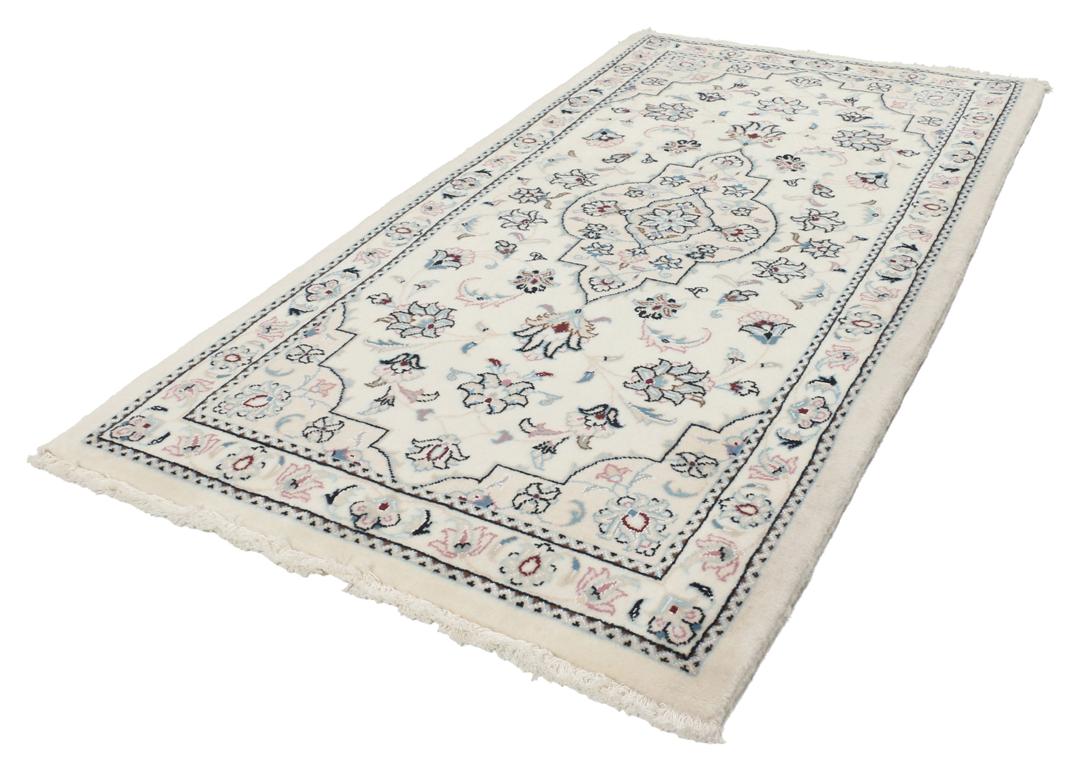
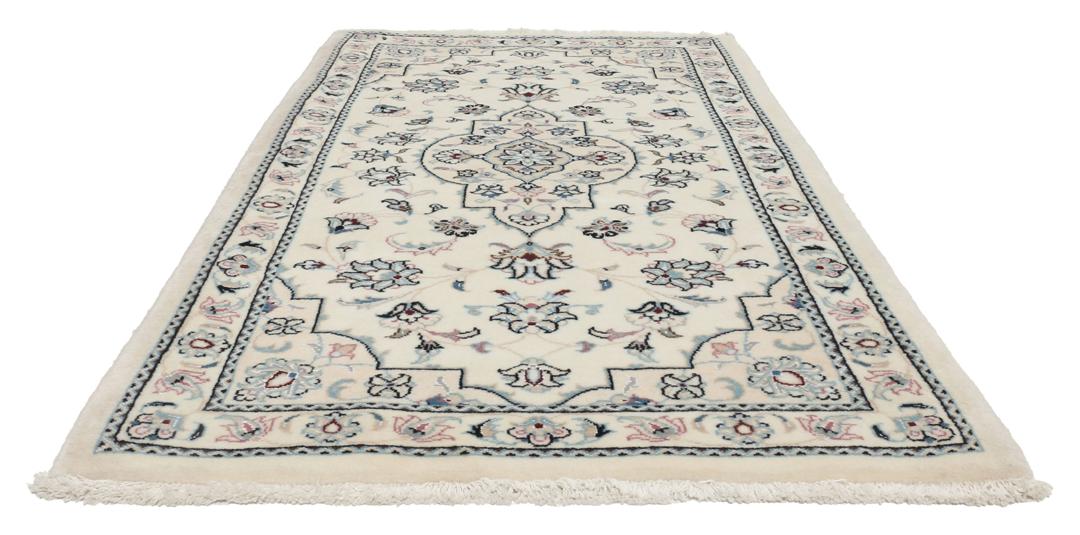
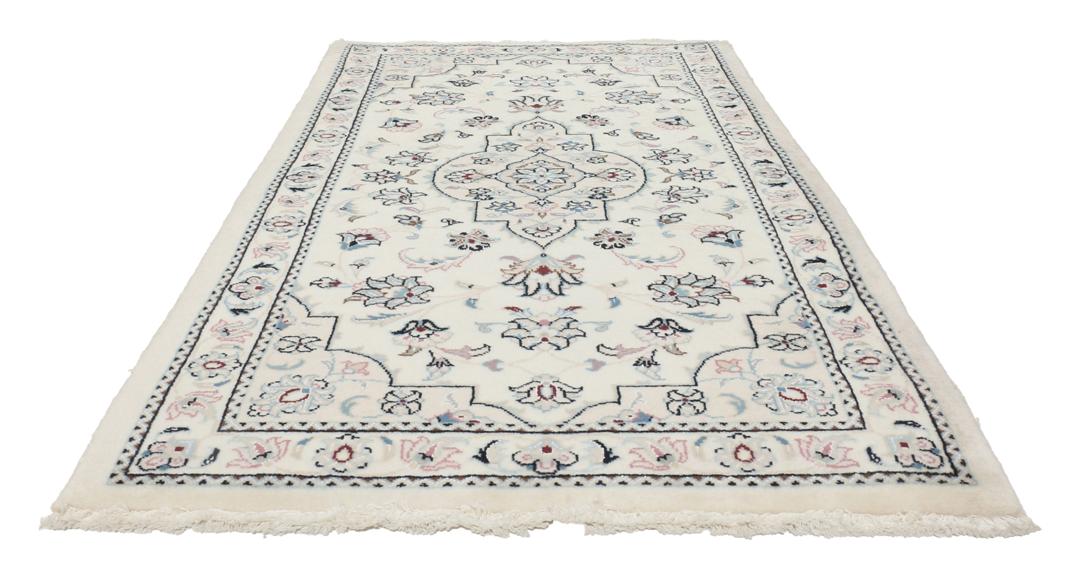
The Nain rug tradition hails from the town of Nain in the Middle East, a region with a long and storied history of textile craftsmanship. Originally known for producing fine wool garments, the area transitioned to rug weaving in the early 20th century, quickly gaining a reputation for creating some of the most sophisticated floor coverings in the world.
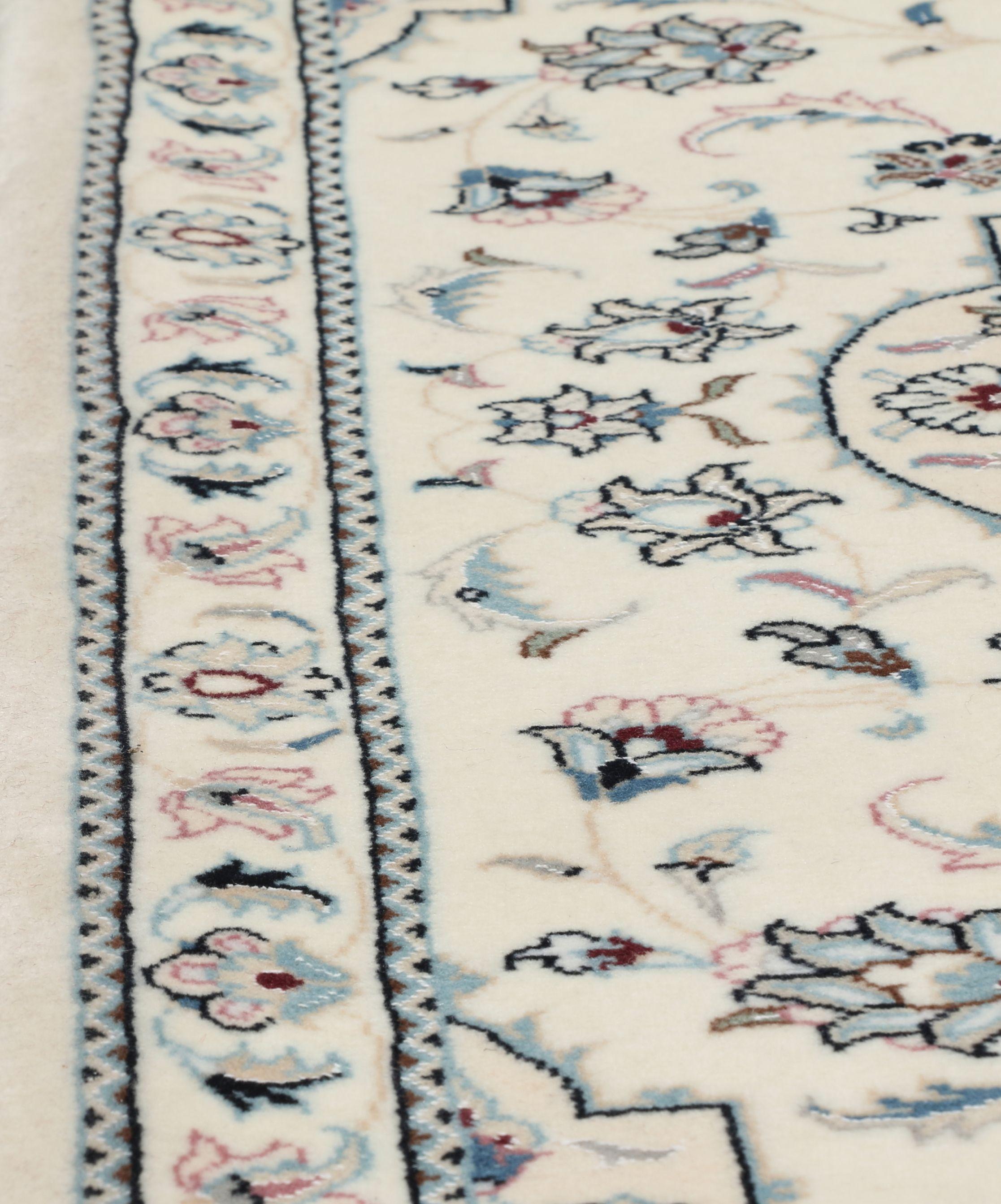
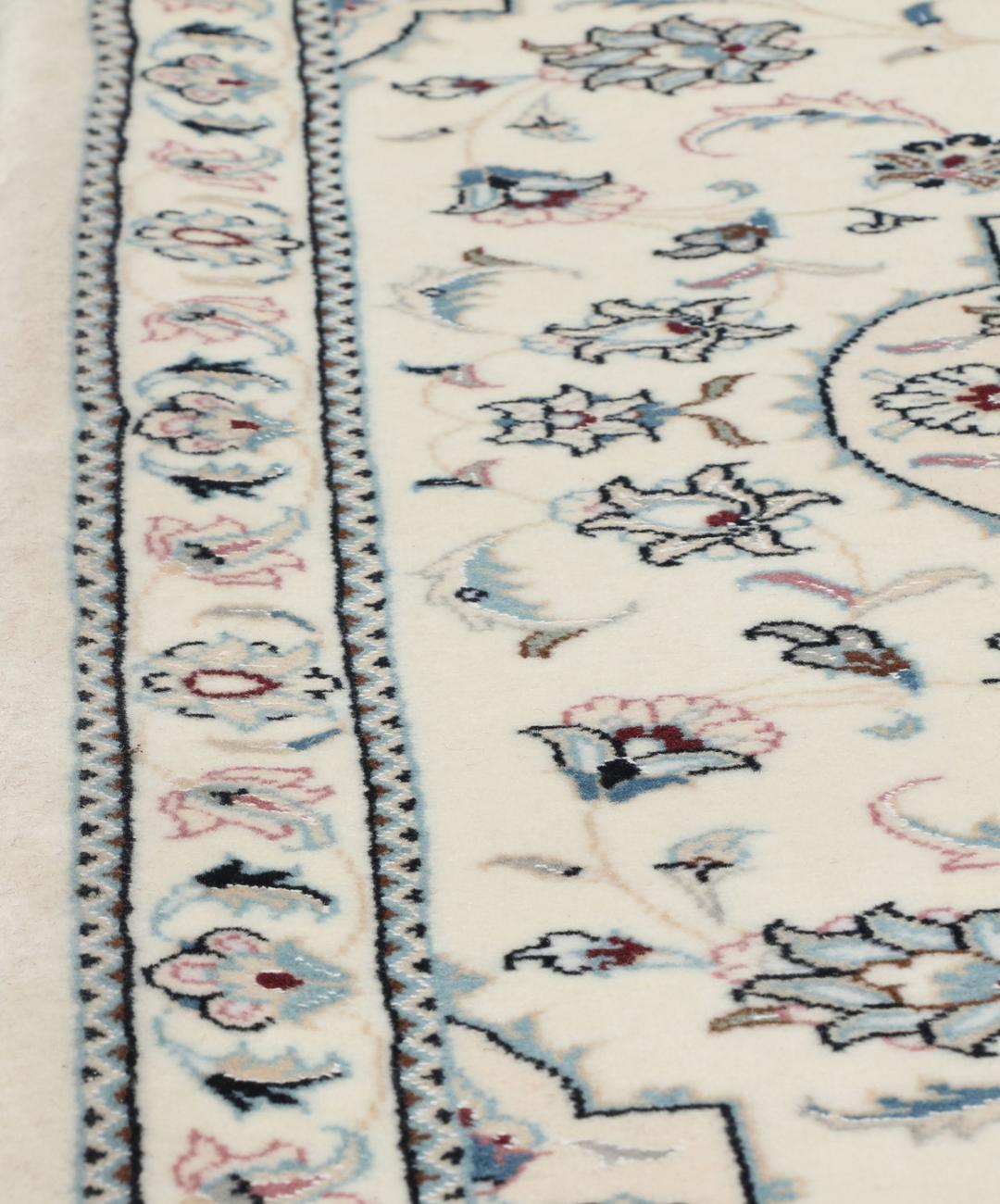
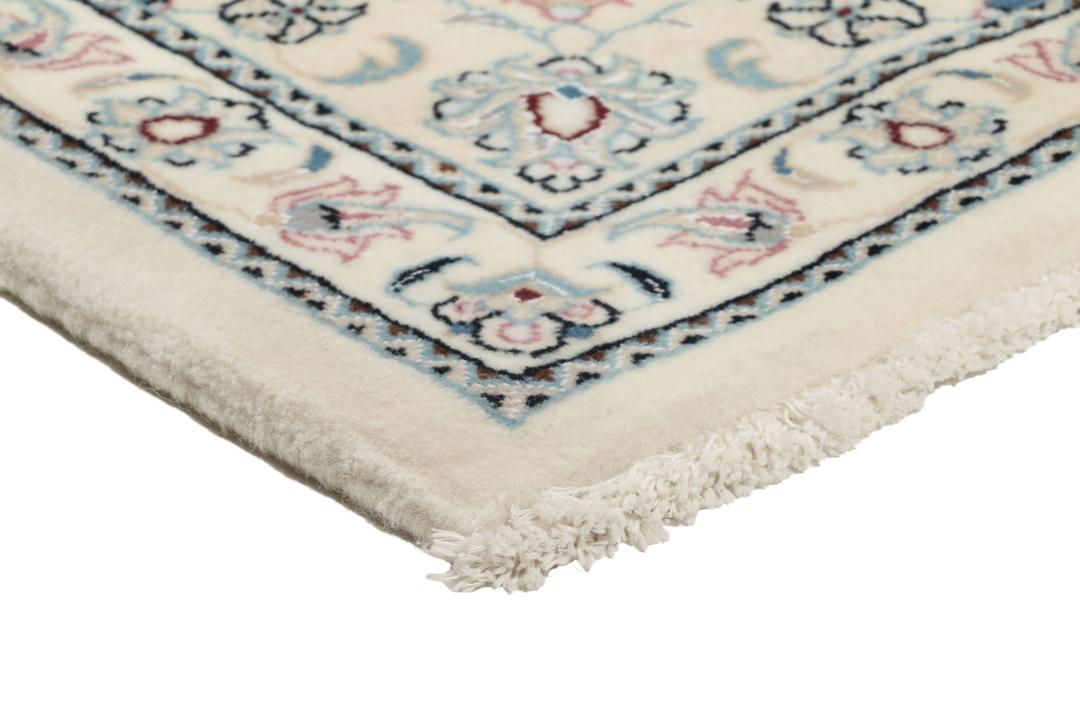
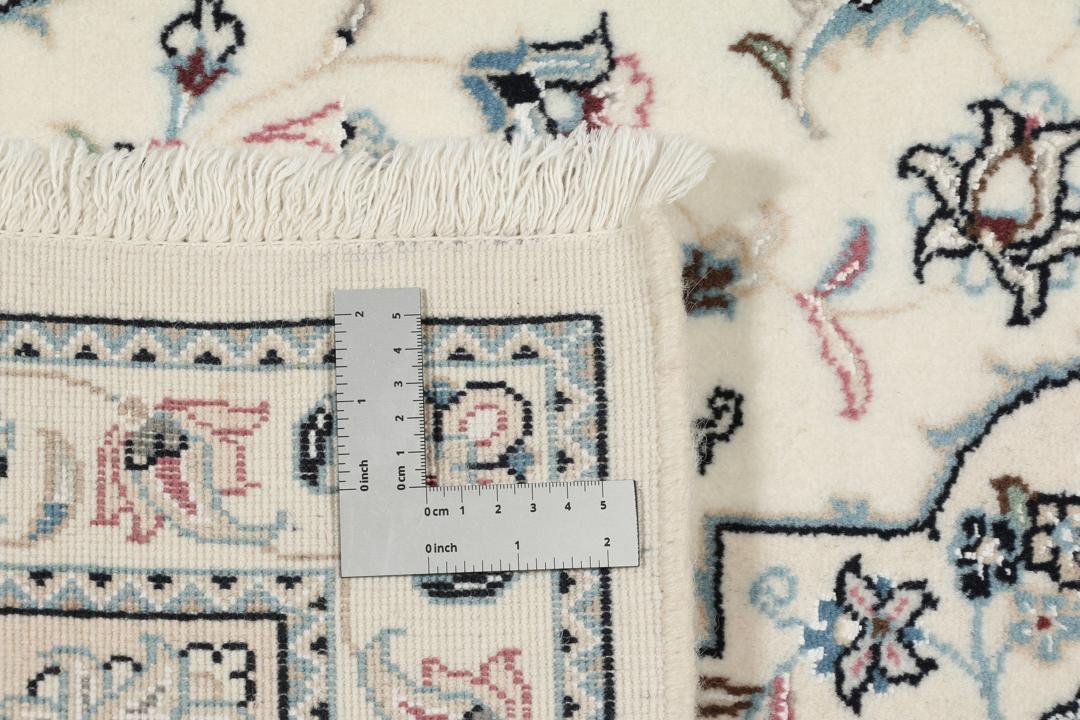
The classification of 9La refers to the number of threads used in the foundation of the rug, specifically the strands within the fringe. A 9La designation indicates a high level of precision and detail, as the thinner threads allow for a finer knot count and a more intricate display of complex motifs compared to coarser variations.
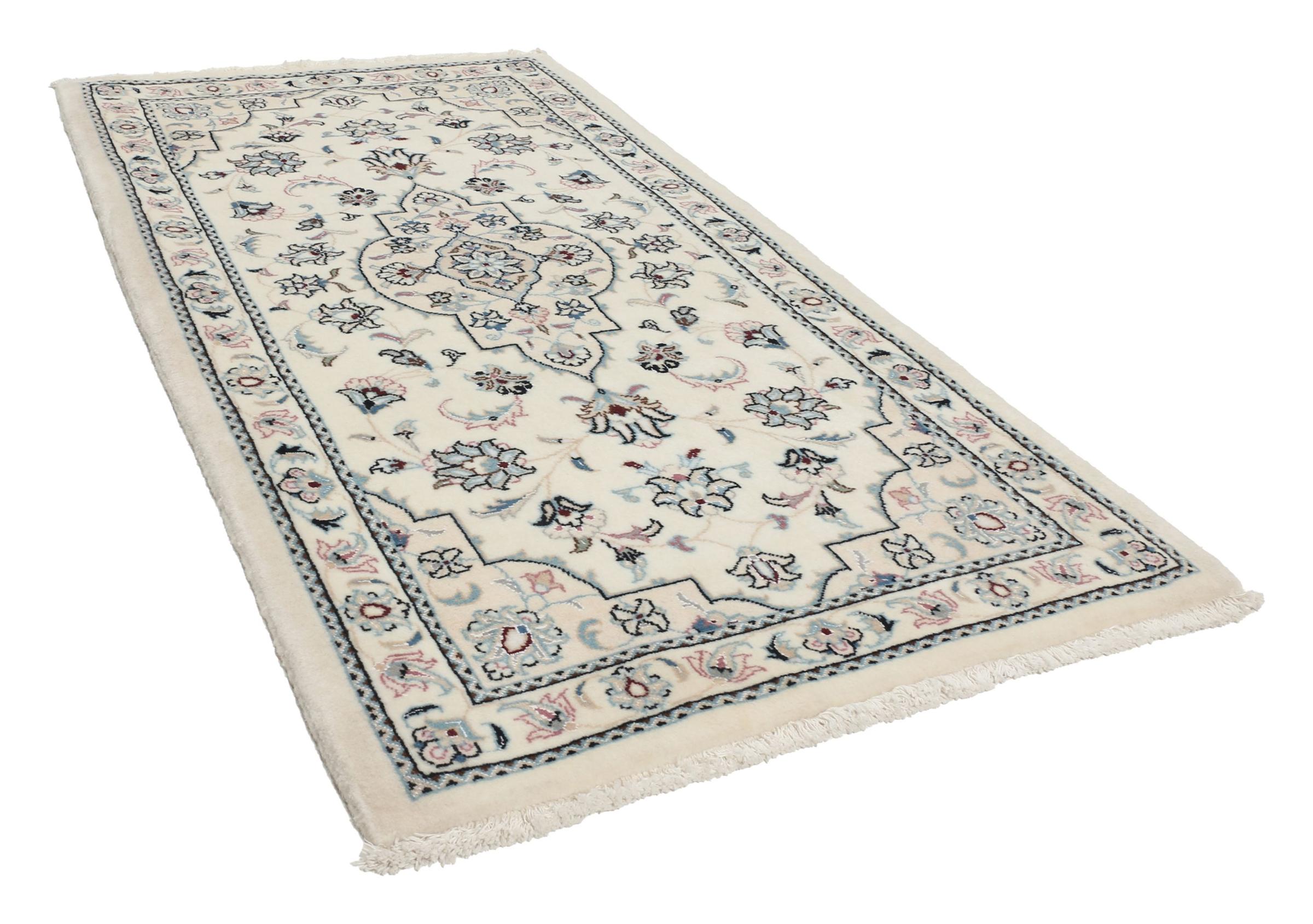
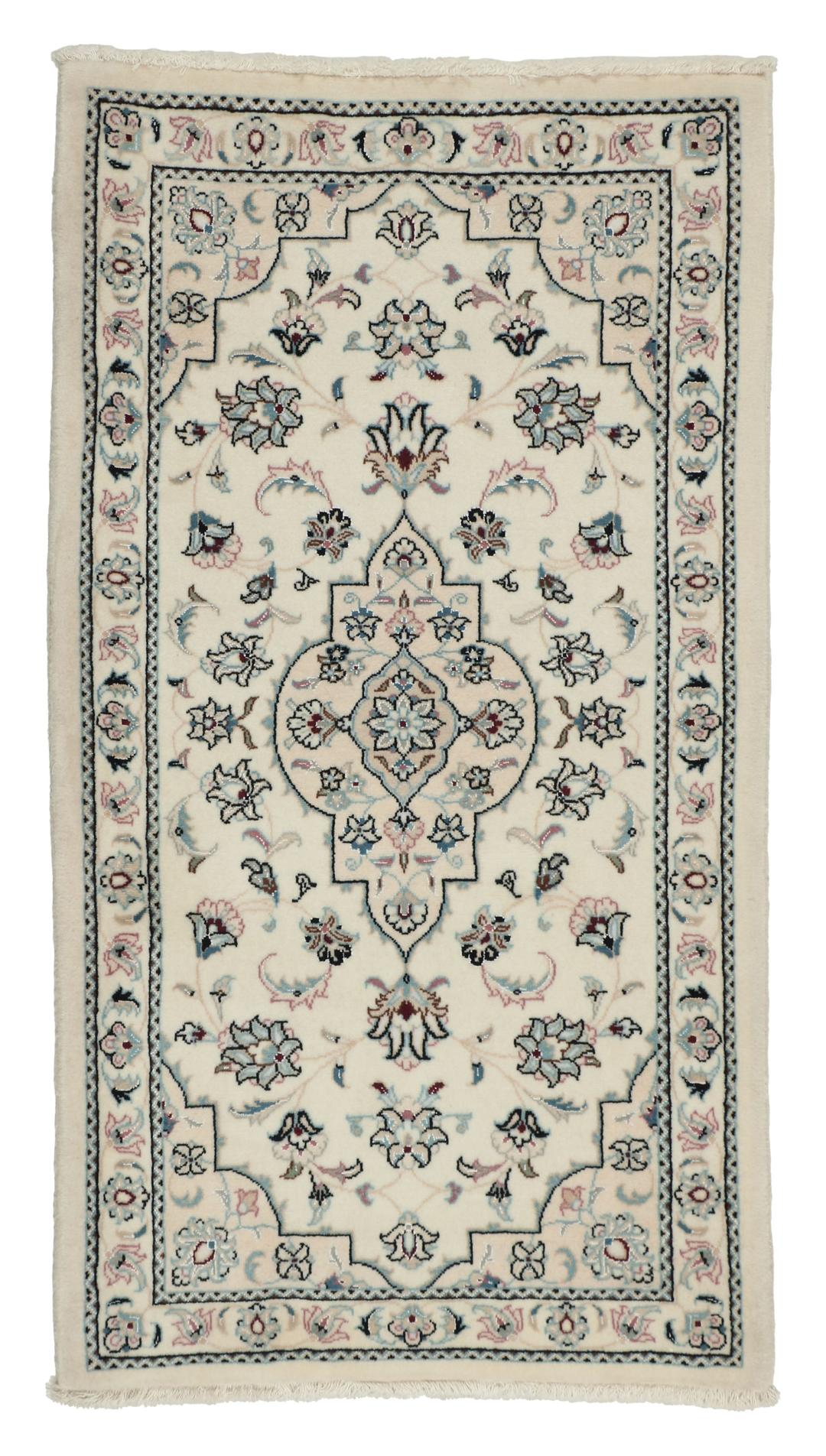
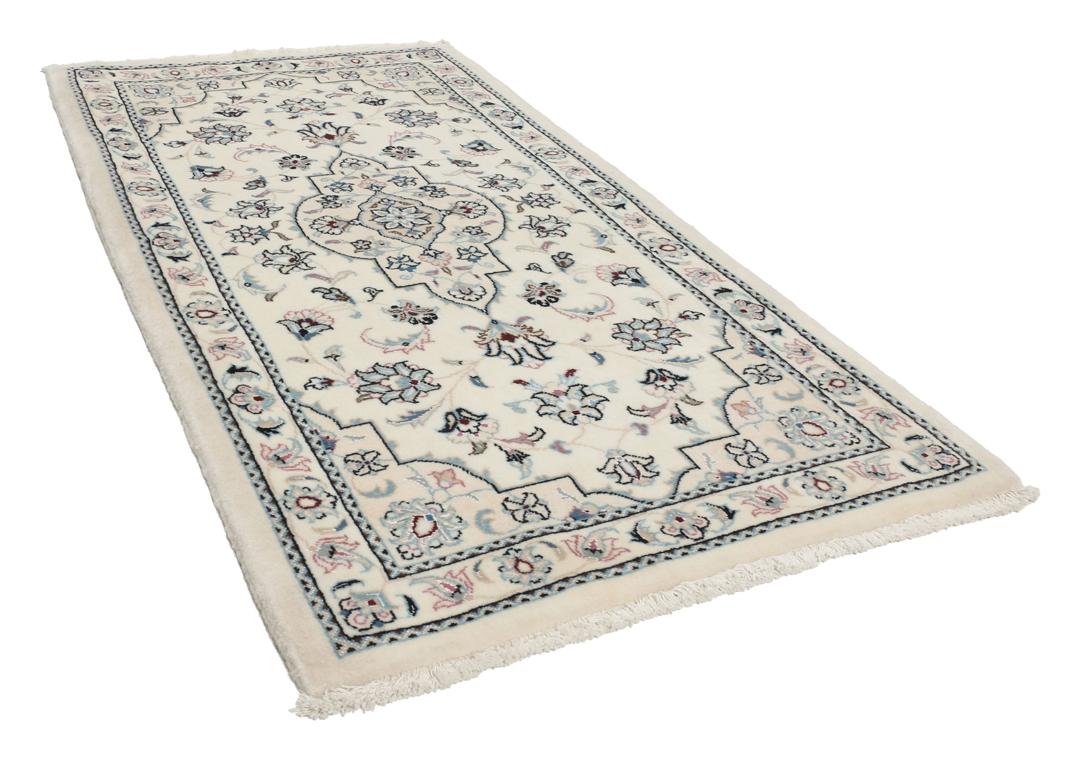
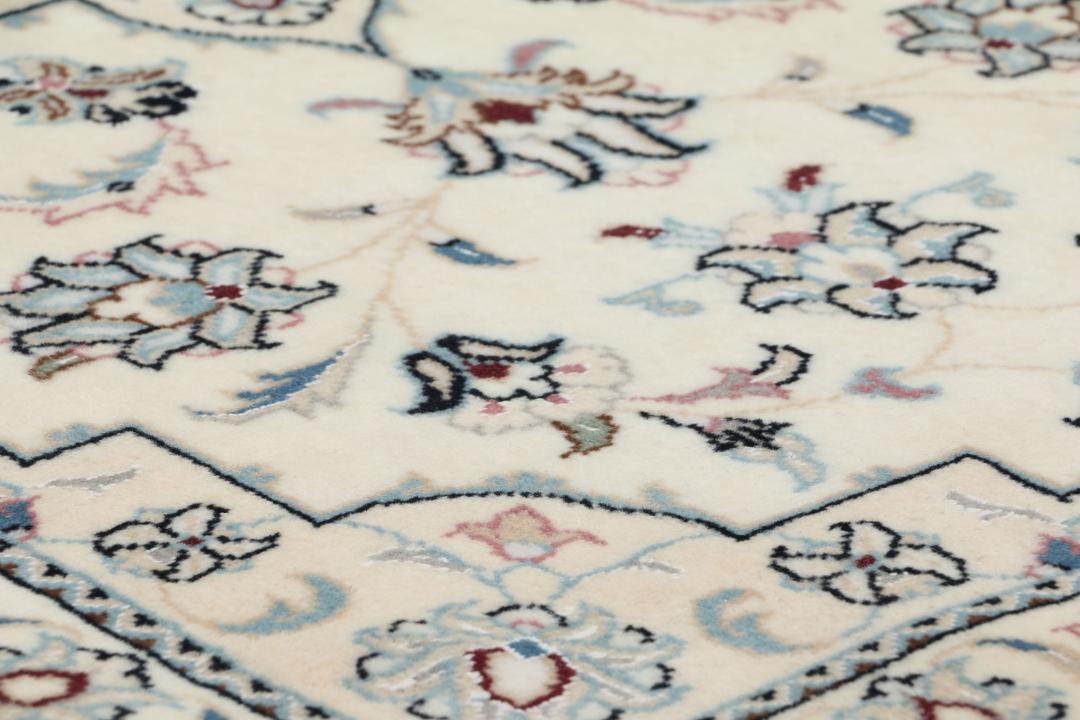
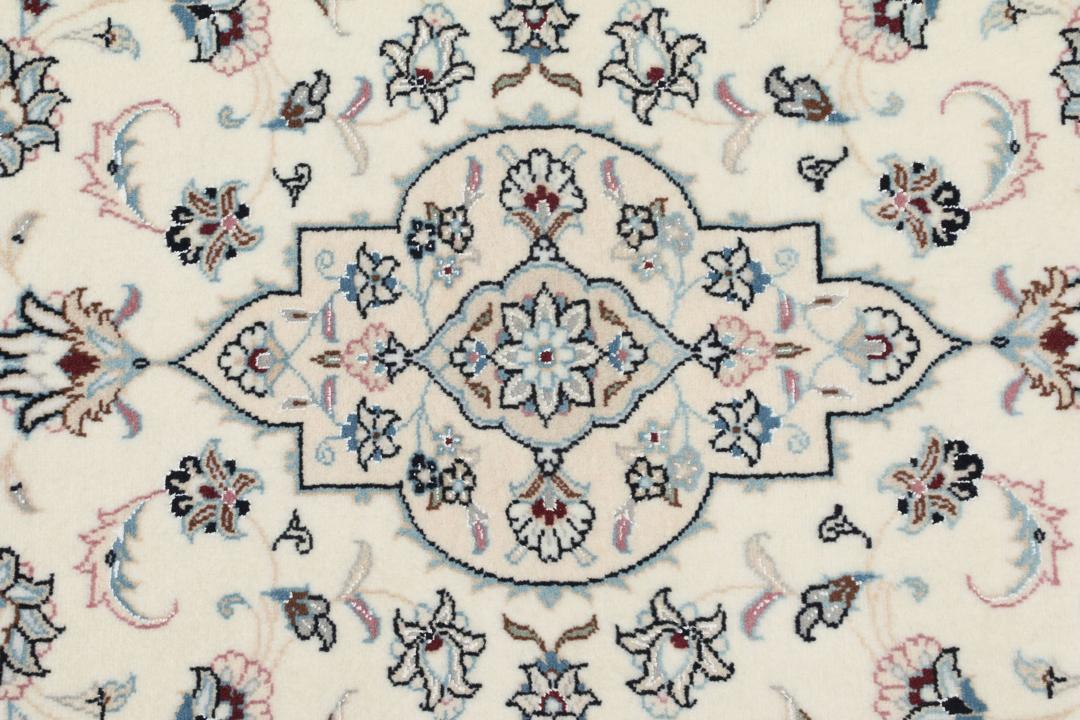
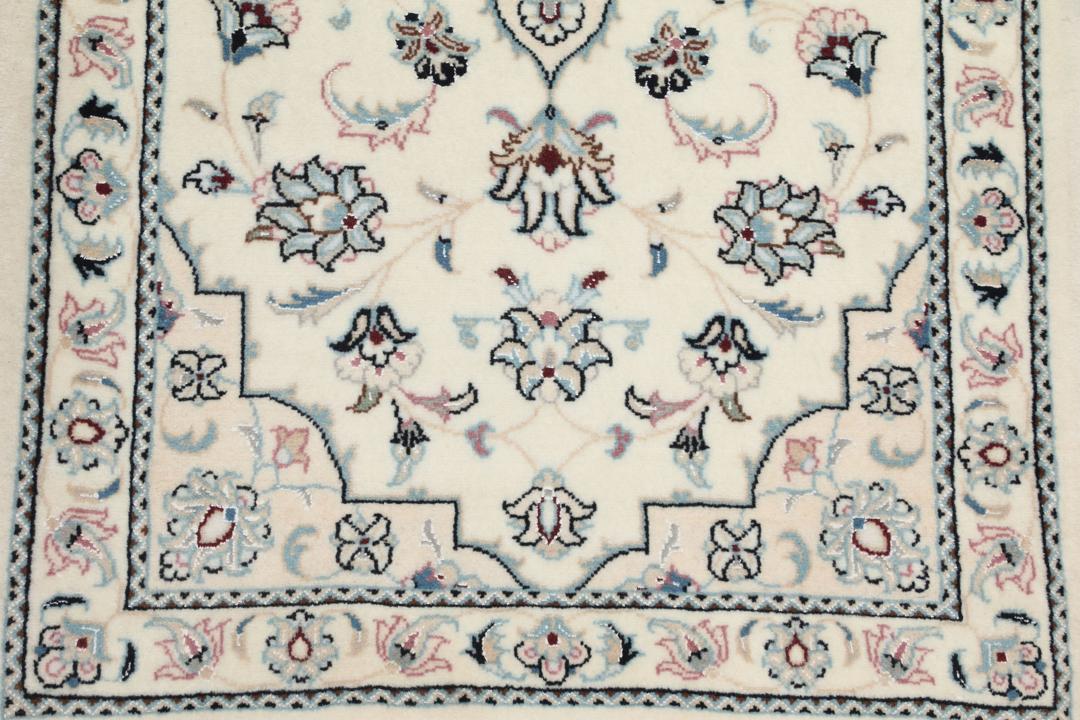
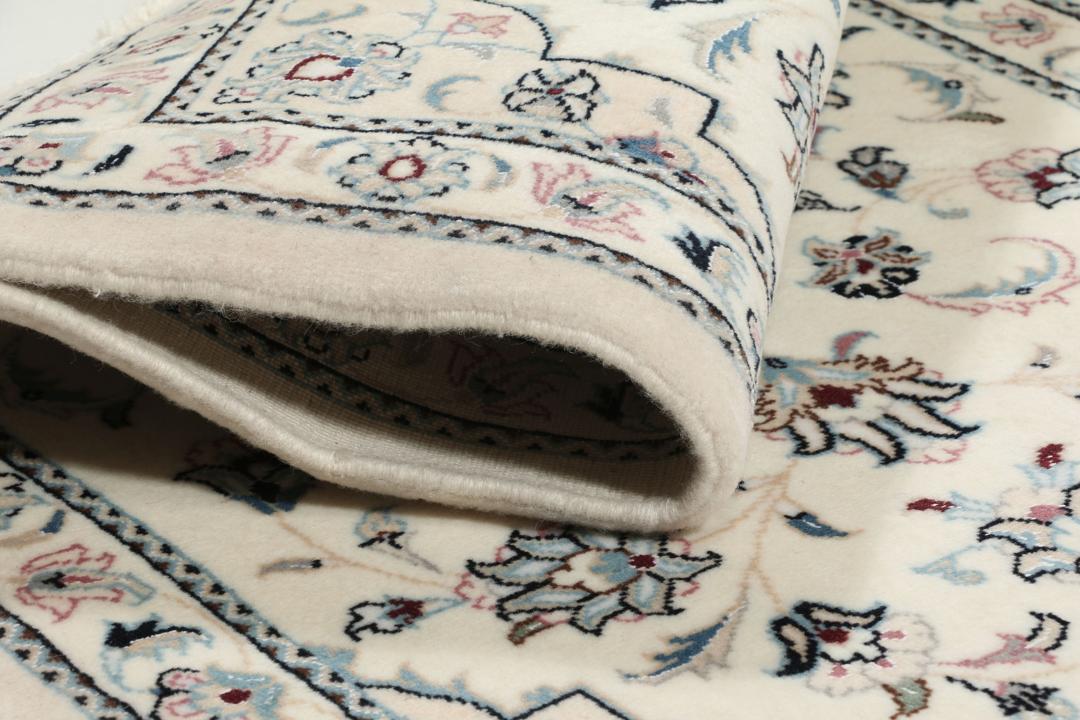
Visually, these rugs are defined by their elegant use of light, neutral tones, often accented with soft shades of blue or rose. The designs typically feature a central medallion surrounded by dense floral scrolls, foliage, and vines, all enclosed within a series of decorative borders that frame the composition with artistic intent.
Owning a piece from this tradition is a commitment to preserving a legacy of skill and patience. Collectors value these rugs not only for their aesthetic beauty but for the immense human effort and cultural heritage woven into every strand, making them enduring treasures for any home.