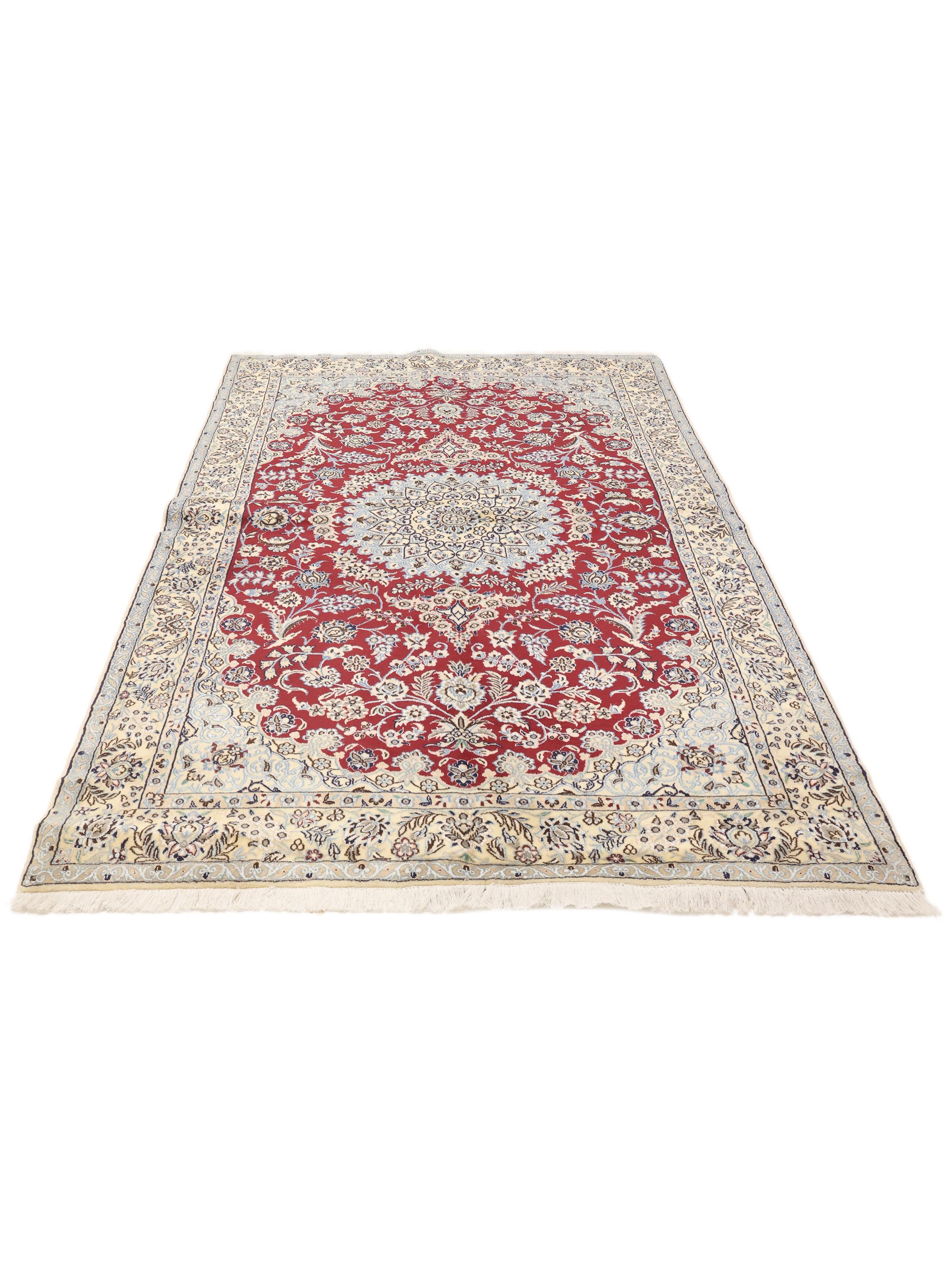
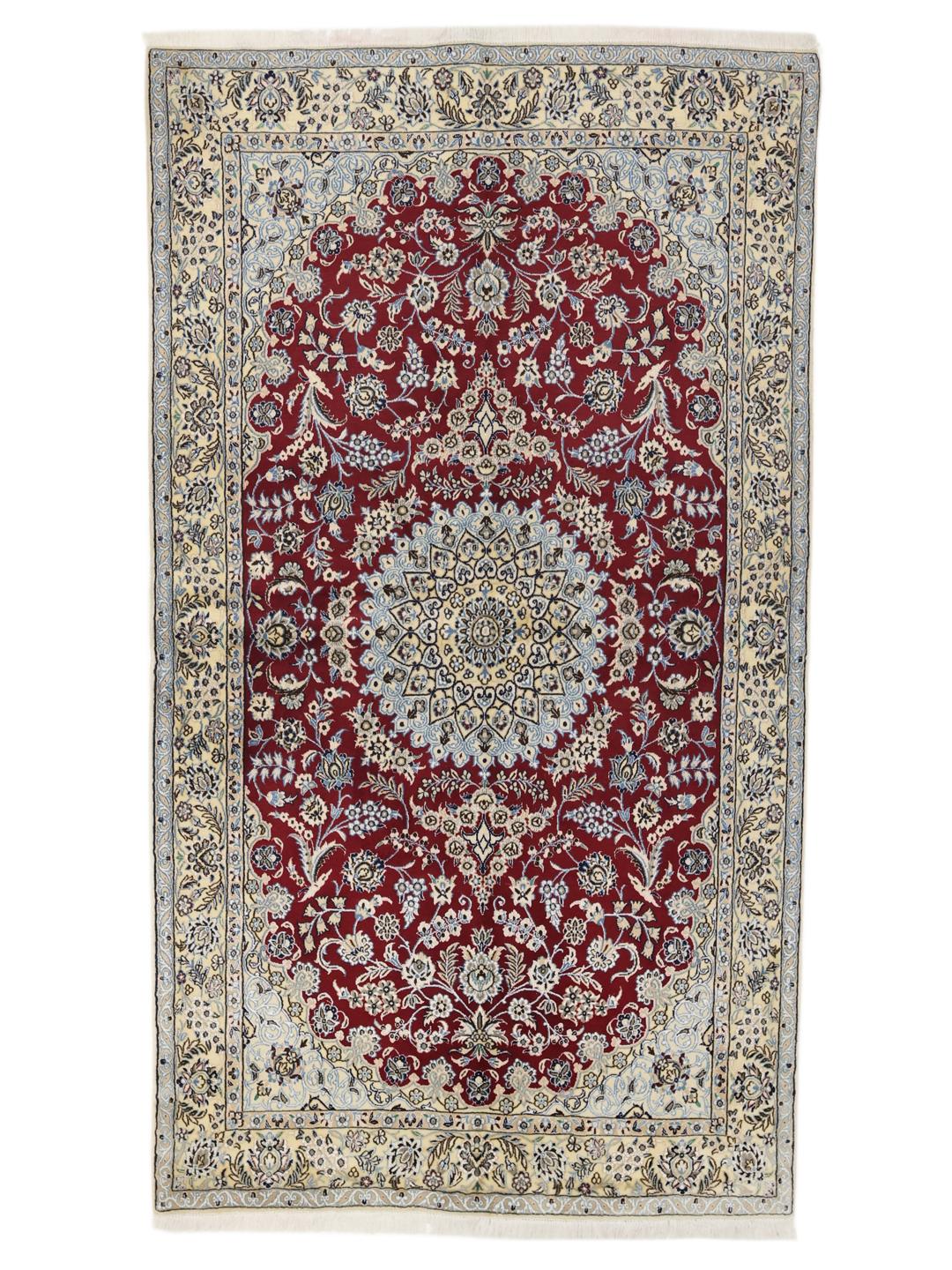
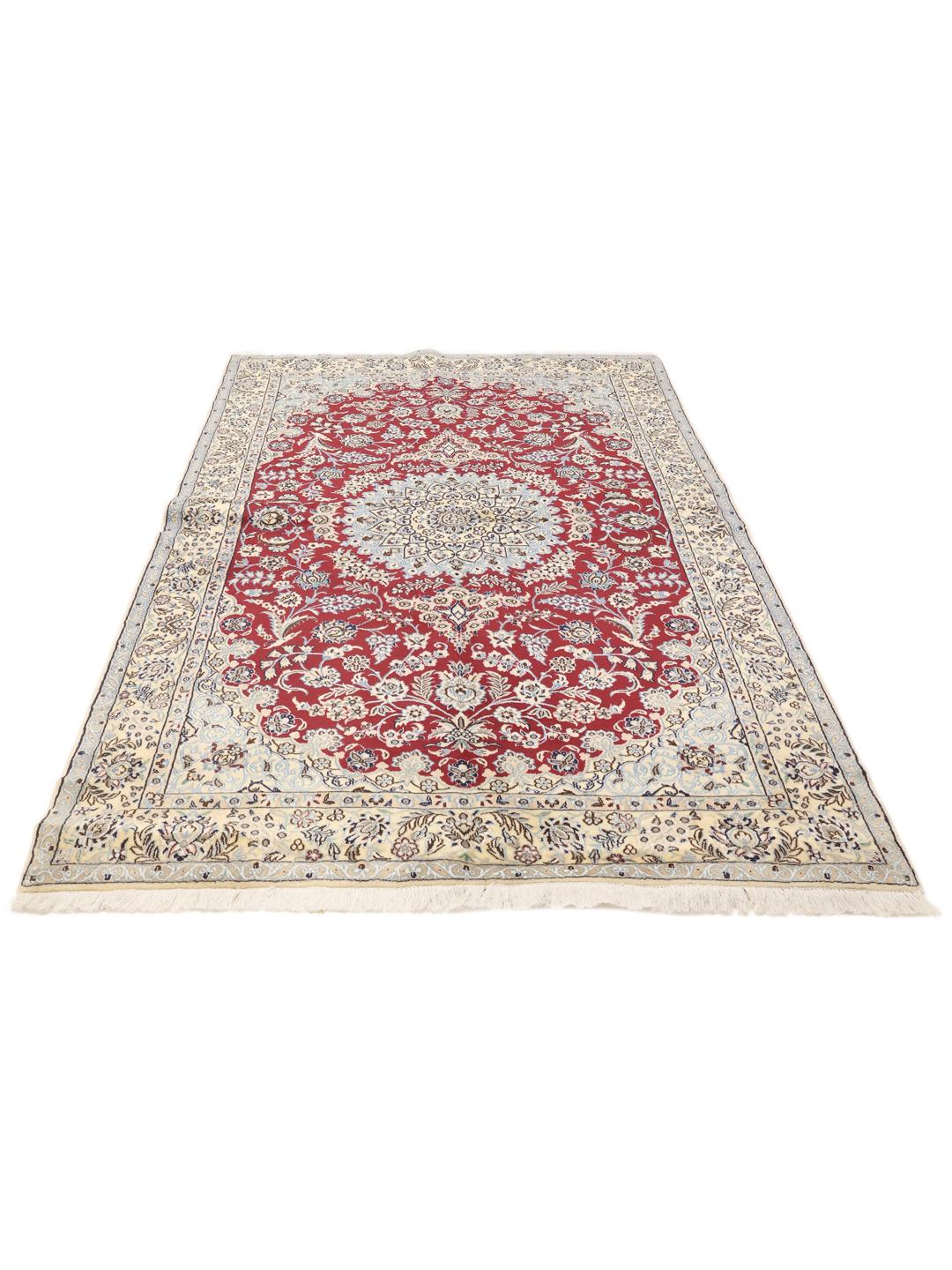
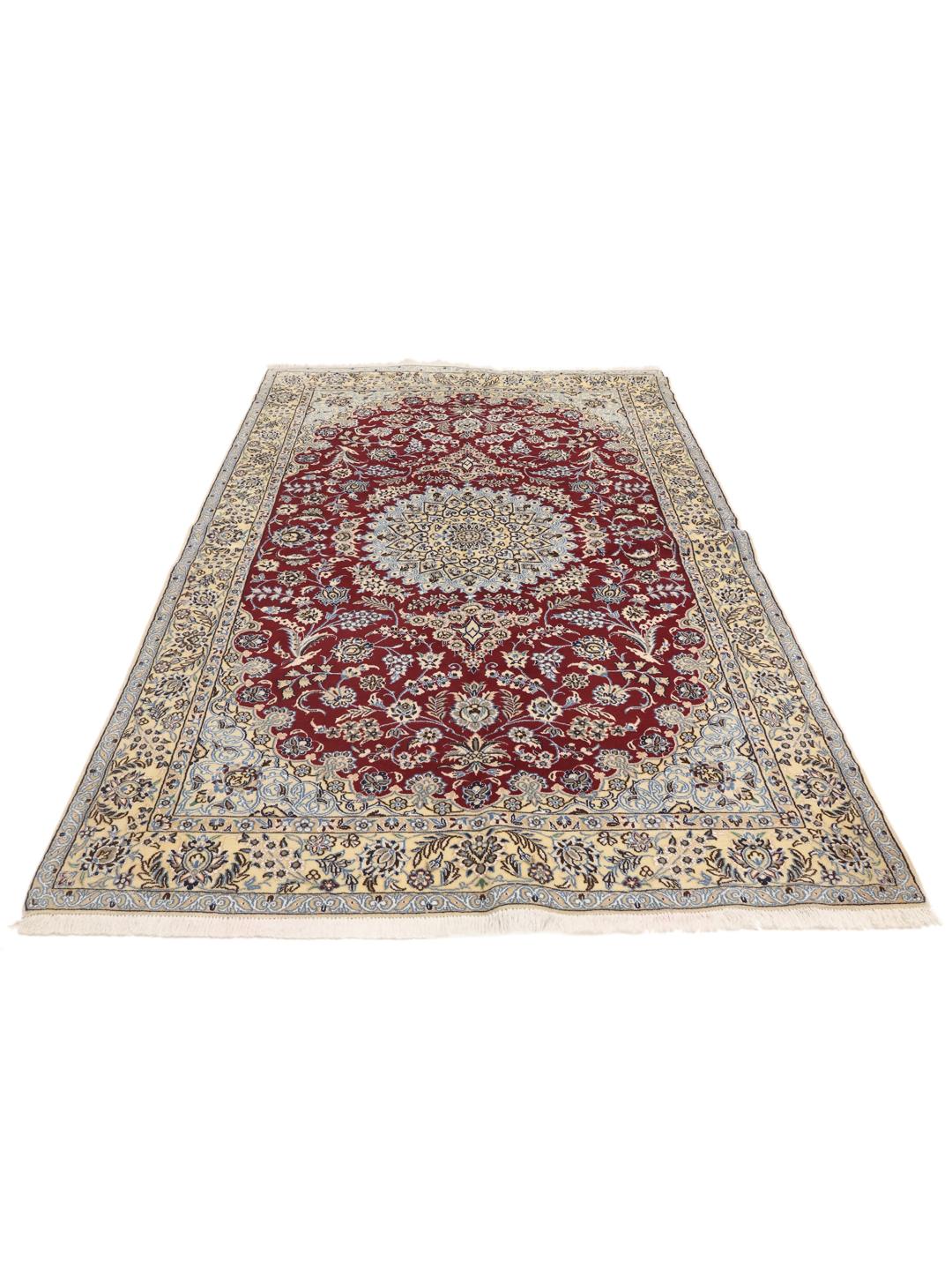
Nain rugs are celebrated for their sophisticated elegance and are among the most esteemed creations from the Middle Eastern weaving tradition. While the city of Nain was historically known for producing high-quality woollen garments, it transitioned into rug production in the early 20th century. Over time, it developed a distinct aesthetic that often utilises a palette of soft creams, blues, and reds, creating a refined look that is recognised by collectors worldwide.
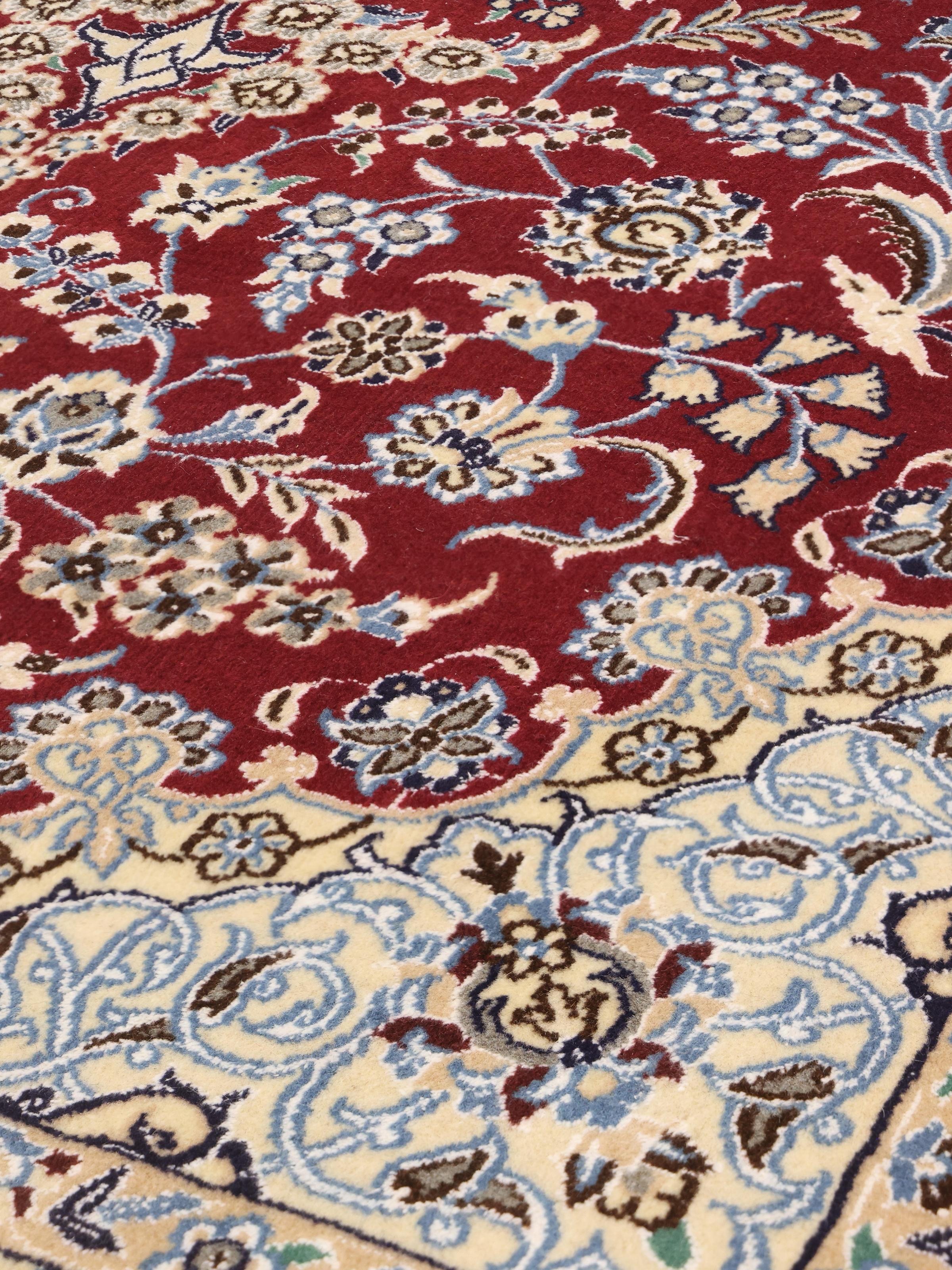
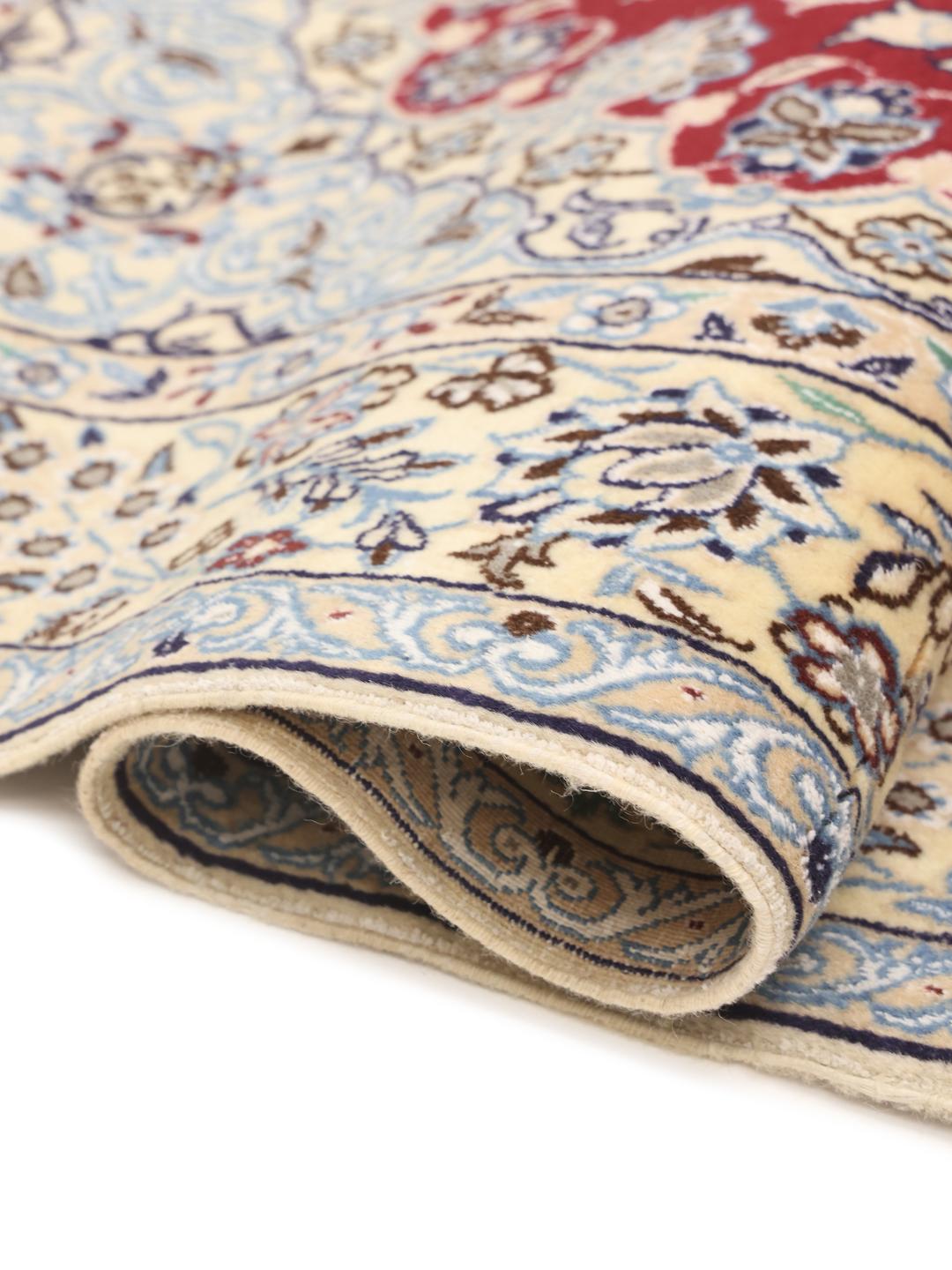
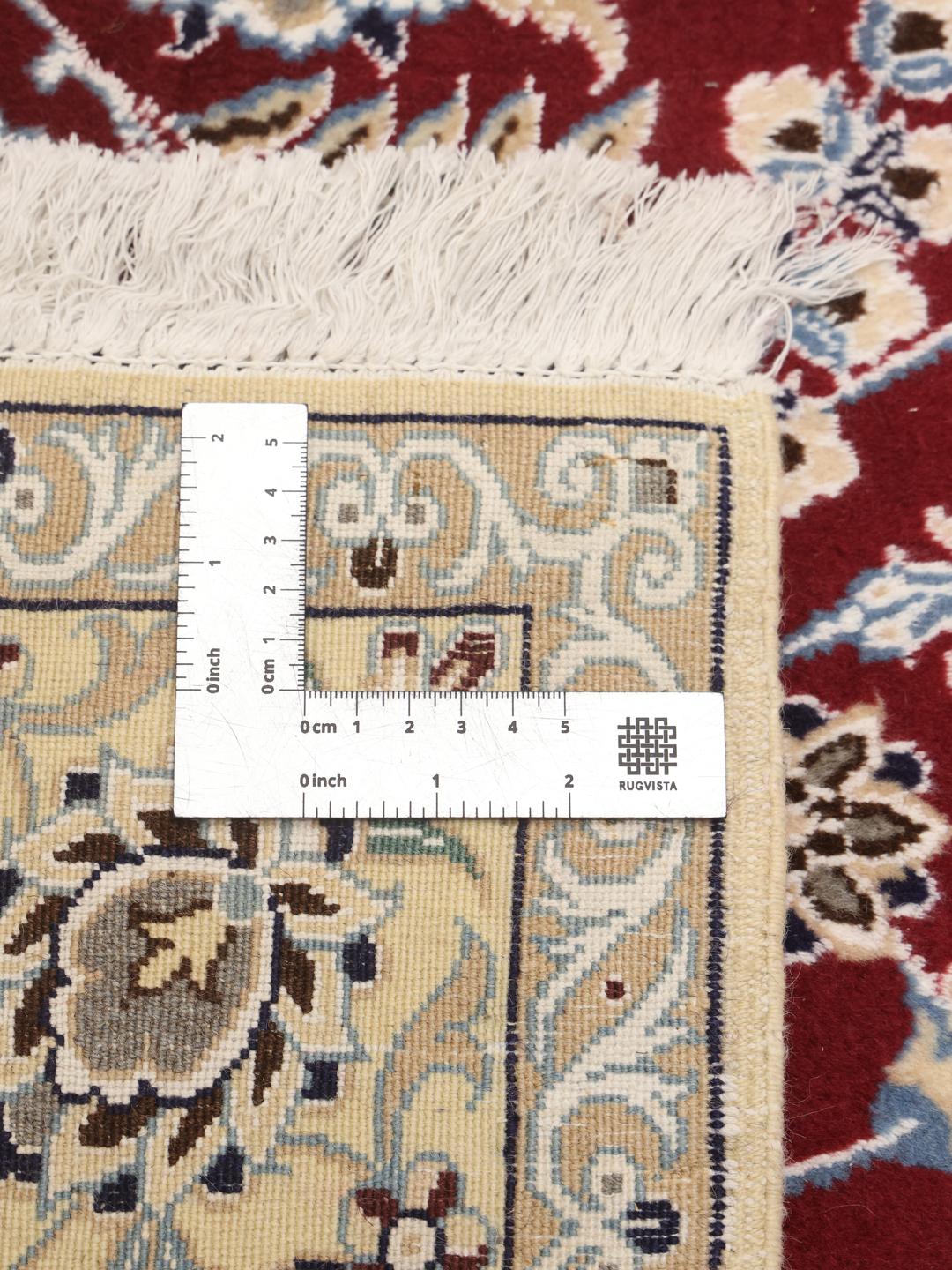
The term 9La refers to the number of threads used in the fringe, which serves as a vital indicator of the rug's fineness and quality. In the Nain tradition, the 'La' count is a shorthand for the thickness of the warp threads; a lower number signifies a finer, more intricate rug. This technical detail is what allows the weavers to achieve such high knot density and fluid, graceful patterns, making a 9La rug a hallmark of superior craftsmanship.
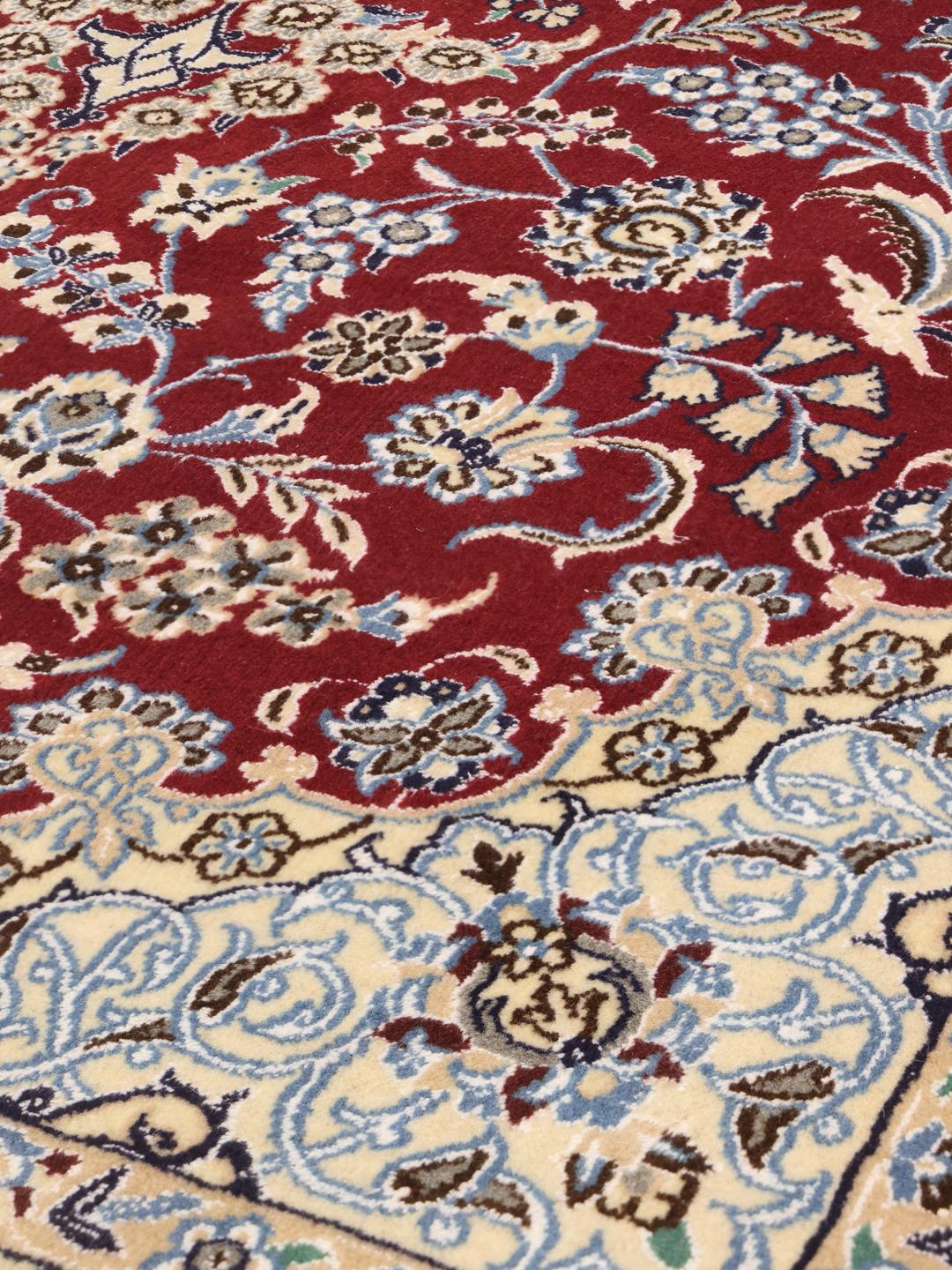
Signature design elements of these rugs typically include a central medallion surrounded by dense, flowing floral sprays and arabesques. The composition is often inspired by classic architectural and artistic motifs found in the region. The balance between the field and the border is carefully considered, often featuring intricate scrollwork that frames the central medallion, resulting in an overall design that feels both formal and inviting.
These rugs are deeply valued for their technical precision and the patience required to produce them. Owning a piece from this tradition represents an appreciation for artisanal skill that has been passed down through generations. Collectors prize them not only for their beauty but for their status as enduring examples of human artistry, capable of bridging the gap between historical tradition and modern interior living.