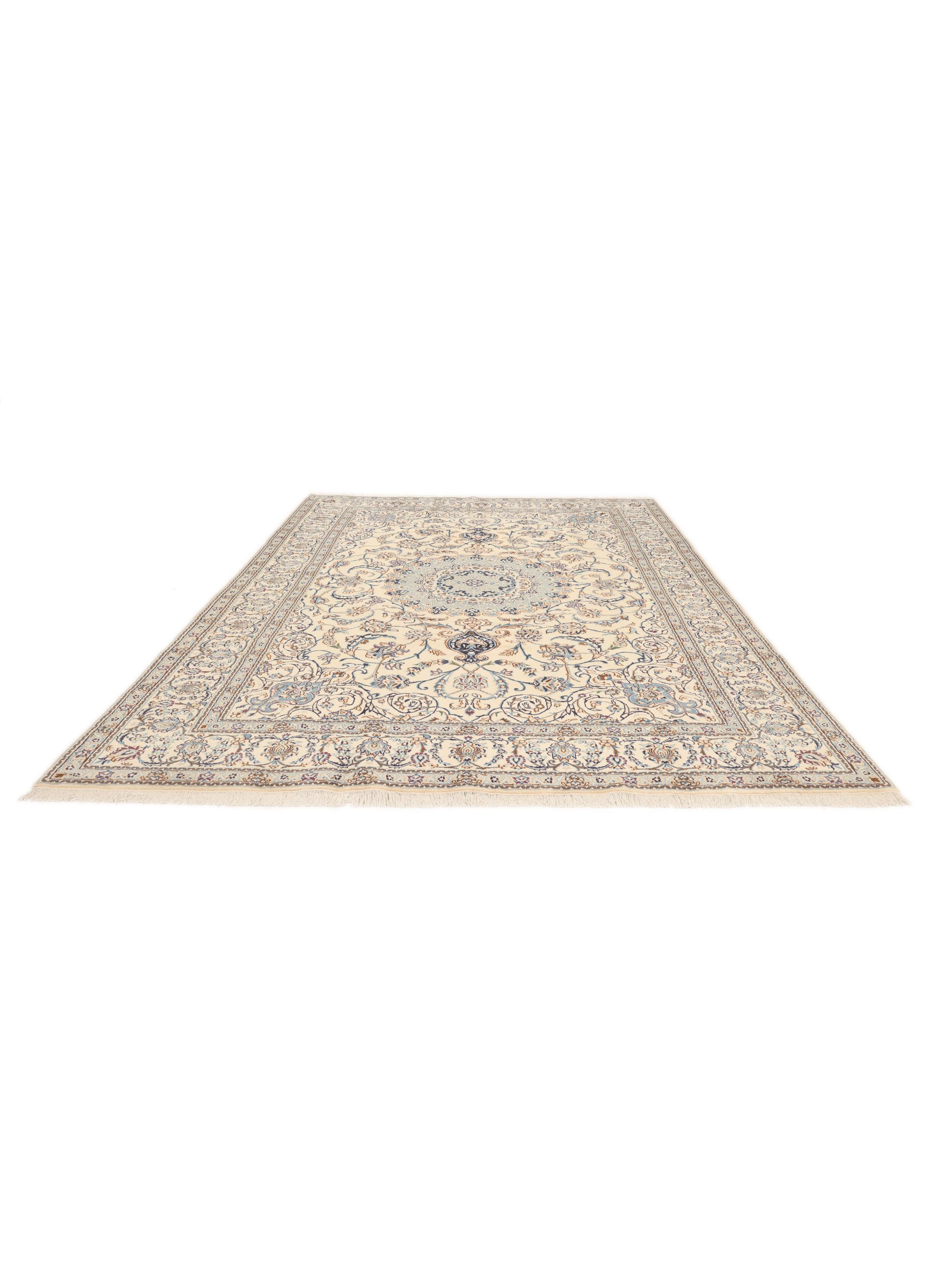
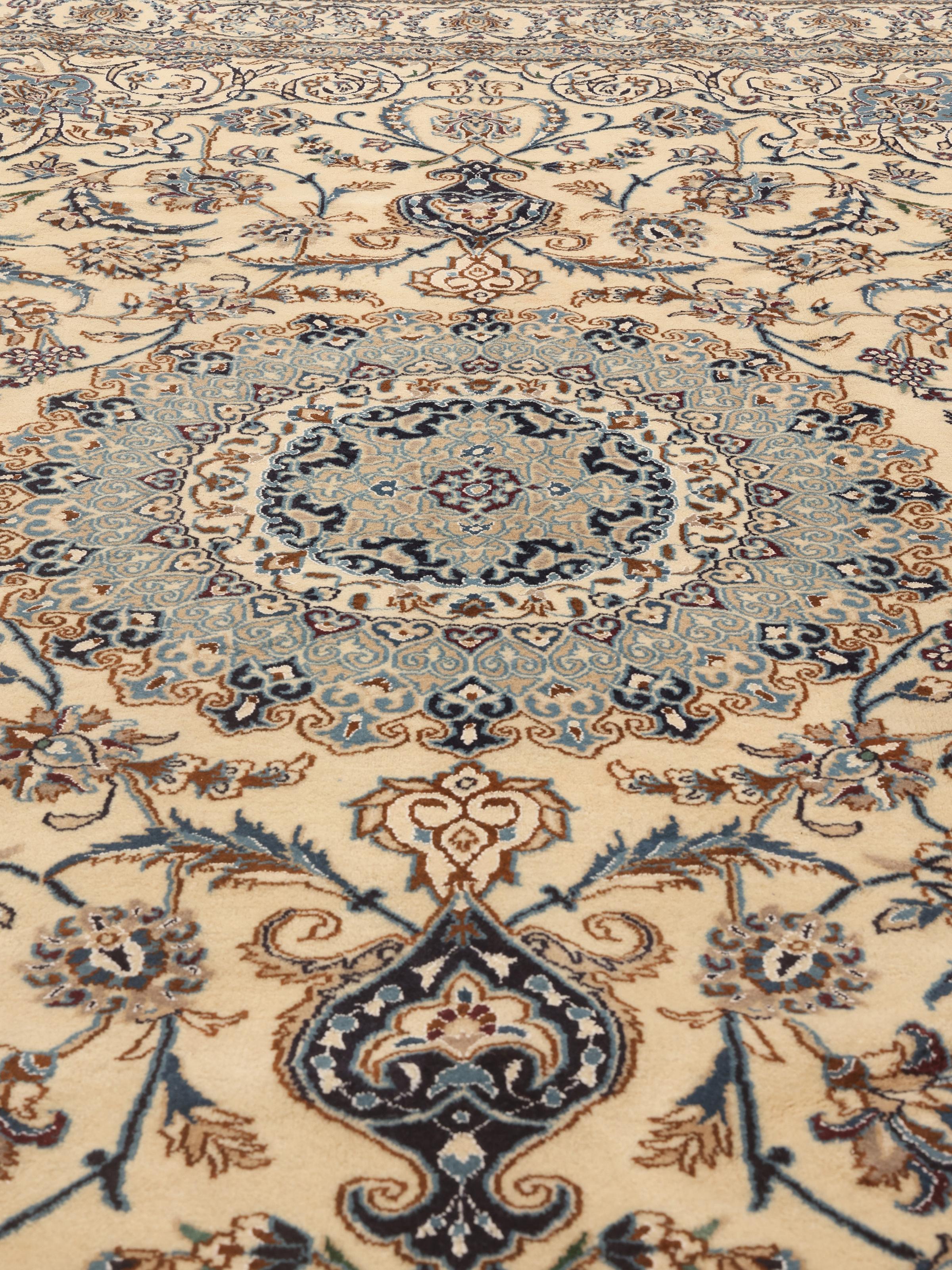
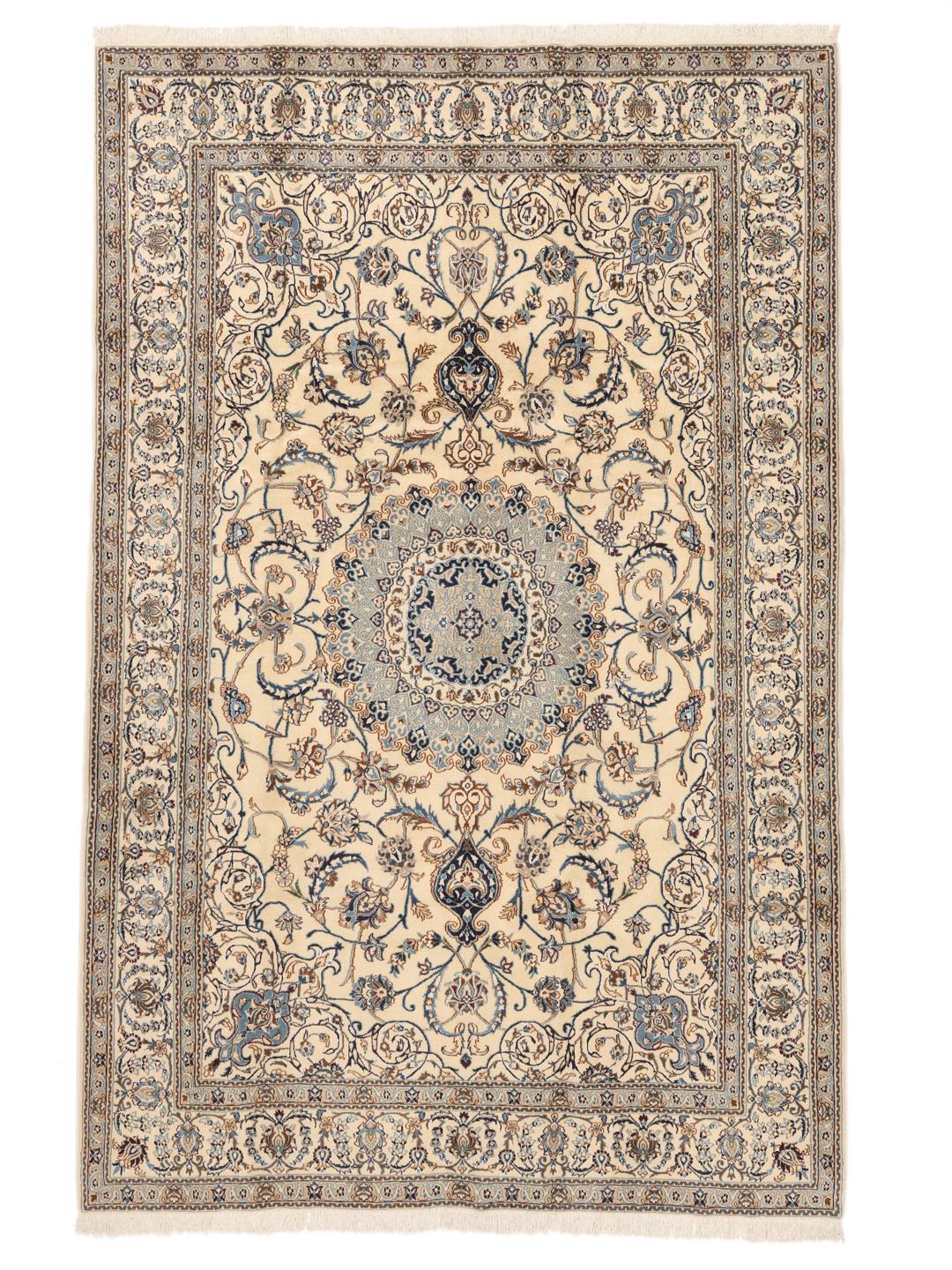
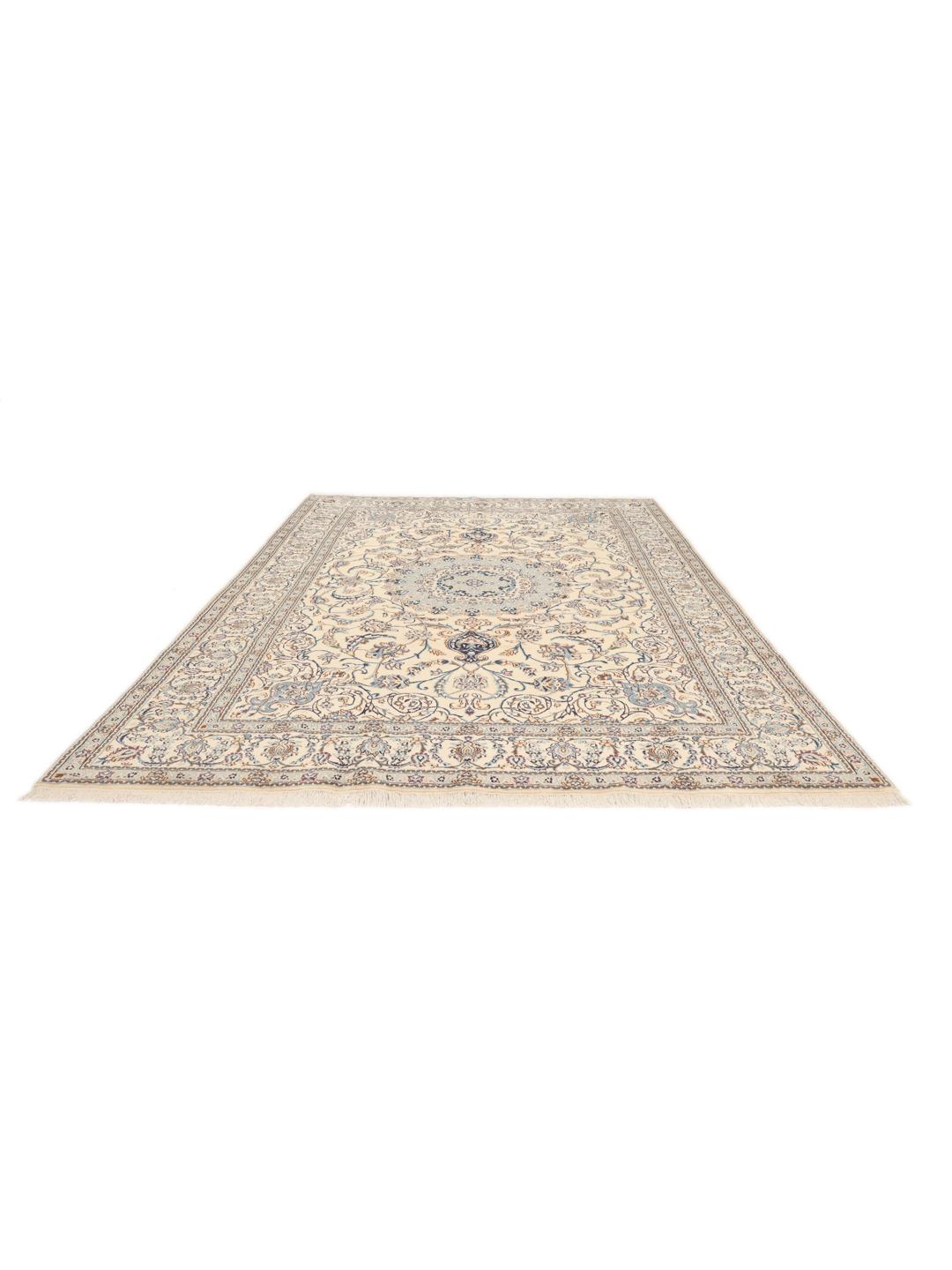
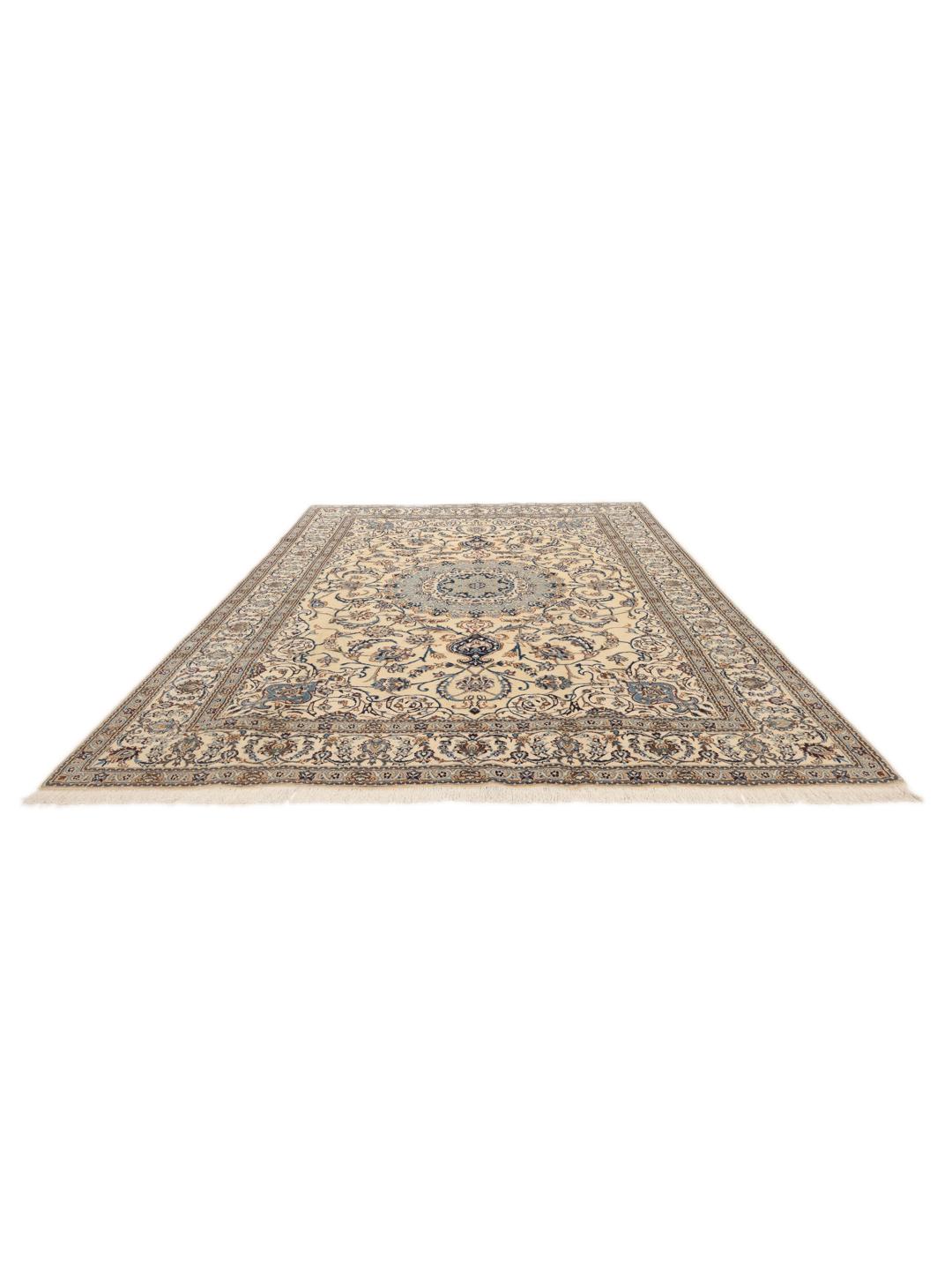
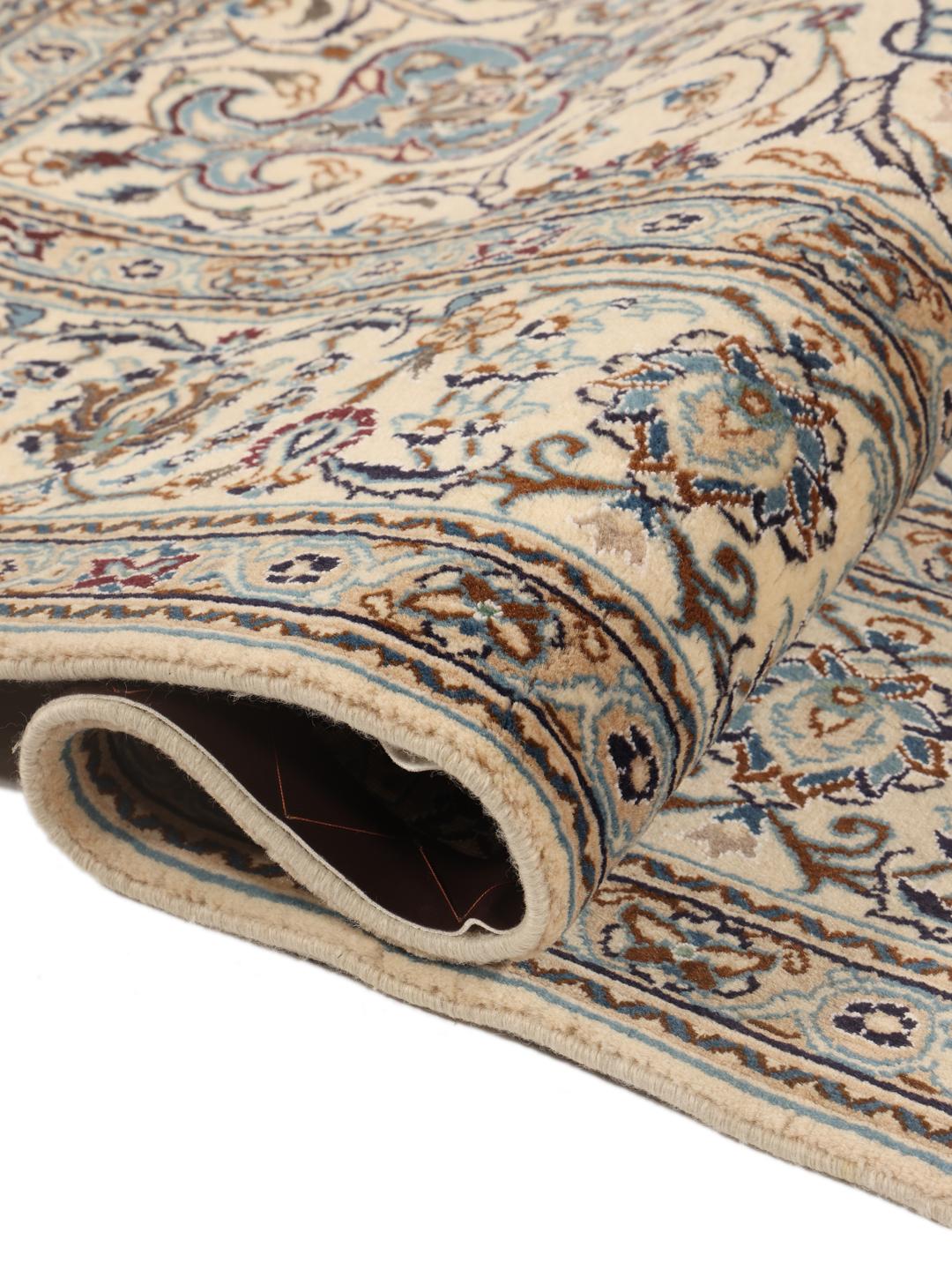
Nain rugs originate from the city of Nain, located in the central part of the Middle East, near the famous centre of silk and carpet weaving, Isfahan. Historically, the region was known for producing high-quality wool textiles, but in the early 20th century, local weavers transitioned their expertise to the creation of rugs. This evolution allowed them to develop a distinct style that quickly became recognised for its sophistication and technical precision.
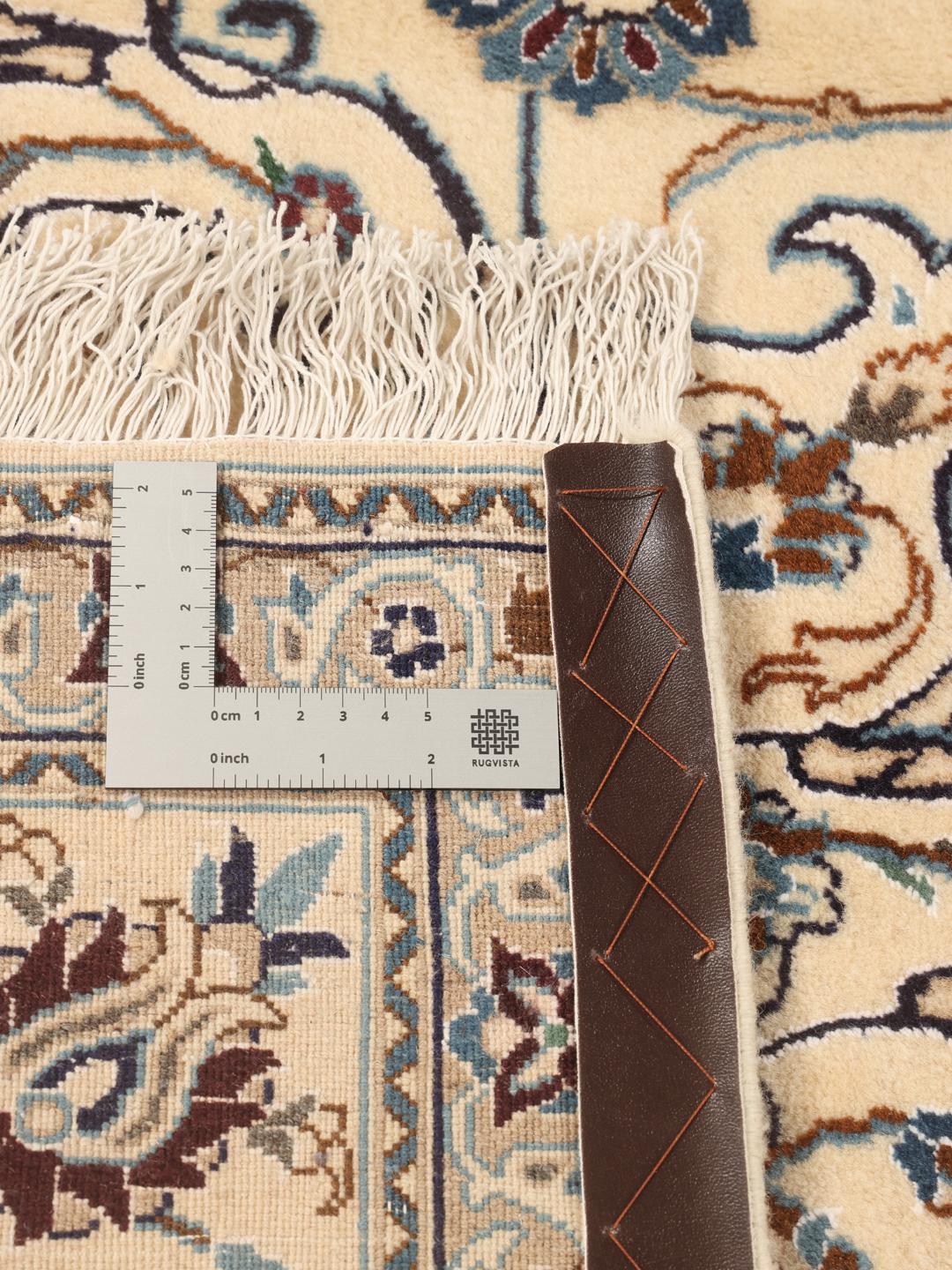
The designation '9La' is a technical term used to classify the quality of these rugs based on the number of strands used in the warp threads. A 'La' refers to the layers of threads in the fringe, and a lower number indicates a finer, higher-quality construction with a greater number of knots. This specific classification is a mark of pride for weavers, signalling a commitment to a finer weave that allows for the delicate, curvilinear patterns that define the Nain aesthetic.
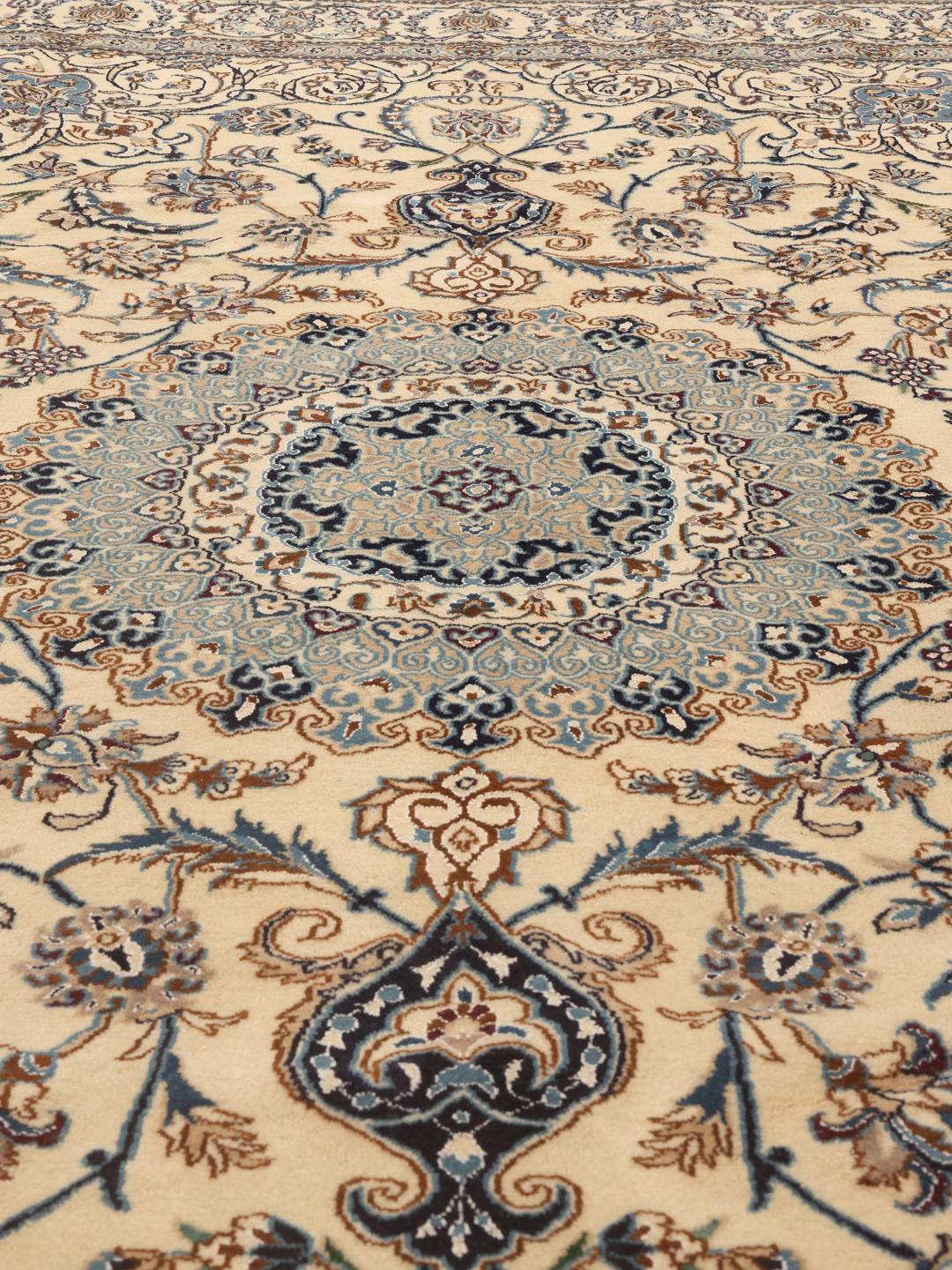
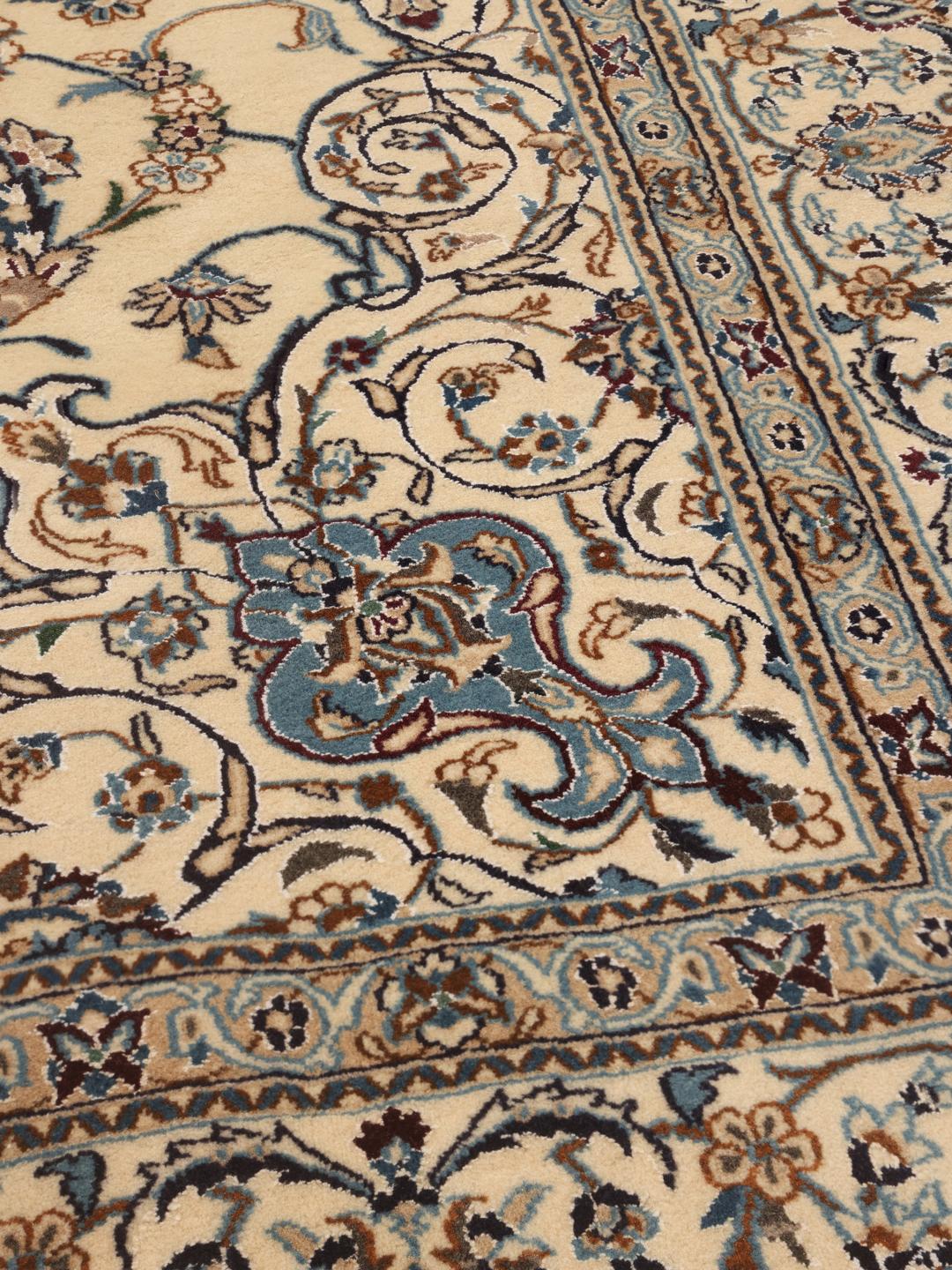
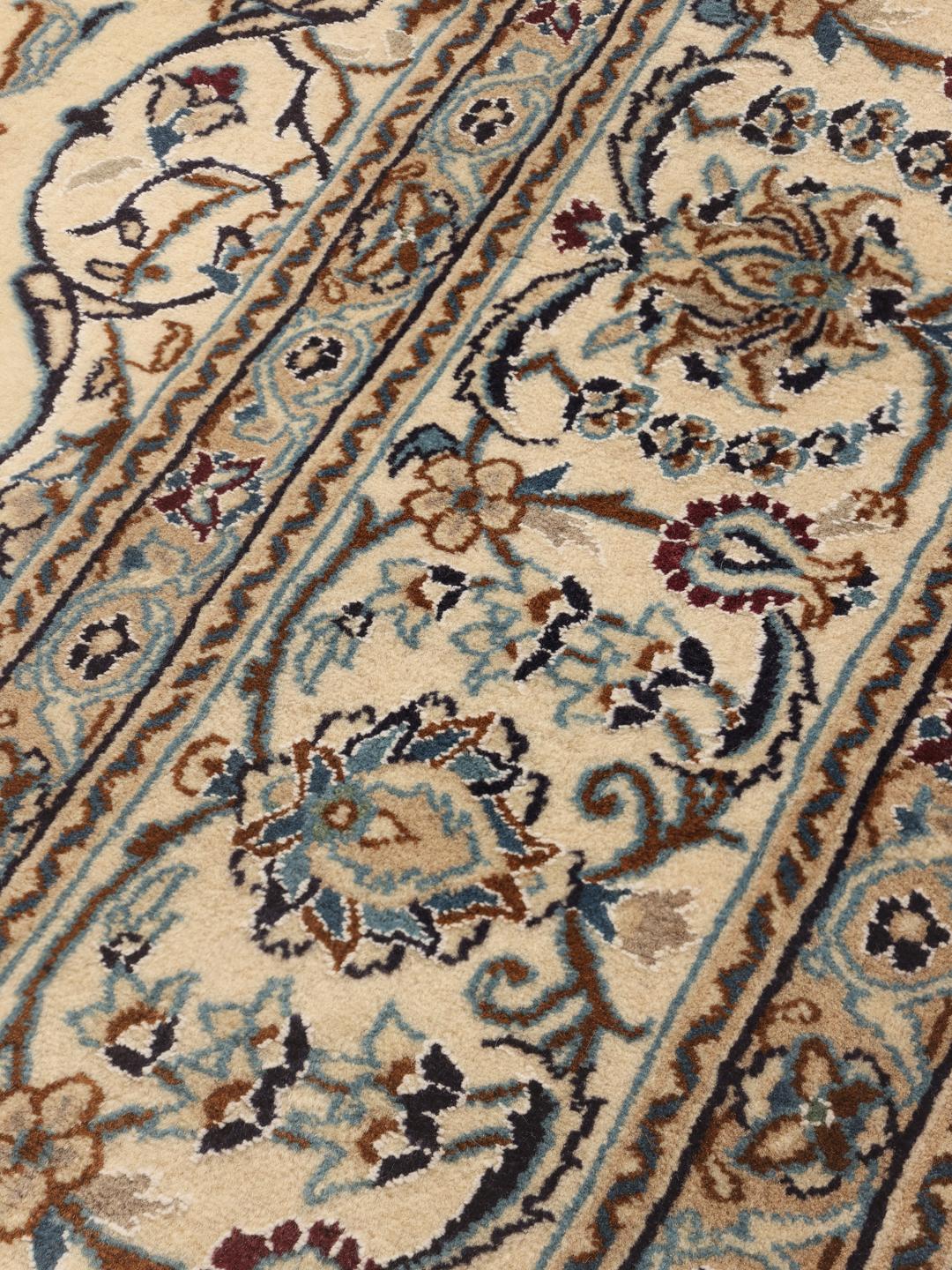
Visually, these rugs are celebrated for their elegant use of a central medallion surrounded by flowing floral arabesques and intricate vine scrolls. The colour palette is traditionally restrained, often utilising soft shades of beige, cream, and ivory as a field colour, accented by delicate tones of blue or light green. This balanced colour scheme highlights the finesse of the design, ensuring that the patterns stand out without overwhelming the space.
Owning a Nain rug is considered an acquisition of cultural heritage and refined skill. These pieces are highly valued by collectors for their consistency in quality and their ability to bring a sense of grace and balance to a room. They represent a pinnacle of decorative floor coverings, where the dedication to traditional techniques ensures that each rug remains a prized possession for generations.