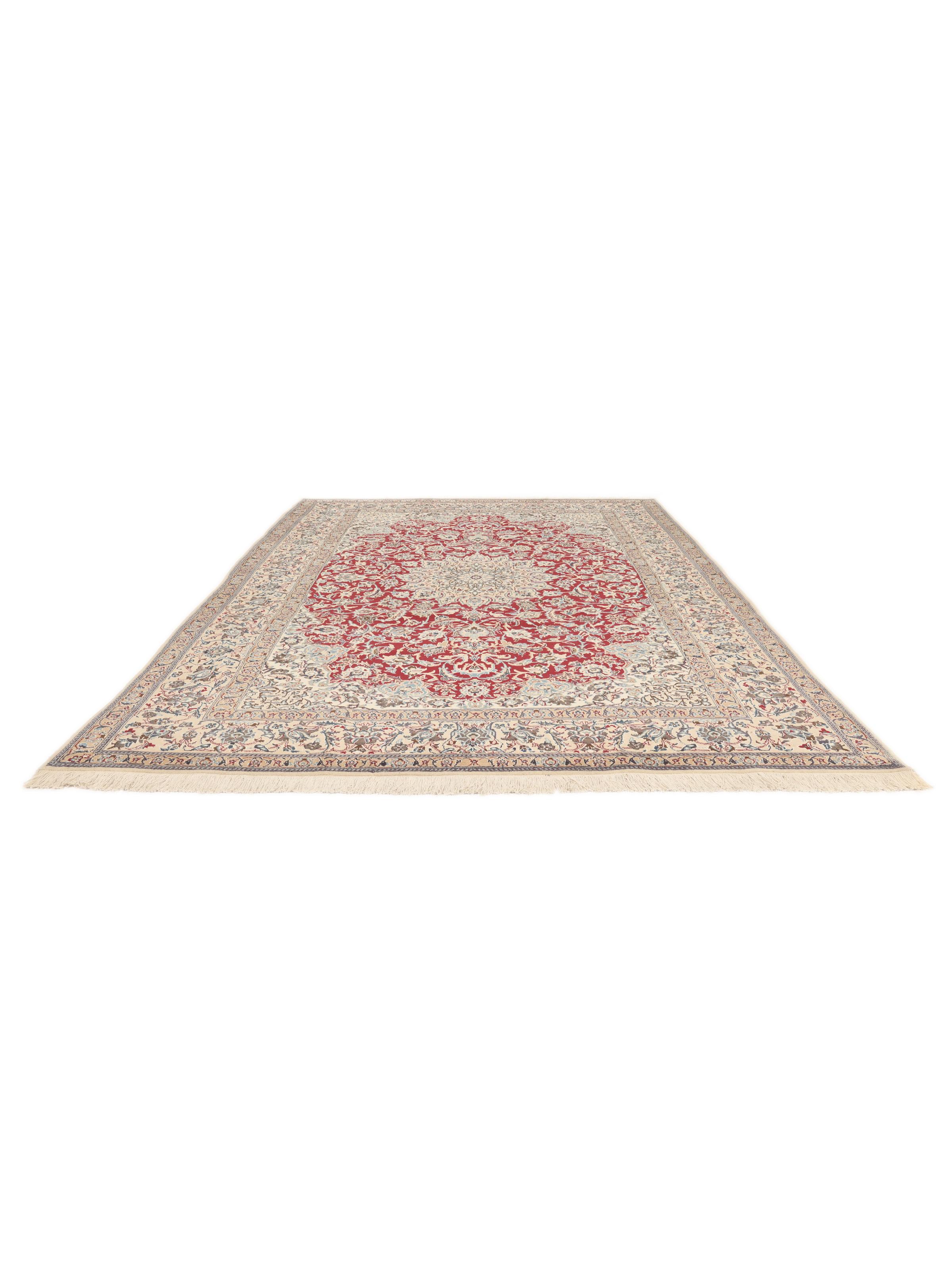
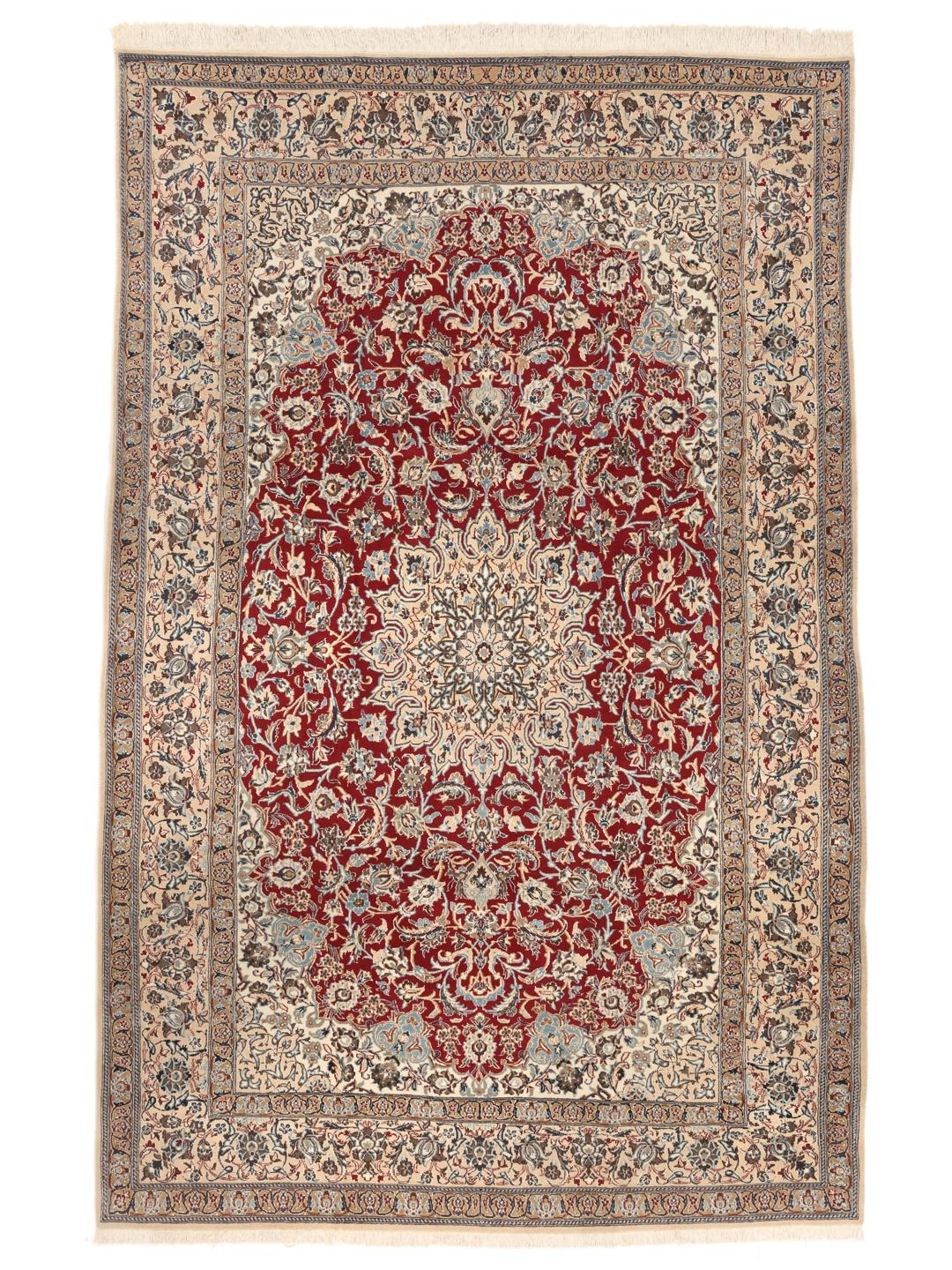
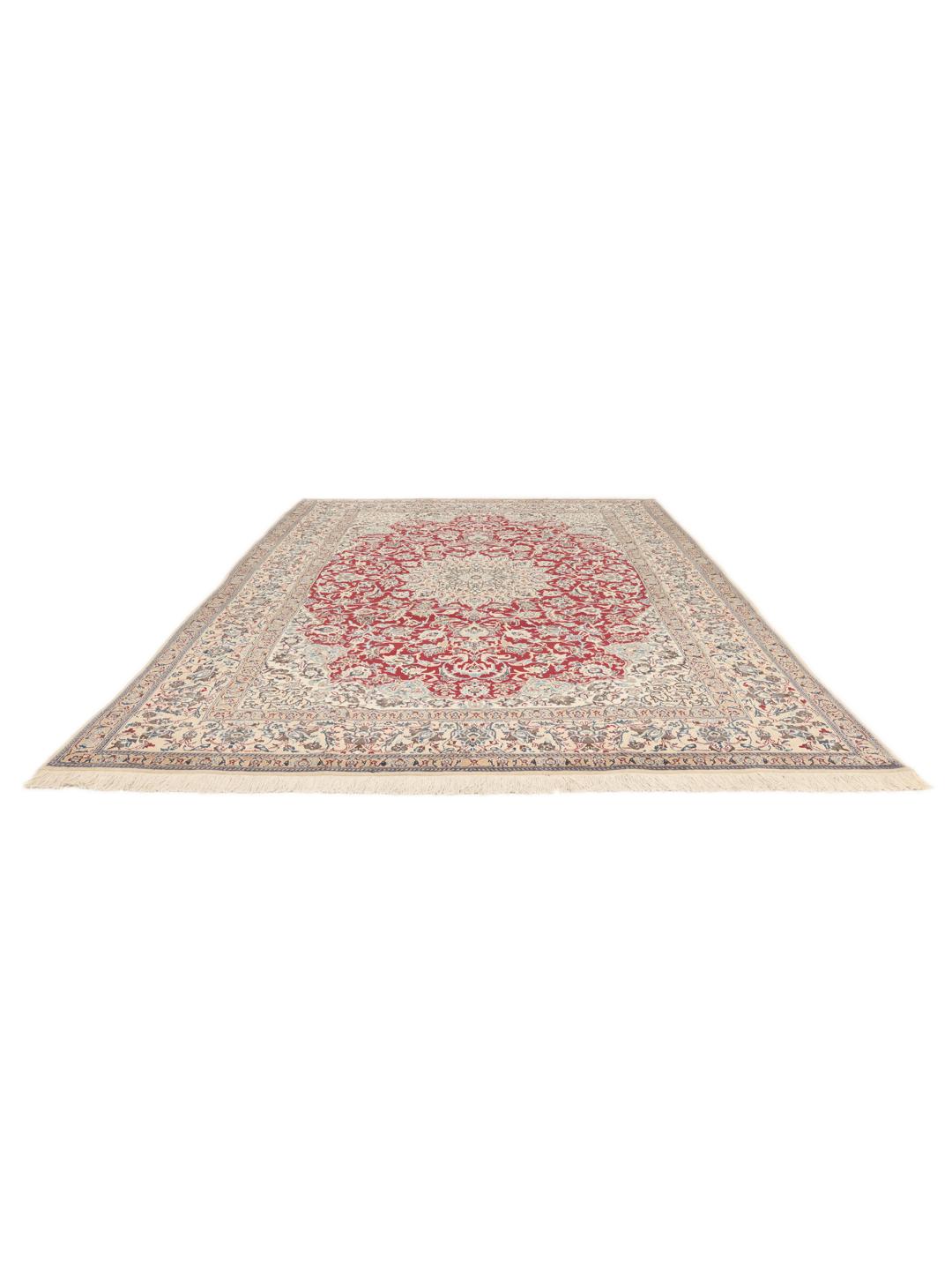
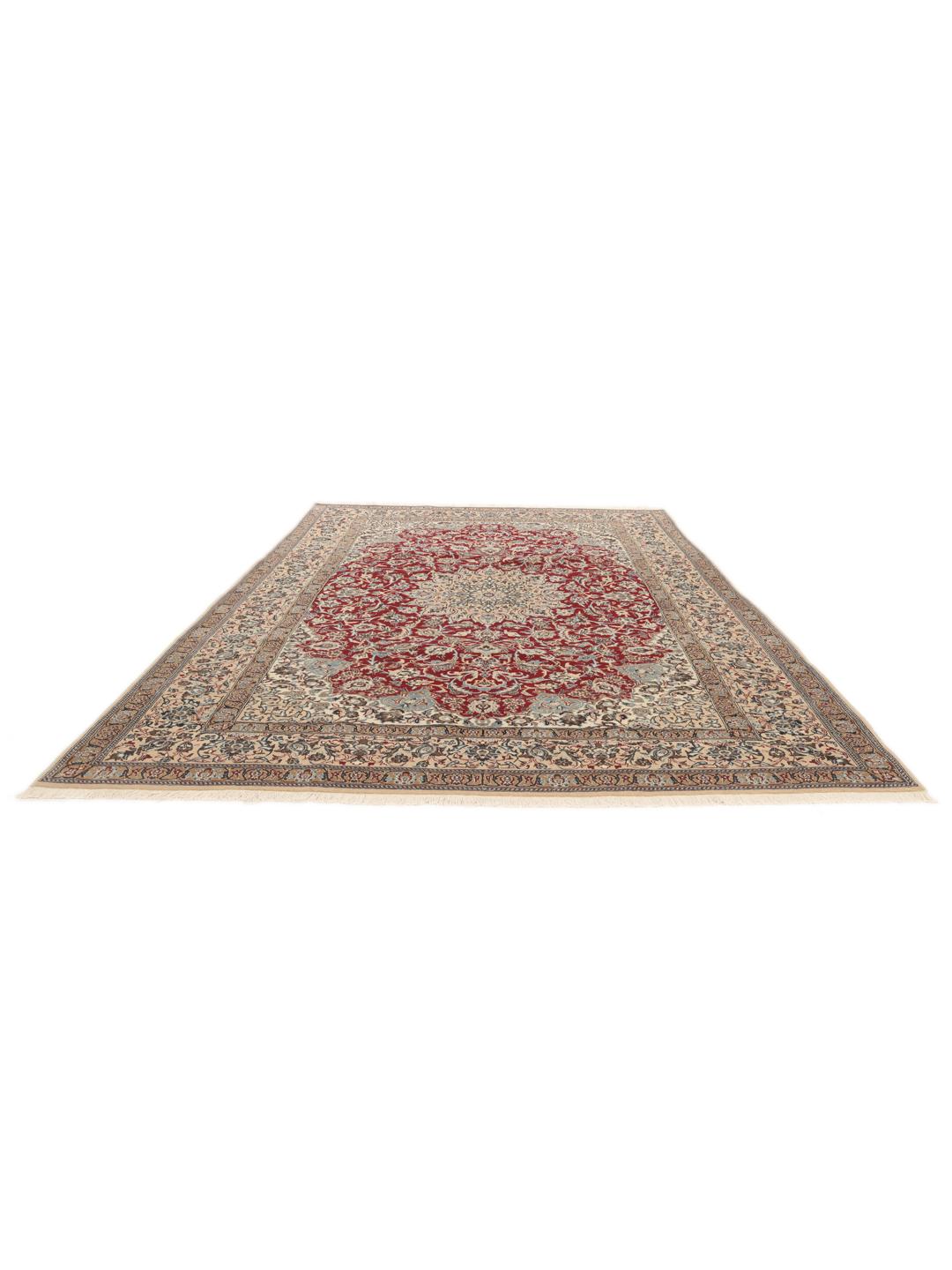
Nain rugs originate from the historic city of Nain in the Middle East, a town once famous for its high-quality wool textiles and religious garments. In the early 20th century, the local weavers transitioned their expertise toward creating some of the most refined floor coverings in the world. These rugs are highly regarded for their sophisticated style, often drawing inspiration from the artistic traditions of nearby weaving hubs while maintaining a distinct, elegant personality.
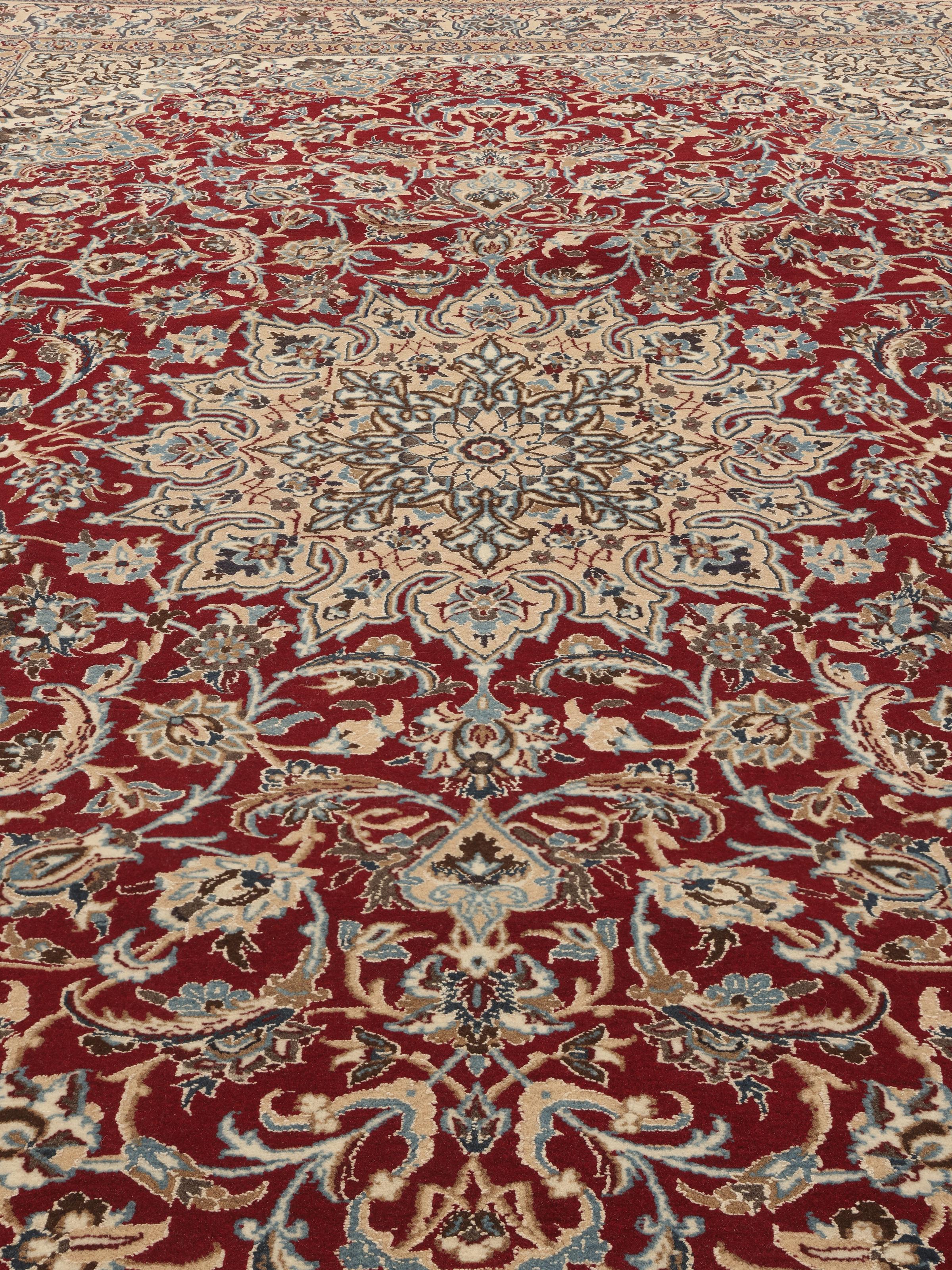
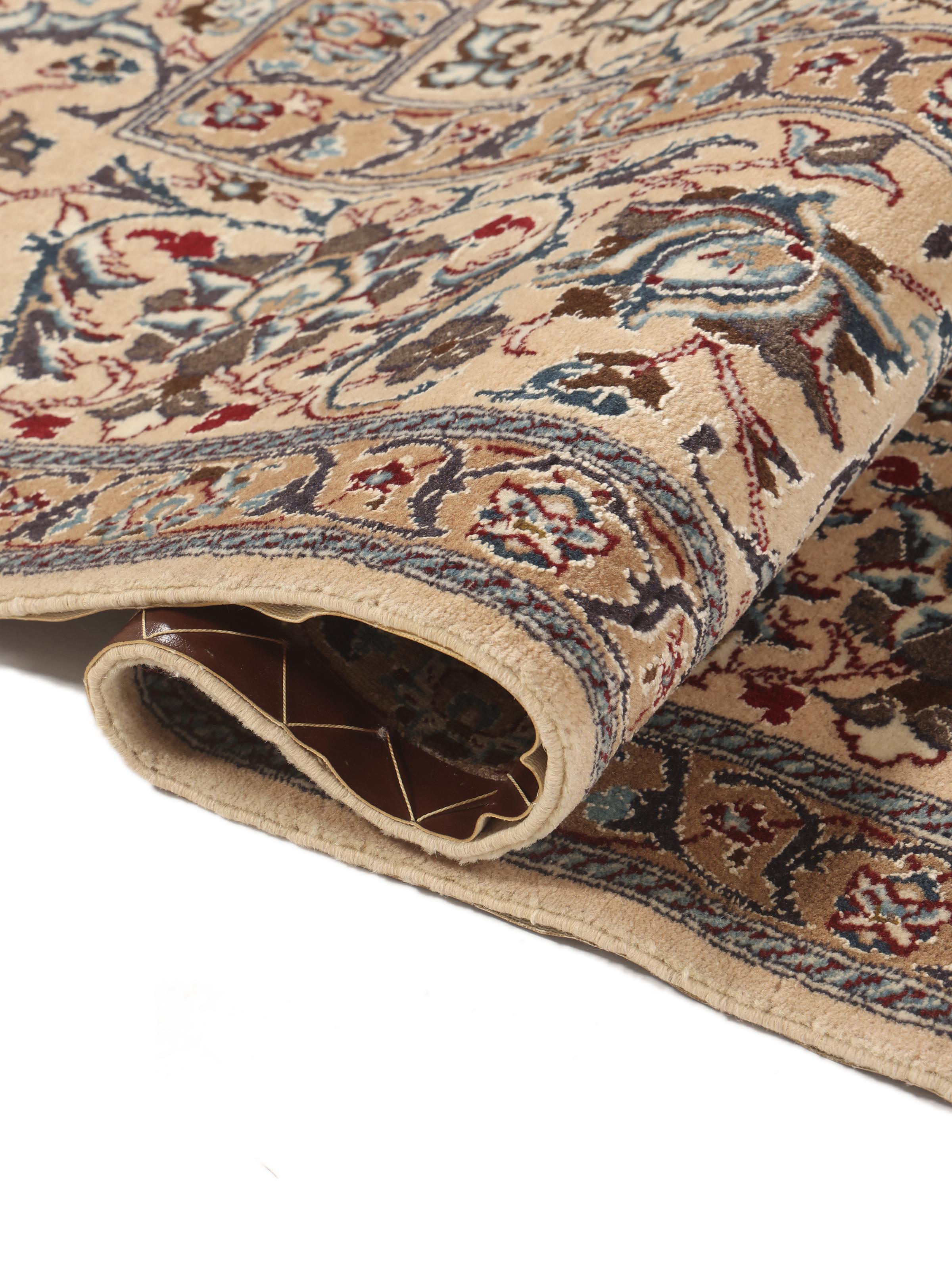
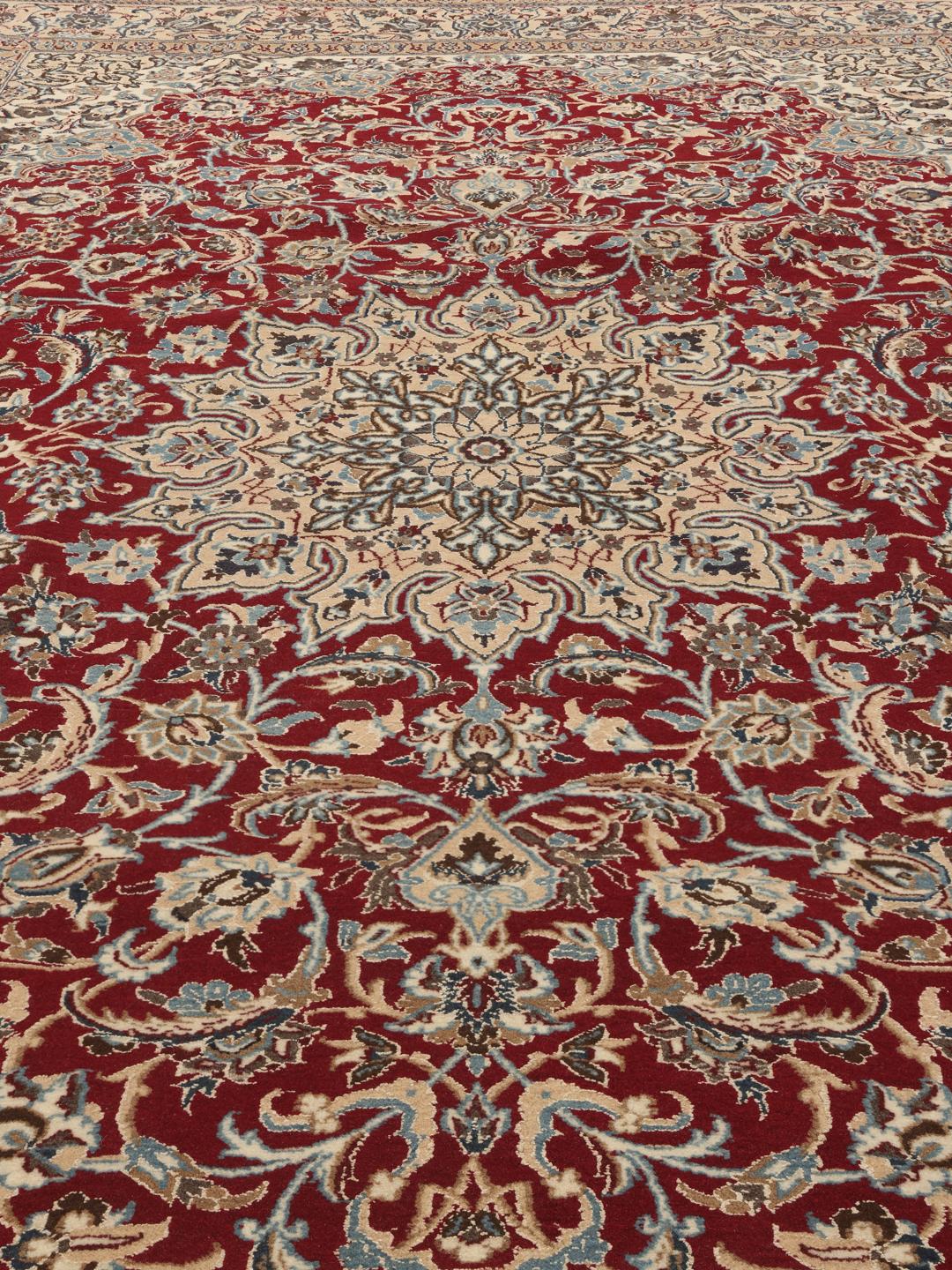
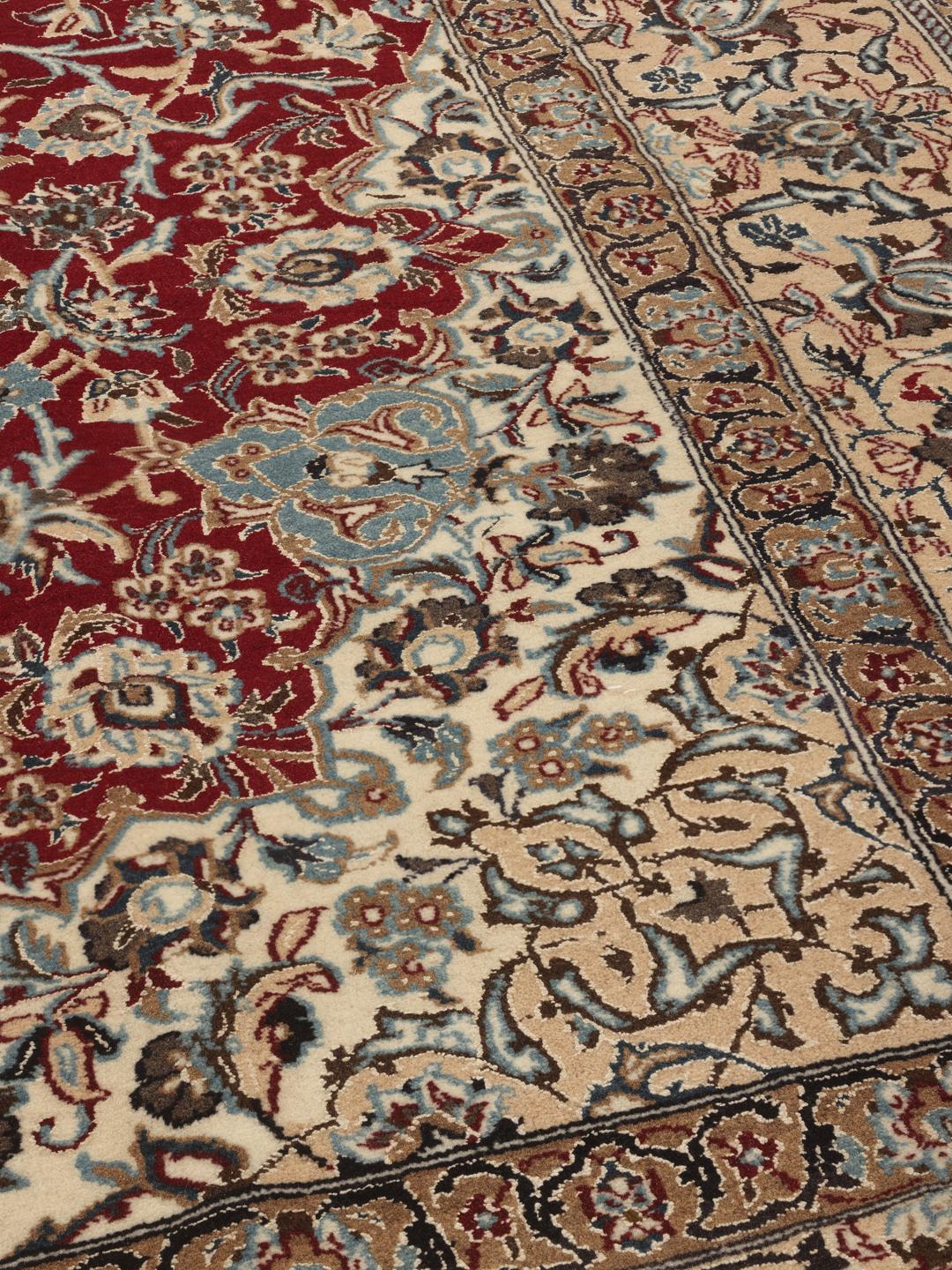
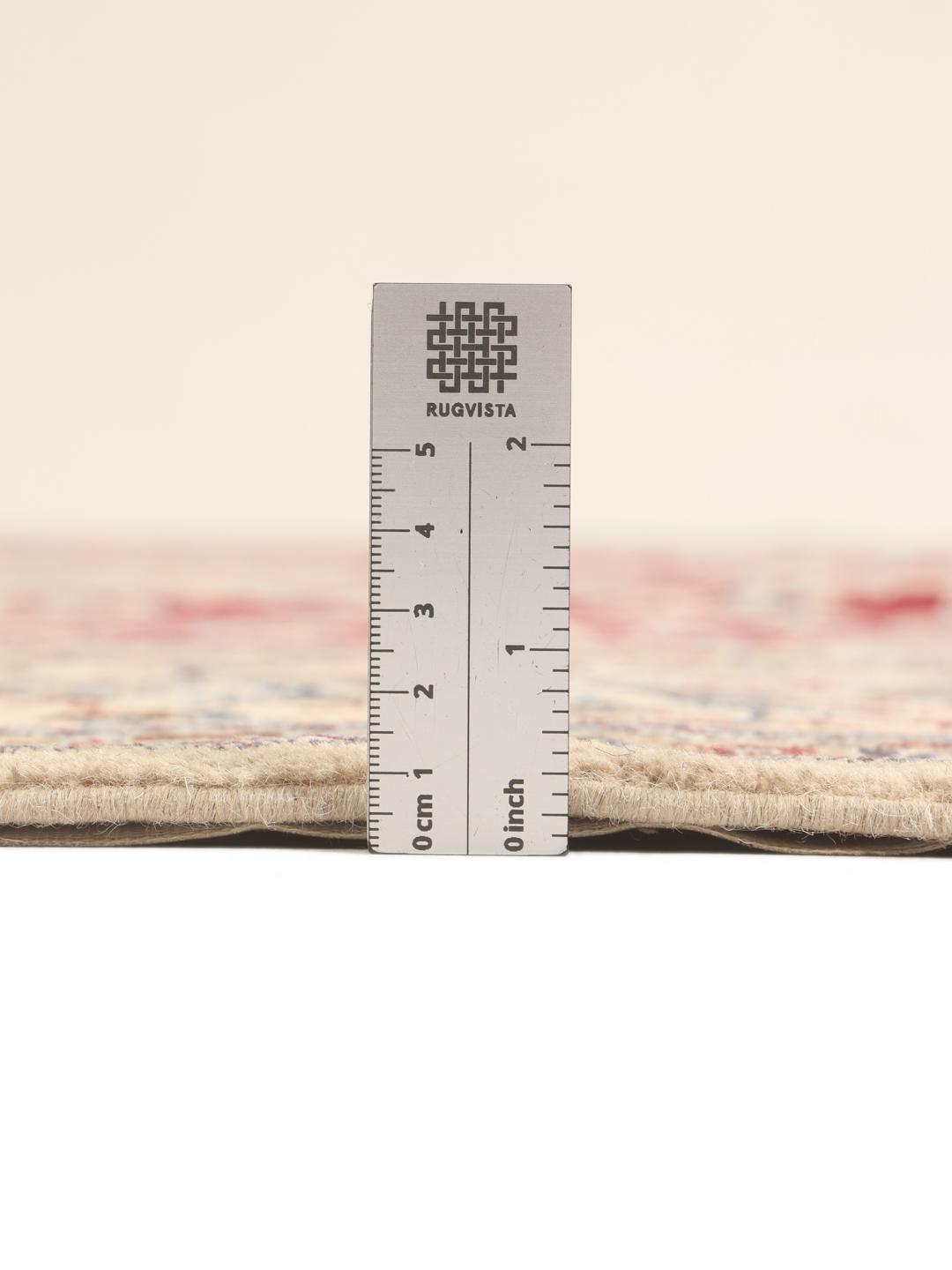
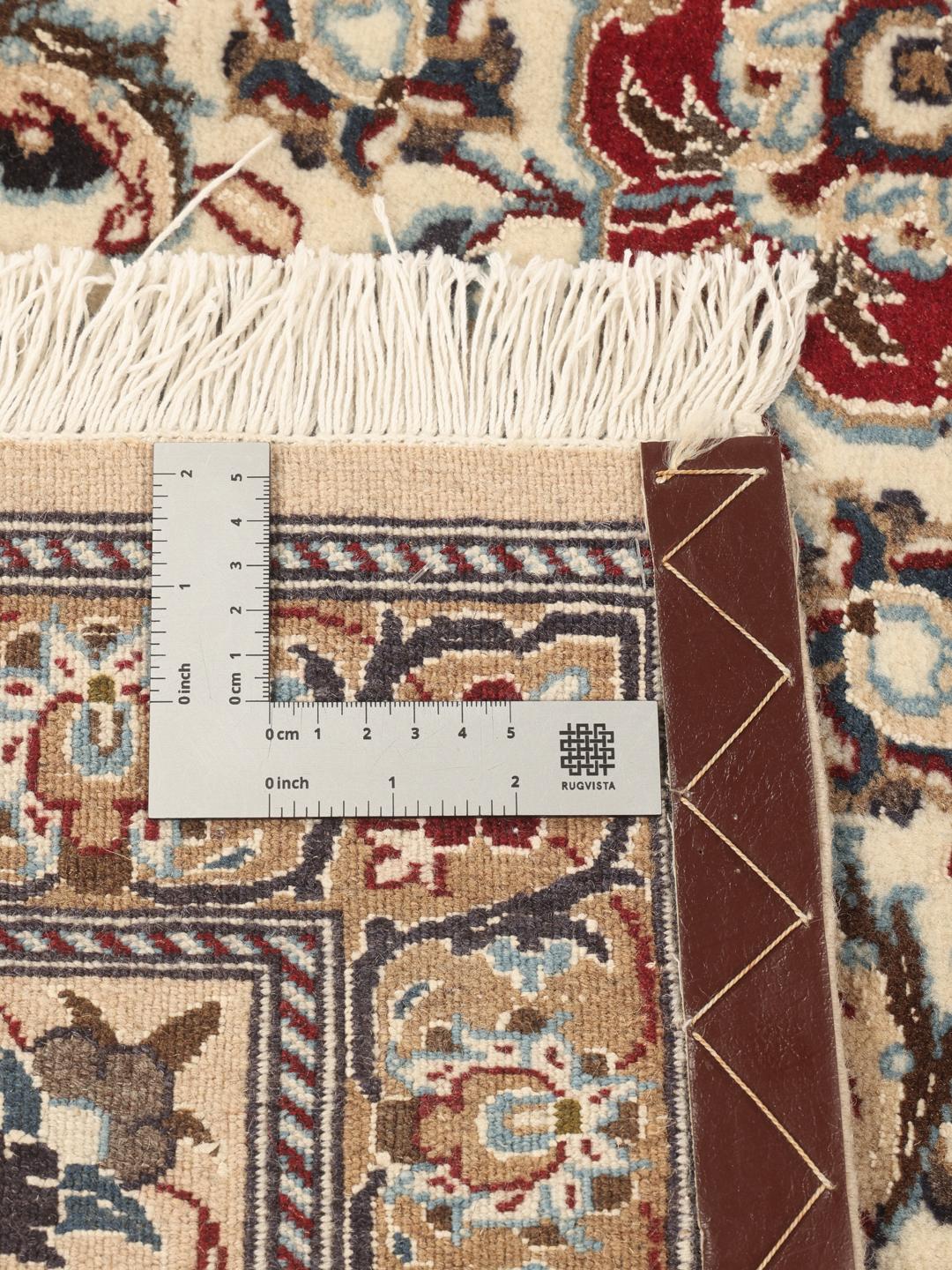
The term 9La refers to the number of threads used in the fringe, which serves as a technical indicator of the rug's quality and fineness. A 9La classification signifies a high level of detail, where the pile is kept relatively short to allow the intricate, curvilinear designs to stand out with clarity. This specific construction method is a hallmark of Nain craftsmanship, ensuring that the visual narrative of the rug remains sharp and expressive.
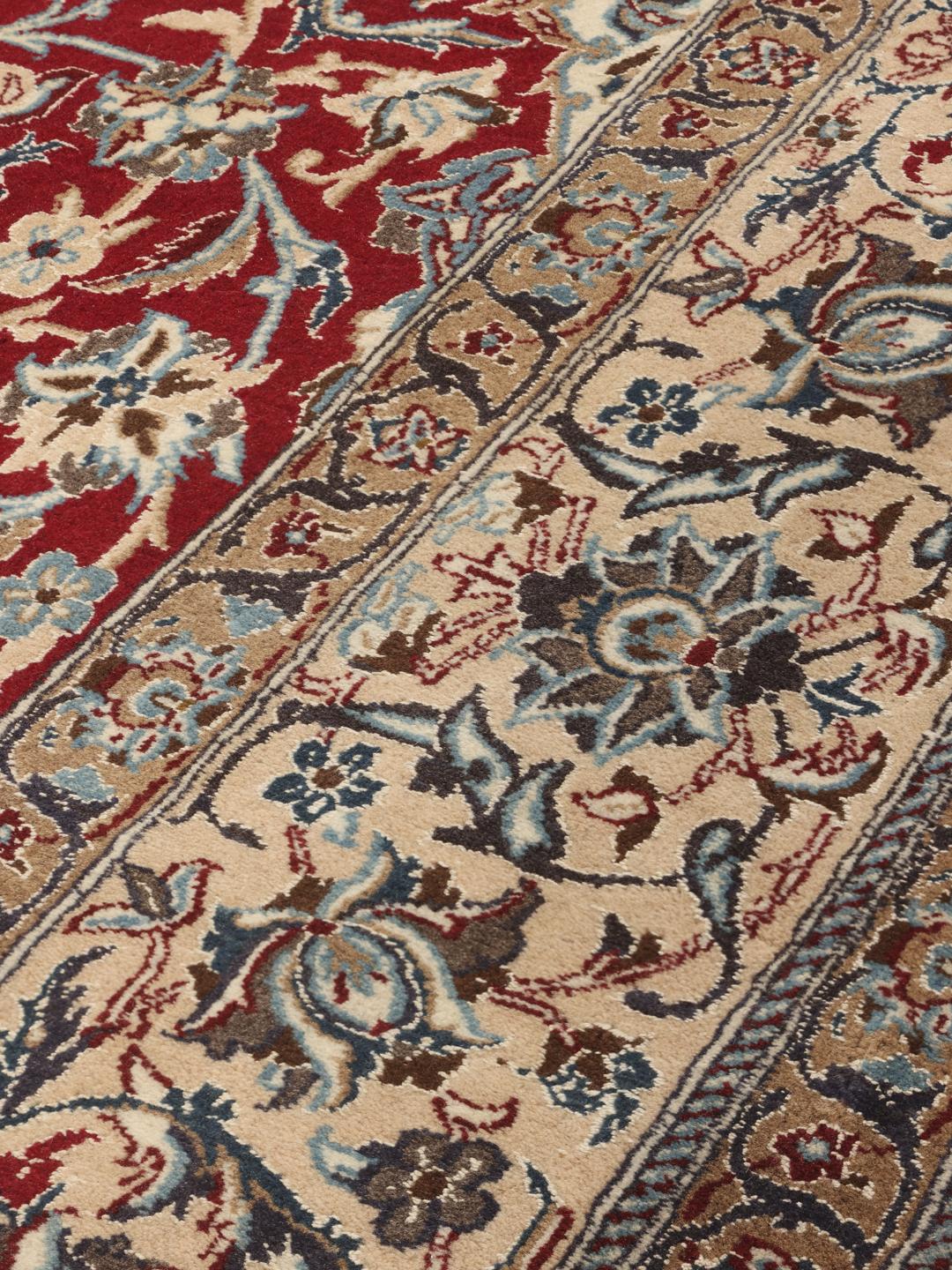
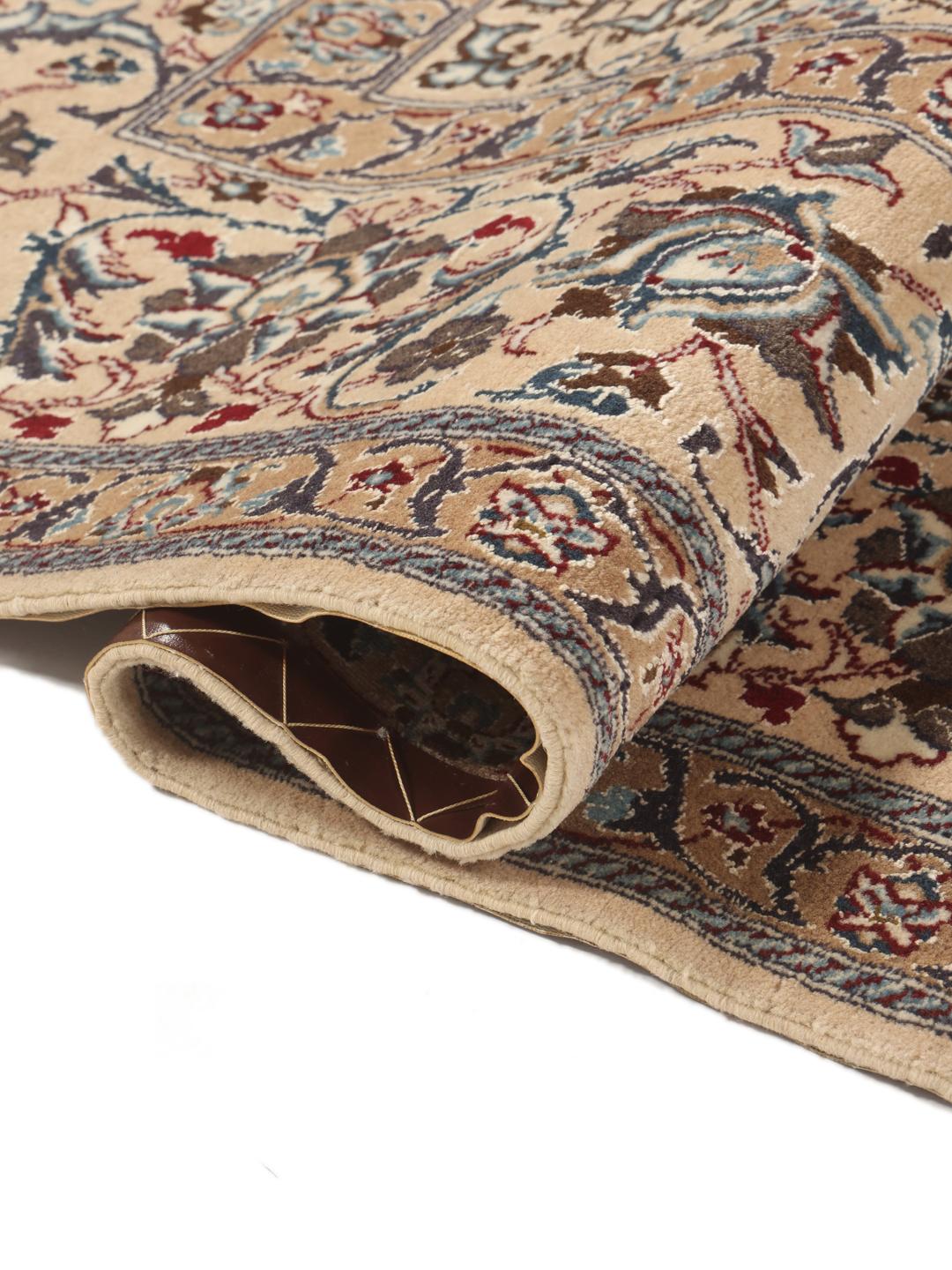
Visually, these rugs are defined by their central medallion and elaborate floral arrangements, often featuring arabesque patterns and scrolling vines. The colour palettes are typically restrained and elegant, frequently utilising ivory, cream, and deep reds to create a harmonious balance. The attention to detail in the borders is particularly notable, often mirroring the complexity of the central field to create a cohesive and balanced design composition.
Owning a Nain rug is considered an investment in cultural heritage and skilled artistry. Collectors value these pieces for their consistency, precision, and the way they bridge the gap between traditional craft and luxury interior design. Each rug is a reflection of a long-standing tradition that prioritises quality above all else, making it a meaningful addition to any collection of fine textiles.