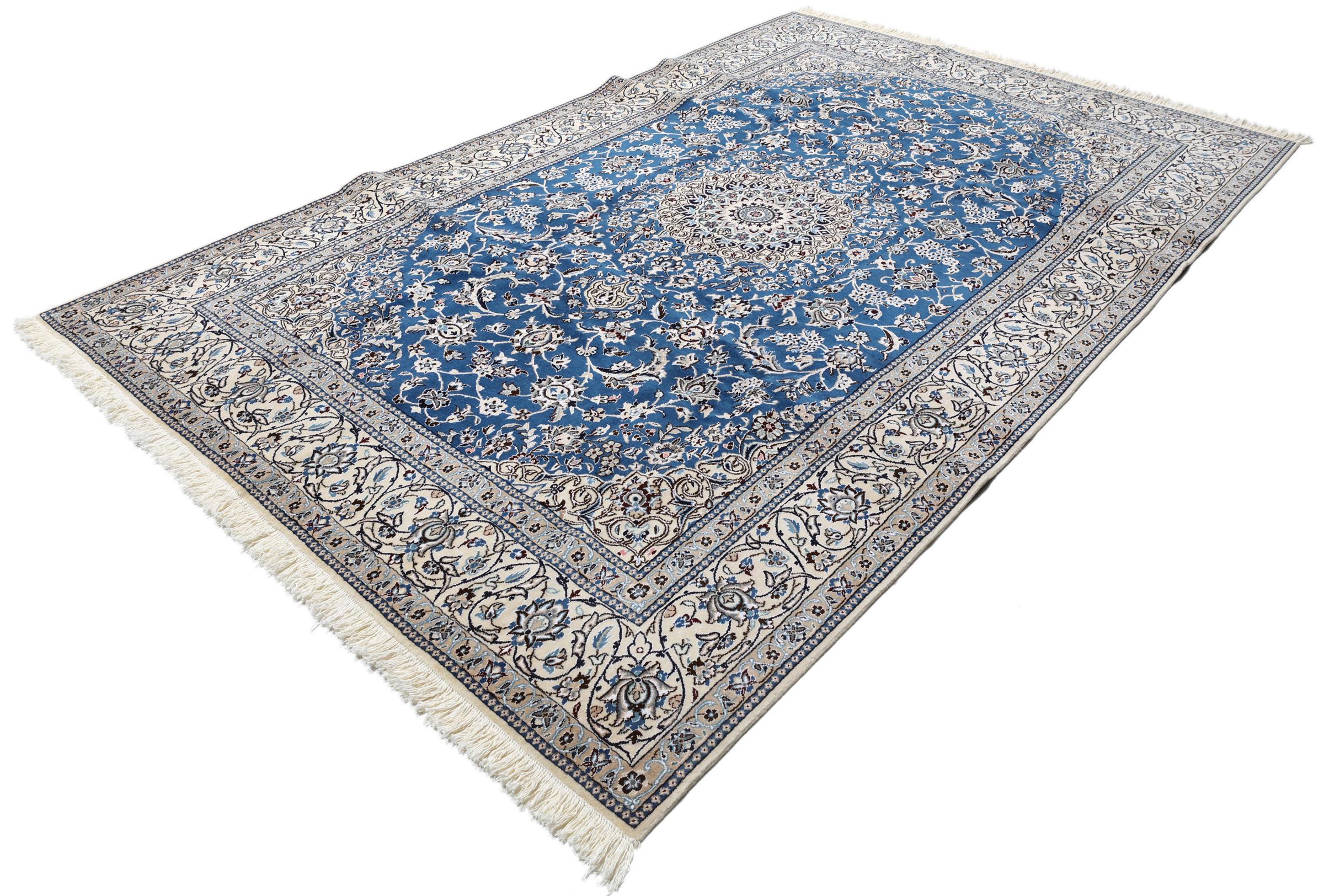
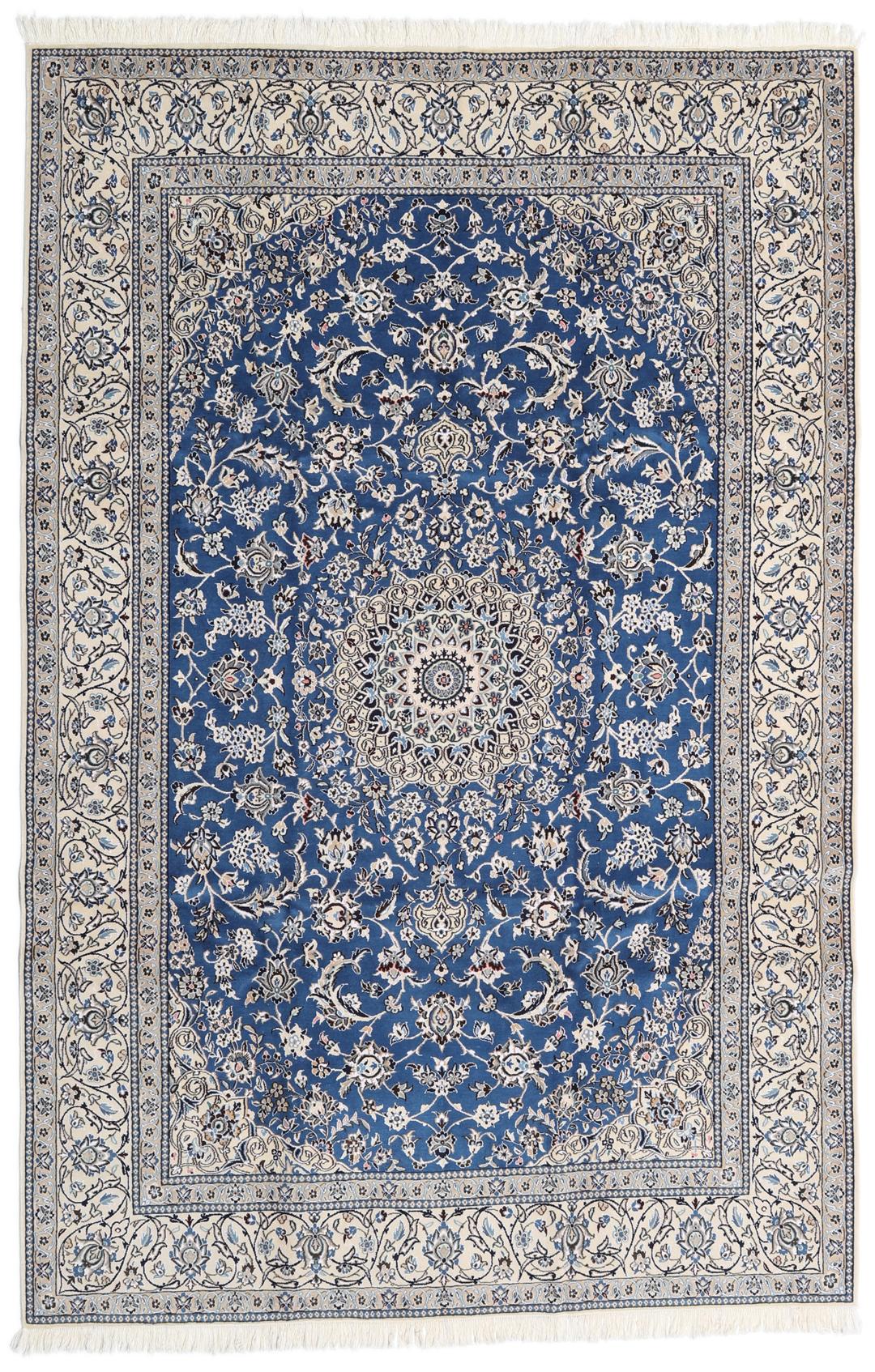
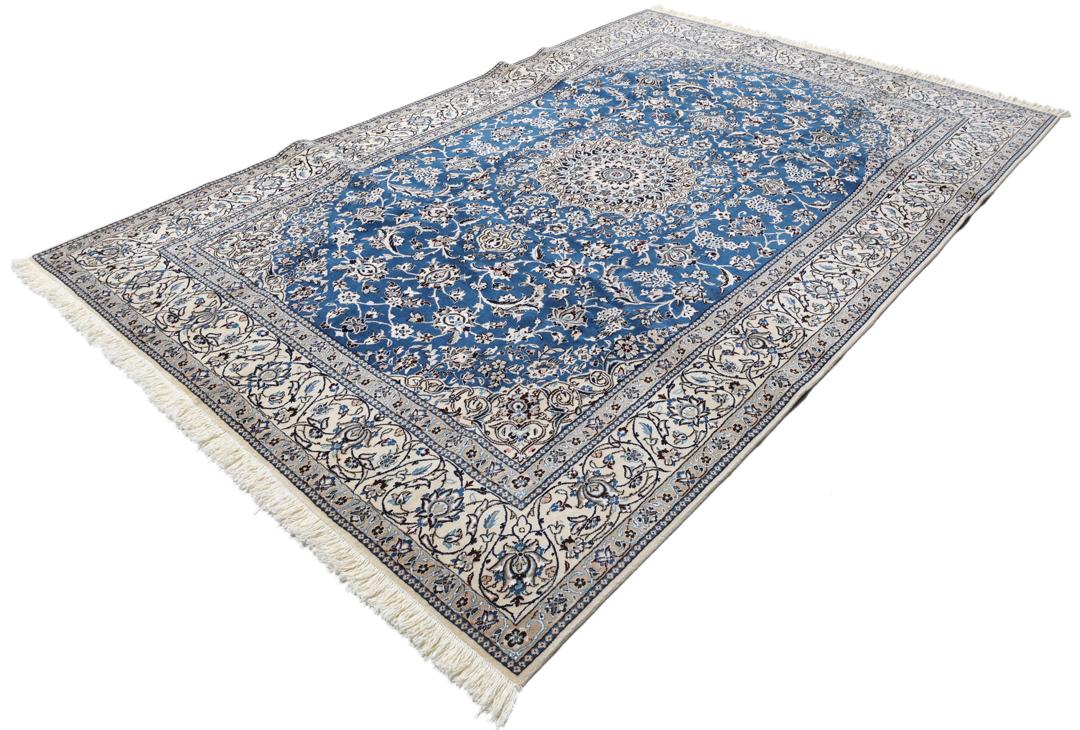
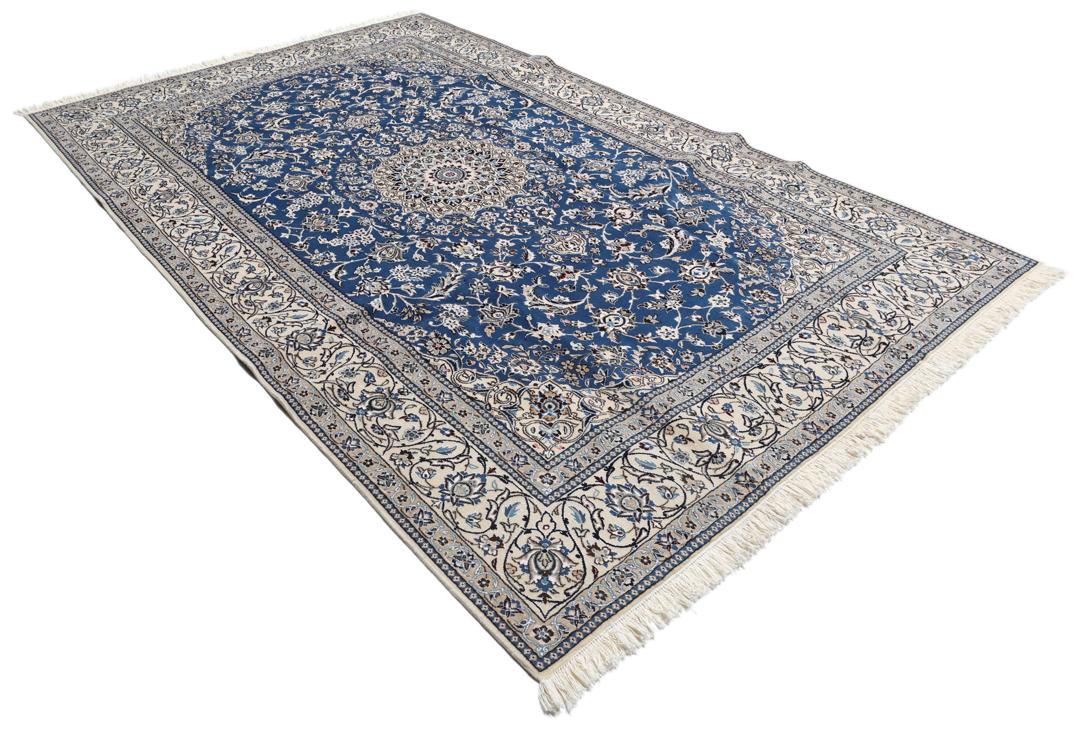
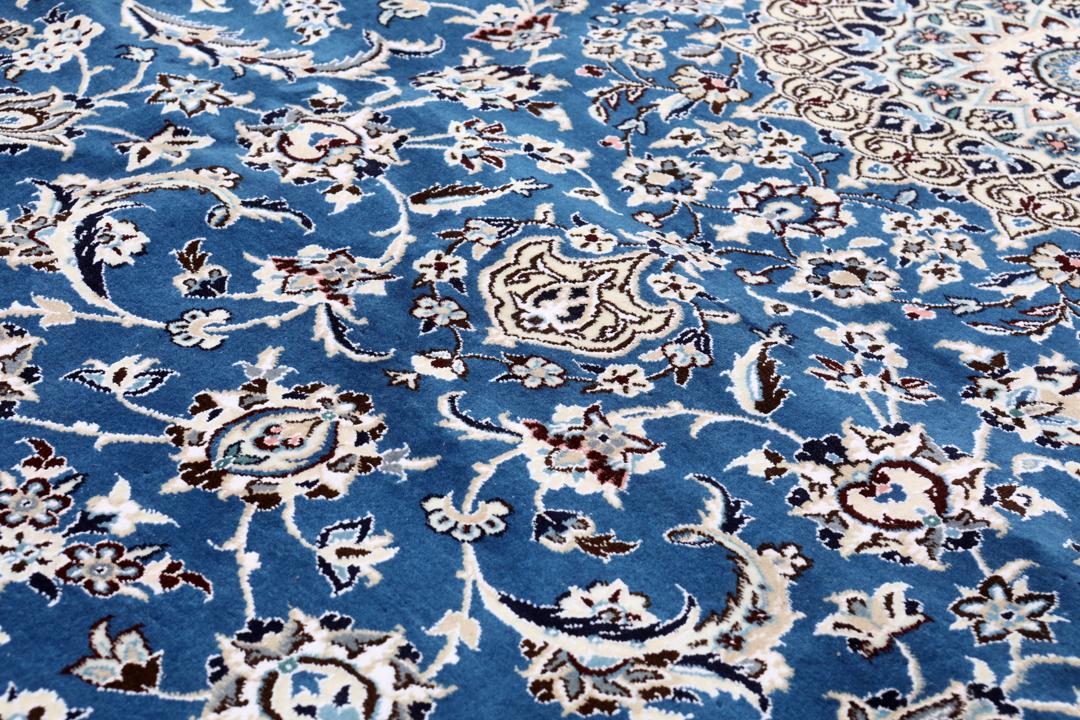
The Nain tradition originates from the town of Nain in the Middle East, a region historically celebrated for its fine textile production. While the area was once famous for its high-quality cloaks, it transitioned into the production of exceptionally fine rugs during the 20th century. This evolution saw the adoption of sophisticated floral and medallion designs, often incorporating a refined colour palette that distinguishes them from other regional styles.
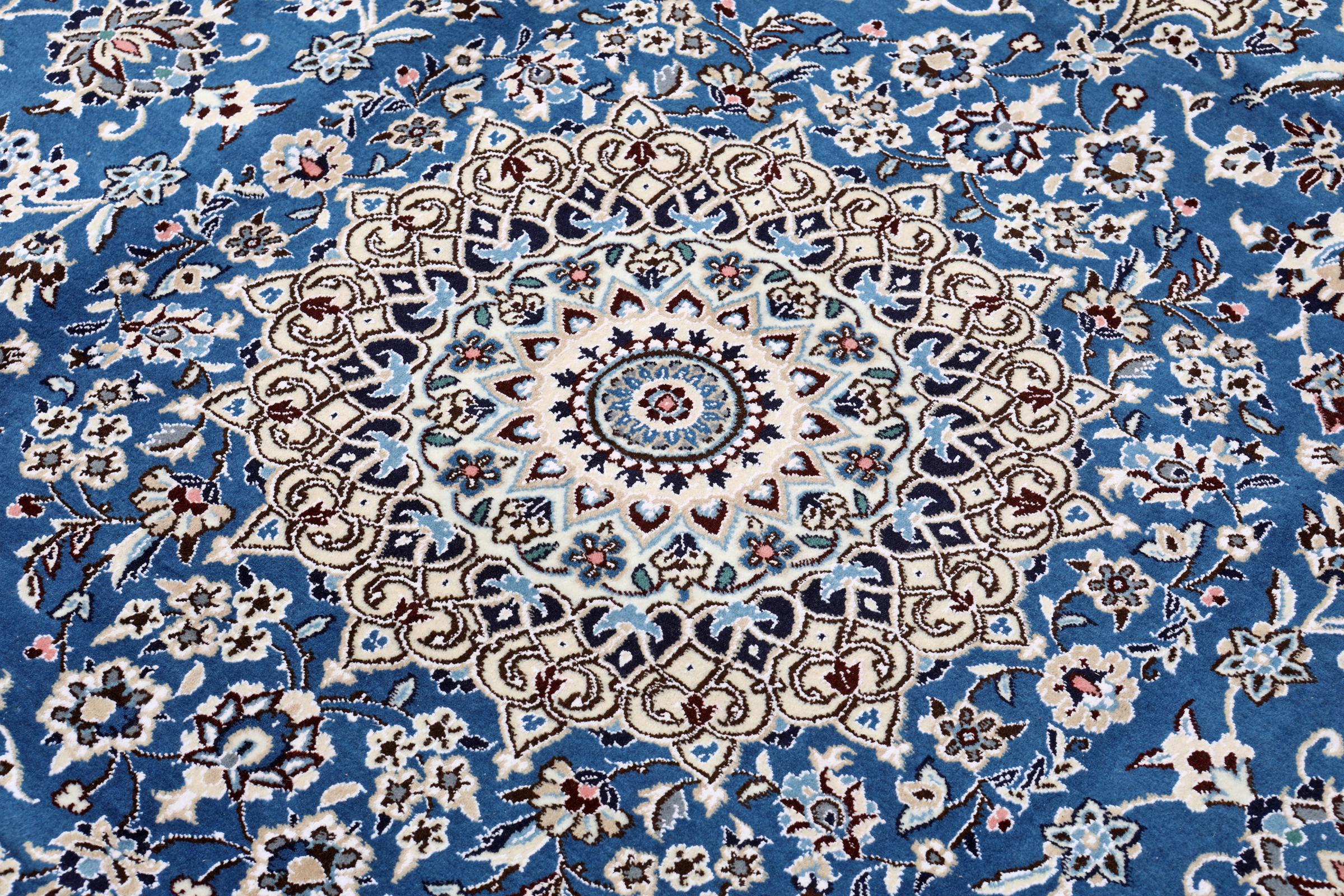
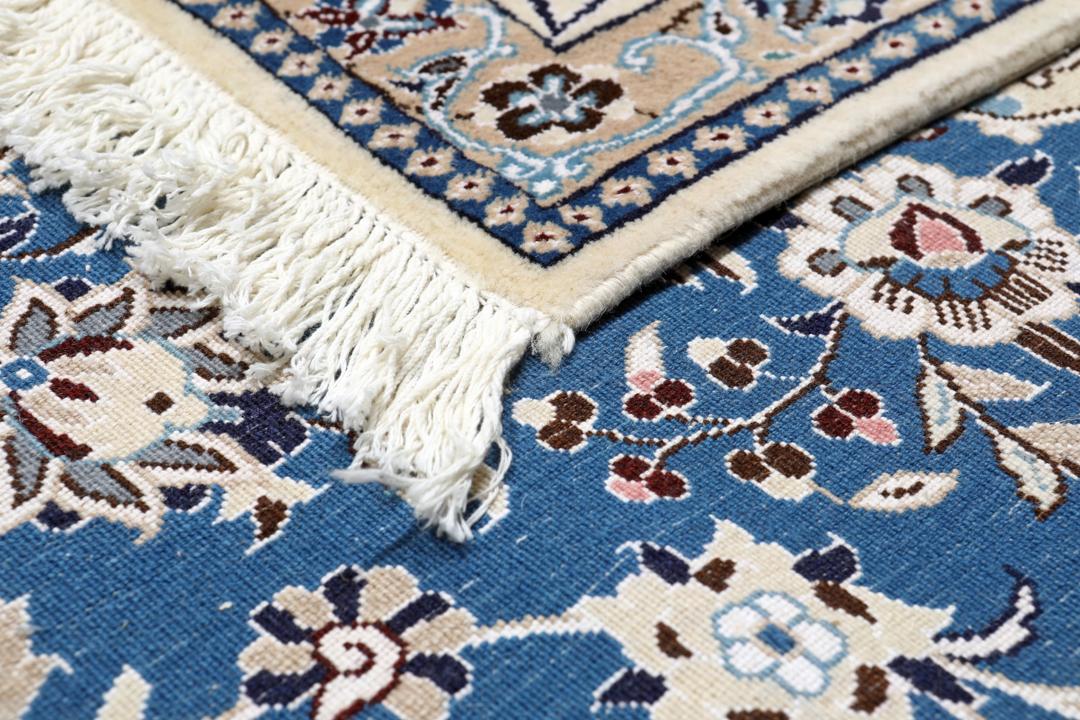
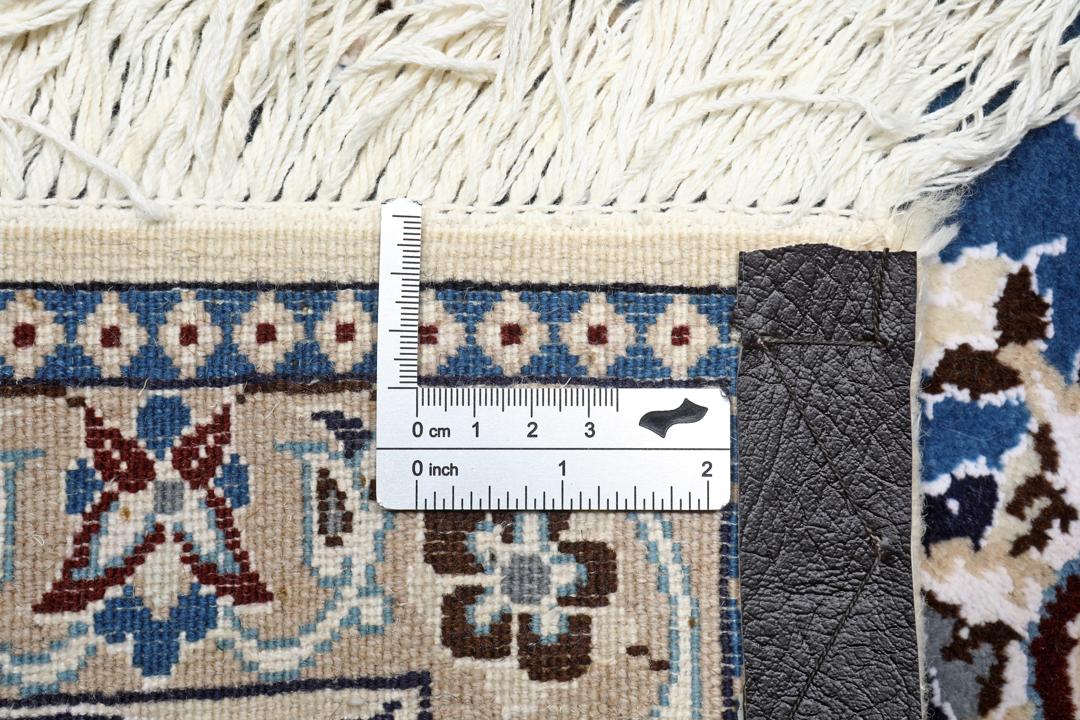
The designation 9La refers to the specific thickness and fineness of the rug, determined by the number of strands of thread used in the foundation. A lower number, such as 9La, signifies a finer construction, where the weaving is more compact and the detail is more pronounced. This technical precision is what allows for the intricate, delicate patterns that define the Nain style, ensuring that even the smallest floral motifs remain sharp and clear.
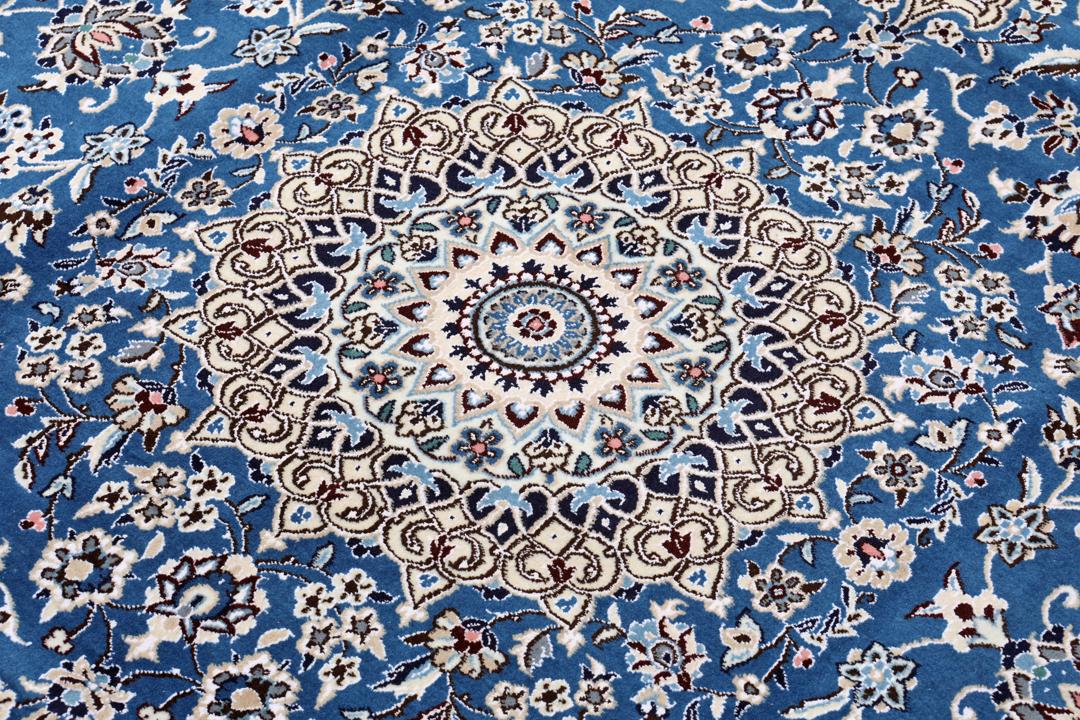
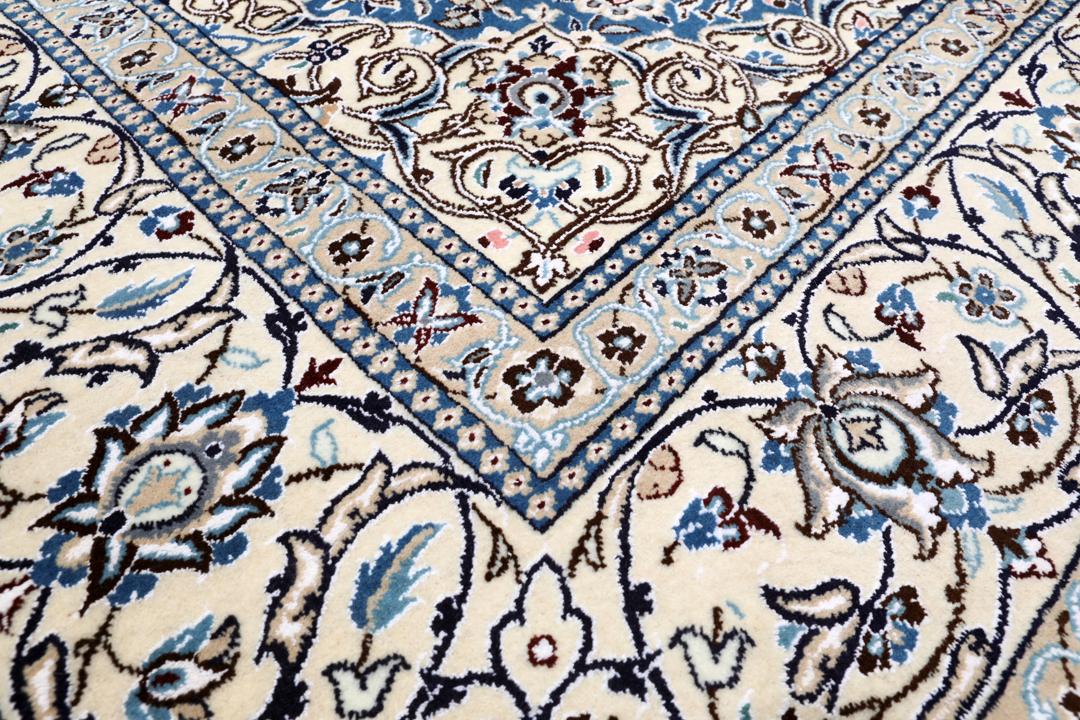
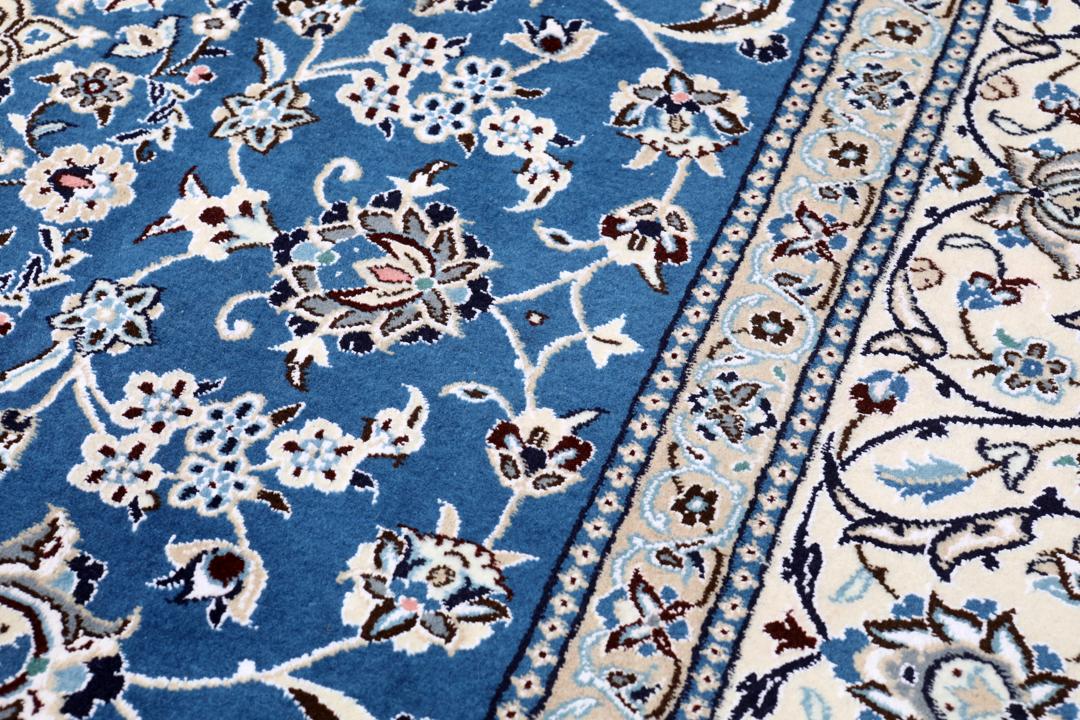
Signature design elements for this tradition include a central medallion surrounded by a field of arabesques, Shah Abbasi motifs, and dense floral sprays. The borders are typically multi-layered and just as detailed as the field, featuring repeating vines and leaves that frame the central composition. While blue and beige are classic colour combinations for these rugs, the specific execution on this piece highlights the artistry of the weavers in balancing light and dark tones.
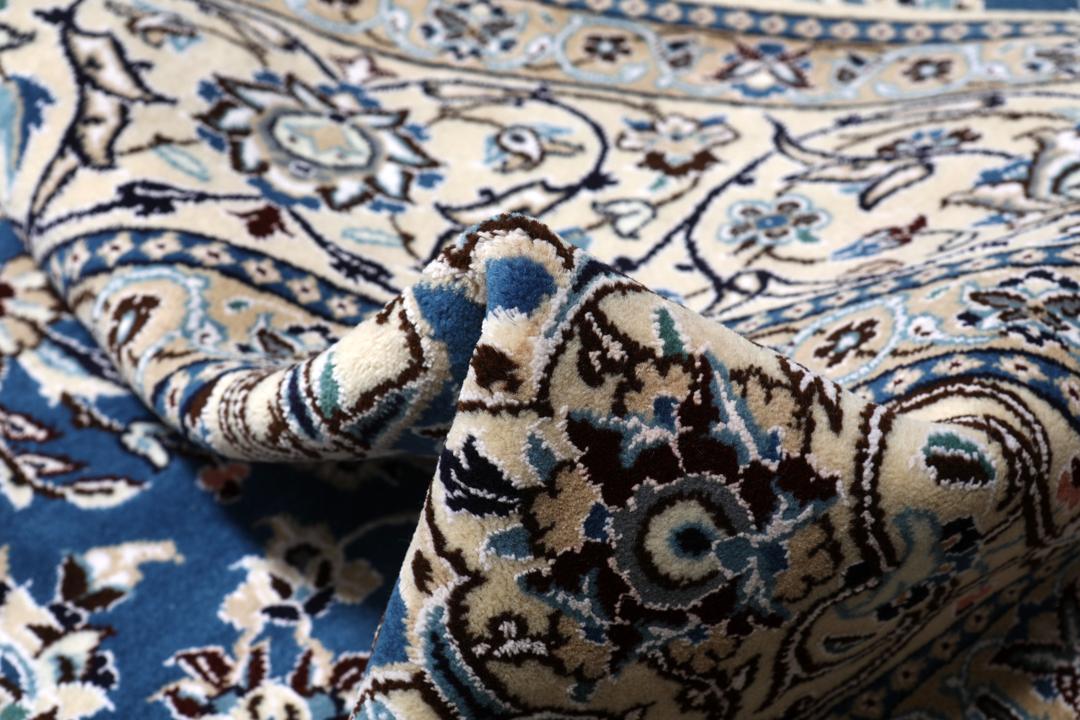
Nain rugs are highly valued by collectors for their blend of elegance and durability. They represent a pinnacle of Middle Eastern weaving, where the focus is on achieving a 'fine' finish that feels both light and substantial. Owning a piece from this tradition is a testament to an appreciation for heritage, as these rugs are crafted to be long-lasting heirlooms that retain their value and aesthetic appeal over time.