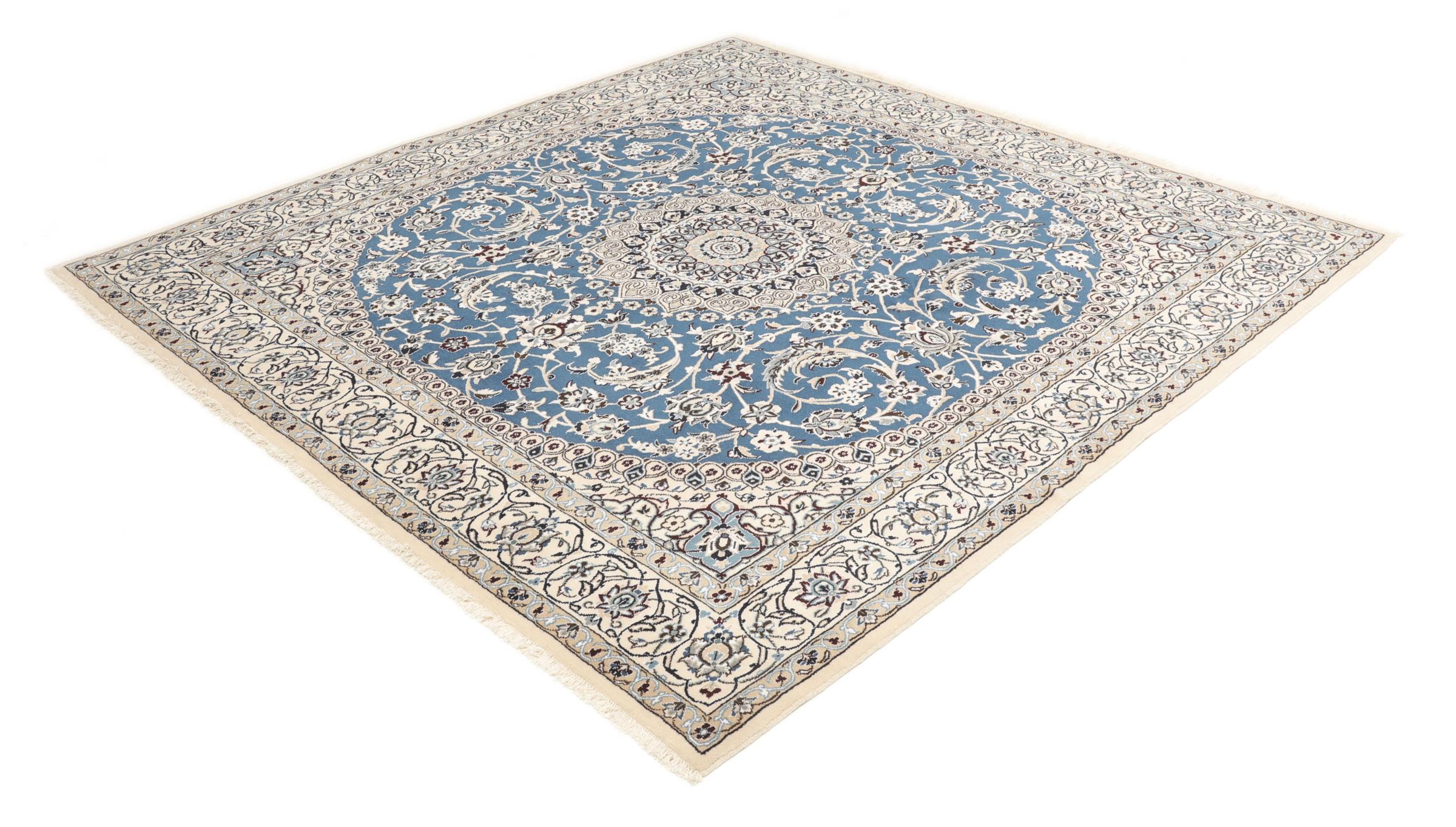
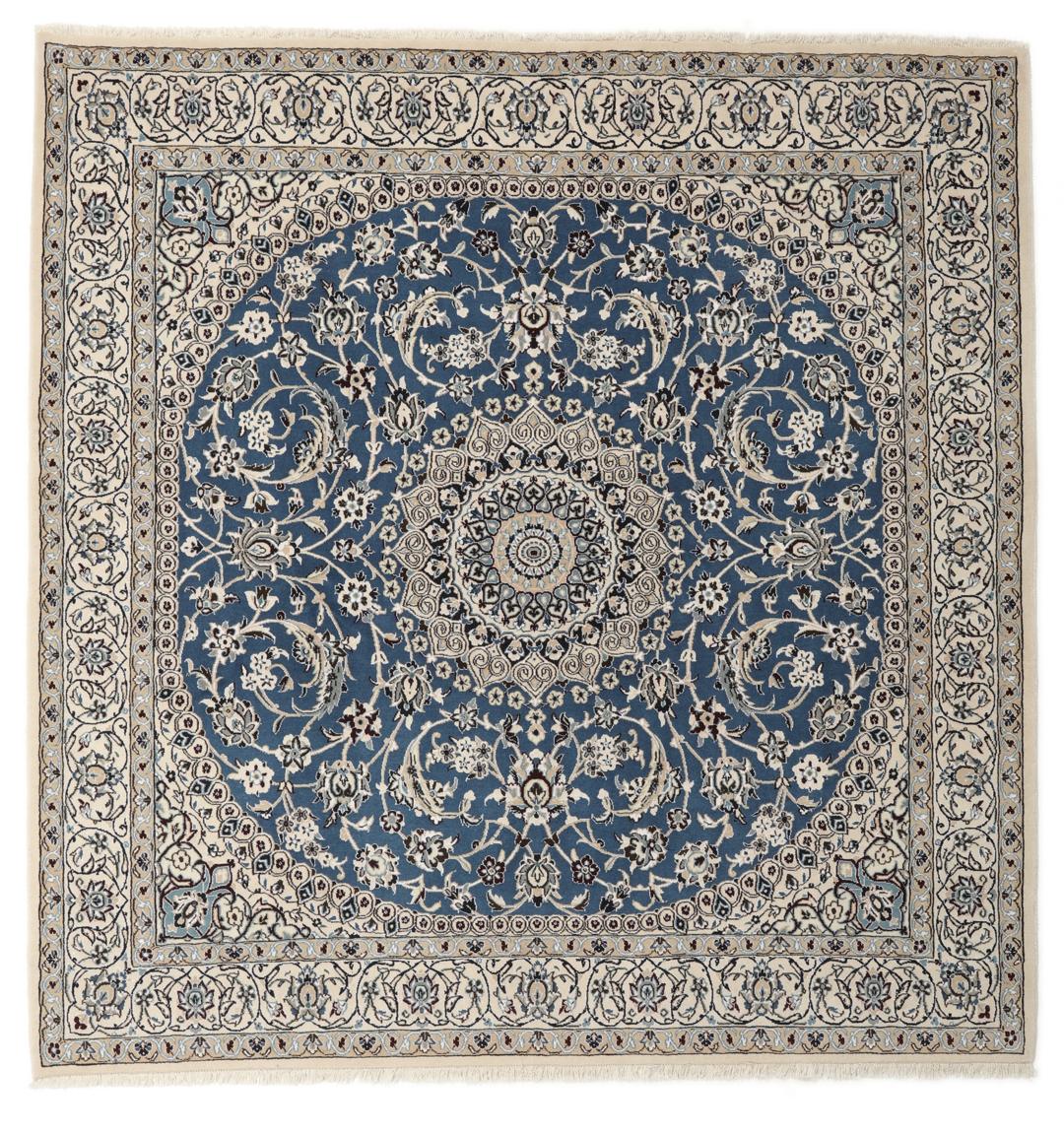
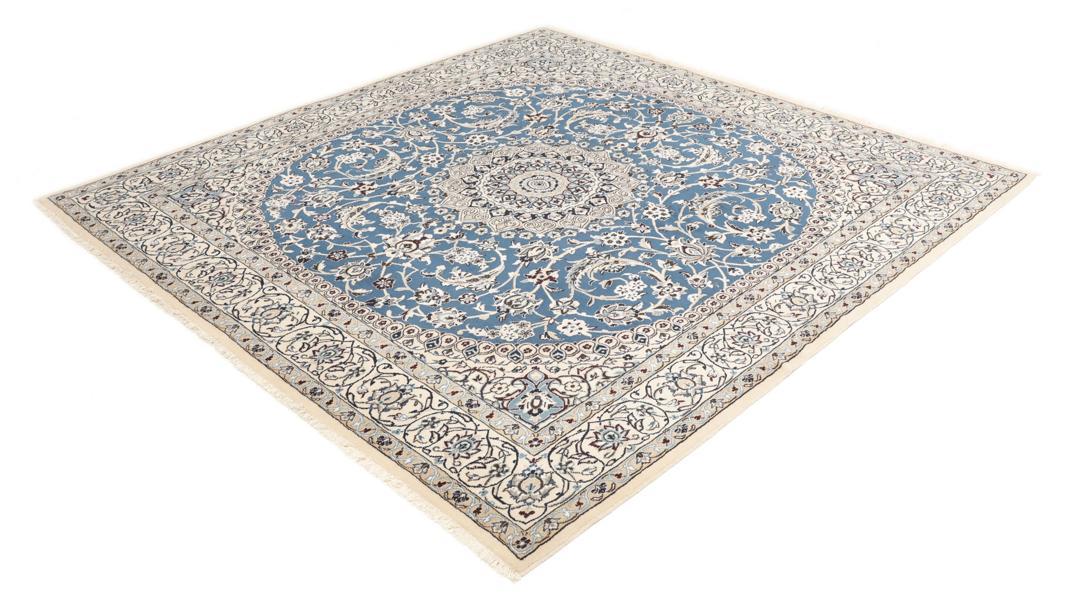
Nain rugs hail from the city of Nain, located in the heart of the Middle East. Originally a centre for the production of high-quality wool textiles and garments, the region pivoted to rug weaving in the early 20th century. Today, these rugs are synonymous with refined elegance and are often considered some of the most sophisticated examples of Middle Eastern weaving traditions.
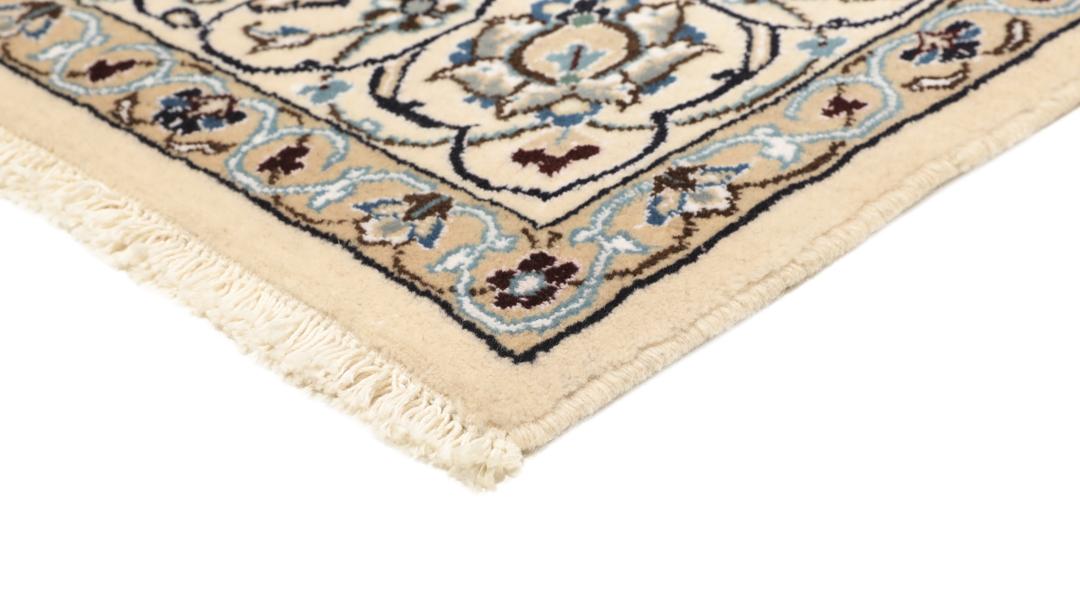
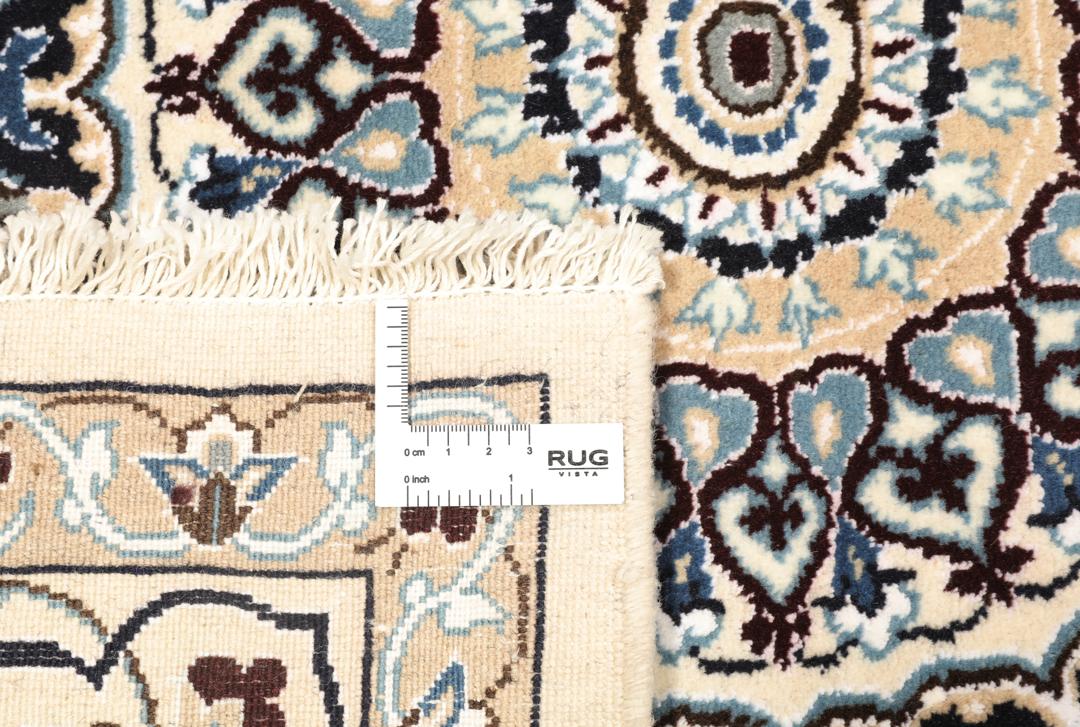
The '9La' designation is a technical term referring to the number of strands used in the fringe of the rug. In the local tradition, 'La' denotes the number of threads in each warp string. A 9La classification indicates a specific level of fineness and detail, where the weaver uses a precise number of threads to achieve a balanced, durable, and aesthetically pleasing result. This technical standard is a hallmark of the region's dedication to quality control.
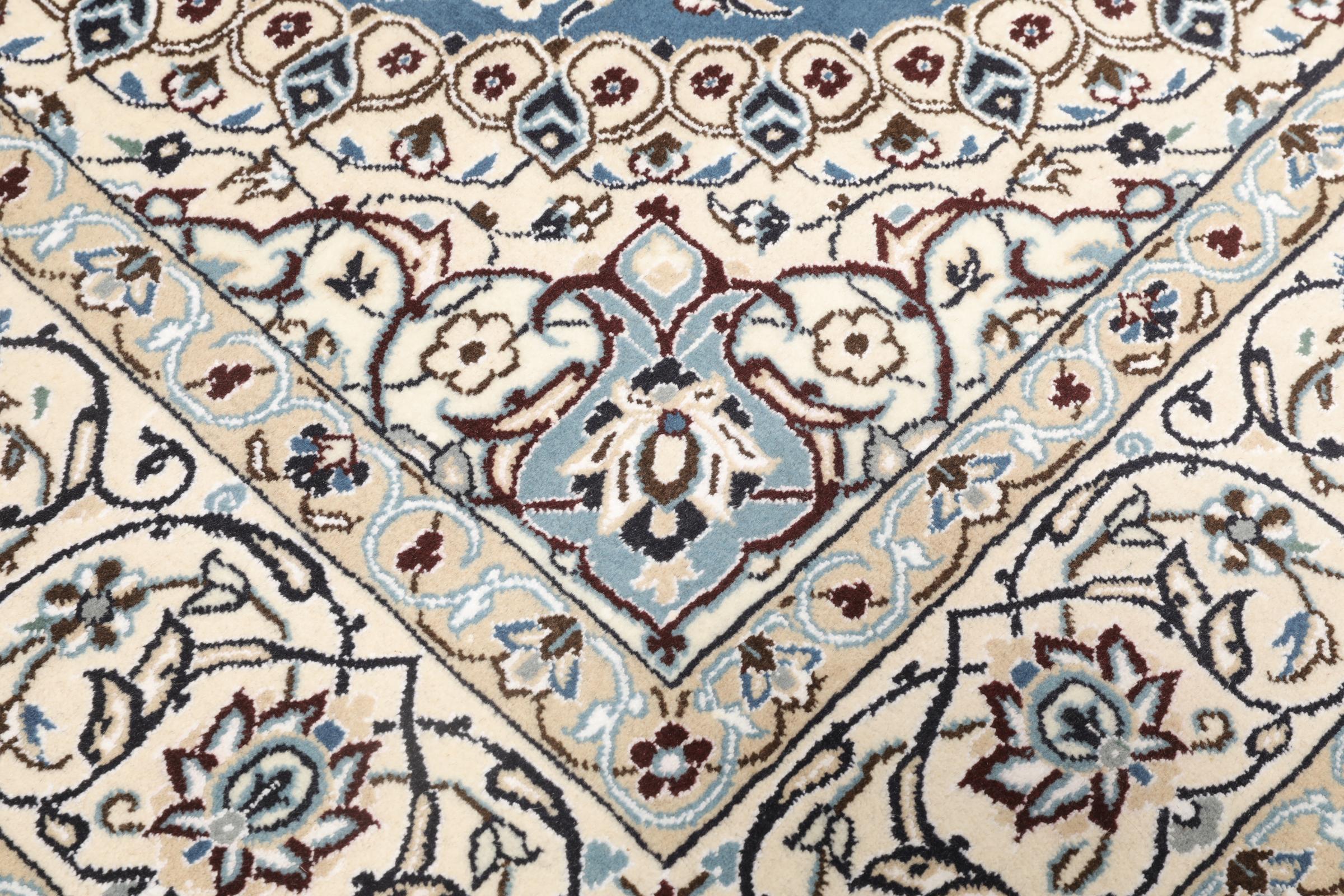
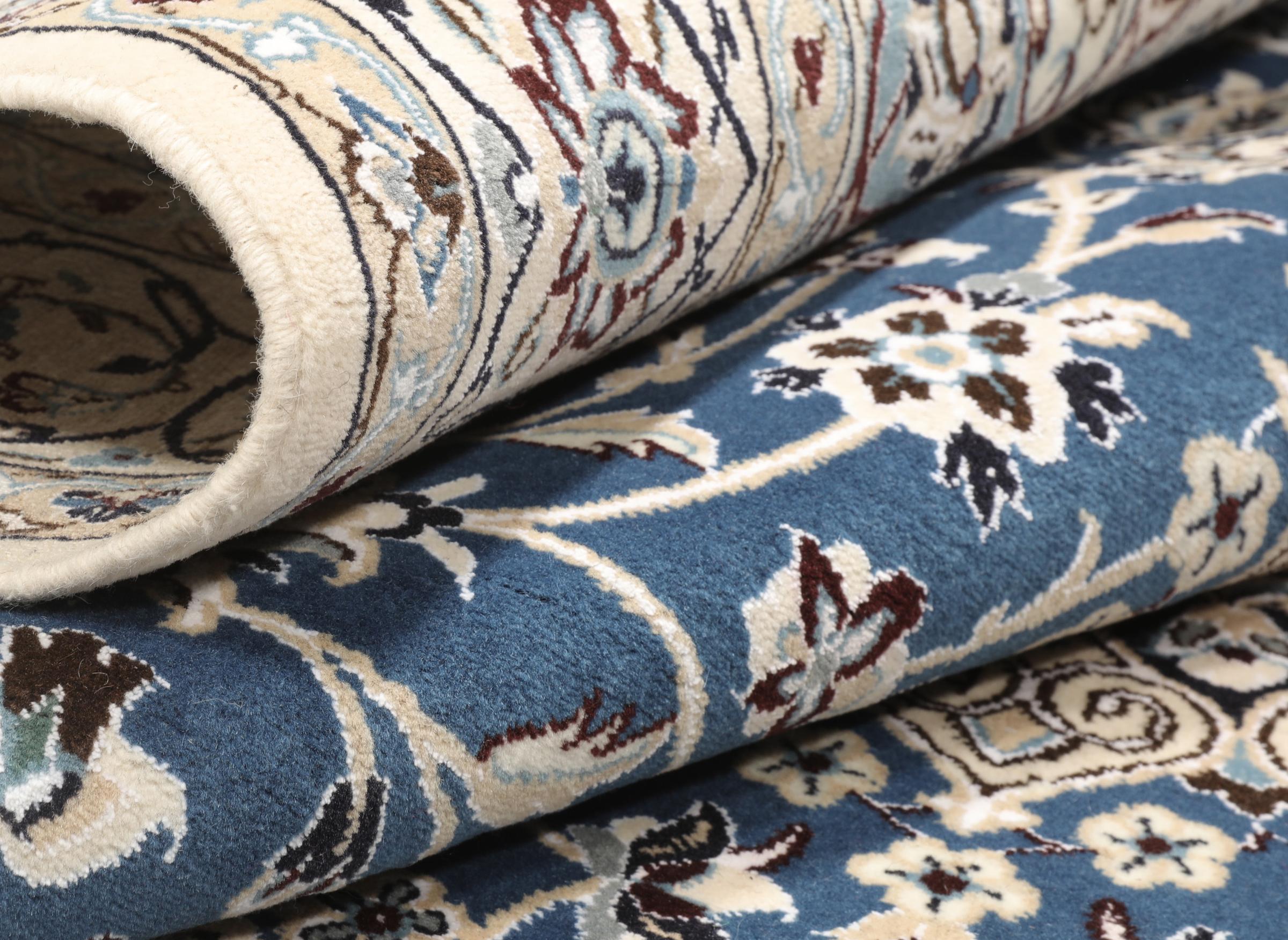
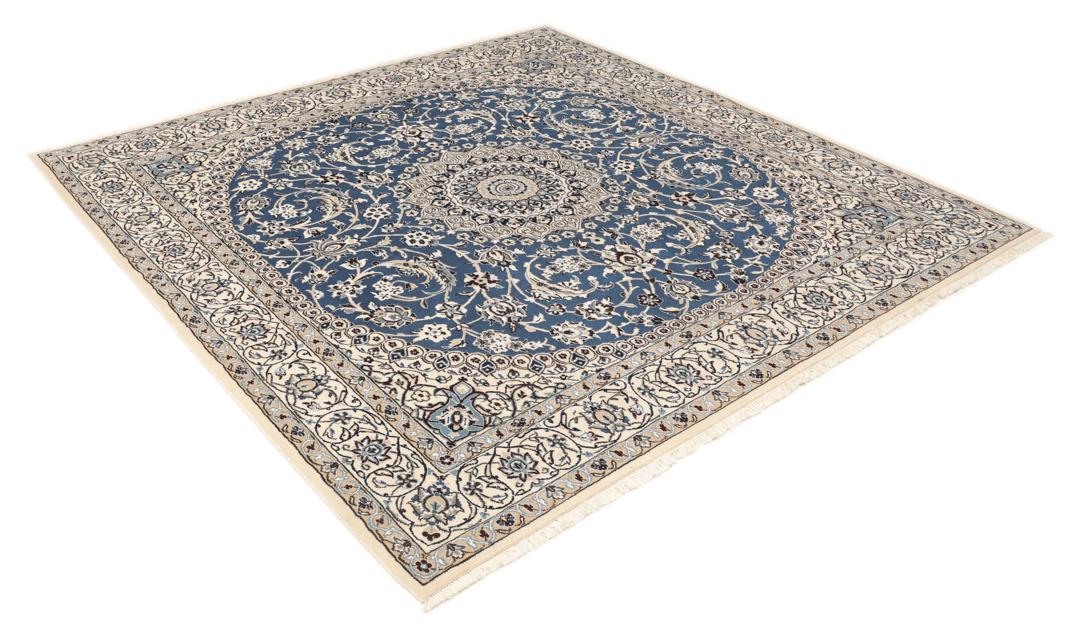
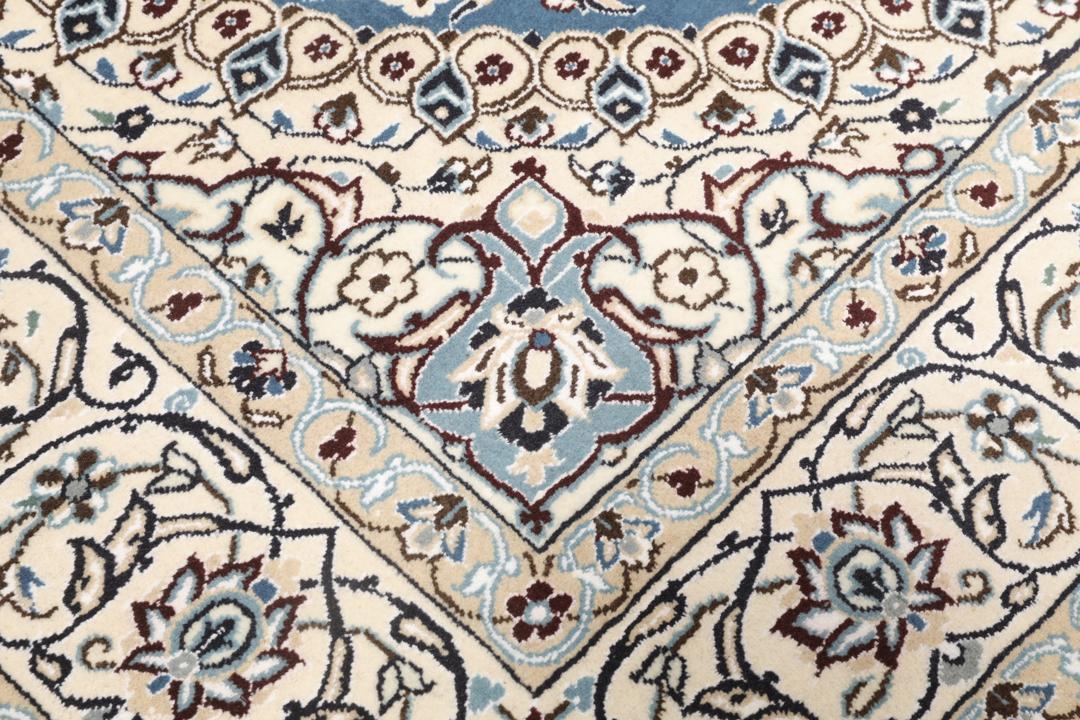
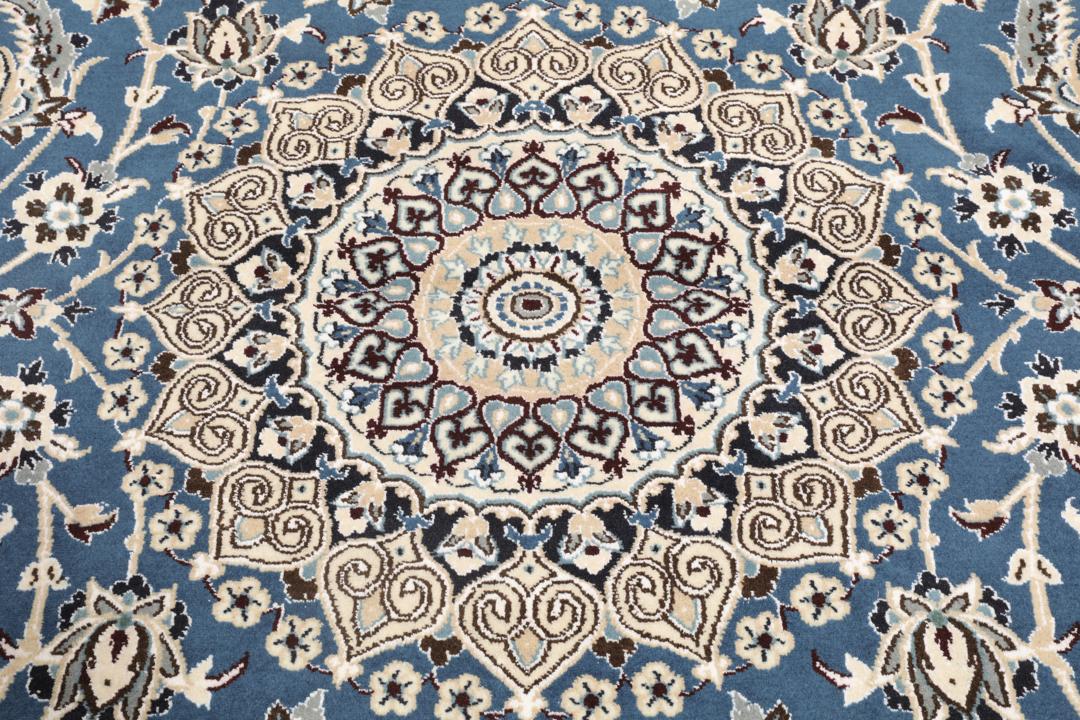
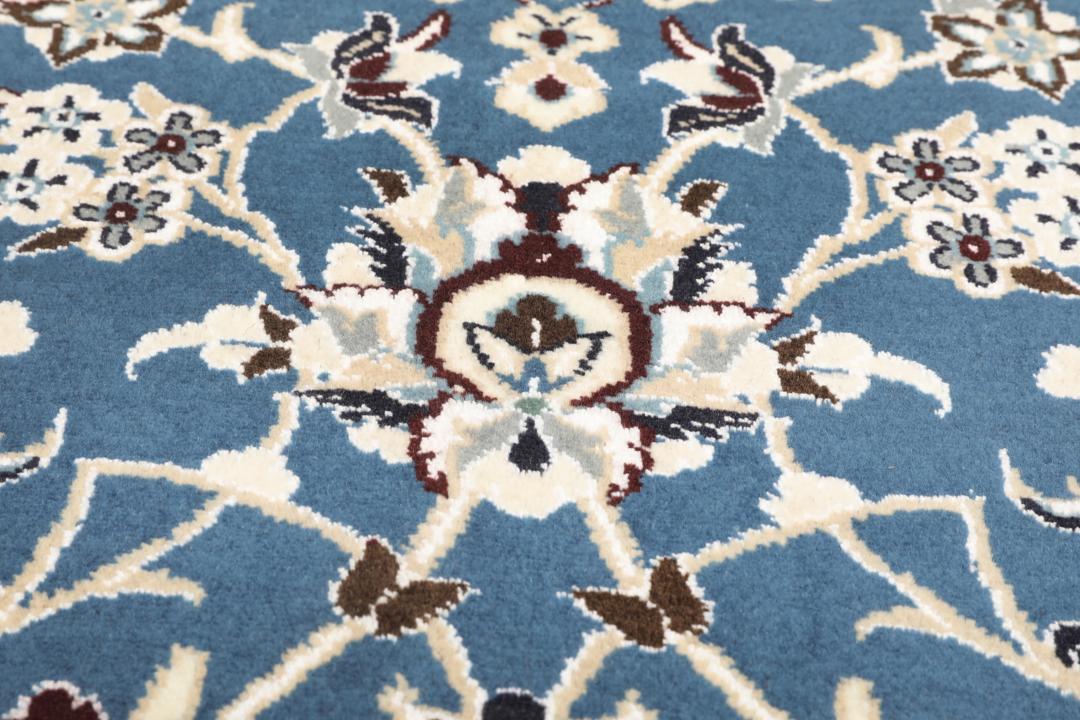
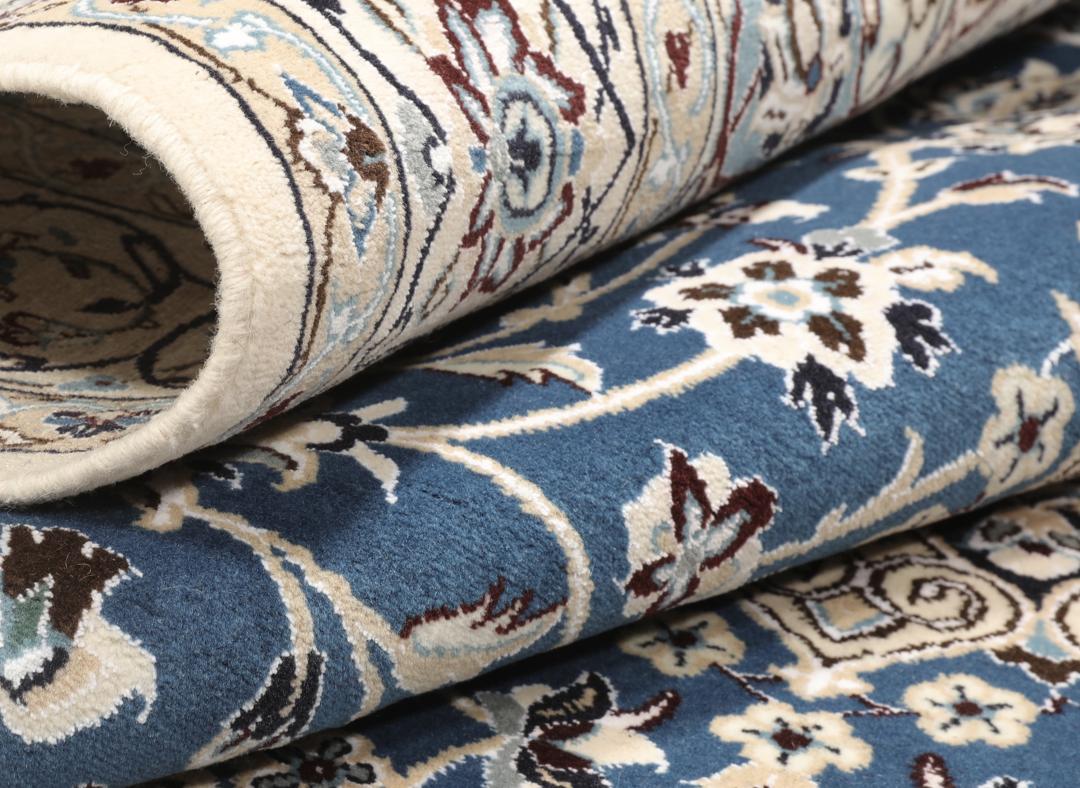
Visually, Nain rugs are defined by their distinct colour palettes and formal design language. They typically feature a central medallion surrounded by flowing arabesques, intricate floral vines, and delicate leaf patterns. While many traditional examples favour cream, beige, and blue tones, the use of high-quality materials ensures these colours remain vibrant over time. The borders are often just as detailed as the field, featuring repeating motifs that frame the composition perfectly.
Owning a Nain rug is an investment in cultural heritage and artisanal skill. These pieces are highly sought after by collectors who value the balance between technical precision and artistic expression. Because they require such a high degree of expertise to produce, these rugs represent a pinnacle of the weaver's craft. When you bring a piece like this into your home, you are continuing a legacy of beauty that has been passed down through generations of master weavers.