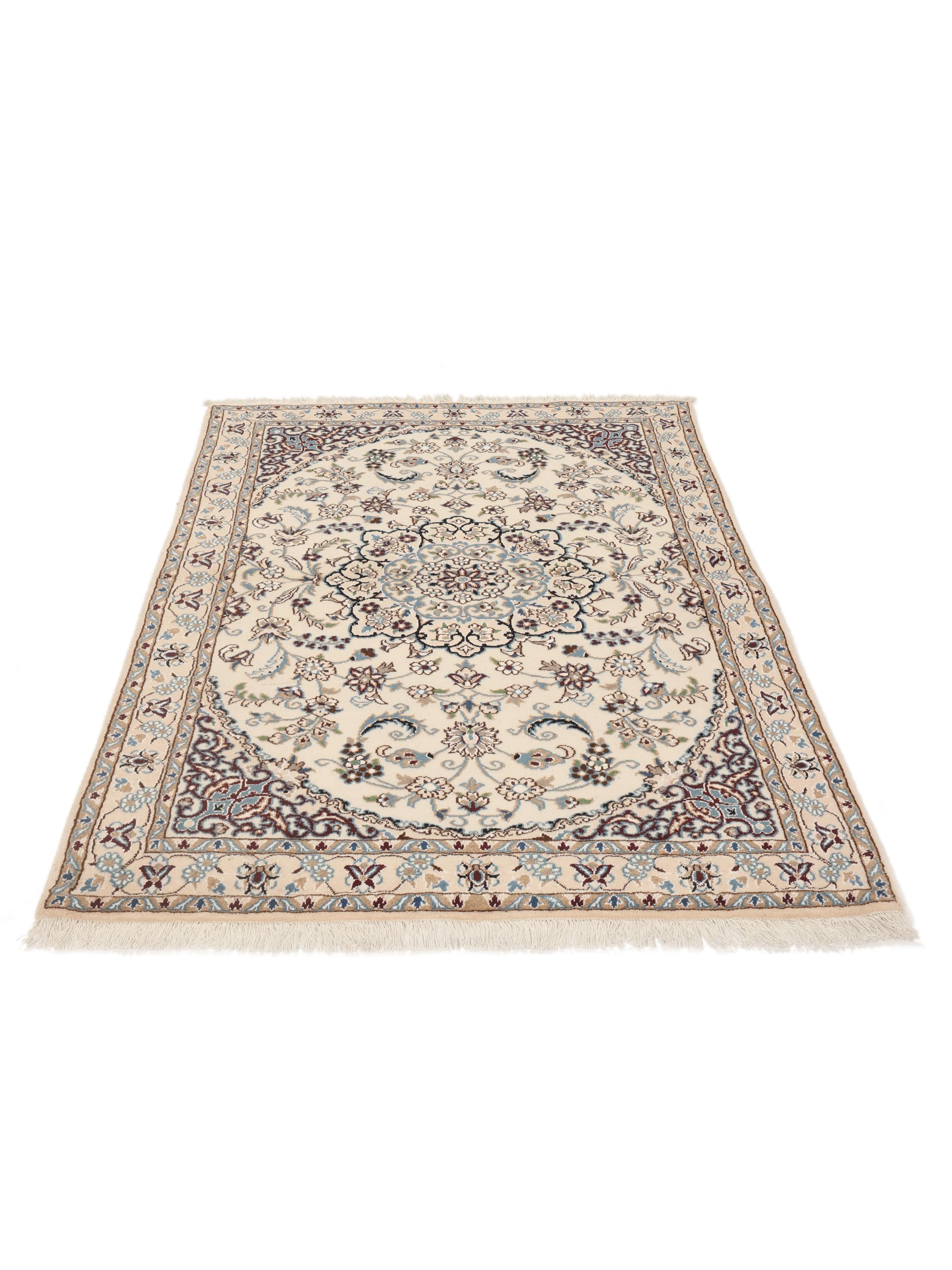
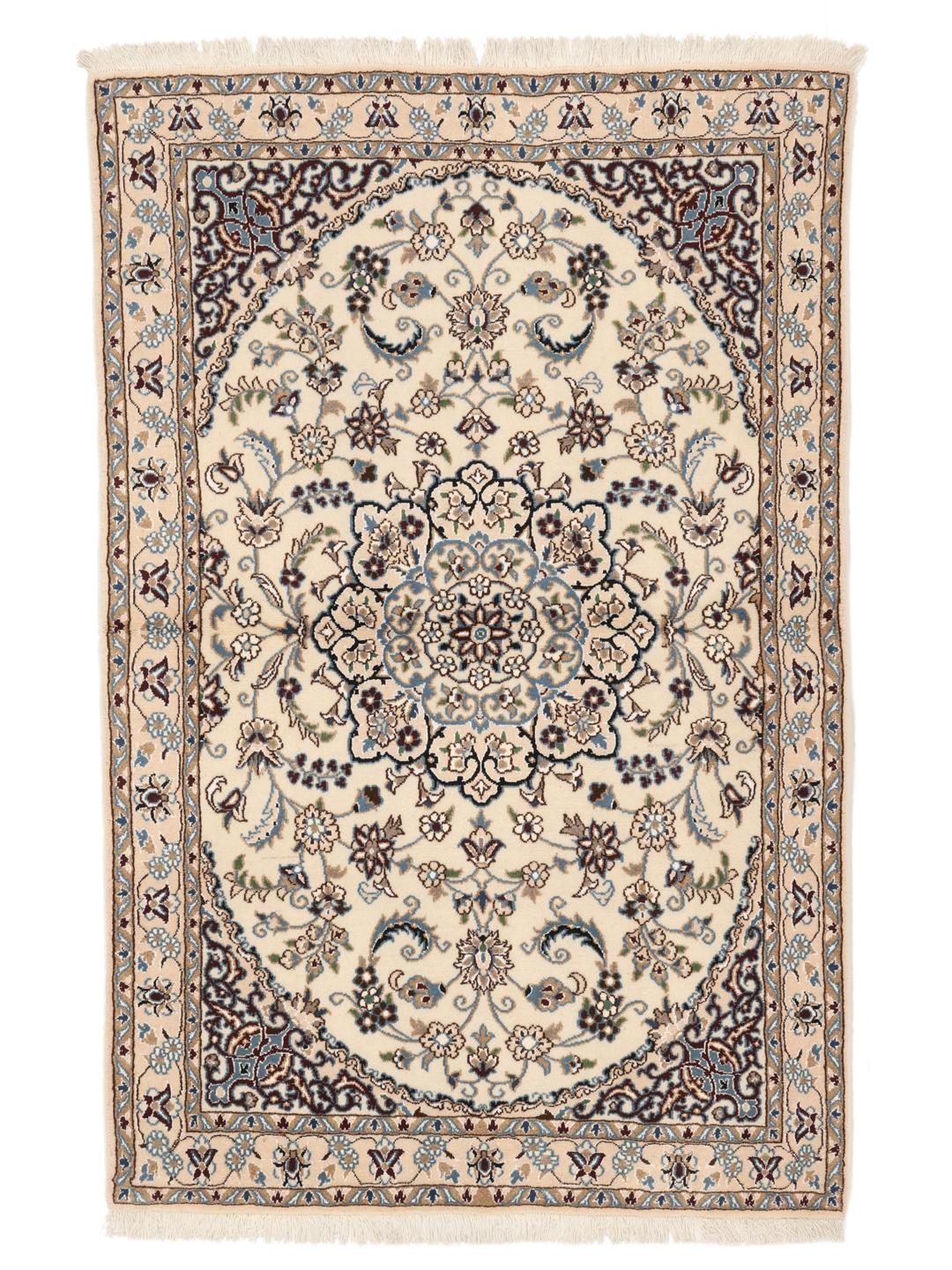
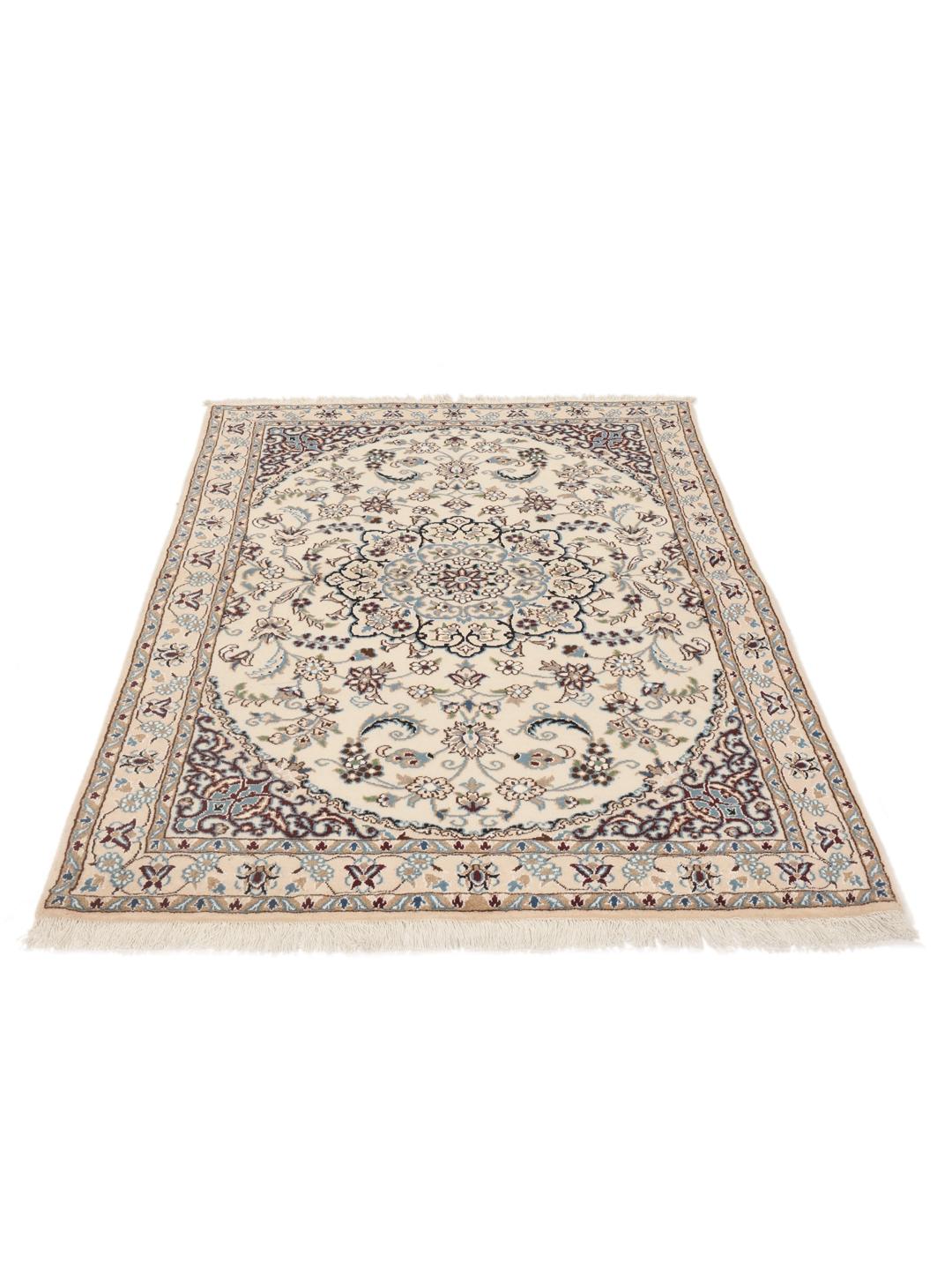
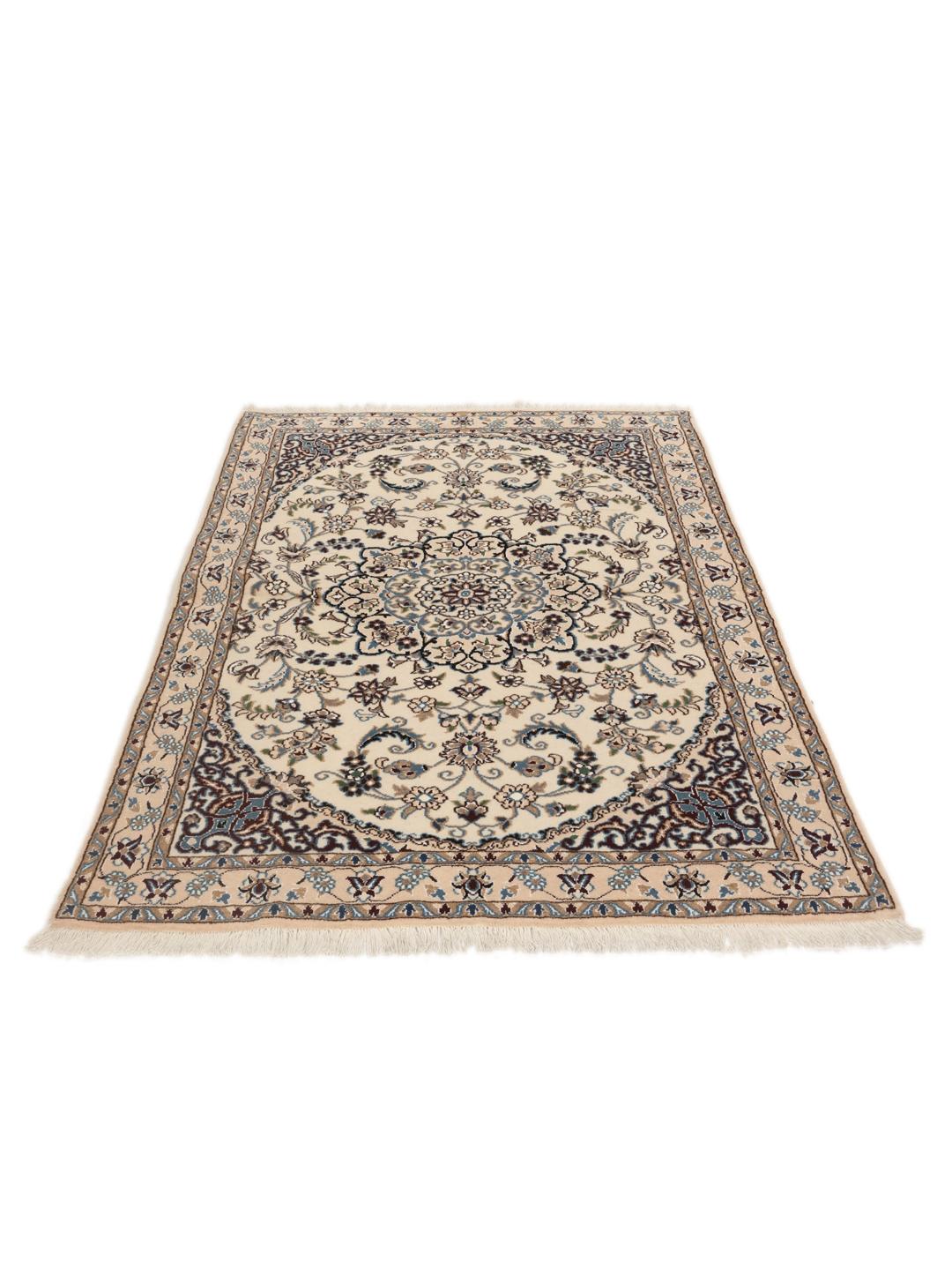
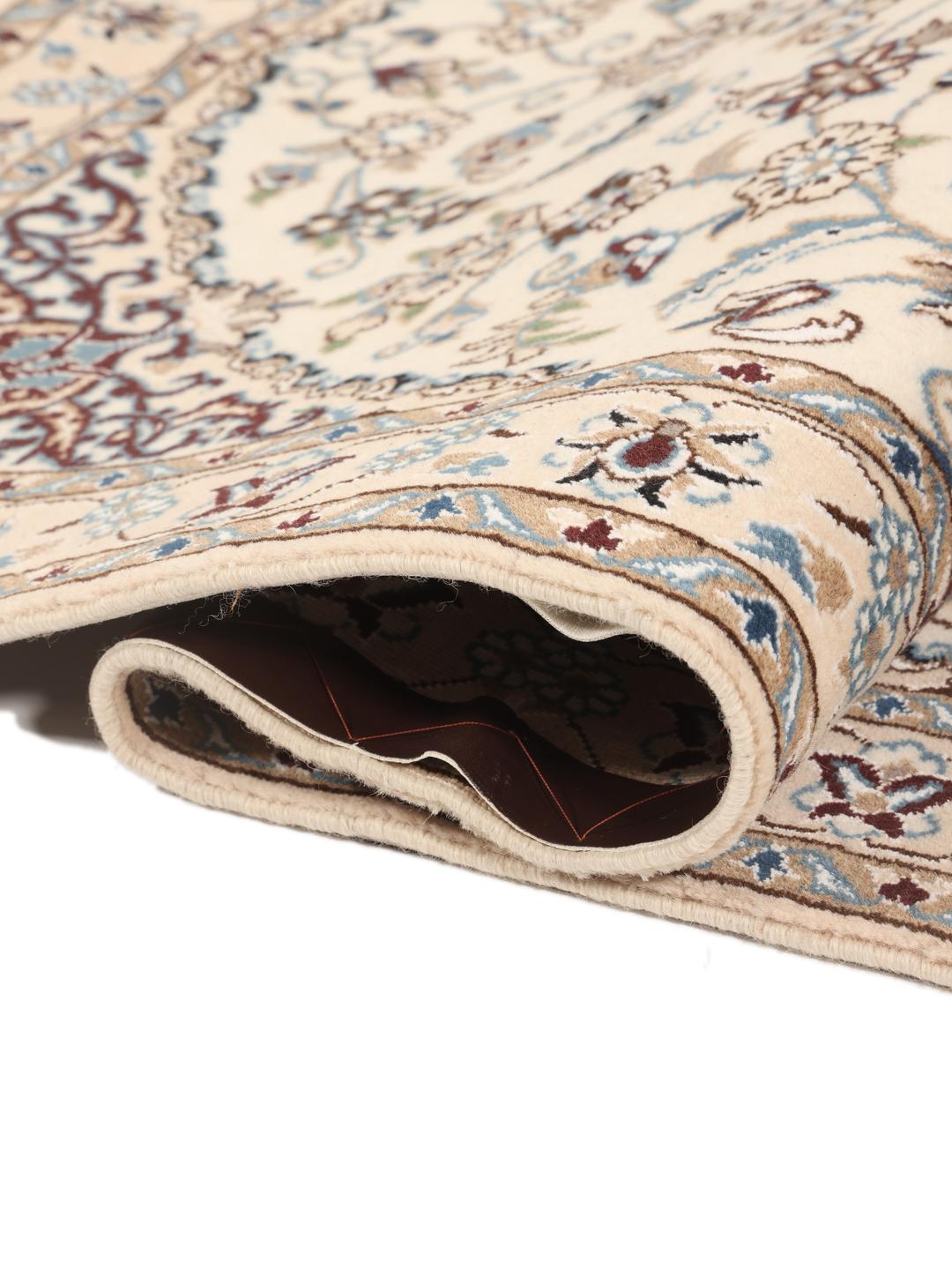
Nain rugs originate from the town of Nain in the Middle East, a region with a storied history in textile arts. While historically known for producing high-quality cloaks, the town transitioned to rug weaving in the early 20th century, quickly gaining a reputation for creating some of the most refined and sophisticated pieces in the world.
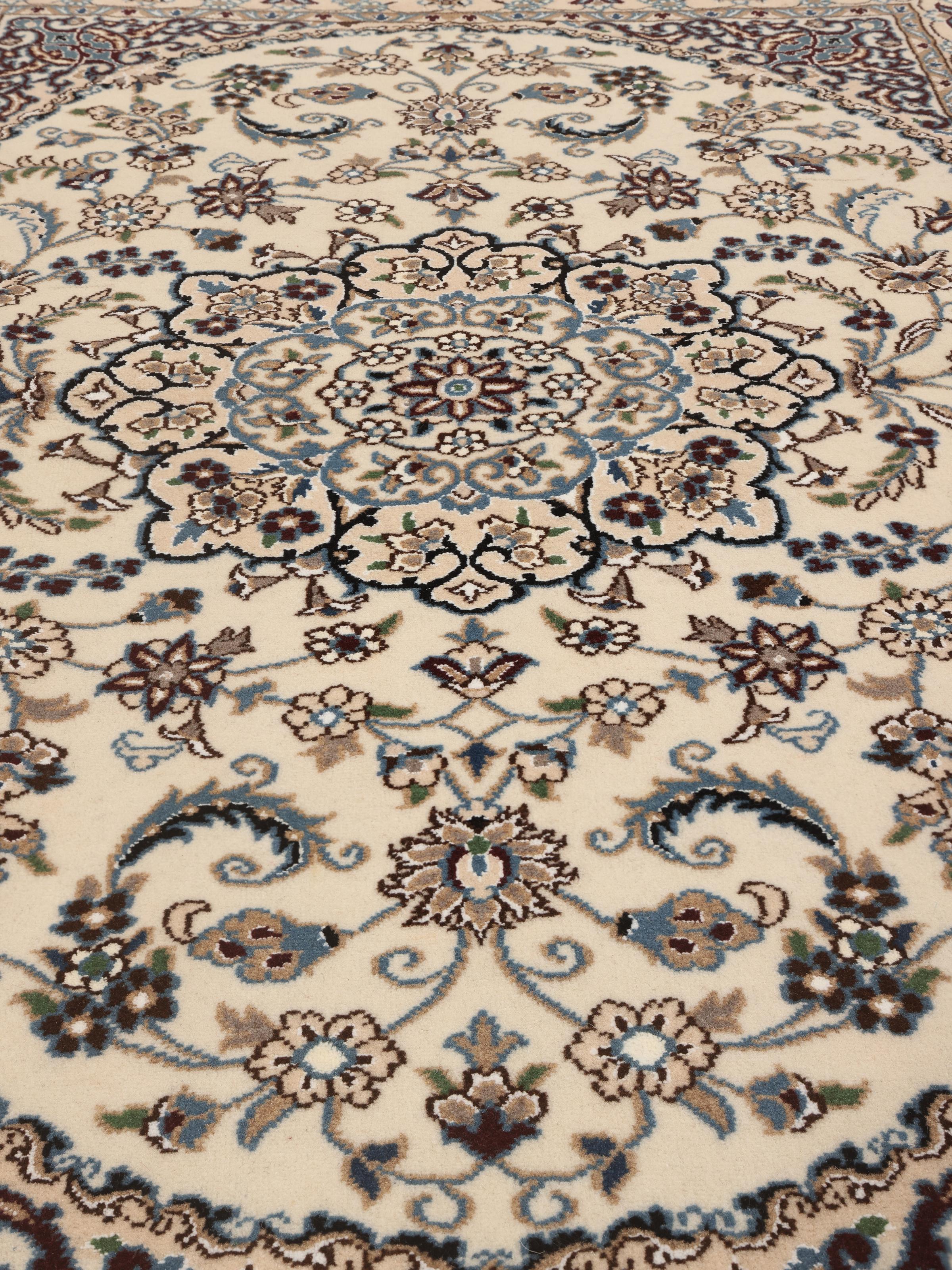
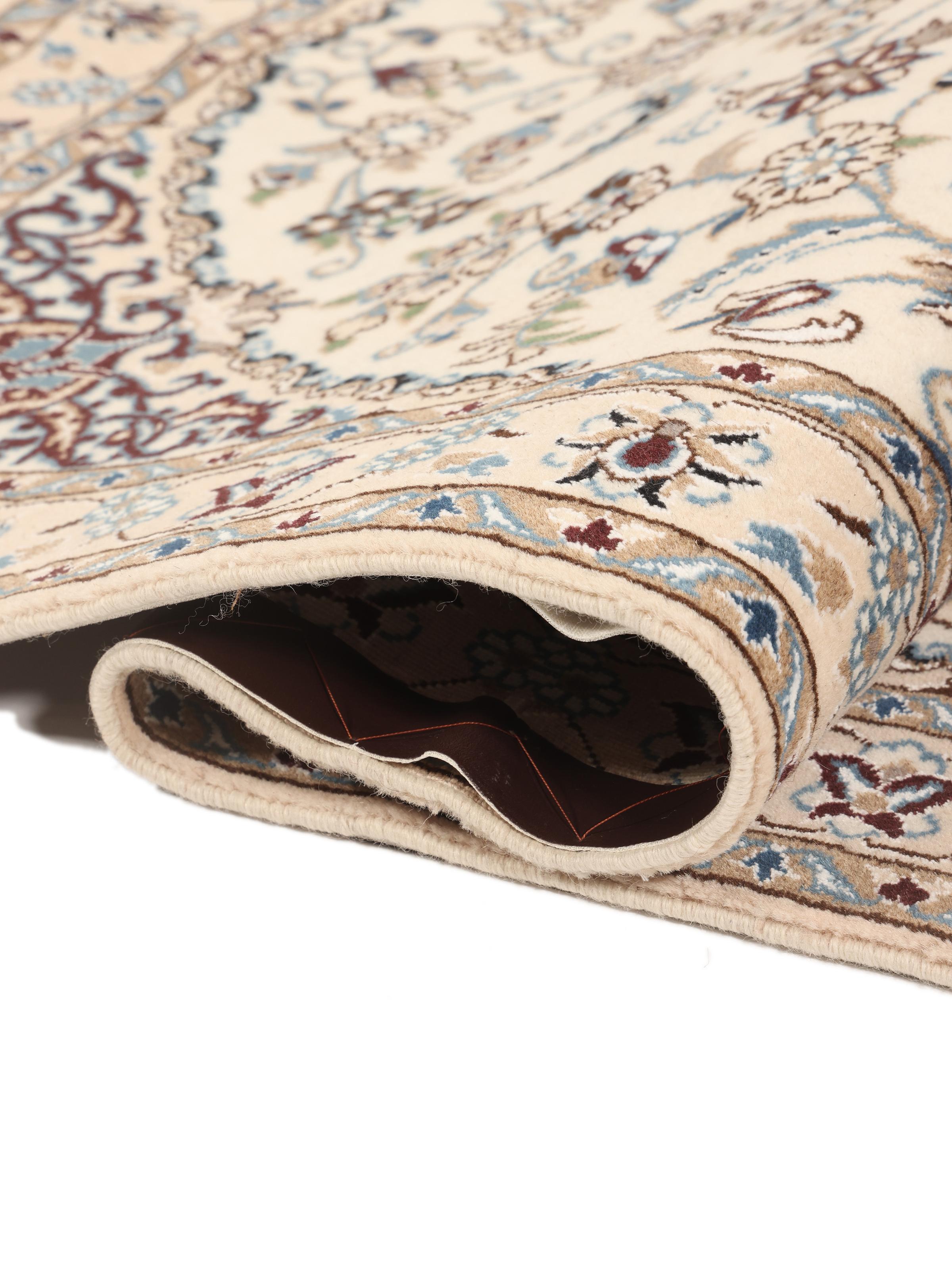
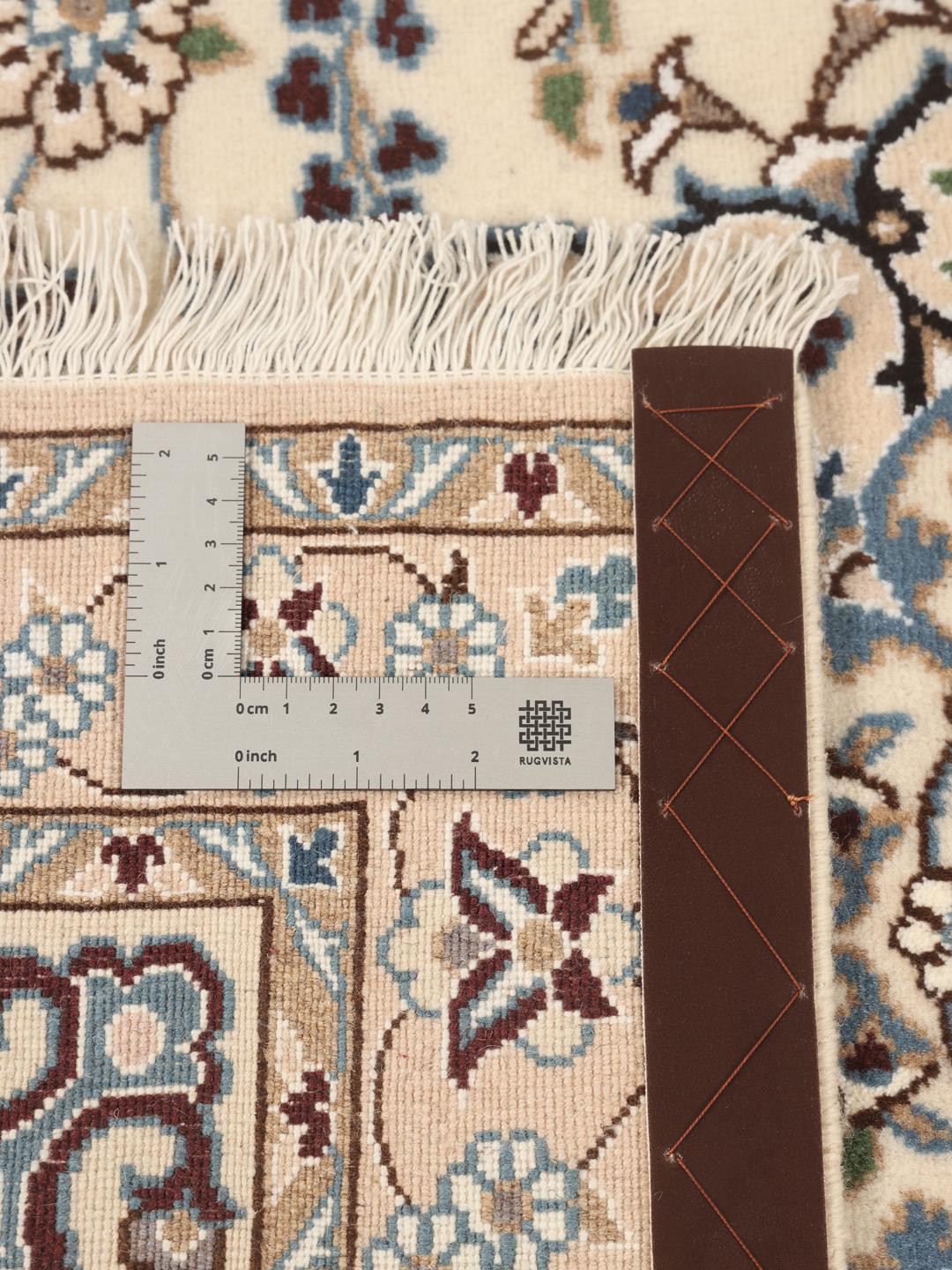
The designation '9La' refers to the number of threads used in the fringe, which serves as a traditional gauge of the rug's fineness. A lower number indicates a higher density of knots, reflecting a more complex and labour-intensive weaving process. This technical distinction is crucial for collectors, as it directly influences the sharpness of the motifs and the overall longevity of the piece.
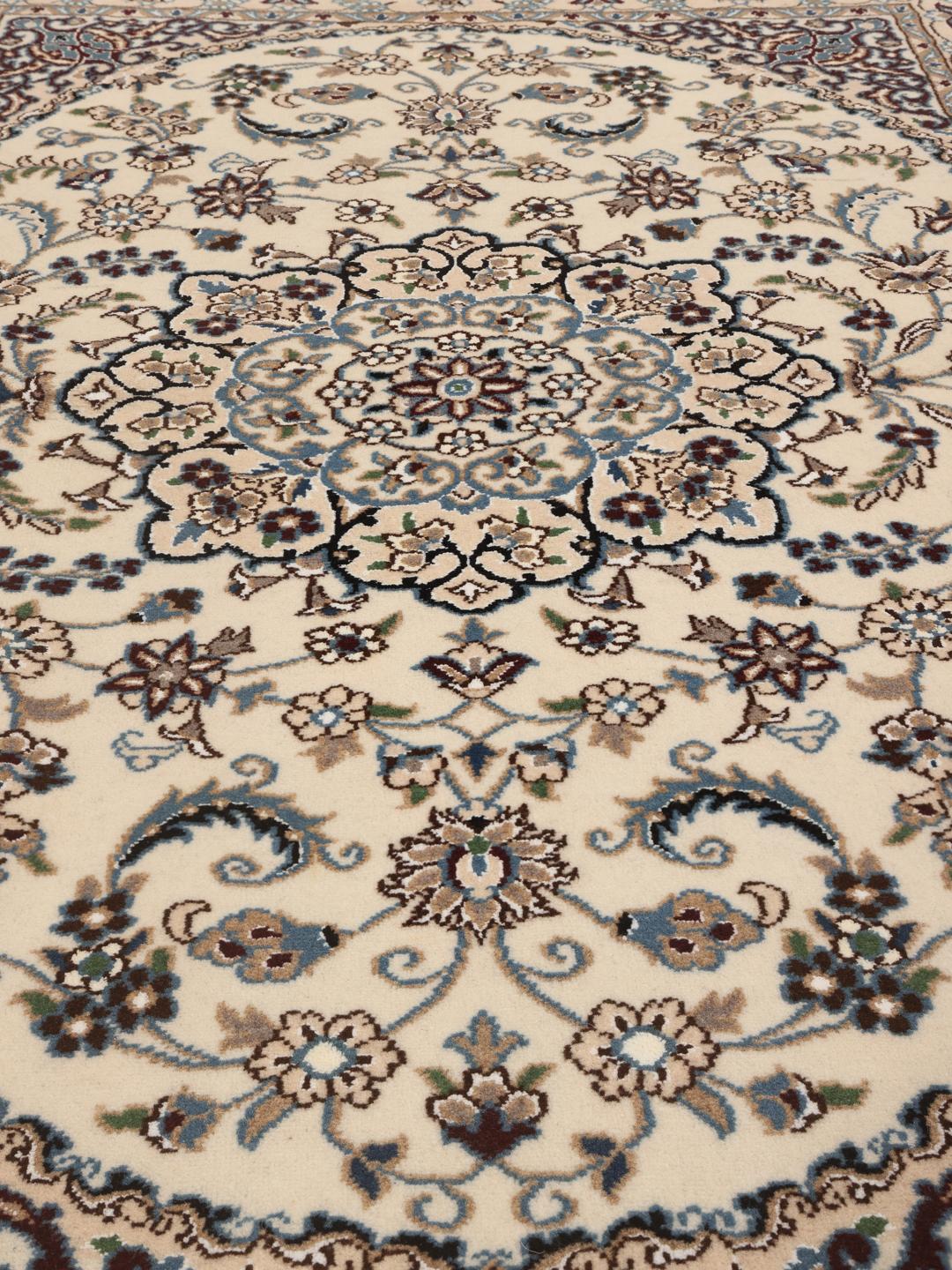
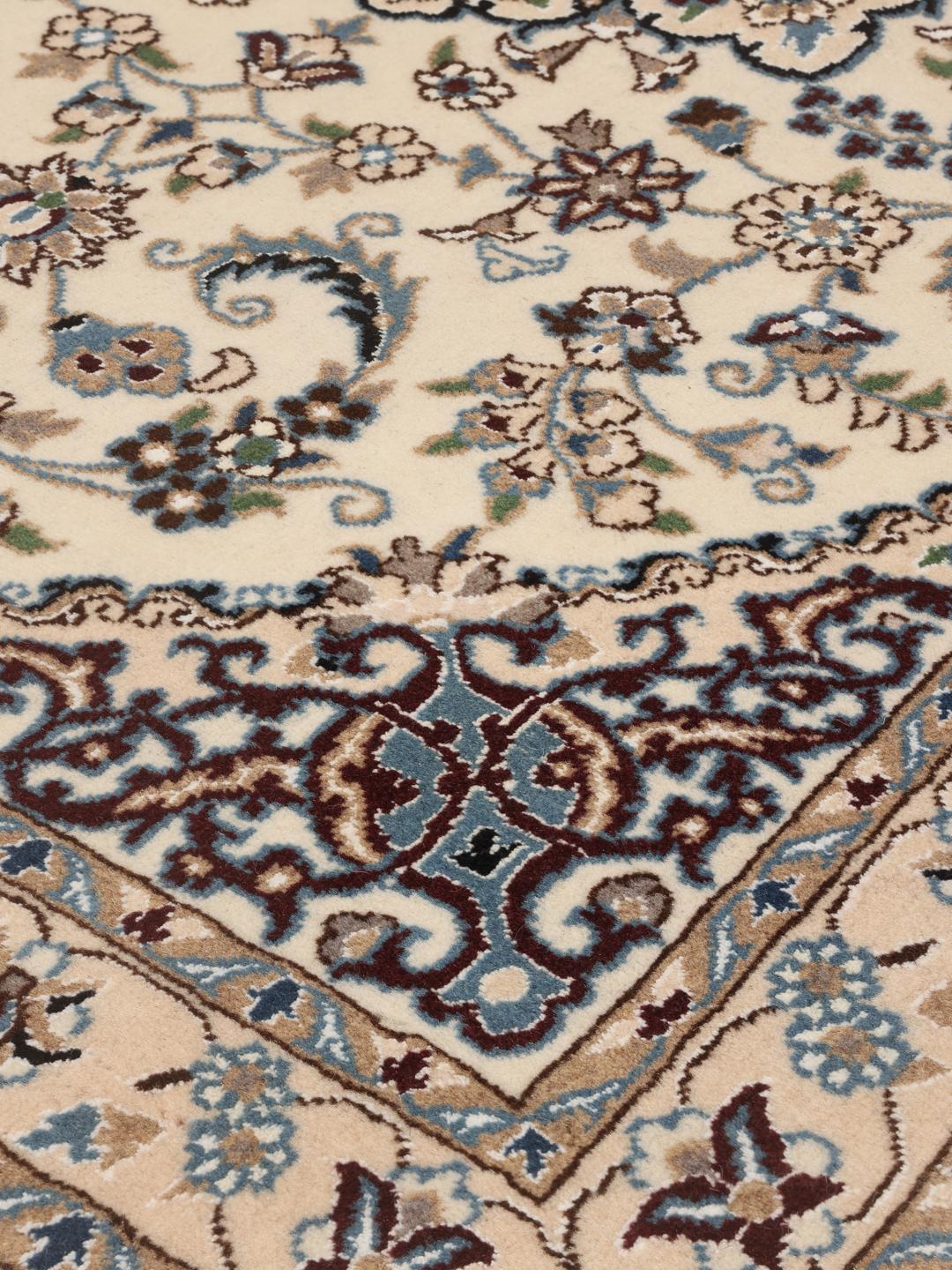
Visually, these rugs are celebrated for their balanced compositions, often featuring a central medallion surrounded by flowing floral arabesques. The colour palettes are typically restrained and elegant, favouring creamy beige, soft blues, and muted tones that allow the intricate line work to take centre stage. This aesthetic is designed to complement rather than overwhelm a room.
Owning a Nain rug is an investment in cultural heritage and technical mastery. These pieces are highly sought after by those who appreciate the intersection of artistic design and traditional hand-crafting. By choosing a Nain, you are not just selecting a floor covering, but a piece of history that embodies the patience and skill of generations of master weavers.