Nain rugs originate from the historic town of Nain, located in the heart of the Middle East. Historically a centre for fine textile production, the region evolved from producing high-quality wool cloaks to becoming world-renowned for its exquisite hand-knotted rugs. This evolution reflects the area's deep-rooted connection to craft and the pursuit of artistic perfection, influenced by the wider traditions of the region.
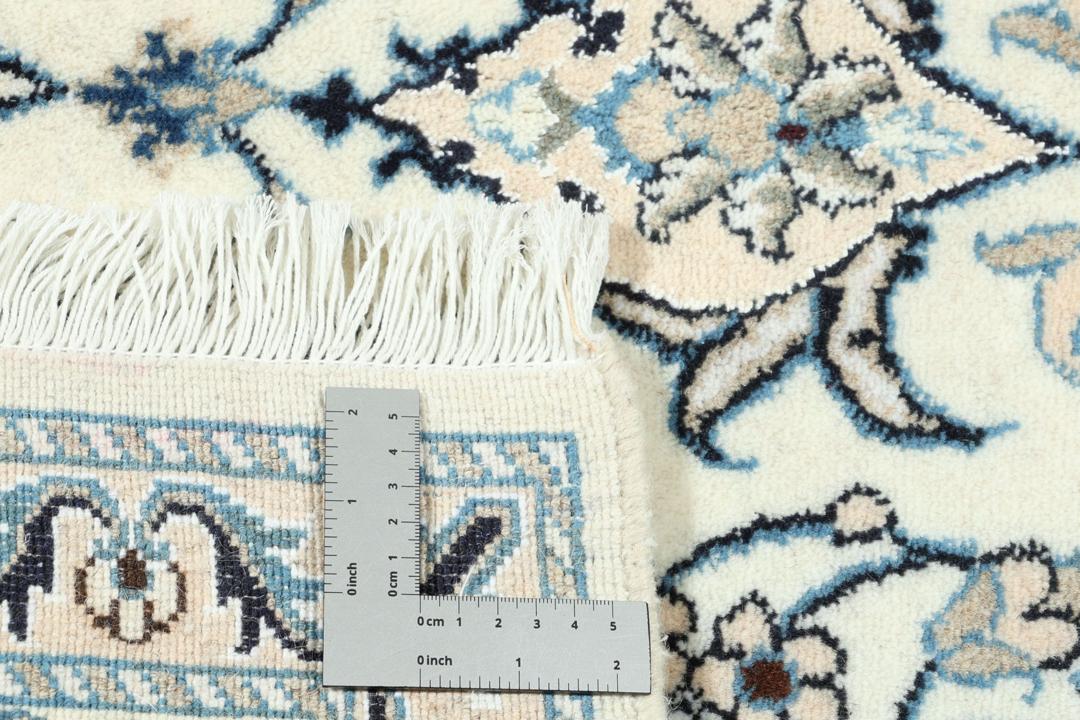
The term Nain is synonymous with a specific standard of quality and design. These rugs are known for their balanced, harmonious compositions and the use of high-quality materials. The construction typically involves a foundation that provides the necessary strength for the dense, lustrous pile, resulting in a rug that is as durable as it is beautiful. Understanding this technical foundation helps one appreciate why these pieces remain so prized by collectors.
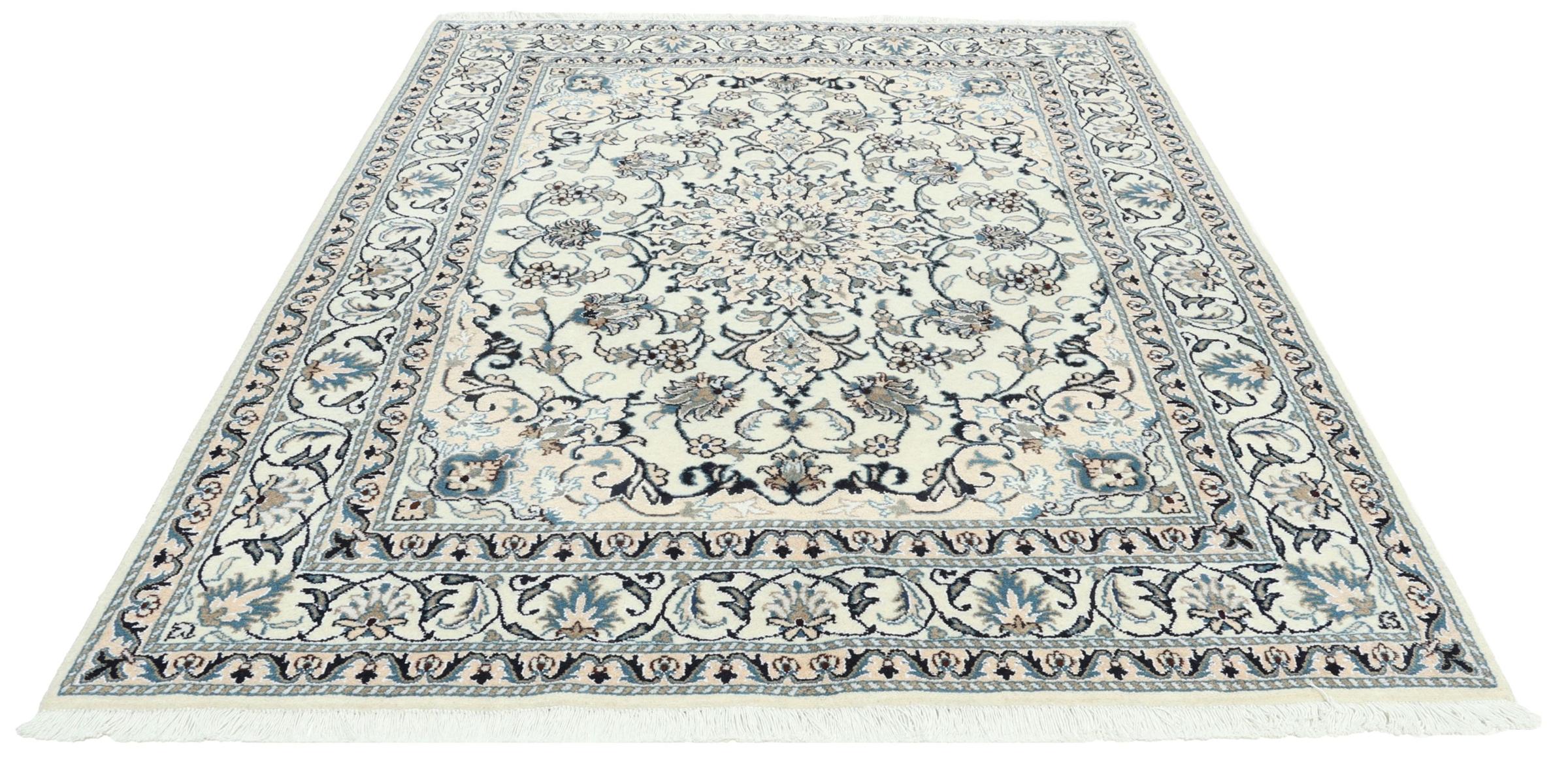
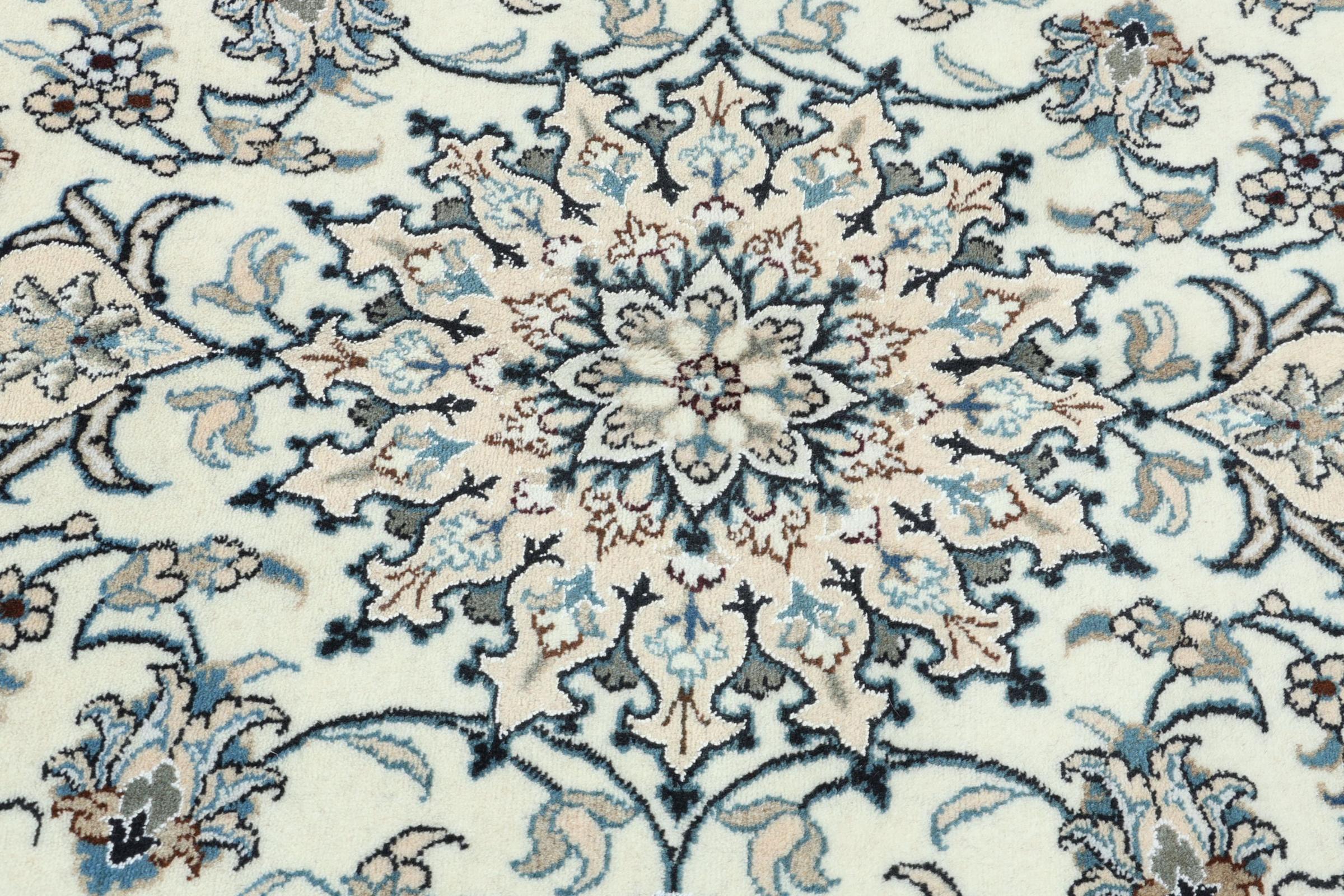
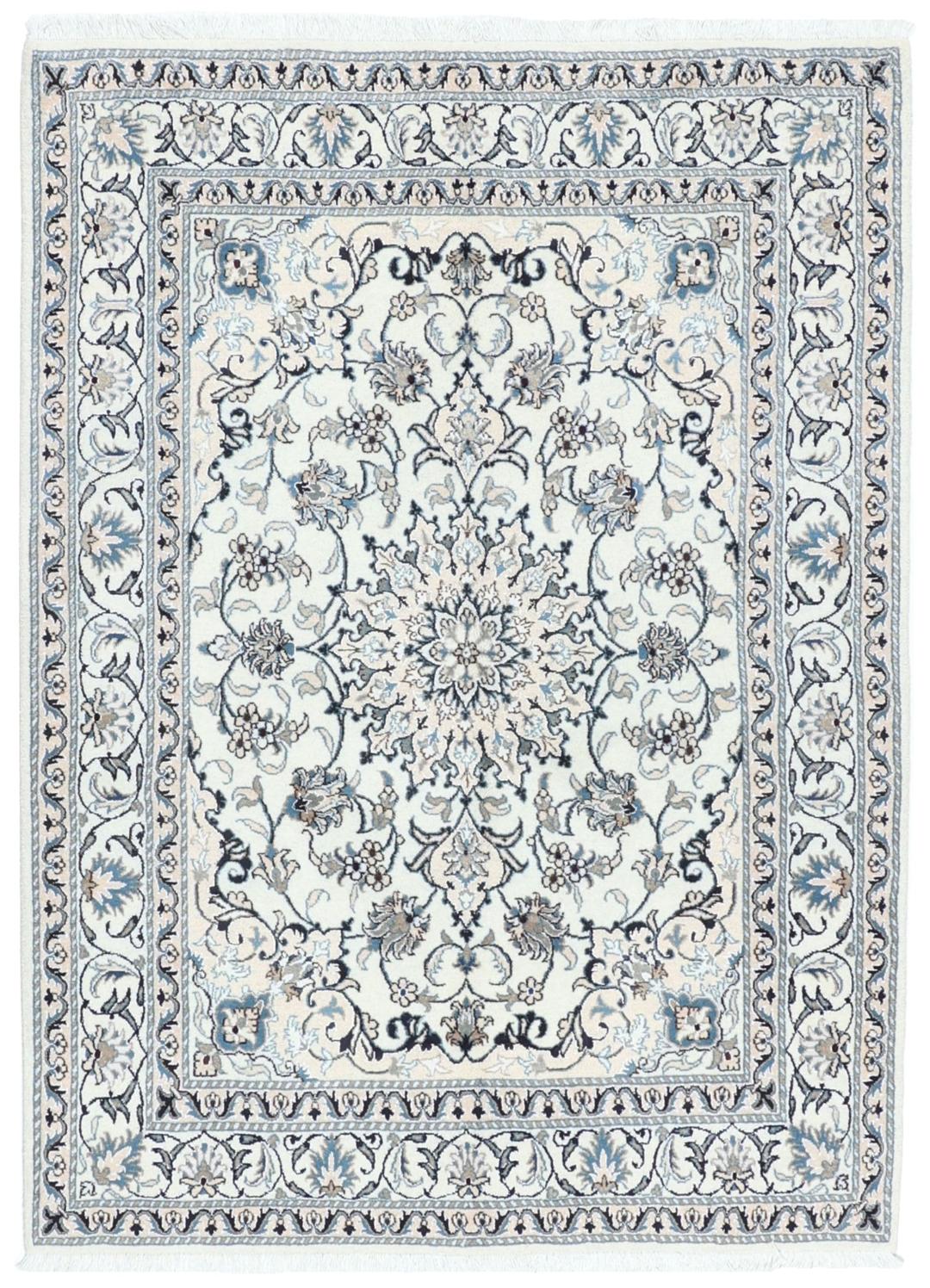
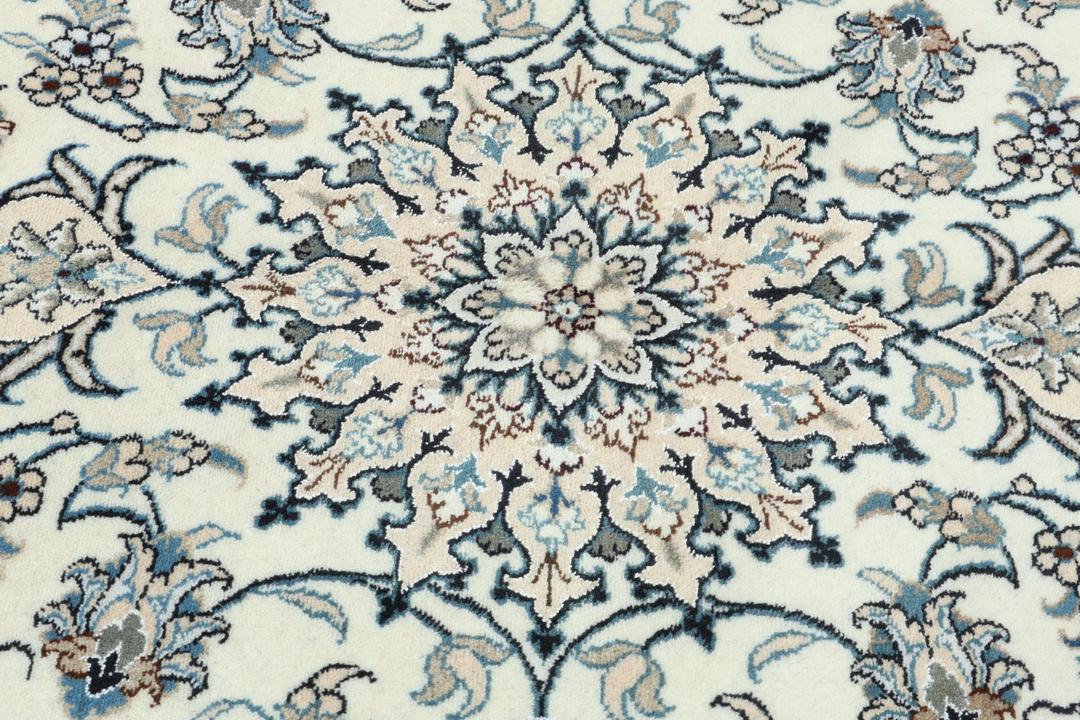
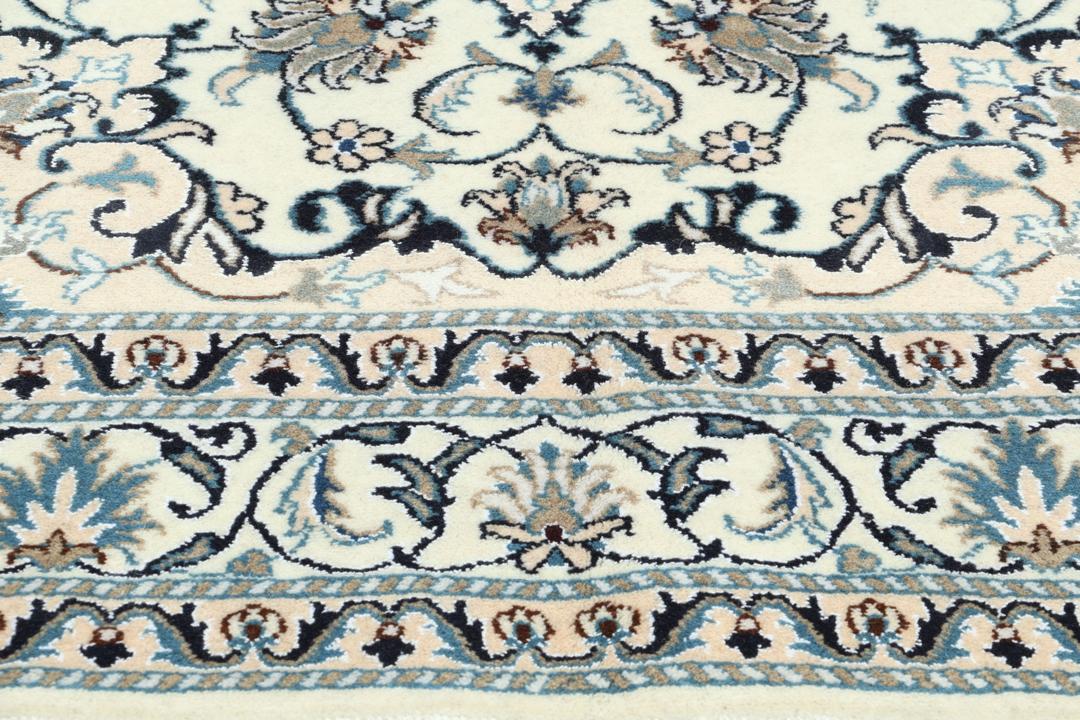
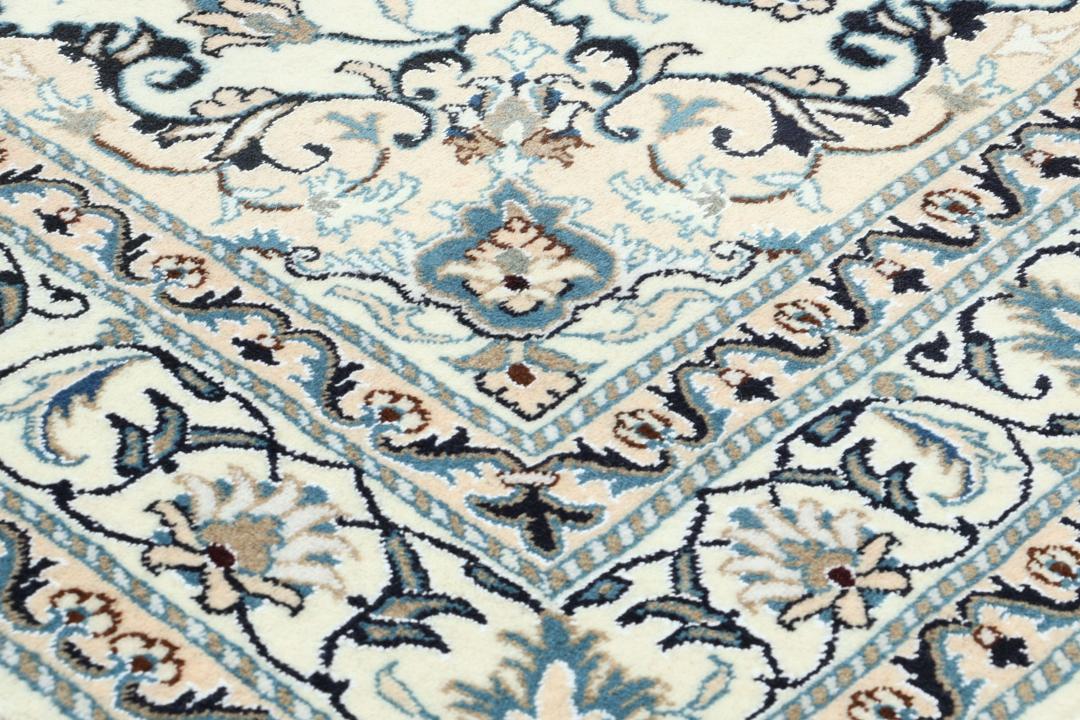
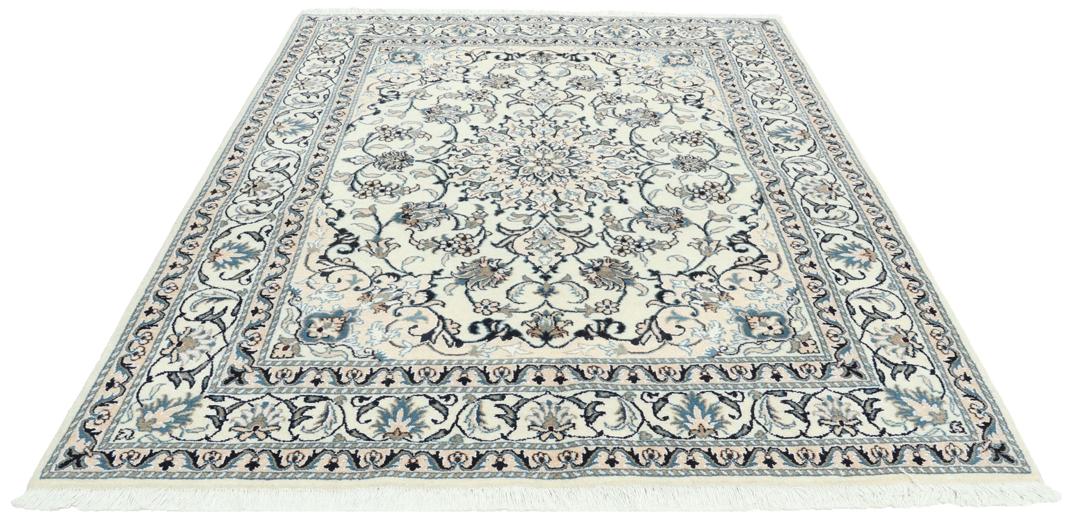
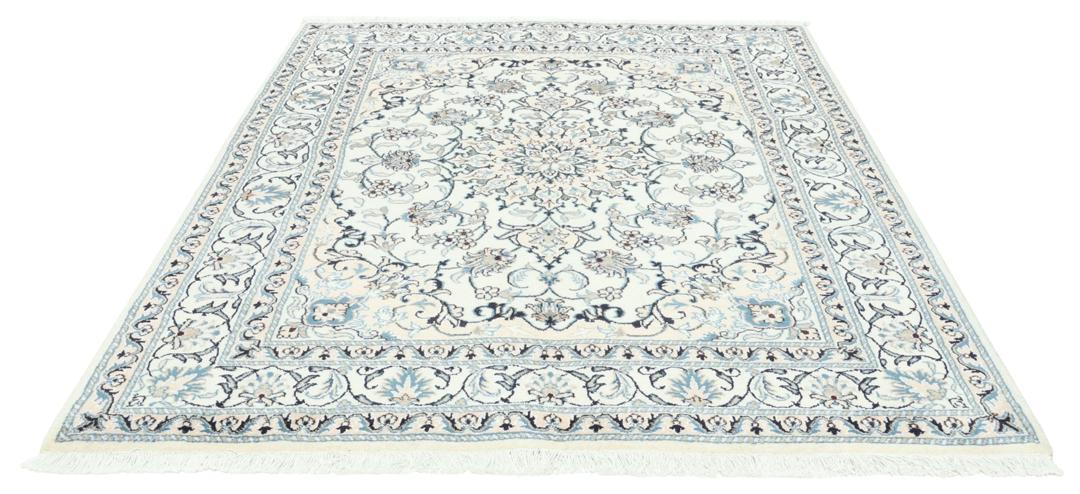
Signature design elements of the Nain tradition include a central medallion surrounded by flowing floral arabesques and intricate vines. The colour palette is often restrained, favouring shades of white, cream, and soft blues, which highlights the clarity of the patterns. This specific rug exemplifies these traditions, with a balanced layout that showcases the classic floral motifs that have defined the Nain style for decades.
Collecting a Nain rug is an investment in cultural heritage and refined skill. These pieces are valued not only for their aesthetic appeal but also for the human story behind every knot. Owning a rug from this tradition signifies an appreciation for enduring quality and the artistic legacy of the Middle East, offering a connection to a history of craftsmanship that continues to influence contemporary interior design.