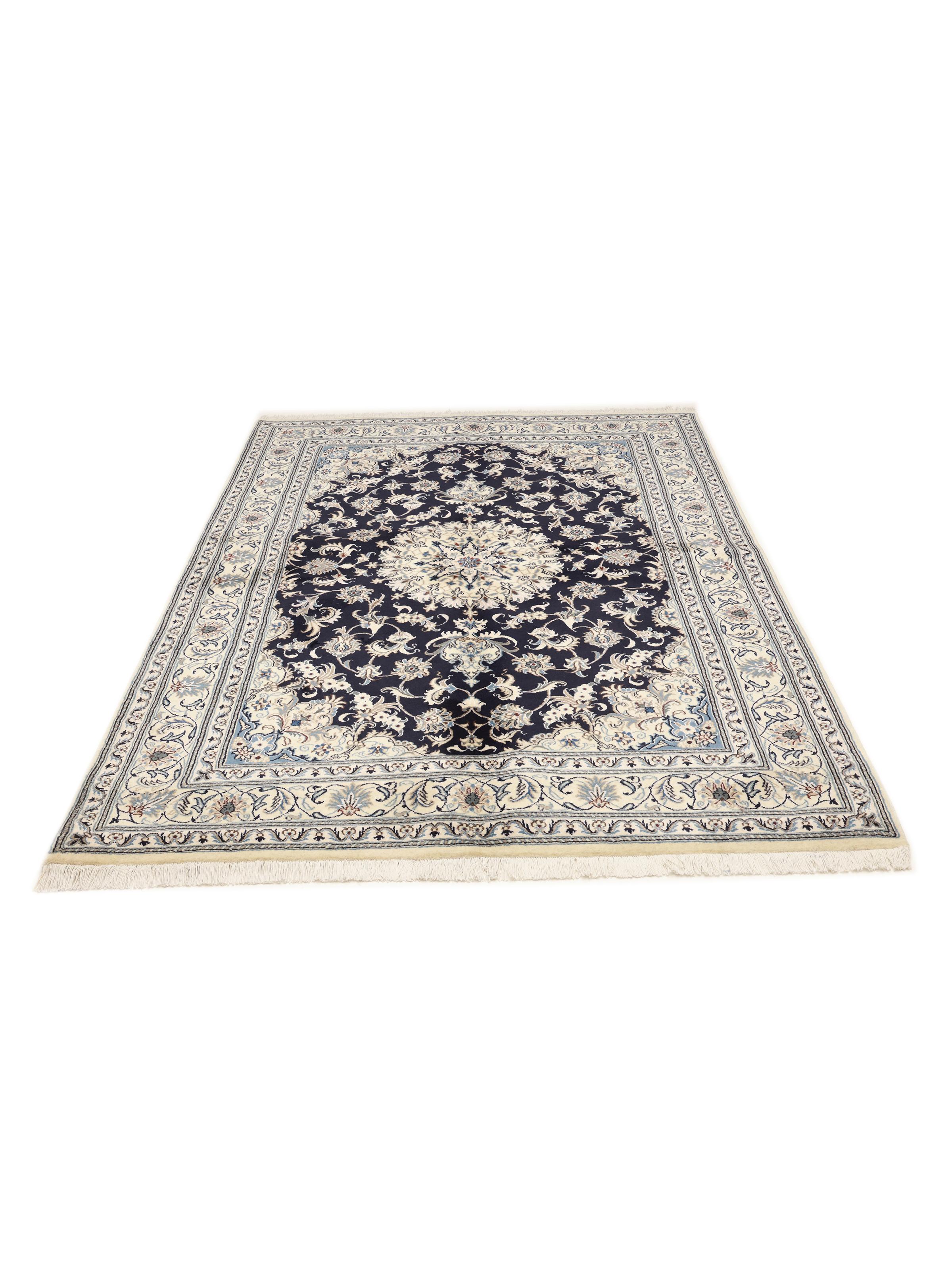
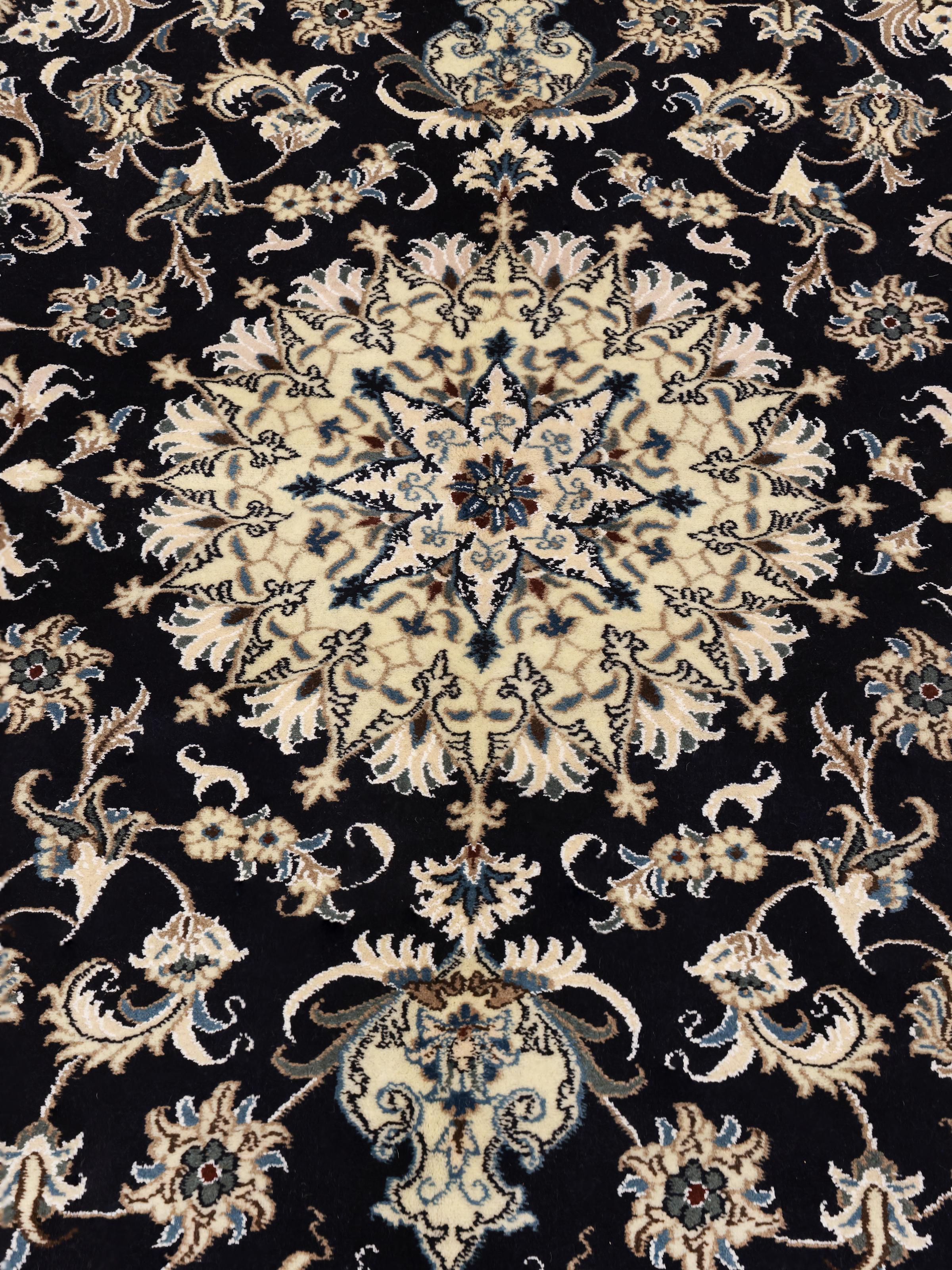
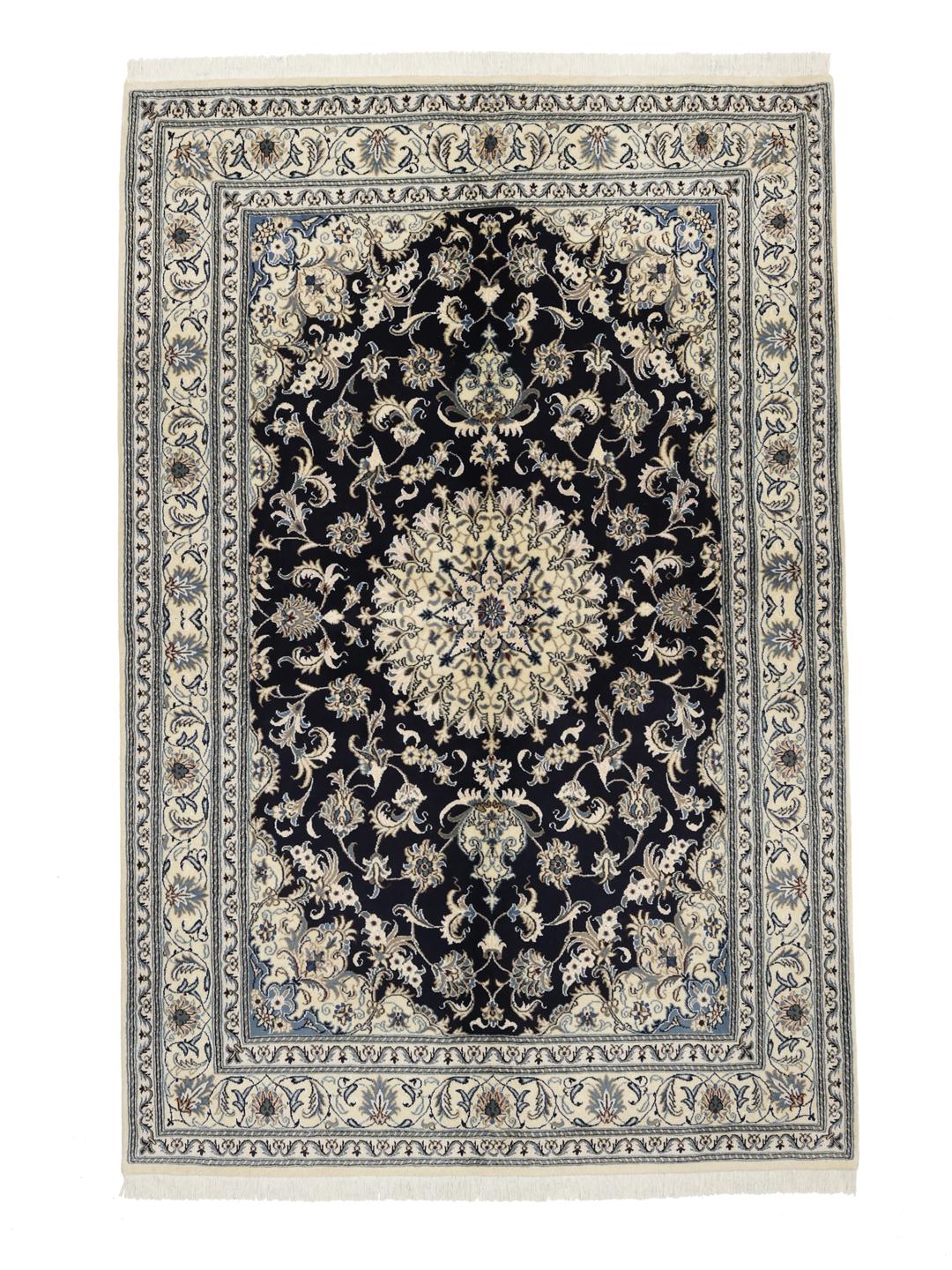
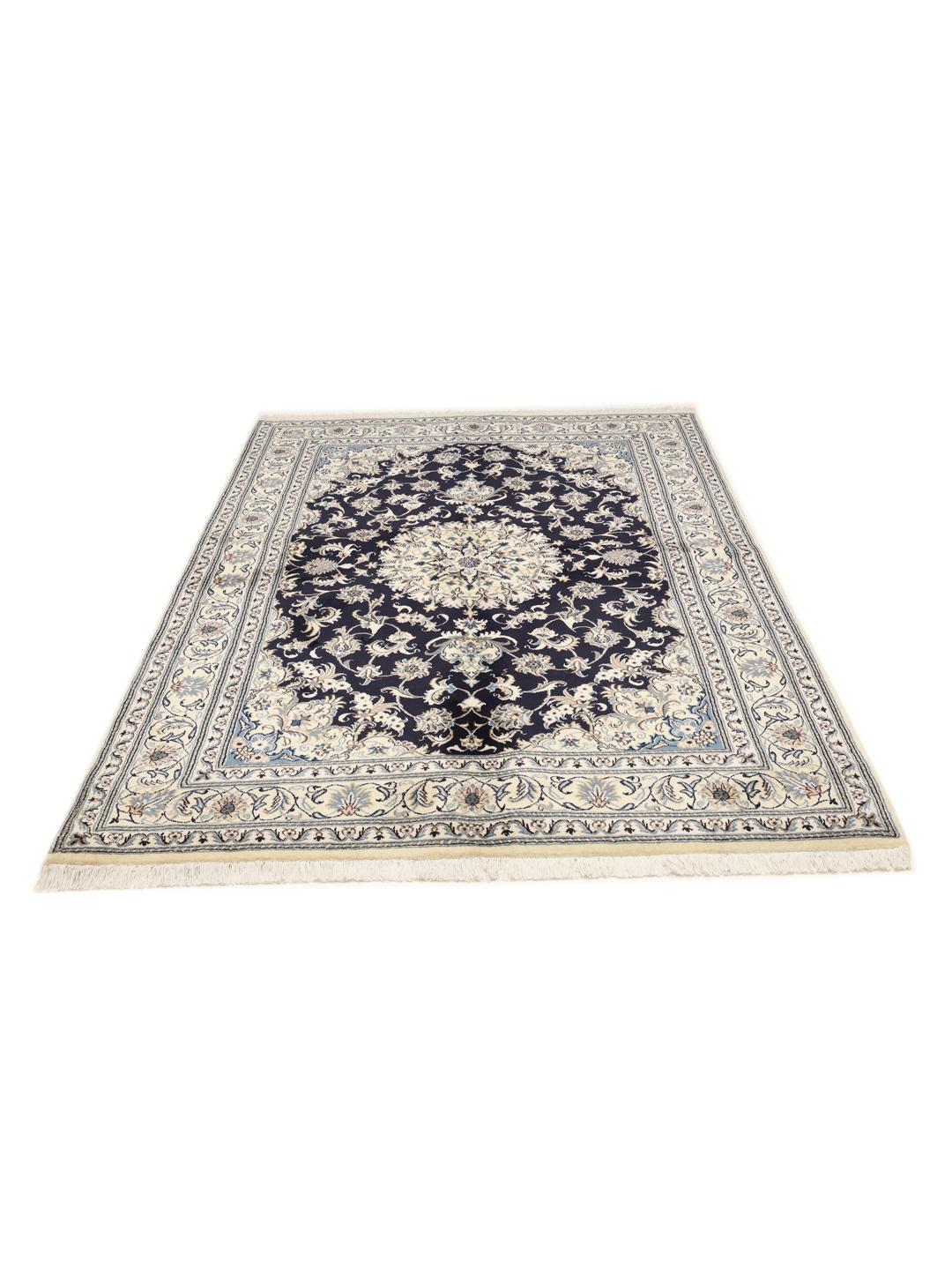
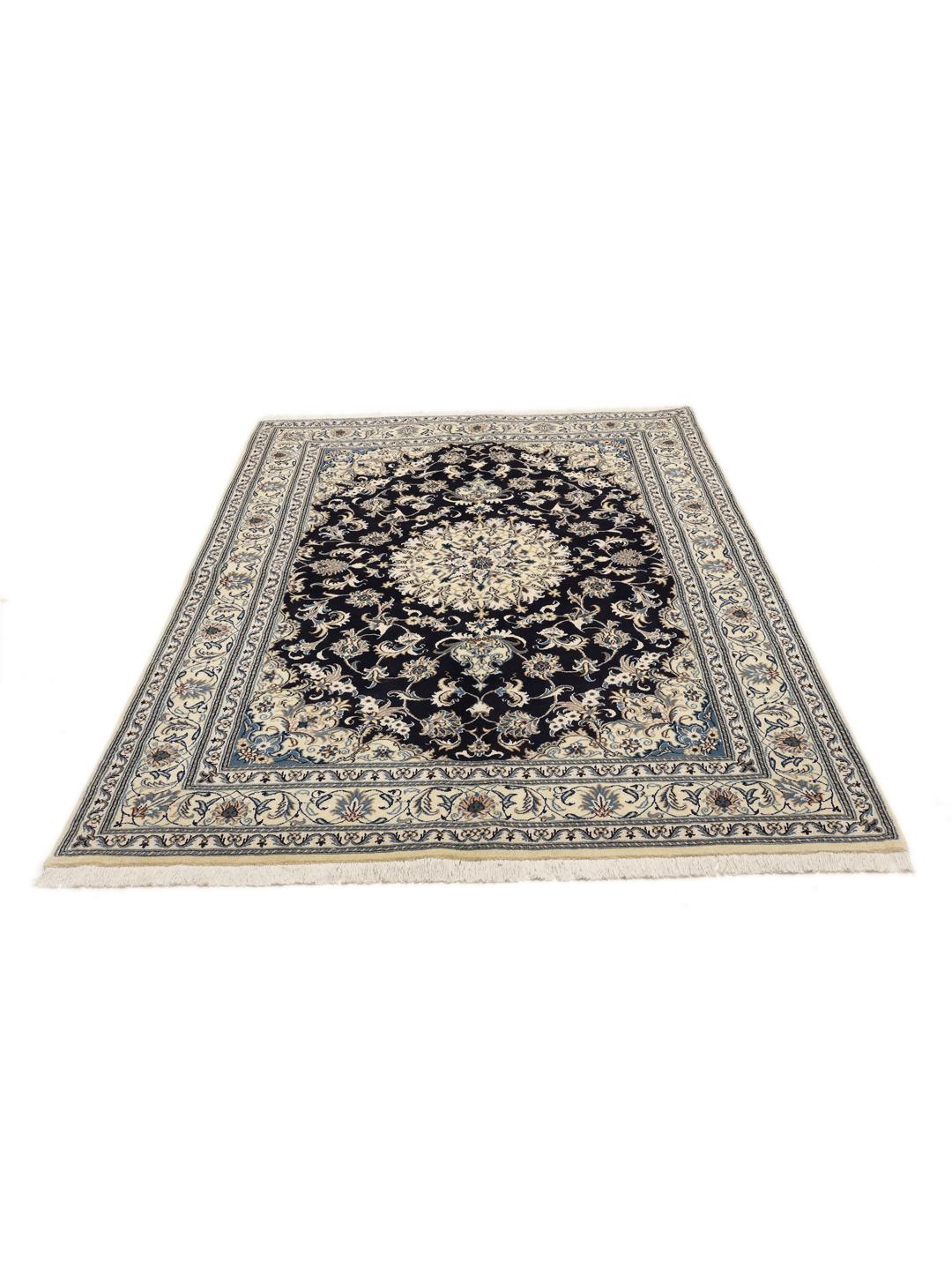
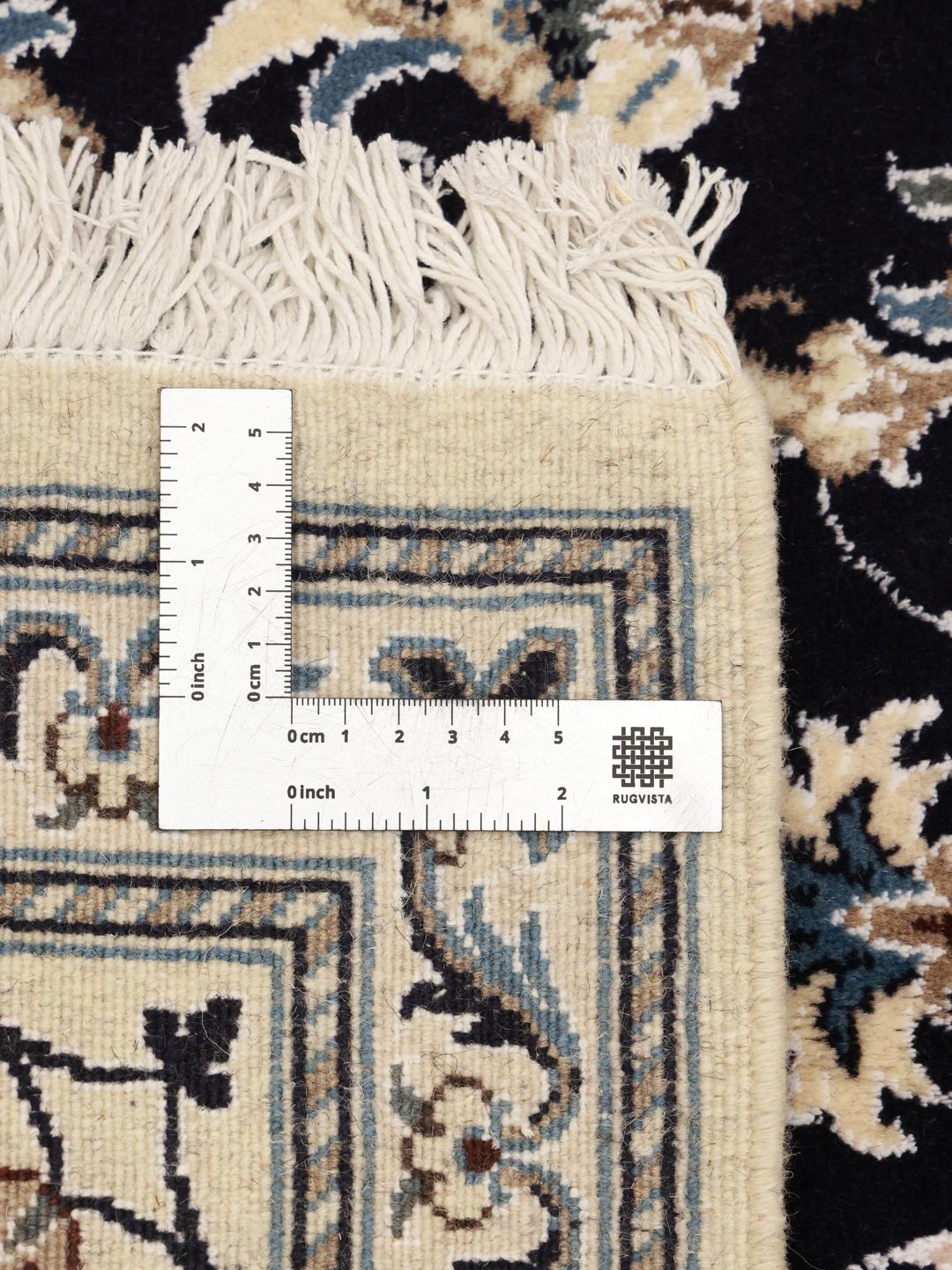
Nain rugs originate from the historic city of Nain, located in the heart of the Middle East. Historically known for producing fine wool textiles and religious garments, the city transitioned into high-end rug weaving during the early 20th century, quickly establishing a reputation for producing some of the most sophisticated and elegant floor coverings in the world.
The term Nain refers to a specific standard of quality and design that emphasises elegance and restraint. These rugs are renowned for their use of high-quality wool, often combined with silk highlights to add depth and lustre. The technique involves a very precise knotting style, which allows the weavers to translate complex, flowing floral patterns into a durable and tactile fabric.
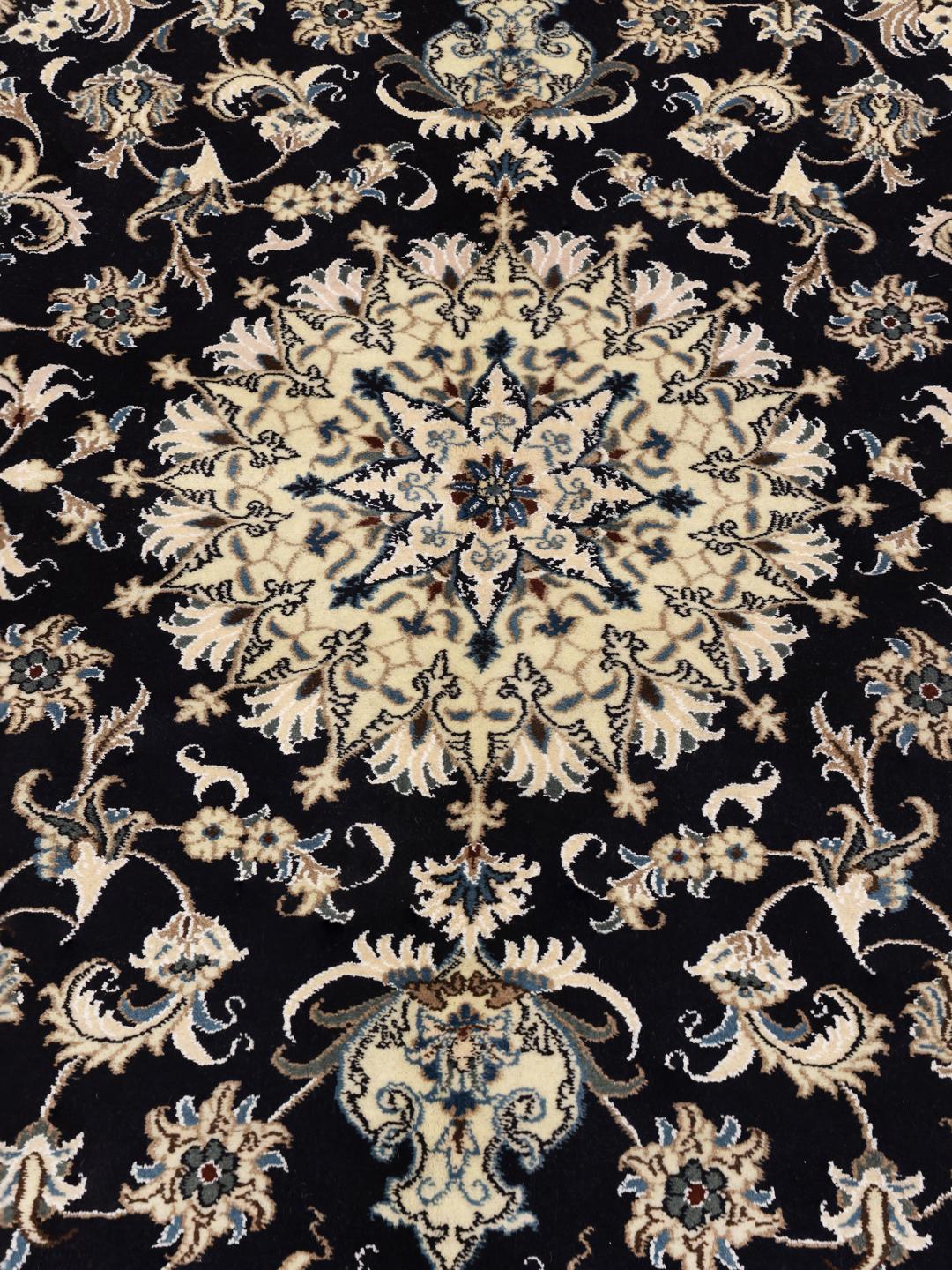
Visually, Nain rugs are defined by their sophisticated colour palettes, which often favour creamy ivories, soft blues, and deep, saturated tones like the one seen here. The central medallion is a hallmark of the style, typically surrounded by a field filled with Shah Abbasi motifs, scrolling vines, and delicate blossoms that reflect the artistic heritage of the region.
Owning a Nain rug is considered an investment in cultural heritage and refined craftsmanship. These pieces are highly sought after by collectors who value the balance between traditional complexity and modern aesthetic appeal. They are not merely floor coverings but represent a legacy of skill passed down through generations, ensuring their value and beauty endure over time.