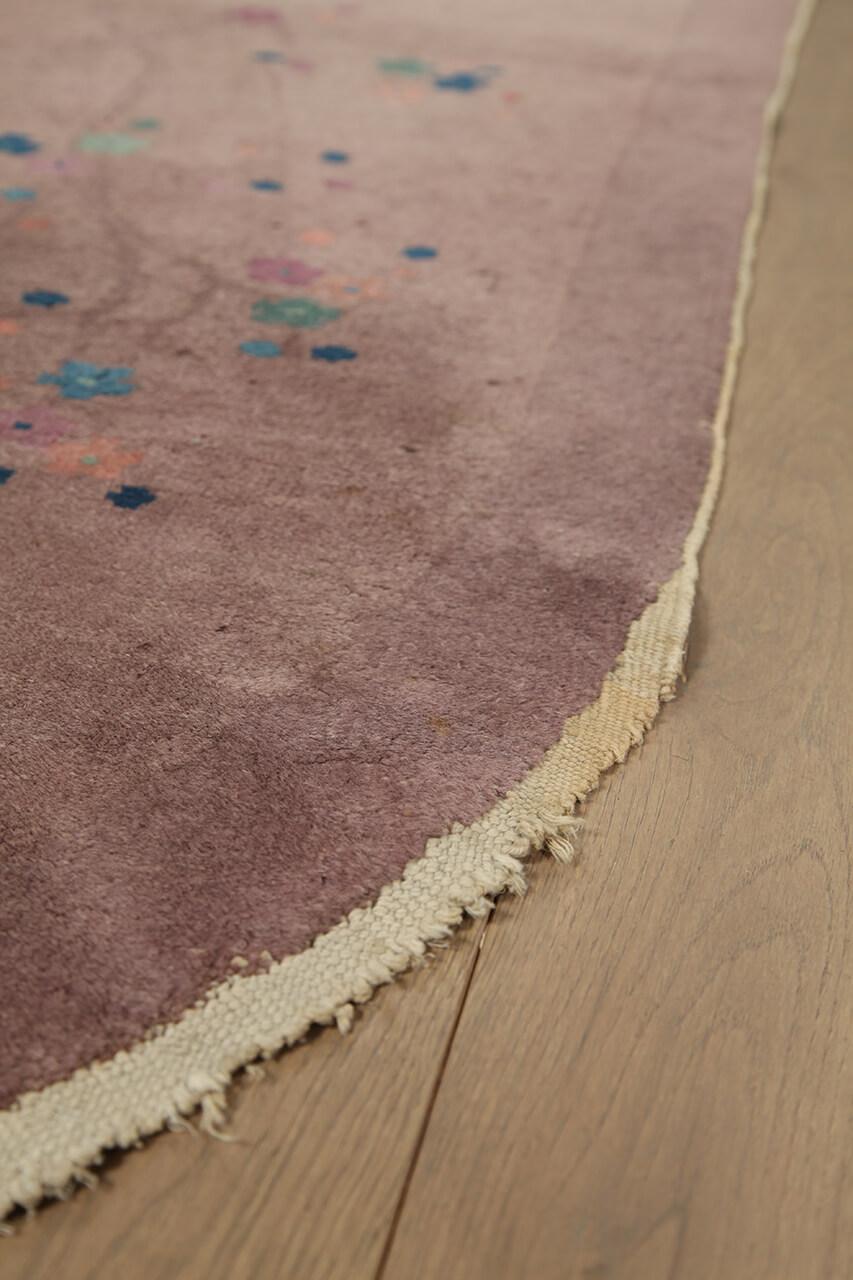
The history of Chinese rug production is deeply intertwined with the country's rich artistic traditions, evolving over centuries from simple utility to highly refined expressions of status and culture. During the early 20th century, the Art Deco movement in China, famously championed by manufacturers like Nichols, synthesised traditional Eastern motifs with the bold, geometric, and stylised aesthetic of the Western Art Deco period.
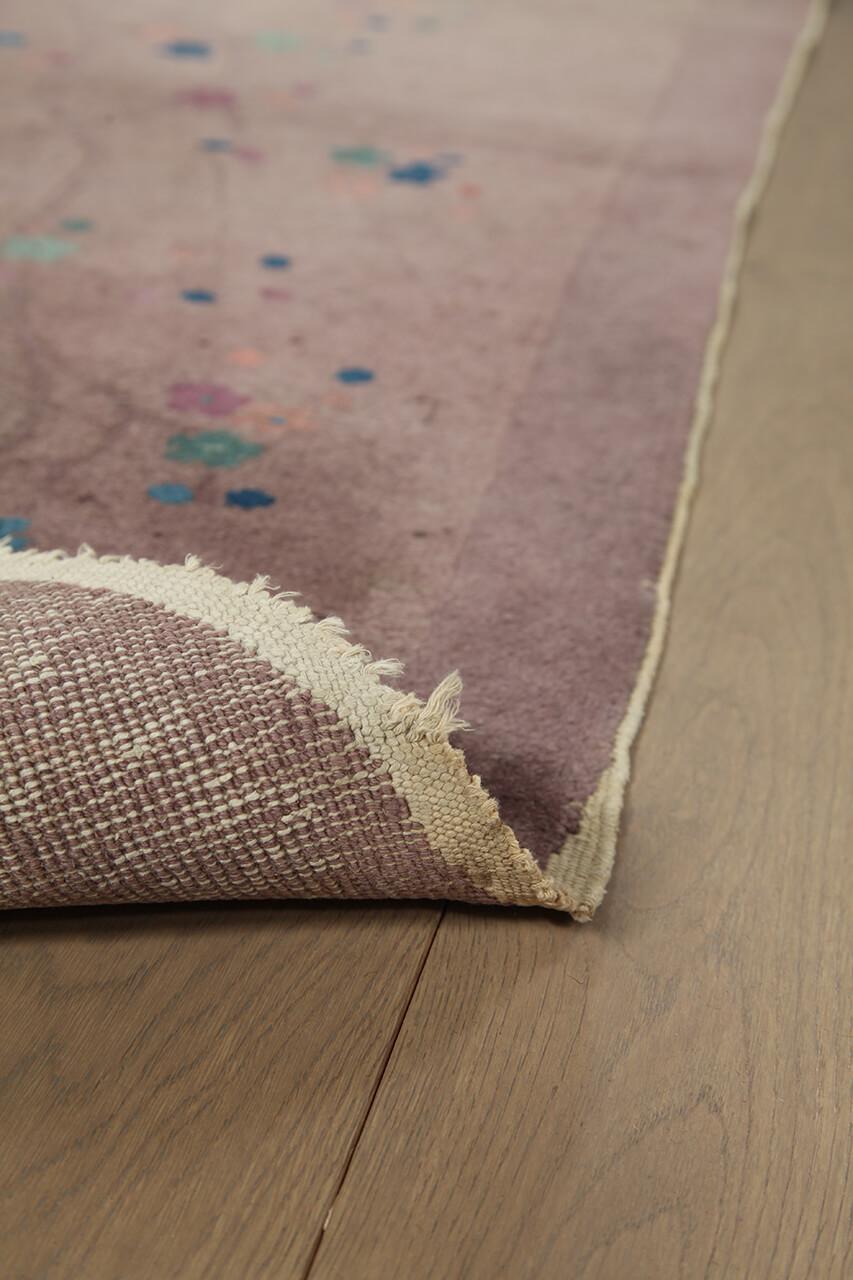
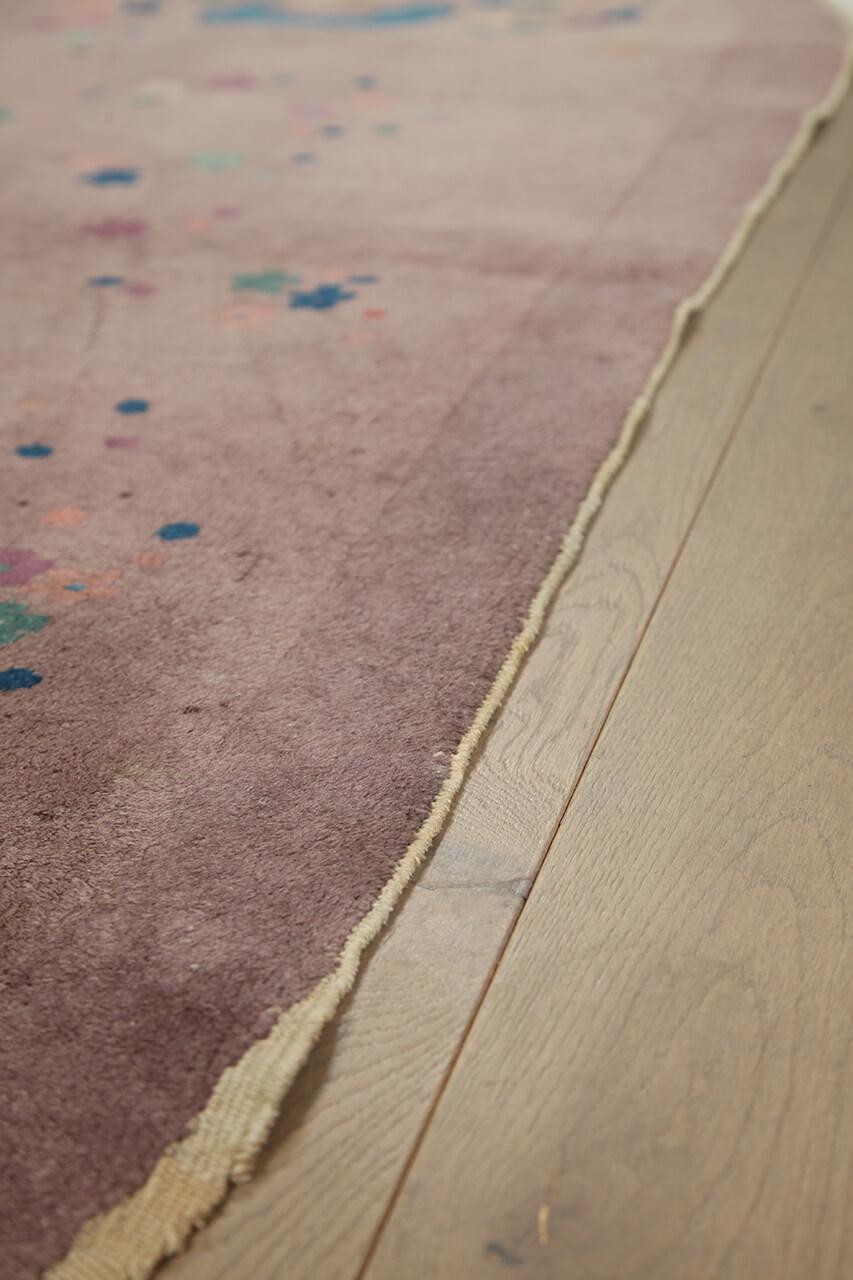
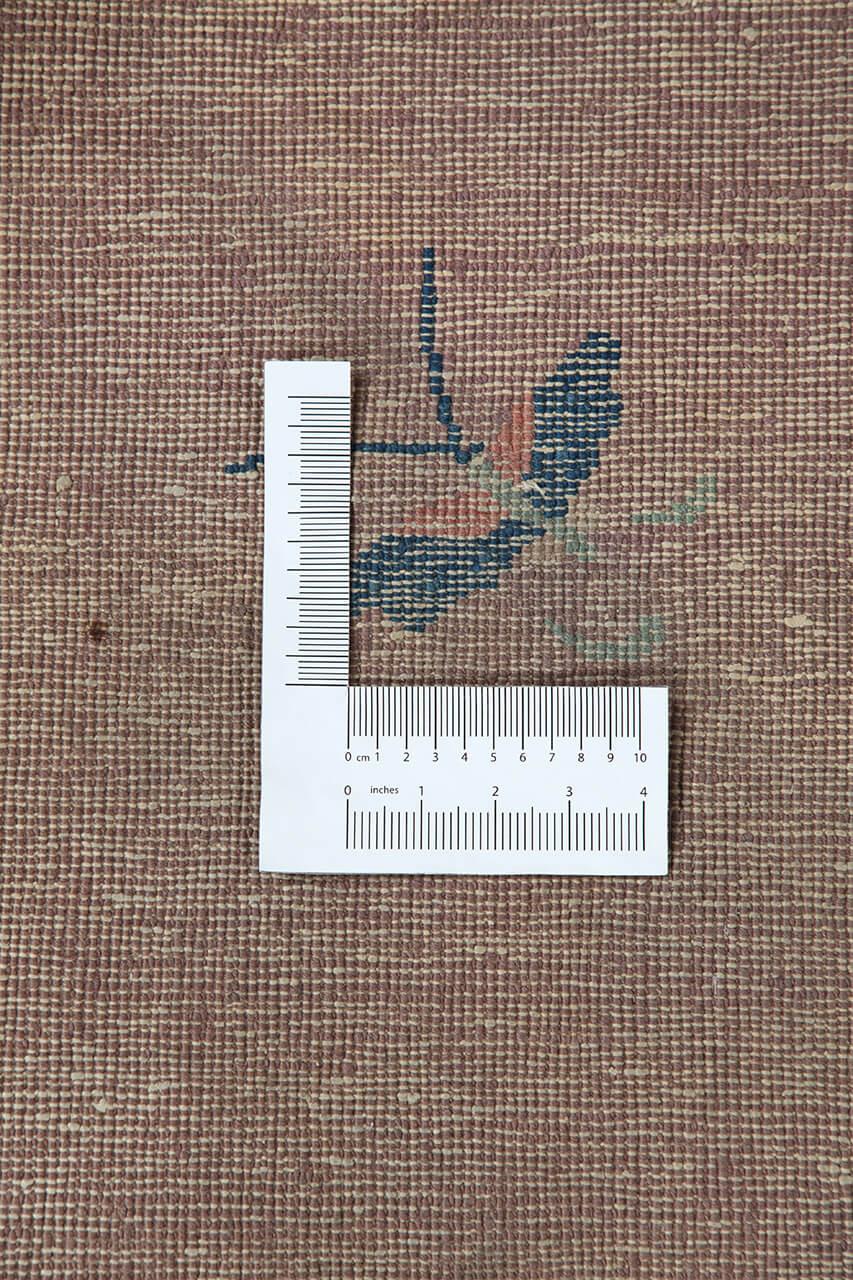
Technical quality in these rugs is often defined by the specific knotting techniques and the quality of the Wool used. The dense pile is typically achieved through precise hand-knotting, which creates a durable surface that remains soft and lustrous. This construction is what allows these older pieces to retain their structural integrity and visual appeal long after their creation.
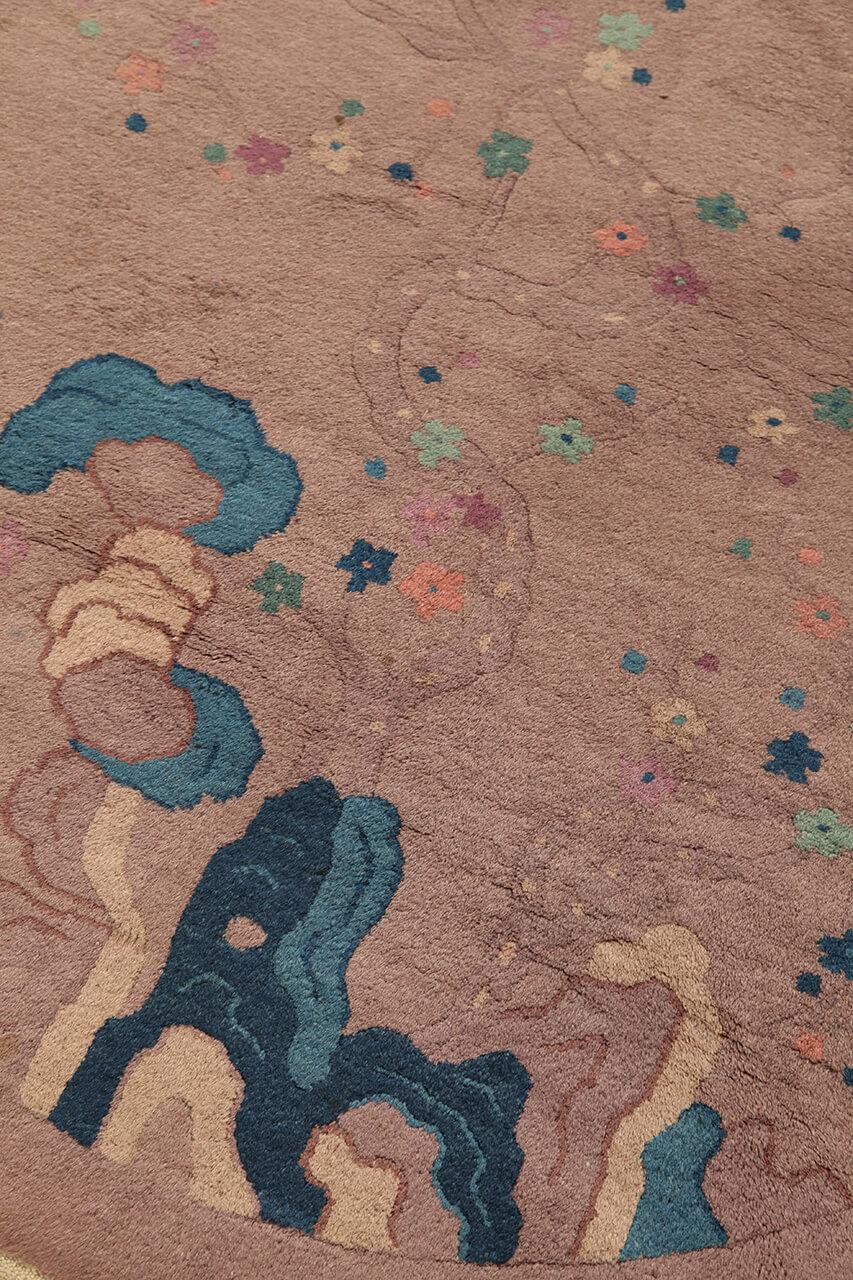
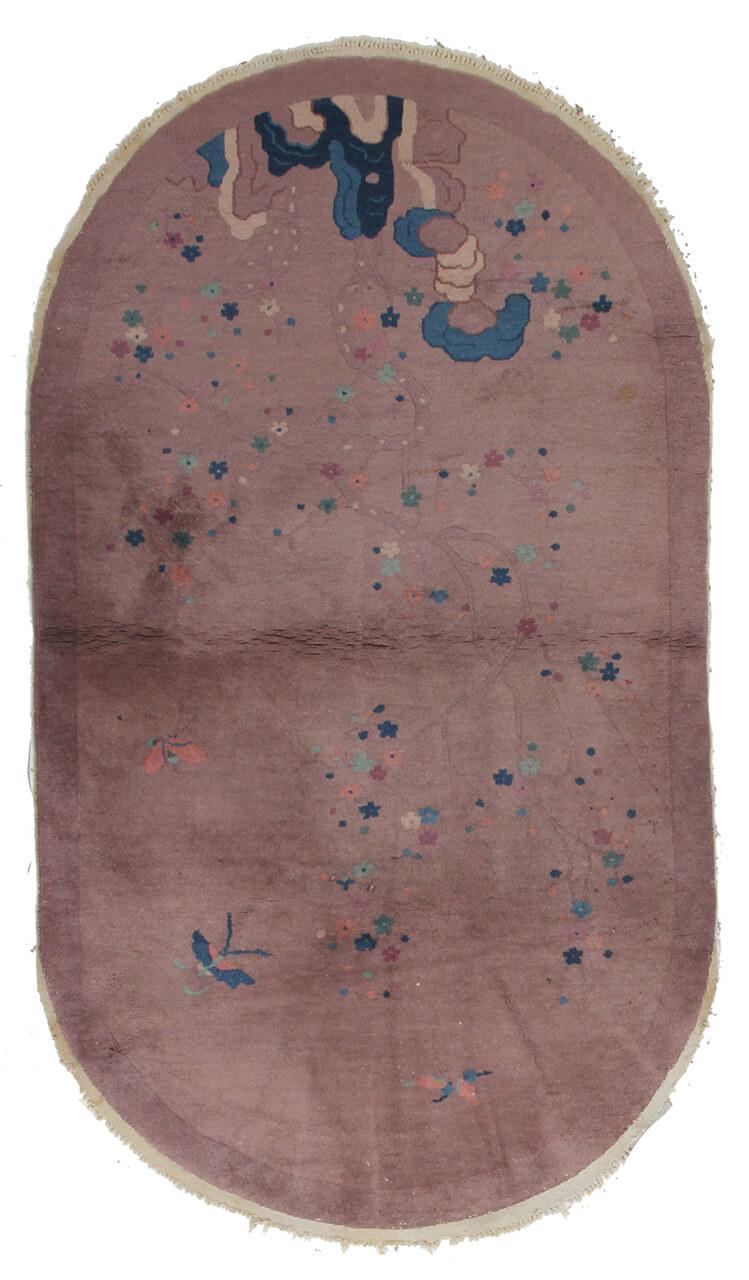
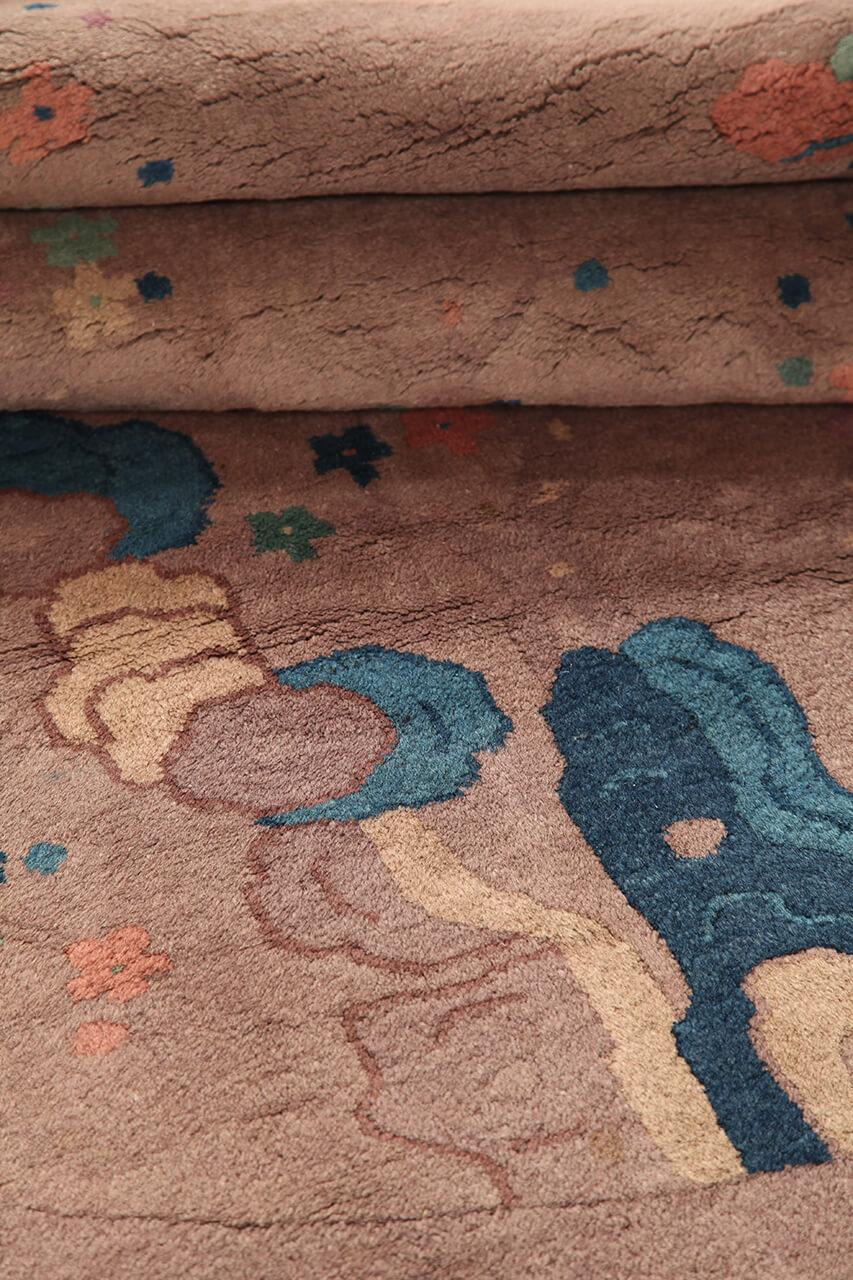
Signature design elements of the Nichols era often include asymmetrical compositions, such as solitary flowering branches or stylised clouds, set against a solid or subtly shaded field. These motifs are deeply symbolic in Chinese culture, representing themes of longevity, prosperity, and the changing seasons. The focus on negative space is a hallmark of this tradition, allowing the eye to rest and appreciate the elegance of the individual design elements.
Collectors value these rugs for their unique intersection of historical provenance and artistic innovation. Owning a Nichols Chinese antique is not merely about floor coverage; it is about preserving a specific moment in the global history of design. These pieces are celebrated for their ability to bridge the gap between traditional craft and modern aesthetic sensibilities, making them highly sought-after treasures.