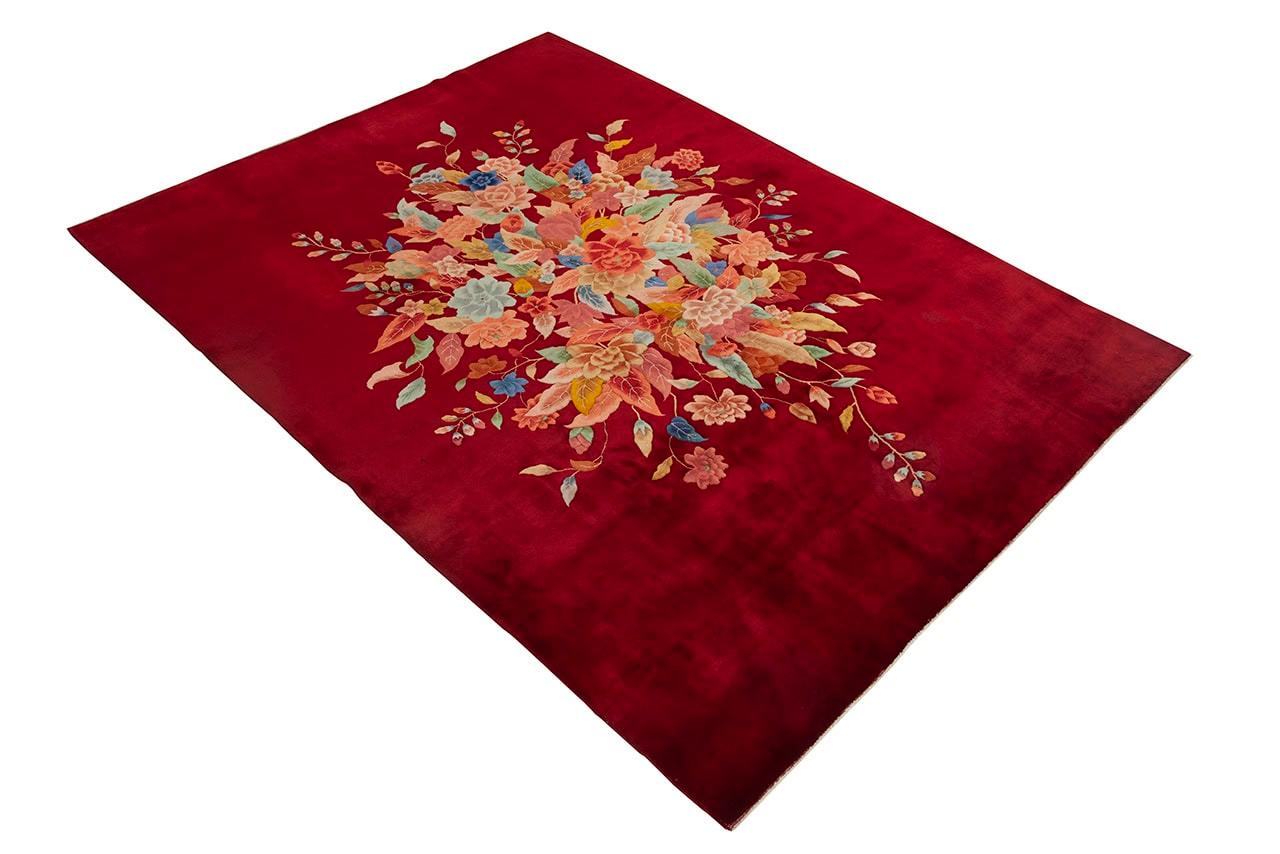
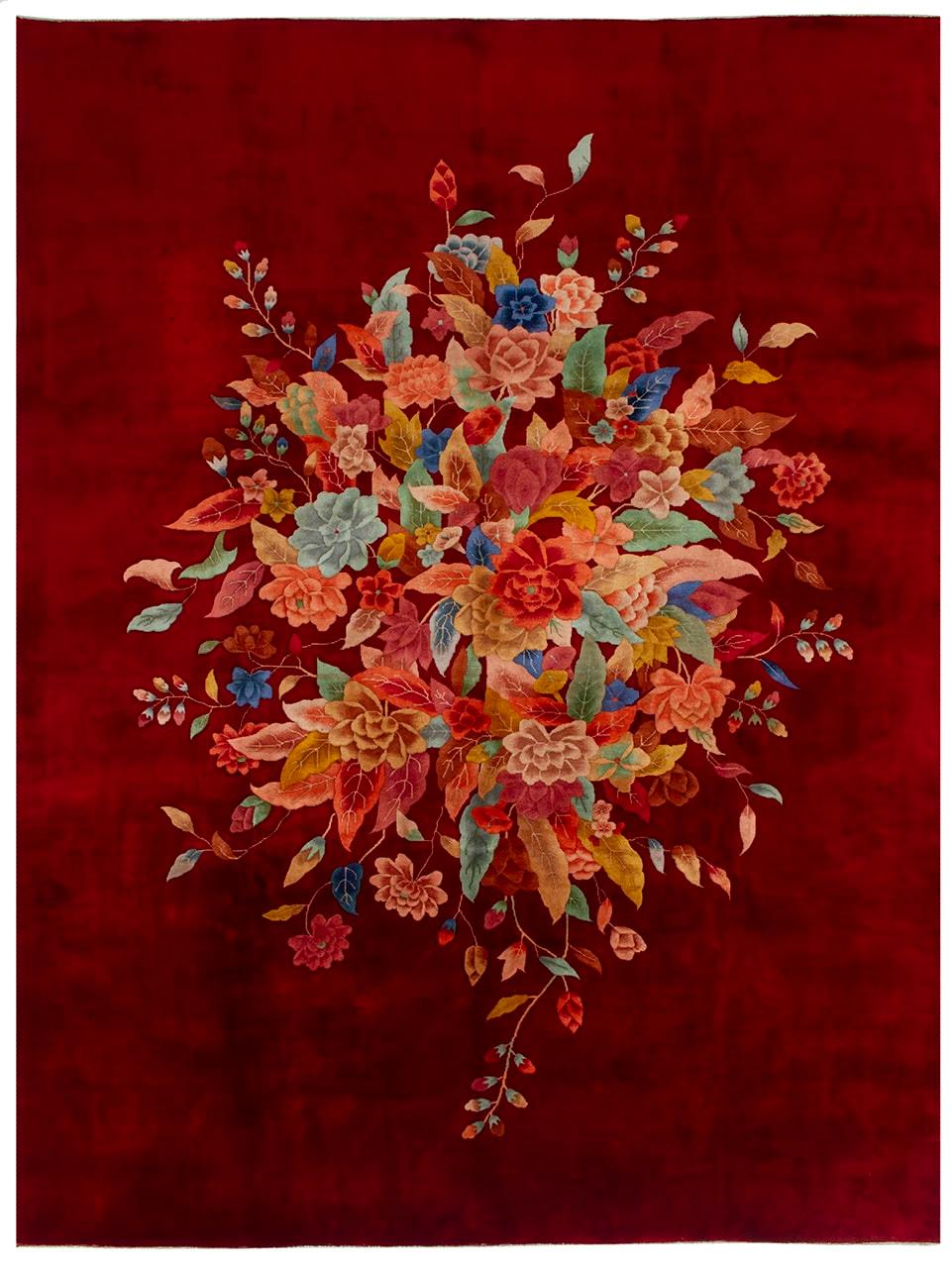
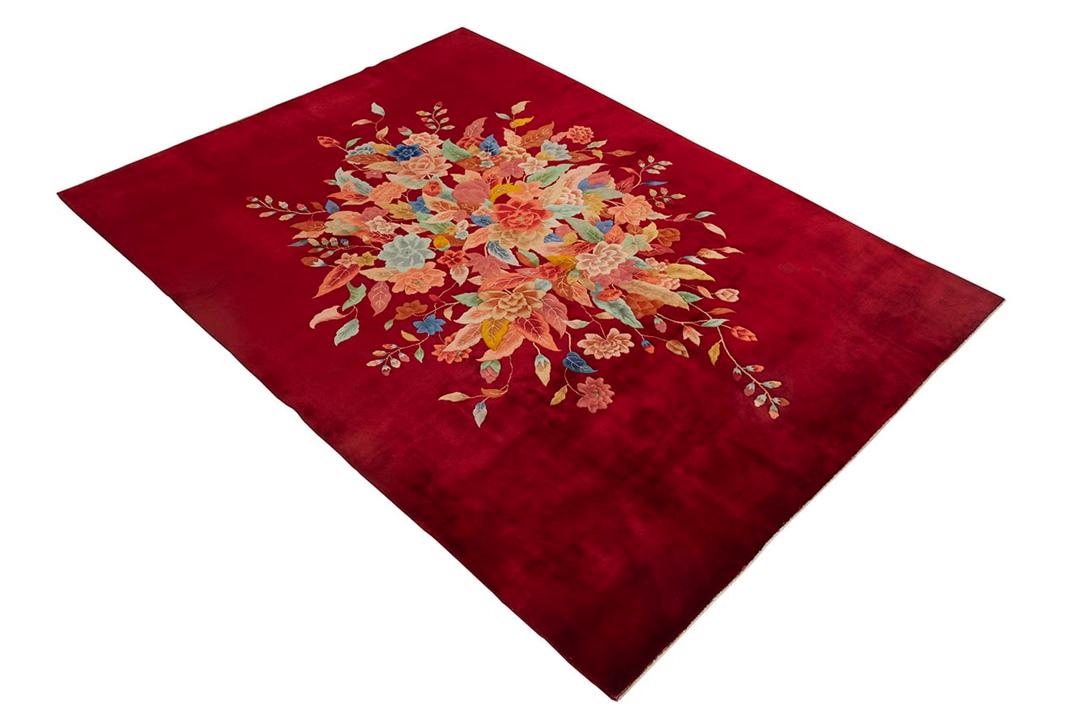
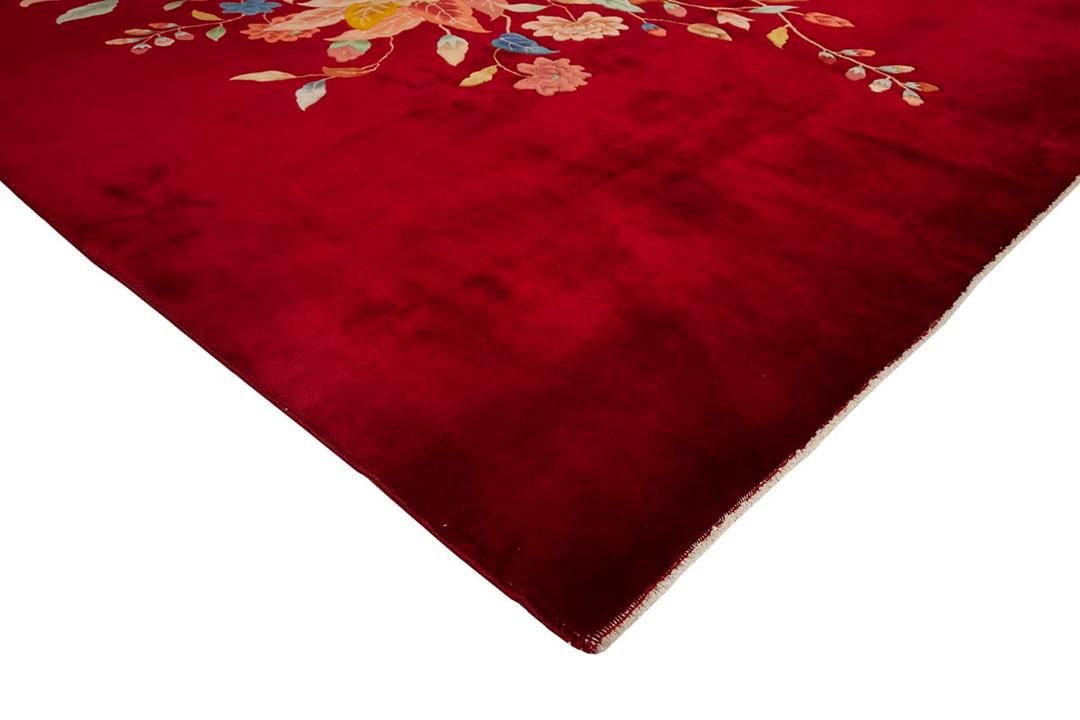
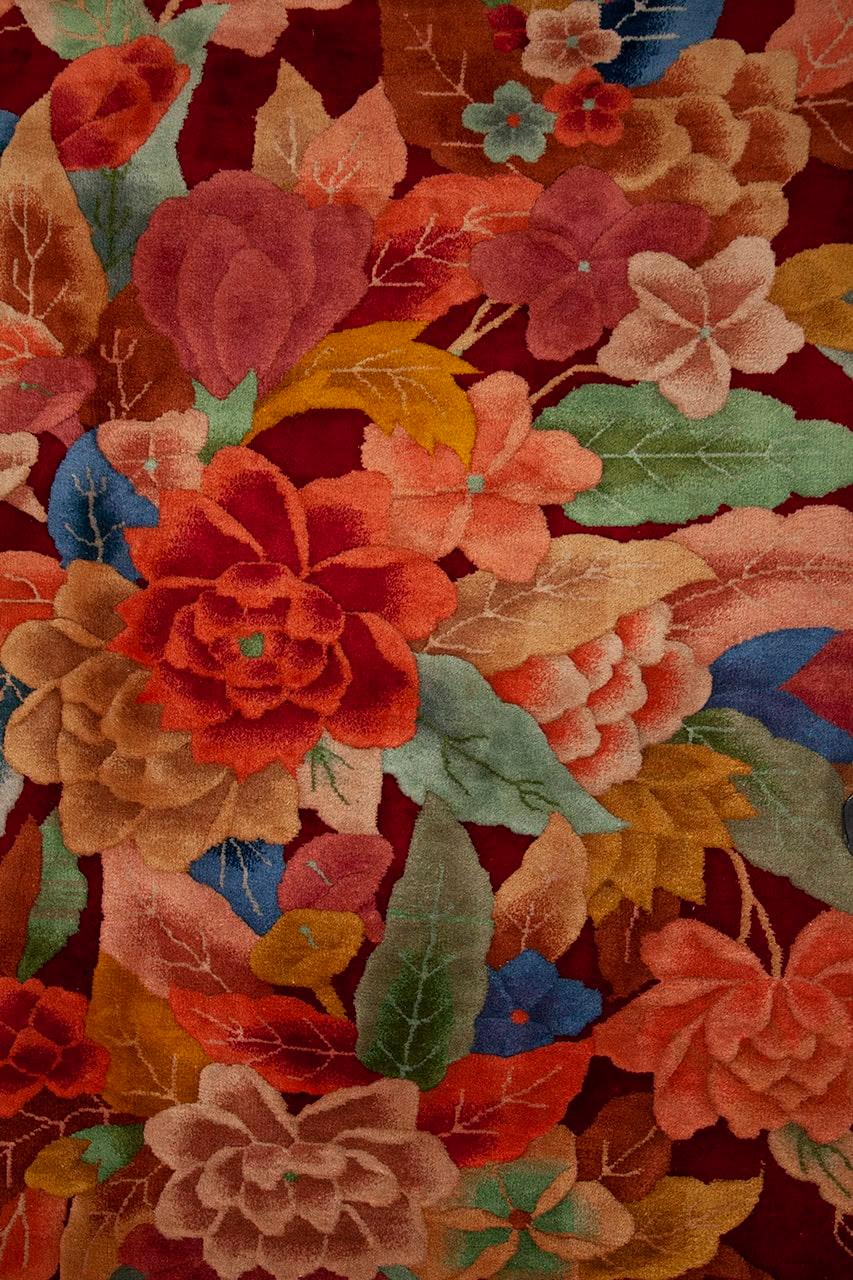
The history of Chinese rugs, particularly those from the early 20th century, is deeply intertwined with the Art Deco movement. These rugs, often referred to as Nichols-style, emerged during a period when Western design influences met traditional Eastern weaving techniques. This fusion resulted in a distinct aesthetic that moved away from traditional, repetitive motifs toward more open, sculptural, and expressive designs like the central floral bouquet seen here.
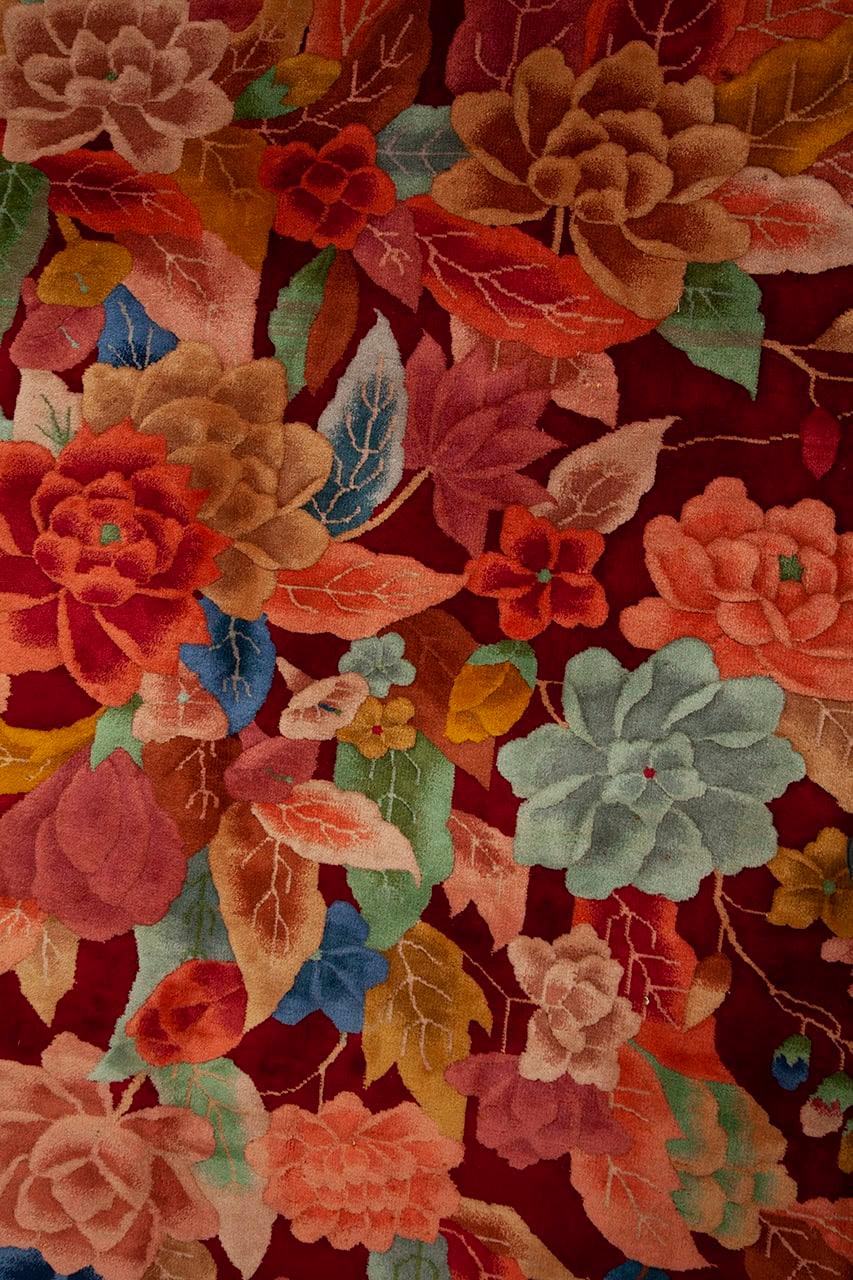
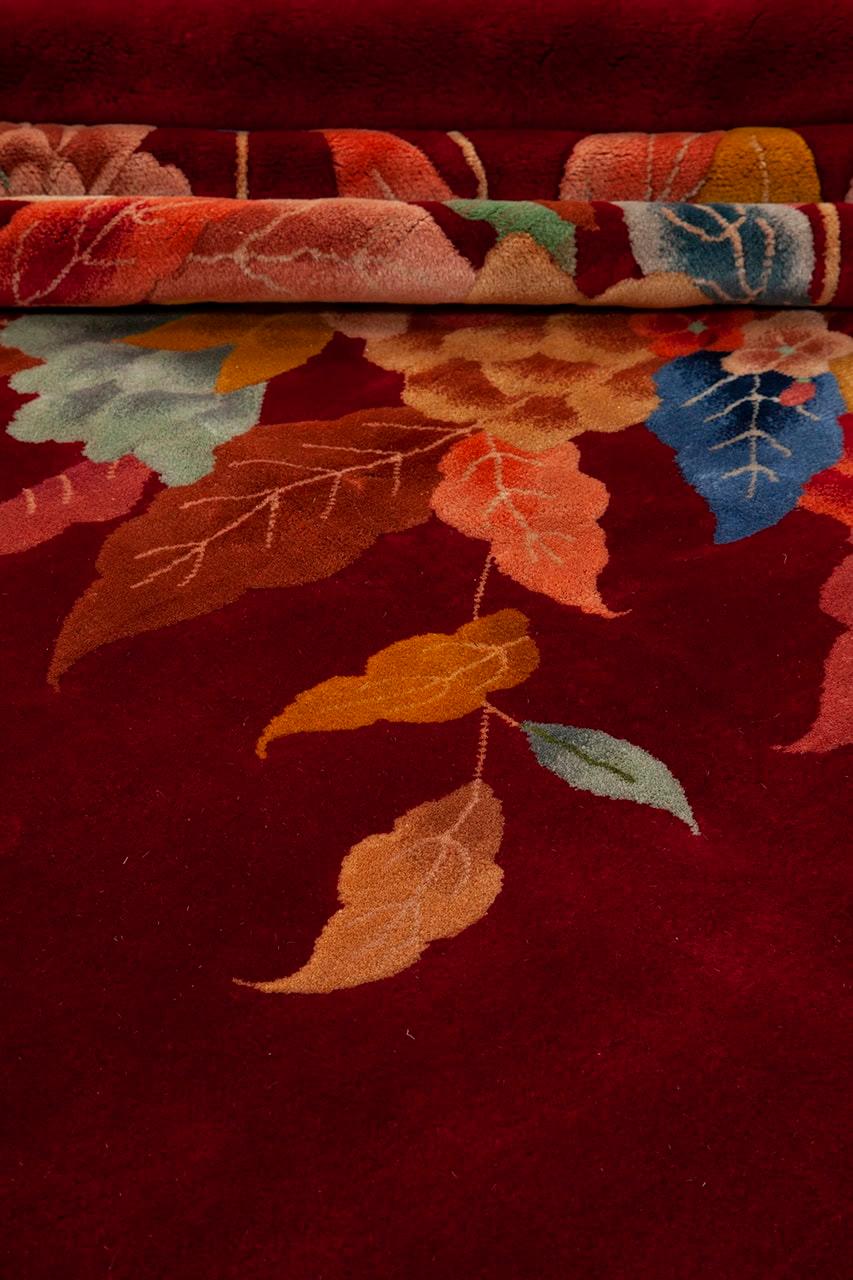
The technical quality of these rugs is defined by their specific construction, which often features a more substantial, plush pile compared to other regional styles. This thickness was a deliberate design choice, intended to provide a luxurious, comfortable feel that suited the elegant interiors of the era. The use of high-quality wool, combined with a sturdy cotton foundation, allowed for the bold, crisp outlines that characterise these floral designs.
Signature design elements of this tradition include the use of large-scale, asymmetrical floral motifs often set against a solid, vibrant background. Unlike more traditional rugs that might be covered in intricate, repeating geometric patterns, these pieces emphasise negative space, allowing the central floral arrangement to take centre stage. The colour palette often features rich, saturated tones that have remained vivid and beautiful over decades of history.
Collecting these antique pieces is a way to preserve a specific moment in the evolution of textile art. They are highly valued for their artistic boldness and the human skill required to translate complex, painterly designs into hand-knotted form. Owning such a rug is not just about floor covering; it is about holding a piece of cultural heritage that honours the transition of design traditions across the 20th century.