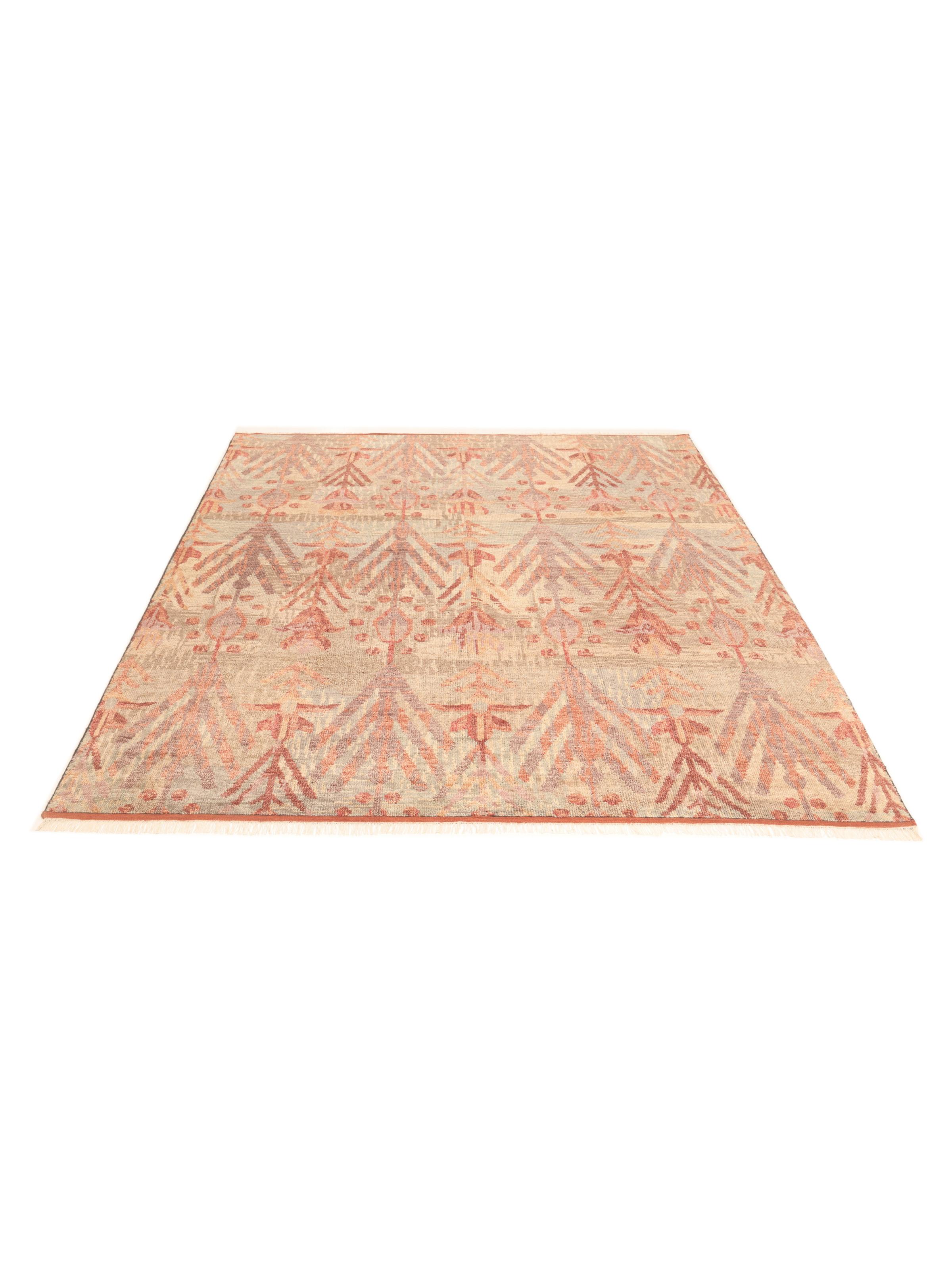
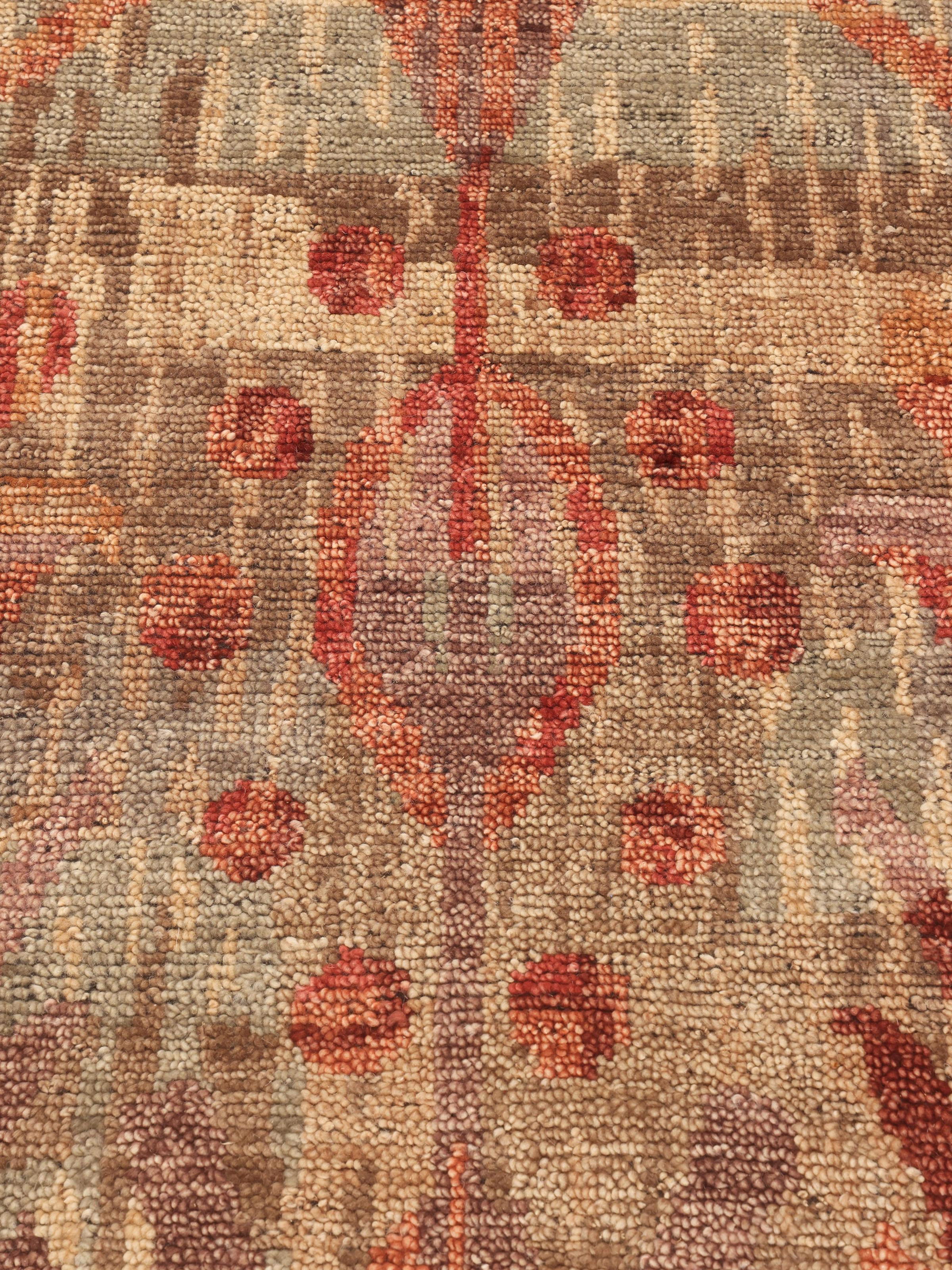
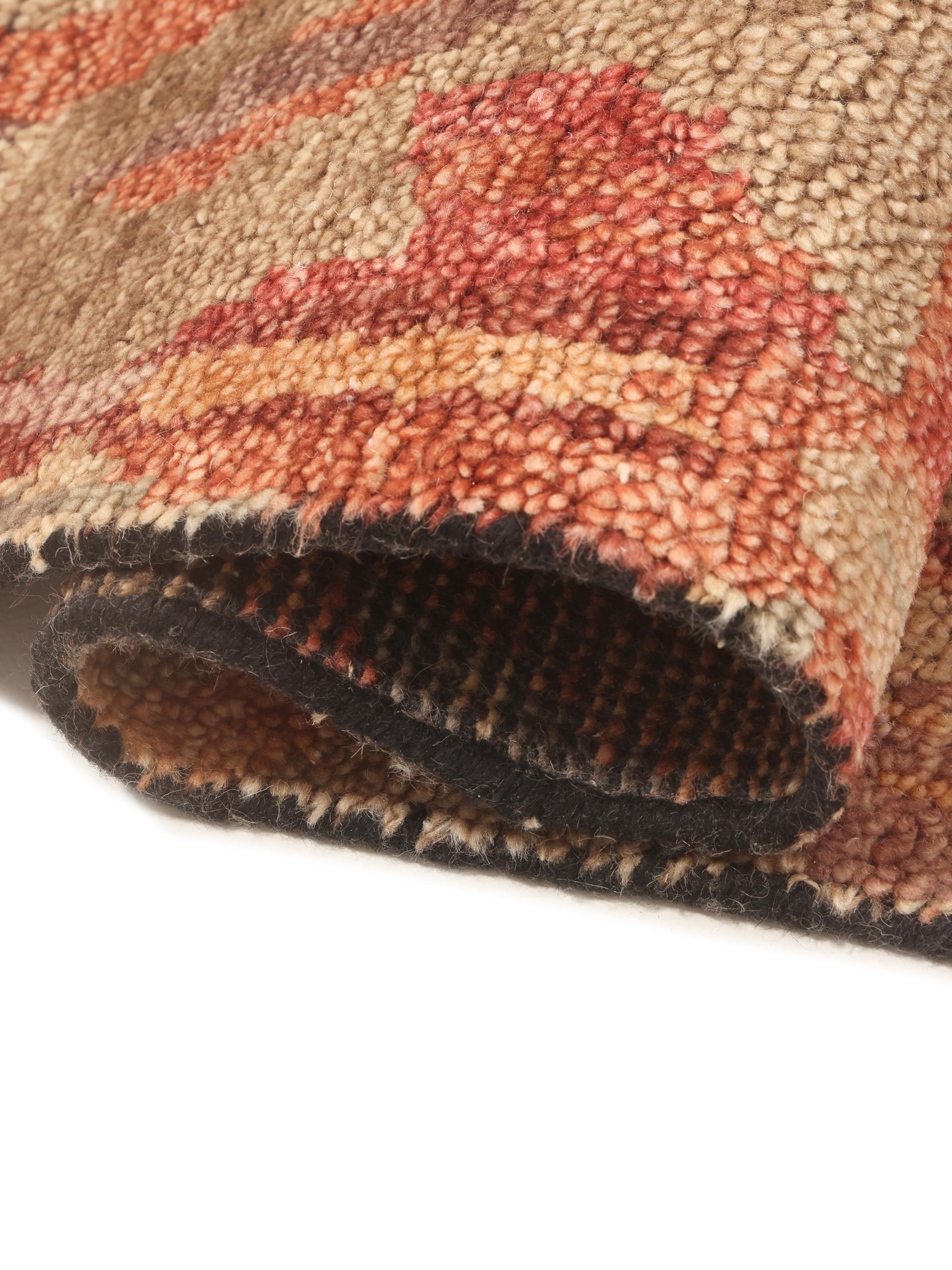
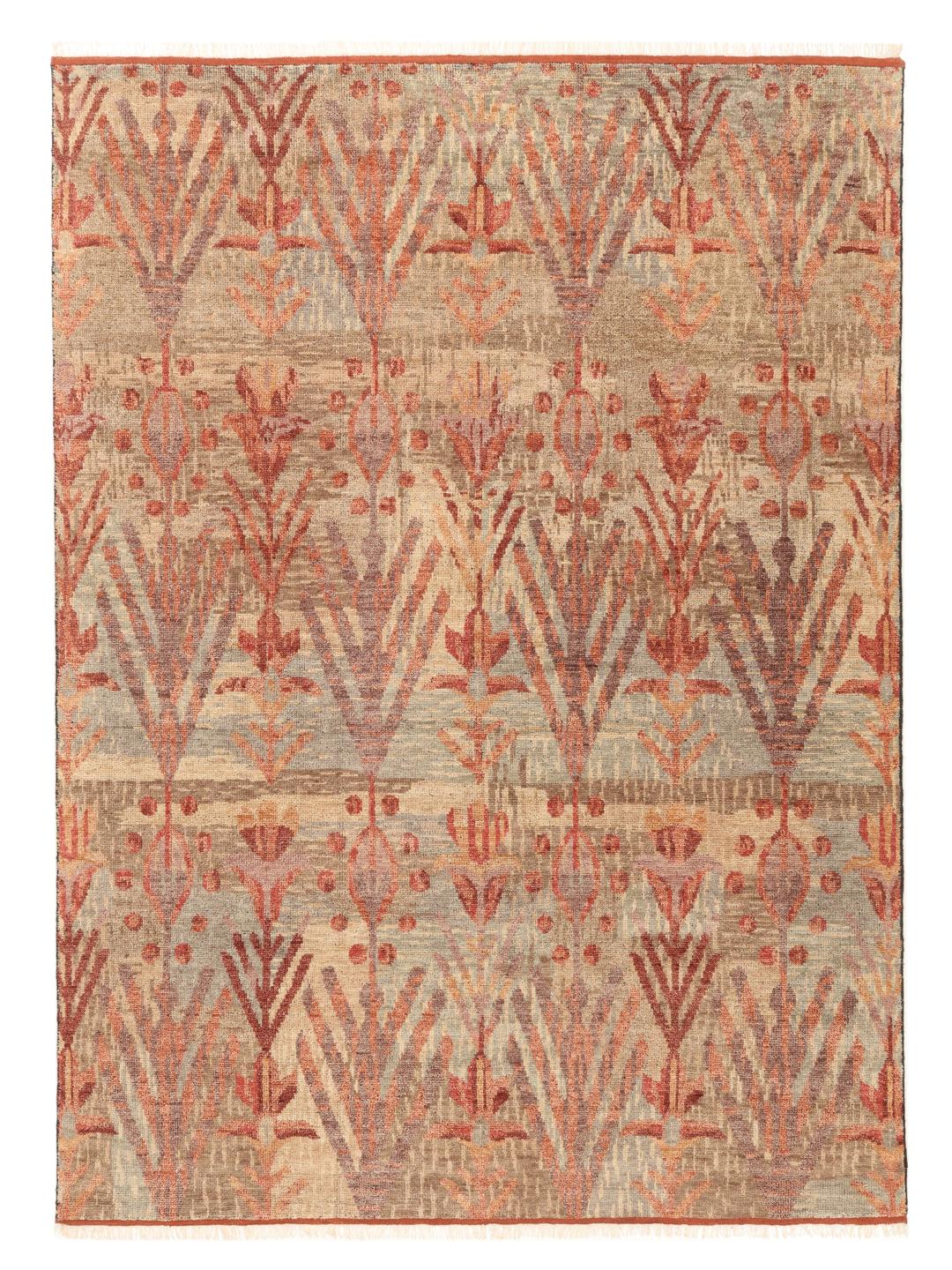
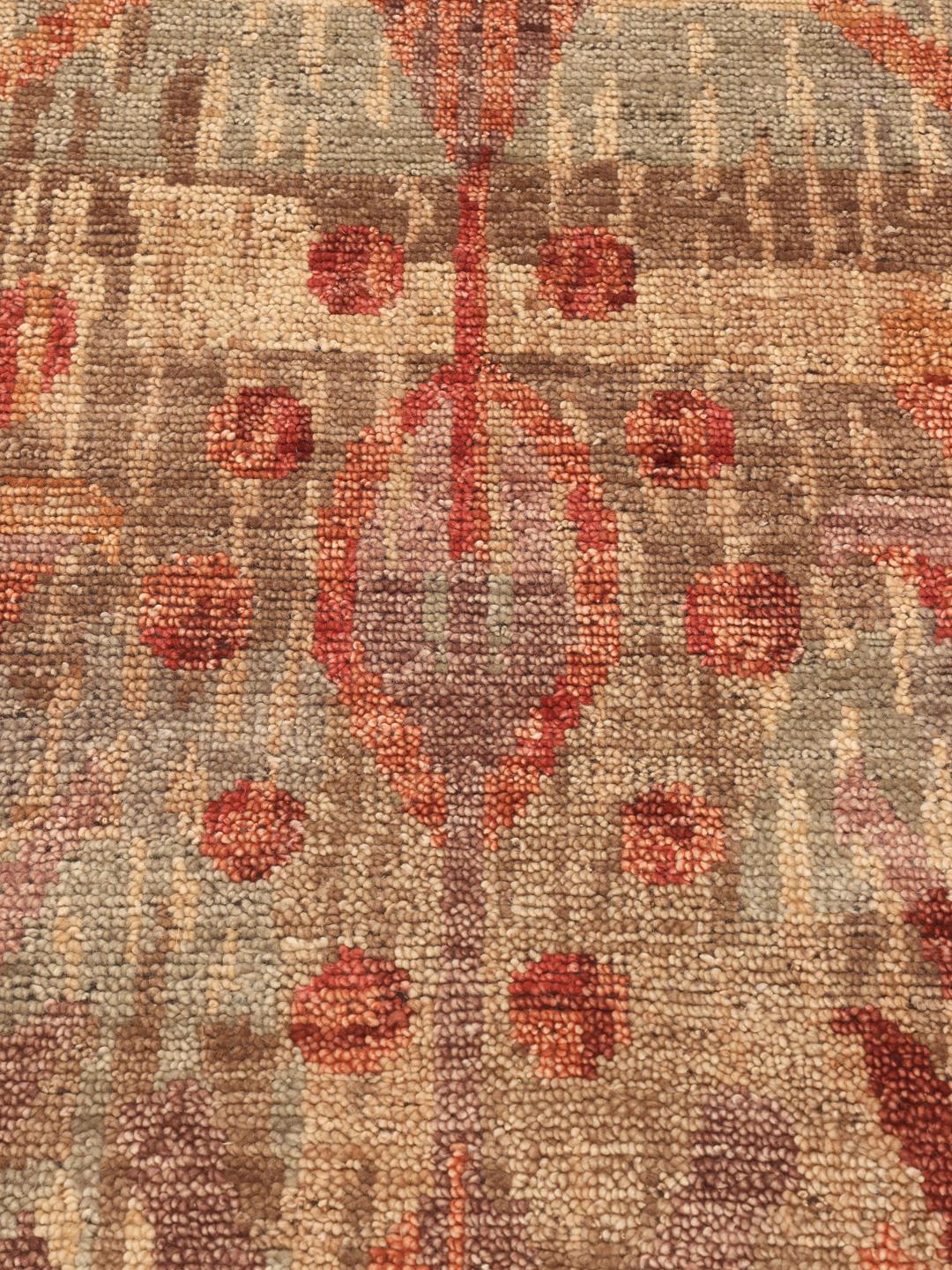
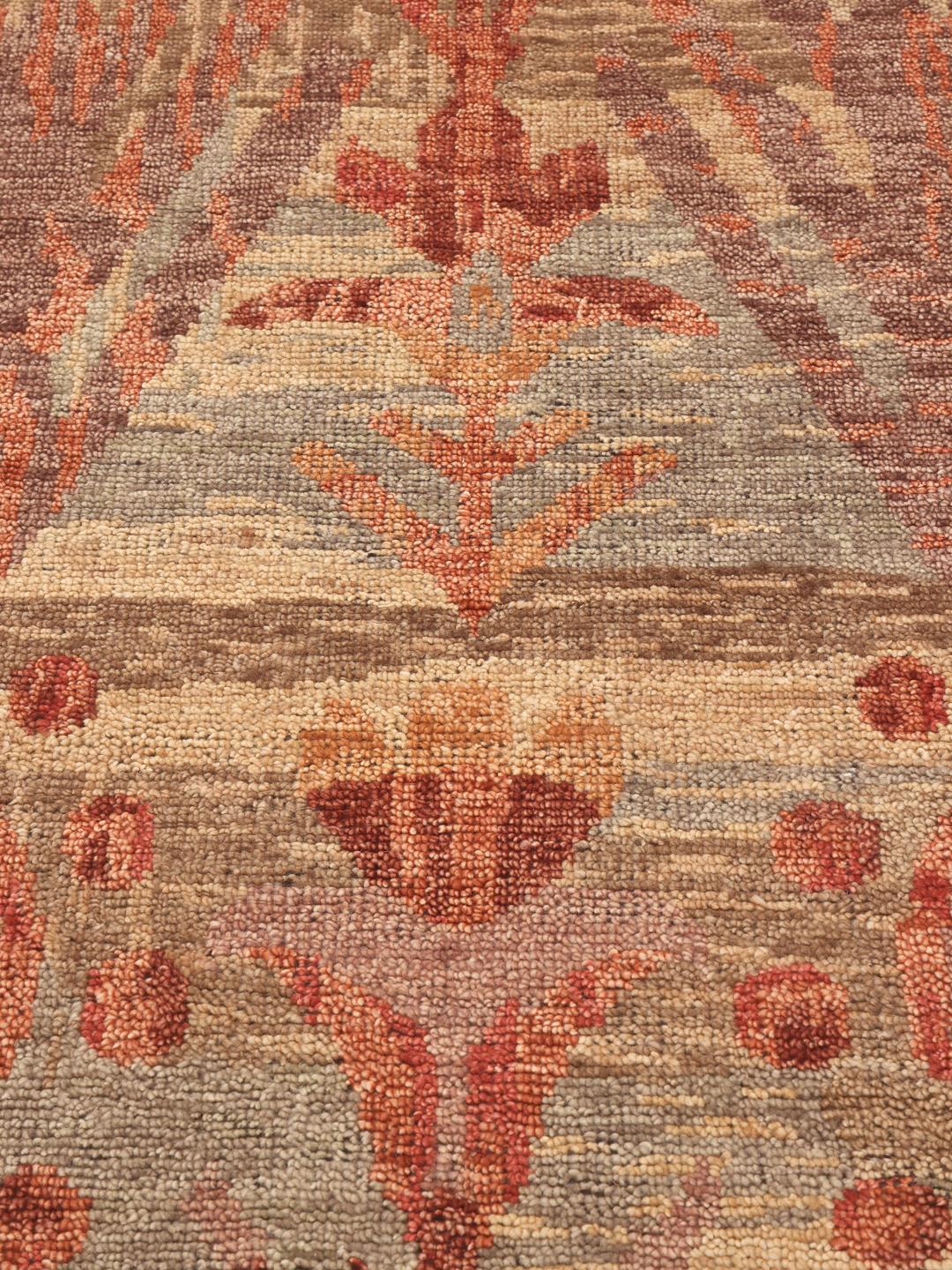
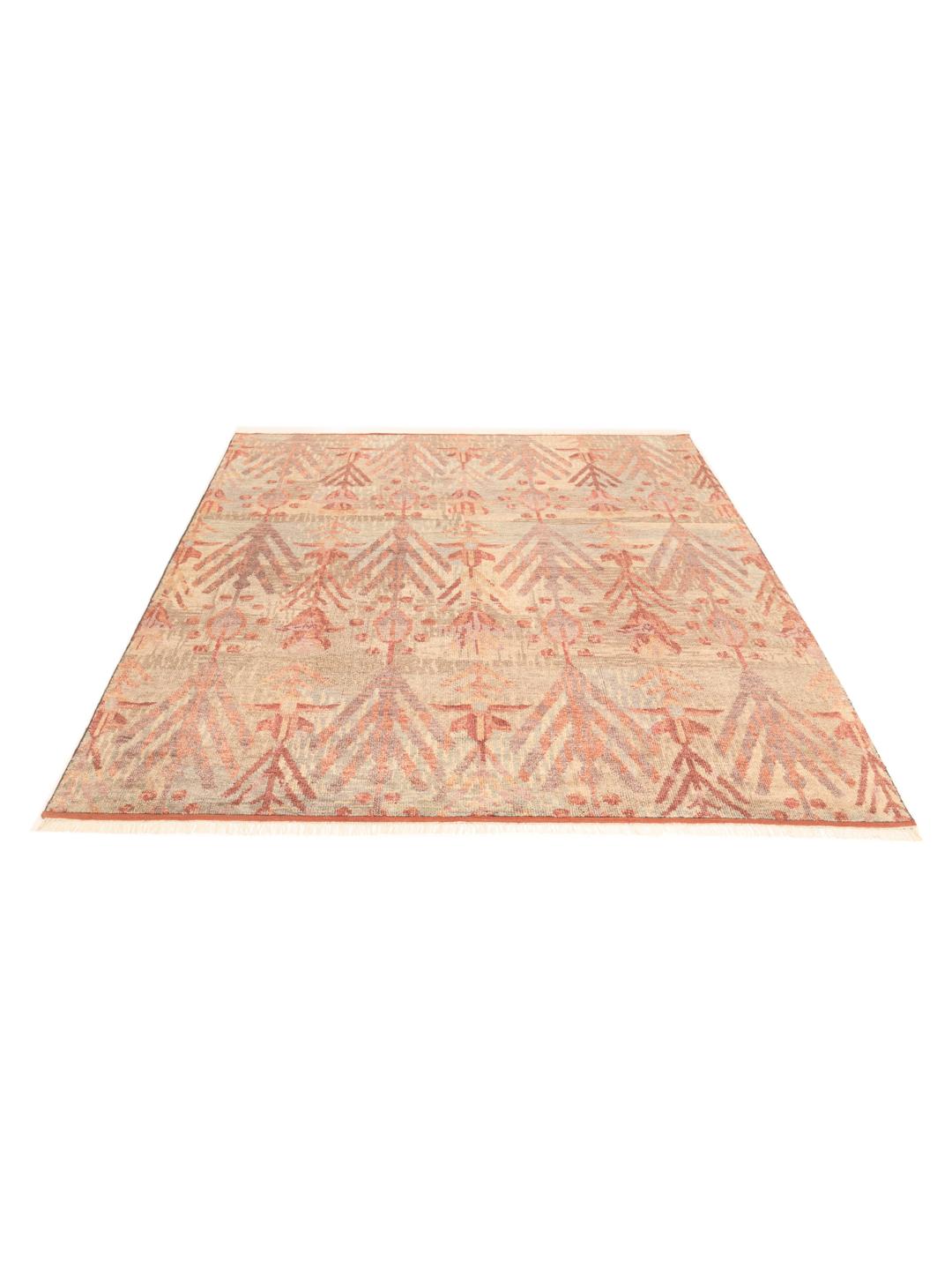
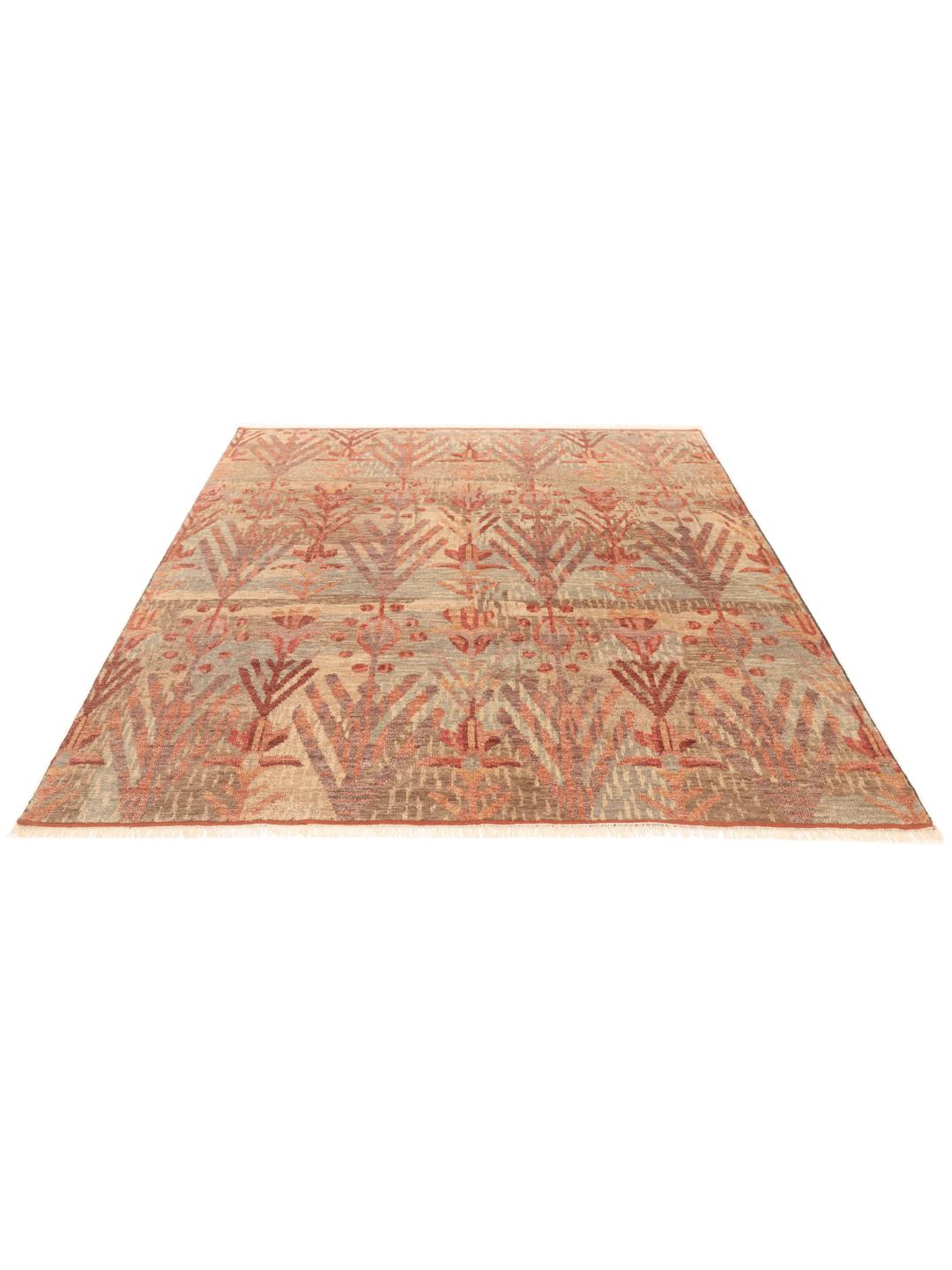
Usak rugs have a storied history rooted in the ancient town of Uşak in western Turkey, which was once a major centre for carpet production during the height of the Ottoman Empire. While the original tradition dates back centuries, the style has evolved significantly over time. Today, the craft has found a vibrant home in India, where artisans continue to honour the legacy of these designs by blending traditional methods with contemporary sensibilities.
The term Usak refers to a specific aesthetic tradition known for its large-scale, often floral or geometric patterns. These rugs were historically prized by European nobility and are frequently depicted in Renaissance-era paintings. The focus on balanced compositions and harmonious colour palettes remains a hallmark of this category, making them a preferred choice for those who value historical depth in their decor.
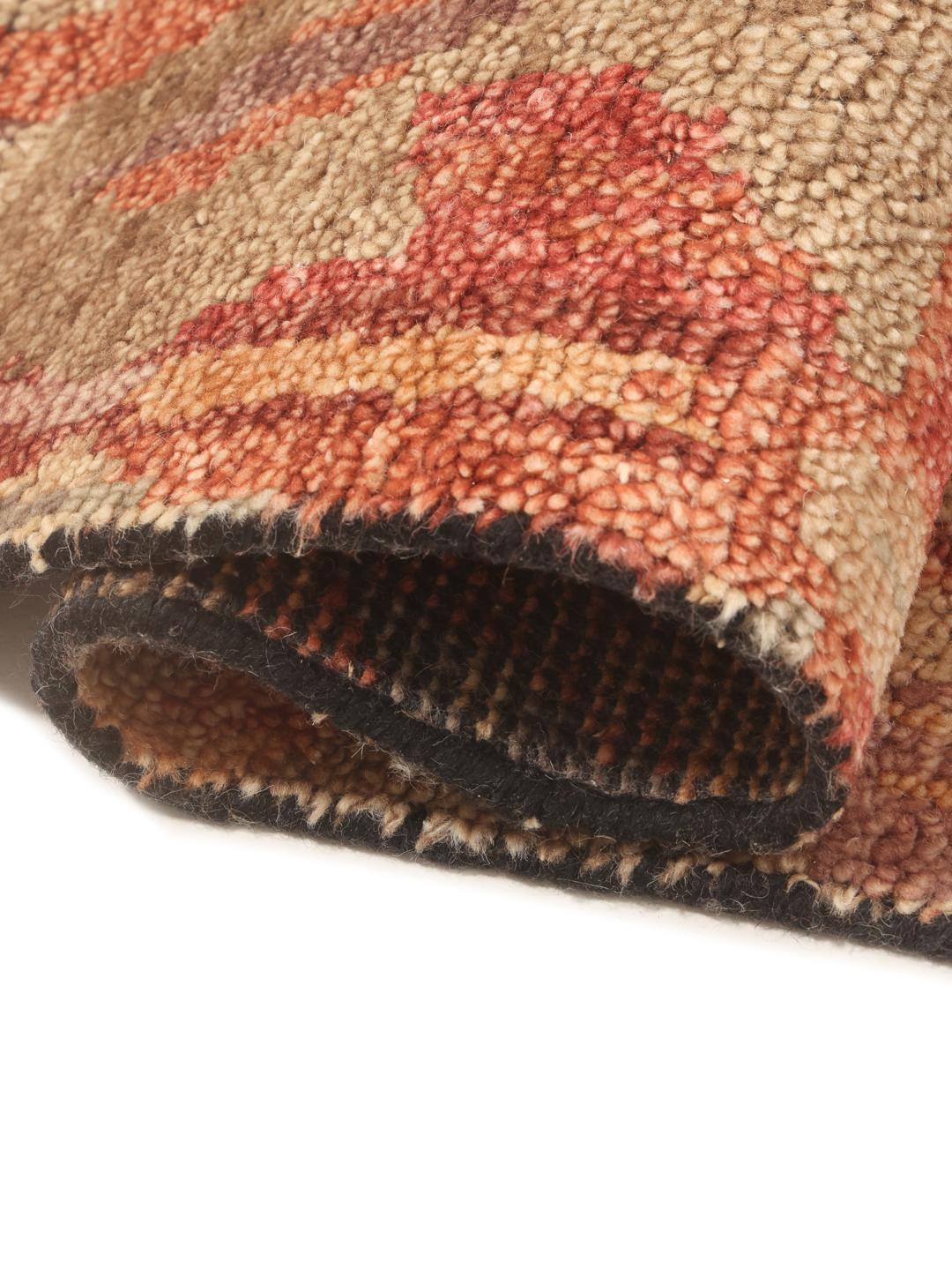
Visually, these rugs are often defined by their large-scale floral motifs, such as medallions or stylized palmettes that float across the field. Unlike more rigid, grid-like patterns found in other regions, the Usak tradition favours a more fluid and artistic approach. The use of soft, organic shapes and a sophisticated colour palette creates a sense of movement and grace that makes the rug appear less like a floor covering and more like a work of art.
Collecting a rug from this tradition is an investment in both heritage and human skill. Because these rugs are still produced using time-honoured, manual techniques, they carry a cultural weight that mass-produced items lack. Owning one is a way to bridge the gap between historical craft traditions and modern living, ensuring that these beautiful, intricate designs continue to be appreciated by new generations.