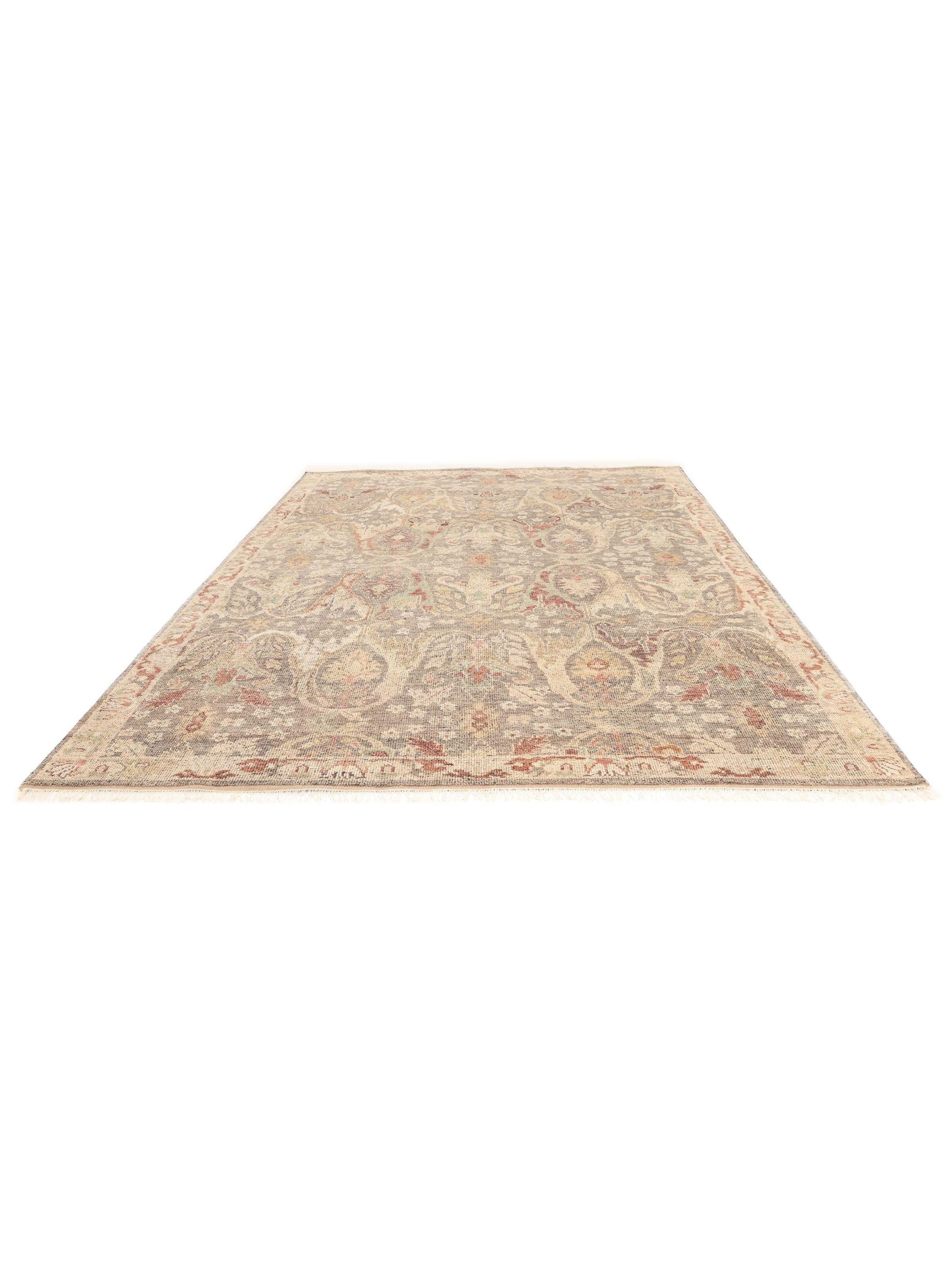
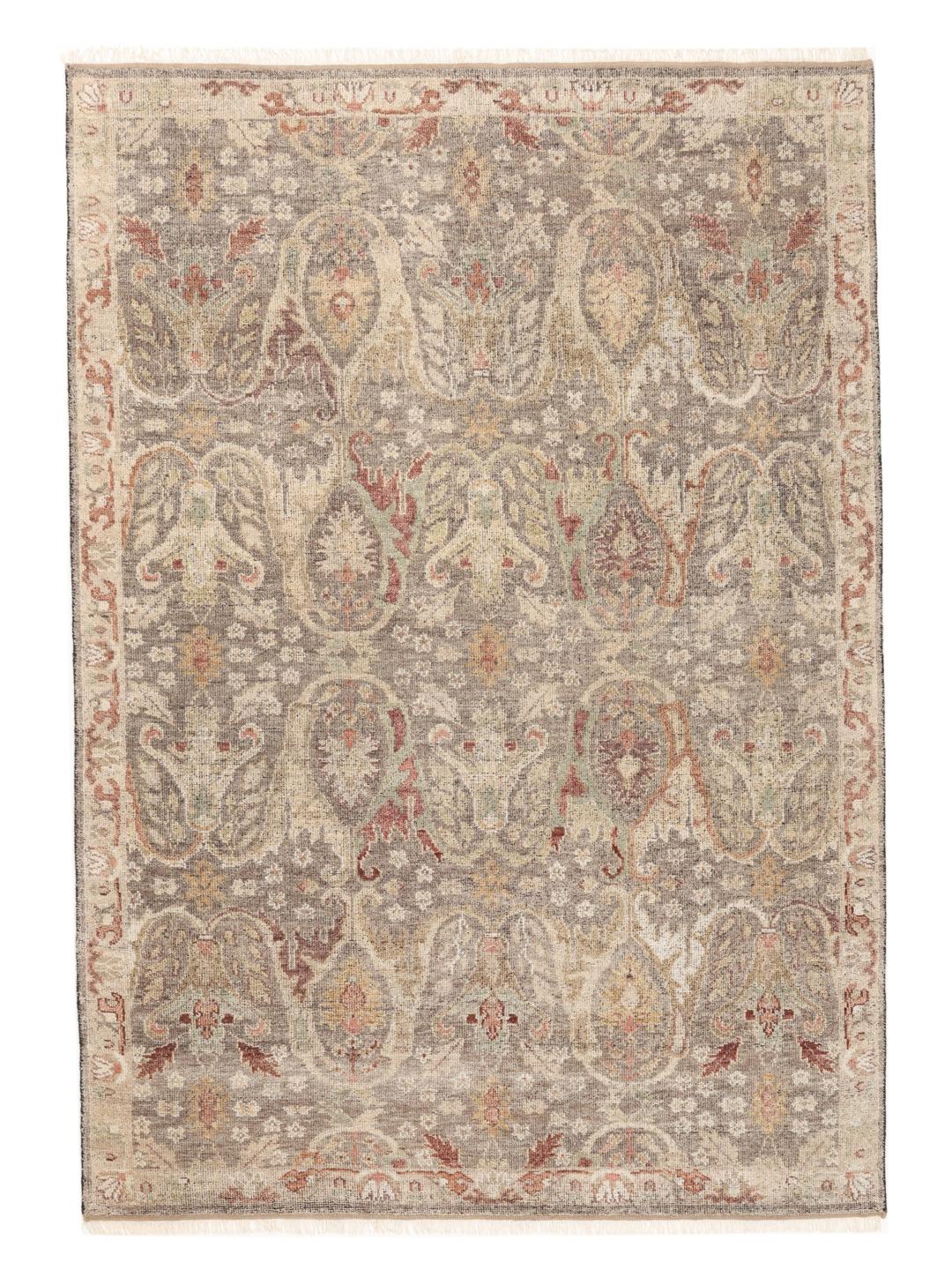
Usak rugs take their name from the historic city of Uşak in western Turkey, which has been a major centre for rug production since the 15th century. Originally renowned for producing large-scale carpets for palaces and mosques, the style became famous for its bold, oversized floral motifs and elegant colour palettes. Over time, the tradition migrated and evolved, with artisans in India now keeping this classic aesthetic alive through modern interpretations.
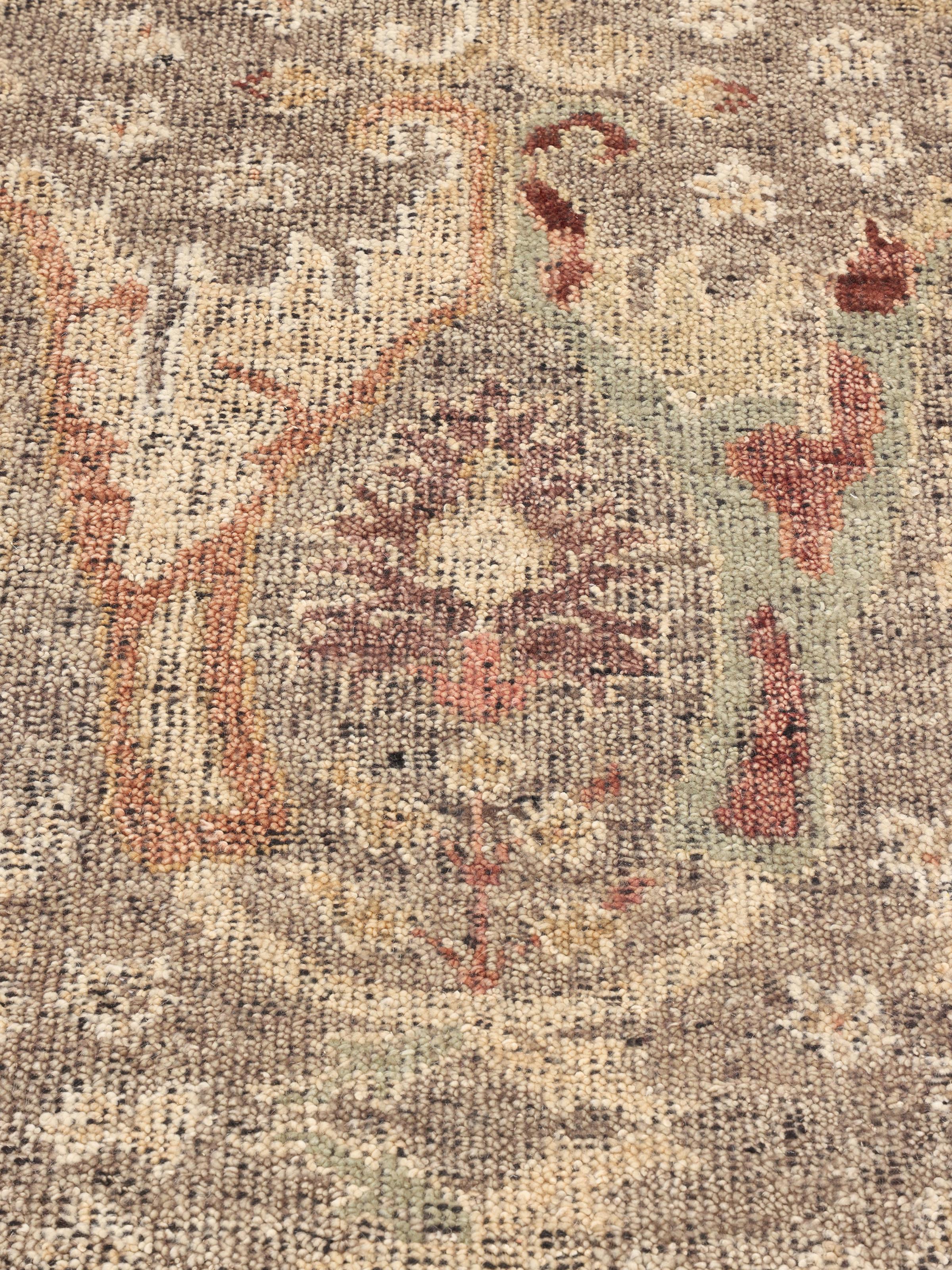
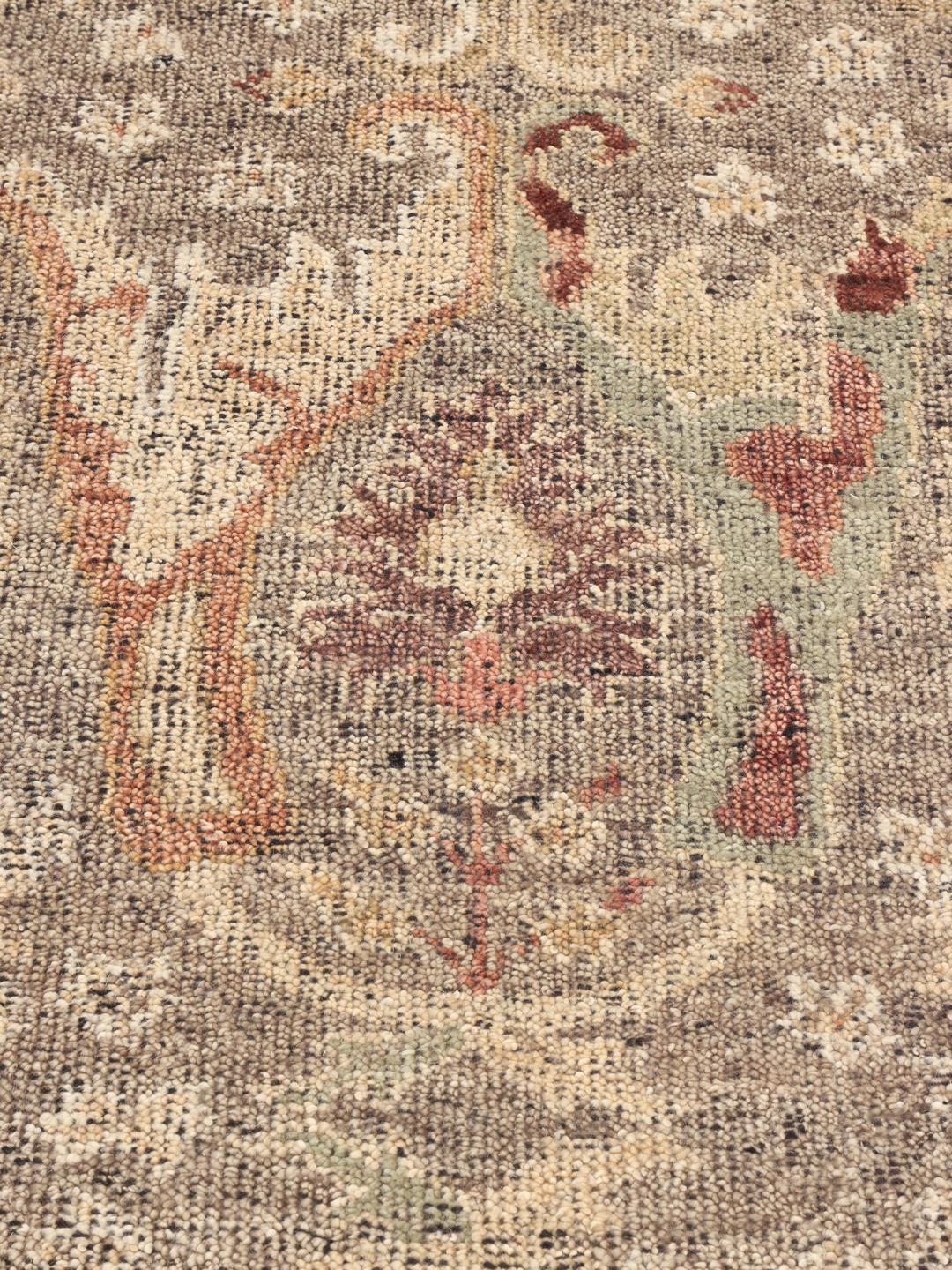
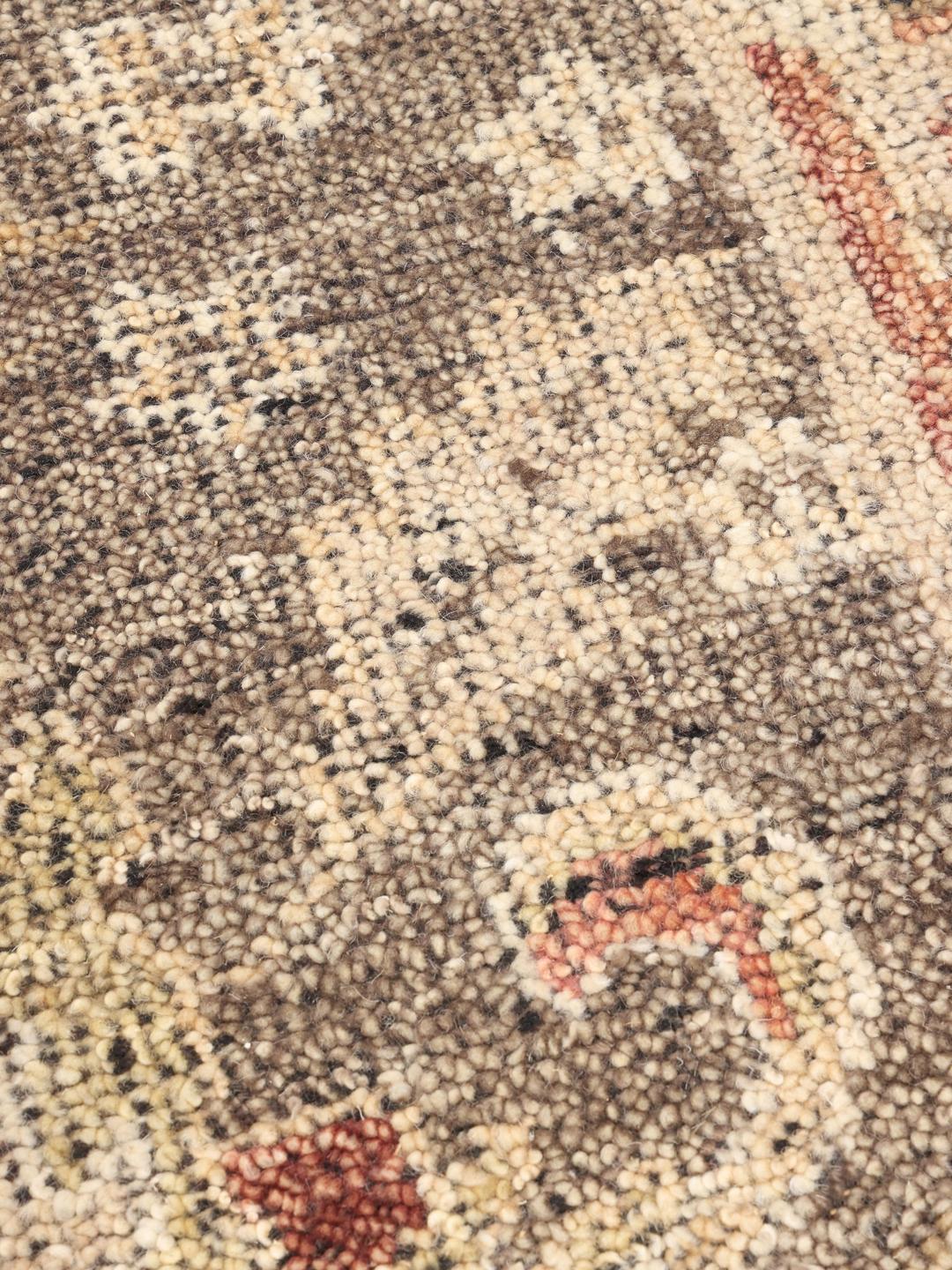
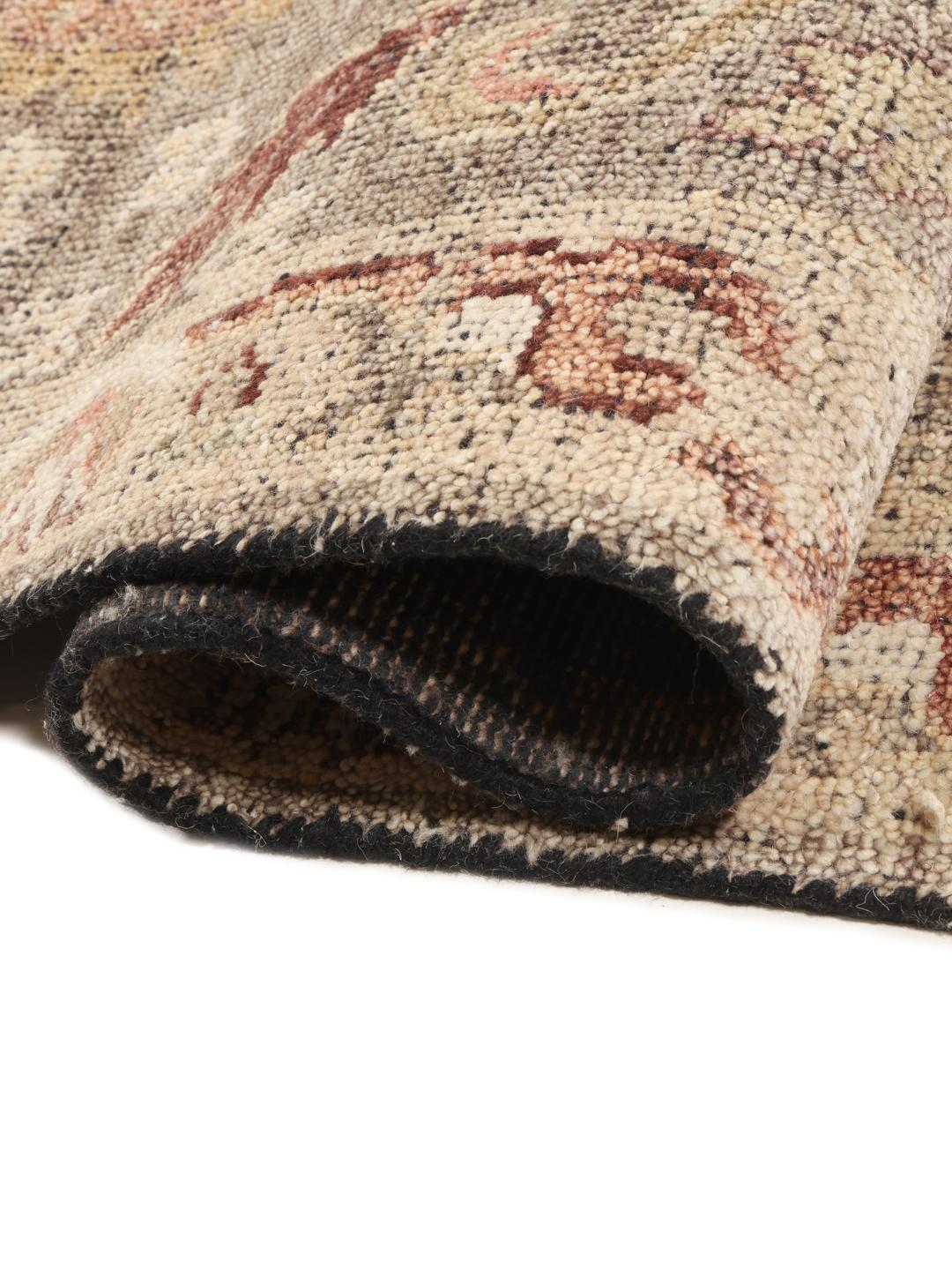
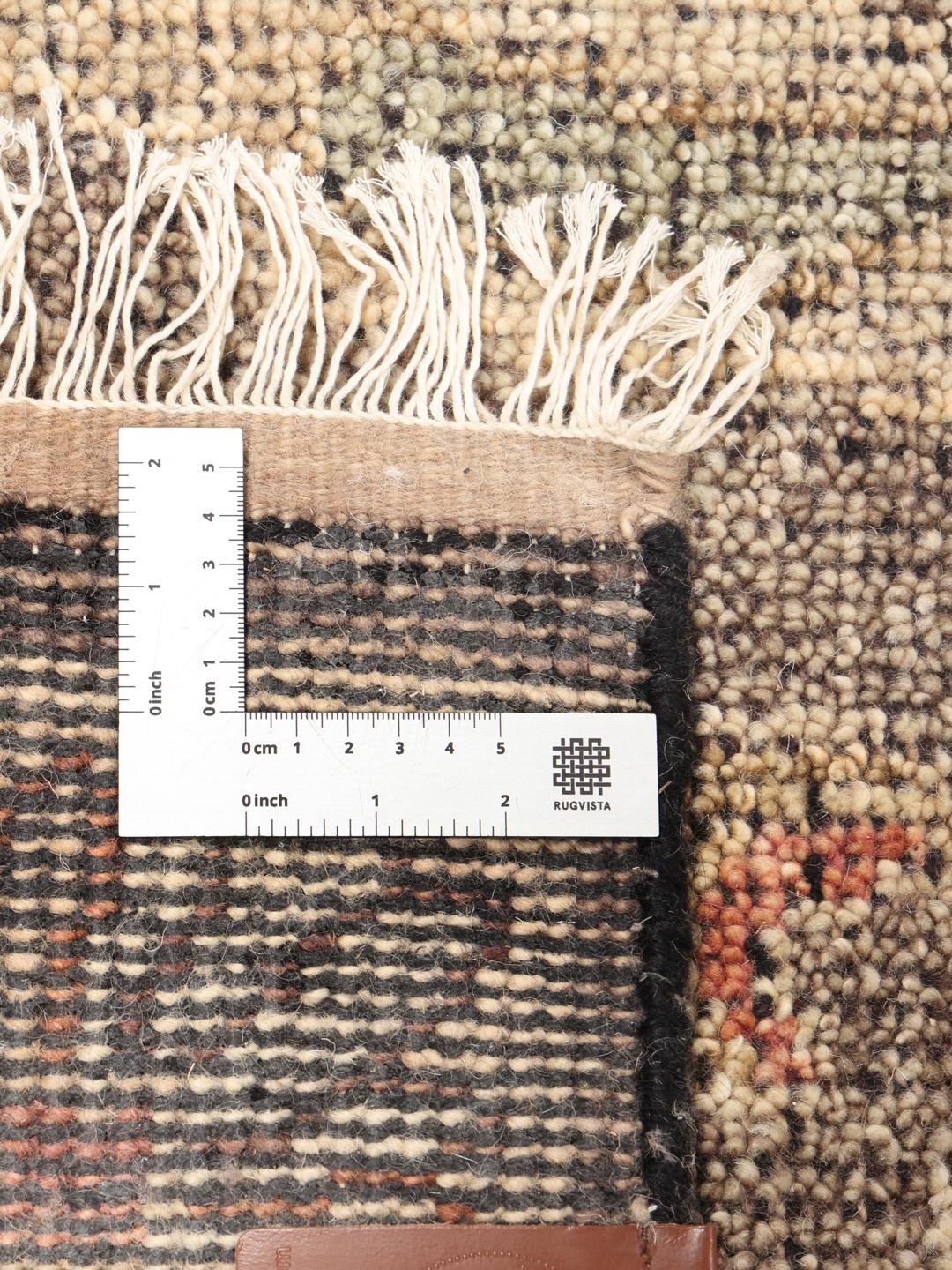
The craftsmanship behind these rugs often relies on a traditional knotting technique that creates a dense and robust pile. This construction is vital for the longevity of the rug, as it allows the material to withstand daily wear while maintaining its plush, inviting texture. The way the pile is secured to the foundation is what gives these pieces their characteristic weight and durability, making them reliable staples in any well-loved home.
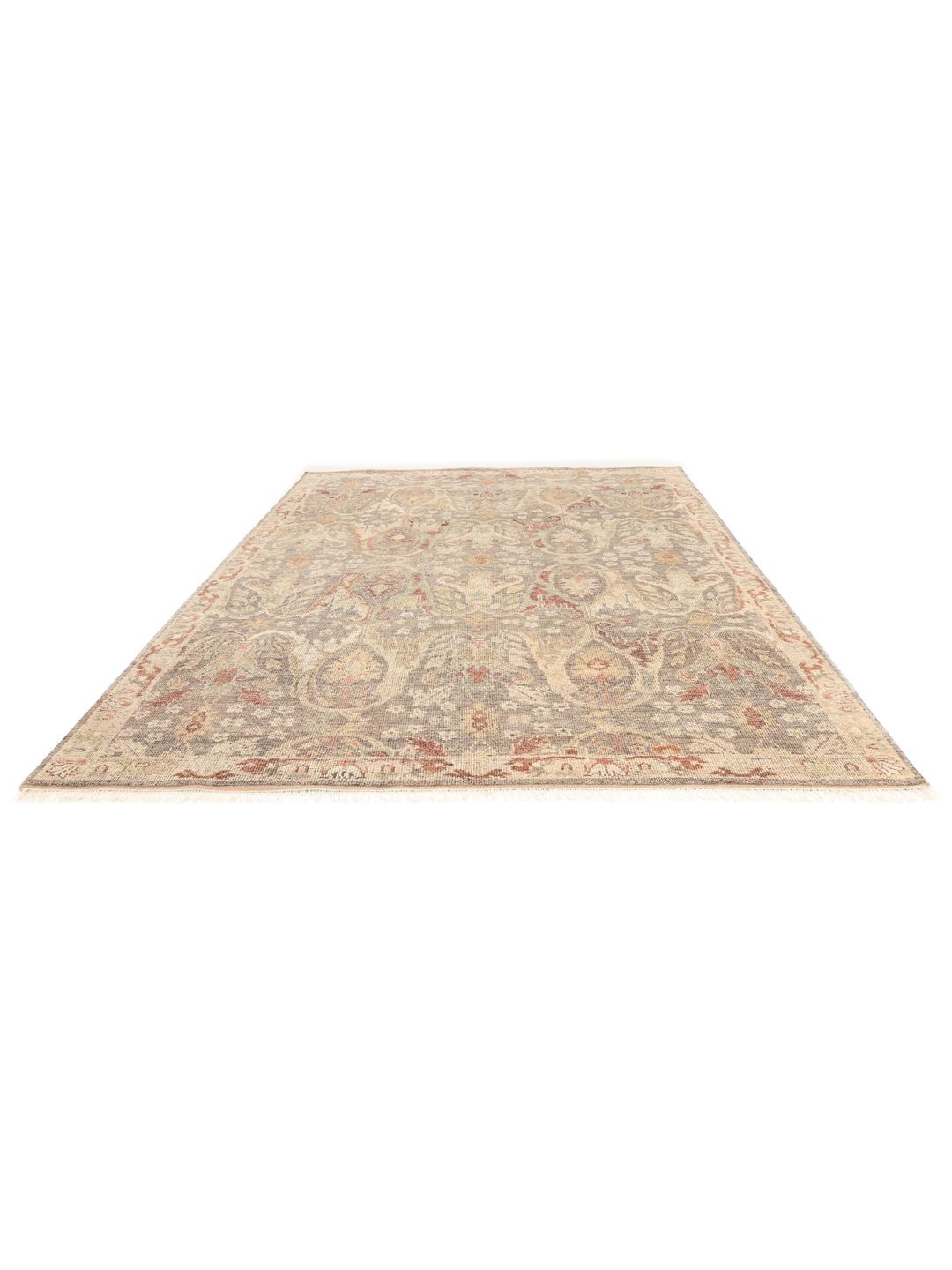
Visually, the Usak style is celebrated for its harmonious blend of large-scale medallions and flowing floral patterns. Unlike more rigid geometric designs, these rugs often feature organic, sweeping shapes that create a sense of calm and movement. The colour palettes are typically sophisticated and understated, often utilising soft, earthy tones that allow the intricate motifs to take centre stage without overwhelming the room.
Collecting a rug from this tradition is about more than just floor decor; it is about connecting with a heritage of artistic skill that has been refined over centuries. These pieces are valued for their ability to balance grand, historic design with a warmth that fits modern living. Owning one is an opportunity to house a piece of cultural history that celebrates the patience and talent of the individuals who brought it into being.