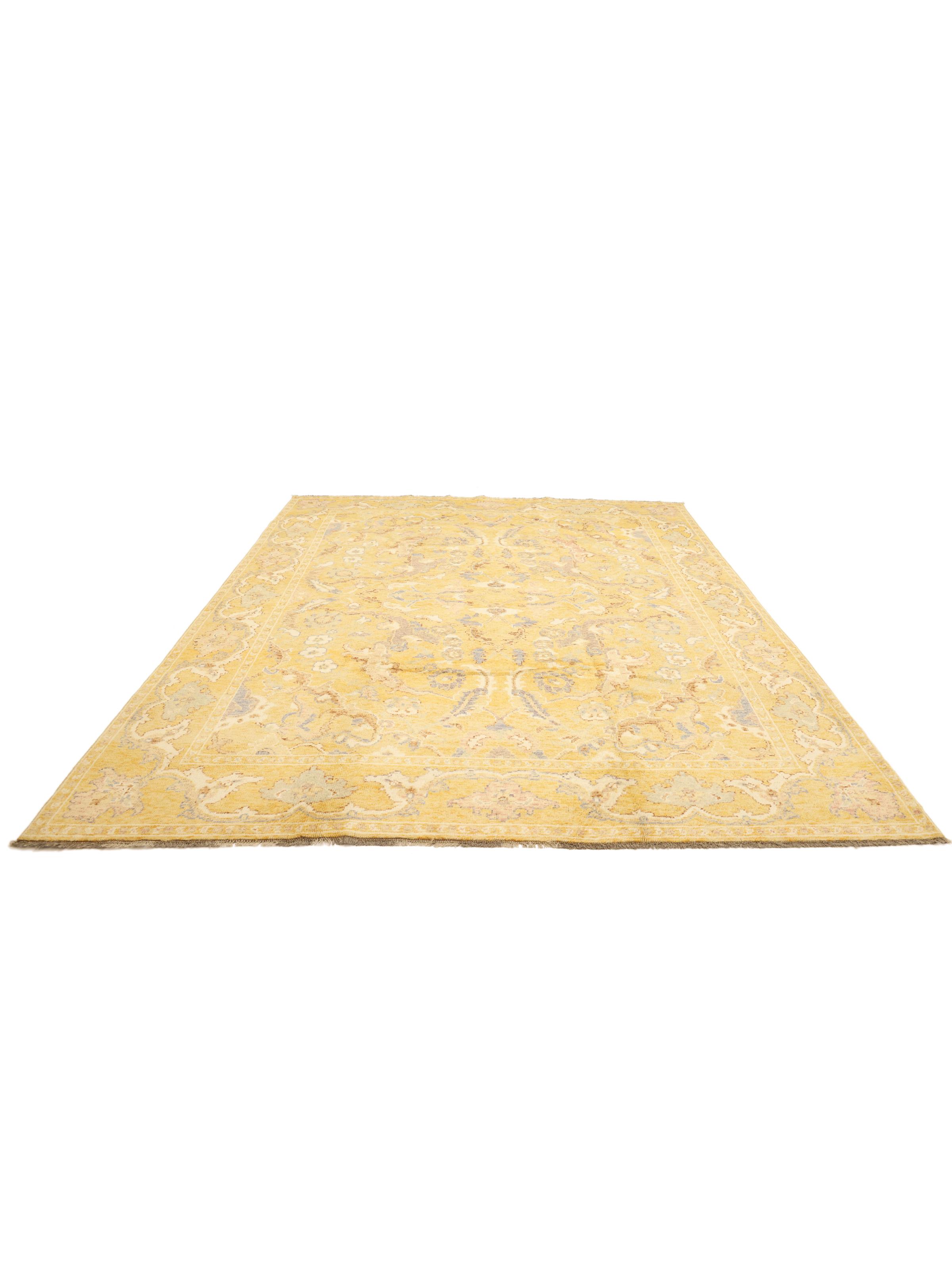
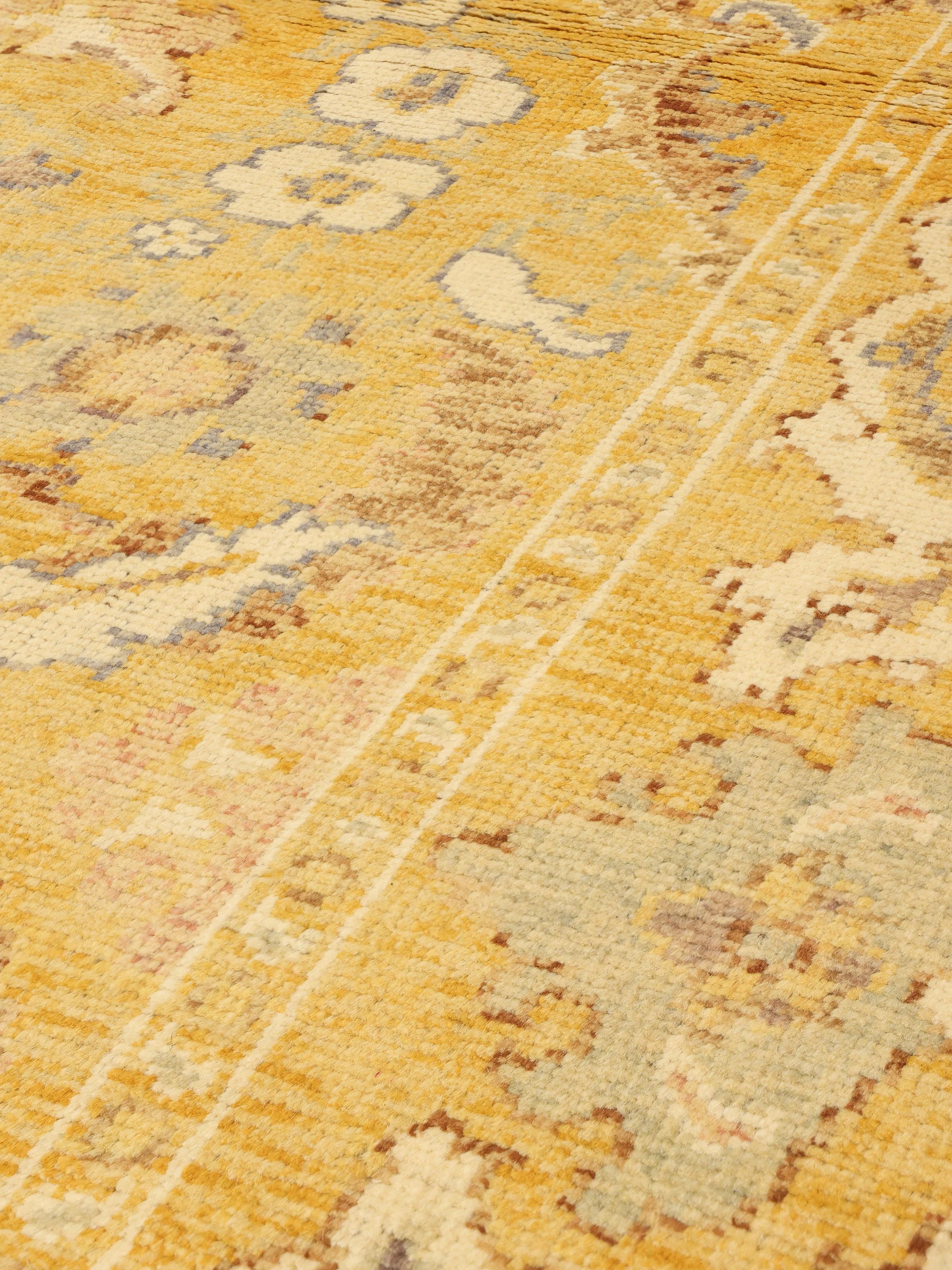
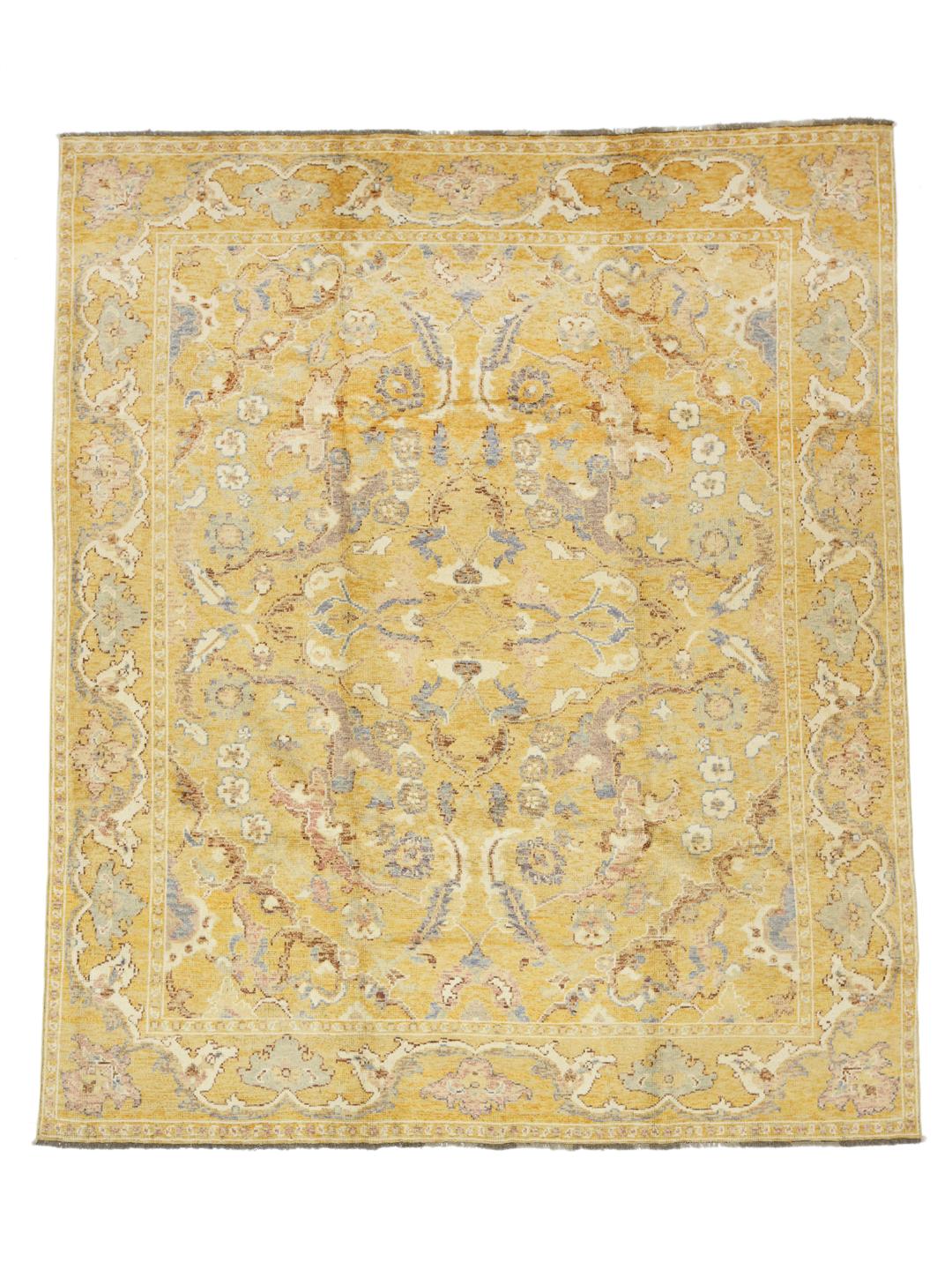
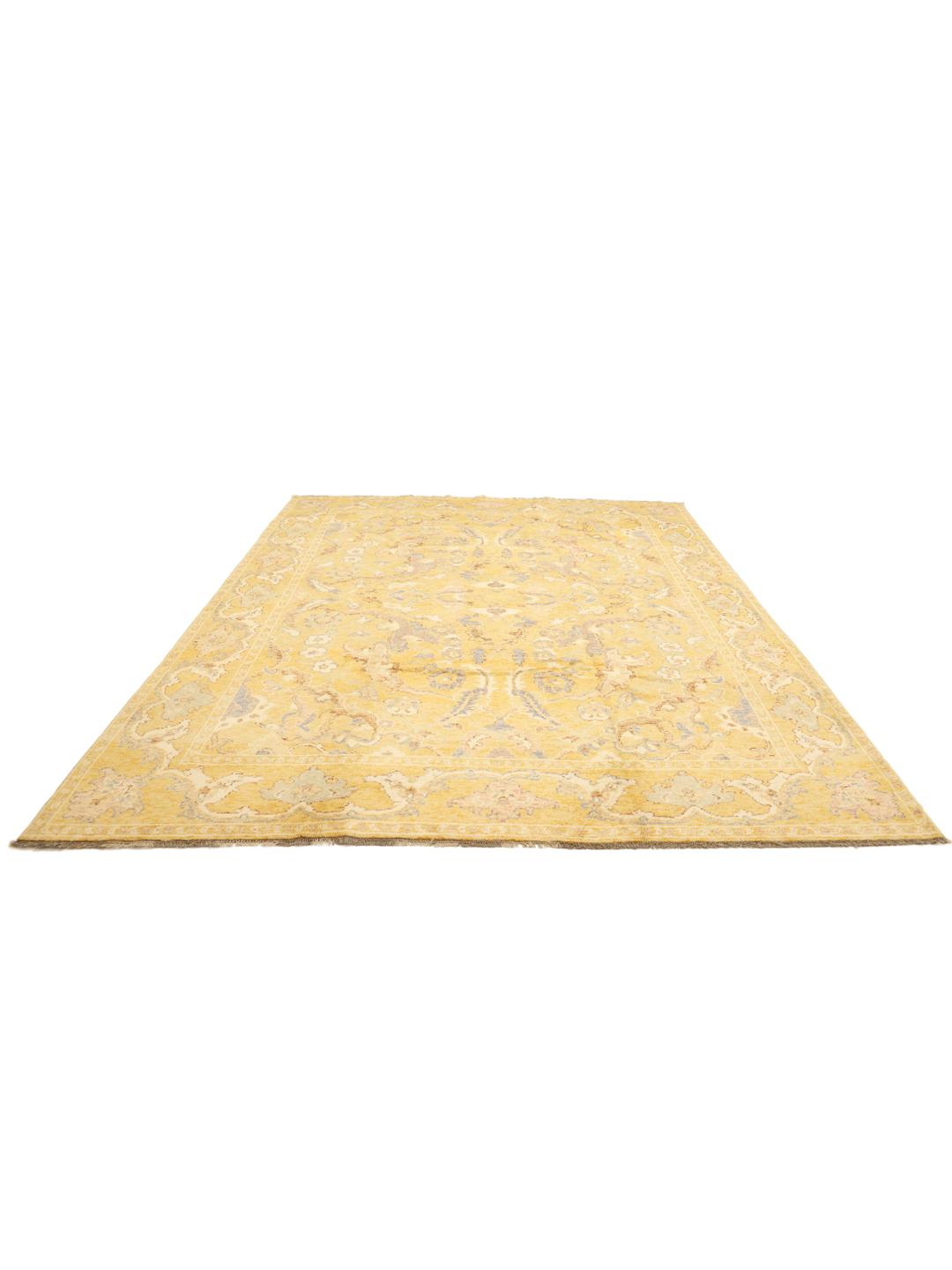
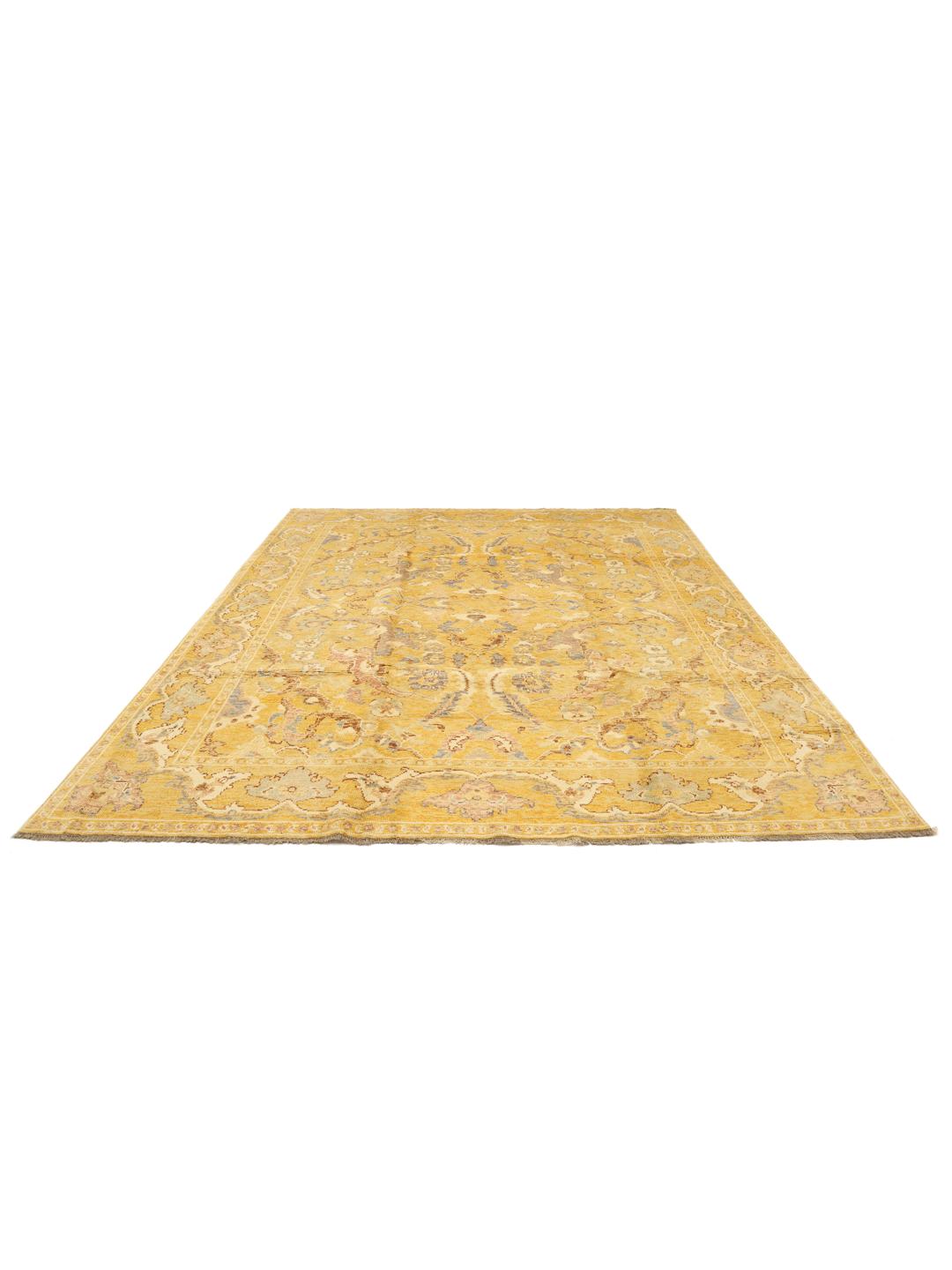
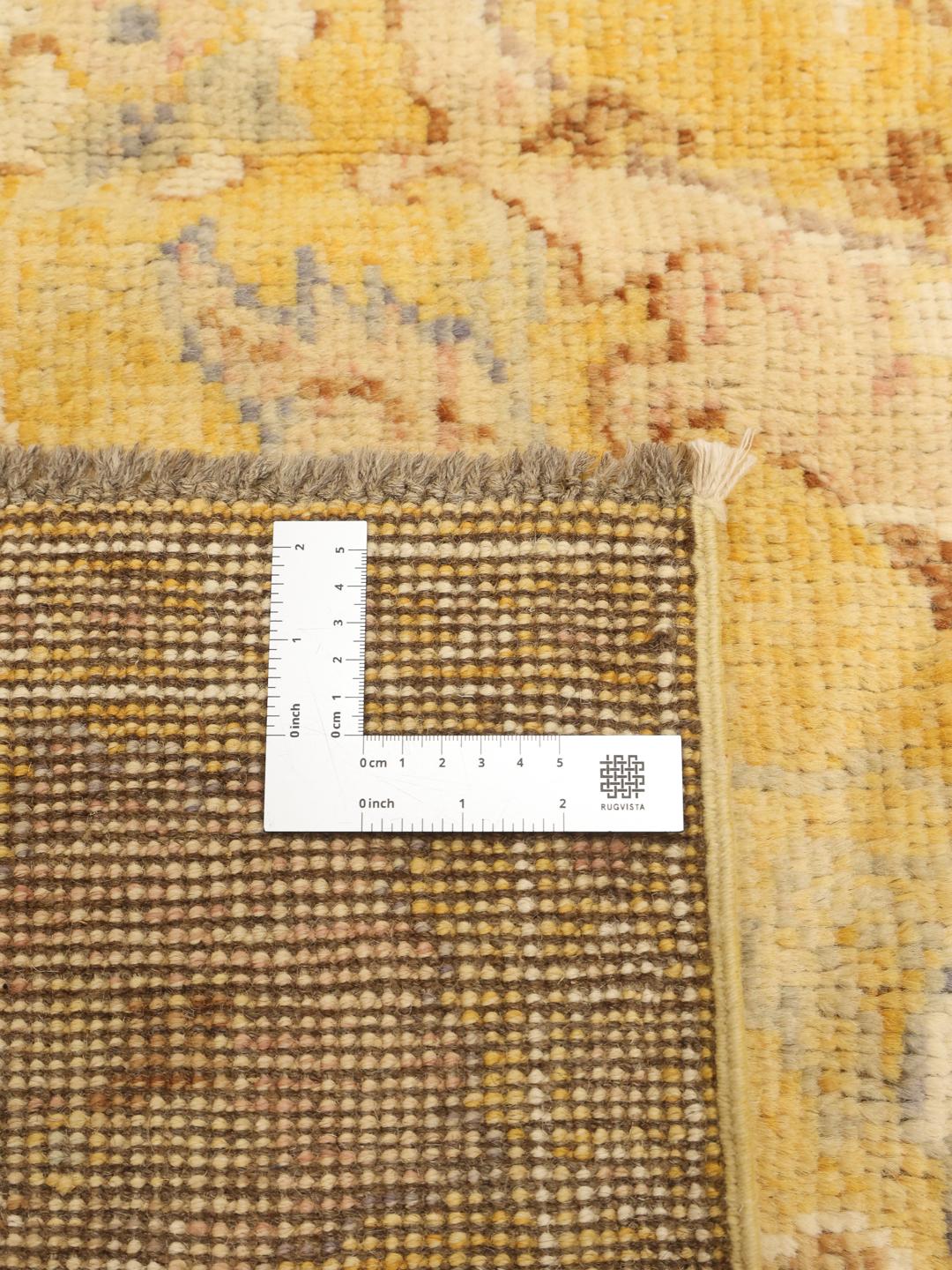
The Usak rug tradition traces its roots to the historic town of Uşak in Western Anatolia, which became a major centre for carpet production during the Ottoman Empire. While originally centred in the Middle East, the style has evolved and travelled across borders, with contemporary masters in Afghanistan now reviving these classic designs with local wool and traditional techniques.
The term Usak refers to a specific aesthetic characterised by large-scale, often simplified floral patterns and a distinctive, harmonious colour palette. These rugs are highly regarded for their ability to bridge the gap between traditional formal motifs and a more relaxed, open aesthetic, making them as popular today as they were centuries ago.
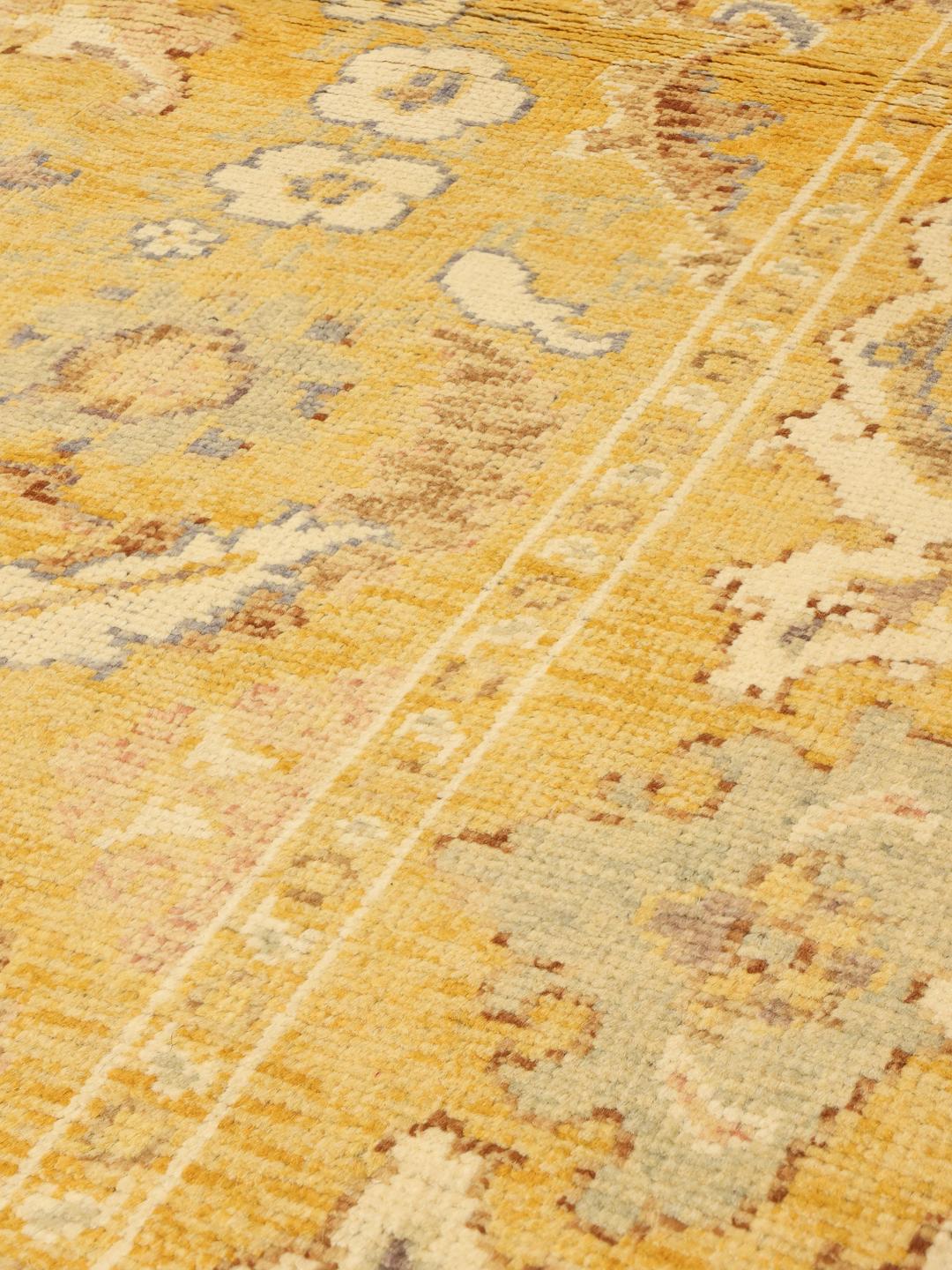
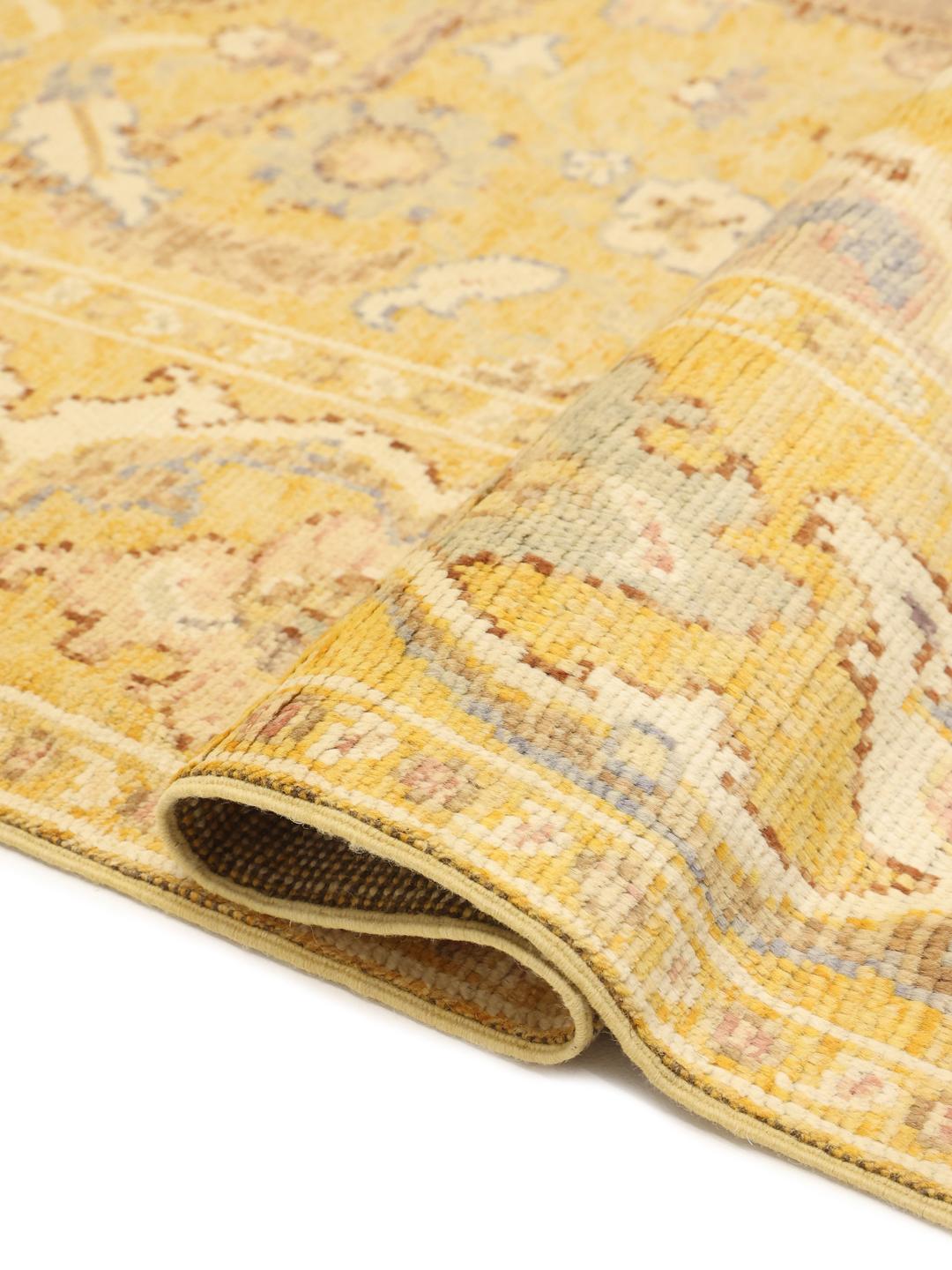
Designers often recognise Usak rugs by their sweeping, curvilinear designs, which frequently include palmettes, vines, and leaves. In this particular piece, the floral motifs are rendered with a grace that feels both timeless and fresh. The use of natural dyes often results in the soft, glowing variations of colour seen in the golden field, which deepen and gain character with age.
Collectors value Usak rugs for their blend of historical prestige and decorative versatility. Unlike the more rigid, geometric designs found in other traditions, these rugs provide a sense of fluid movement and warmth. Owning one is an investment in a storied craft tradition, representing a commitment to preserving the artistry of hand-knotted textiles.