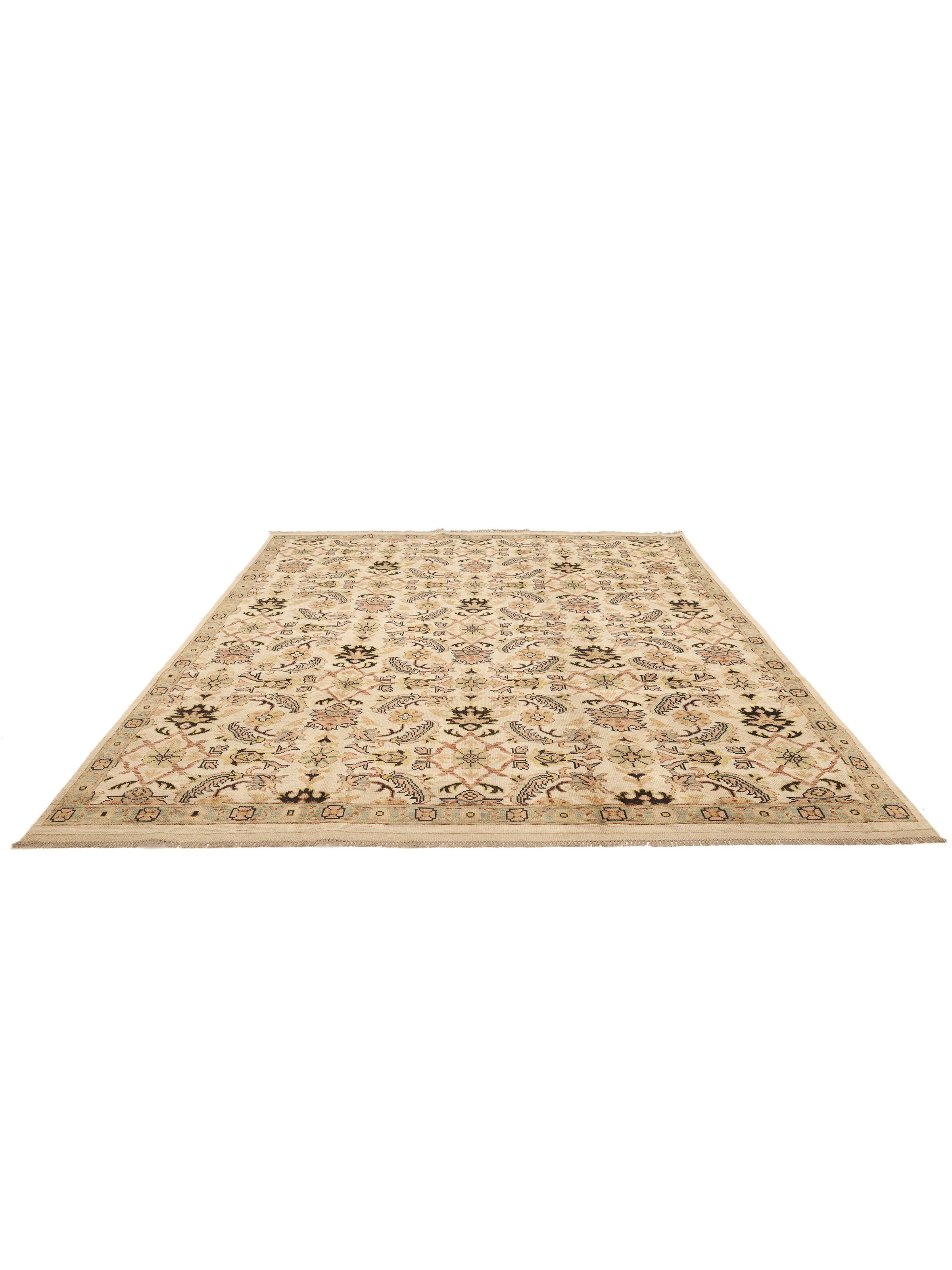
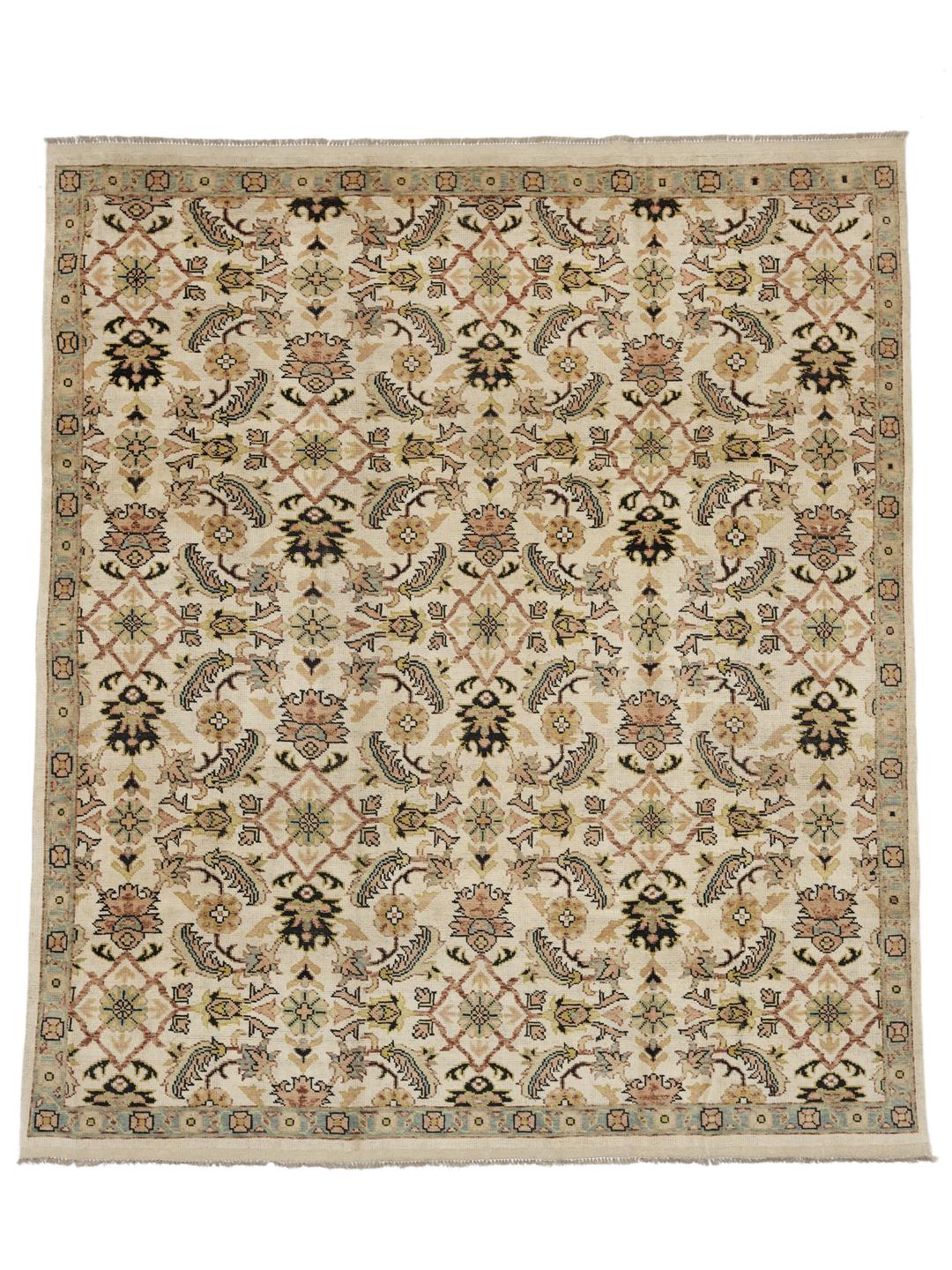
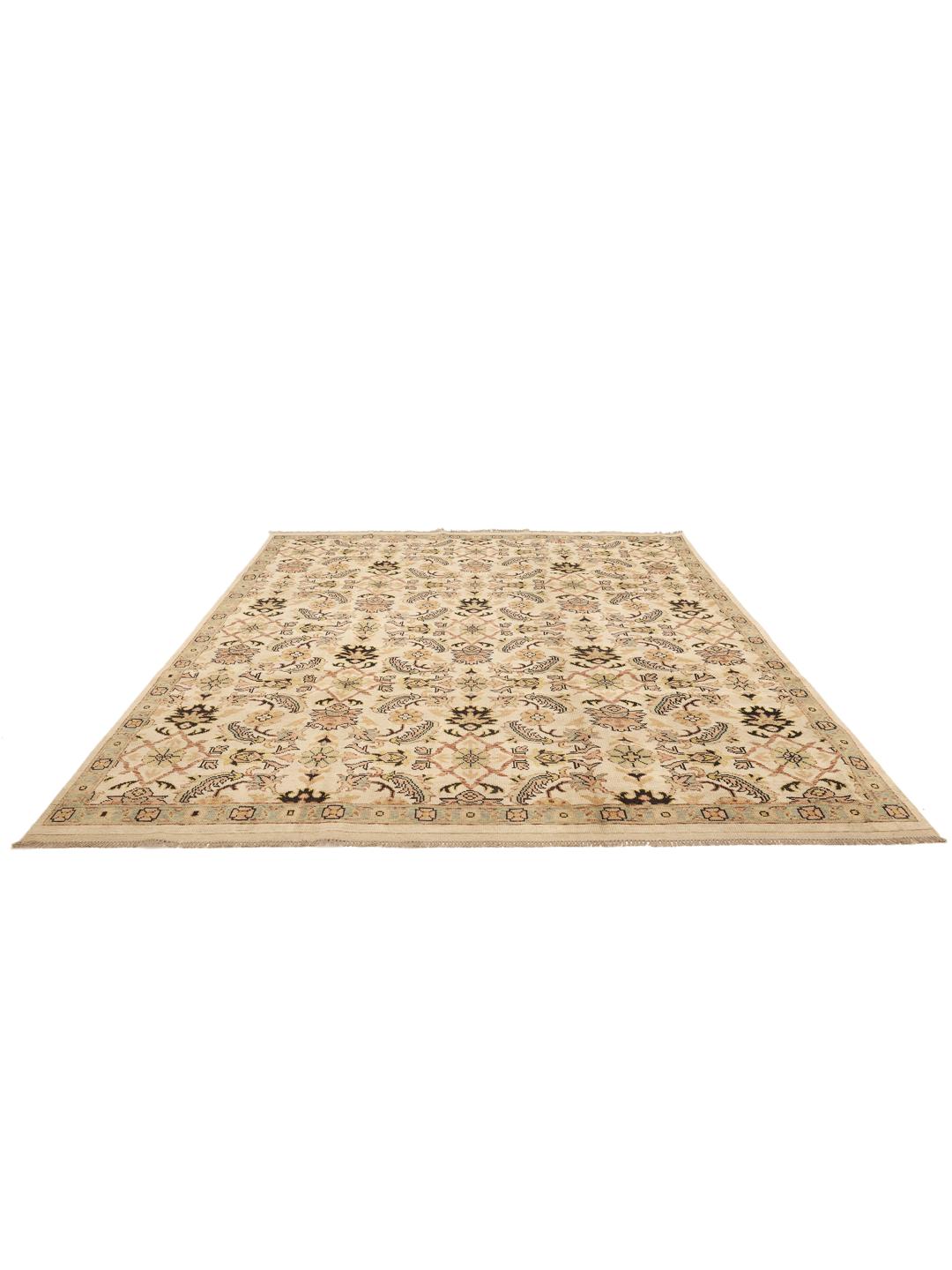
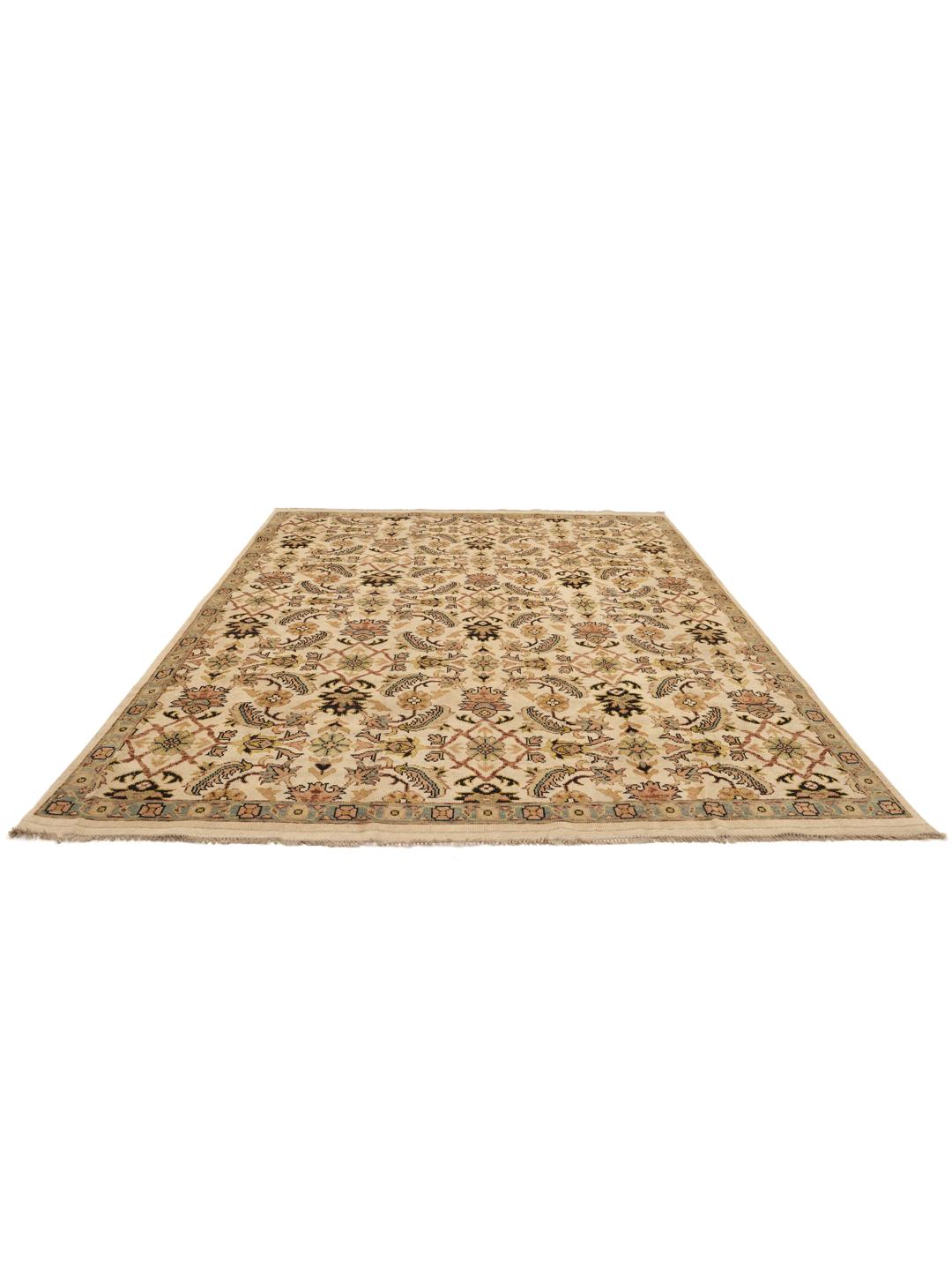
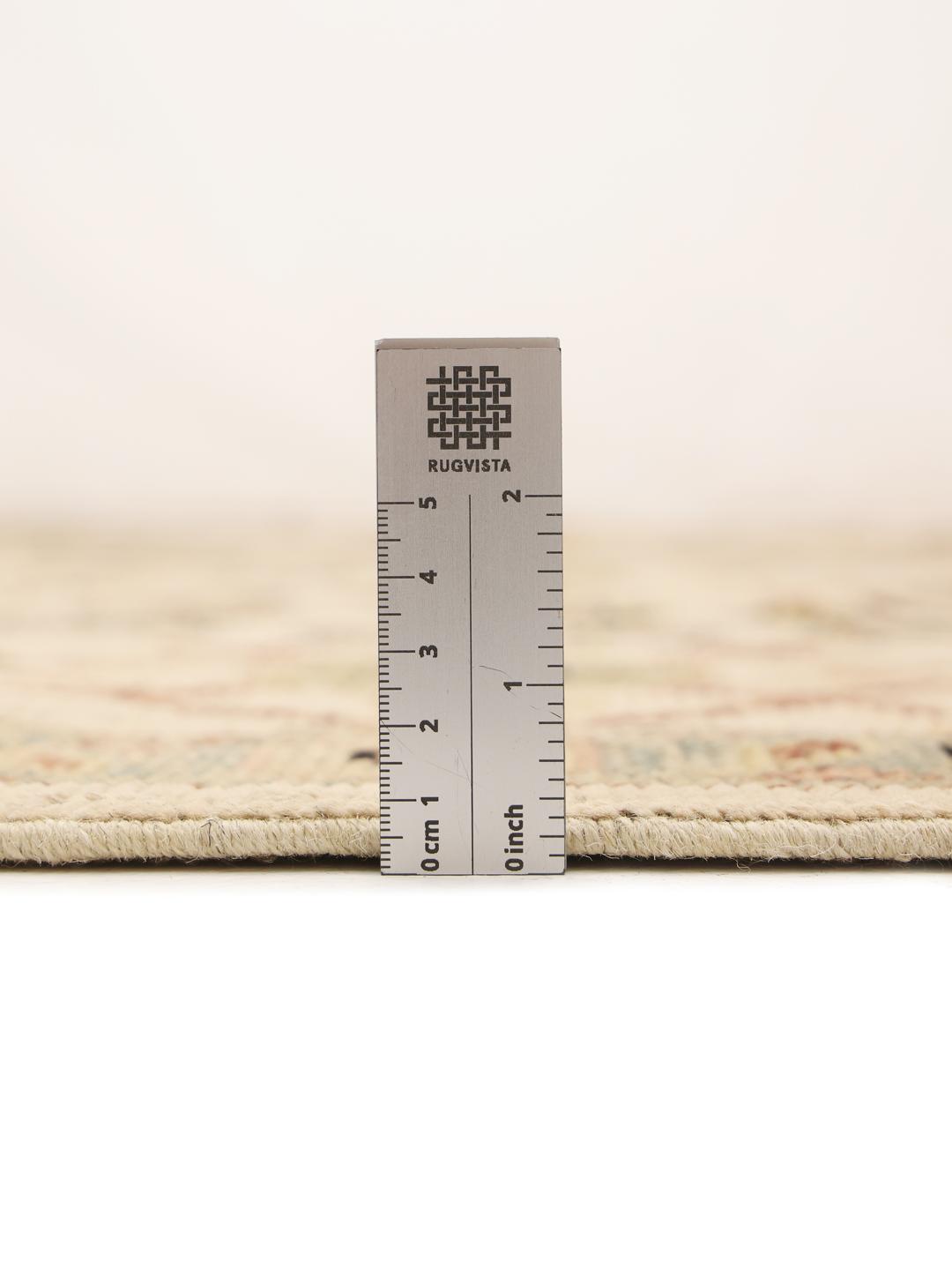
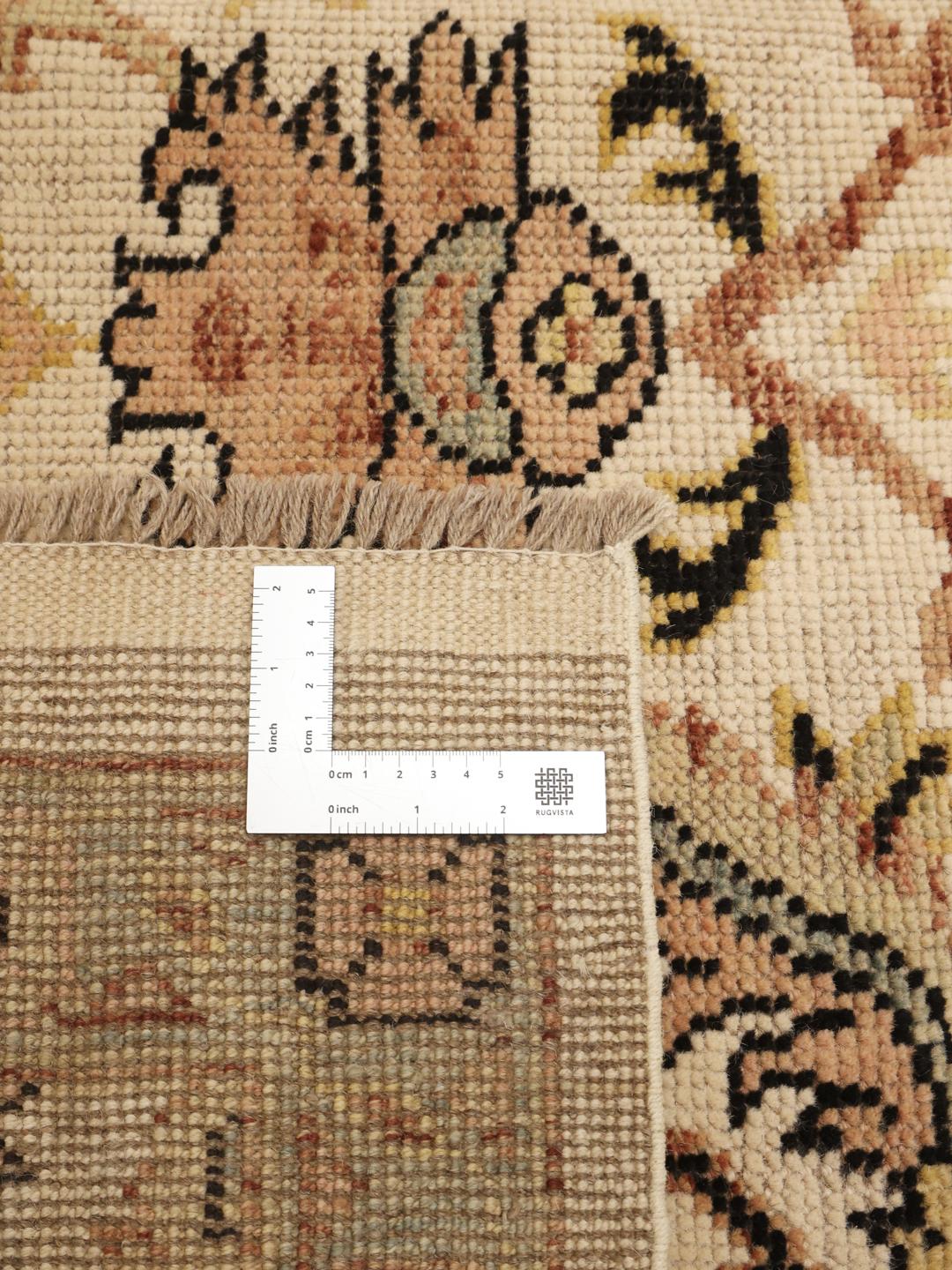
Usak rugs, or Oushak rugs, trace their historical origins to the town of Usak in western Turkey, which was a major centre for carpet production as early as the 15th century. Over time, the design traditions associated with these rugs evolved and spread, eventually influencing weaving communities across the Middle East, including those in Afghanistan where this particular piece was crafted.
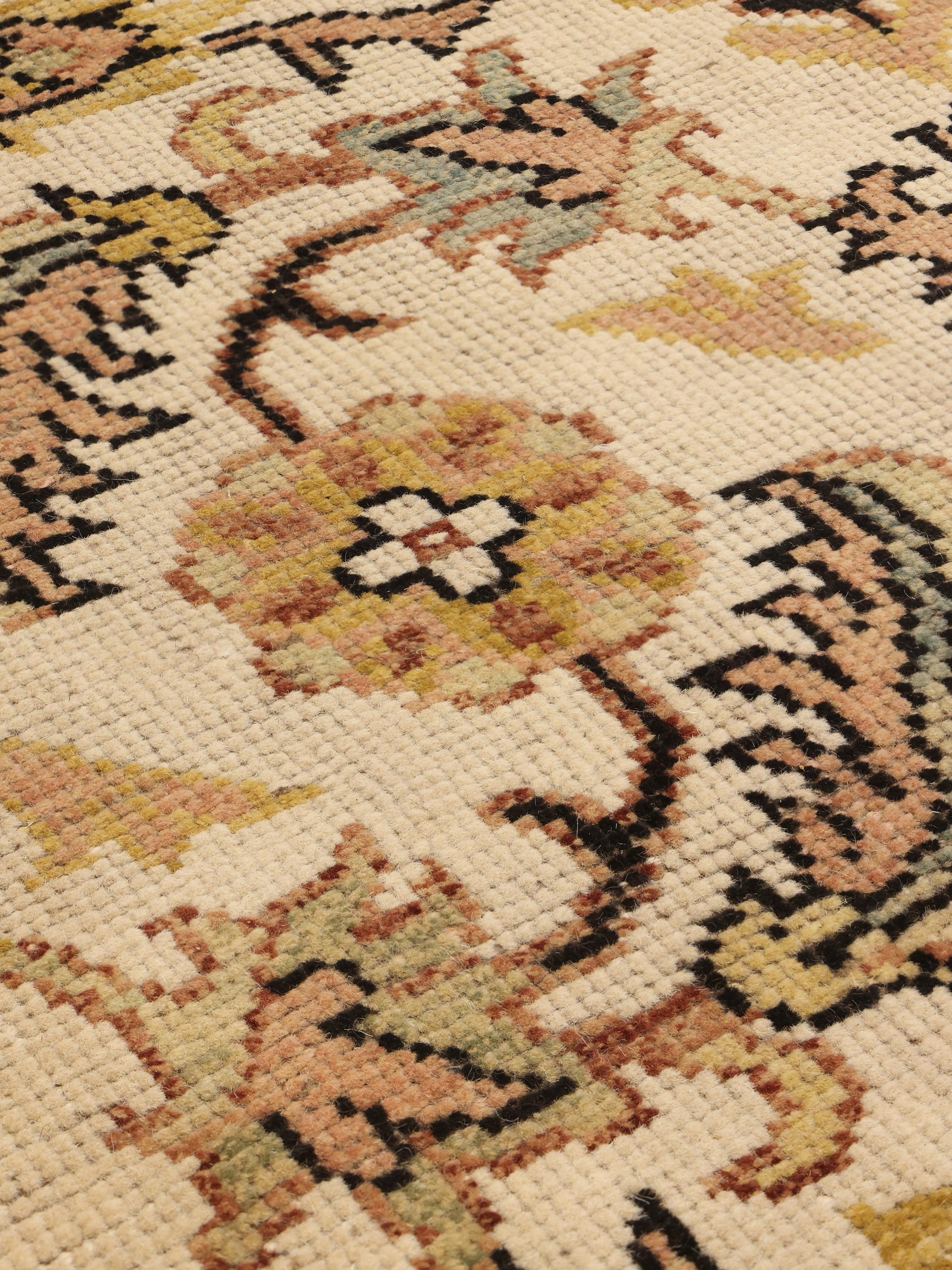
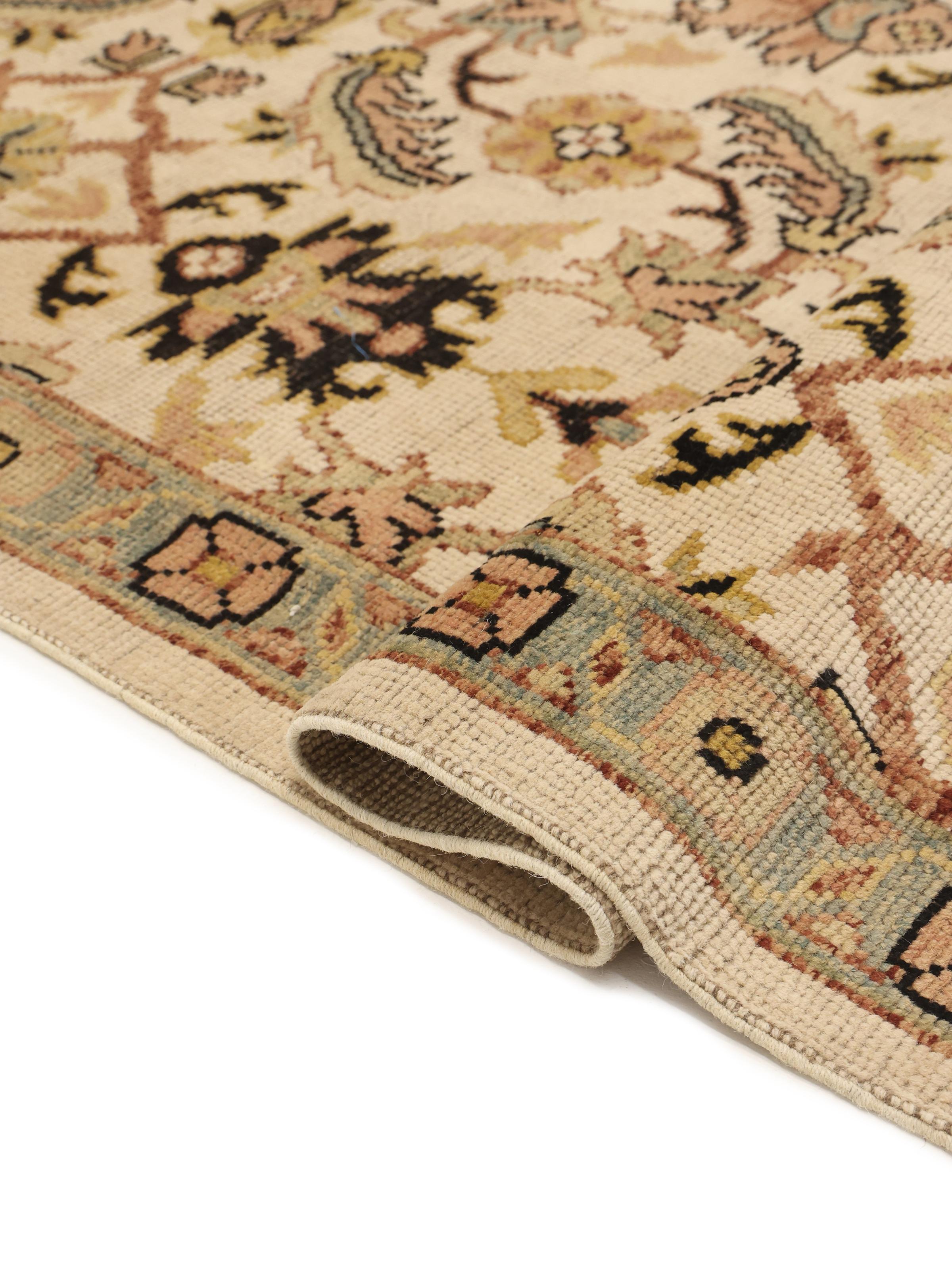
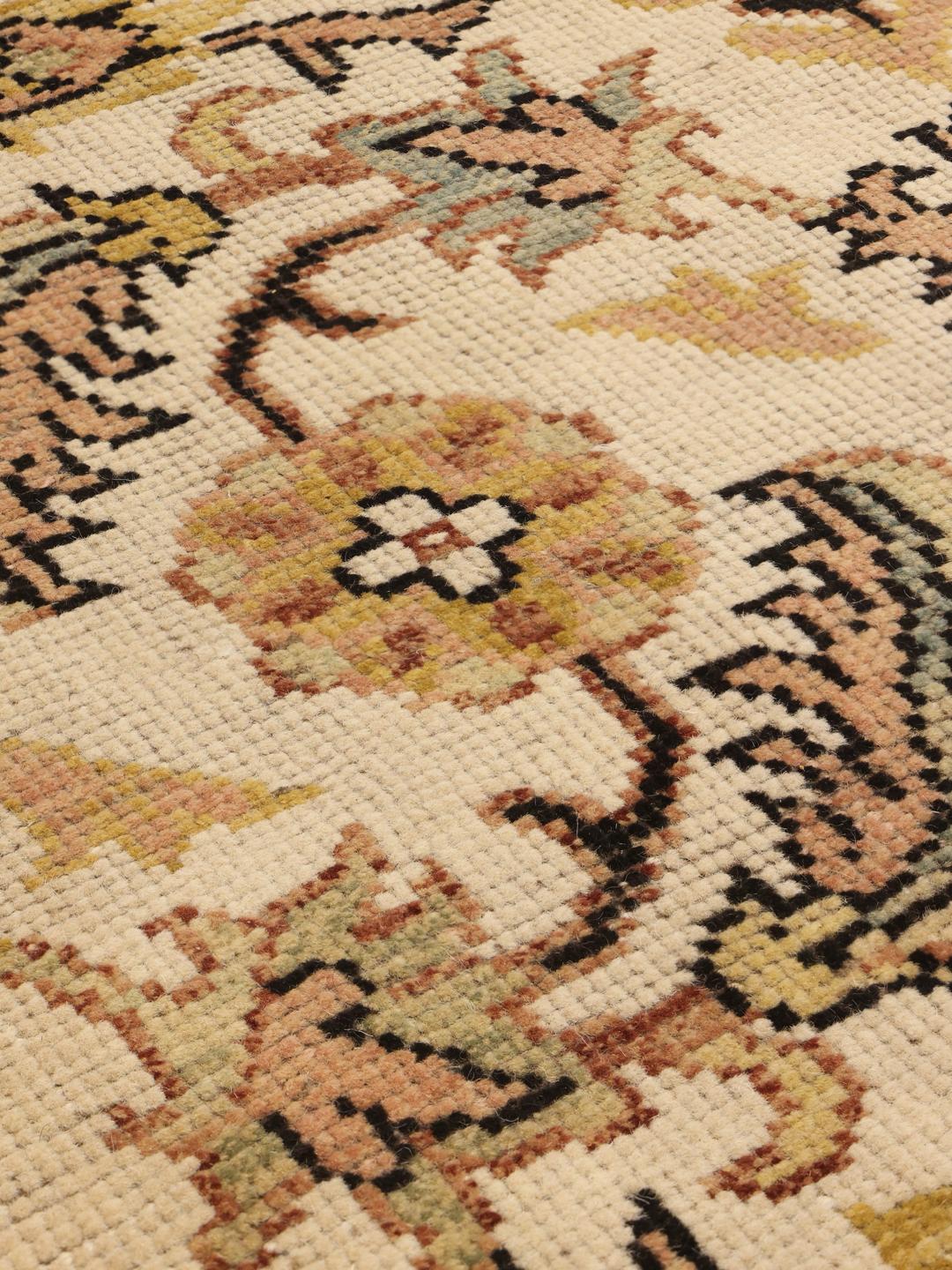
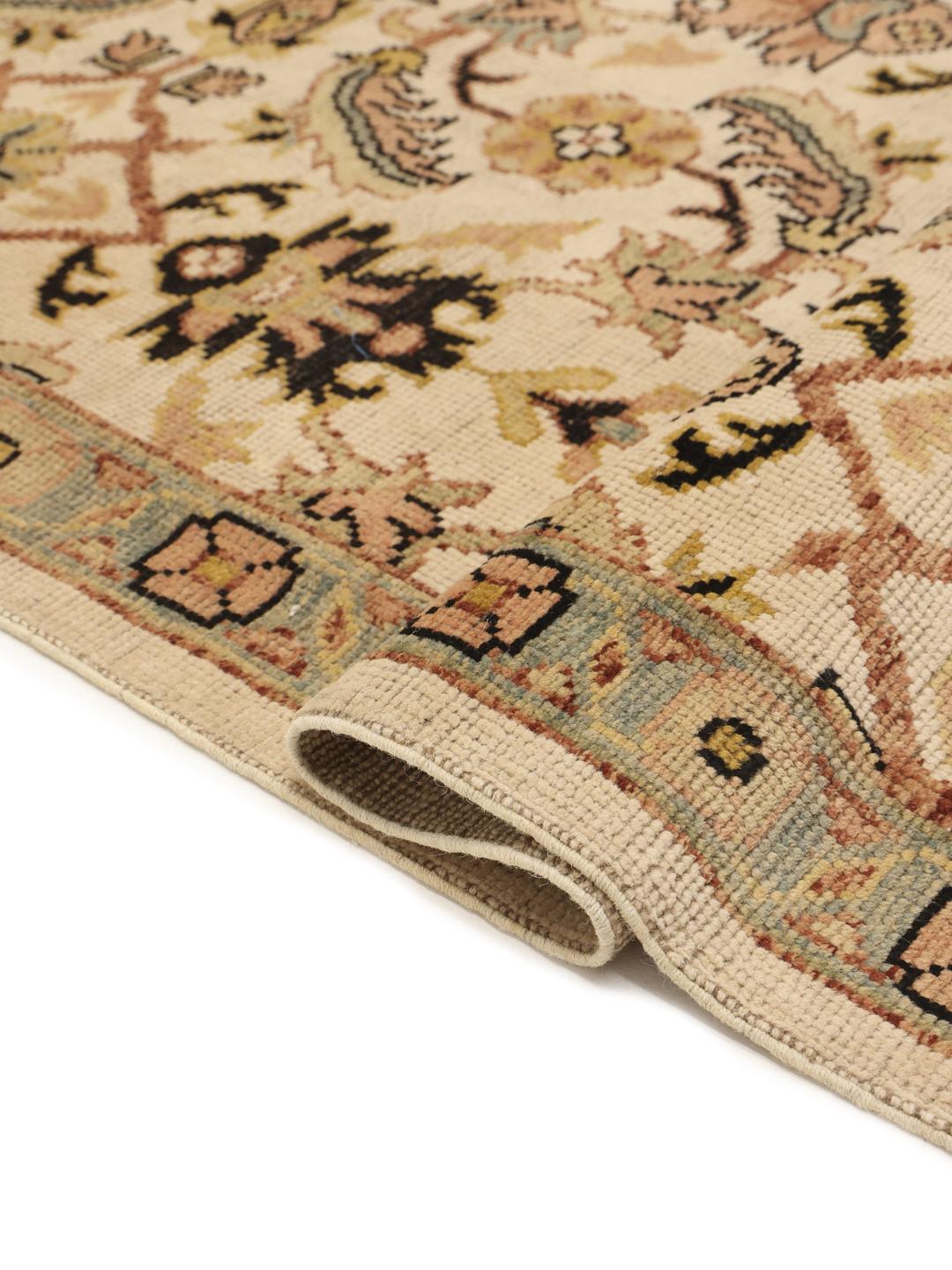
The term Usak refers to a specific aesthetic tradition rather than a single technical style. Historically, these rugs are celebrated for their large-scale, often floral, motifs and a certain looseness in their knotting, which gives them a soft, plush feel. The evolution of this style has allowed for a beautiful blend of traditional geometric foundations with more fluid, organic designs.
A signature element of this tradition is the use of a harmonious, often muted colour palette. Unlike more vibrant rug styles, the Usak tradition favours soft, earthy tones that allow the intricate patterns to emerge subtly. This design language creates a balanced look that is highly prized for its ability to integrate seamlessly into diverse home environments.
Collectors value Usak rugs for their distinctive blend of cultural heritage and visual elegance. Owning a piece from this tradition is an investment in human skill and historical continuity. These rugs are not merely floor coverings but are regarded as lasting components of a home, celebrated for their ability to age gracefully and maintain their character over time.