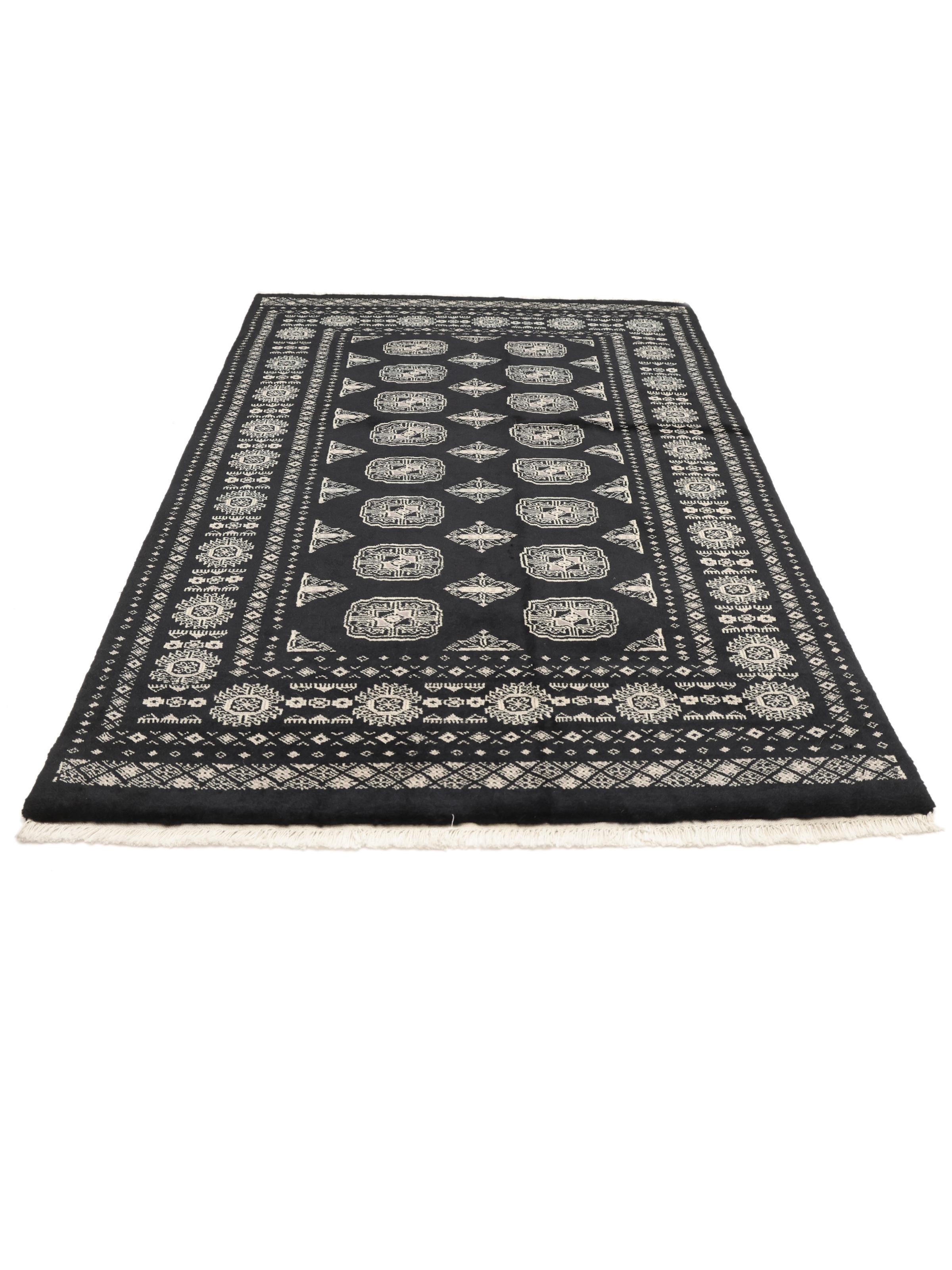
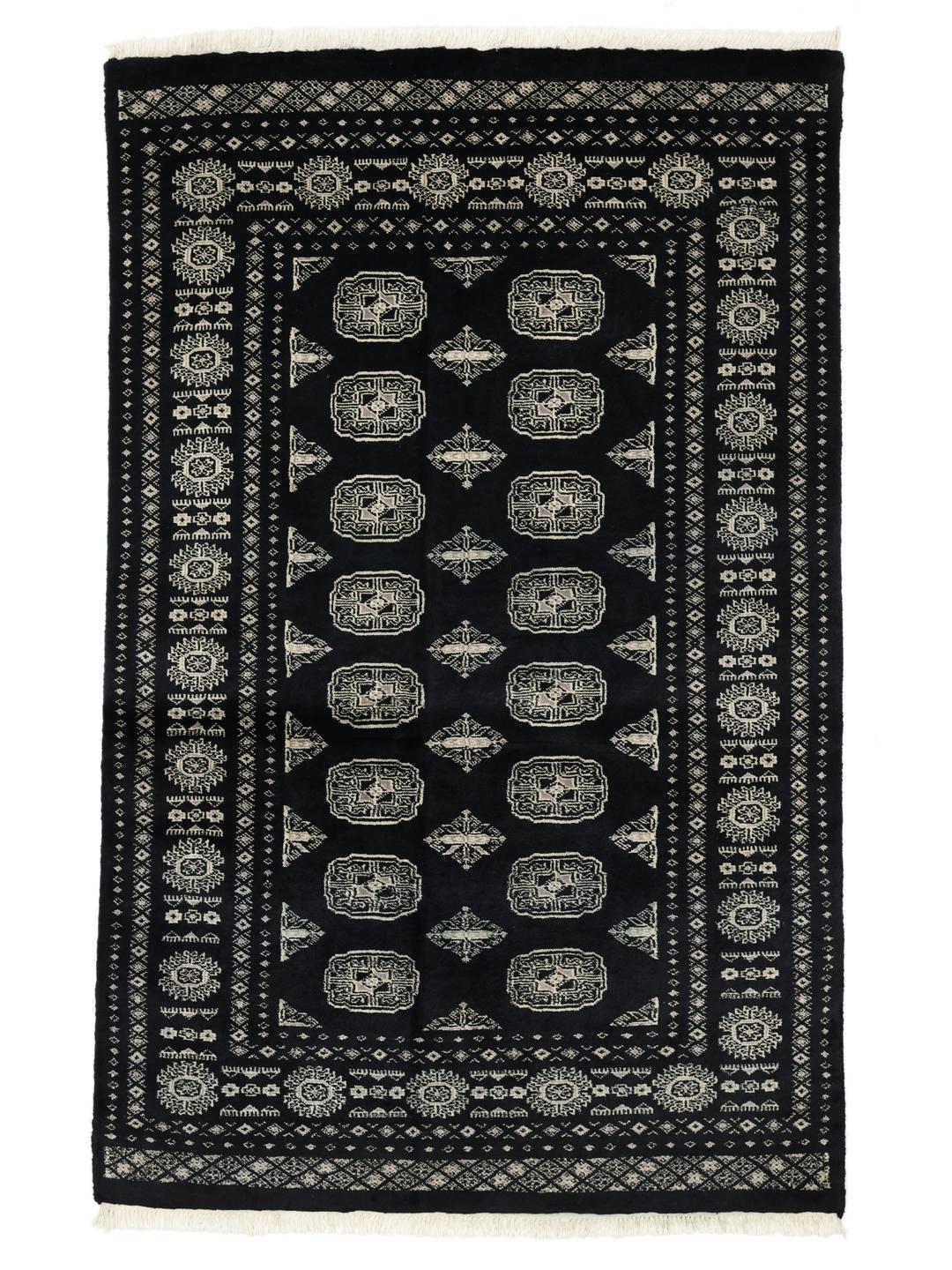
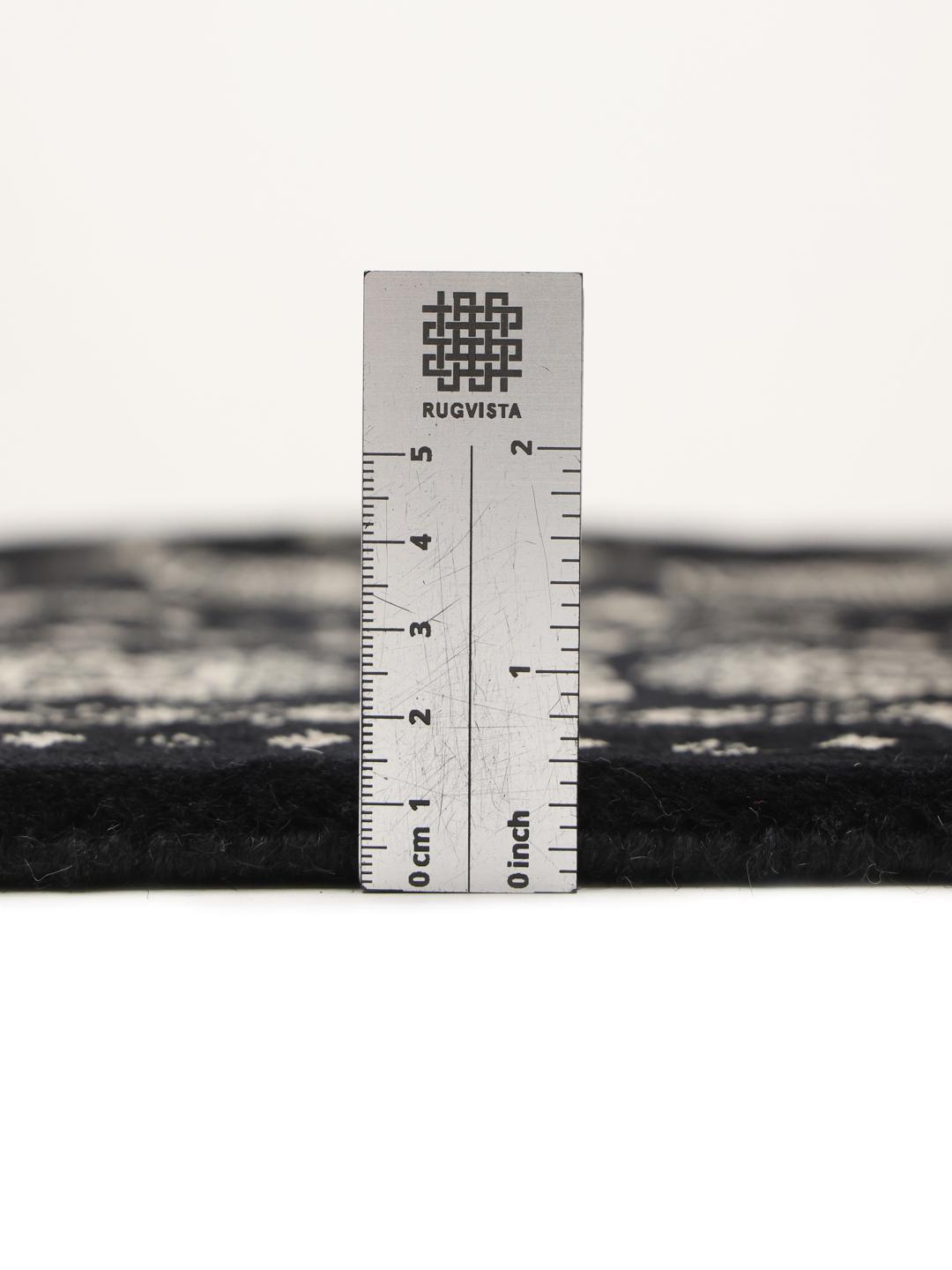
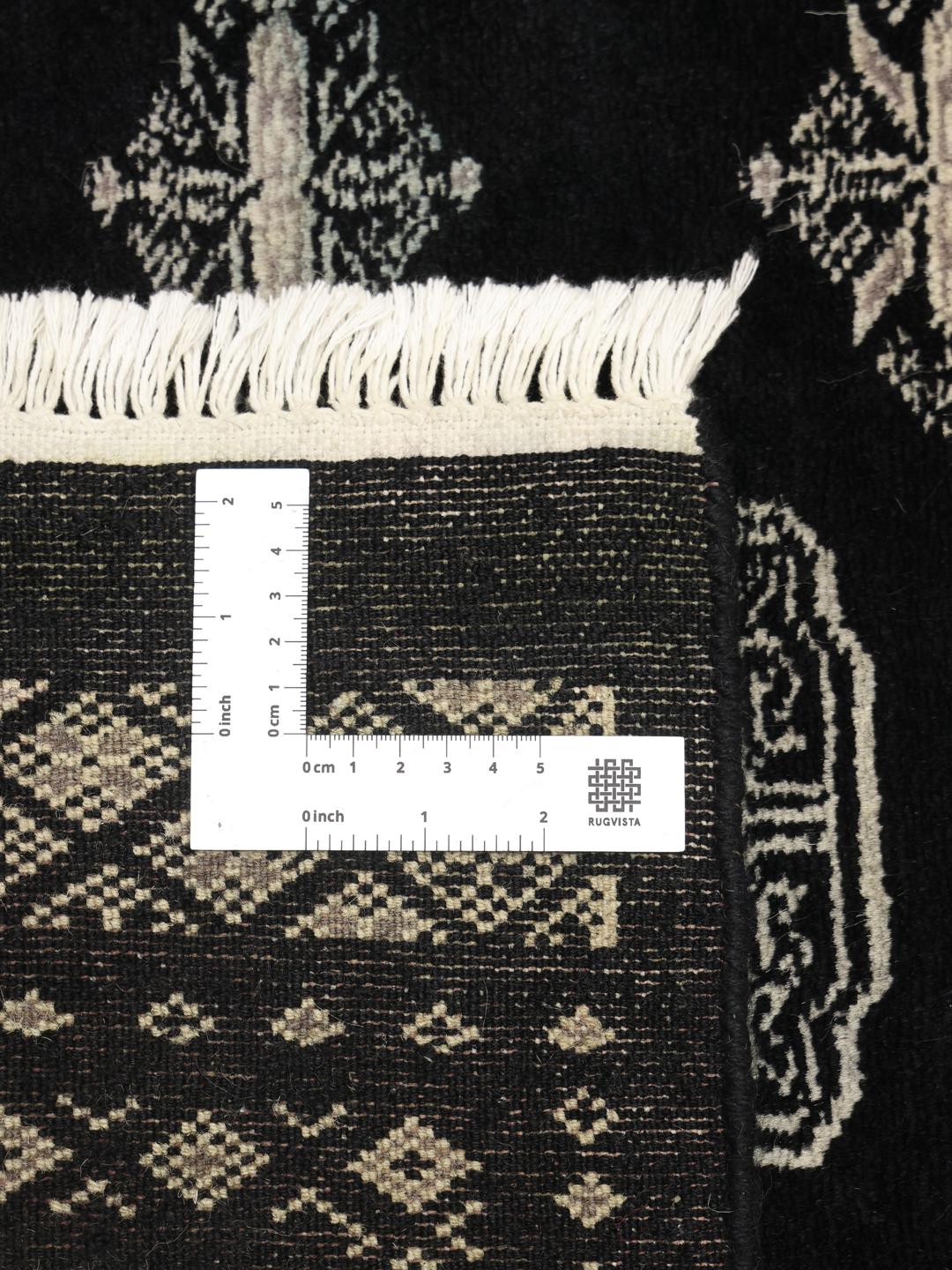
The Bokhara rug tradition is deeply rooted in the historical crossroads of the Silk Road, taking its name from the ancient city of Bukhara. While its origins trace back to nomadic tribes across Central Asia who wove these rugs for portable warmth and status, the craft has evolved significantly over centuries. Today, some of the most refined and high-quality examples are produced in Pakistan, where weavers have mastered the intricate techniques required to produce these iconic designs.
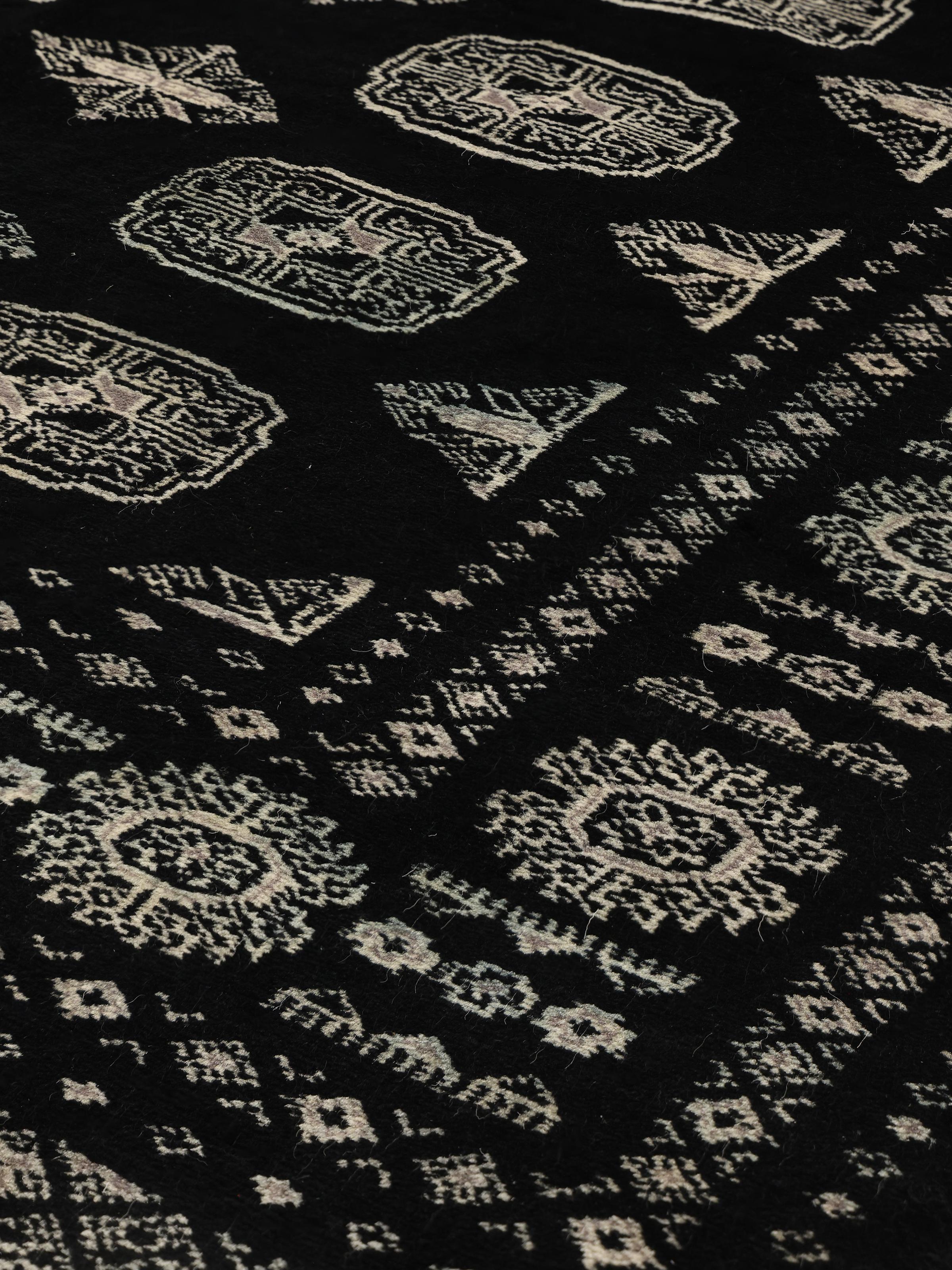
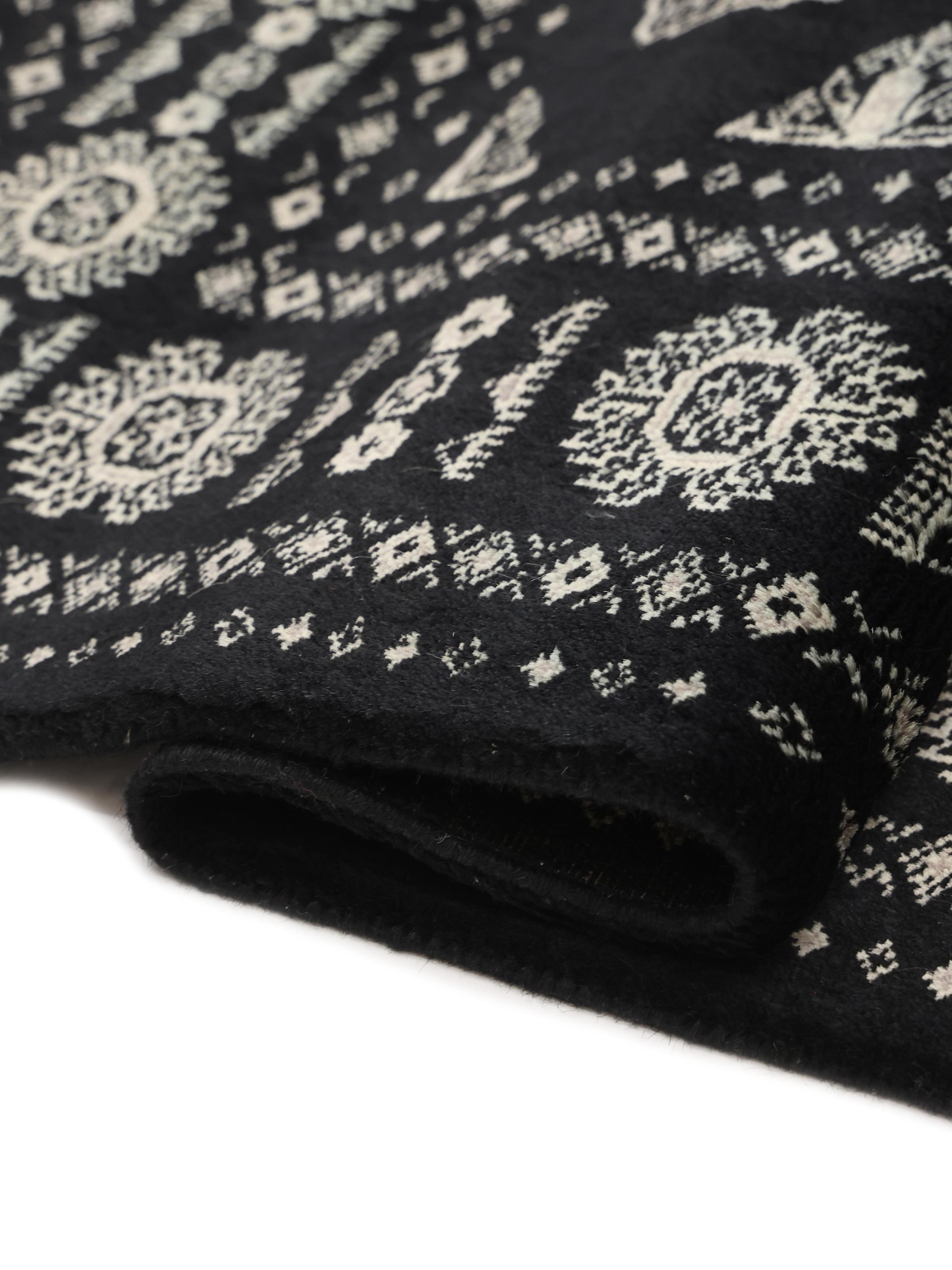
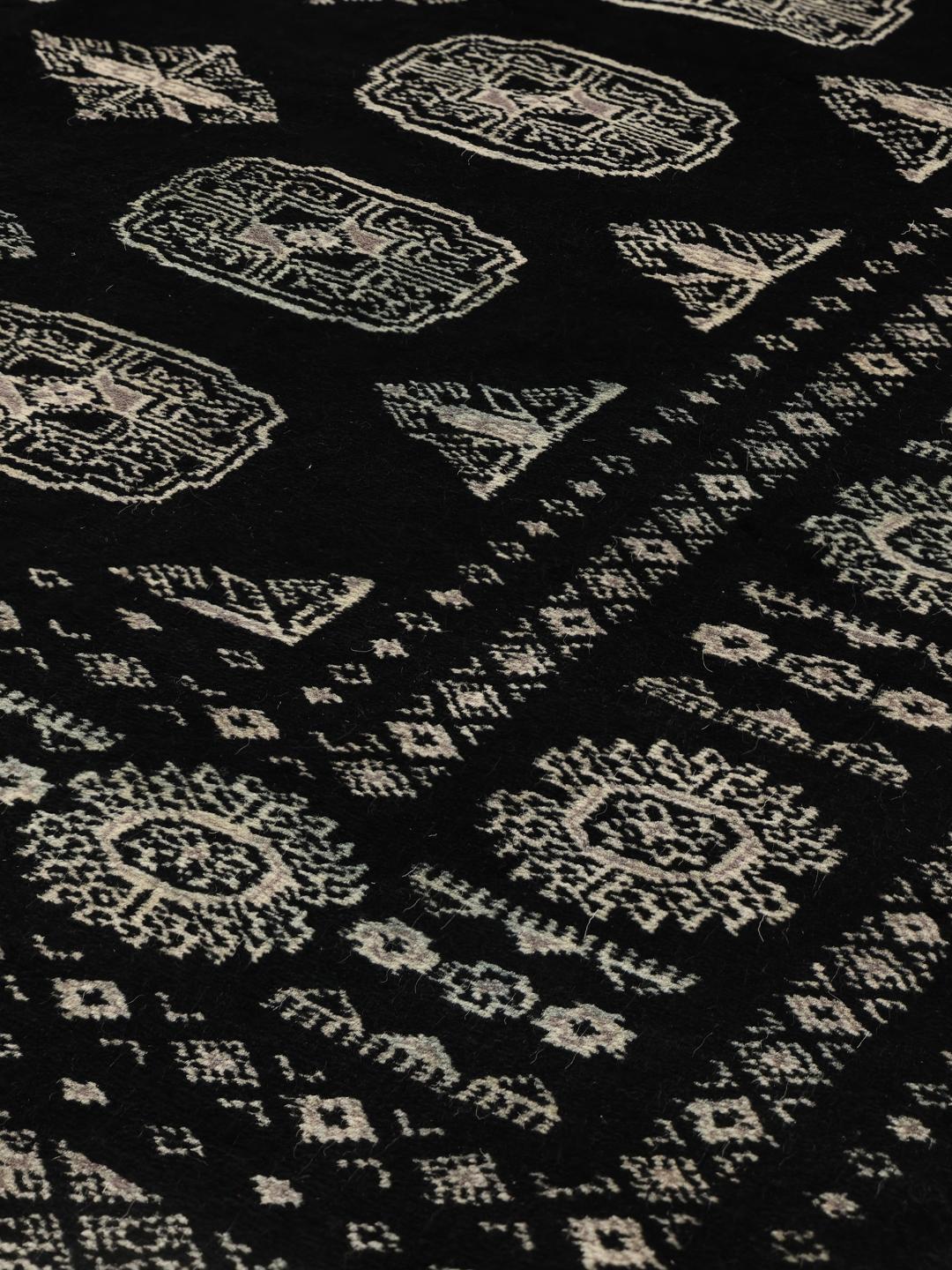
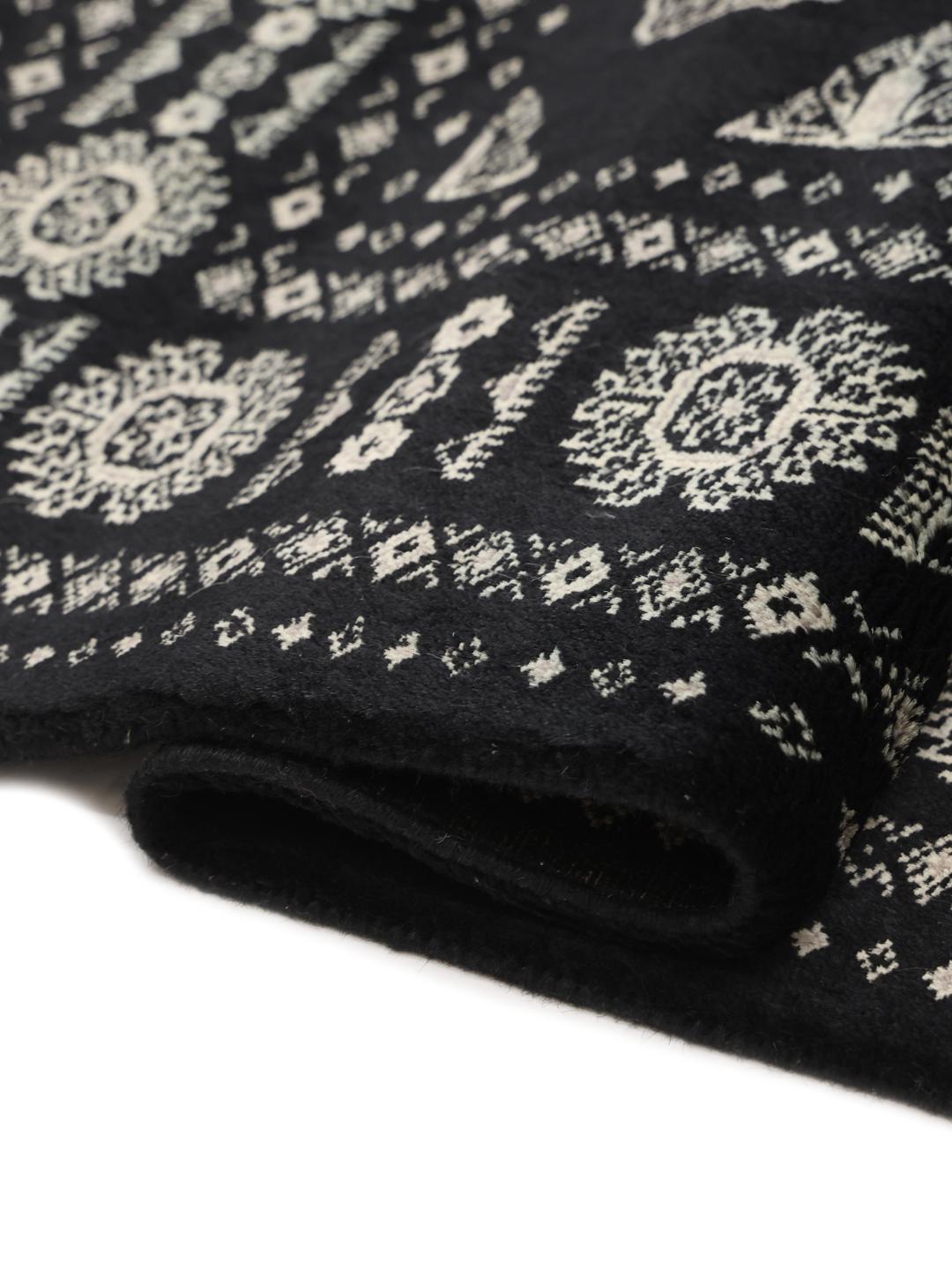
The term 2ply refers to a specific method of spinning the wool, where two individual strands are twisted together before being used as the pile. This is a crucial detail for quality, as it creates a stronger, more lustrous, and thicker yarn compared to single-ply alternatives. This construction is what allows the rug to withstand years of daily use while maintaining its soft, inviting texture and vibrant appearance.
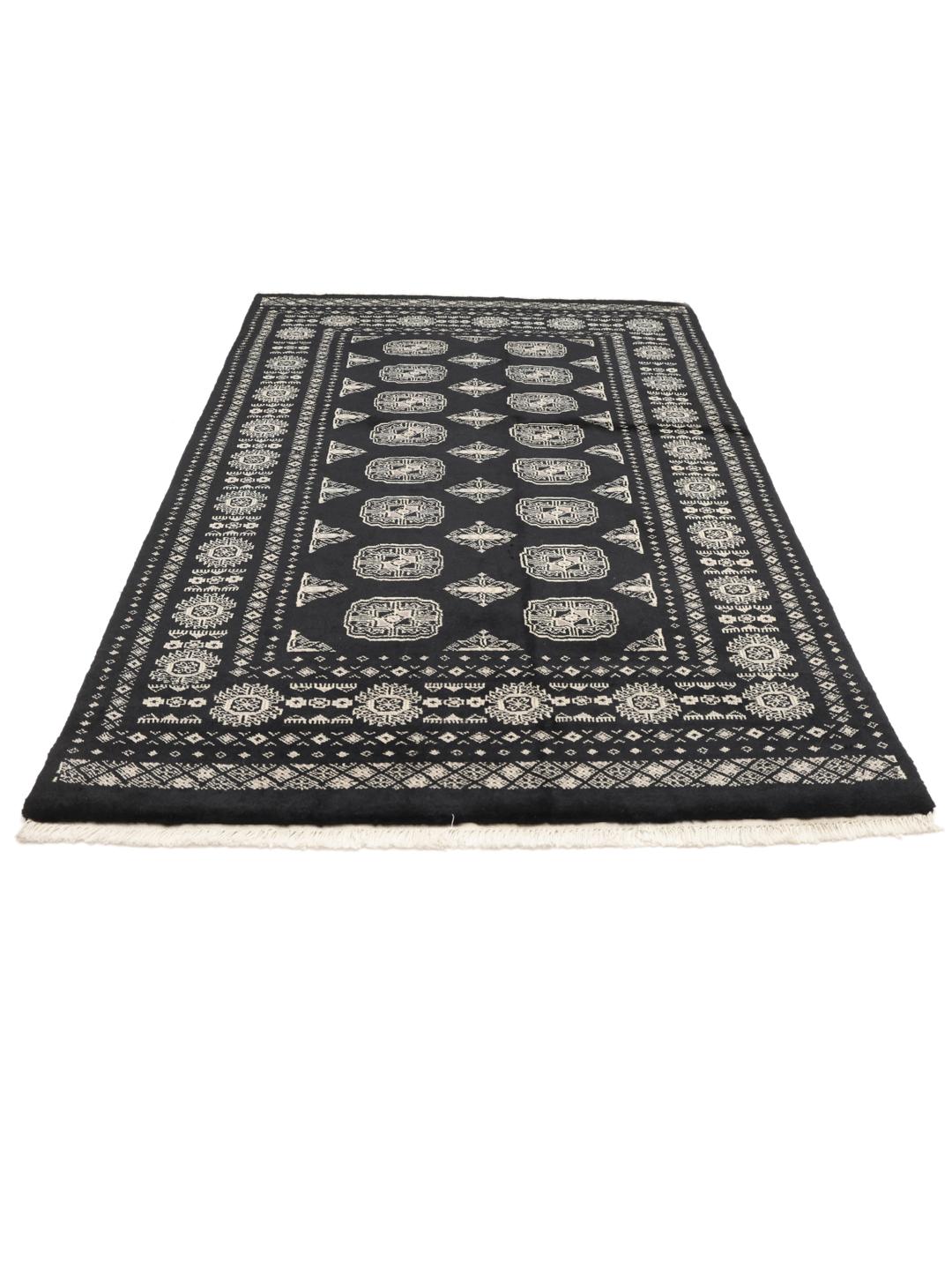
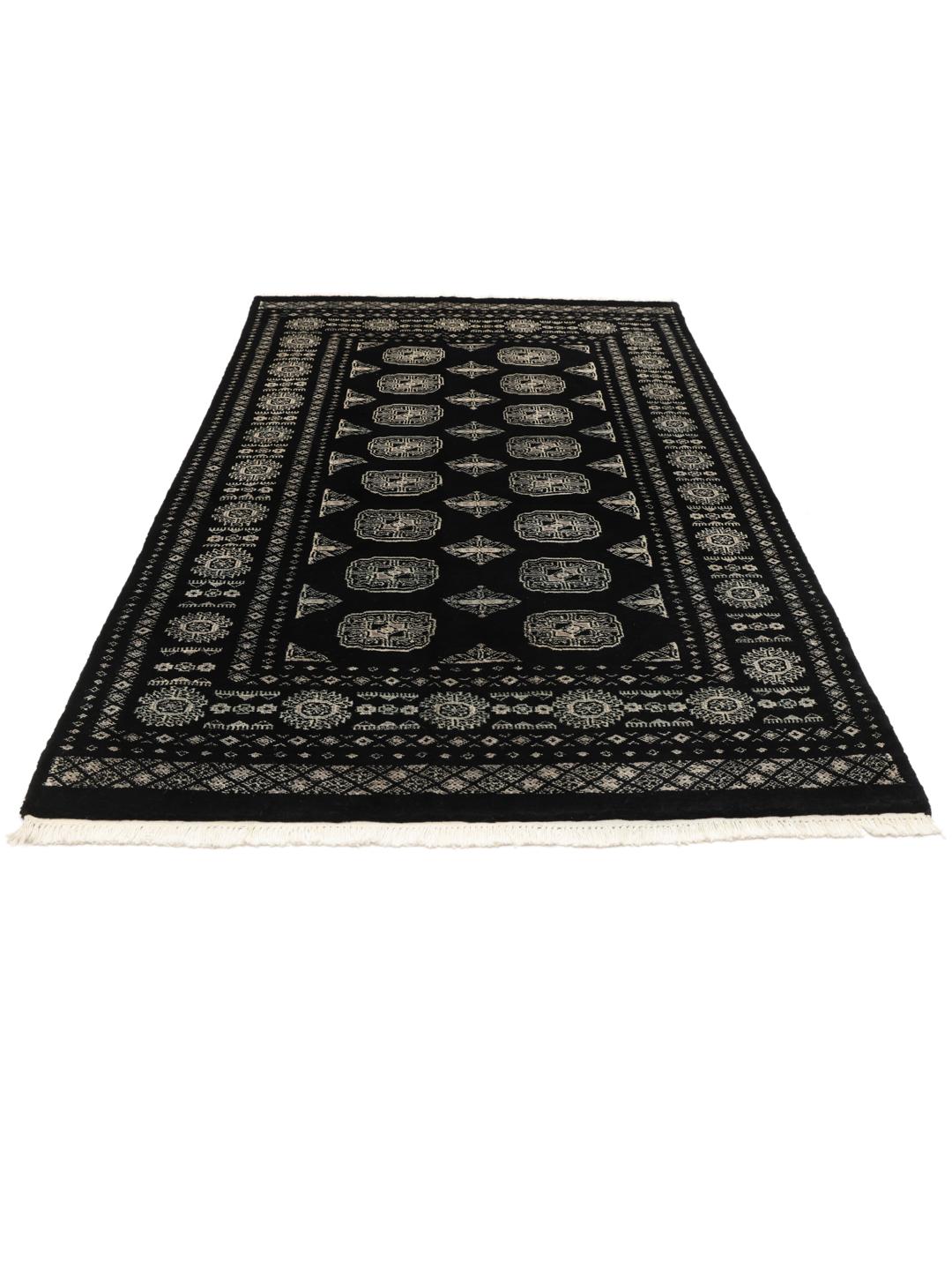
Visually, Bokhara rugs are instantly recognisable for their field of repeating gul motifs, which are stylised, octagonal medallions often said to represent elephant footprints. These are typically arranged in precise, symmetrical rows and framed by formal, decorative borders. This specific piece features a striking black field, which offers a modern, bold take on the traditional, usually red-toned, colour palettes found in older, more classic examples.
Collecting a Pakistan Bokhara is an appreciation of the patience and heritage embedded in every knot. These rugs are valued not just for their aesthetic symmetry, but for the human story they represent. By bringing one into your home, you are participating in a long-standing tradition of craft that values quality above all else, ensuring that your investment serves as a legacy piece for years to come.