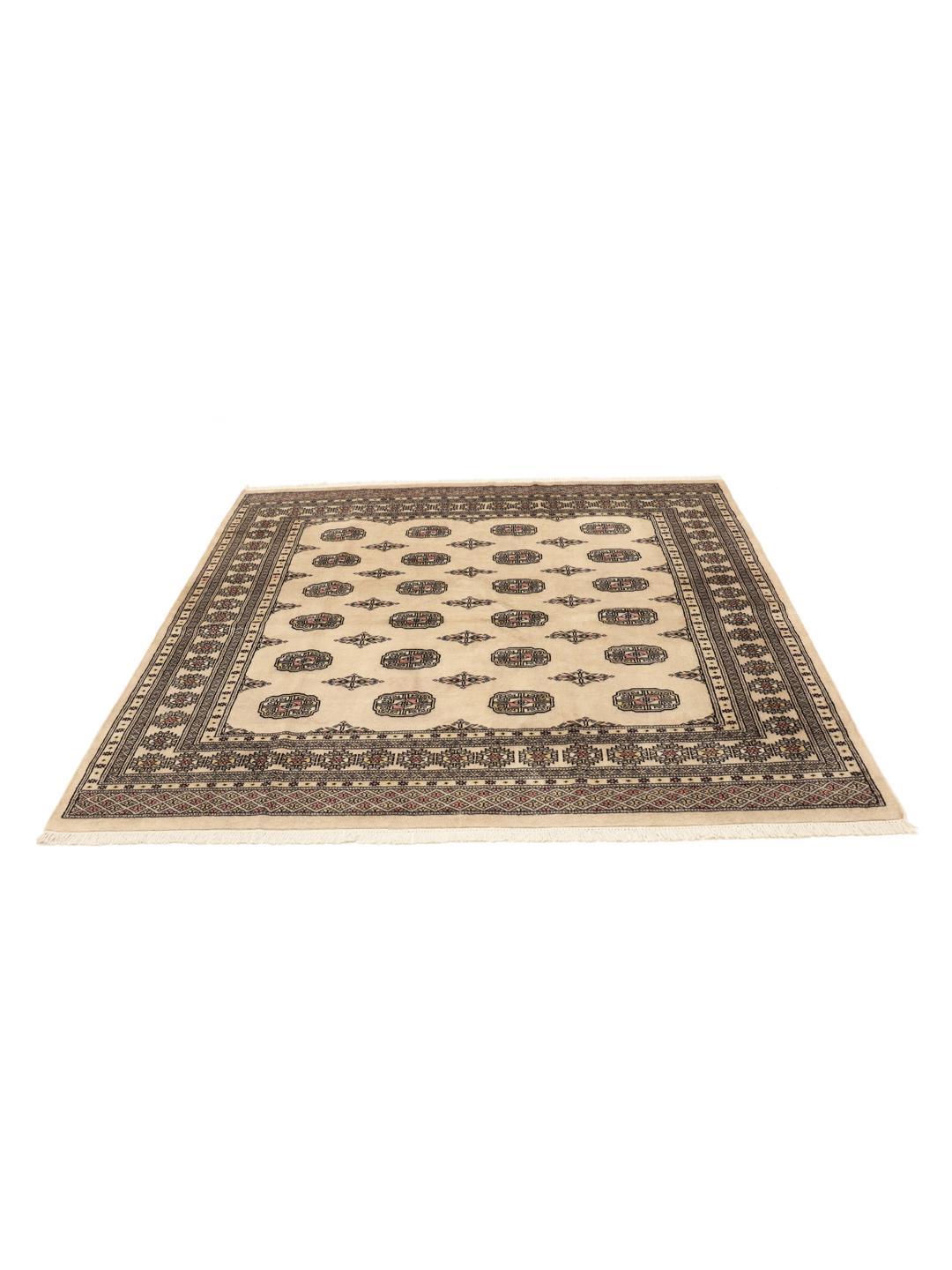
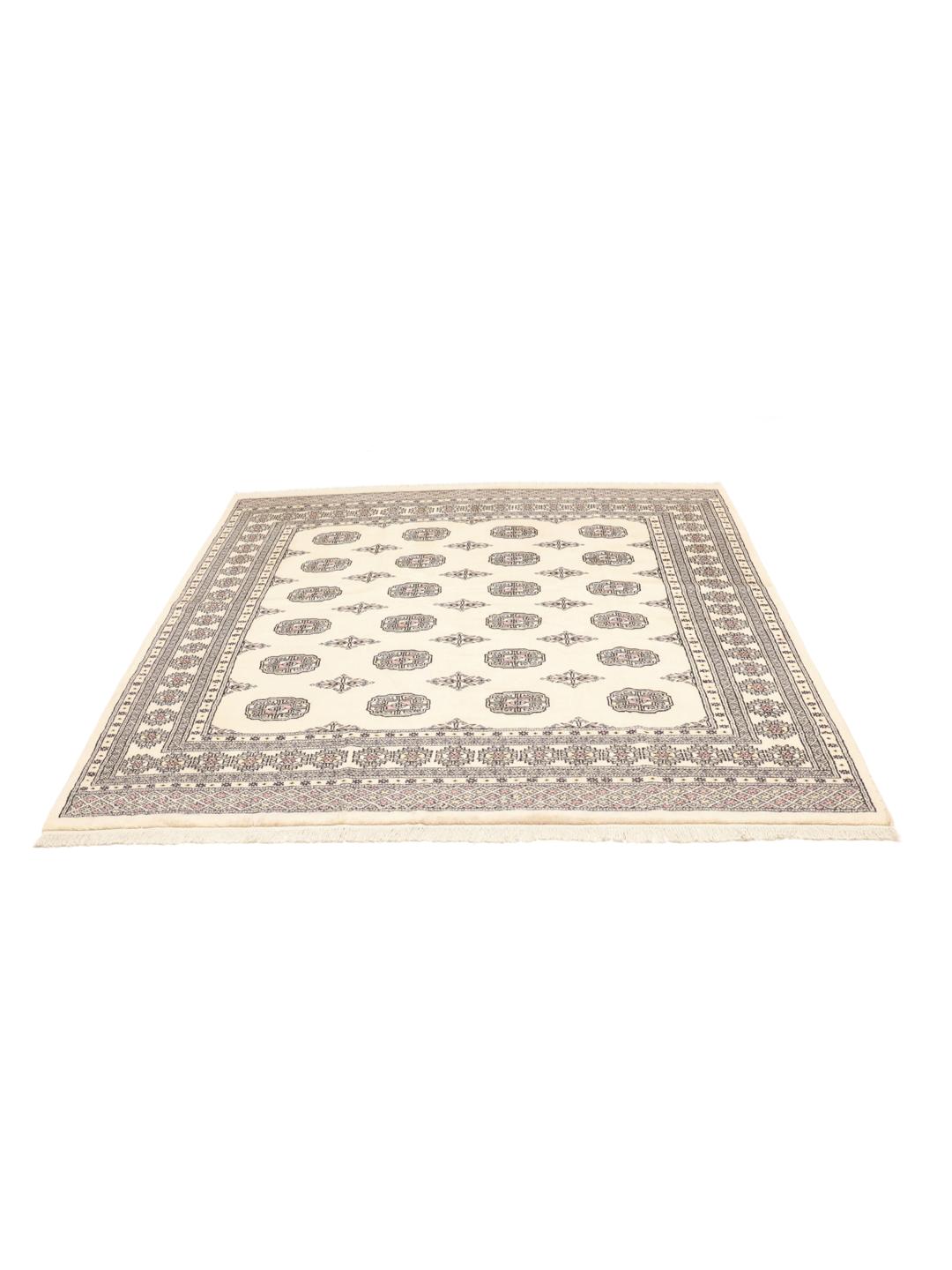
Bokhara rugs take their name from the ancient Silk Road city of Bukhara, which served as a historic crossroads for trade and cultural exchange in Central Asia. While the name originates from this storied region, the finest examples of these rugs are today masterfully woven in Pakistan. This evolution reflects the migration of weaving traditions across borders, where artisans have refined these classic designs to suit contemporary tastes while honouring their historical roots.
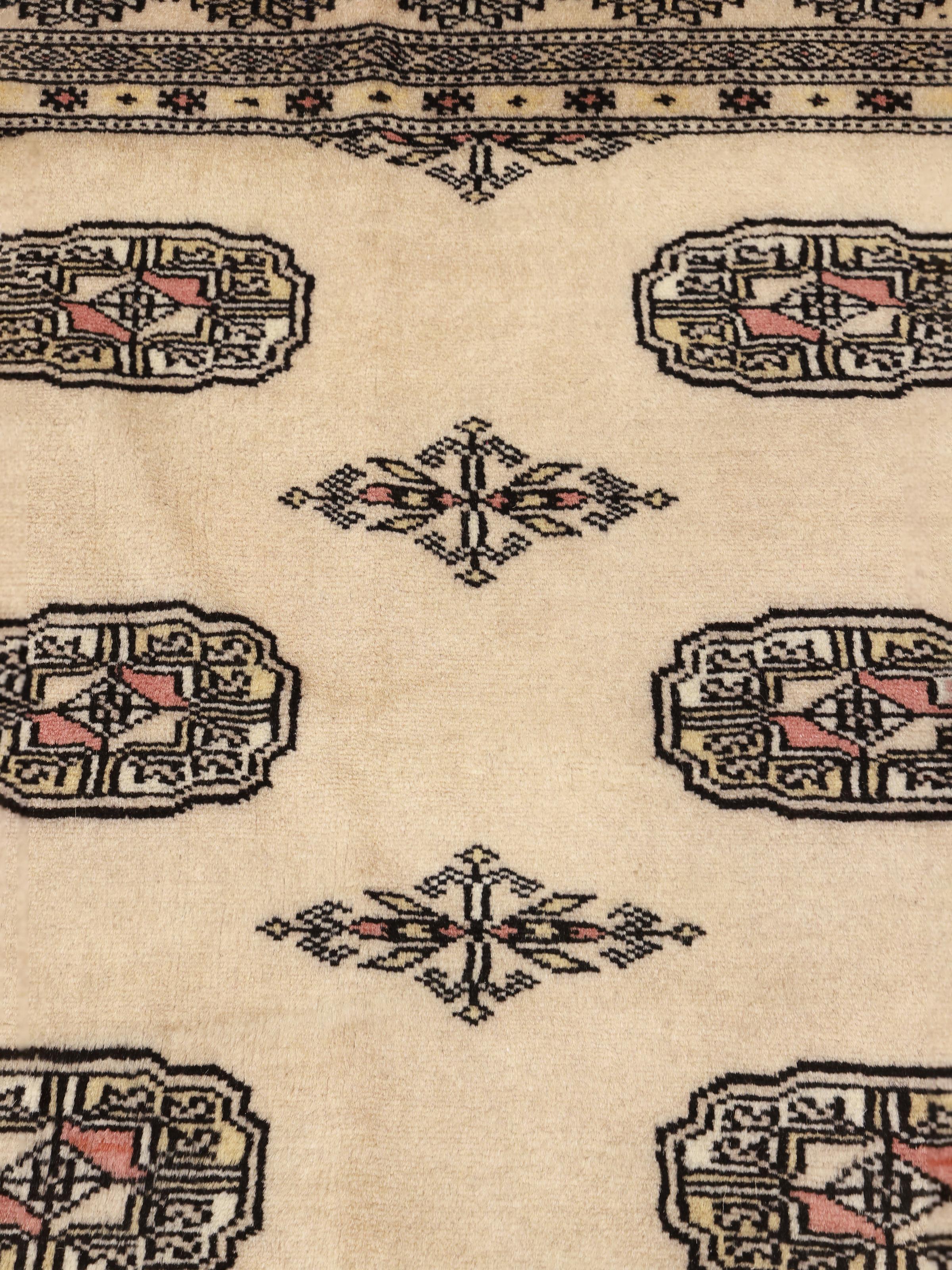
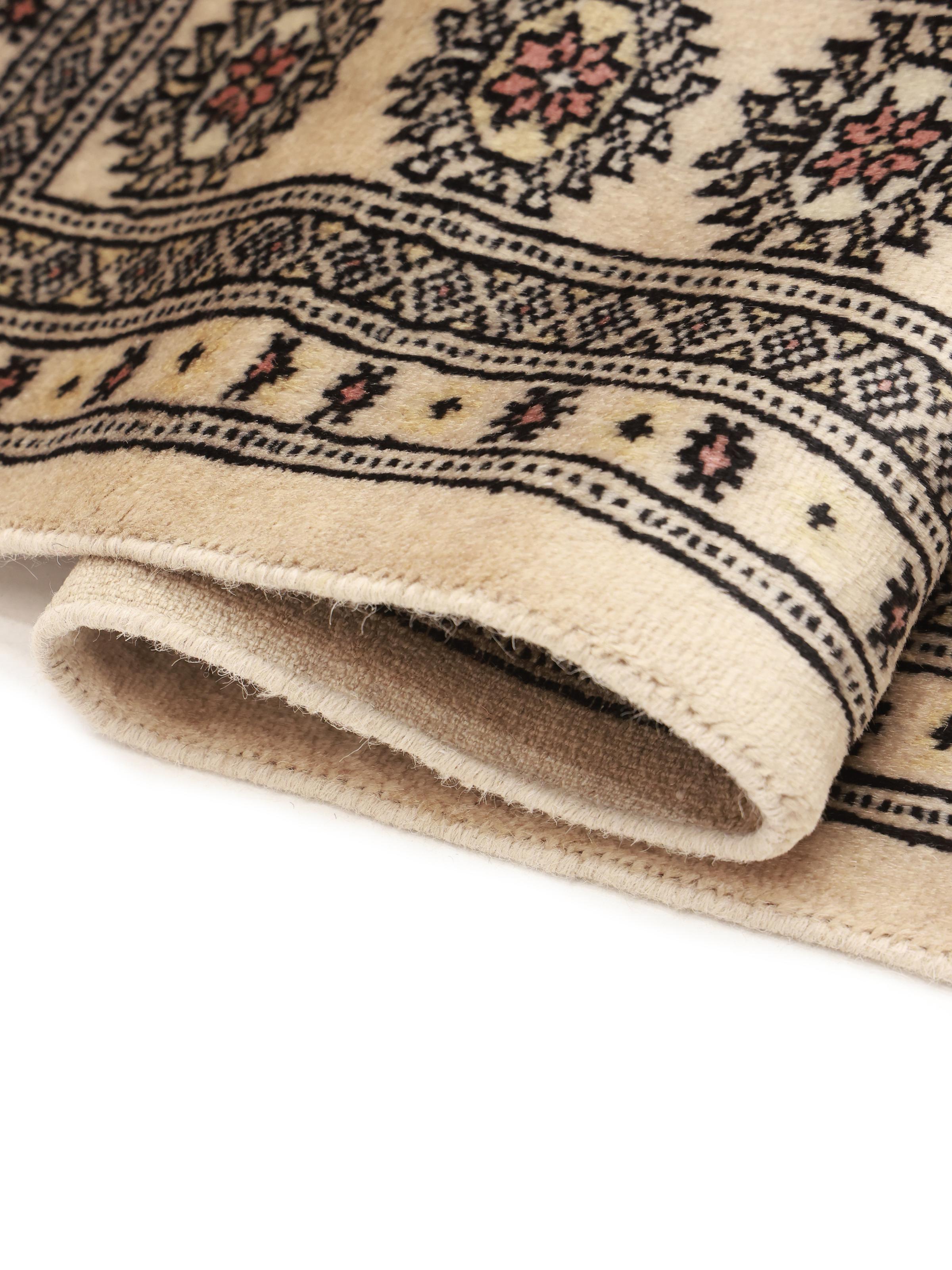
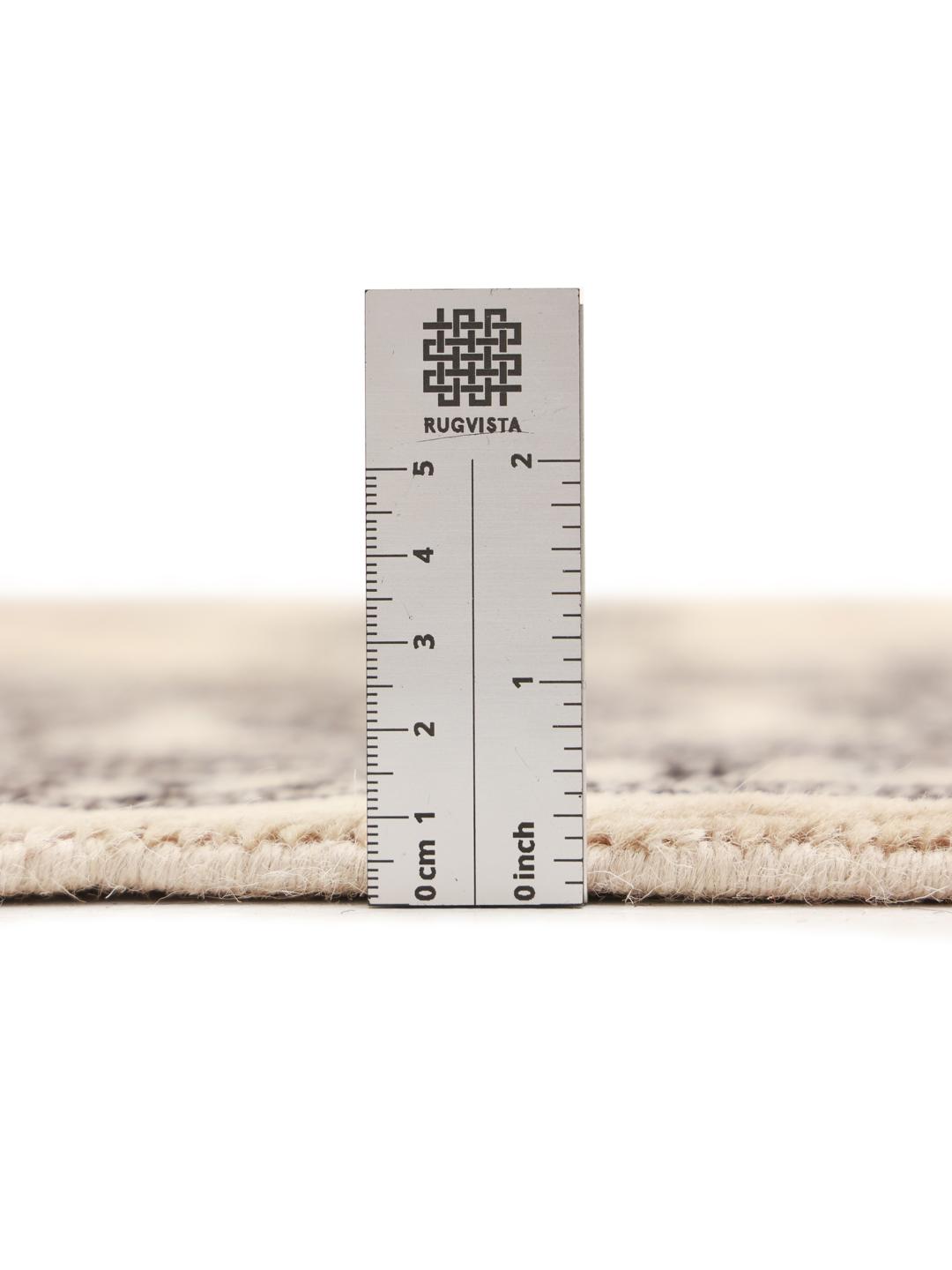
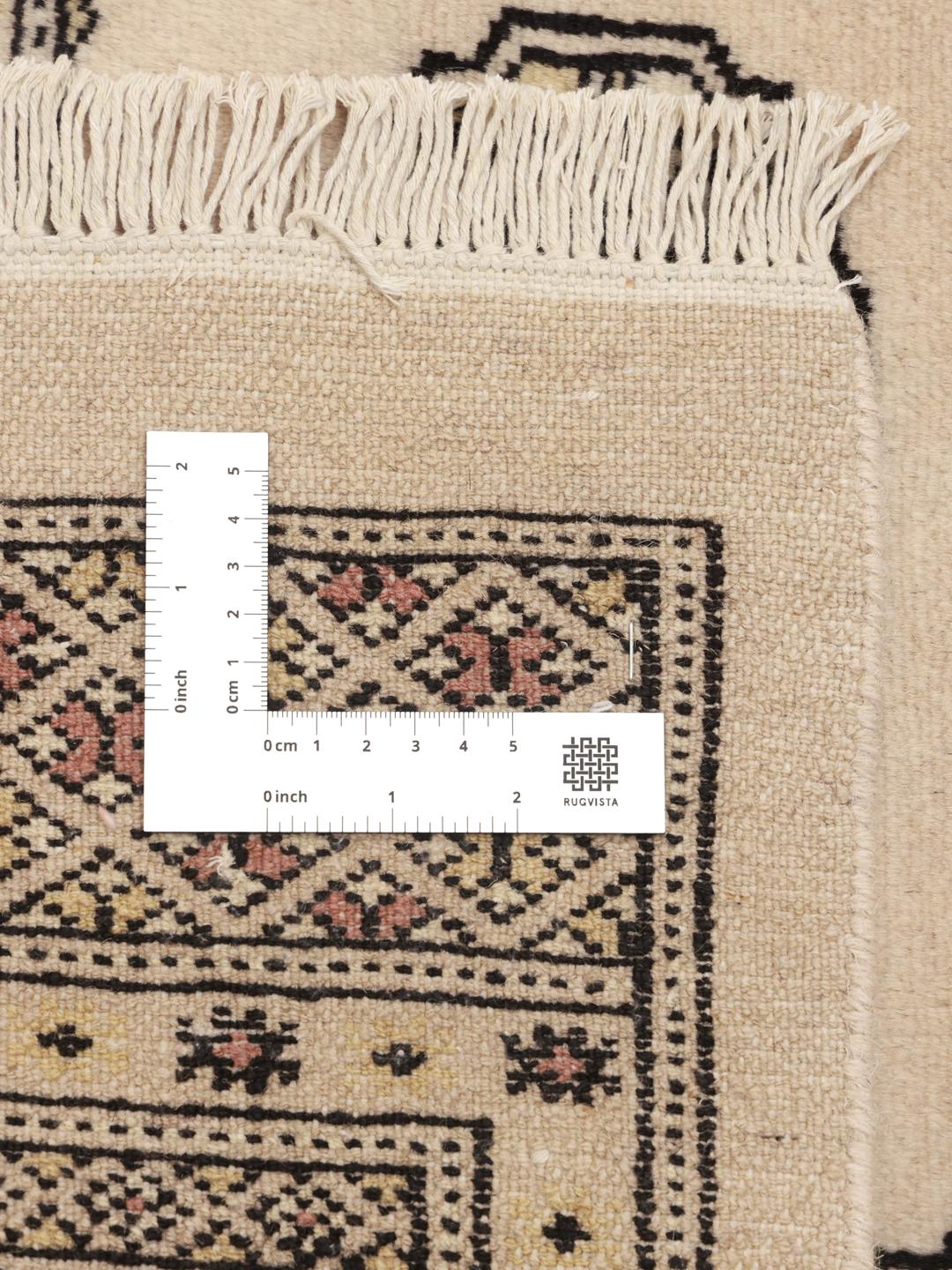
The term 2ply refers to the construction of the wool pile, where two distinct strands of wool are twisted together before being knotted. This technique is significant because it produces a thicker, more lustrous, and remarkably durable yarn. By using 2ply wool, the rug gains a deeper texture and a resilient surface that resists wear, ensuring that the intricate patterns remain vibrant and clear even after years of use.
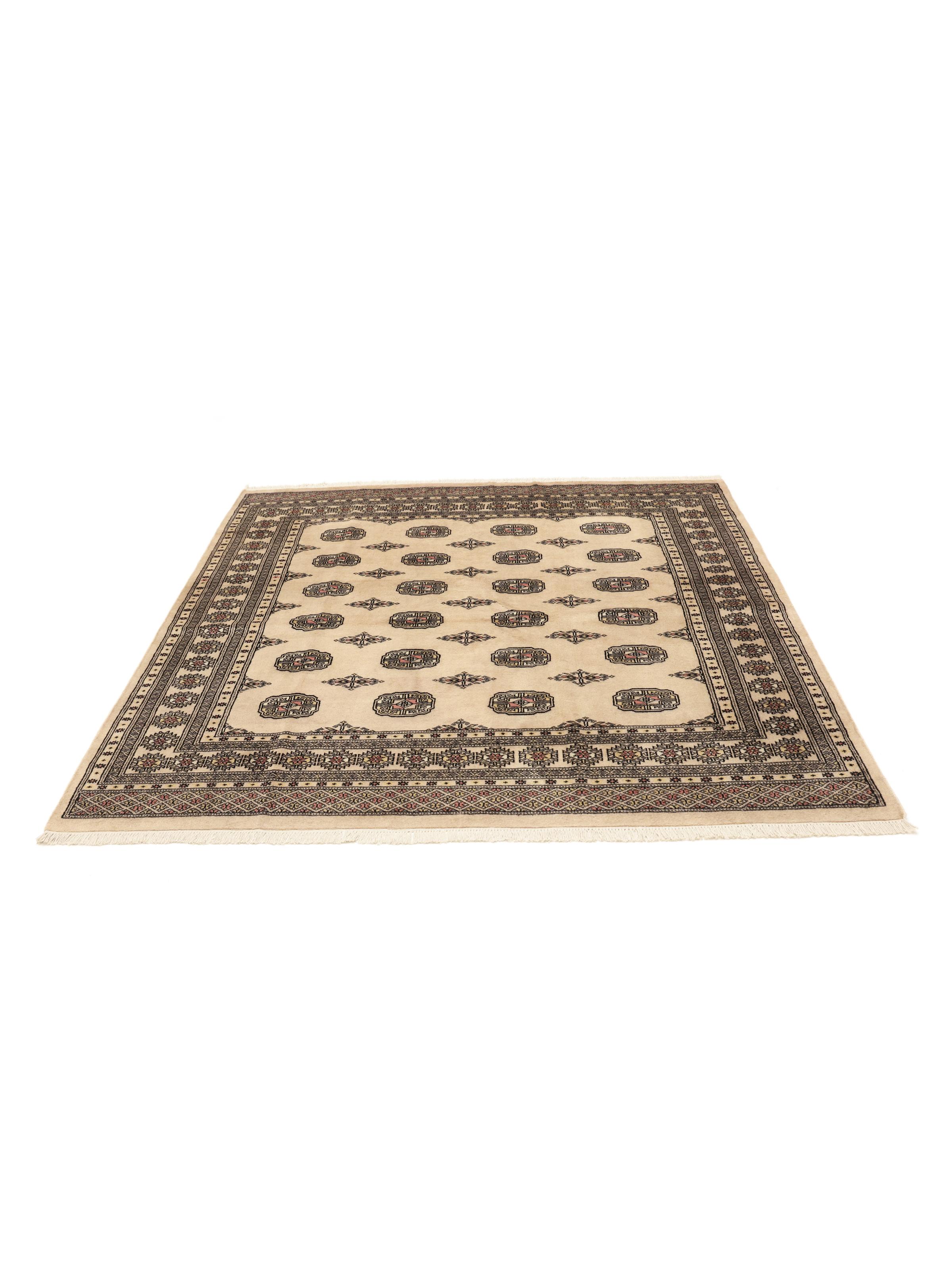
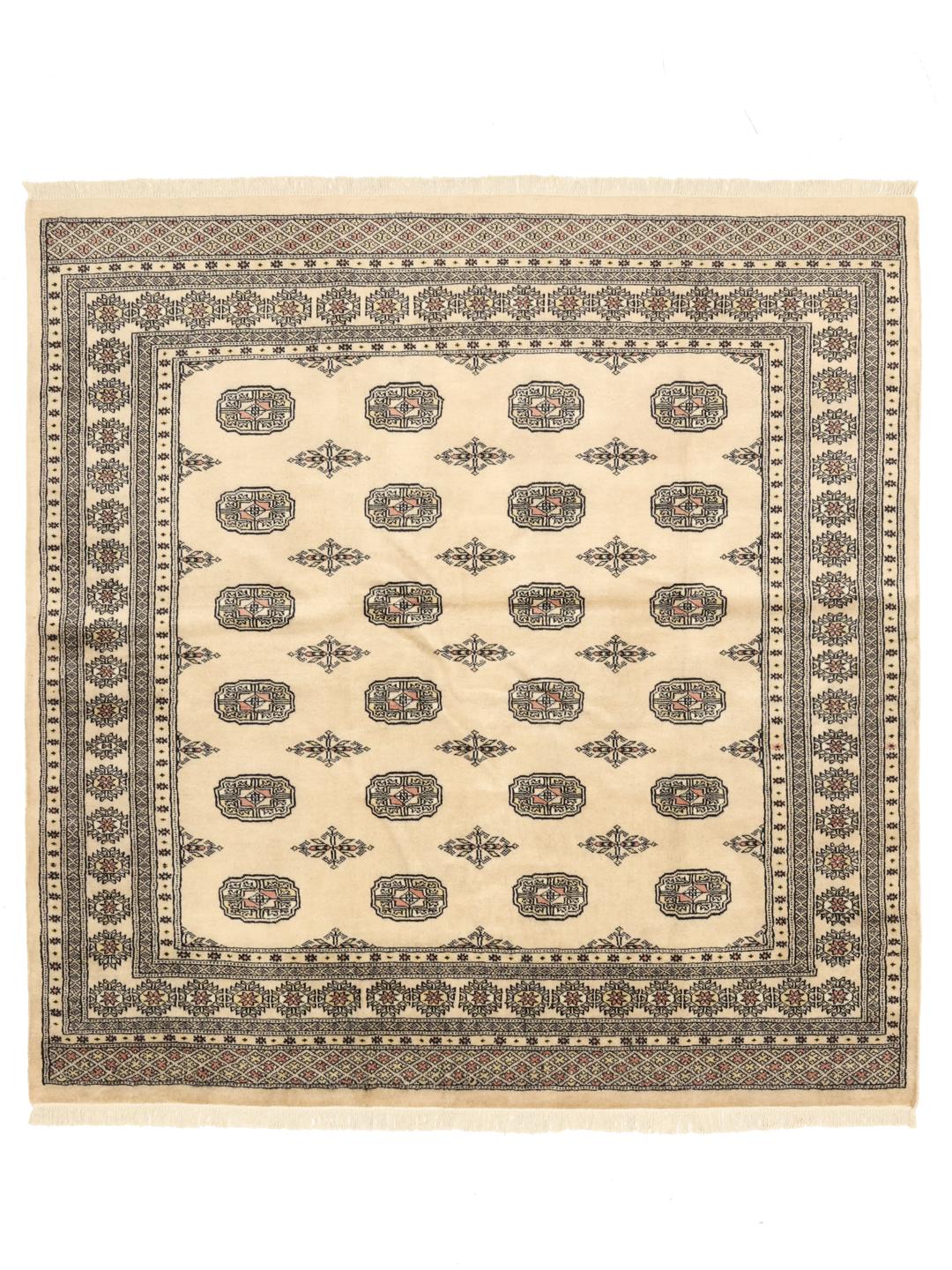
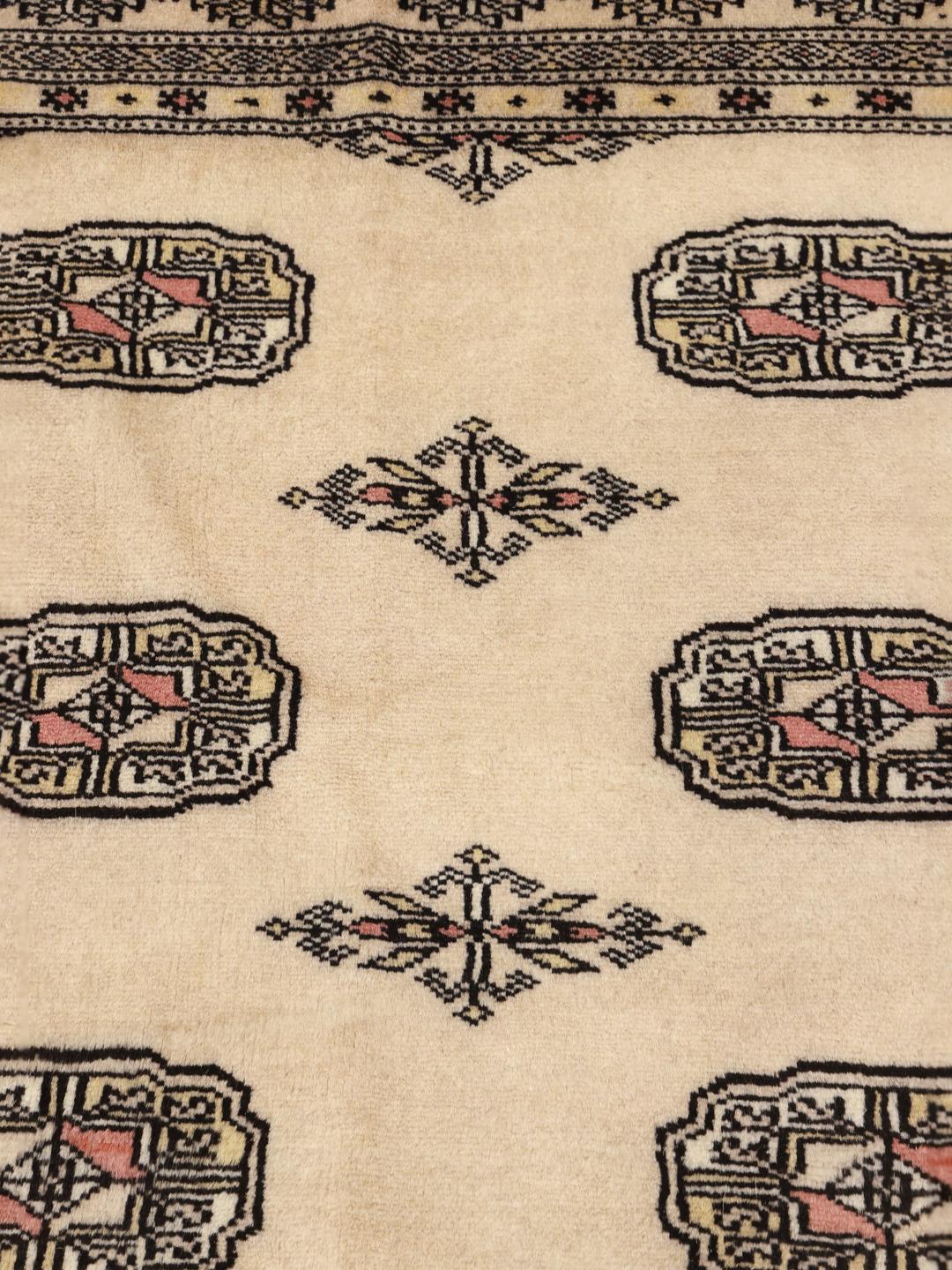
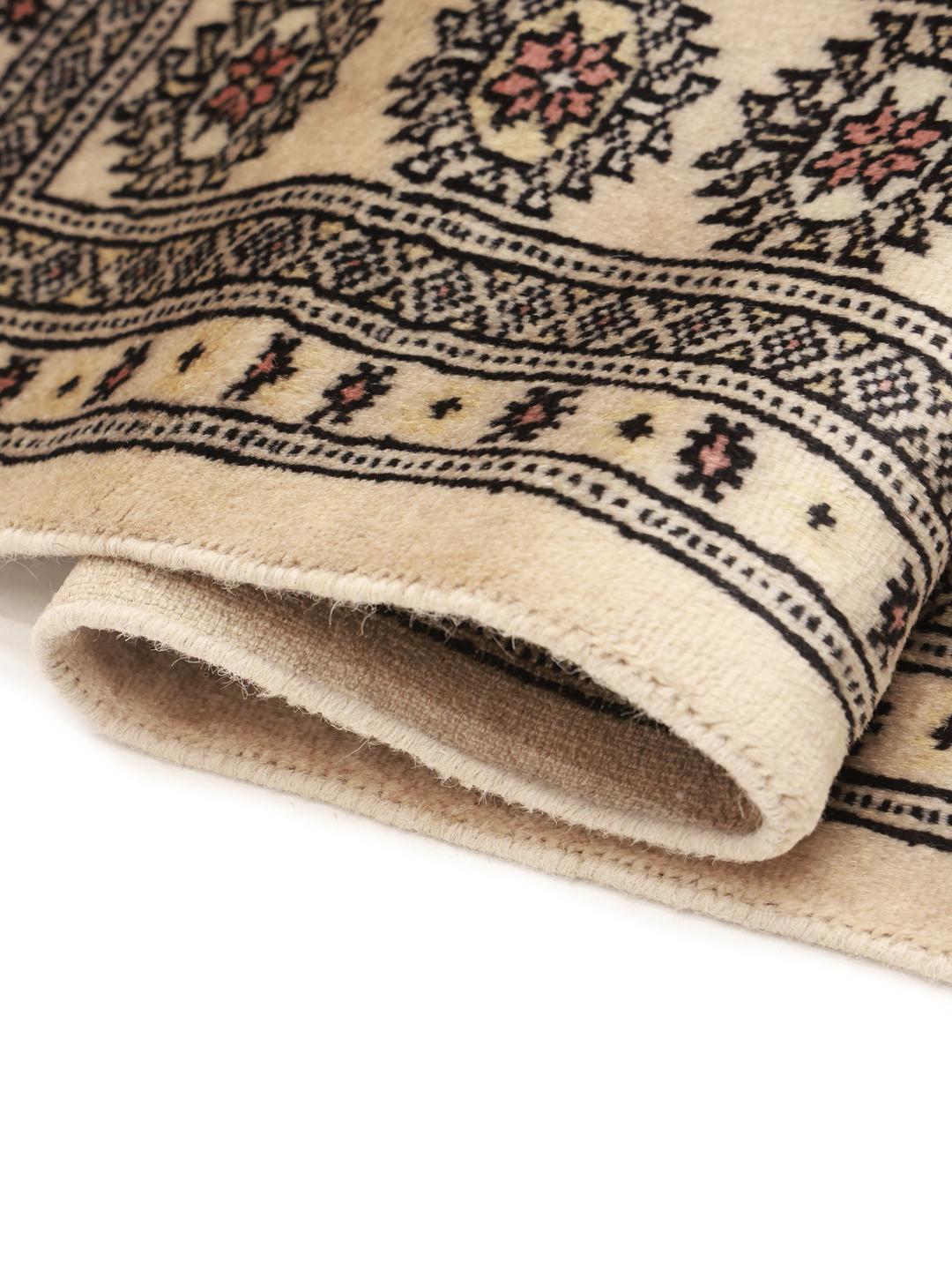
The visual language of this rug is defined by the repetition of the gul motif, which resembles an elephant's footprint or an octagonal medallion. These symbols are arranged in strict, rhythmic rows, framed by sophisticated floral borders that draw the eye inward. The use of a soft beige field is a classic choice, allowing the deeper tones within the medallions to stand out with clarity and grace.
Owning a hand-knotted rug of this calibre is a testament to an appreciation for heritage and the human element in design. These rugs are valued not just for their aesthetic appeal, but for the profound skill and patience required to create them. By bringing this piece into your home, you are preserving a centuries-old tradition of craft, ensuring that this cultural legacy continues to be celebrated and enjoyed.