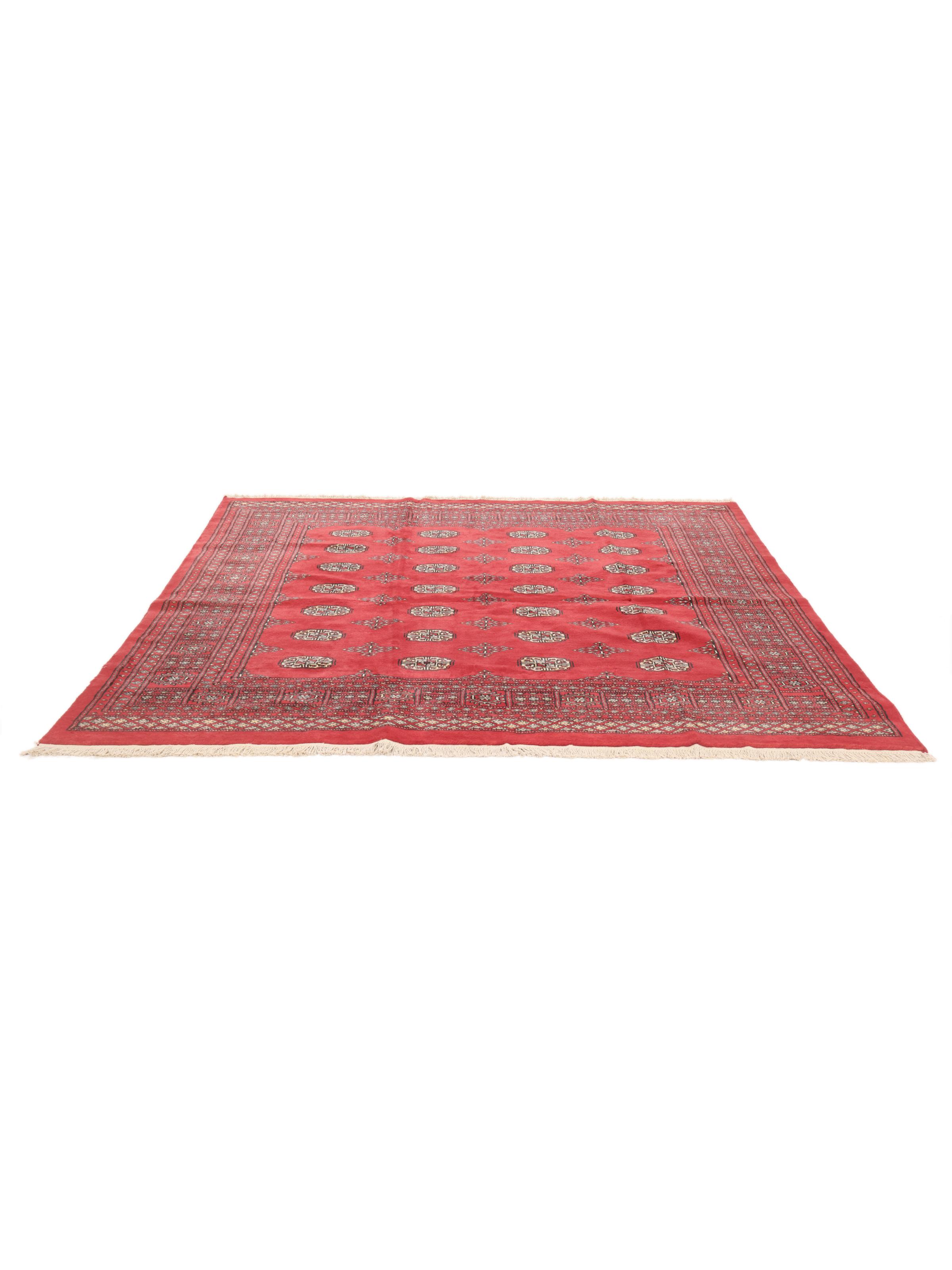
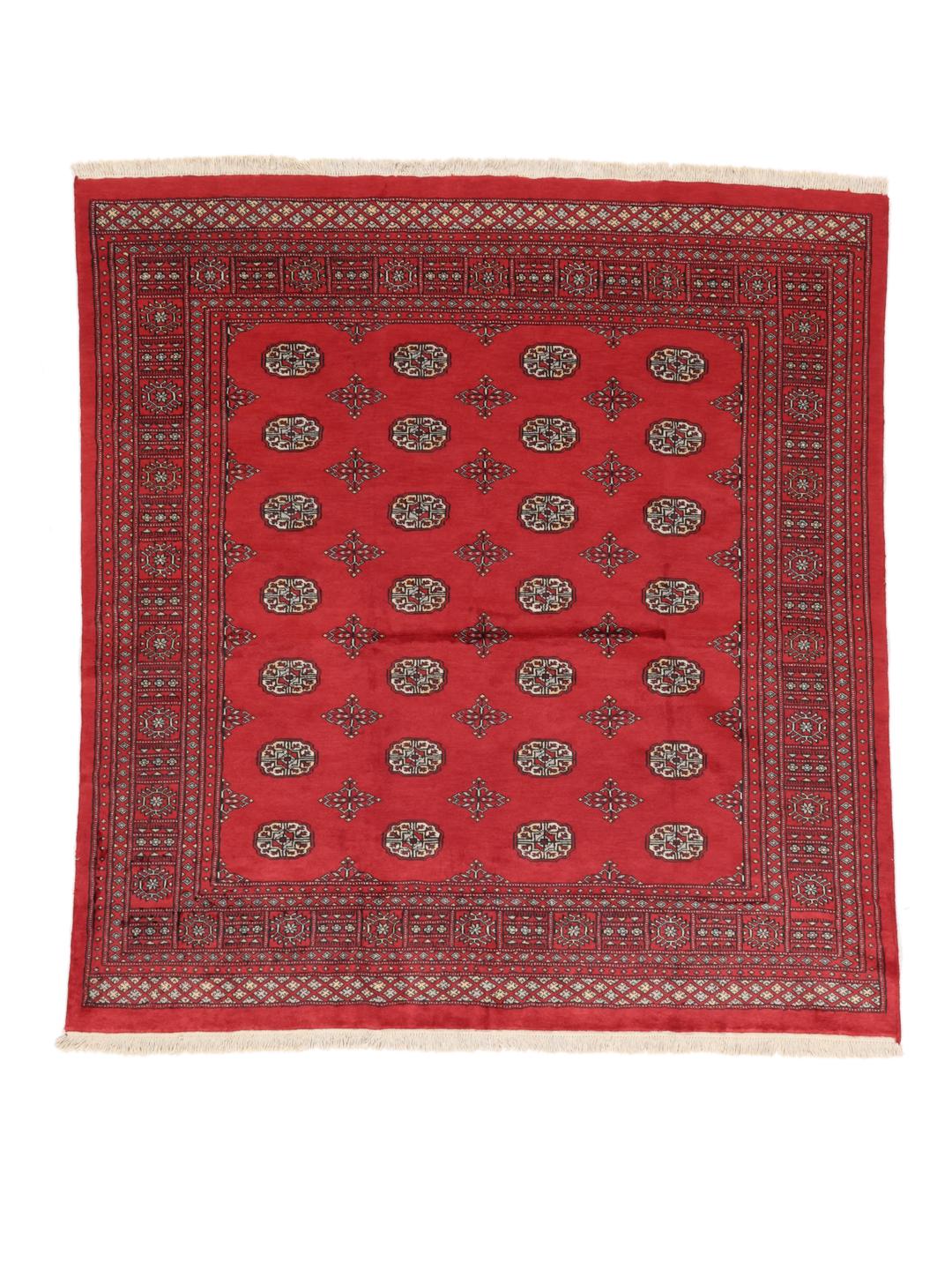
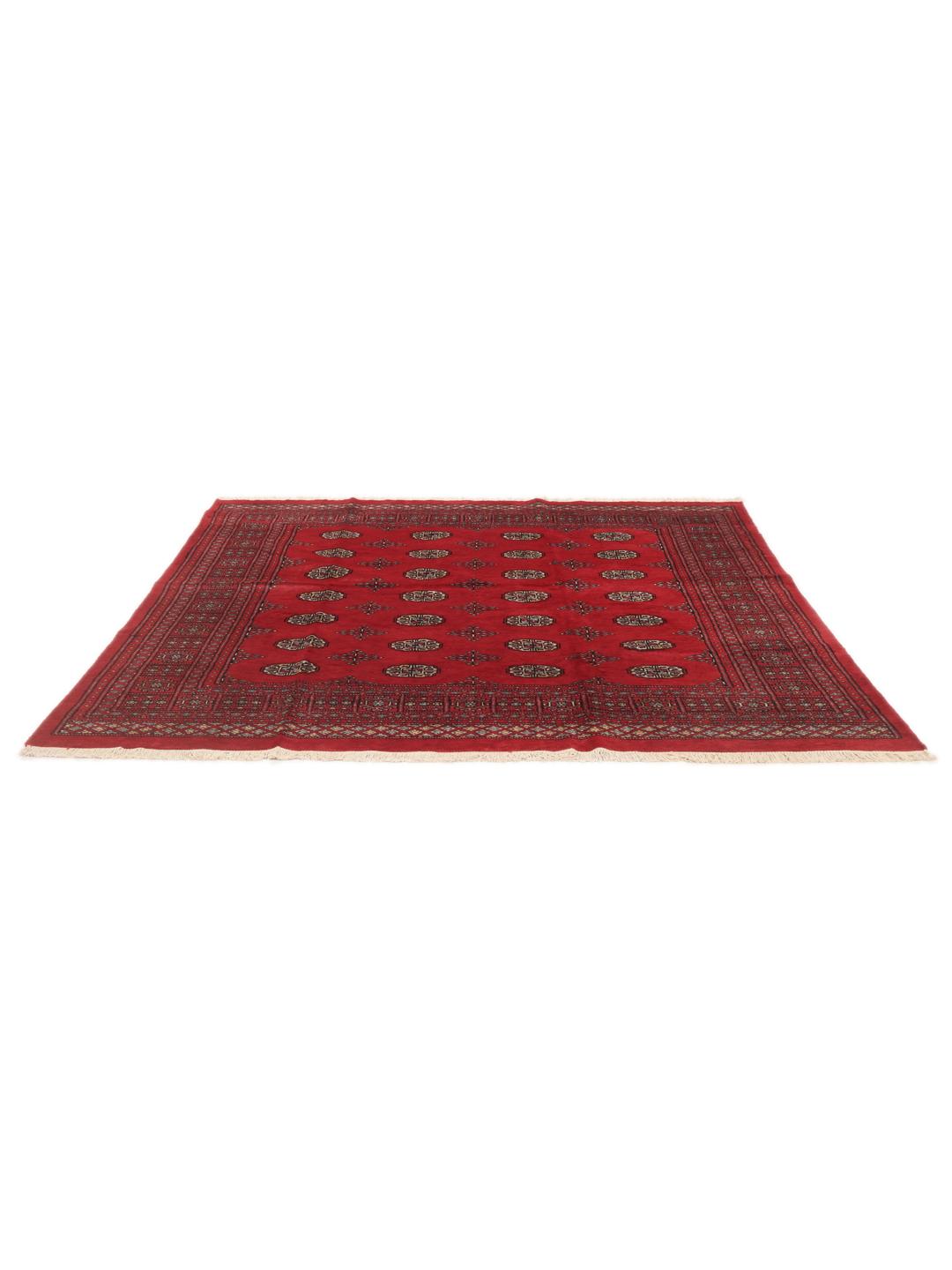
The Bokhara rug tradition is deeply tied to the history of the ancient Silk Road, drawing its name from the fabled city of Bukhara in Central Asia. While these designs find their historical roots in the nomadic tribes of the region, the finest contemporary examples are crafted in Pakistan. This evolution reflects a migration of skill and tradition, where master weavers have preserved and refined these classic motifs for modern homes.
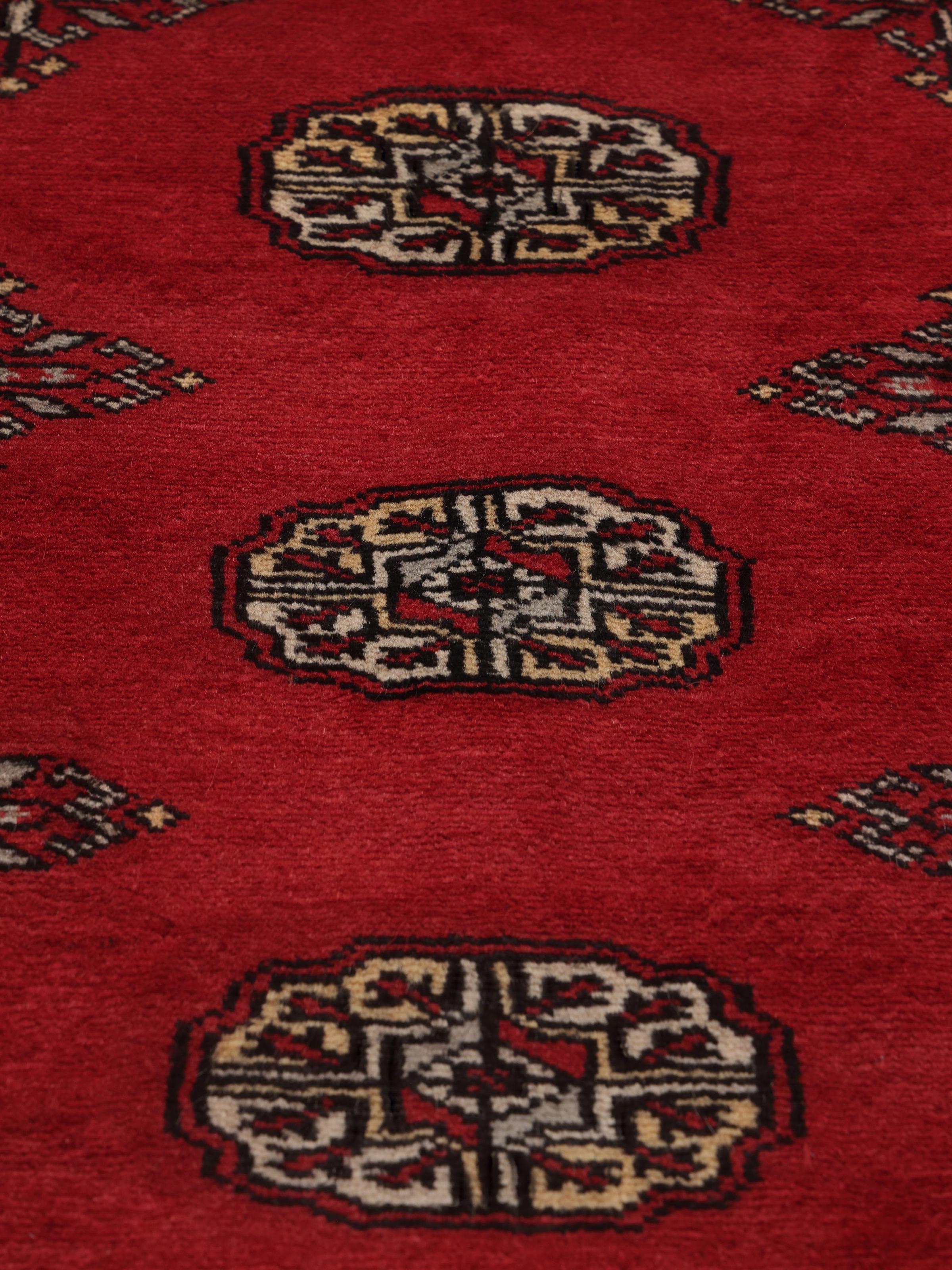
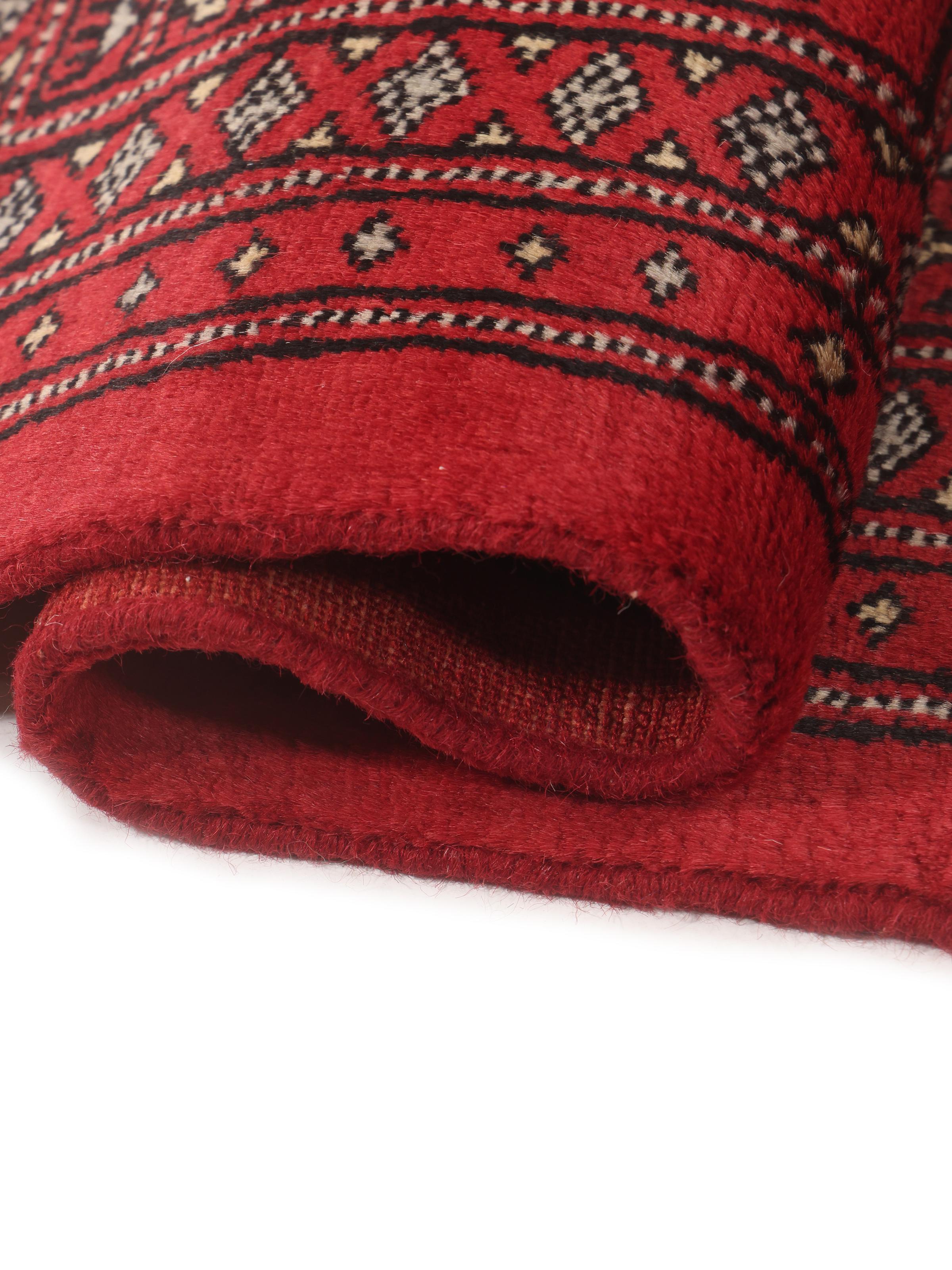
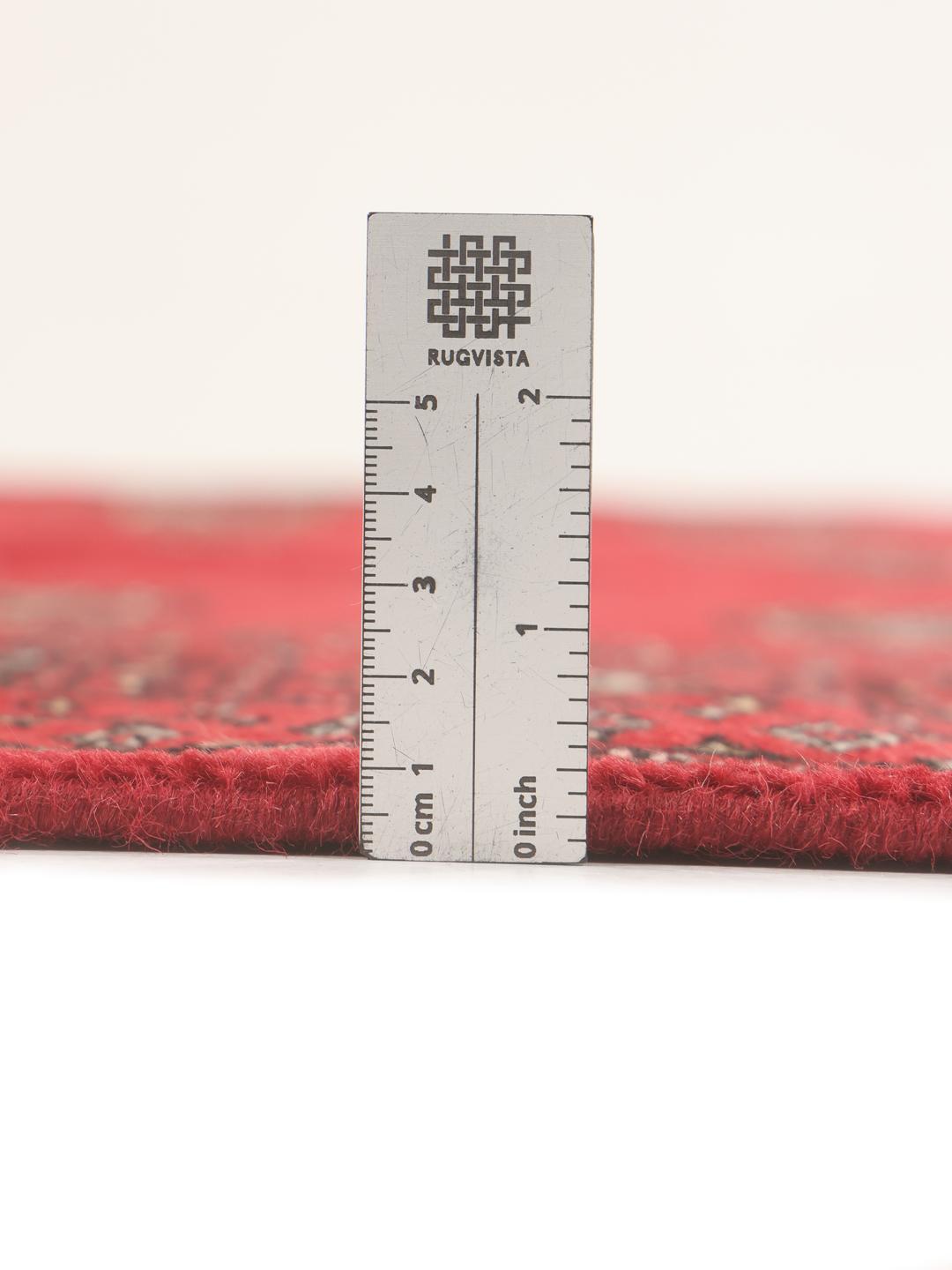
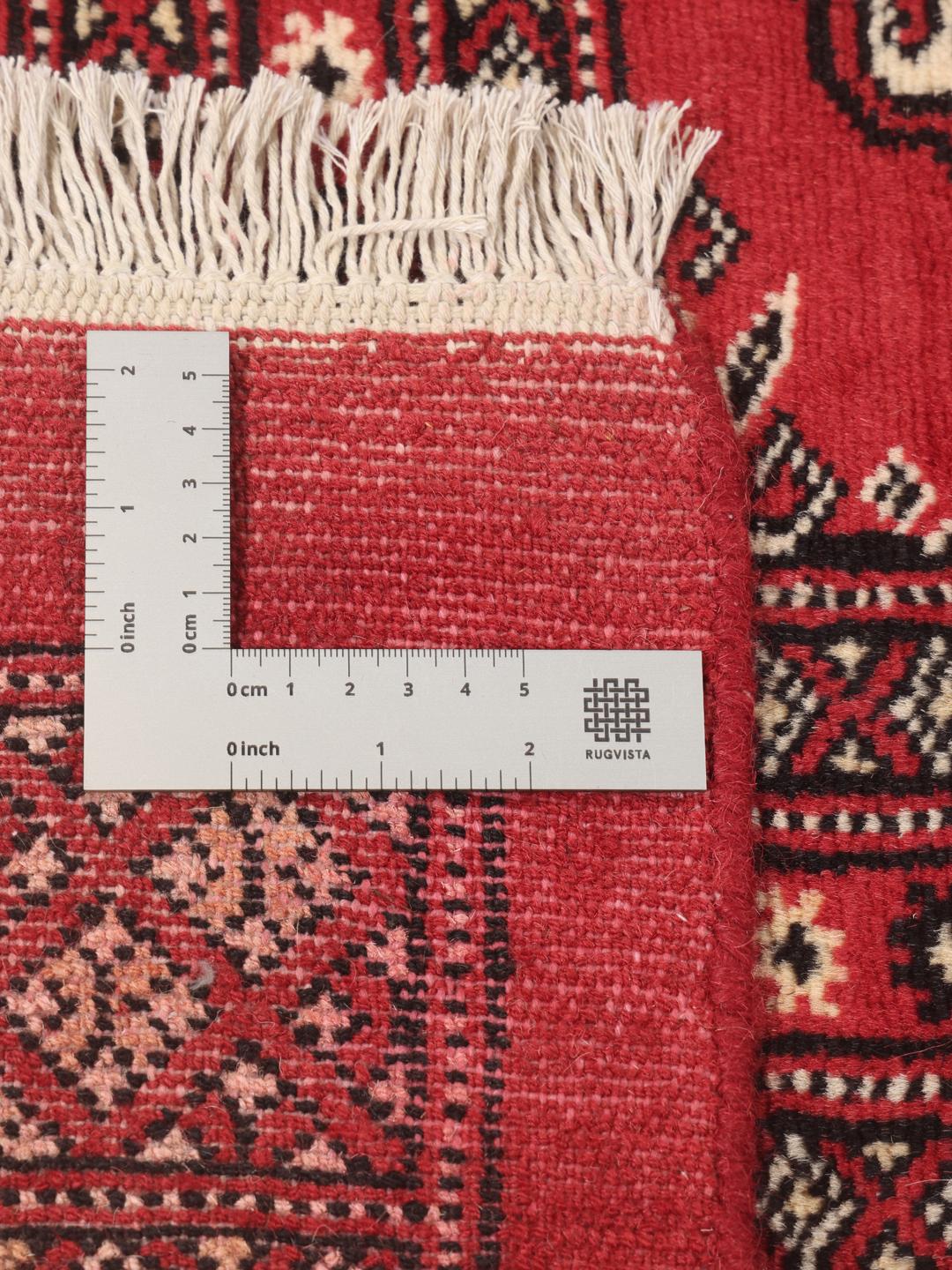
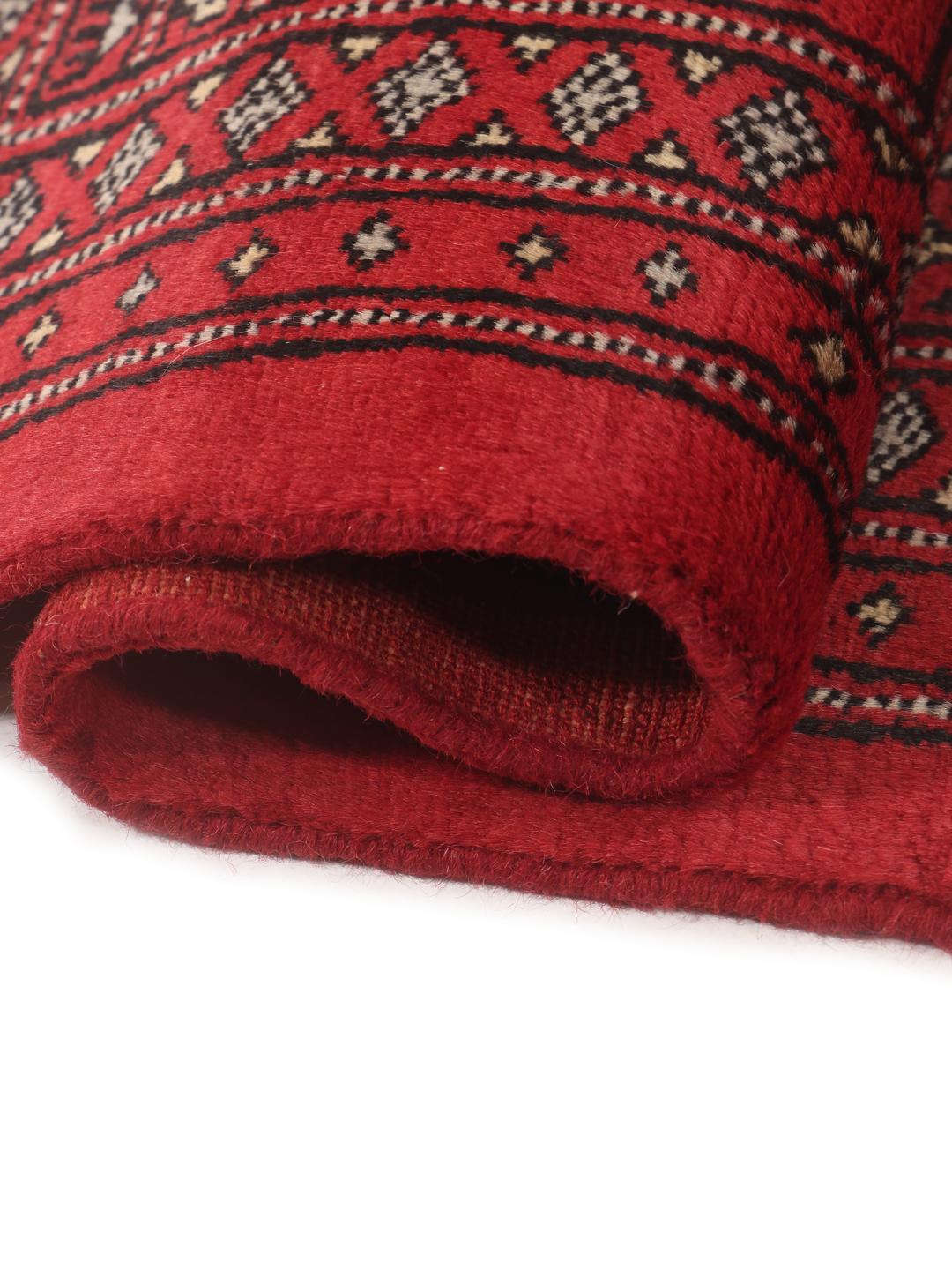
The term 2ply refers to the construction of the wool pile, where two strands of yarn are twisted together before being knotted. This technique is significant because it produces a pile that is substantially denser, more lustrous, and longer-lasting than single-ply alternatives. For the owner, this means a rug that is not only softer and more luxurious to walk on but also better equipped to handle the wear of daily life.
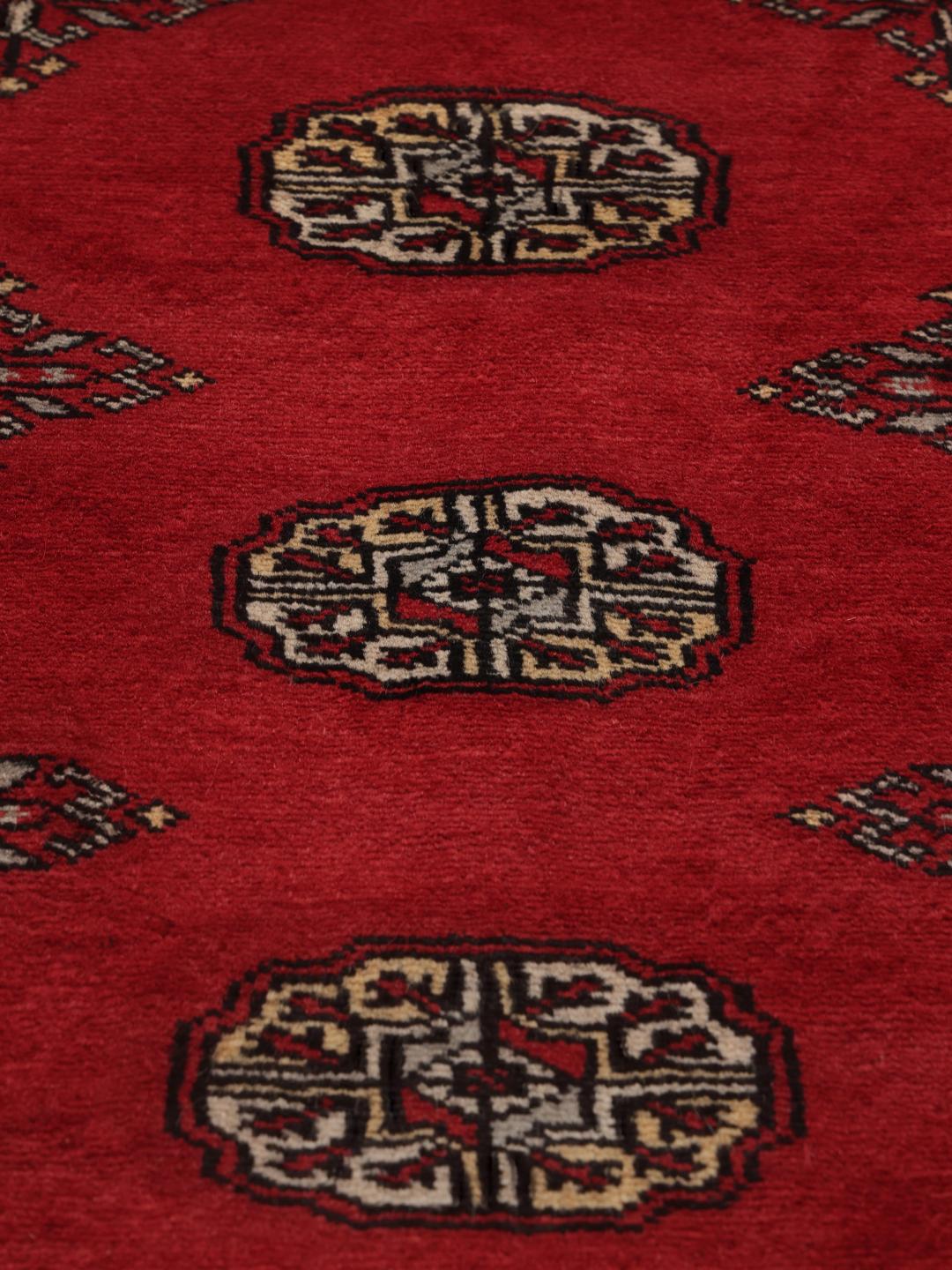
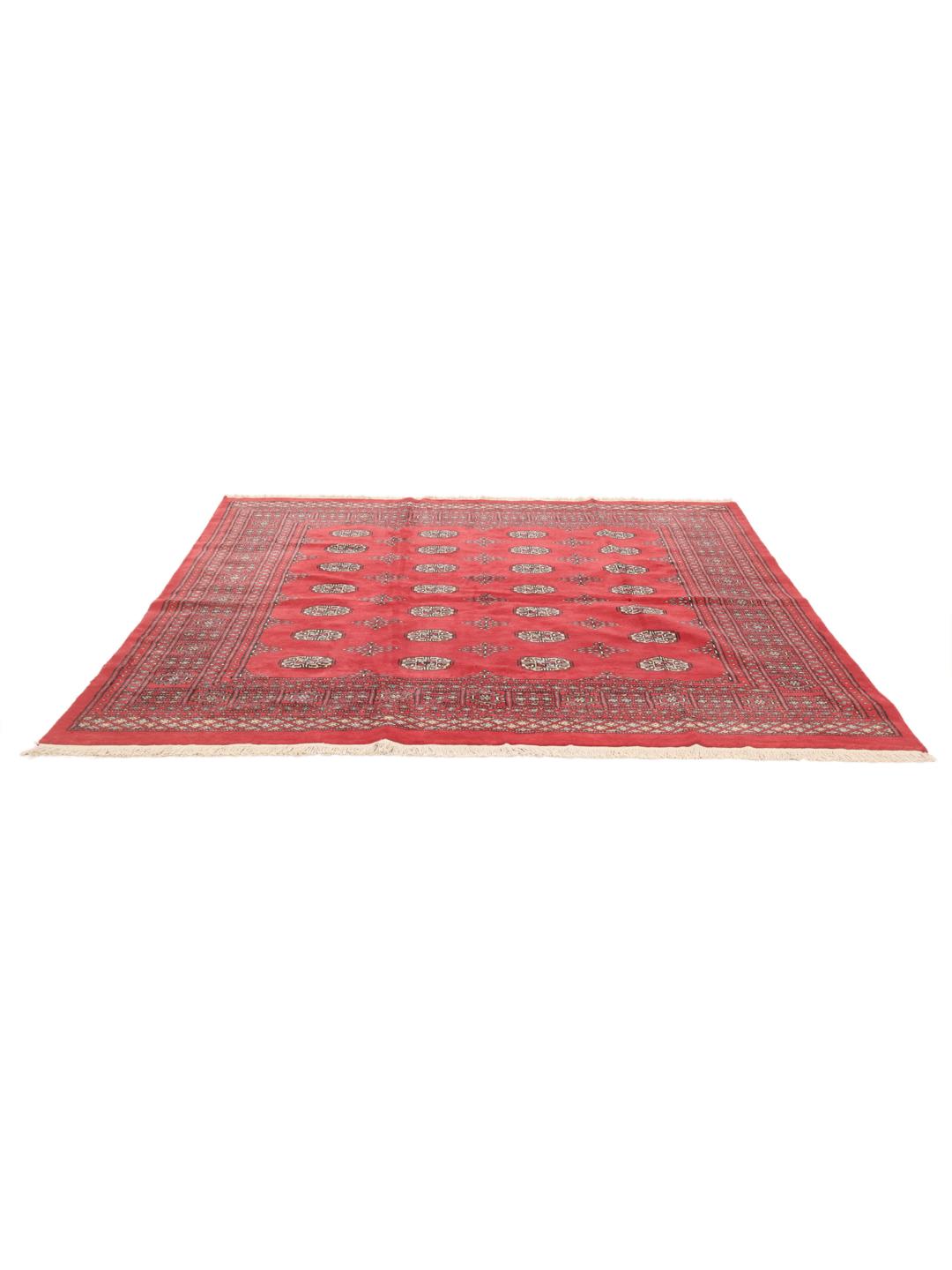
Visually, this rug is defined by the iconic repeating gul motifs, which are stylised, octagonal medallions reminiscent of elephant footprints. These are organised in a formal, rhythmic grid across the red field and are framed by detailed, intricate borders. Such patterns are a hallmark of the tradition, symbolising order and harmony through their precise, repetitive geometry.
Rugs from this tradition are highly valued by collectors and enthusiasts who appreciate the intersection of heritage and technical skill. Owning a piece like this is more than just a decorative choice; it is an investment in a craft that has been passed down through generations. It brings a sense of cultural weight and timeless quality to your home, standing as a testament to the patience and expertise of its makers.