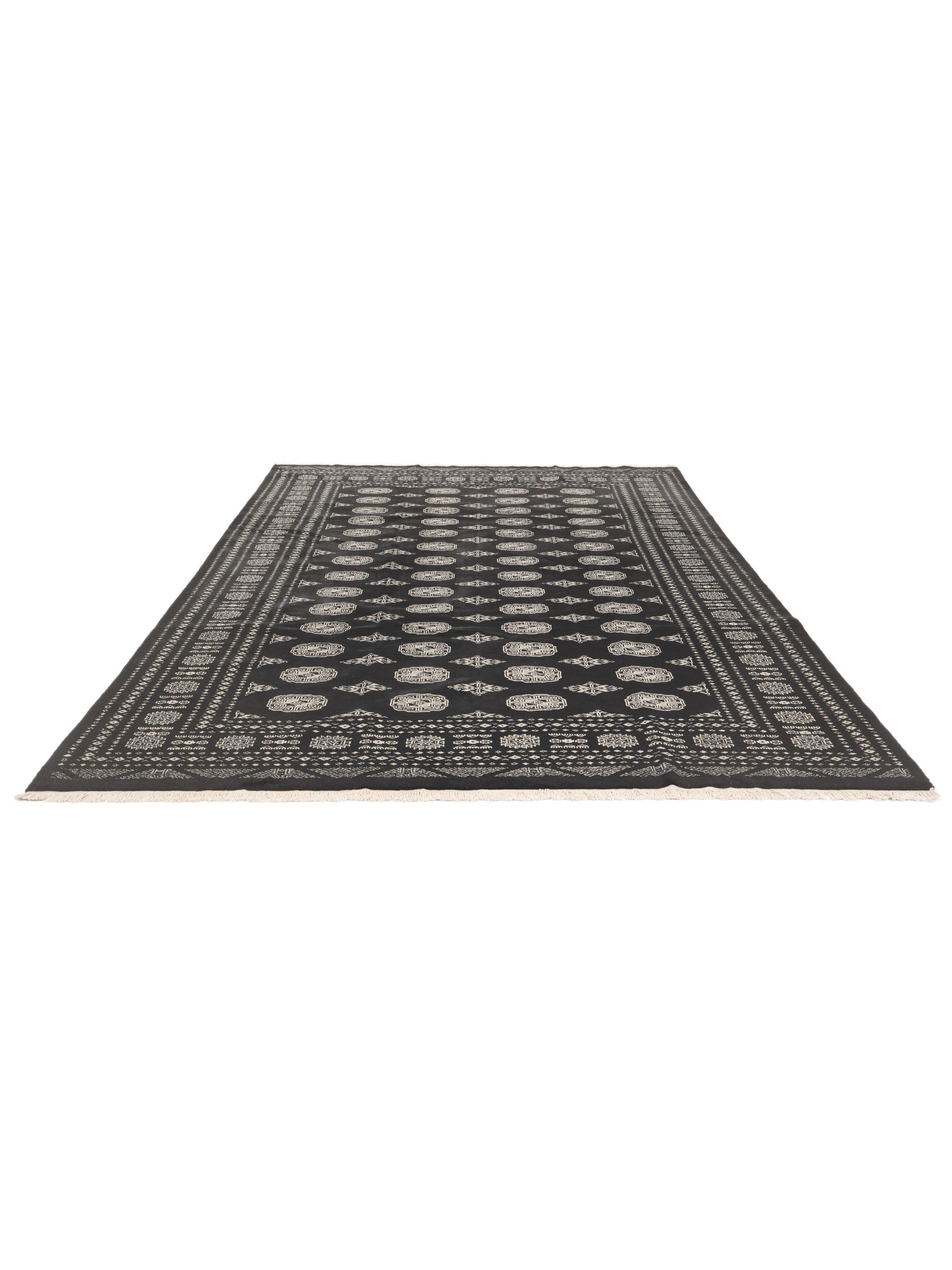
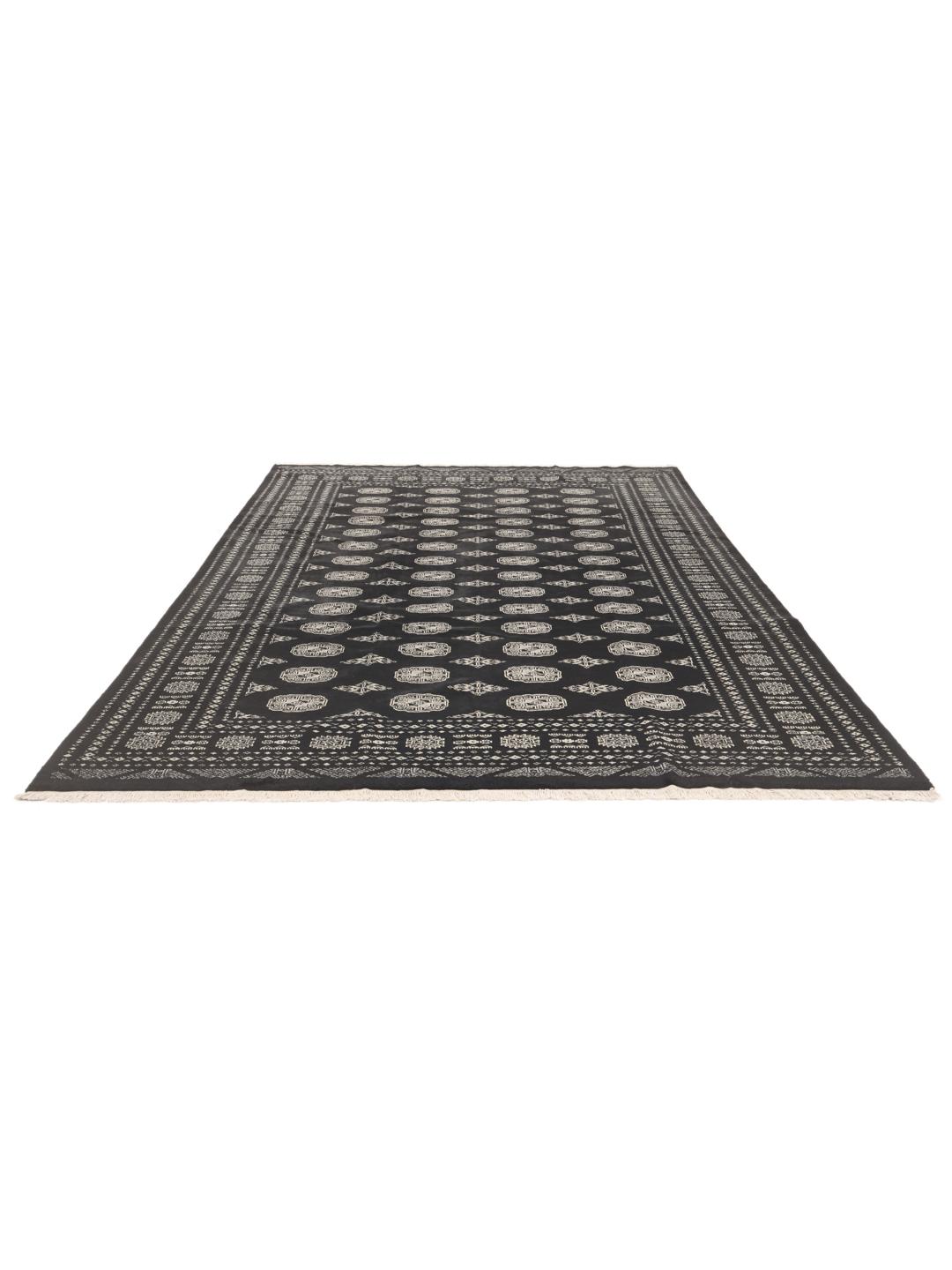
The Bokhara rug tradition traces its stylistic roots back to the ancient Silk Road city of Bukhara in Central Asia. Historically, these rugs were produced by nomadic tribes who carried their weaving techniques across vast territories, eventually evolving into the sophisticated, highly refined styles we see today in Pakistan.
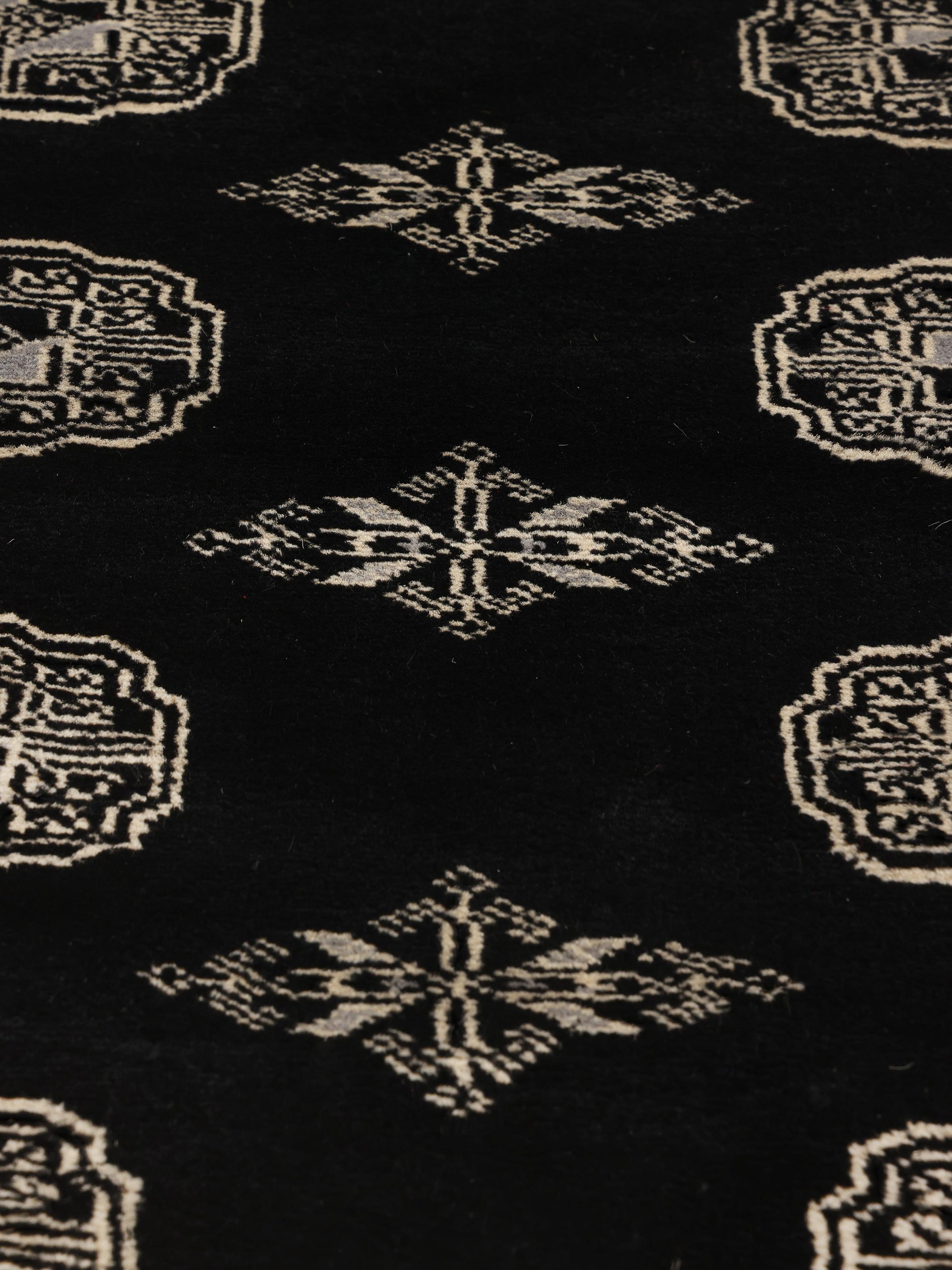
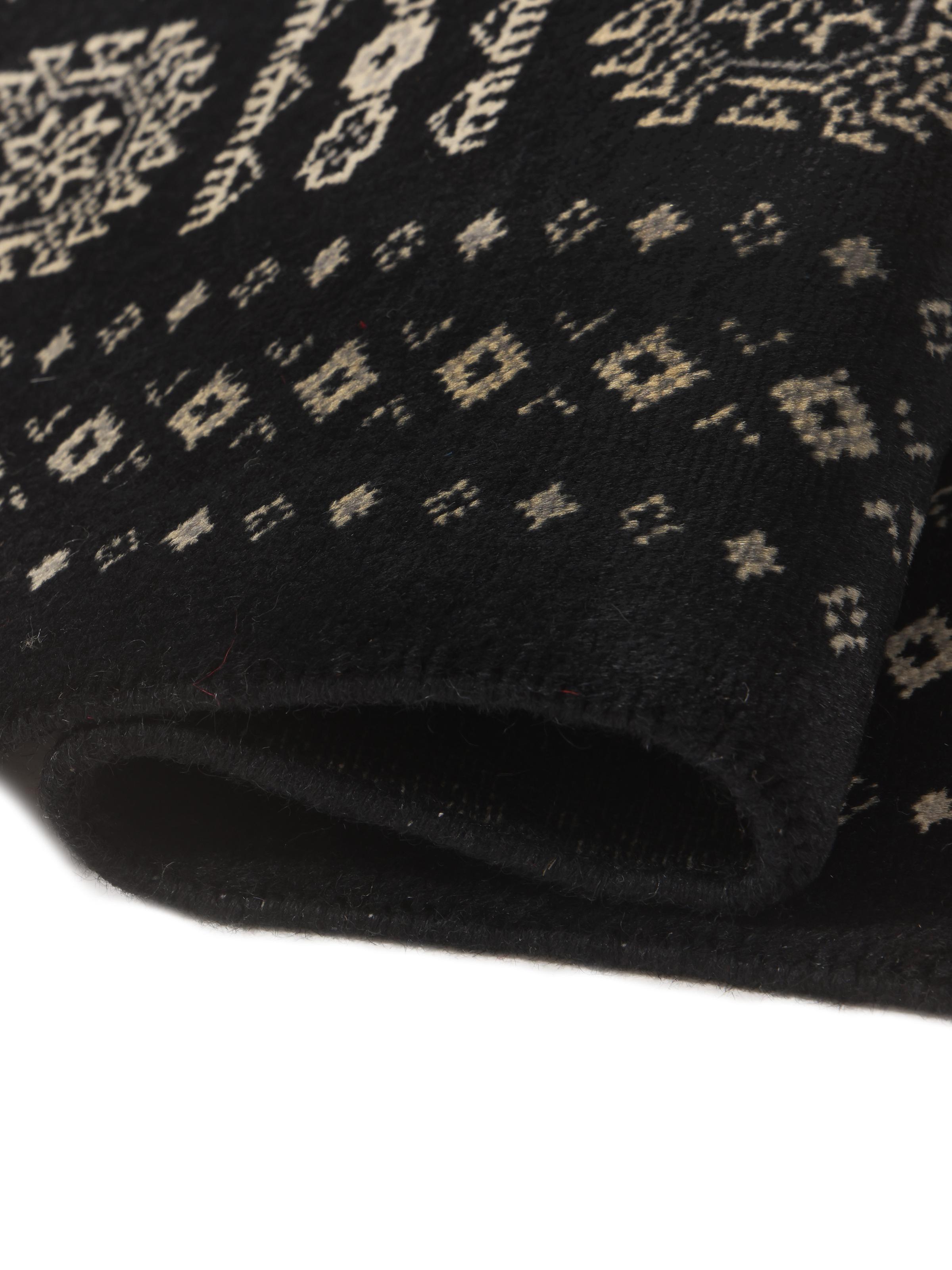
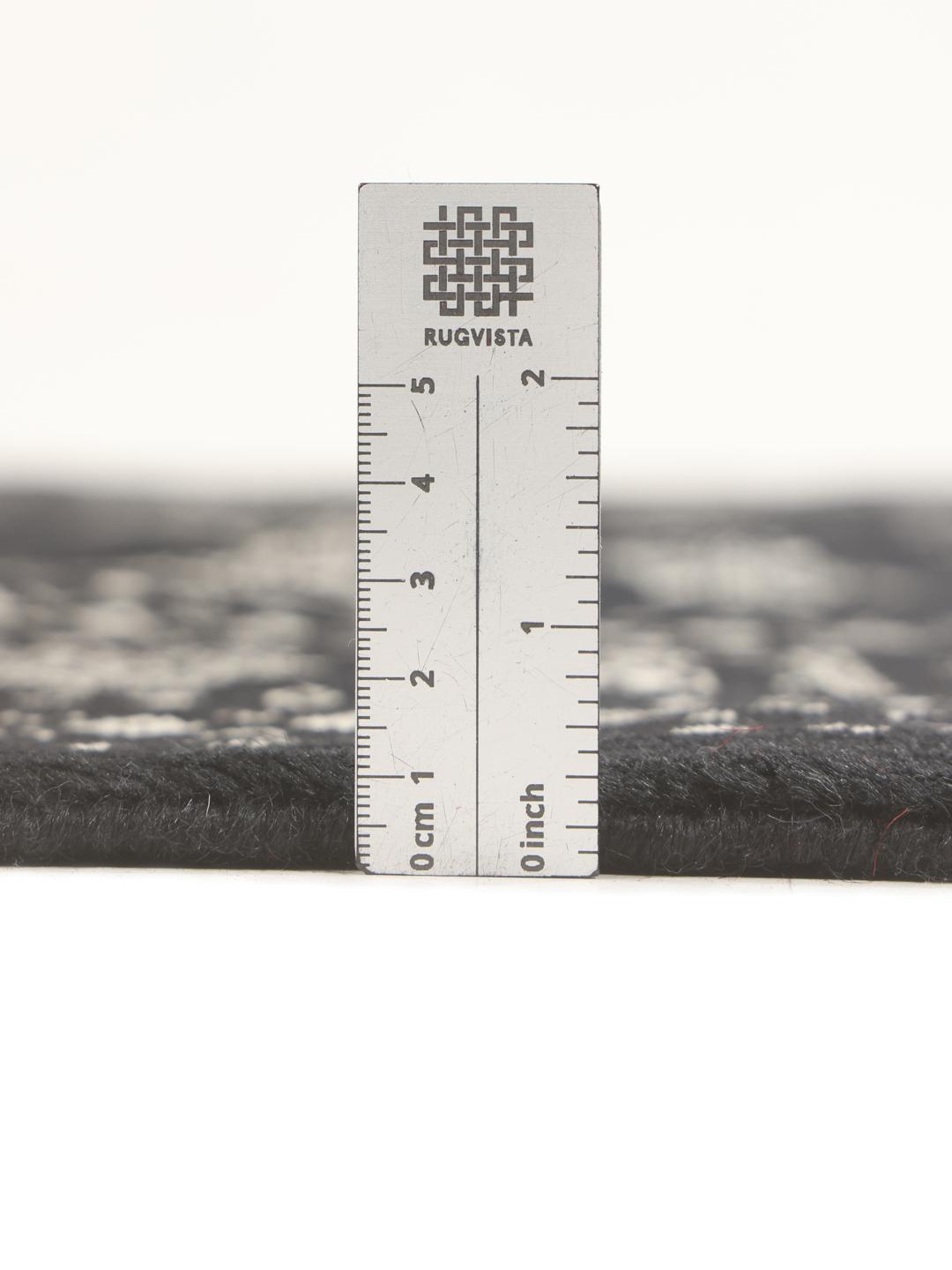
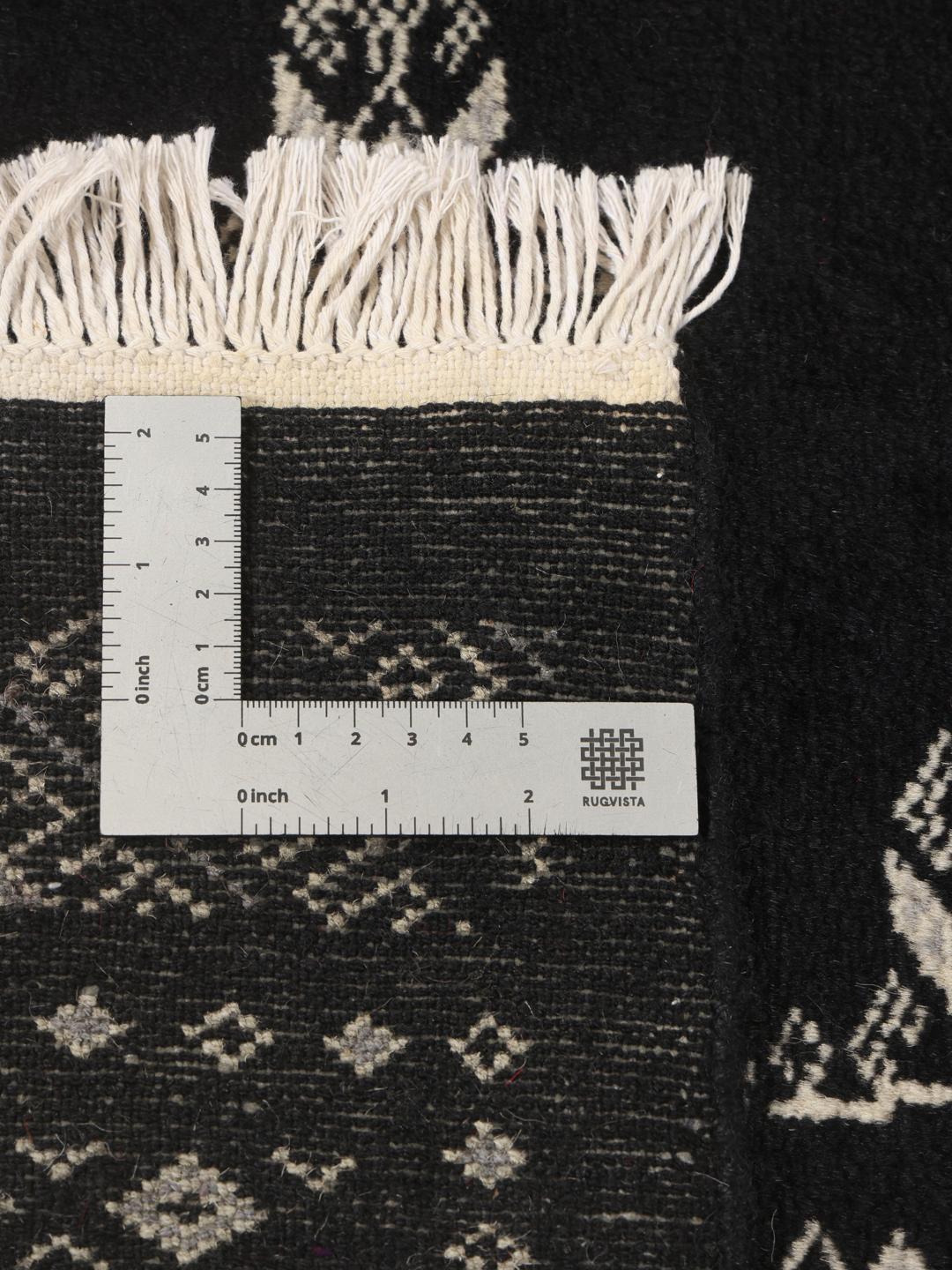
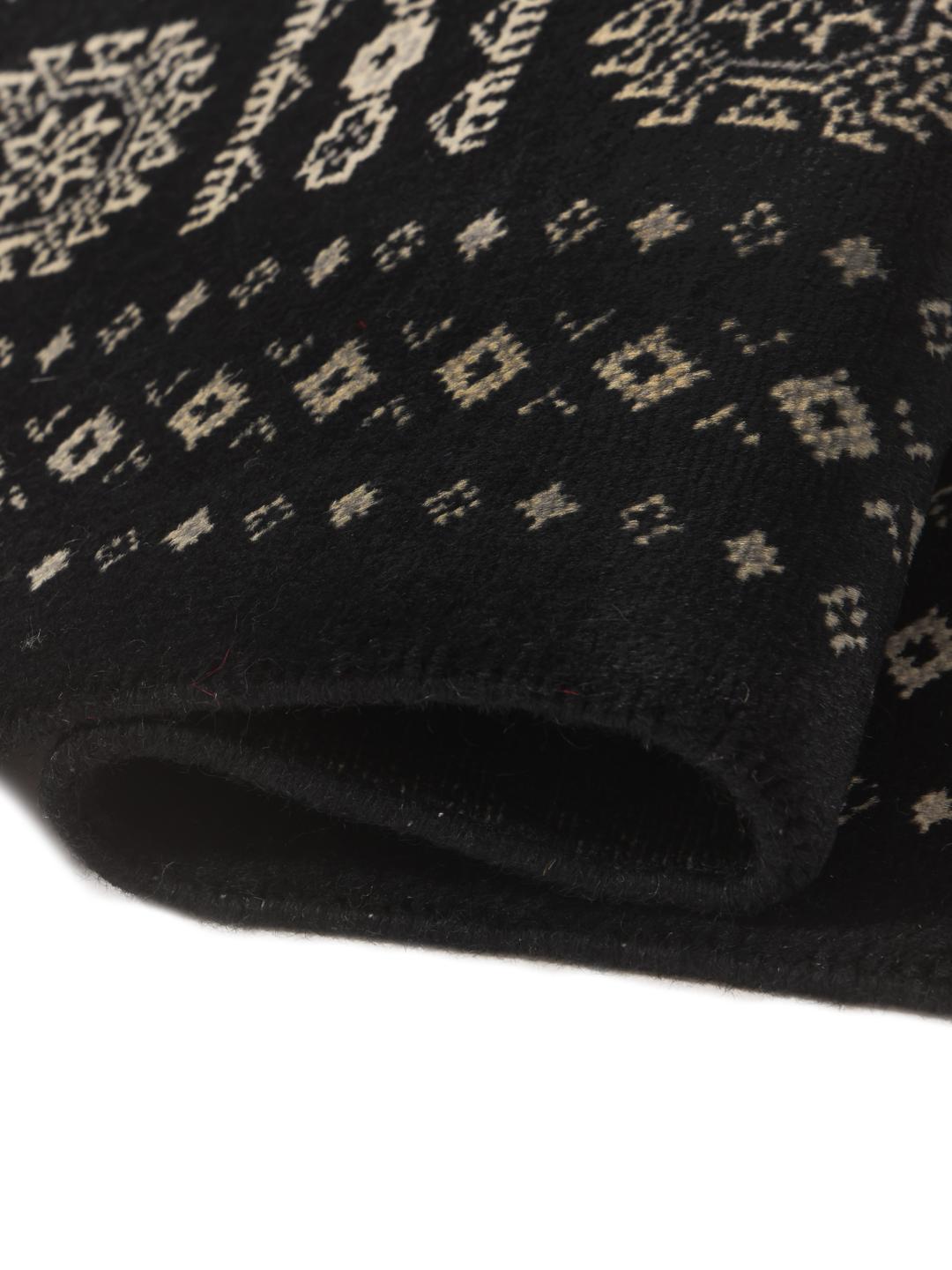
The term 2ply refers to the specific way the wool is prepared before weaving. By twisting two strands of wool together, the pile becomes significantly more durable and gains a distinctive lustre that catches the light beautifully. This technique is a hallmark of high-quality craftsmanship, ensuring the rug remains soft to the touch while being resistant to wear.
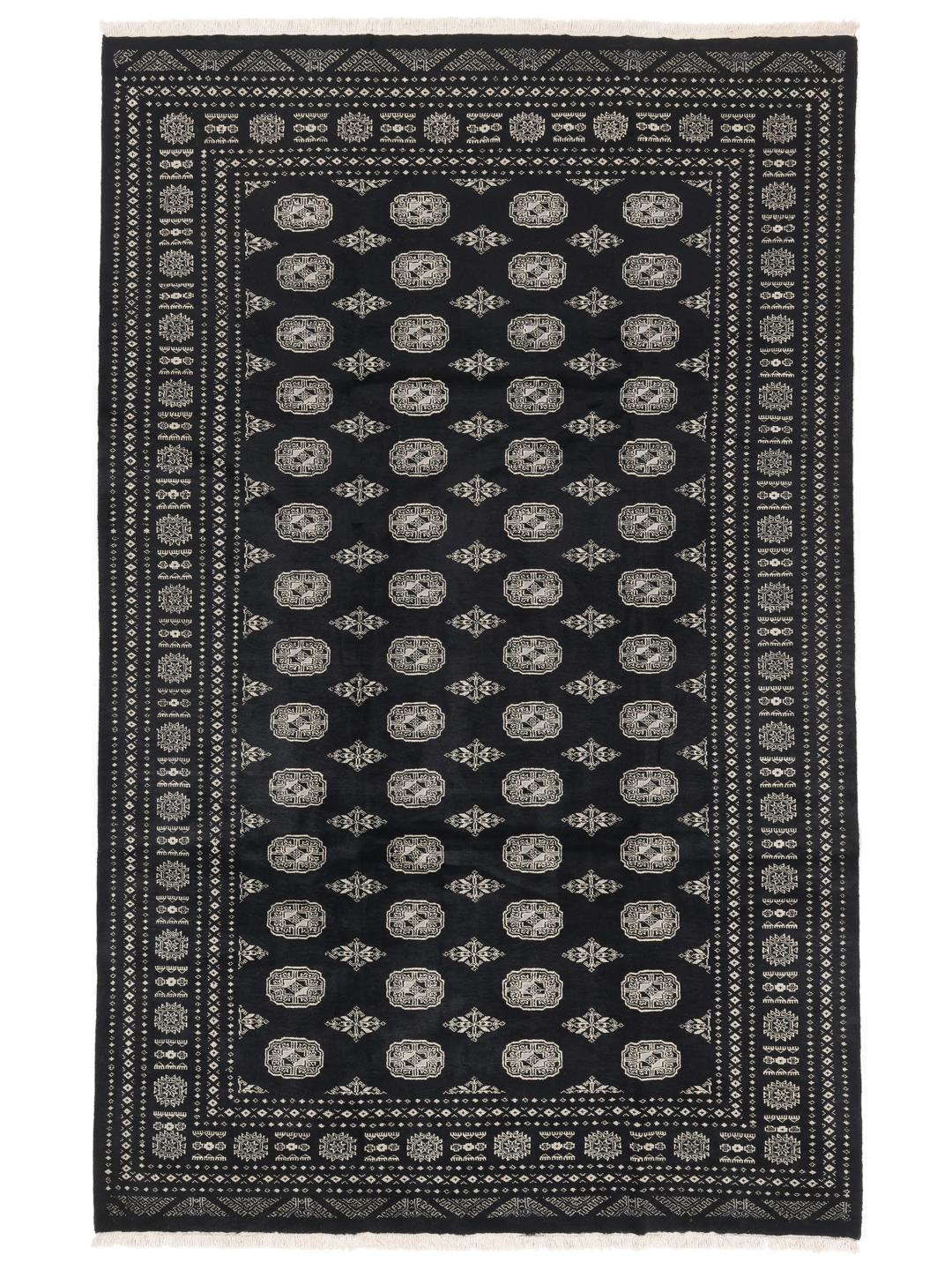
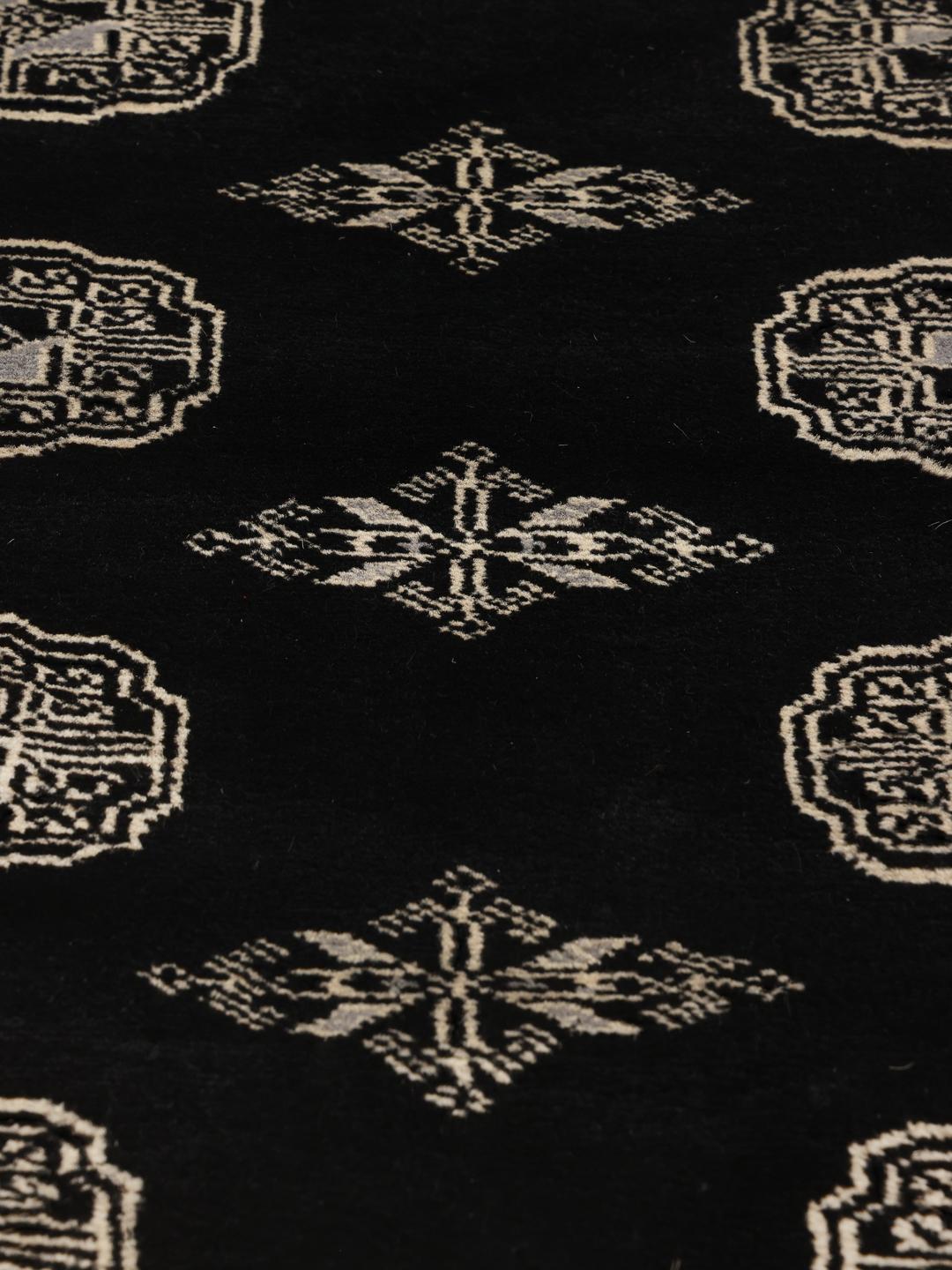
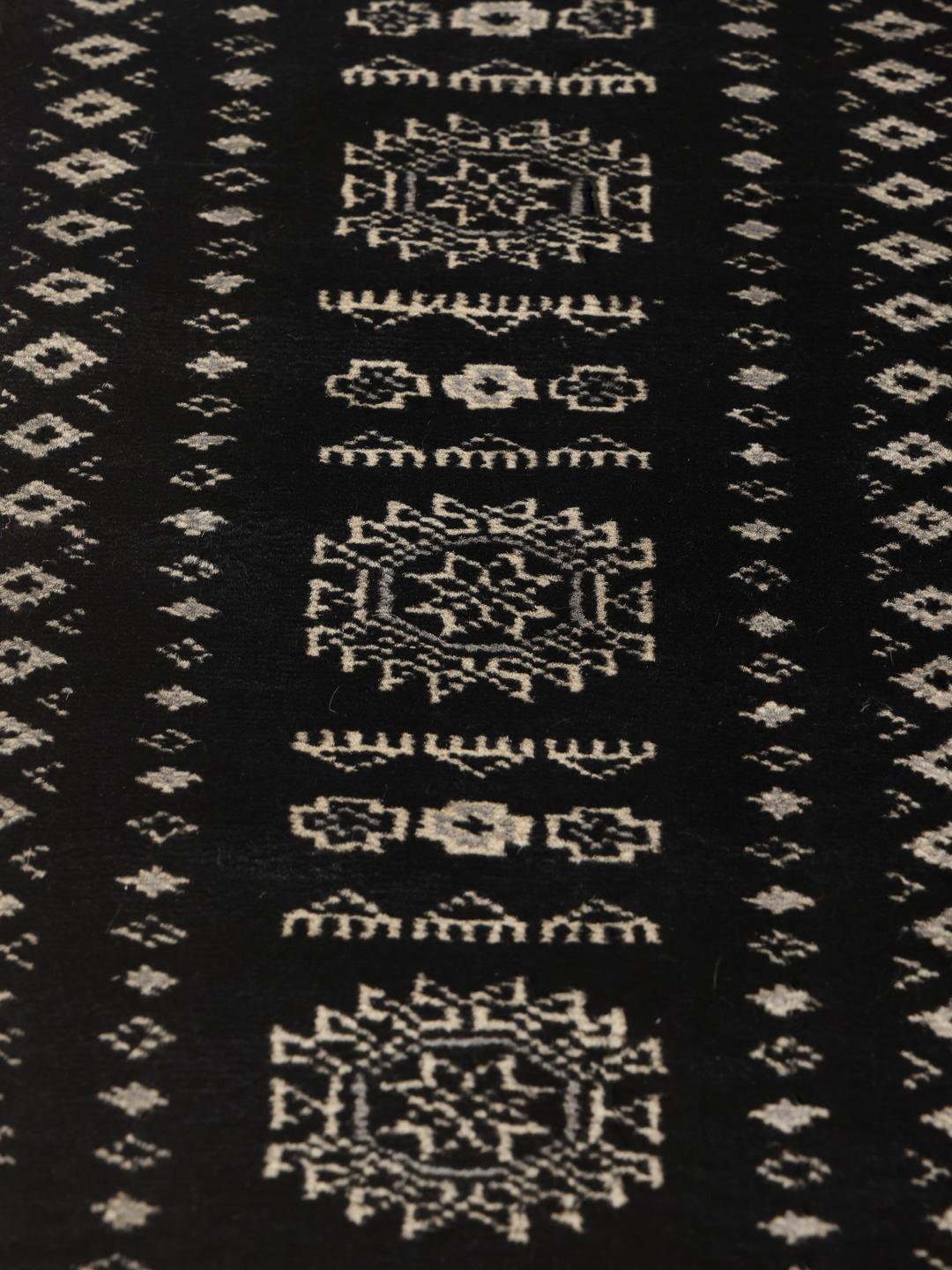
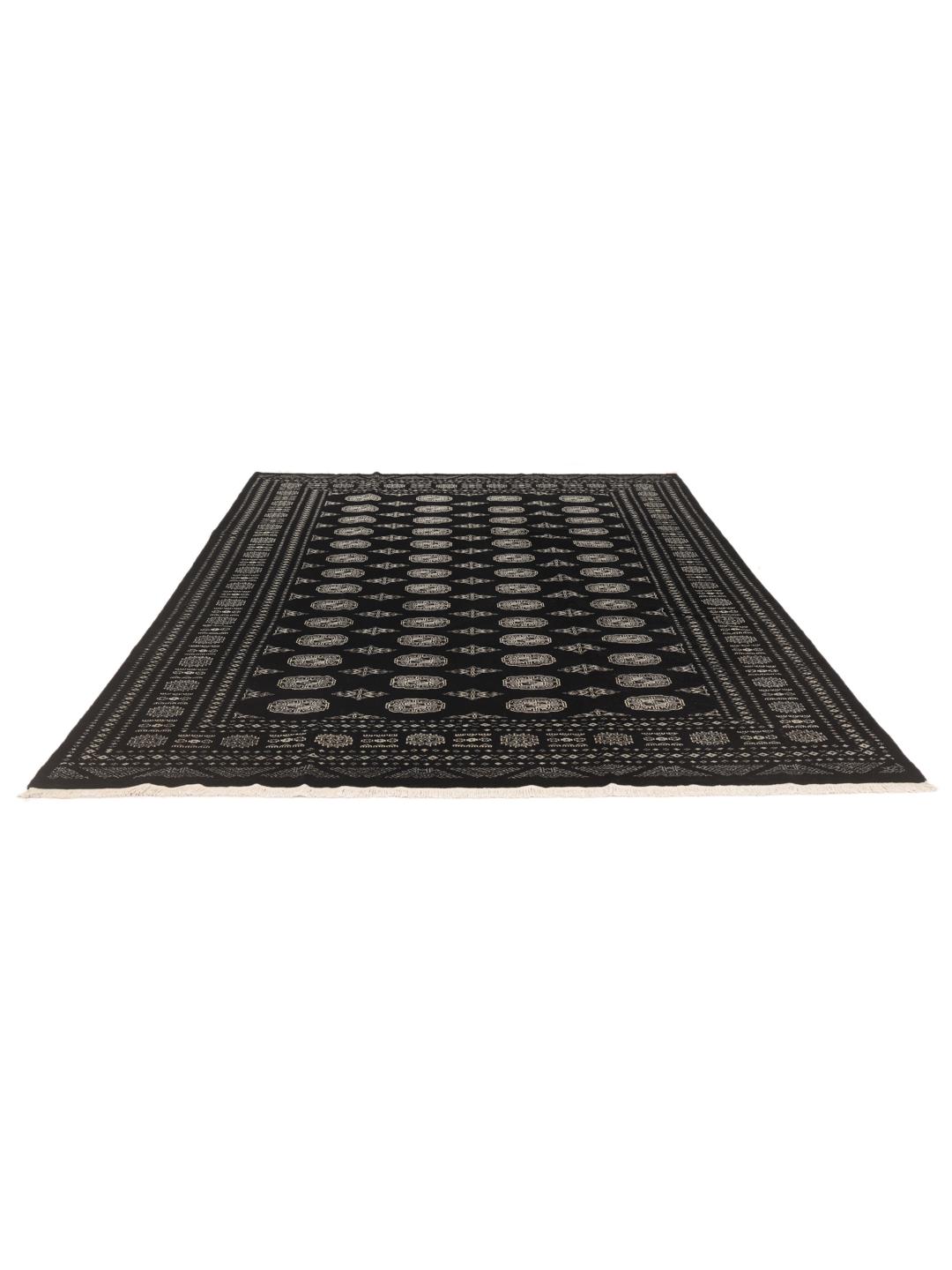
Visually, this rug is defined by the classic gul motif, which appears as repeating, rounded medallions arranged in elegant rows across the field. These symbols are deeply traditional, often representing tribal heritage and the natural world. The use of a black field is a striking choice that modernises the traditional geometric border, making it a versatile piece for contemporary homes.
Owning a hand-knotted piece from this tradition is a way to connect with a long history of human artistry. These rugs are highly valued by collectors not only for their visual appeal but for the immense skill required to produce them. By bringing one into your home, you are preserving a craft tradition that prioritises patience, precision, and an enduring sense of style.