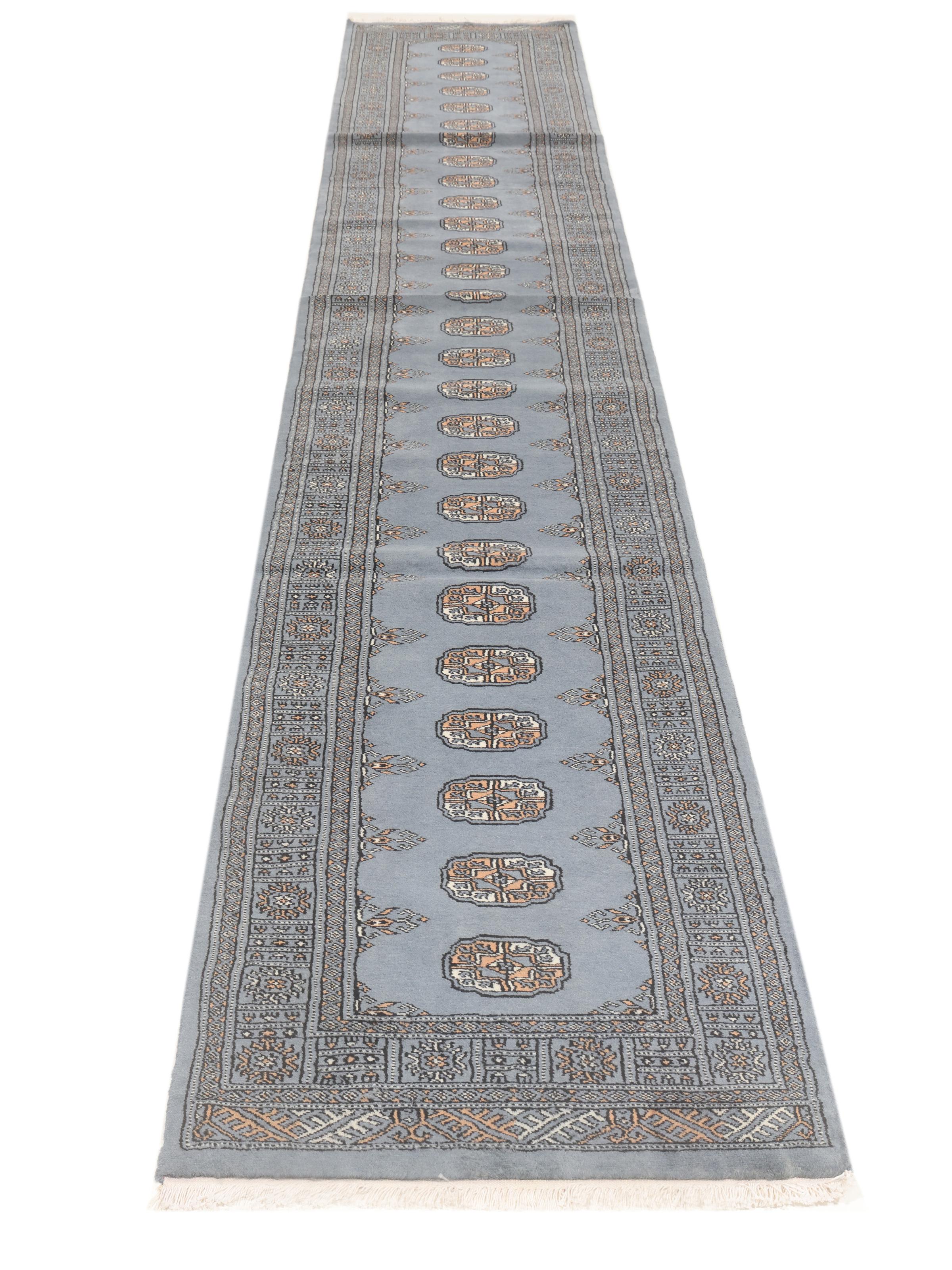
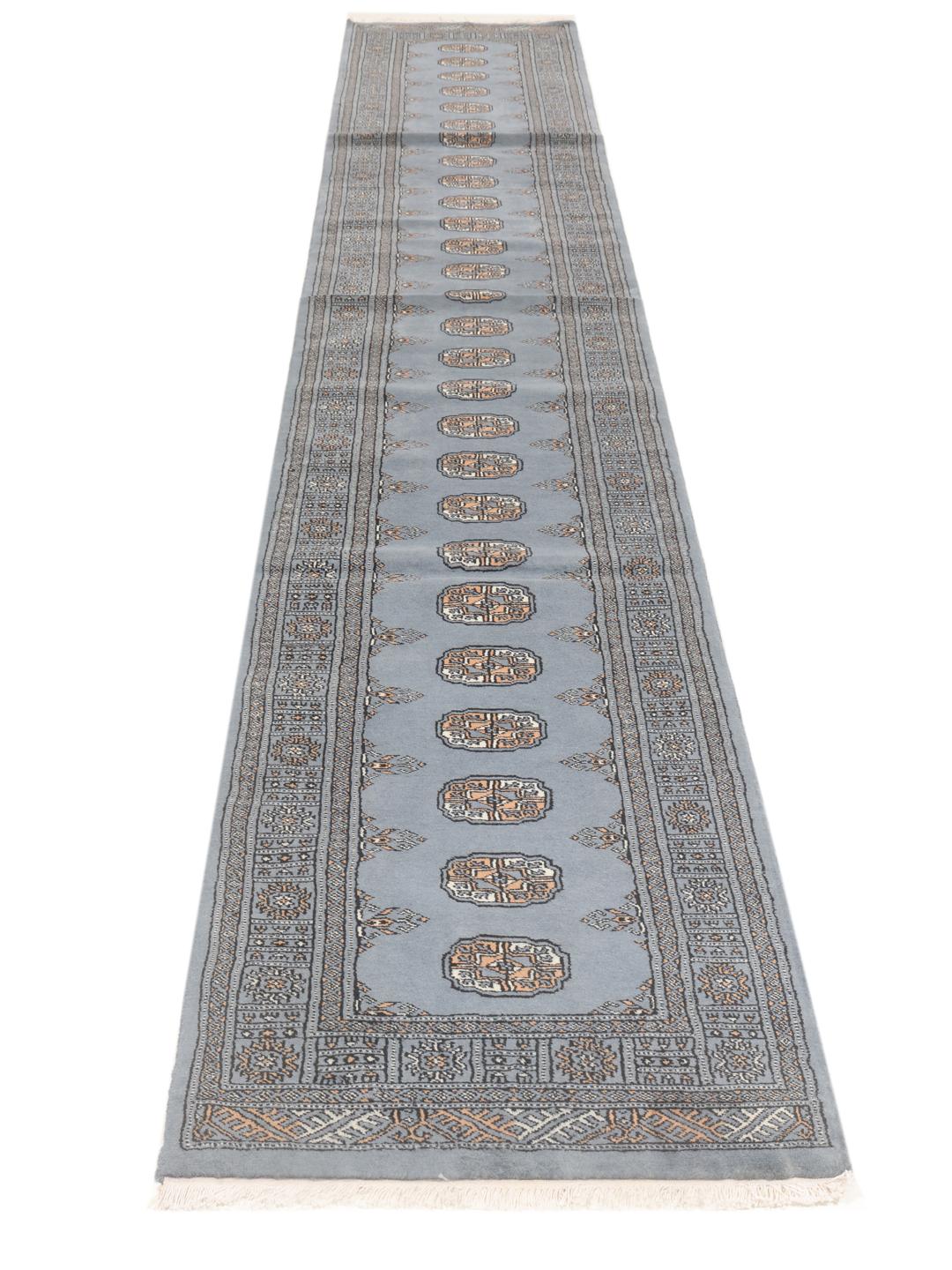
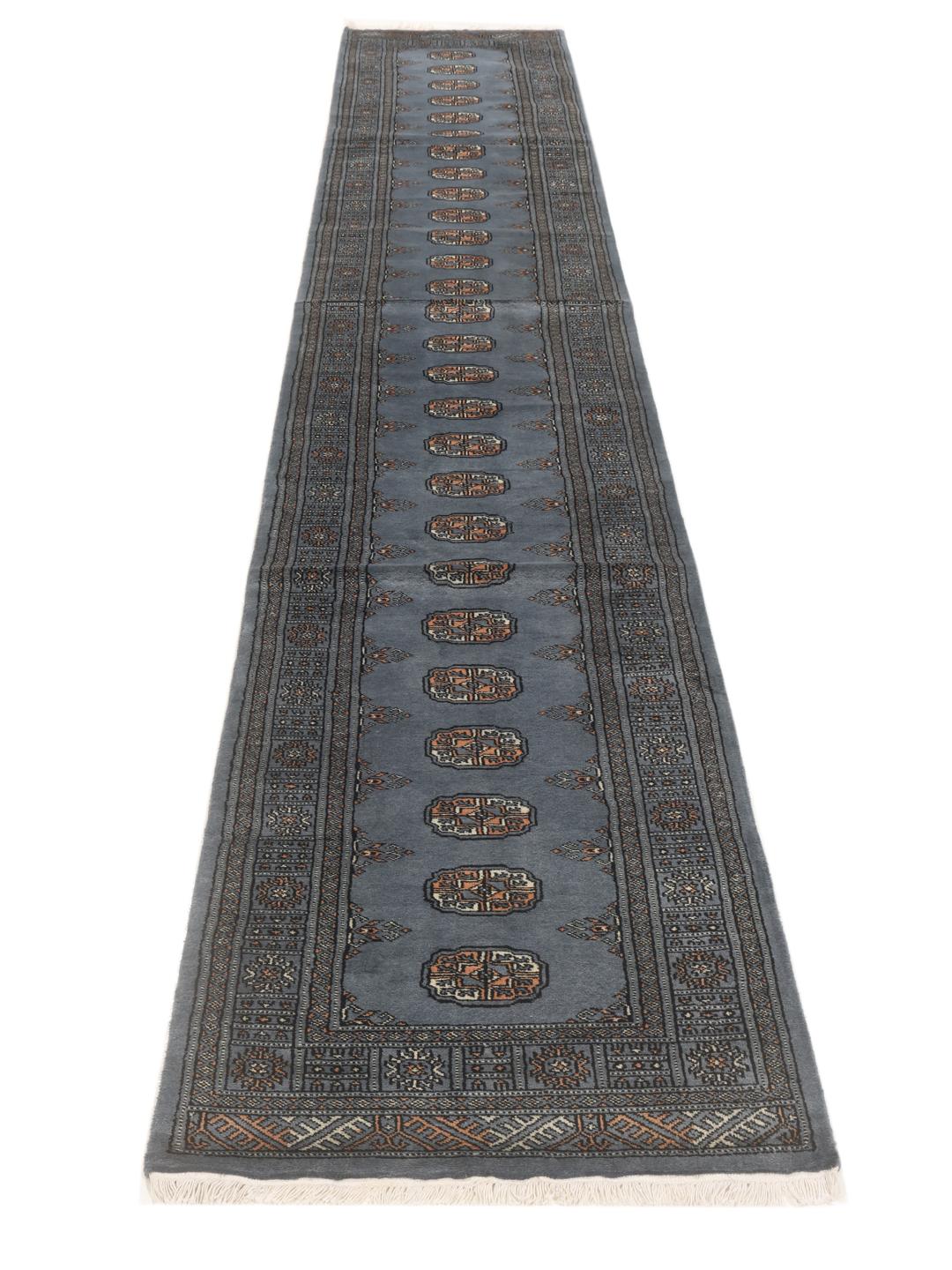
Bokhara rugs take their name from the ancient Silk Road city of Bukhara in Central Asia, a historical hub of trade and culture. While the style originated in this nomadic region, the most refined and sought-after examples today are woven in Pakistan. This evolution reflects the migration of weaving techniques across borders, where artisans have adapted traditional patterns to suit contemporary aesthetics while preserving their ancient soul.
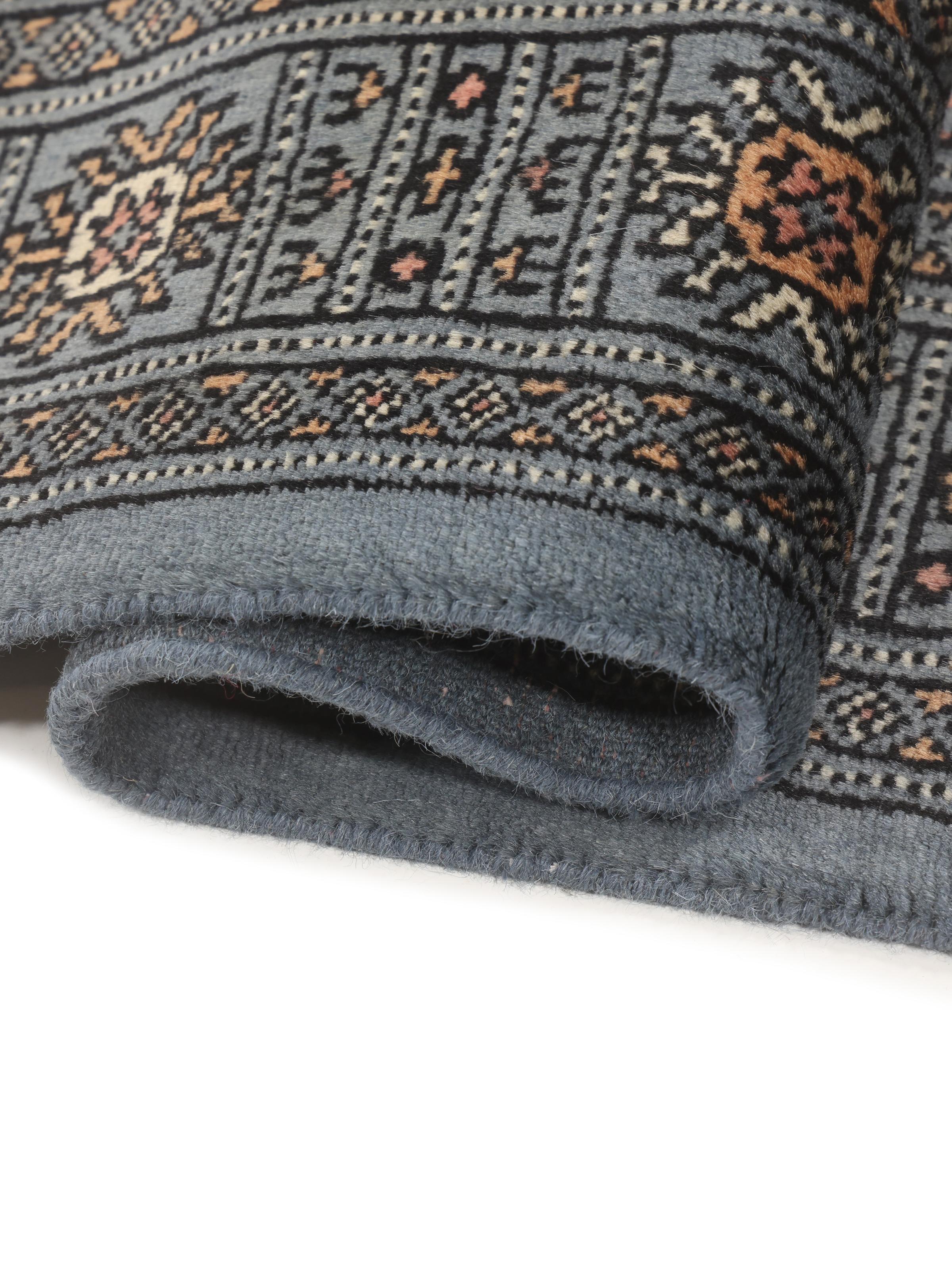
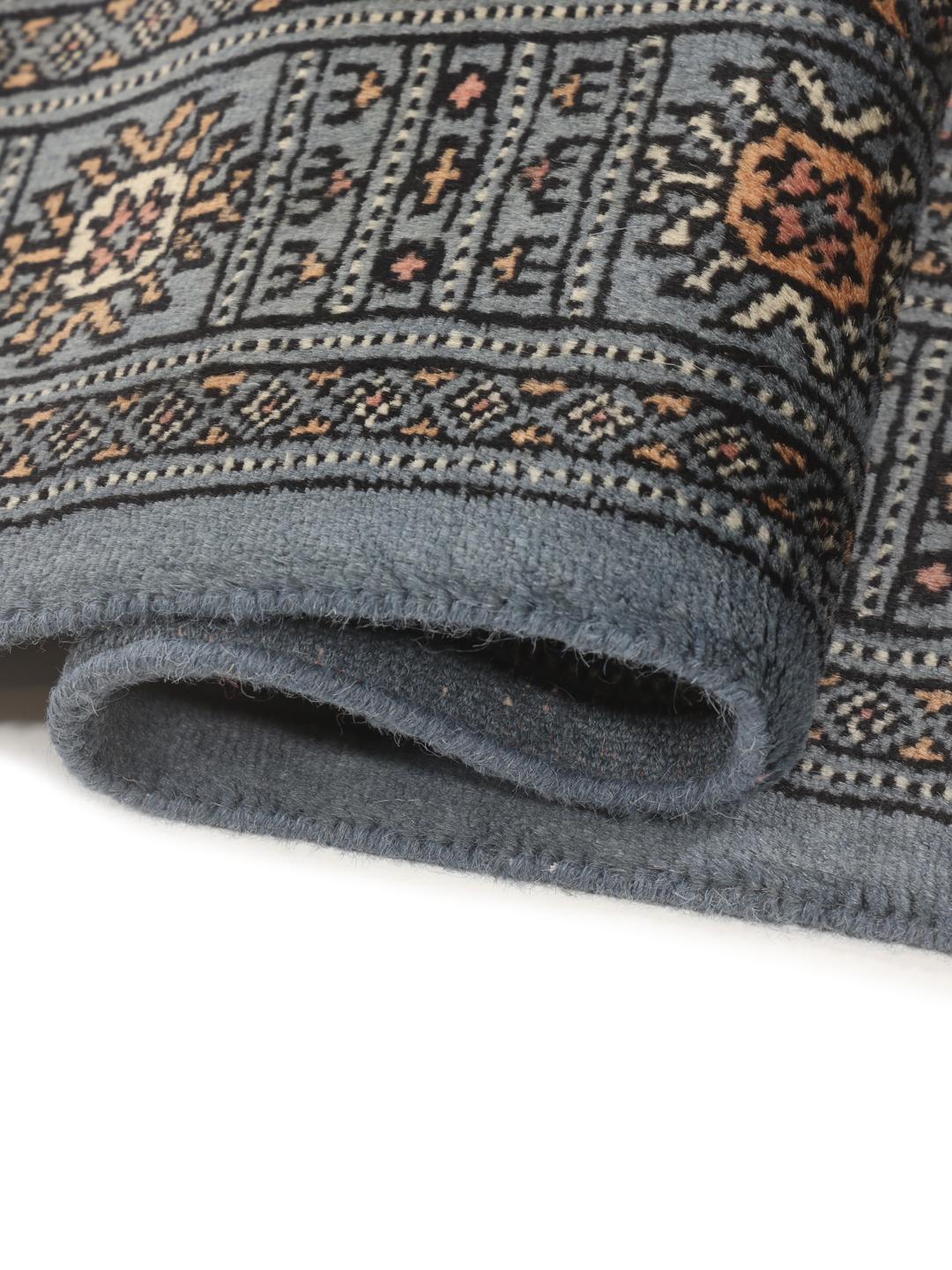
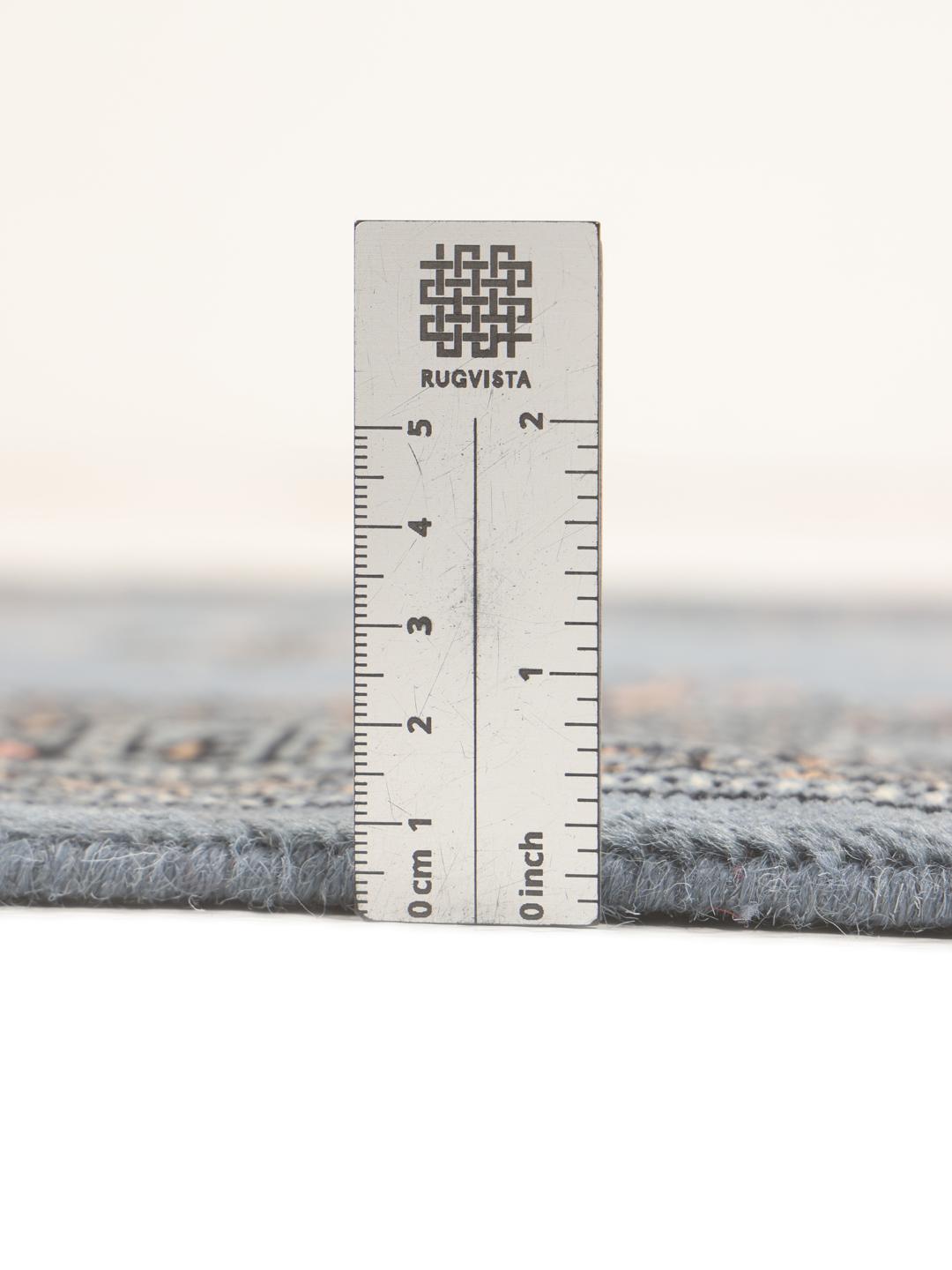
The '2ply' designation refers to the construction of the wool pile, where two strands of yarn are twisted together before being knotted. This technical choice is significant because it creates a pile that is substantially more lustrous, dense, and resilient than single-ply alternatives. It provides a thicker, more cushioned surface that feels substantial underfoot and holds its shape better over the long term.
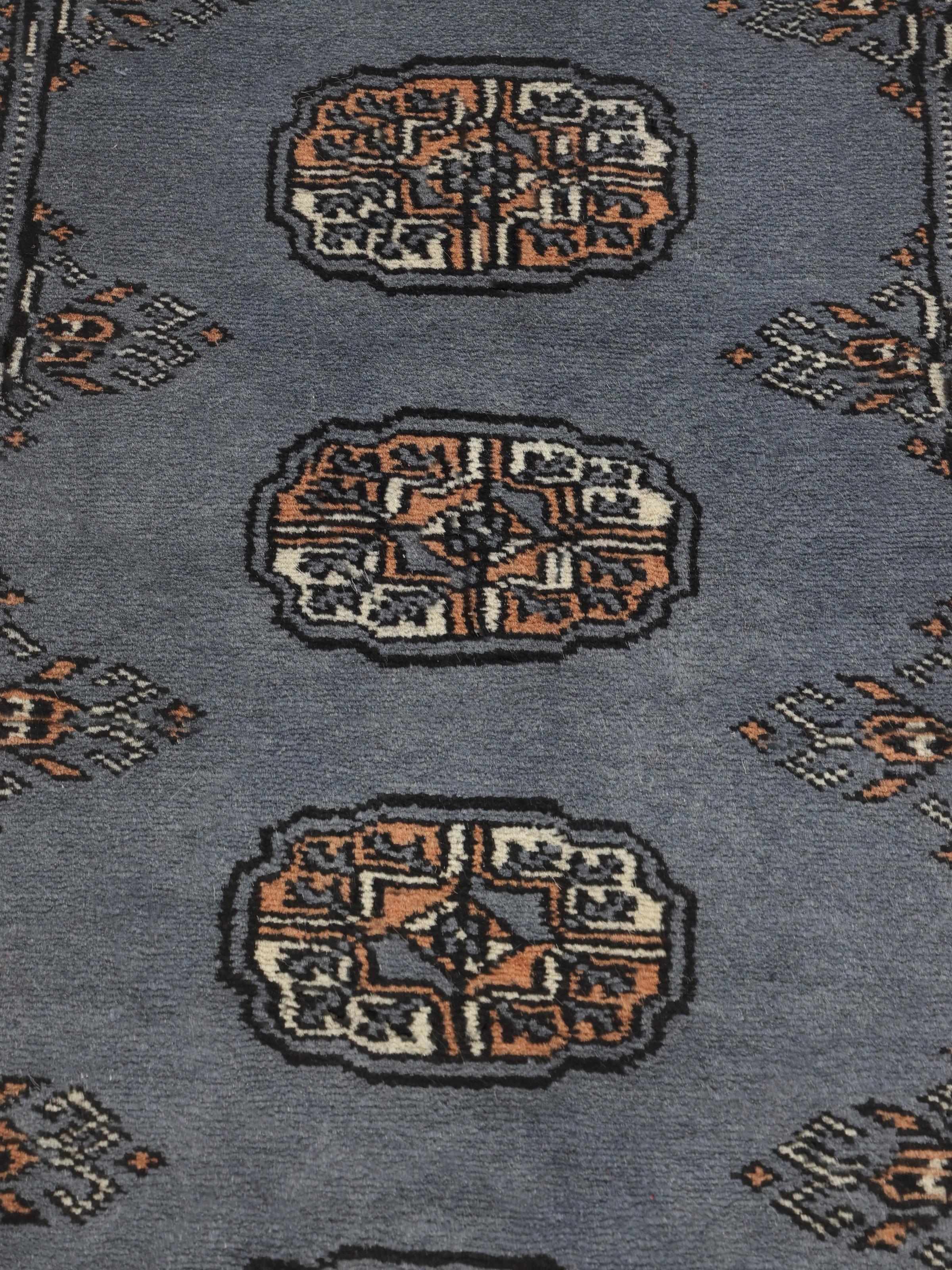
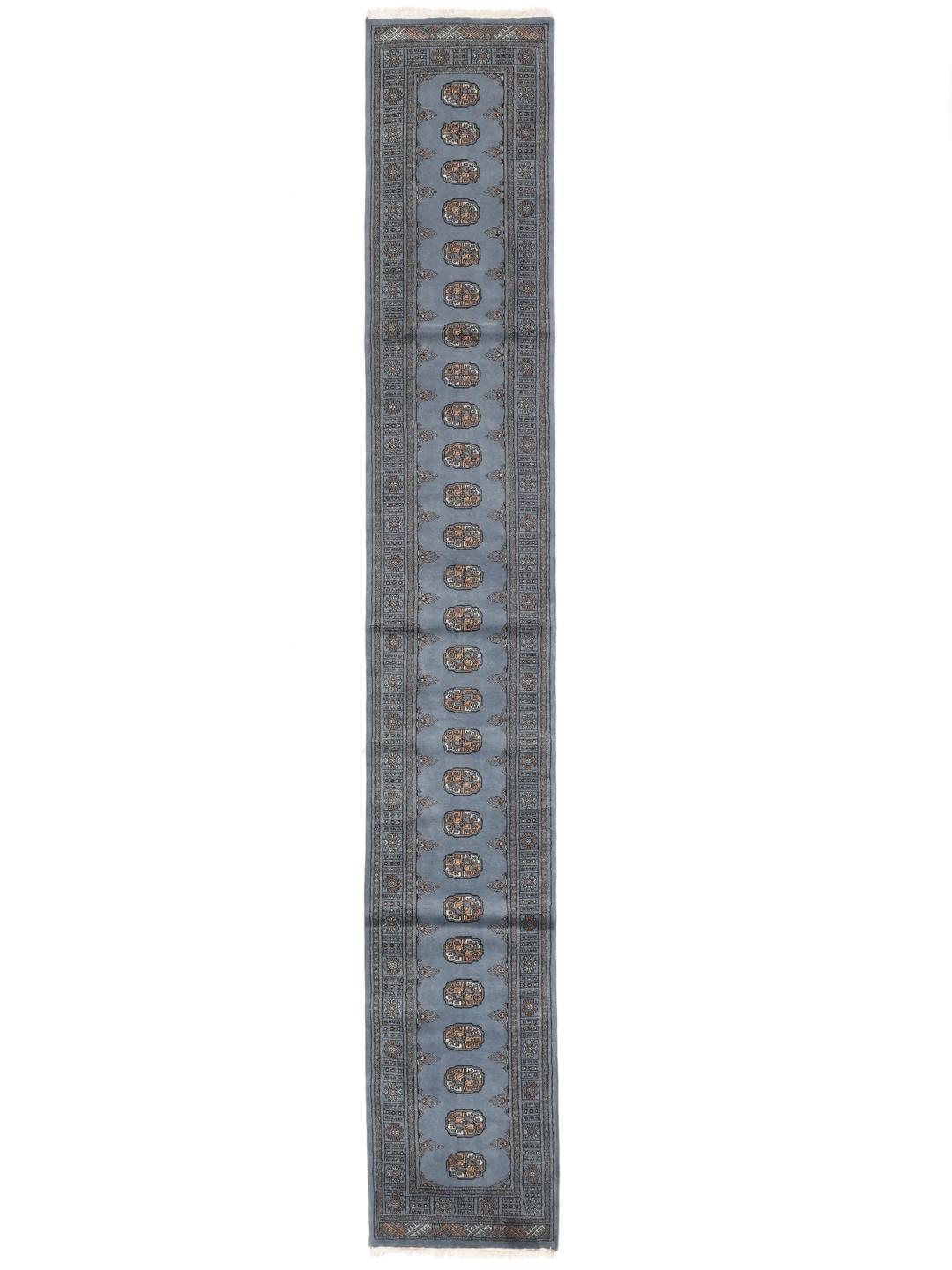
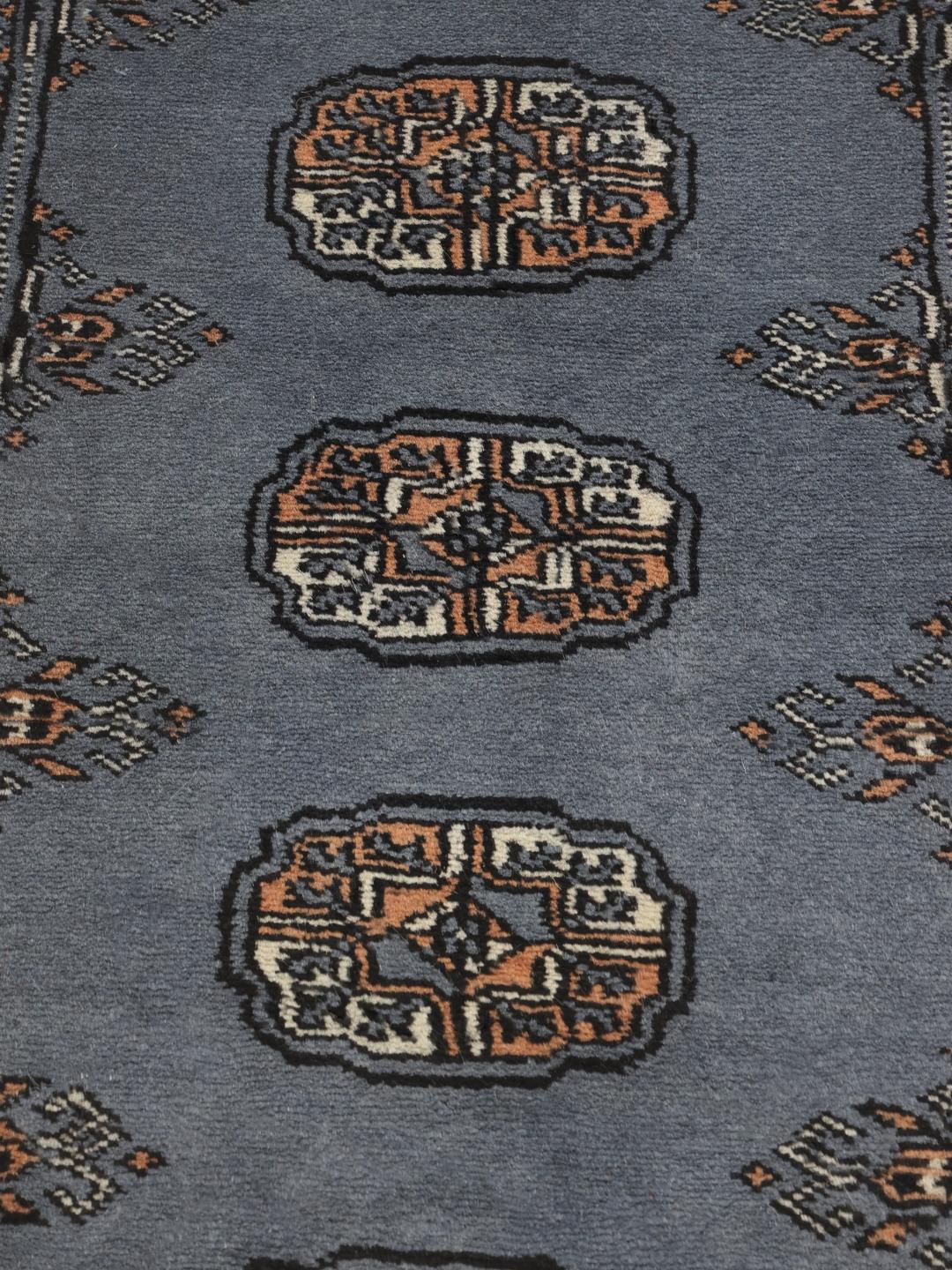
The signature design element of these rugs is the recurring 'gul' motif, which often resembles an elephant's footprint or an octagonal medallion. These are arranged in precise, repeating rows across the field, framed by complex, multi-layered decorative borders. While traditional Bokhara rugs are famous for deep reds, this specific piece stands out with its calm blue field, showcasing how the tradition can be adapted to create a modern, refreshing look.
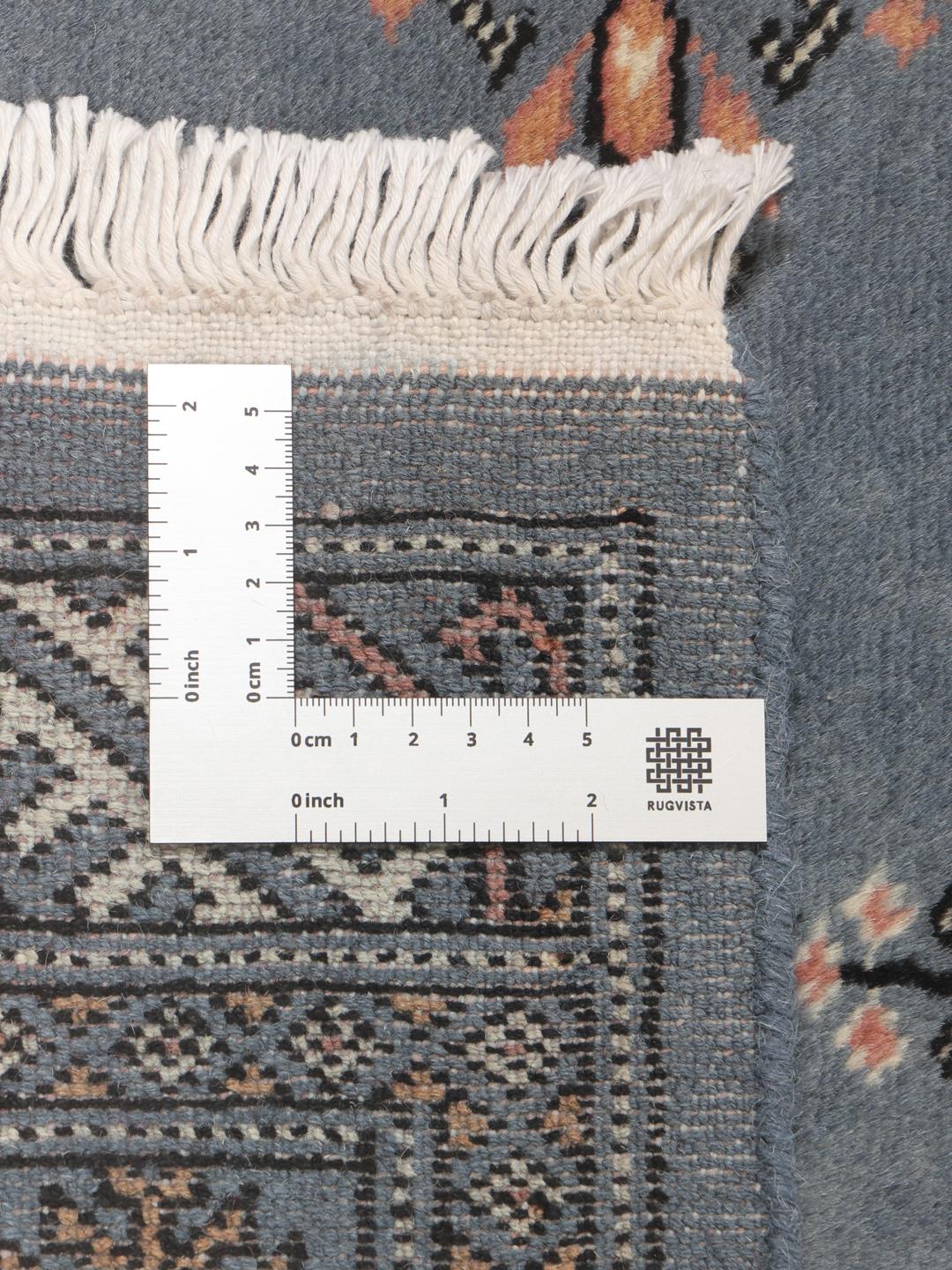
Owning a hand-knotted rug from this tradition is about more than just decoration; it is an investment in cultural heritage. Collectors value these pieces for the skill required to maintain such consistent symmetry and the deep connection they represent to generations of weavers. By bringing this runner into your home, you are continuing a legacy of craft that prioritises patience, beauty, and the enduring nature of hand-worked textiles.