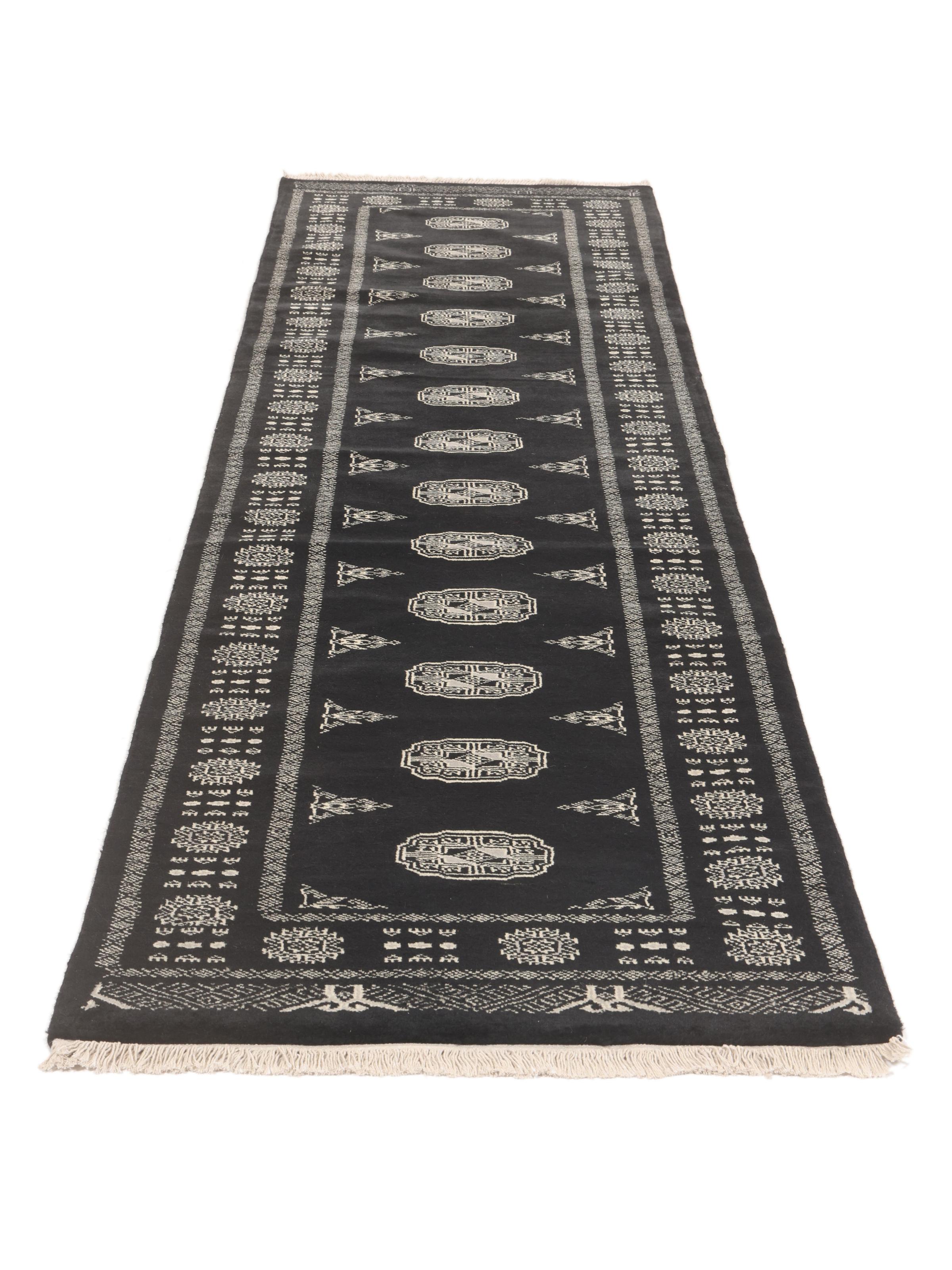
The Bokhara rug tradition is deeply rooted in the history of Central Asia, taking its name from the ancient Silk Road city of Bukhara. While these rugs were historically woven by nomadic tribes as a way to preserve their cultural identity and history through textiles, the finest examples today are primarily produced in Pakistan, where the craft has been refined and perfected over generations.
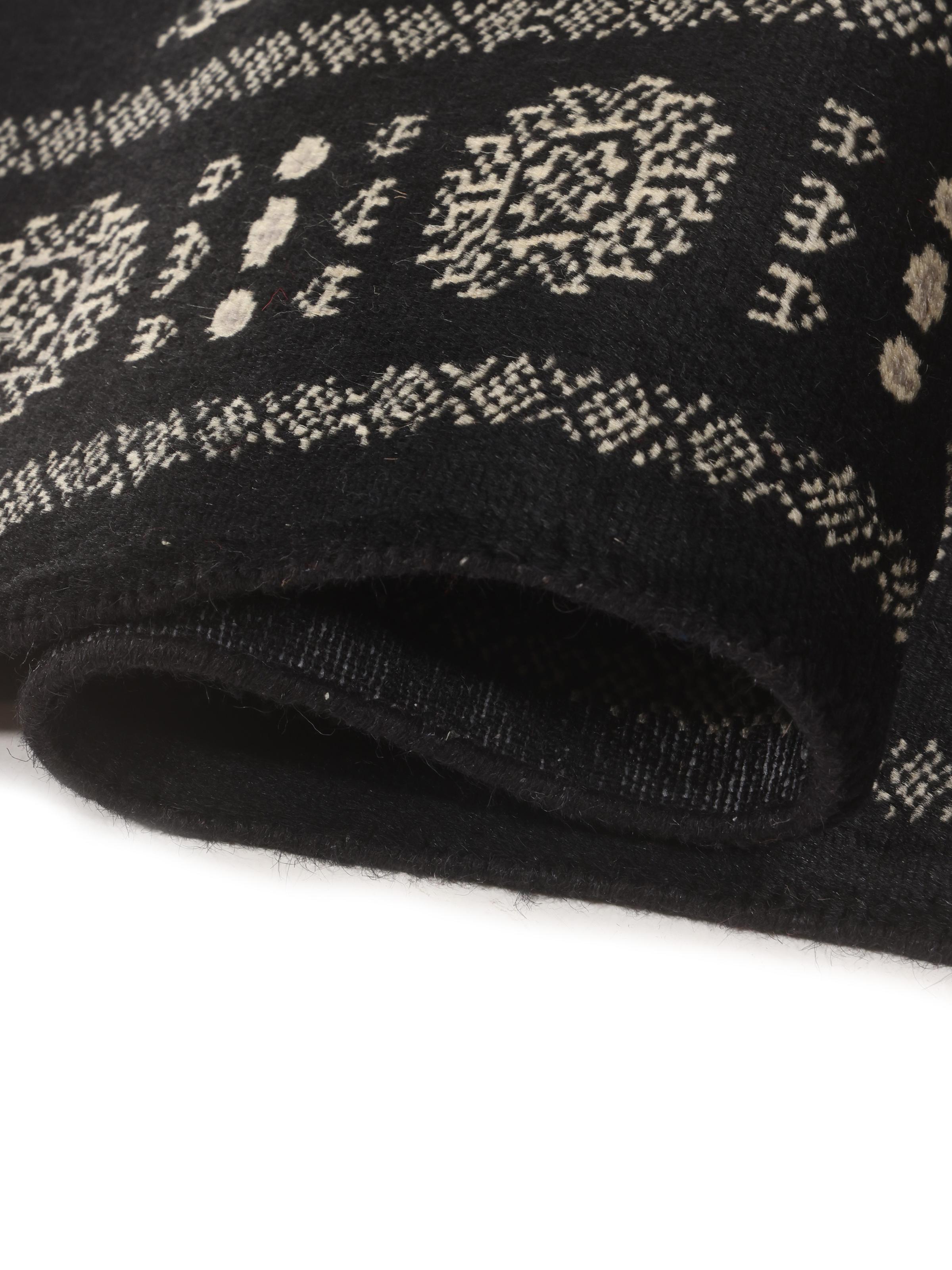
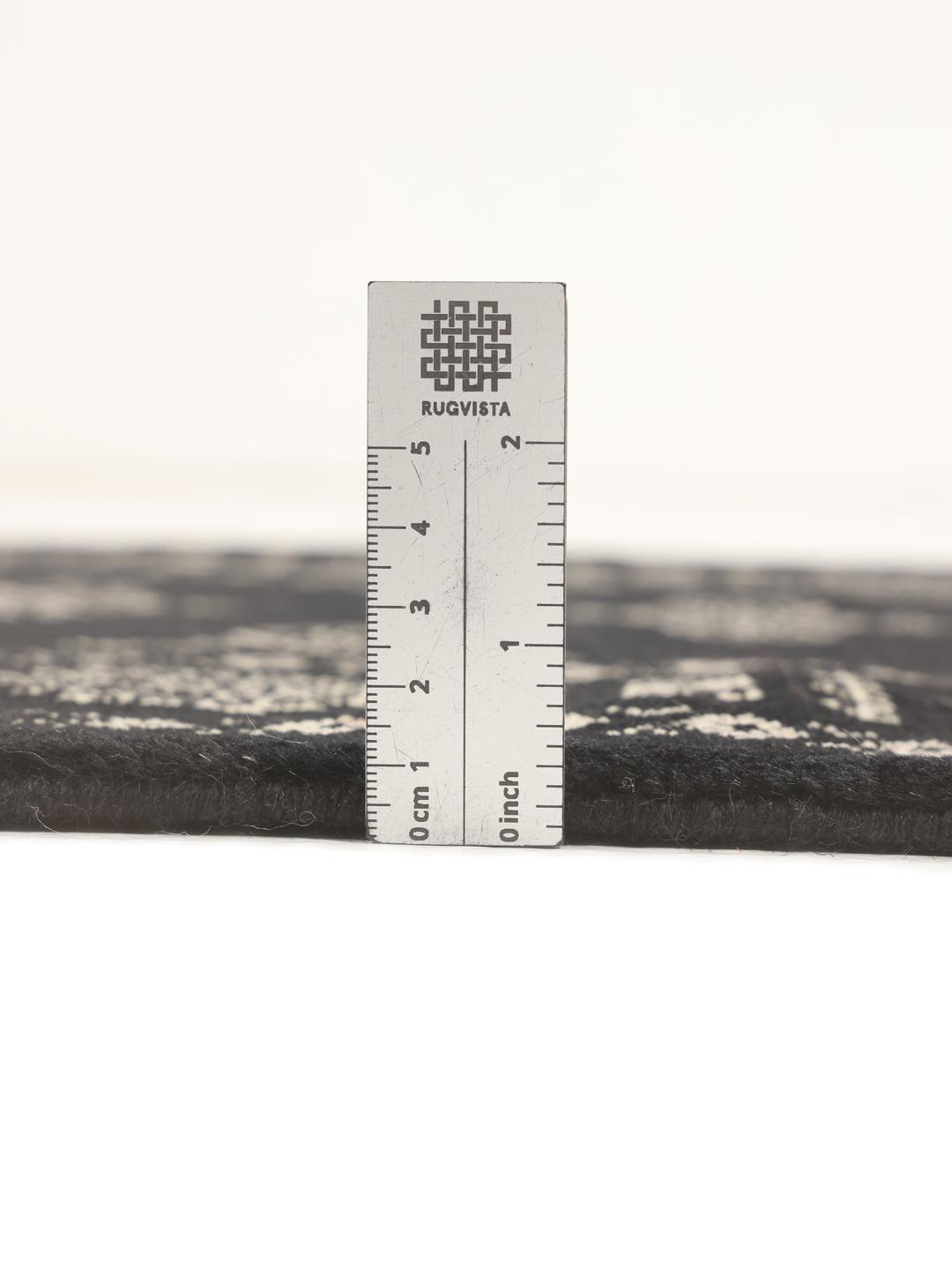
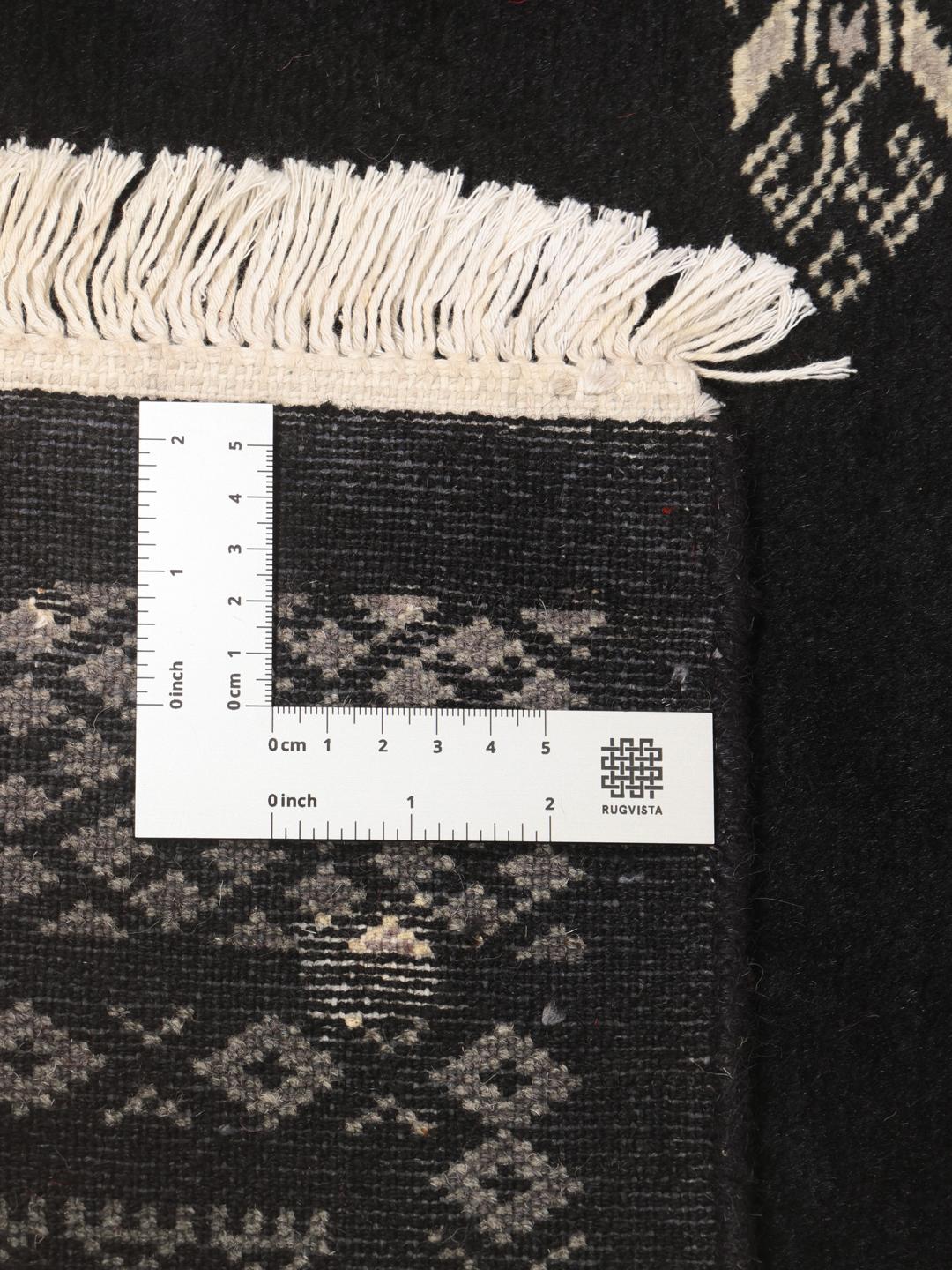
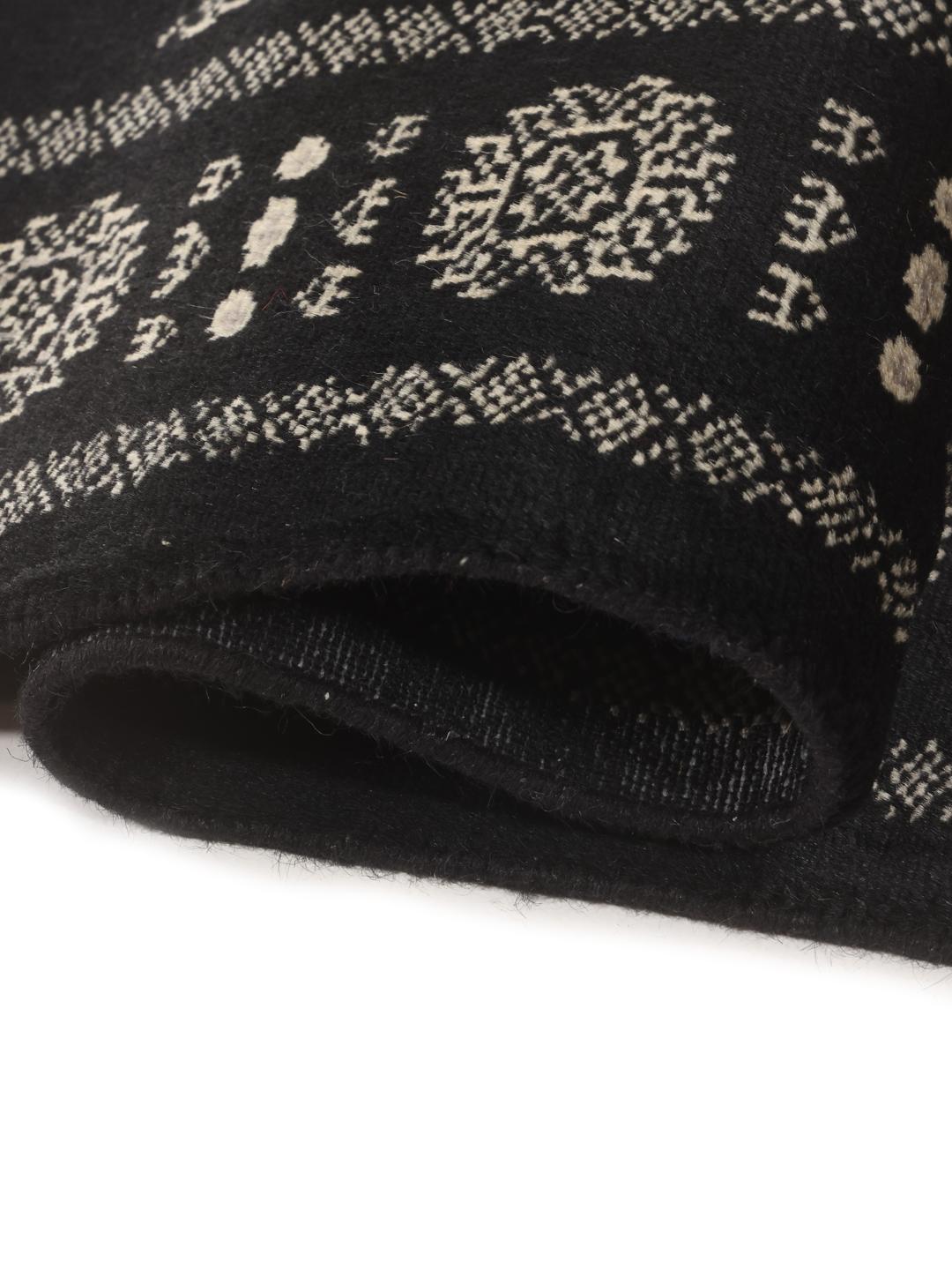
The term 2ply refers to the construction of the pile, where two strands of Wool are twisted together before being knotted. This technique is significant because it results in a thicker, more lustrous, and more resilient pile compared to single-ply alternatives. For the owner, this means a rug that not only feels softer and more luxurious underfoot but also retains its structural integrity and visual appeal over a much longer period.
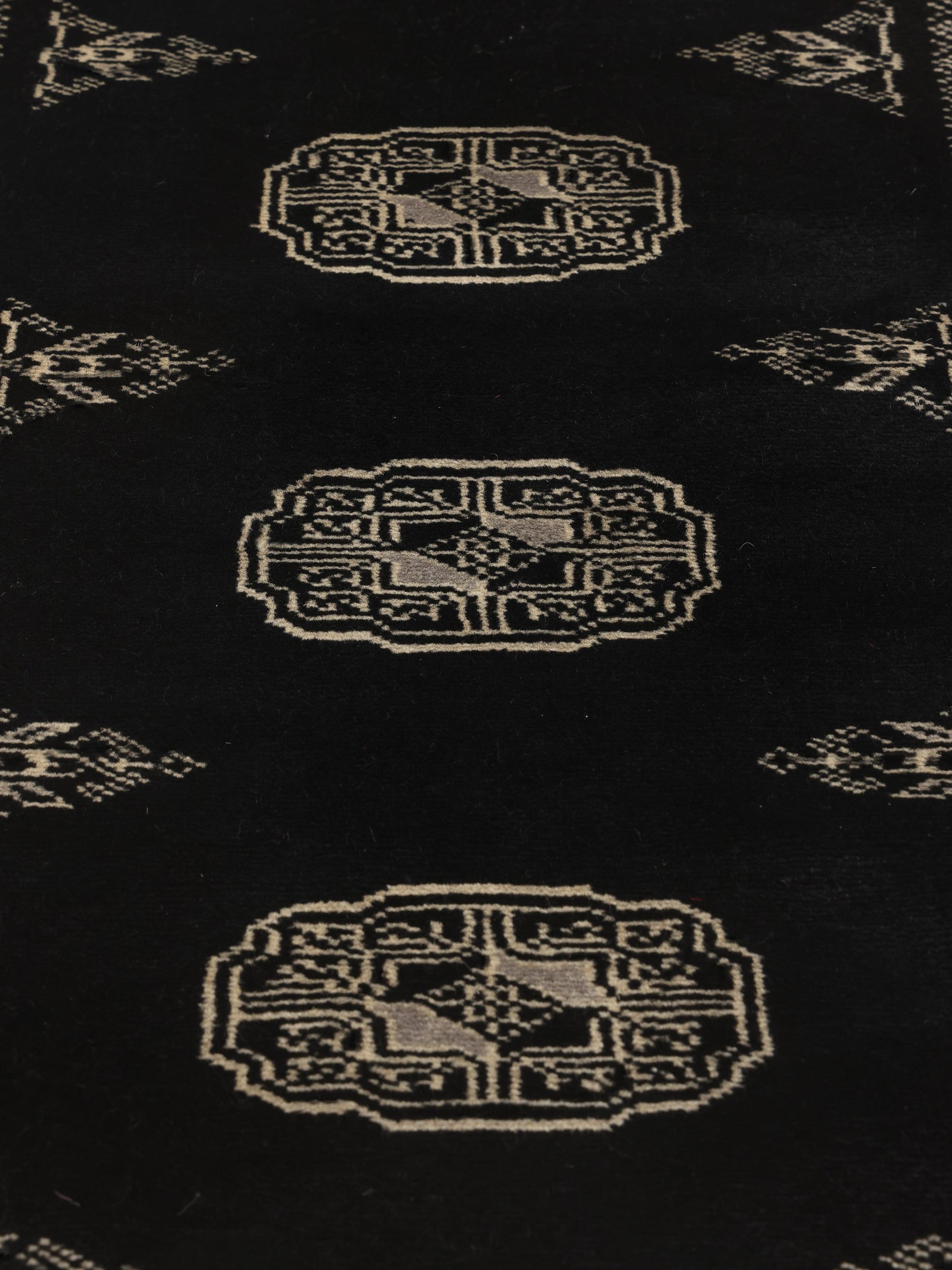
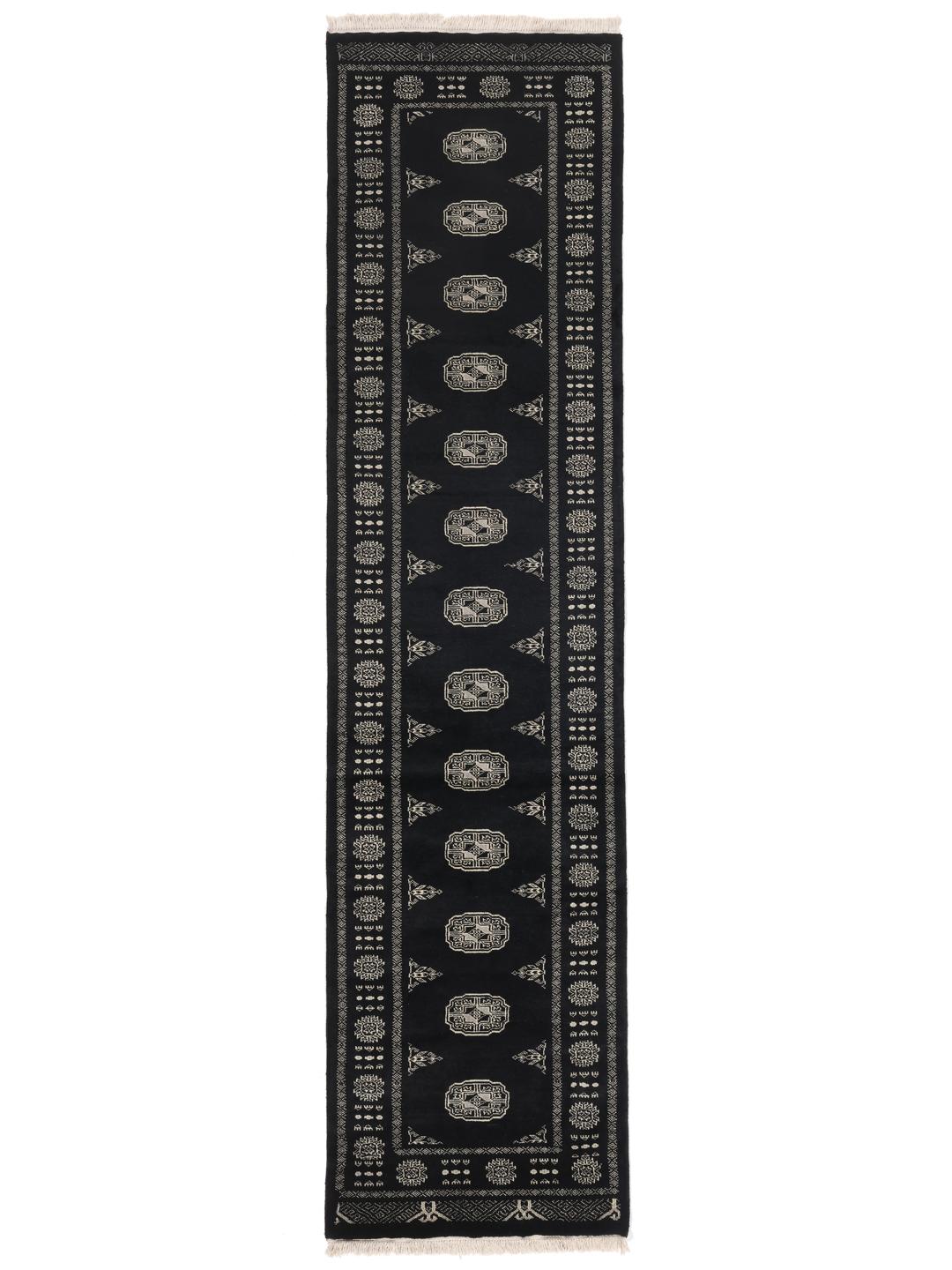
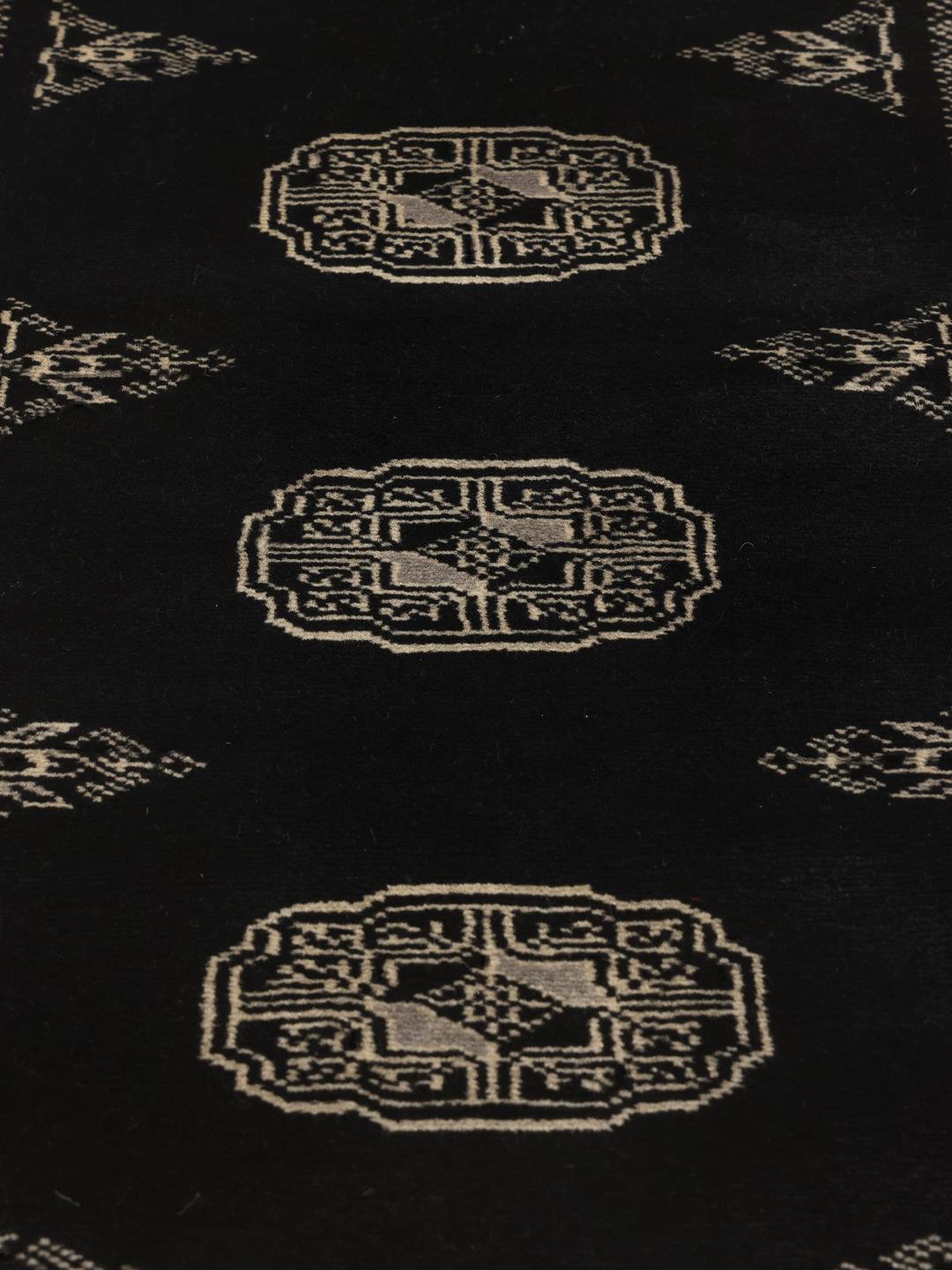
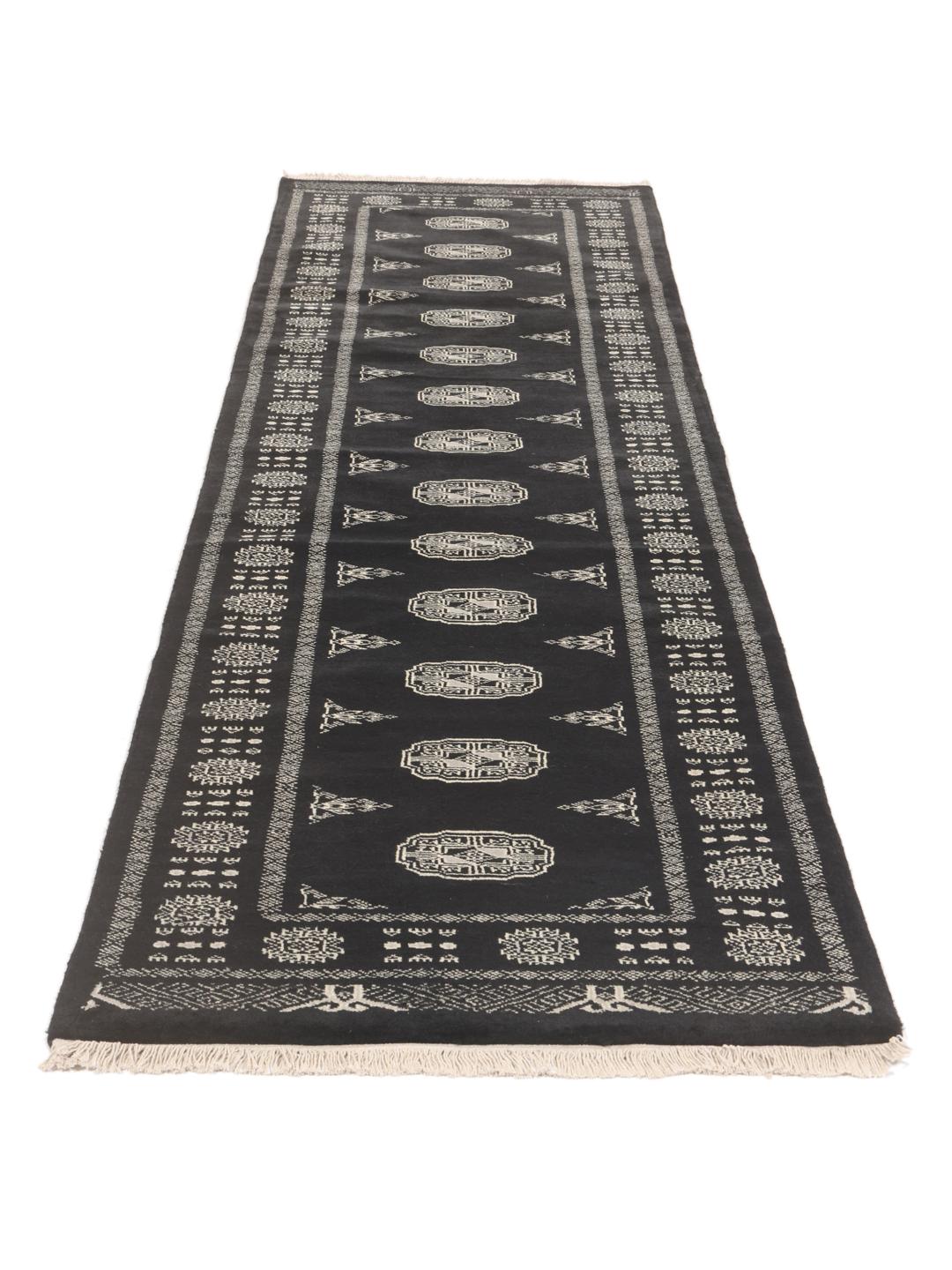
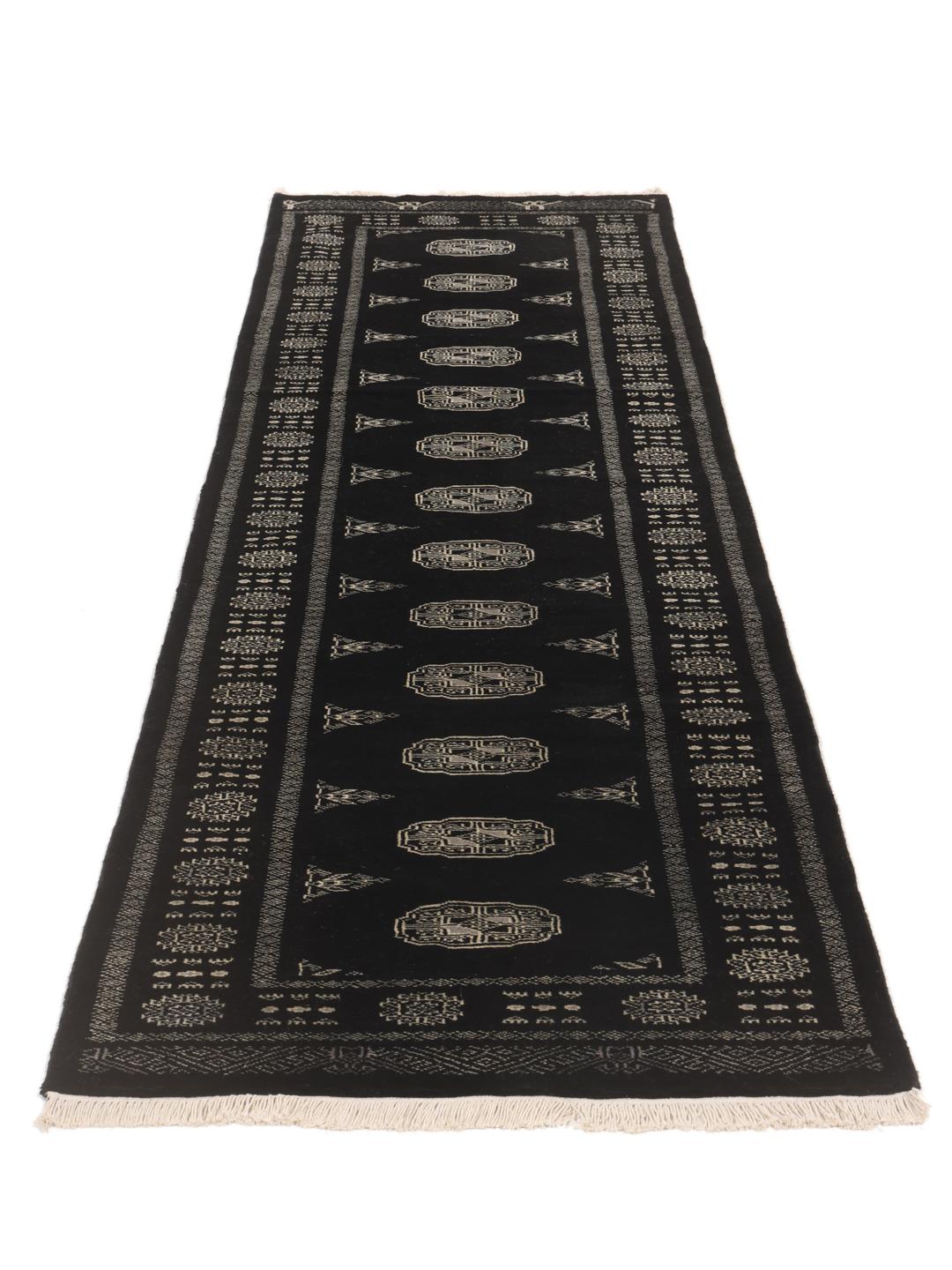
Visually, these rugs are defined by their repeating gul motifs, which are often octagonal or elephant-foot shaped medallions. These symbols are arranged in formal rows across the field and are typically framed by elaborate, multi-layered borders. While red is a traditional choice, this piece features a striking black field, which offers a contemporary, dramatic twist on the classic design language.
Owning a hand-knotted piece from this tradition connects you to a long lineage of craft and storytelling. These rugs are highly valued by collectors and enthusiasts for their ability to balance complex symmetry with a human touch. By bringing such a piece into your home, you are celebrating the skill of the artisan and preserving a tradition that prioritises quality and longevity above all else.