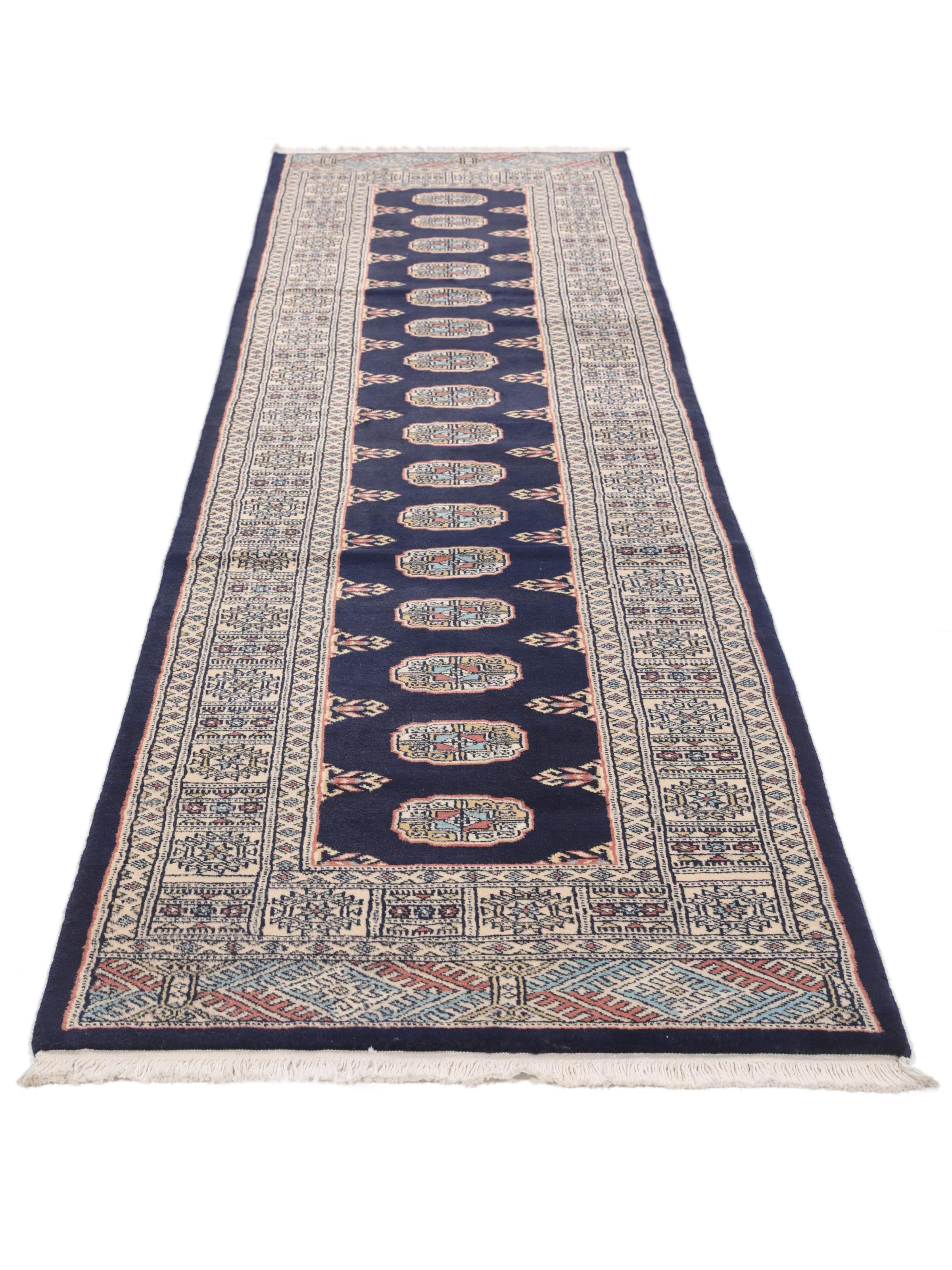
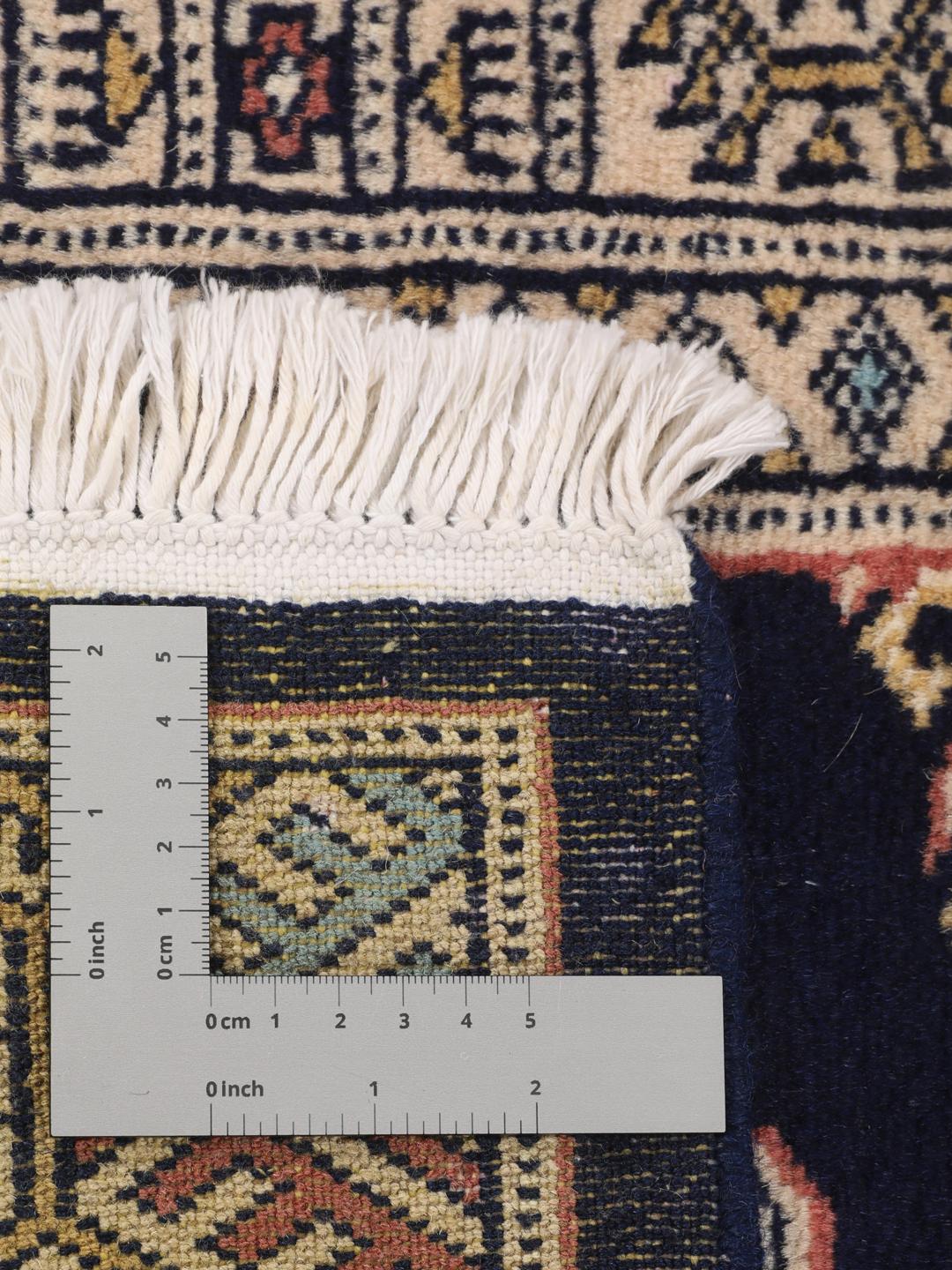
The Bokhara rug is a style with deep roots in the rich weaving traditions of Central Asia, specifically drawing inspiration from the ancient Silk Road city of Bukhara. While these designs are historically nomadic in their origins, the finest modern examples are expertly crafted in Pakistan, where artisans have refined the style to an extraordinary level of detail and consistency.
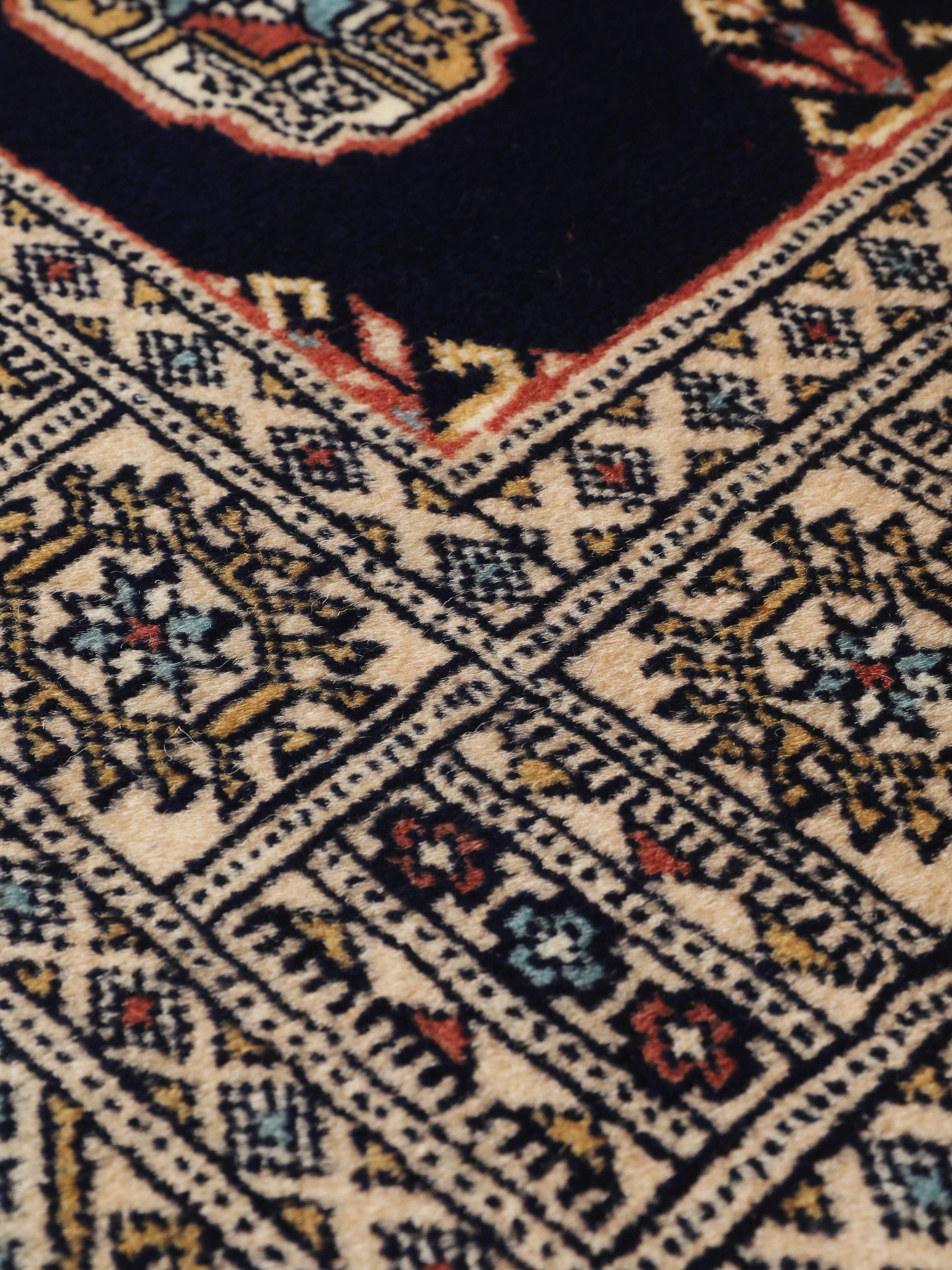
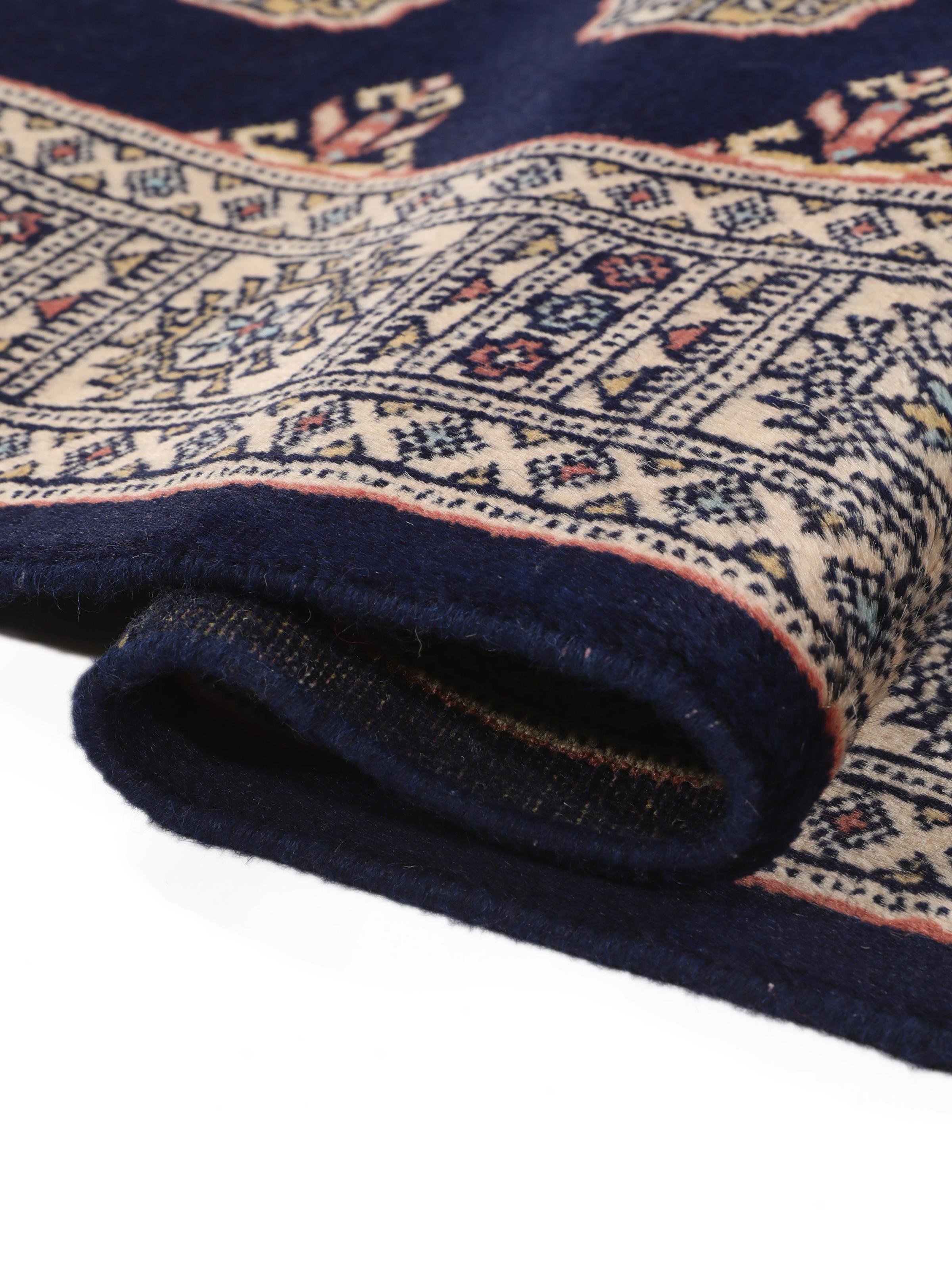
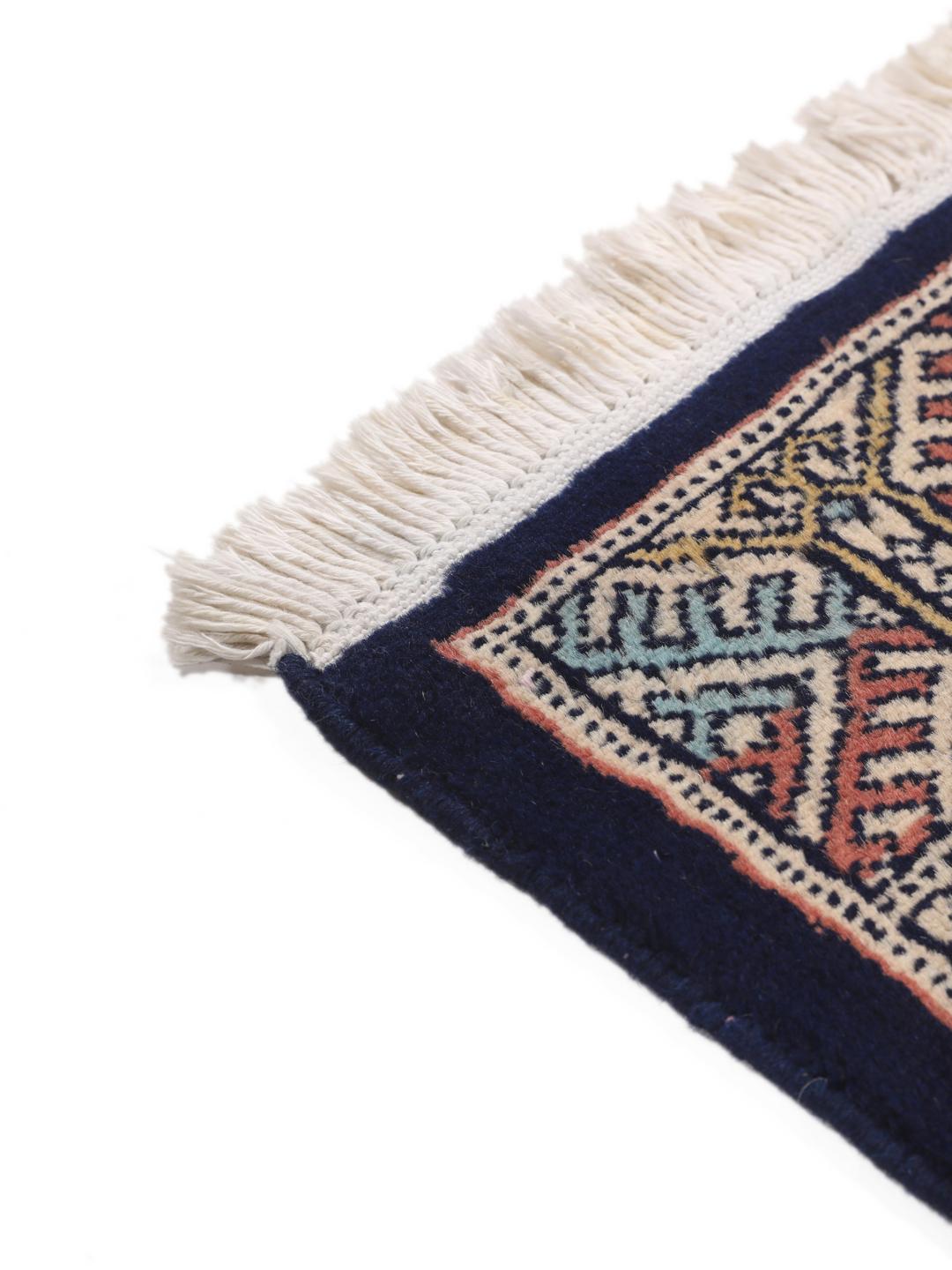
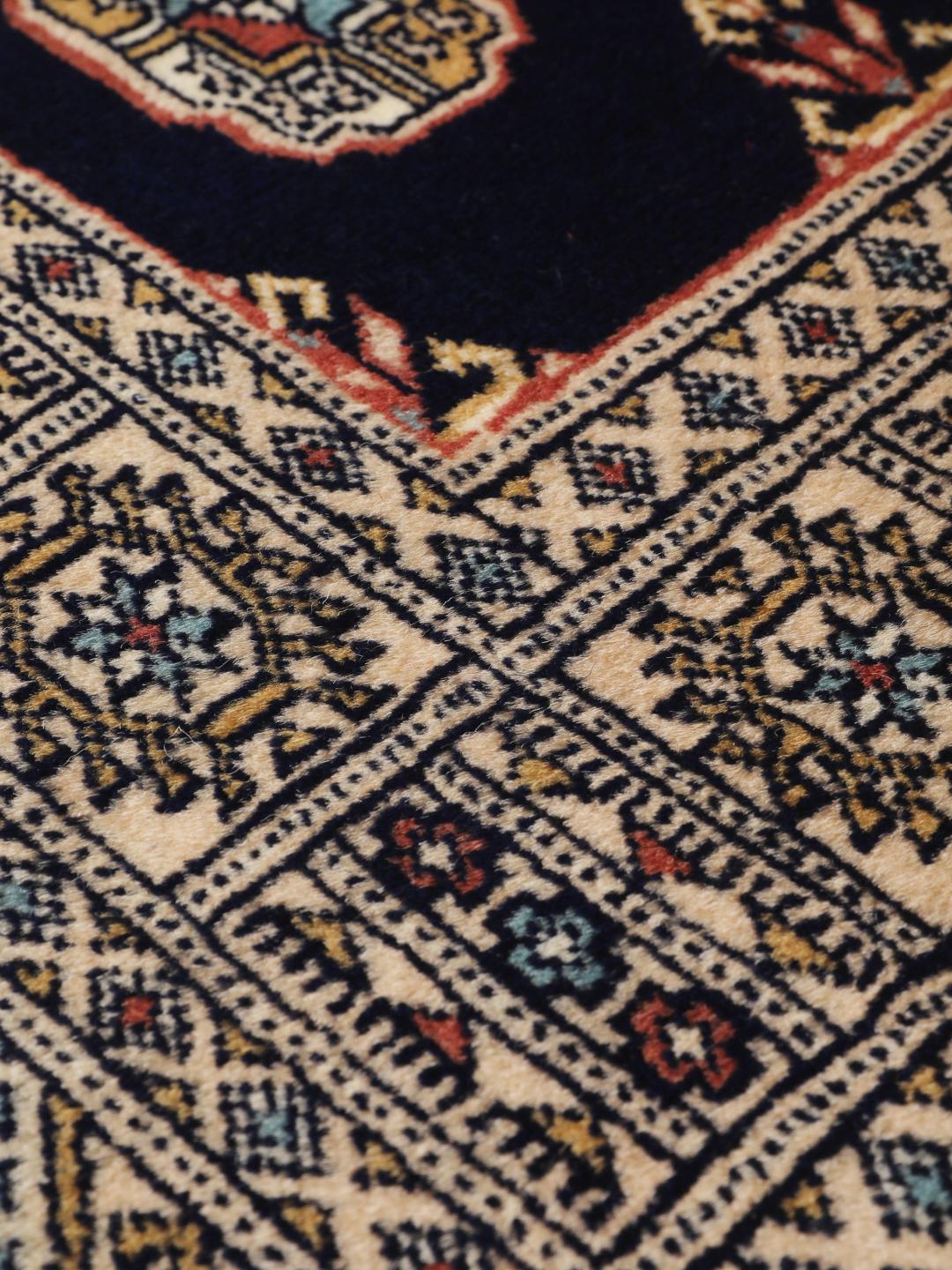
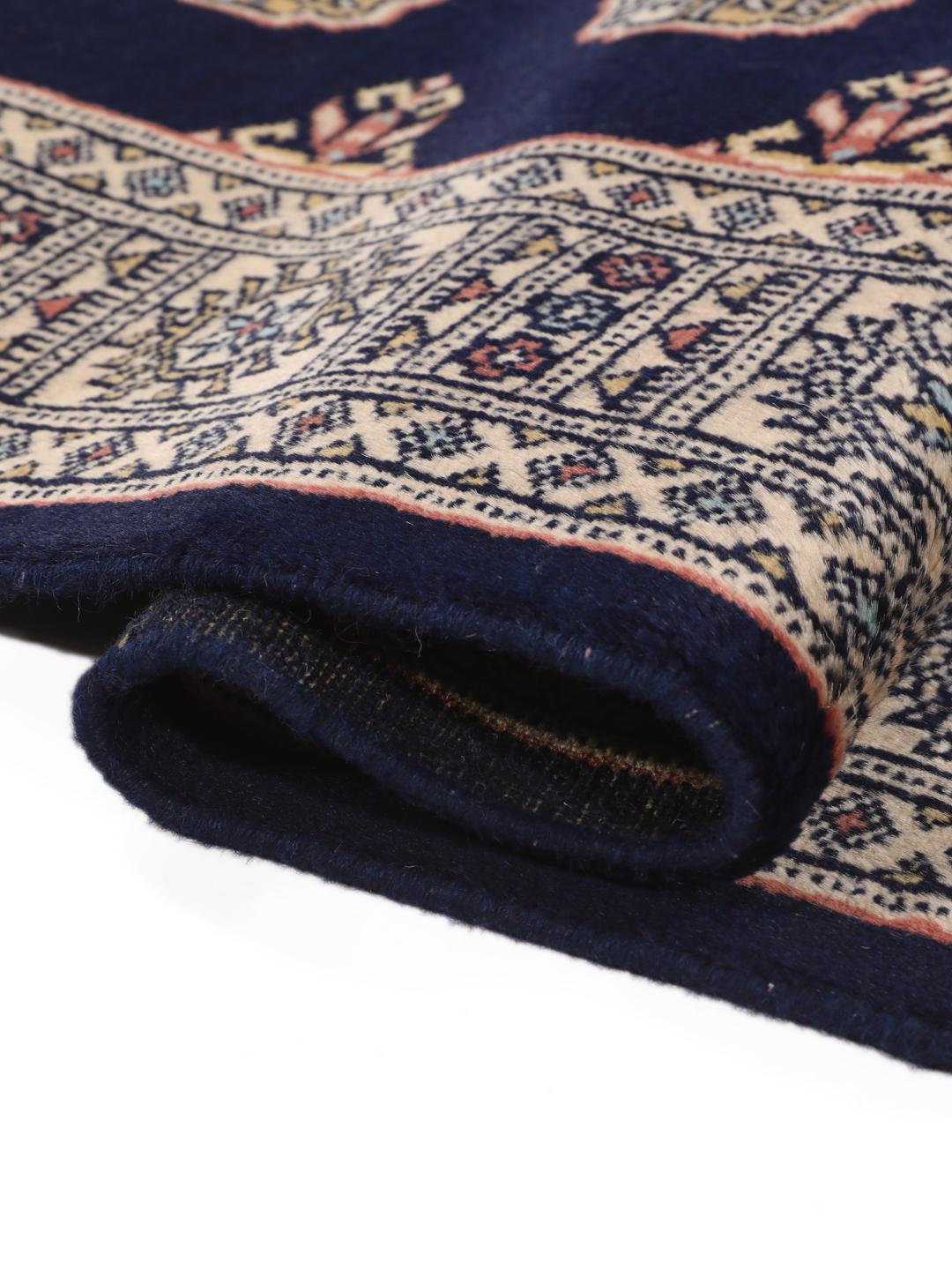
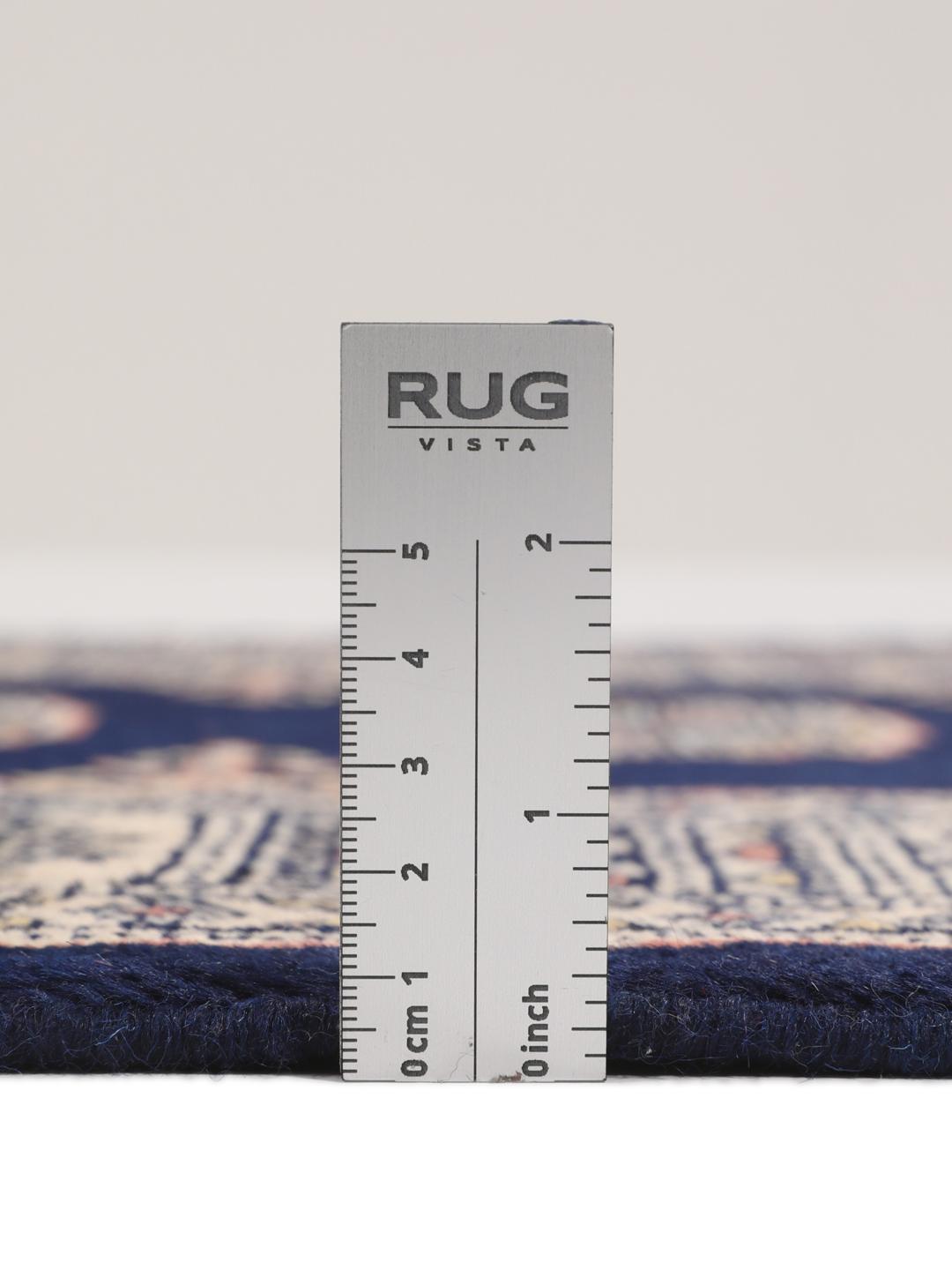
The term 2ply refers to the construction of the pile, where two strands of wool are twisted together before being knotted. This technique is essential for quality, as it produces a much thicker, more lustrous, and durable pile that resists wear better than single-ply alternatives. It provides a fuller, more luxurious texture that feels substantial and soft underfoot.
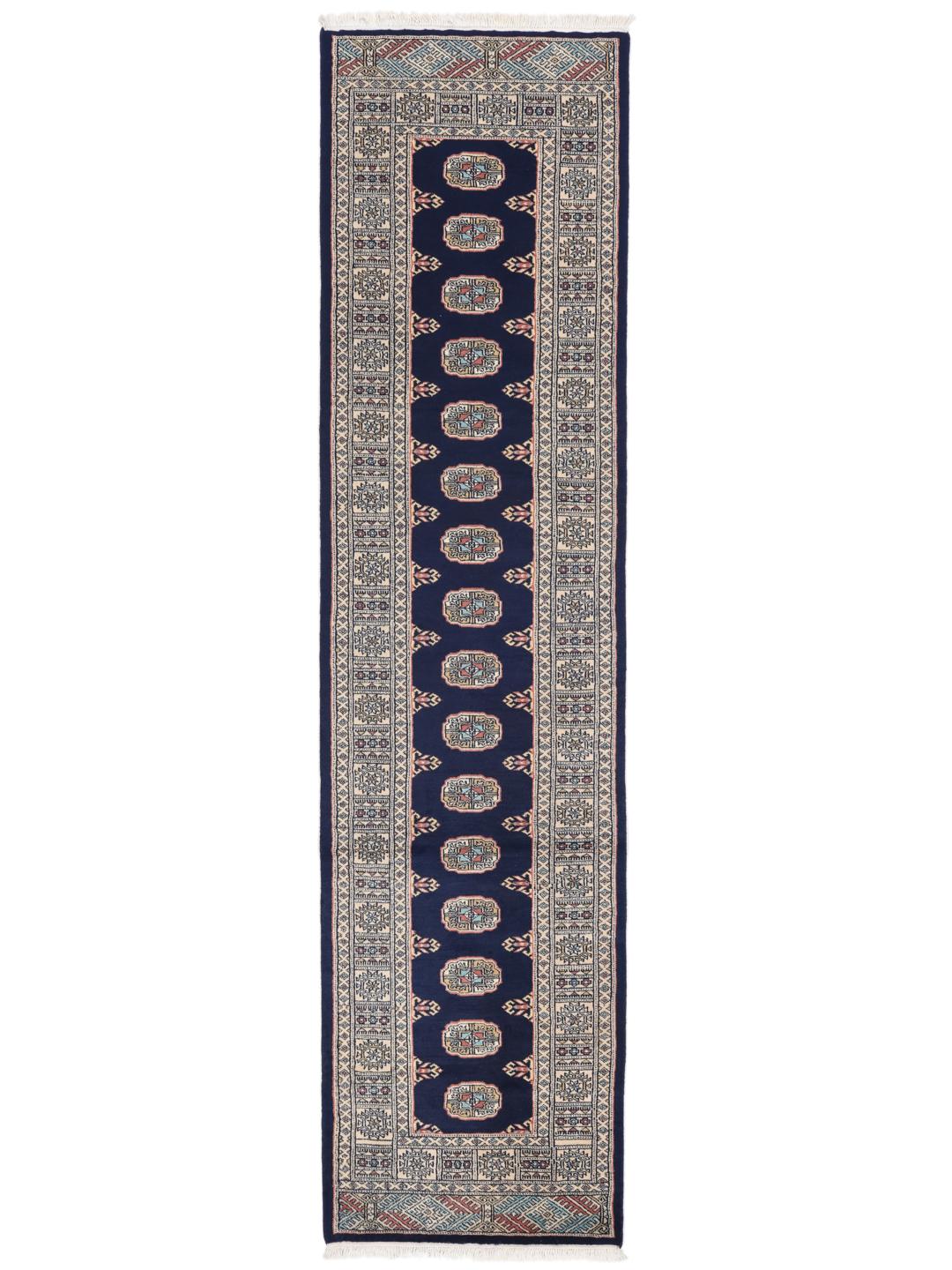
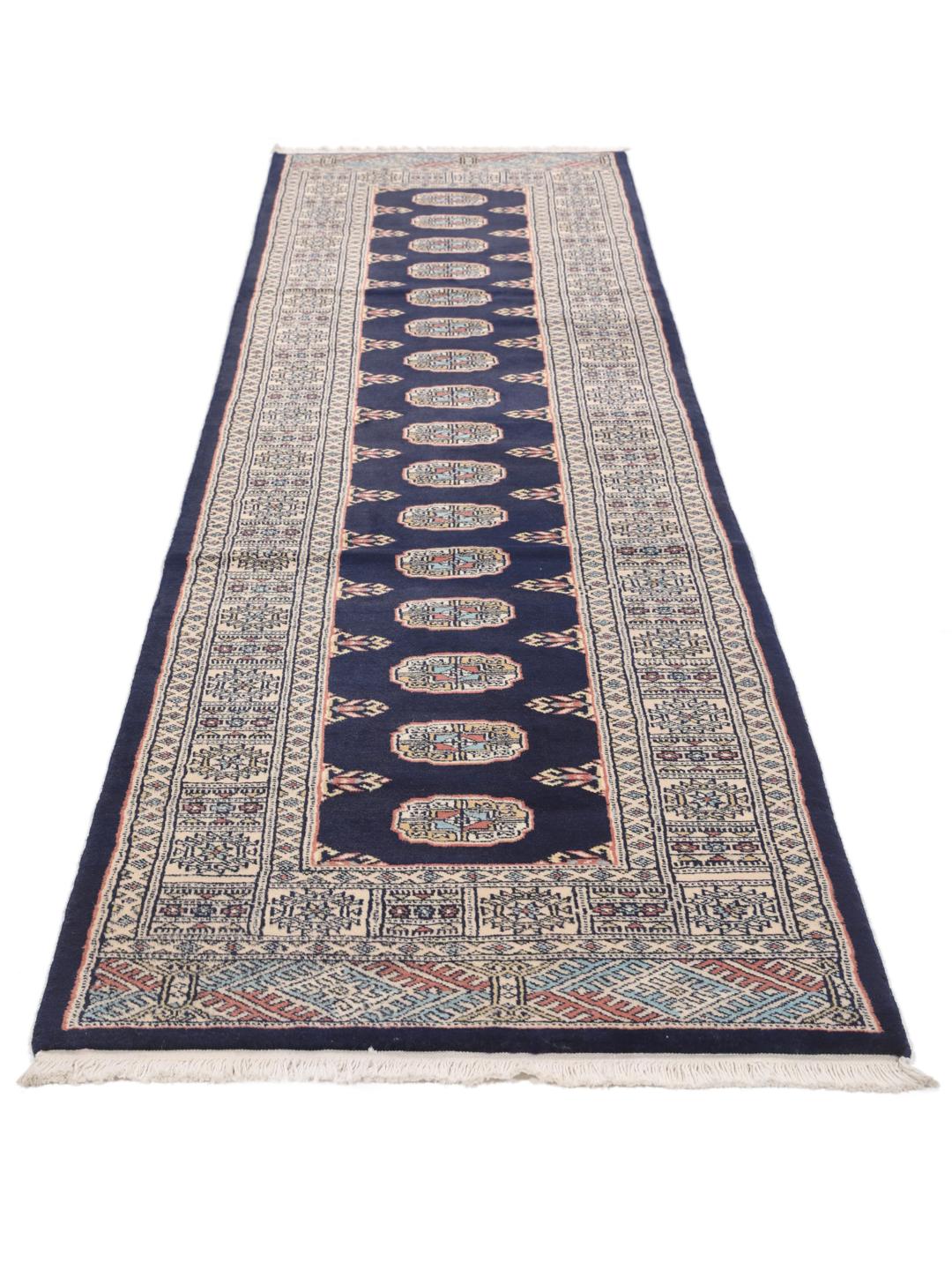
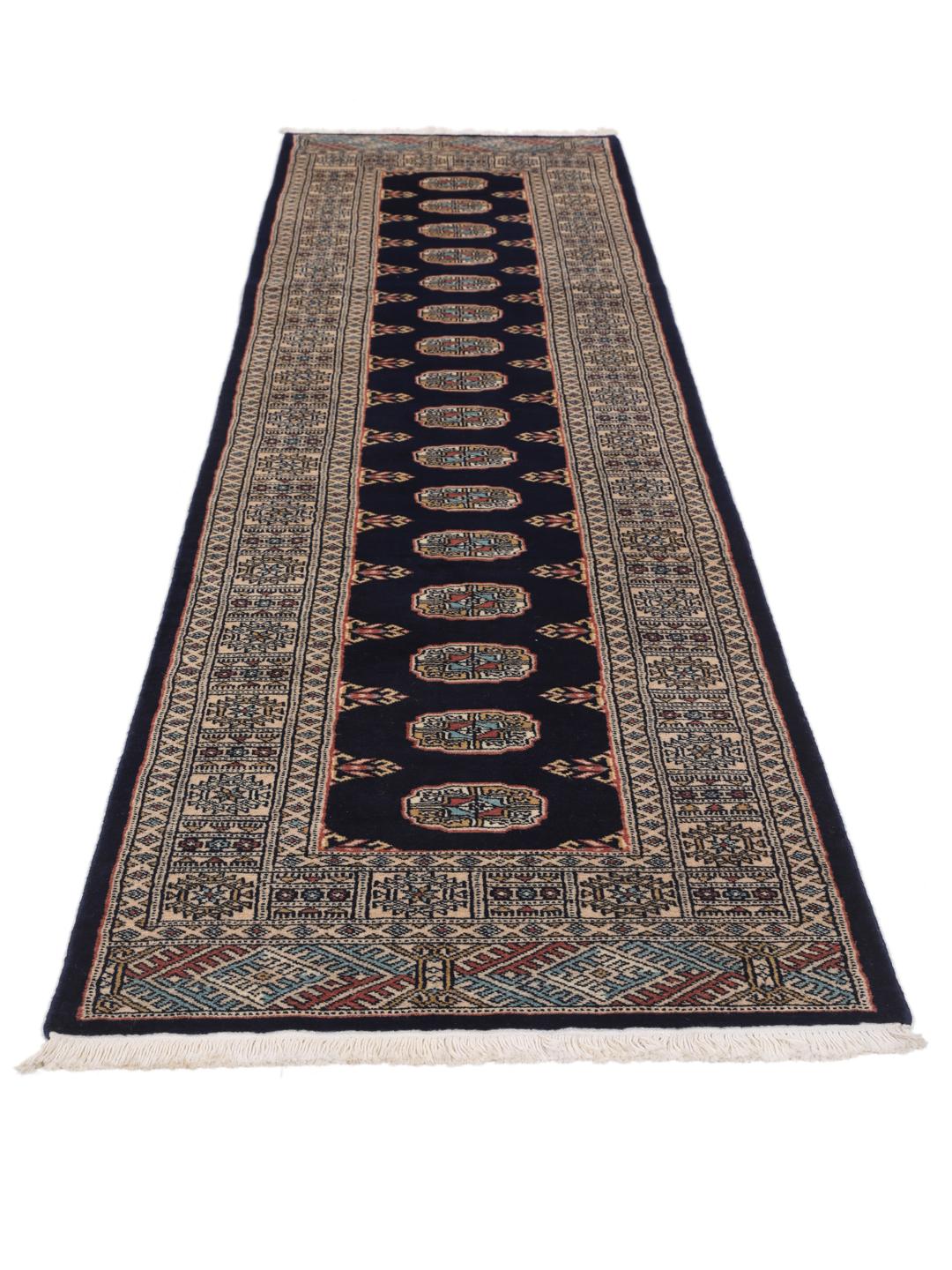
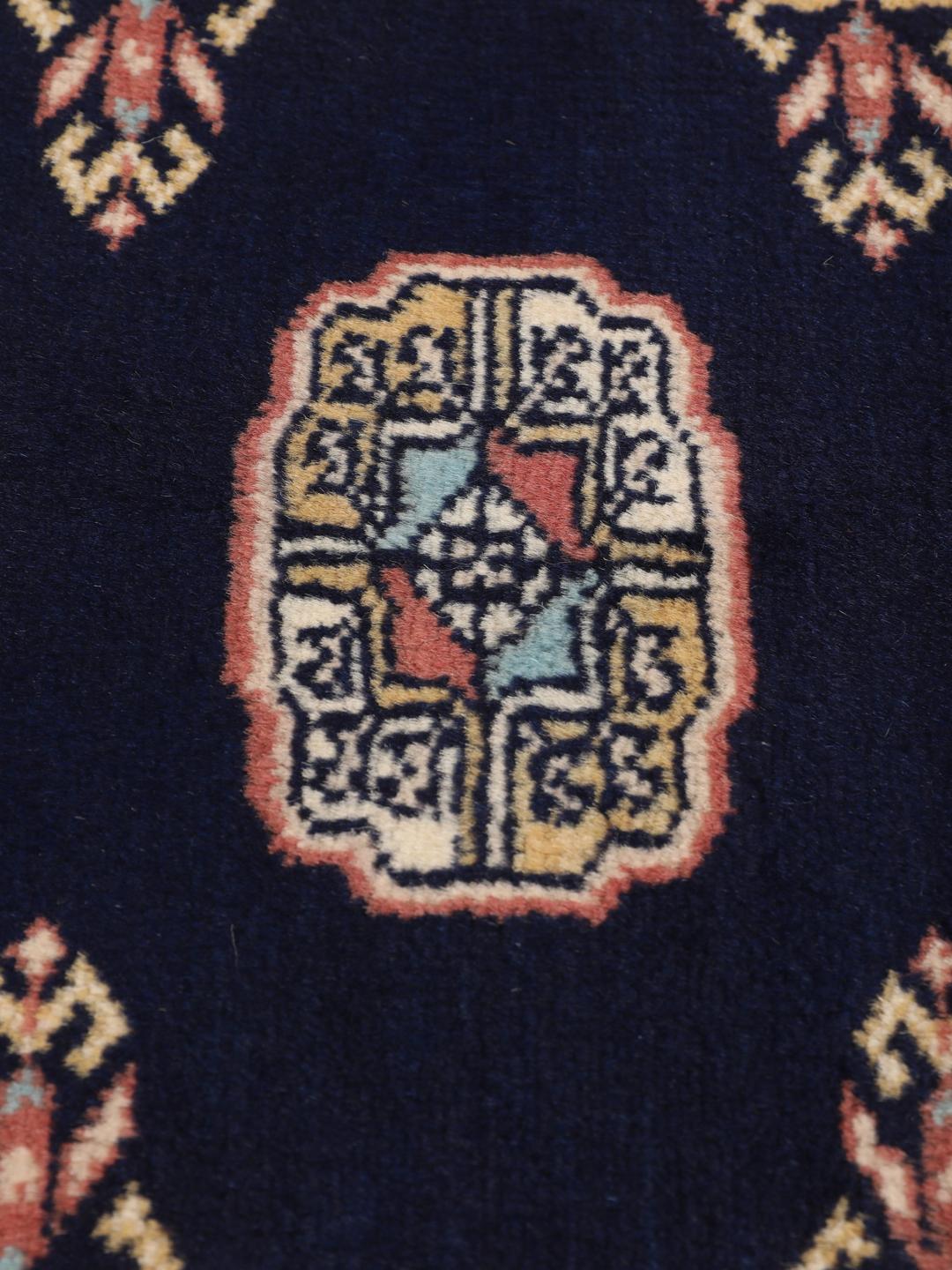
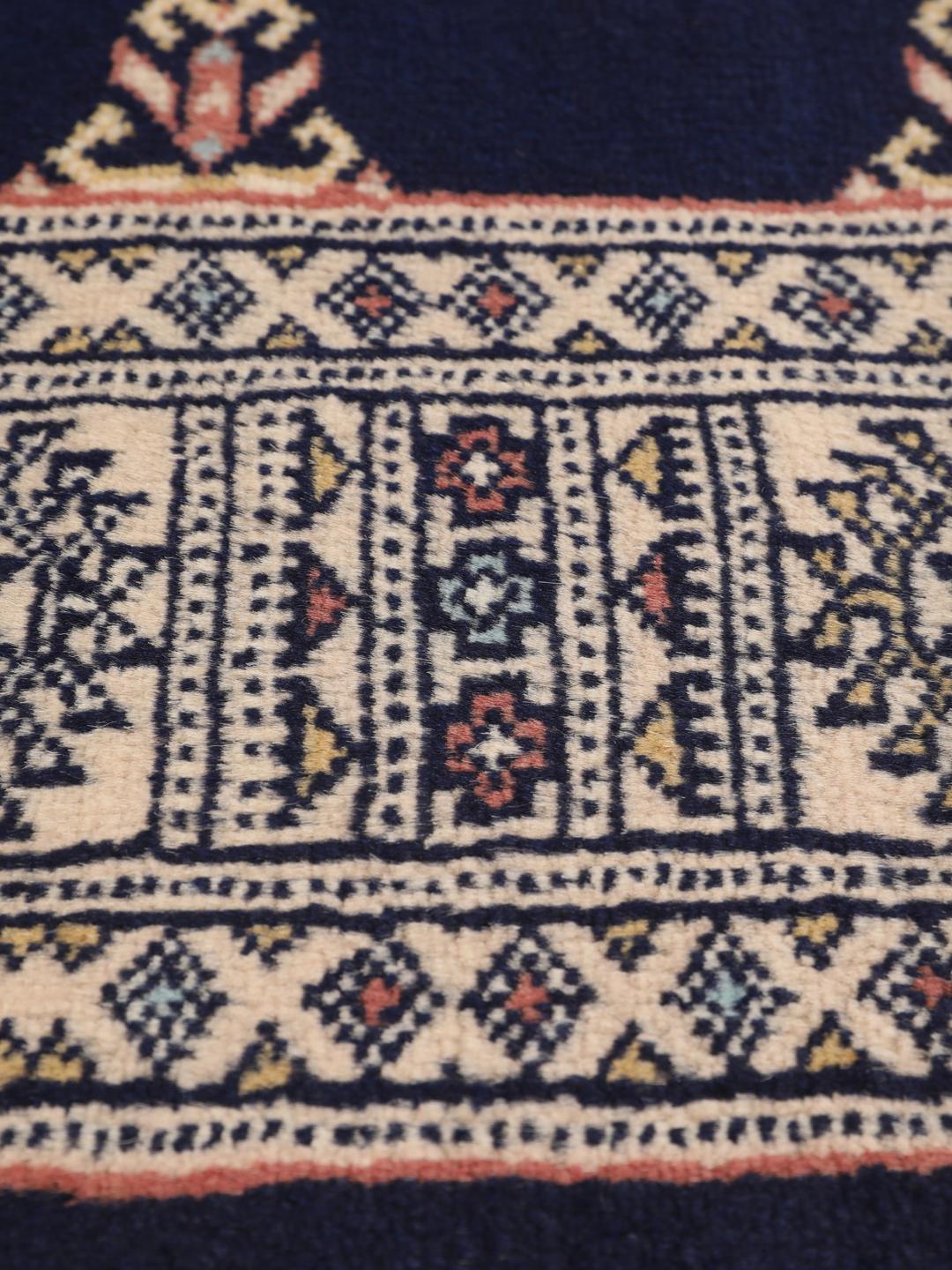
Visually, these rugs are defined by their iconic repeating gul motifs, which are stylised, octagonal medallions that represent traditional tribal heritage. These patterns are typically framed by elaborate, multi-layered borders that create a sense of order and formal beauty. The dark-blue field on this specific piece provides a deep, sophisticated backdrop that makes the lighter, patterned details truly stand out.
Owning a hand-knotted rug of this lineage is about more than just decor; it is an appreciation of a heritage that spans centuries. These rugs are highly valued by collectors for their blend of technical precision and cultural narrative, representing a commitment to slow, intentional craft that stands in stark contrast to mass-produced items.