The Bokhara rug tradition finds its roots in the ancient, storied history of Central Asian nomadic tribes, though the finest modern examples are expertly crafted in Pakistan. These rugs take their name from the historic city of Bukhara, once a vital trading hub on the legendary Silk Road. Over generations, the techniques and designs migrated, evolving into the refined, highly sought-after style we recognise today, characterised by technical precision and cultural depth.
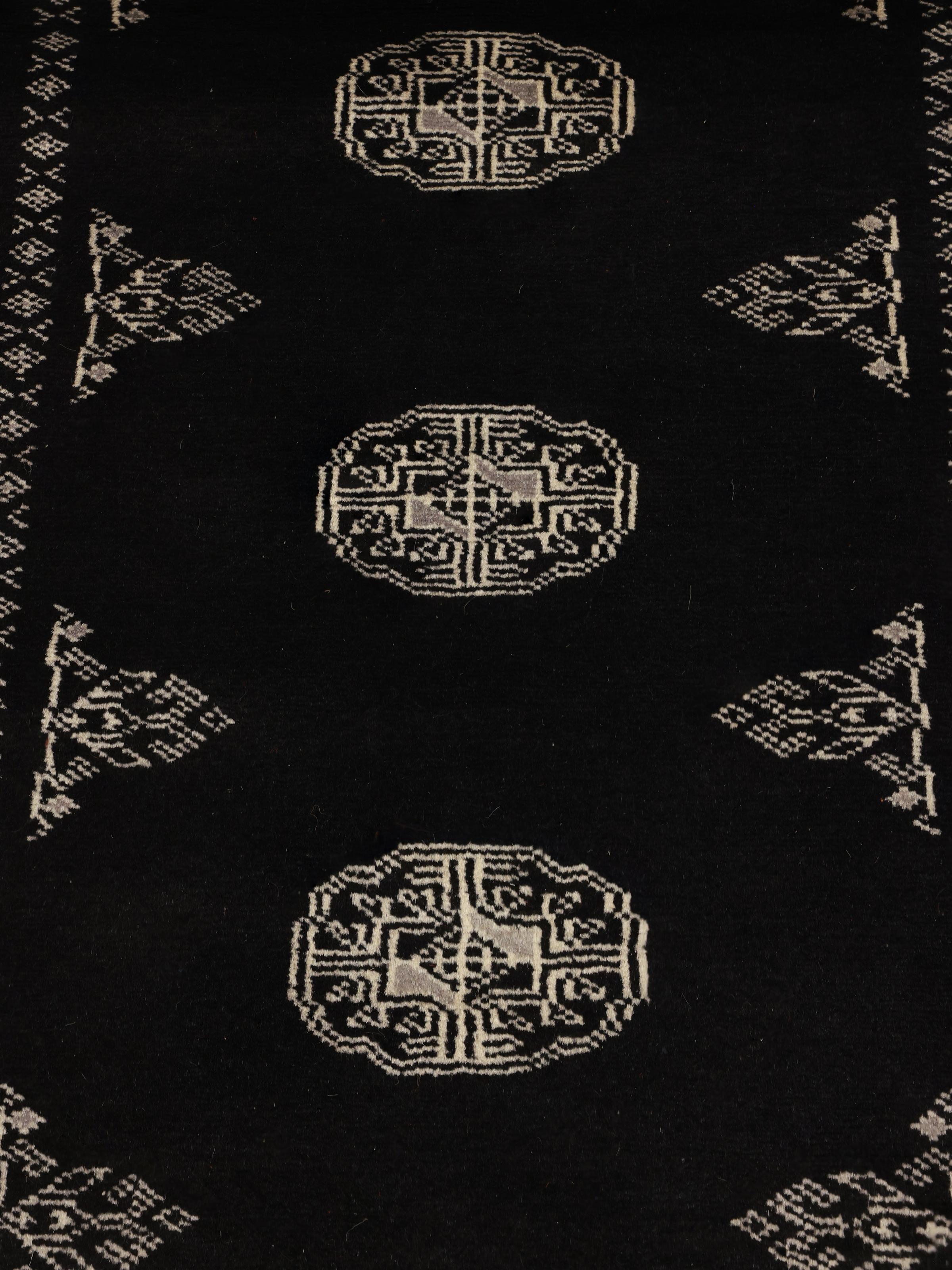
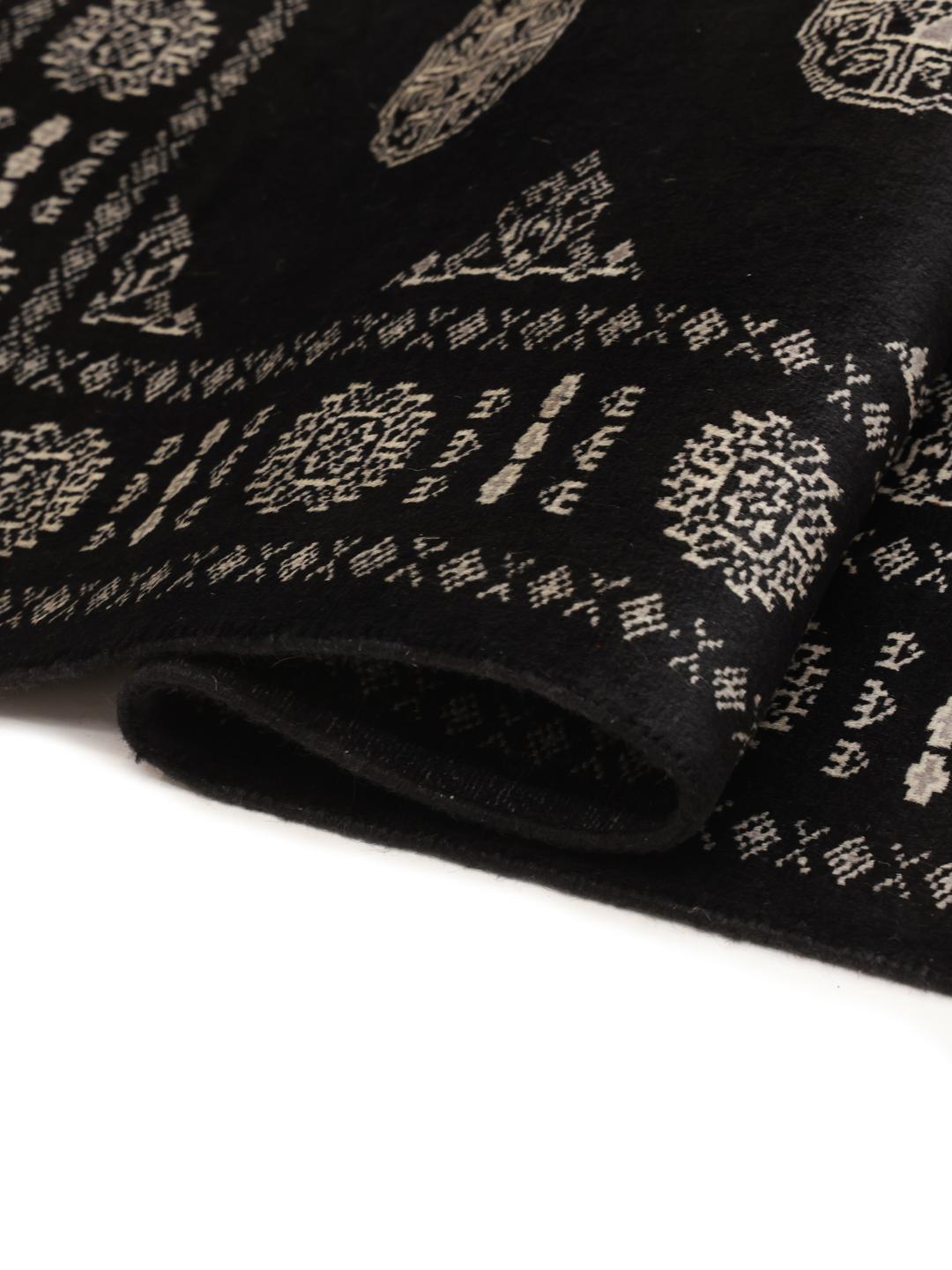
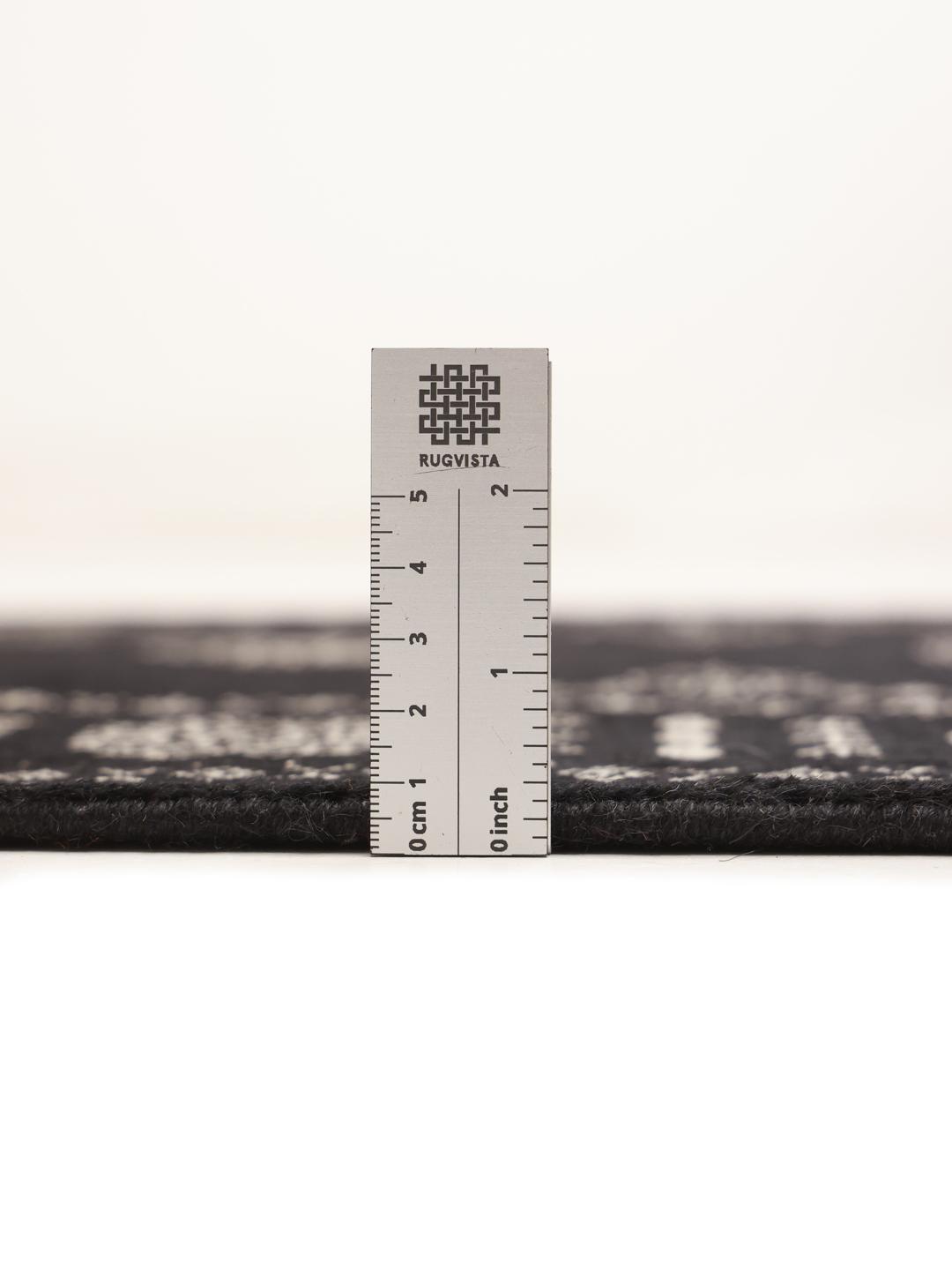
The '2ply' designation refers to the specific way the wool is prepared before knotting. By twisting two individual strands of wool together, the artisan creates a yarn that is significantly more durable and lustrous than single-ply alternatives. This construction method not only enhances the rug's ability to withstand daily wear but also gives the pile a richer, deeper texture that catches the light beautifully, adding a subtle dimension to the overall design.
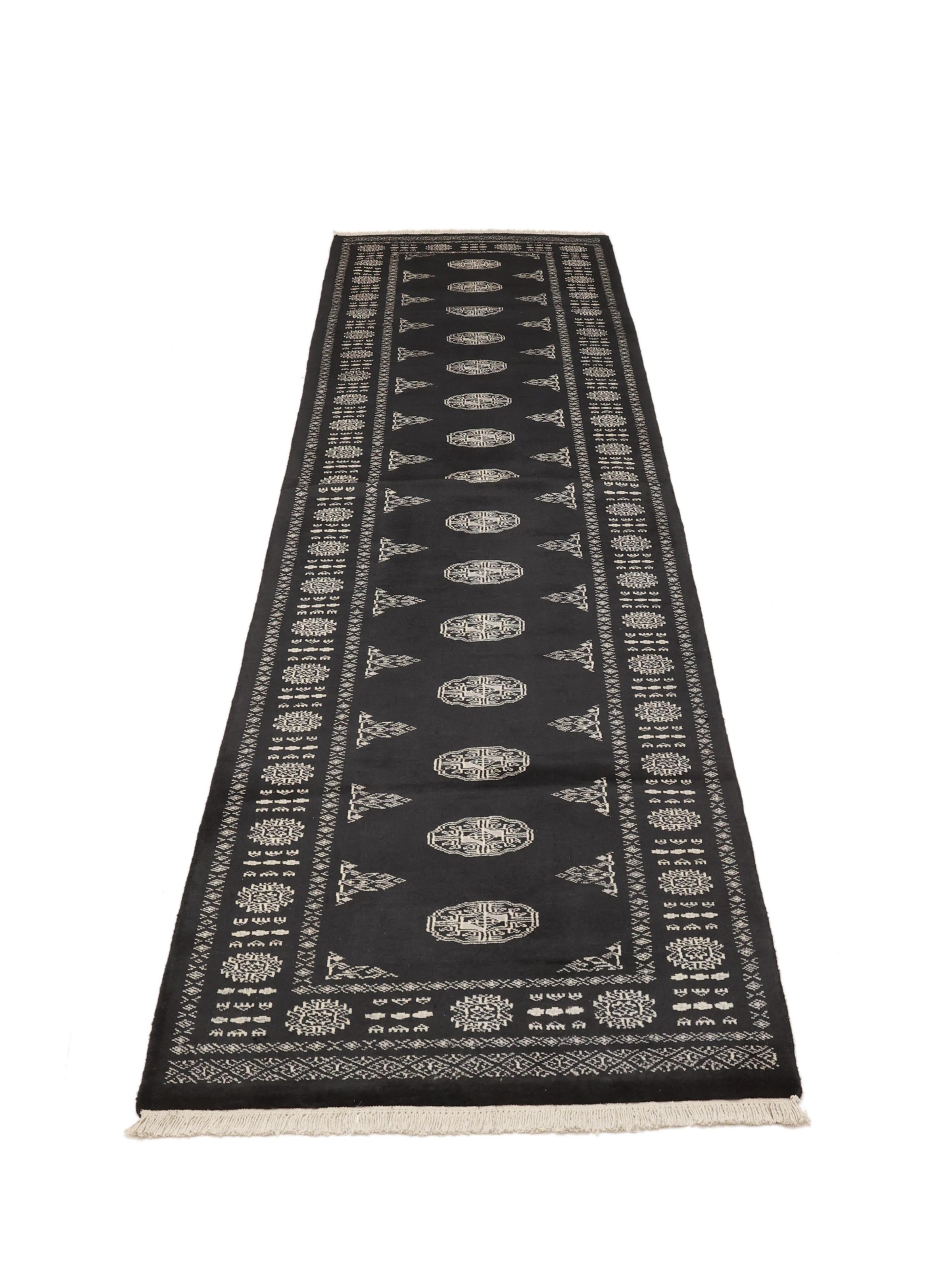
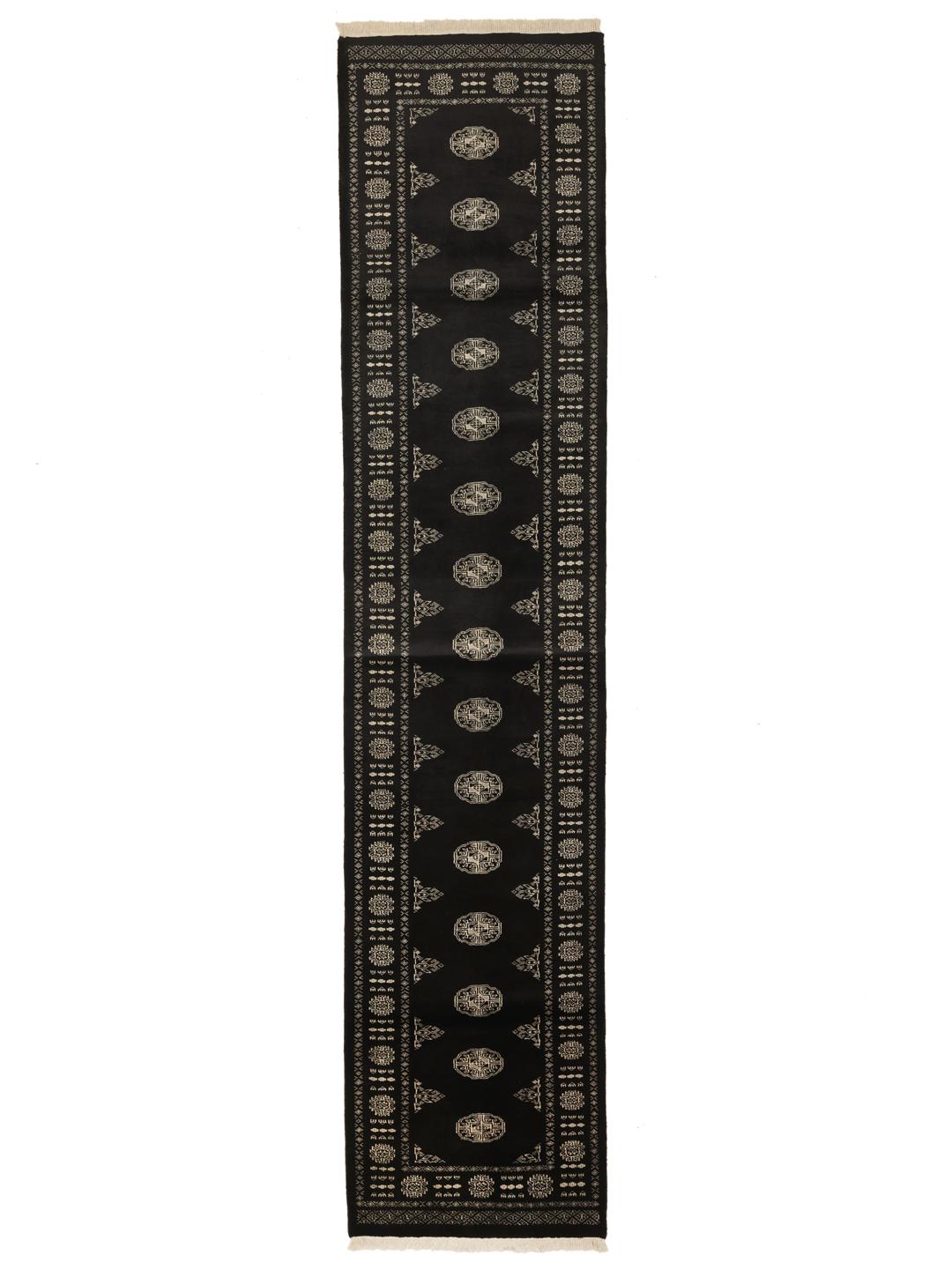
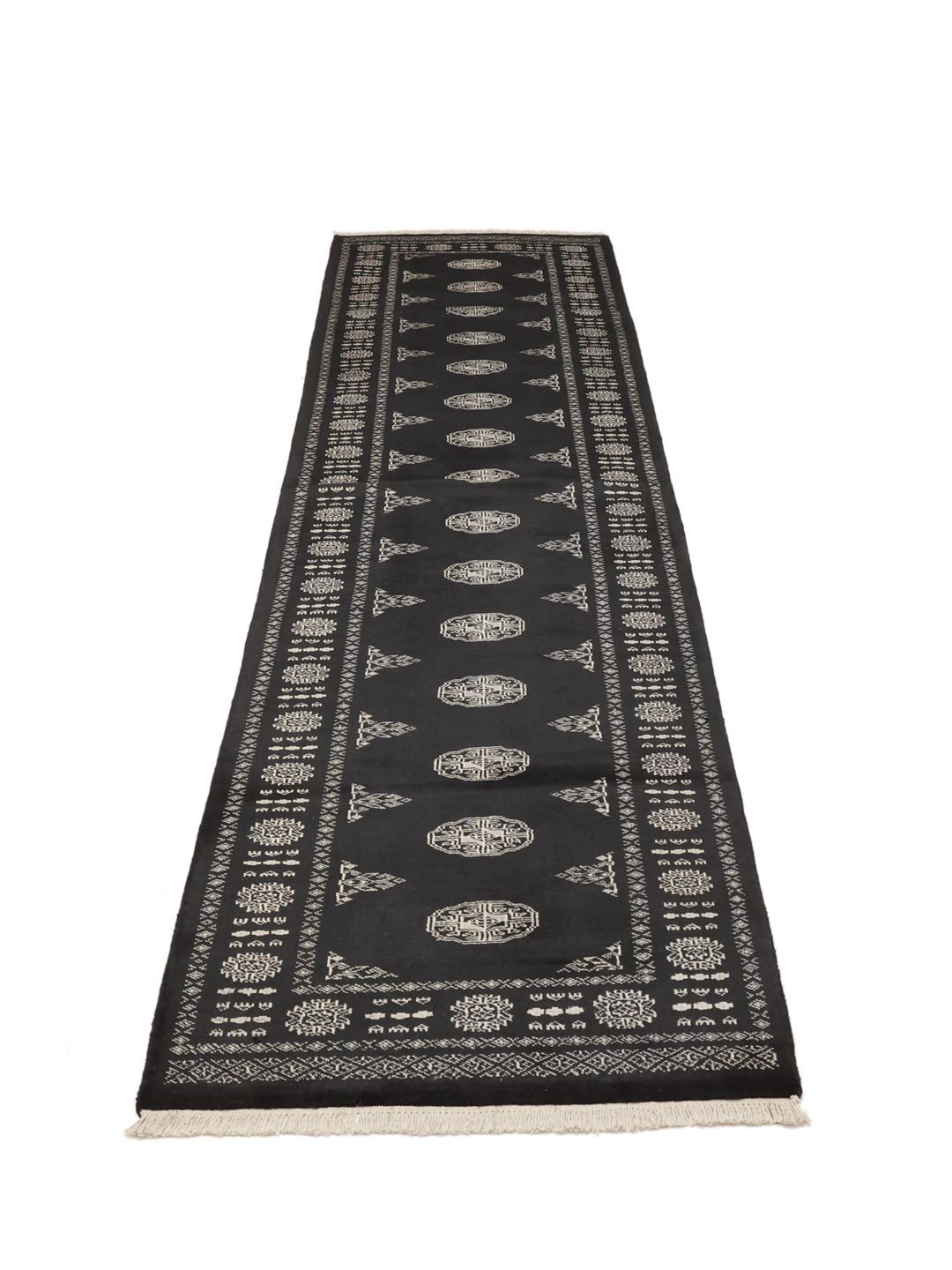
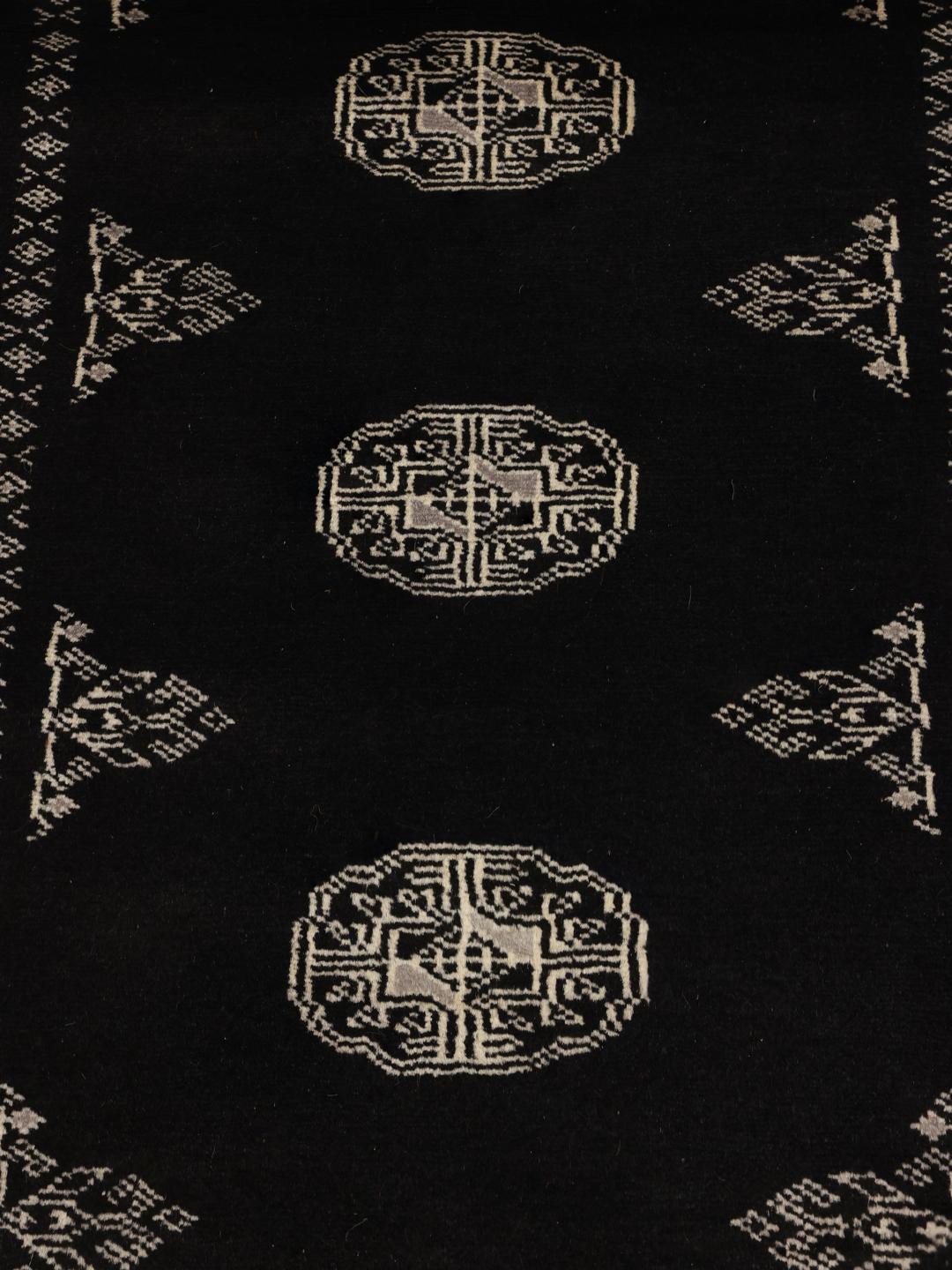
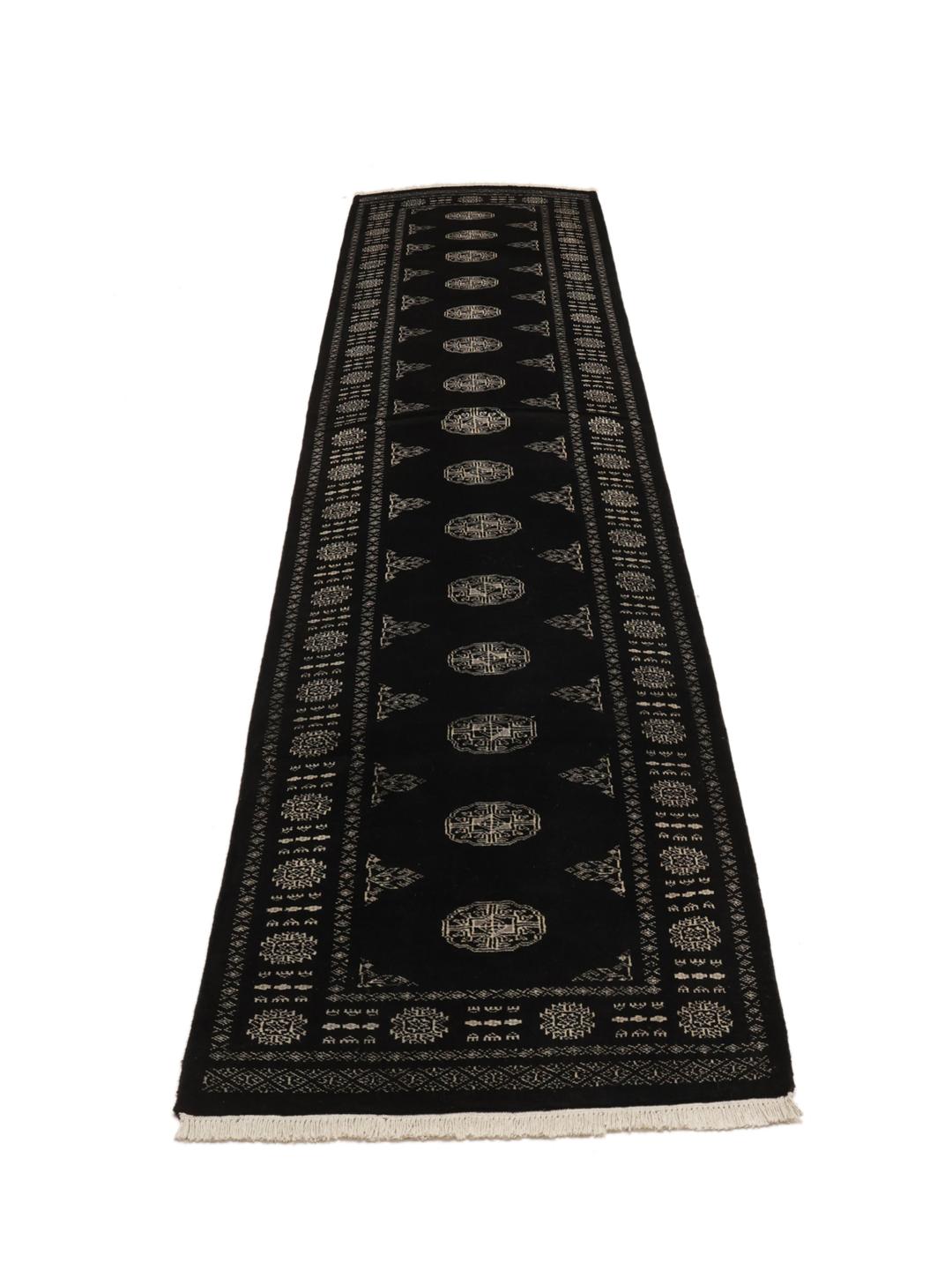
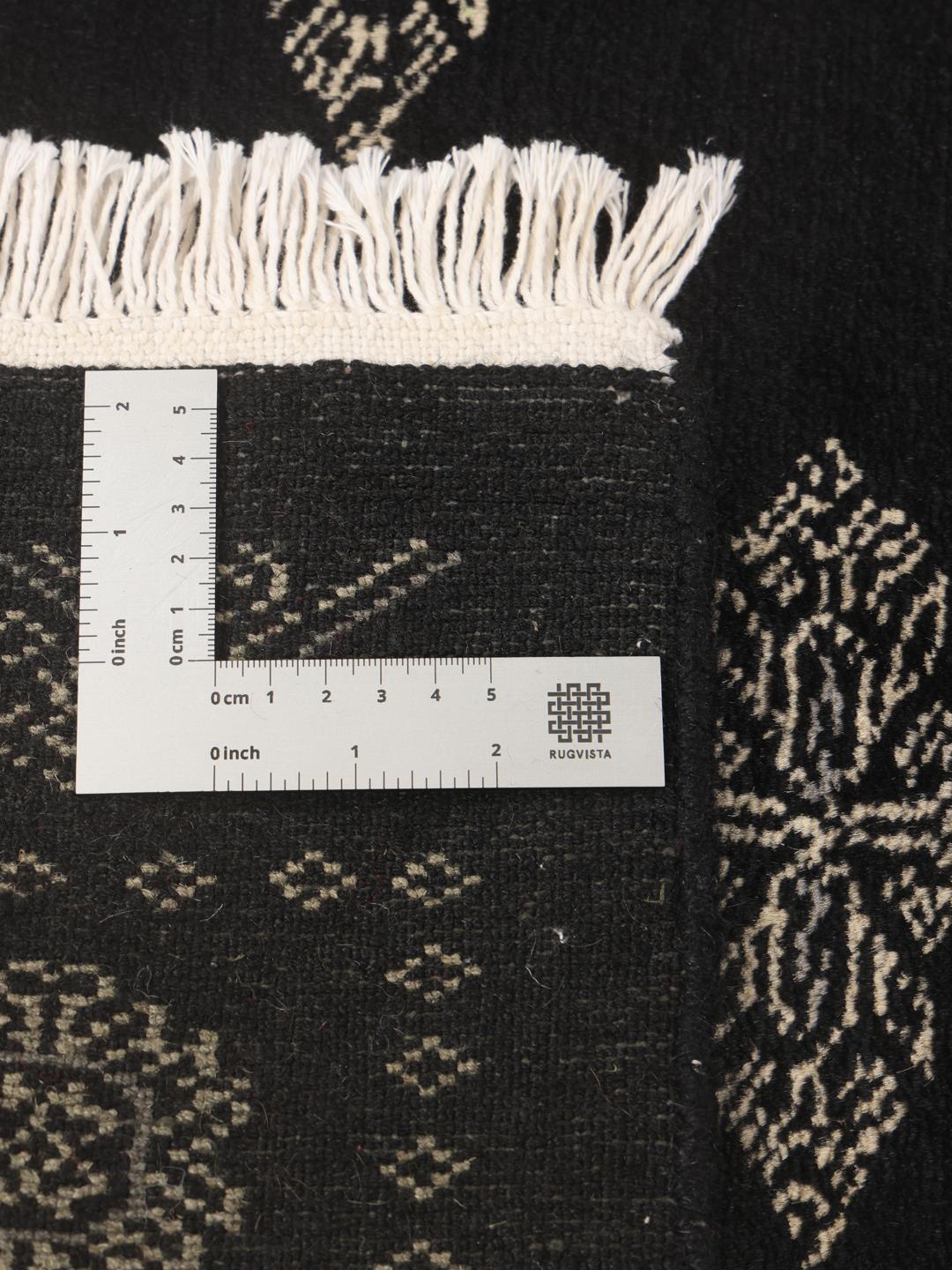
Visually, these rugs are defined by the repeating 'gul' motif, an octagonal or elephant-foot shape that serves as the heart of the design. In this particular runner, the motifs are arranged in a balanced, rhythmic sequence, framed by elaborate geometric borders that reflect a formal design language. While the traditional palette often leans toward warm reds, this piece is particularly distinctive for its striking black field, which allows the intricate, lighter-toned patterns to stand out with exceptional clarity.
Collecting a rug from this tradition is an act of preserving a sophisticated craft. These pieces are valued not only for their visual impact but for the immense human skill required to produce them. To own such a rug is to hold a connection to a centuries-old lineage of weavers who have perfected the art of the hand-knotted textile, ensuring that the heritage of their region remains vibrant and relevant in contemporary homes.