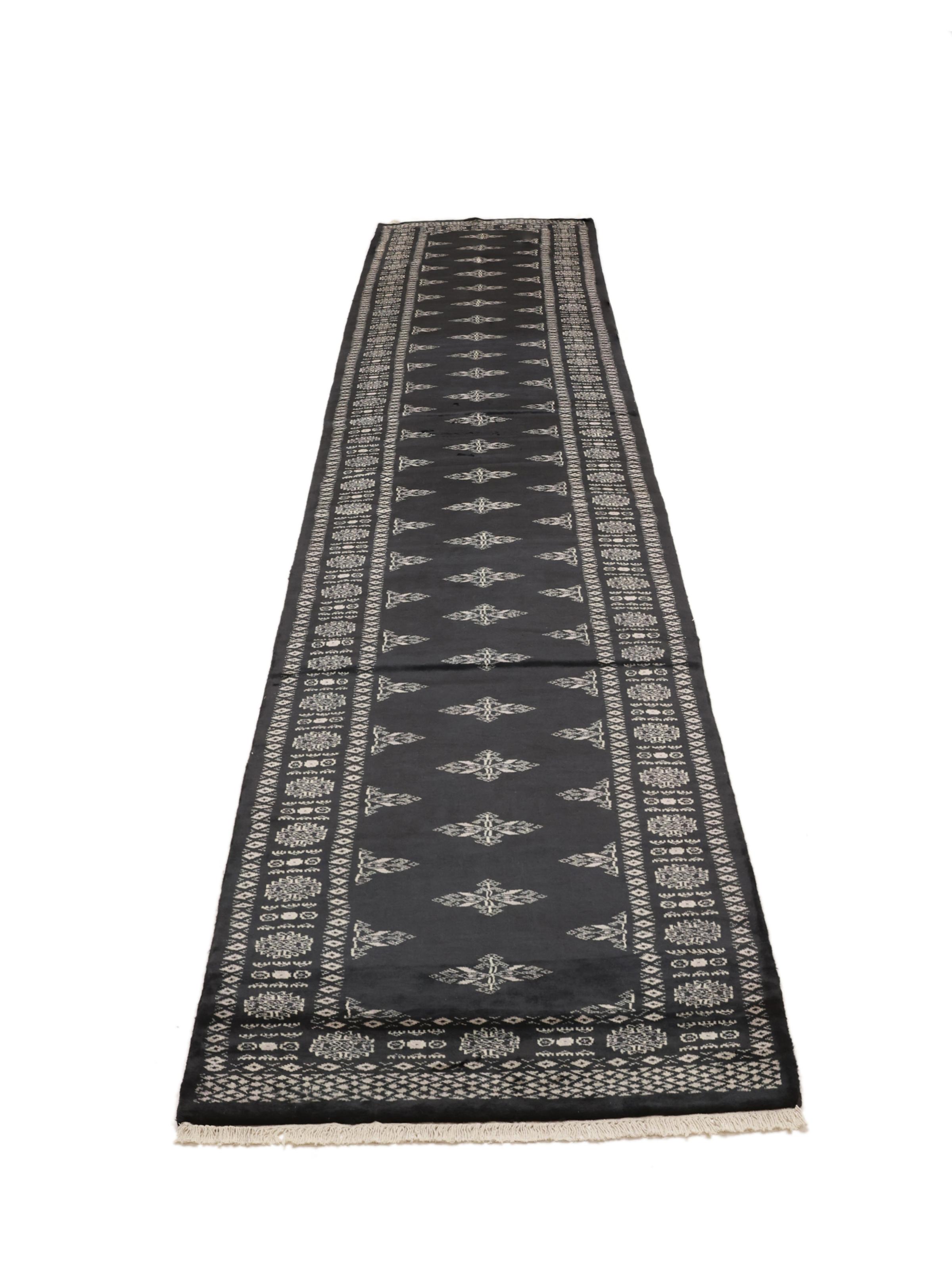
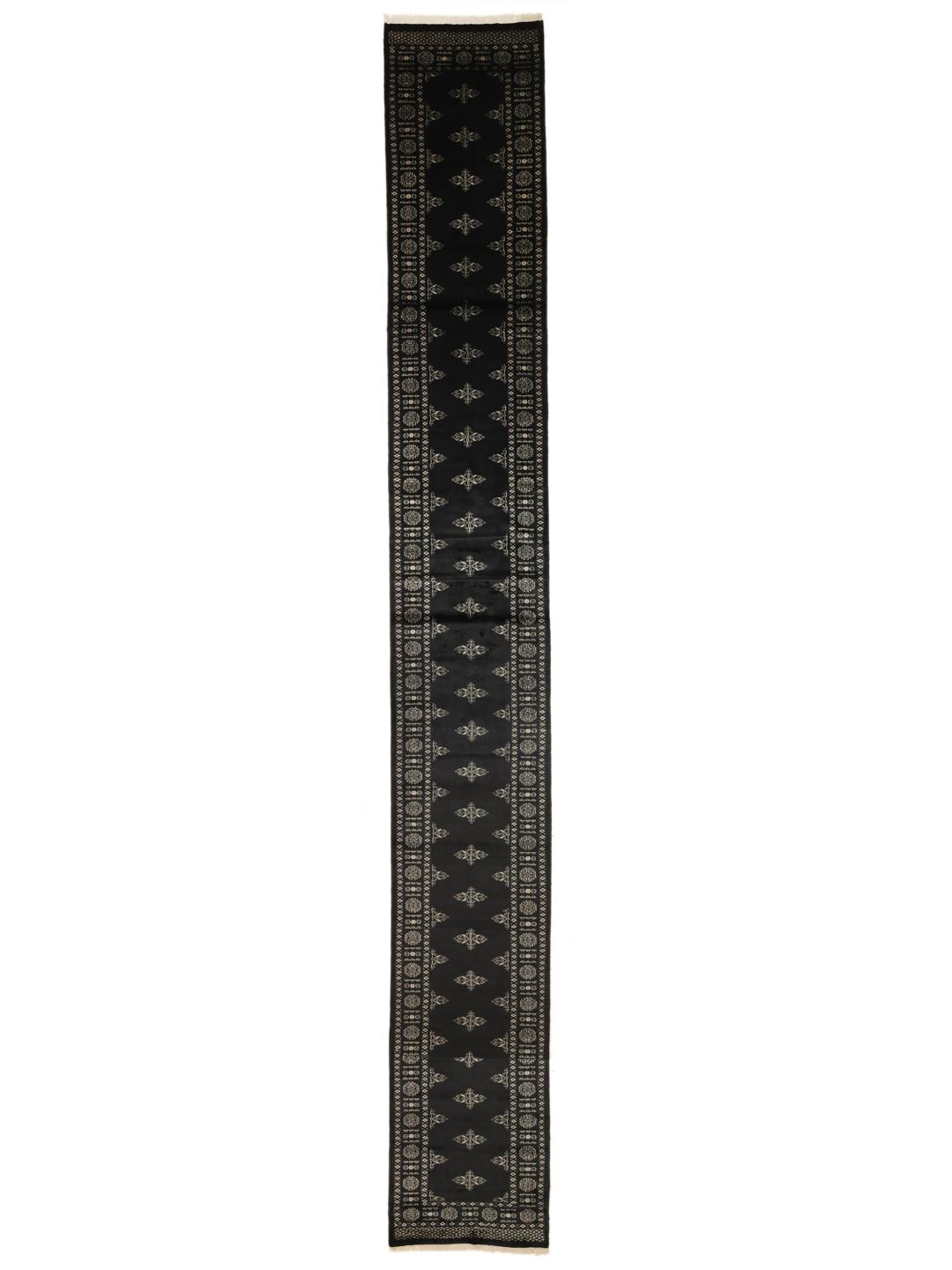
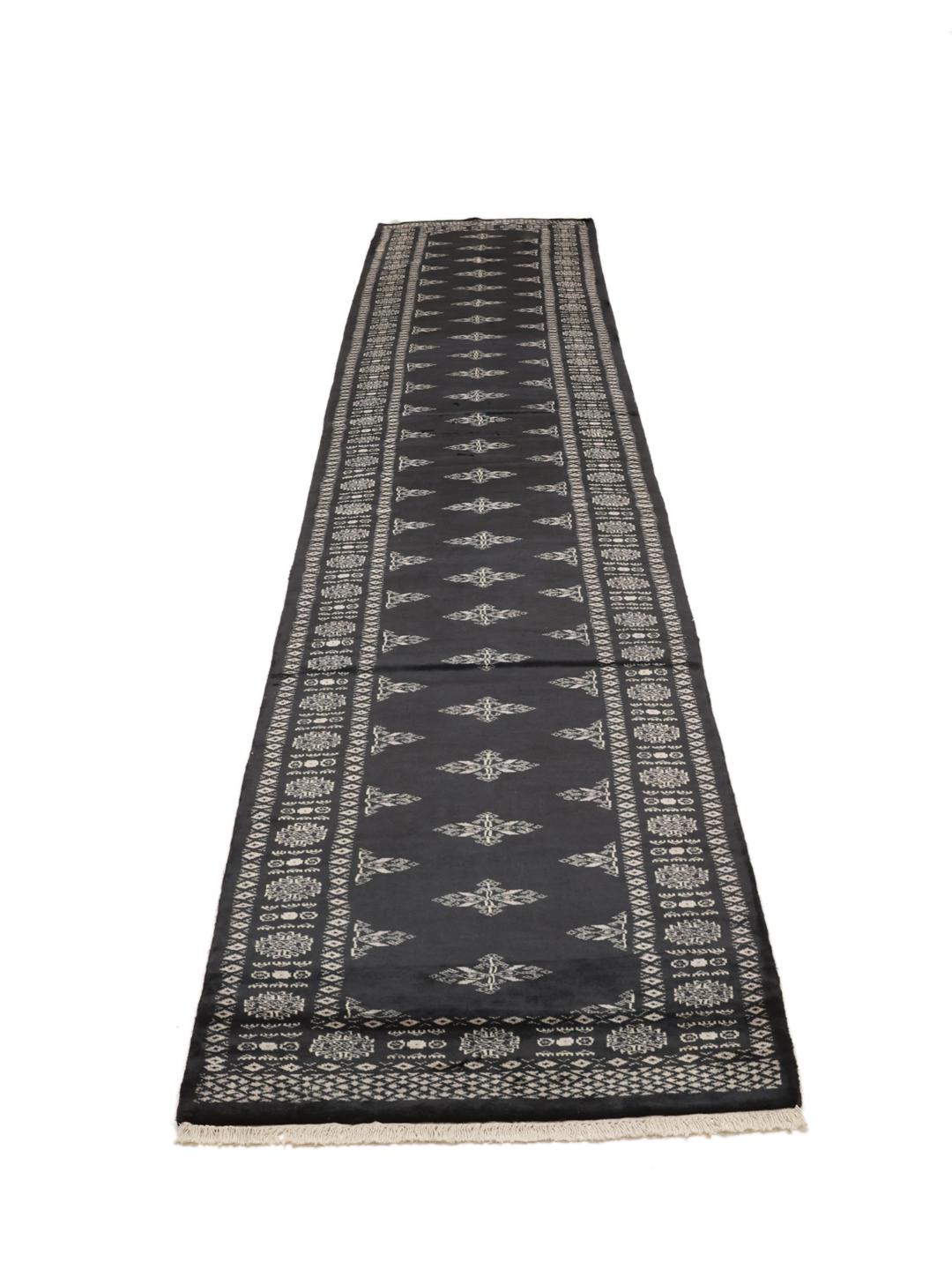
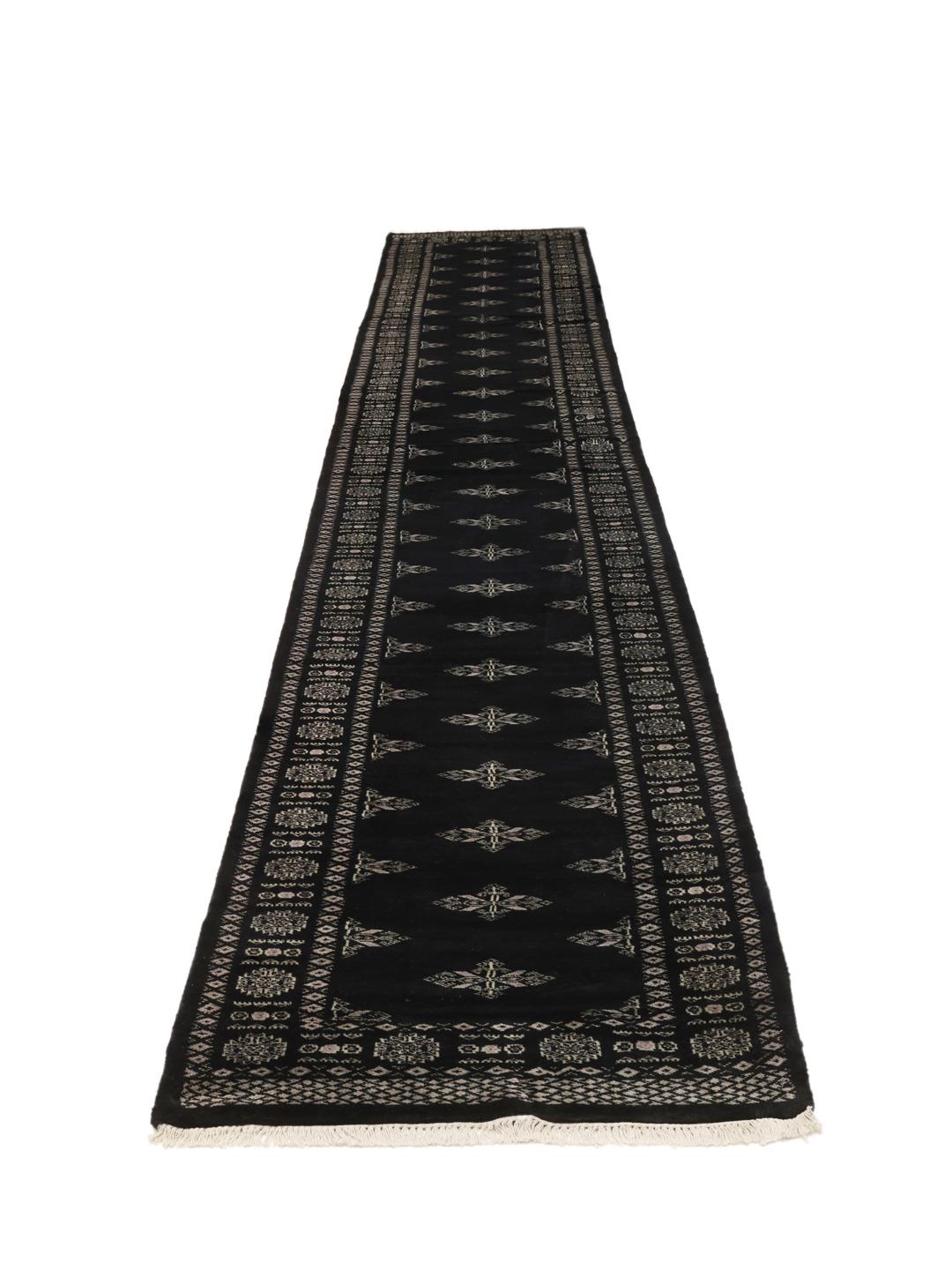
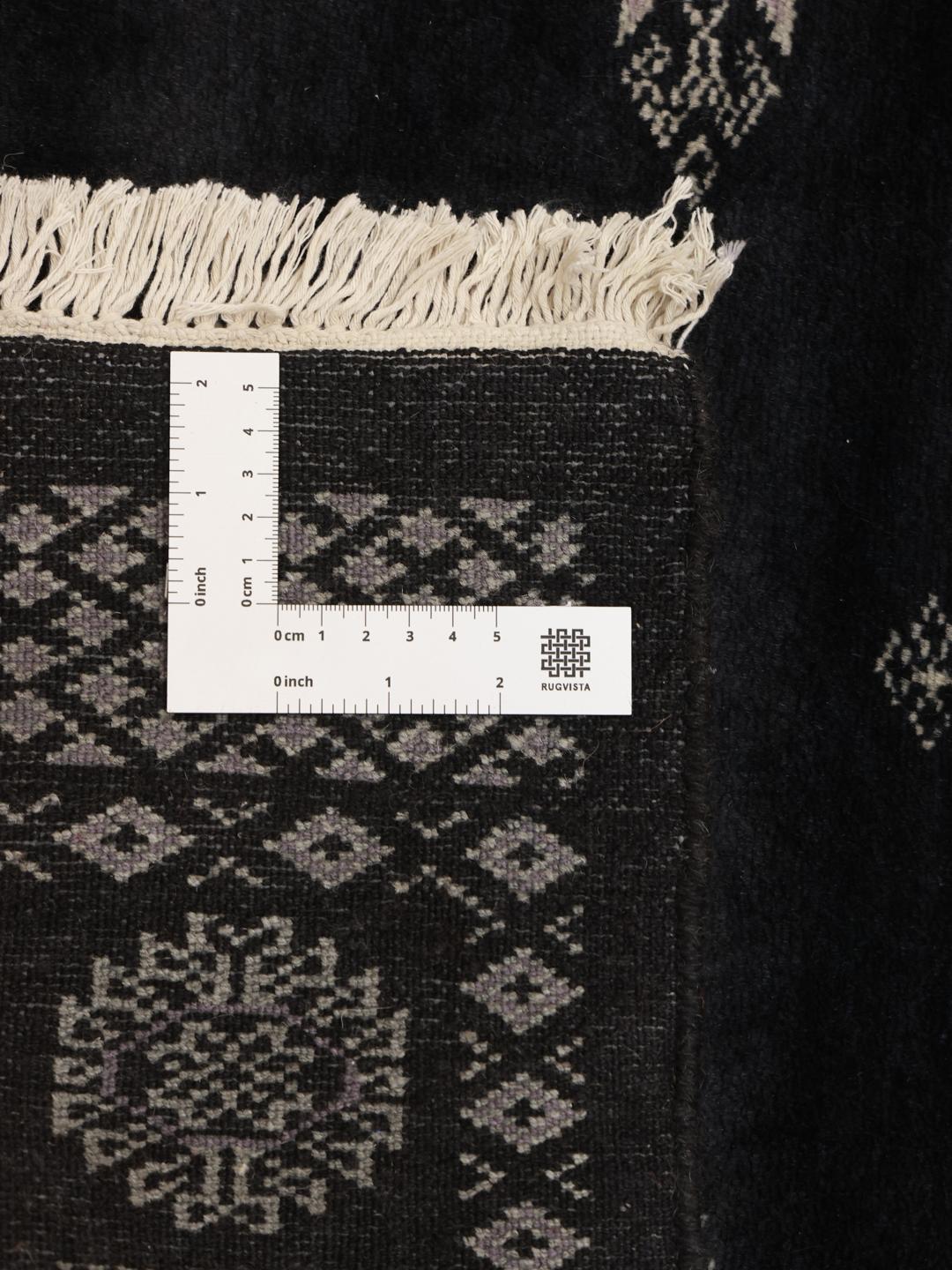
The Bokhara rug tradition is deeply rooted in the history of the Silk Road, taking its name from the ancient trade city of Bukhara. While these designs have historical ties to Central Asian nomadic tribes, the finest contemporary examples are predominantly woven in Pakistan. This evolution has allowed for a refinement of the craft, blending ancient motifs with a level of precision and consistency that is highly sought after by modern collectors.
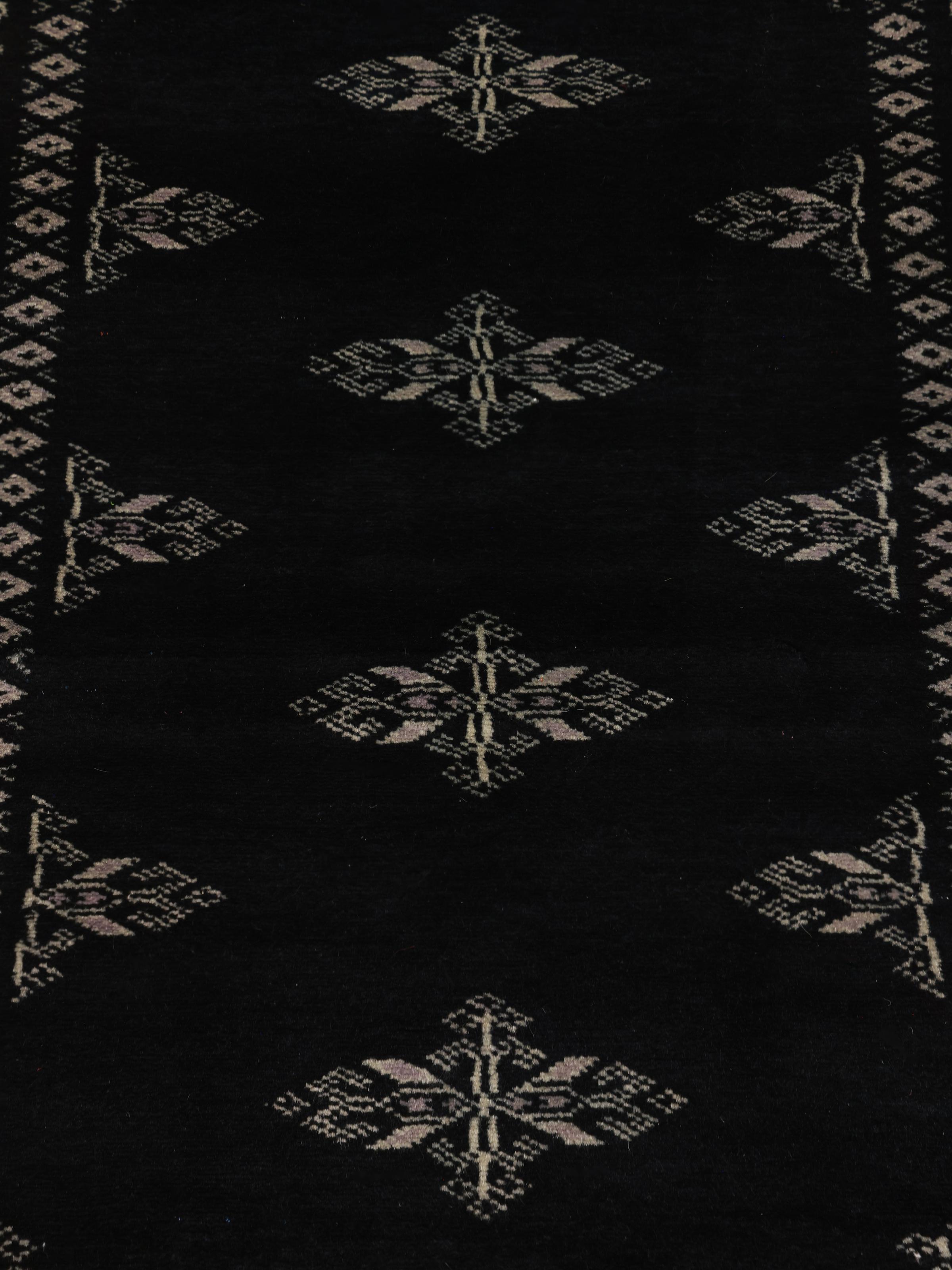
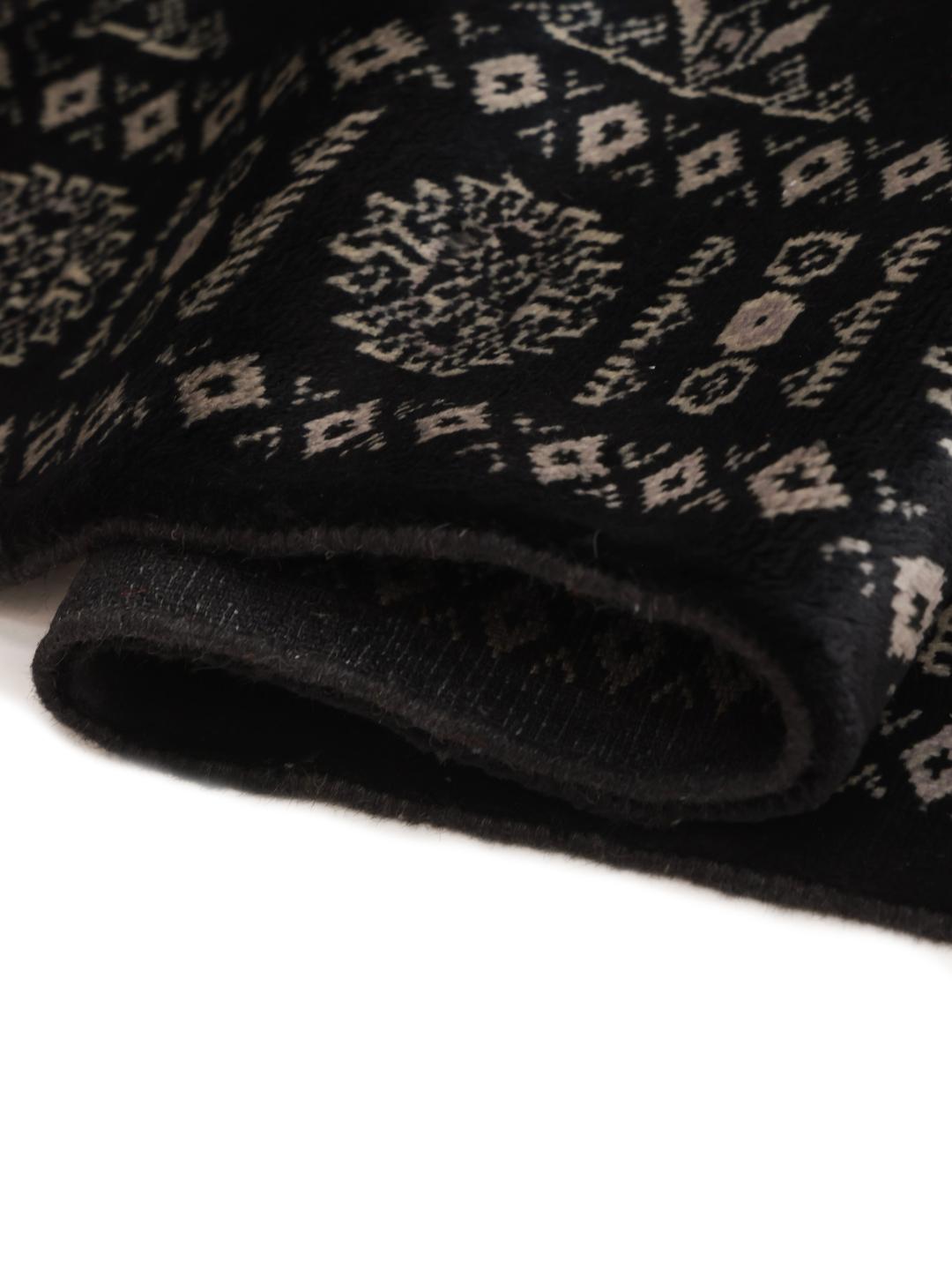
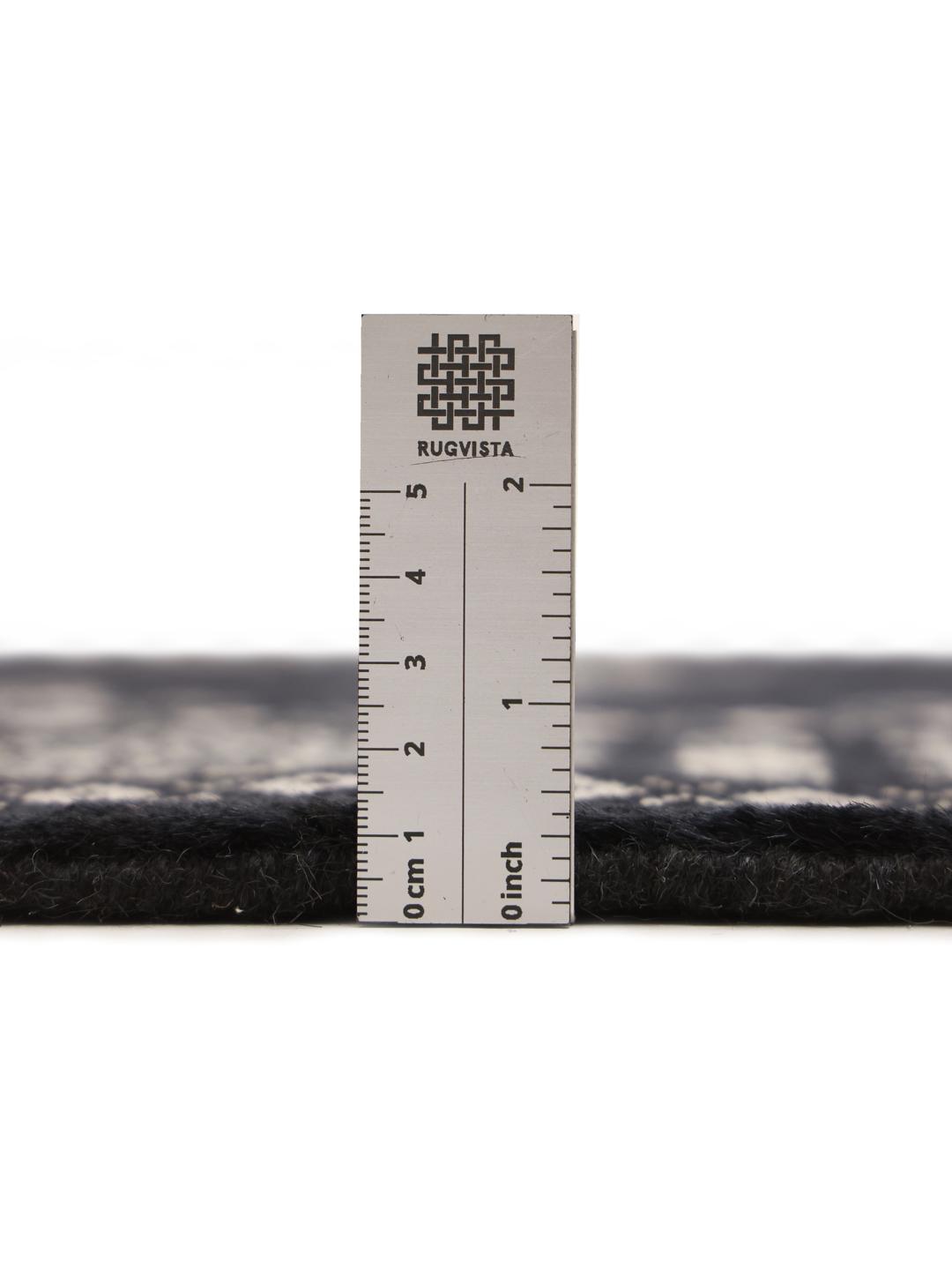
The term 2ply refers to the construction of the wool pile, where two strands of wool are twisted together before being knotted. This technical choice is significant because it produces a pile that is thicker, more lustrous, and remarkably resilient. For the owner, this means a rug that not only looks more vibrant but also feels more substantial and wears better over time compared to simpler, single-strand constructions.
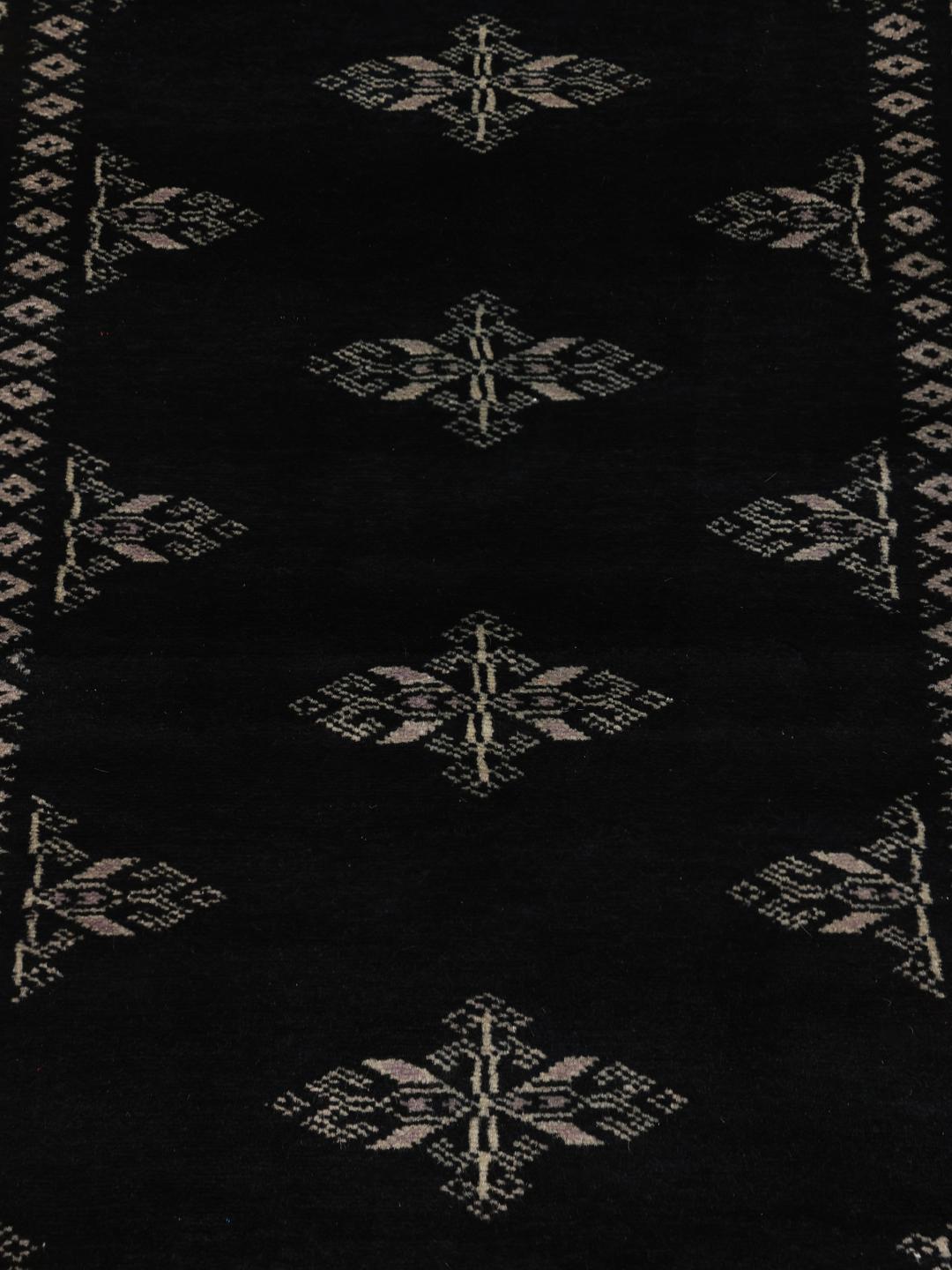
Signature to this tradition are the repeating gul motifs, which are often octagonal or elephant-foot shapes arranged in orderly rows. These geometric emblems are deeply symbolic and have been passed down through generations of weavers. The use of a black field in this particular piece is a sophisticated variation, offering a contemporary twist on the classic, warm palette typically associated with these traditional designs.
Owning a hand-knotted rug from this tradition is an act of preserving a rich cultural legacy. It represents a connection to a centuries-old craft where skill, patience, and artistic vision converge. Collectors value these pieces not just for their beauty, but for the human story embedded in every knot, making them a meaningful addition to any home that values history and authentic craftsmanship.