Bokhara rugs are deeply rooted in the history of the Silk Road. While the name traces back to the ancient trading city of Bukhara in Central Asia, the tradition was carried forward by nomadic tribes who developed these signature styles over generations. Today, Pakistan is renowned for producing some of the finest examples of this tradition, blending historical techniques with refined modern sensibilities.
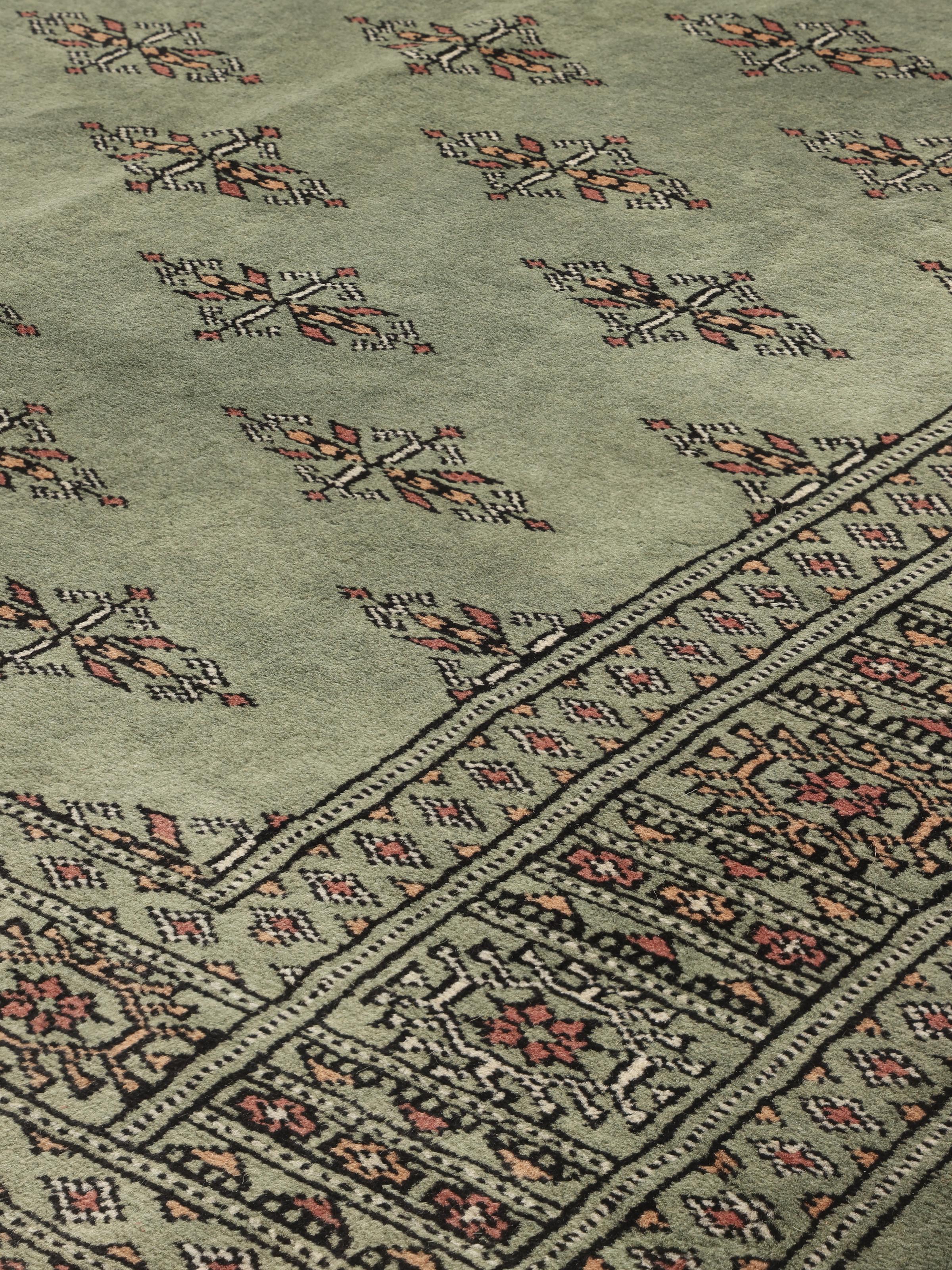
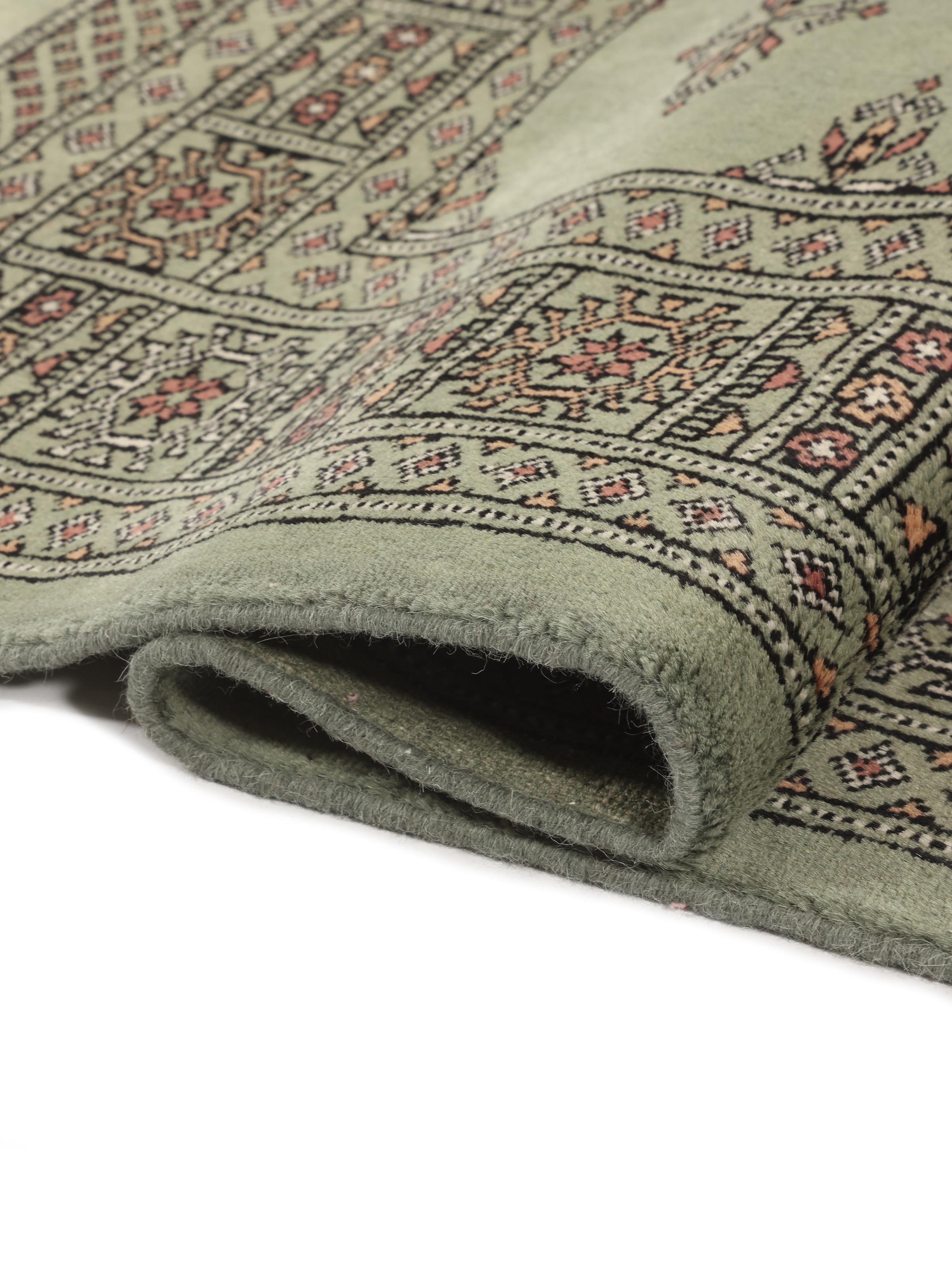
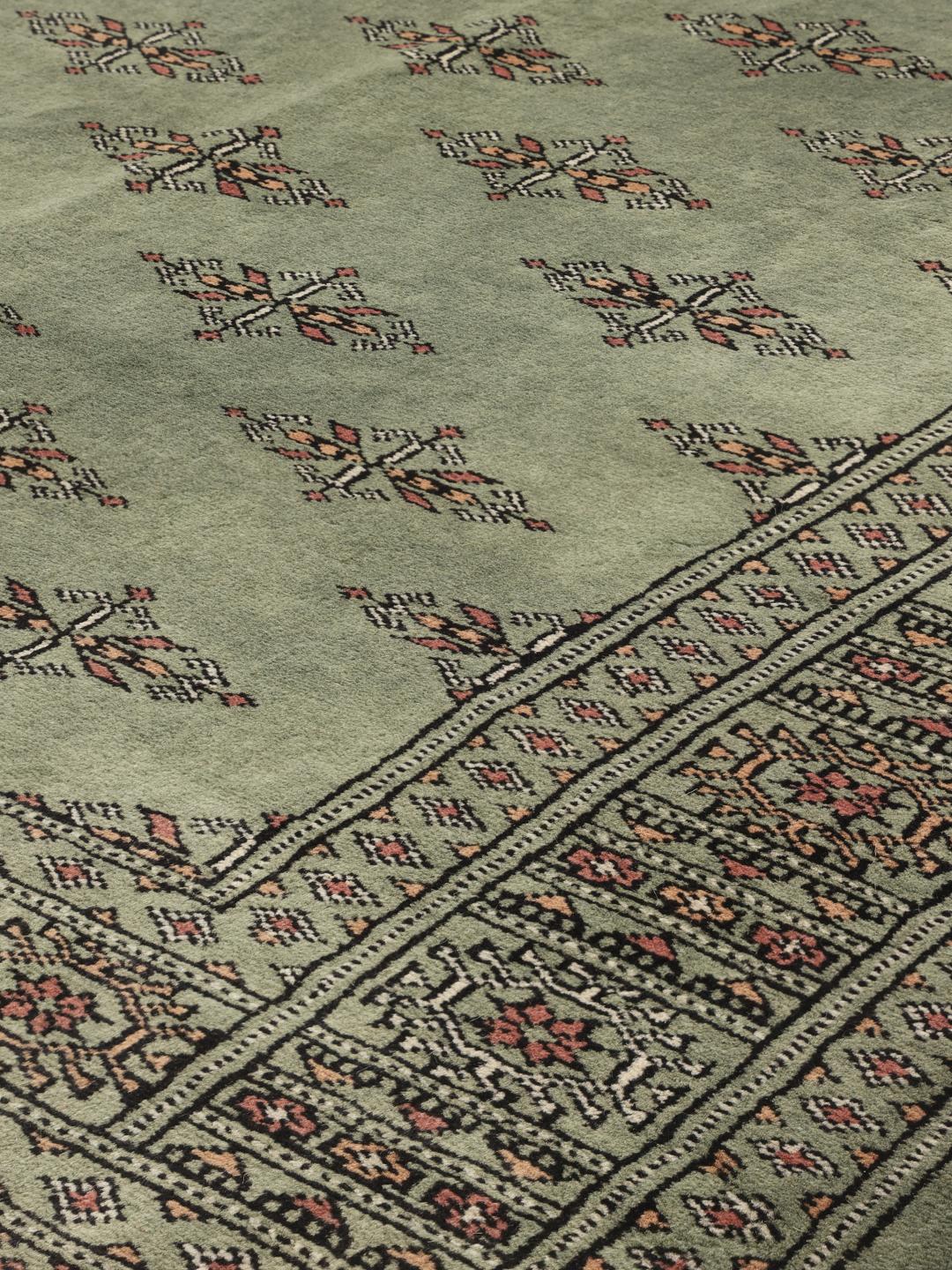
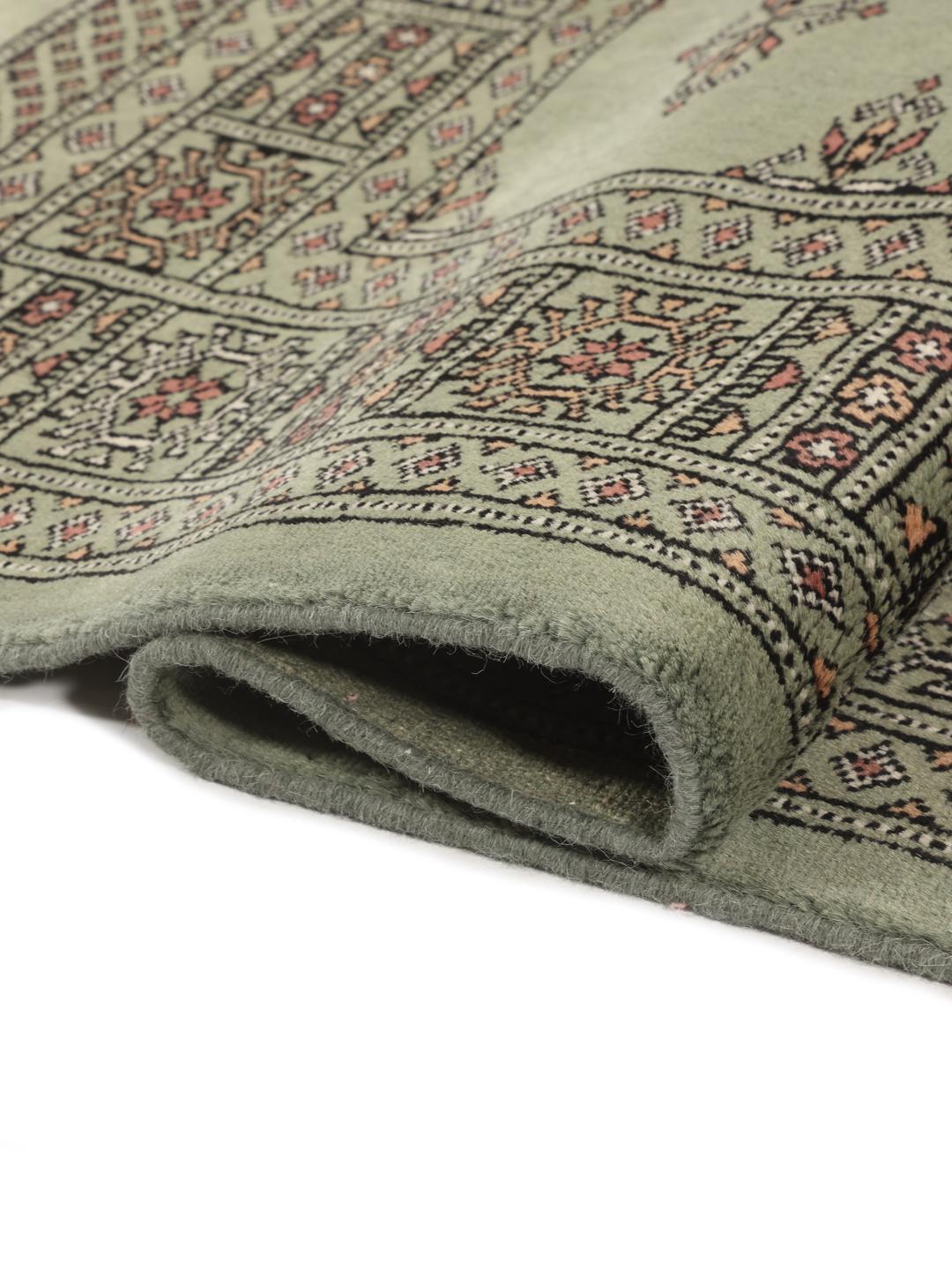
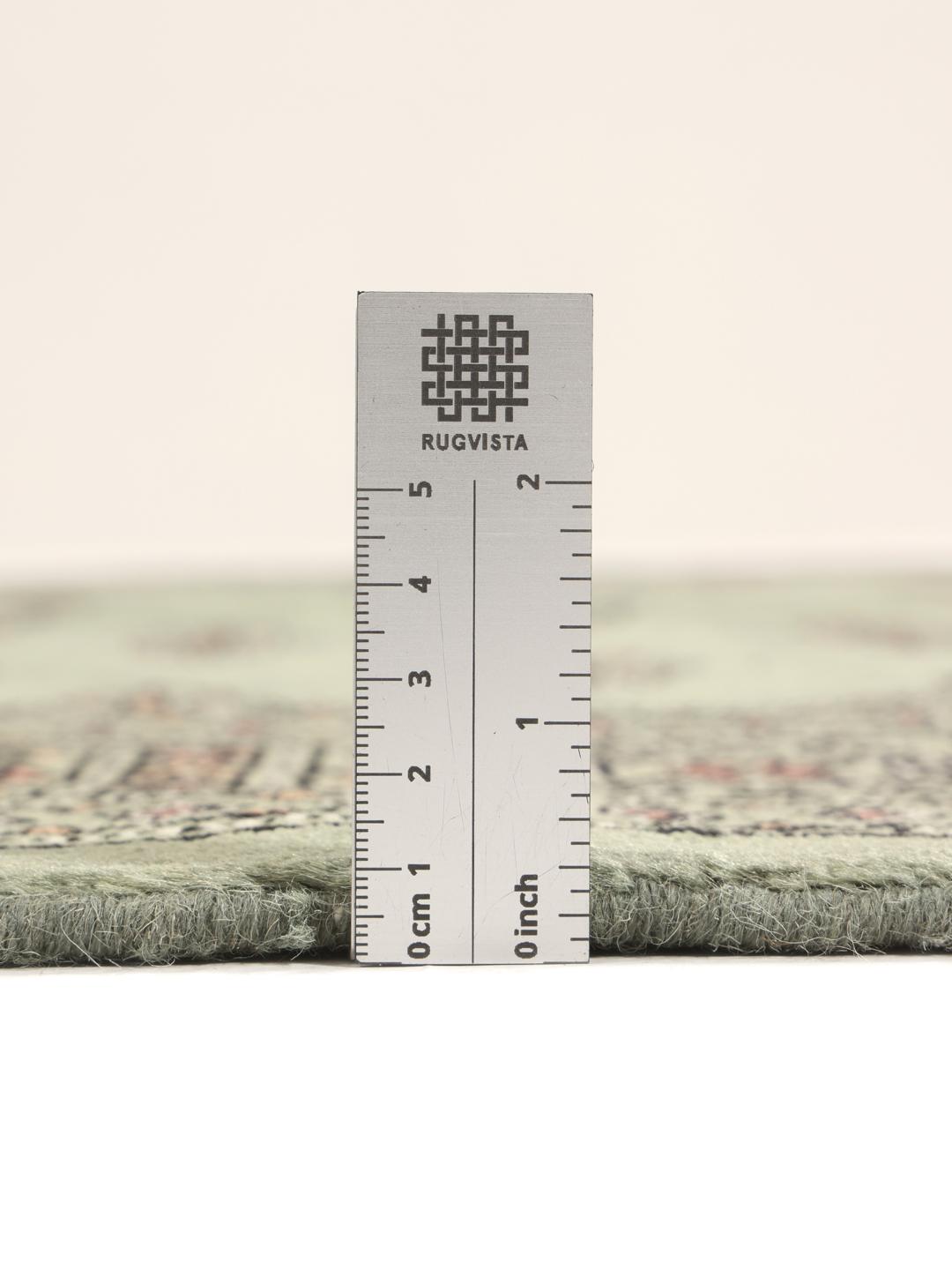
The term 3ply refers to the construction of the pile, where three strands of wool are twisted together before being knotted into the foundation. This specific technique is highly valued because it creates a thicker, more lustrous, and remarkably durable pile. For the owner, this means a rug that not only feels exceptionally soft and plush but also holds up beautifully against the wear of daily life.
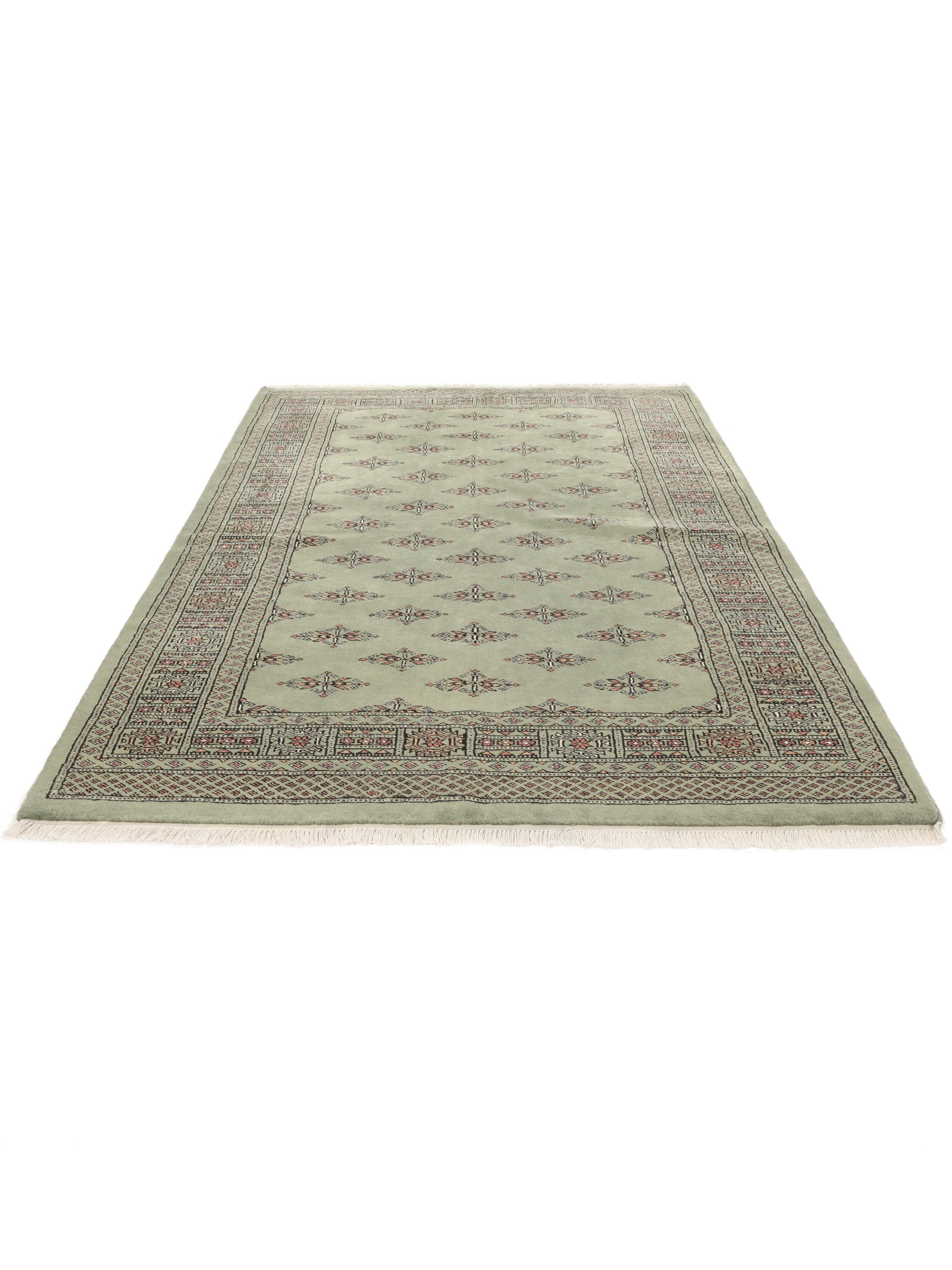
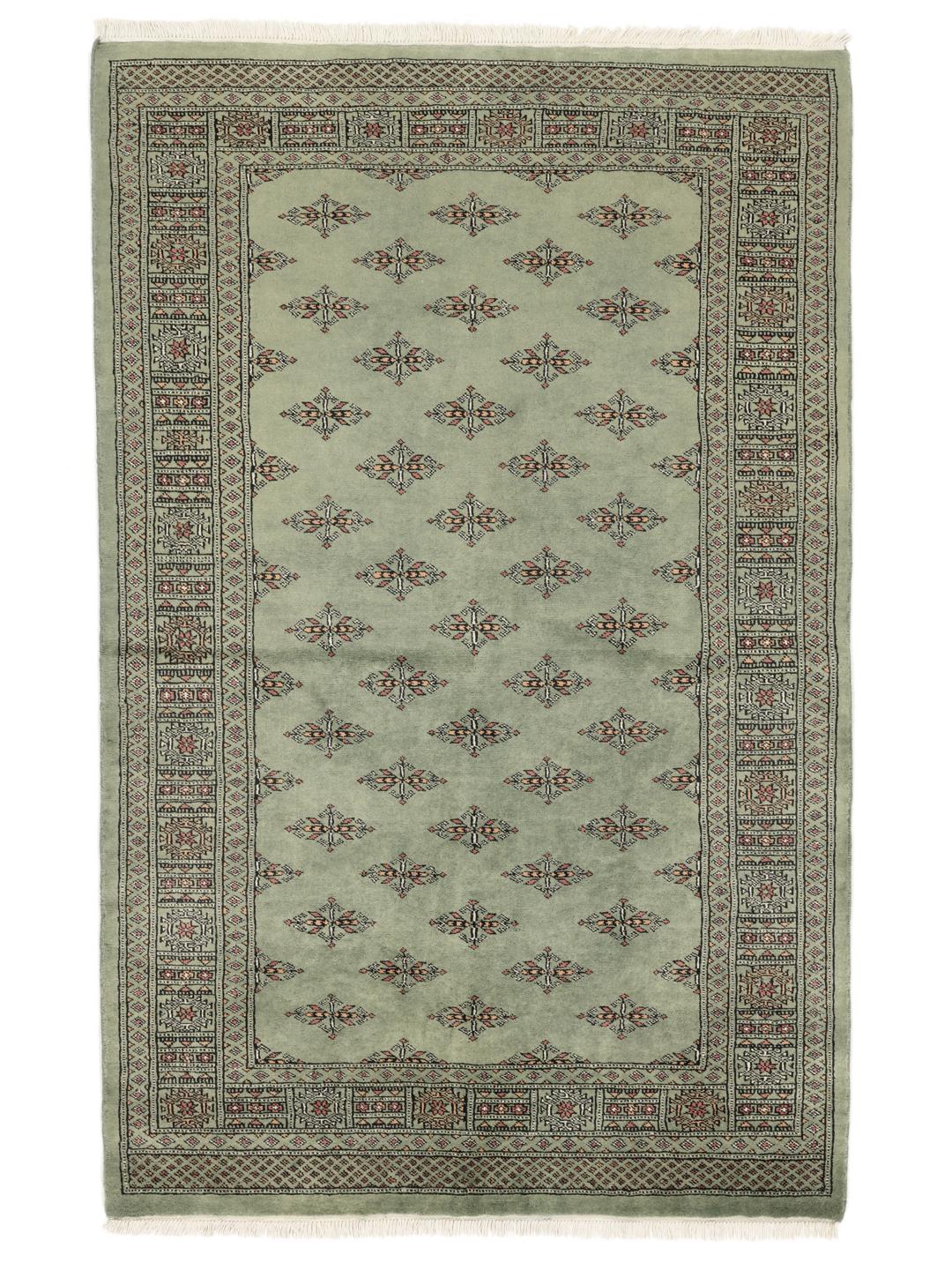
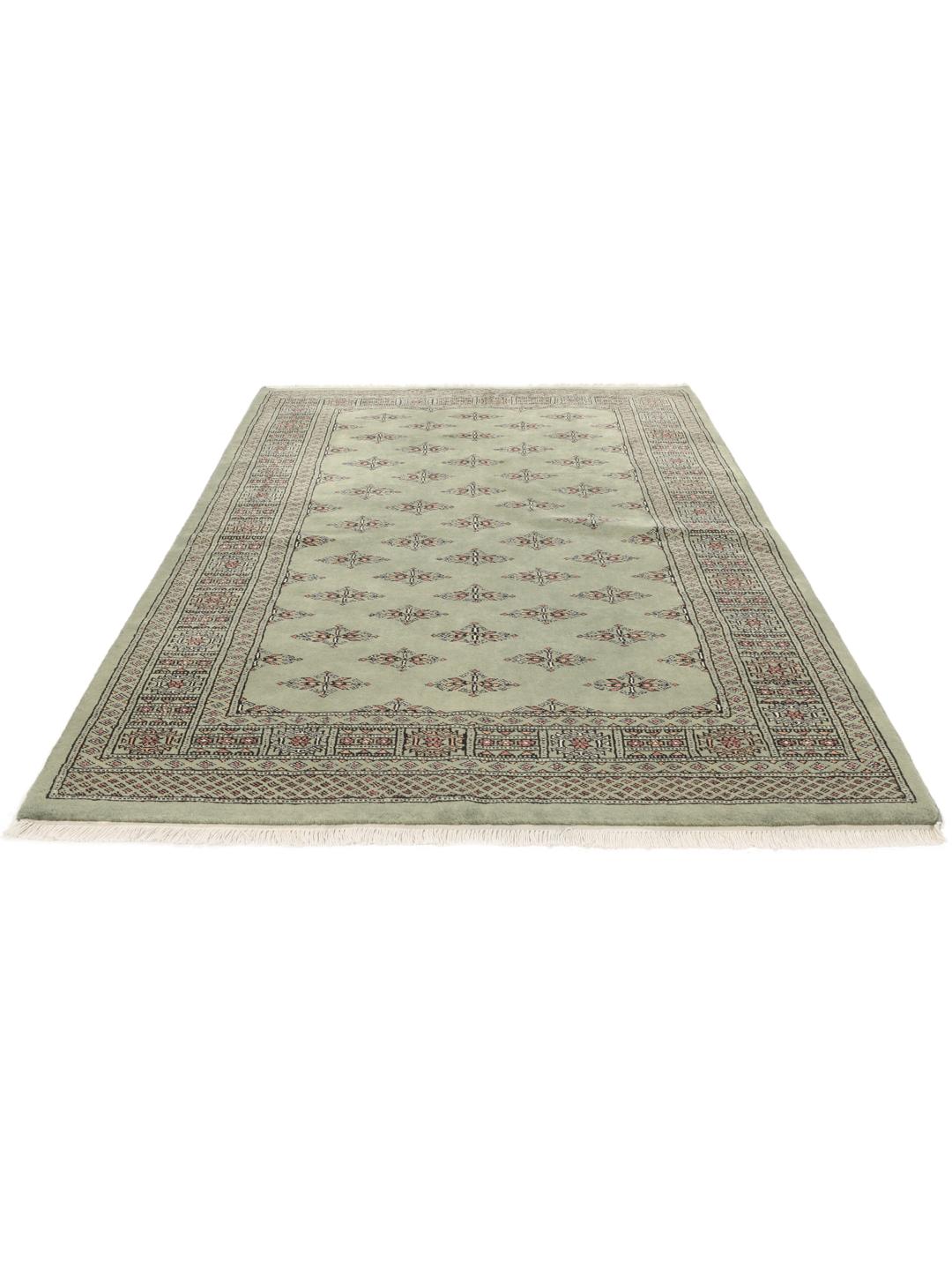
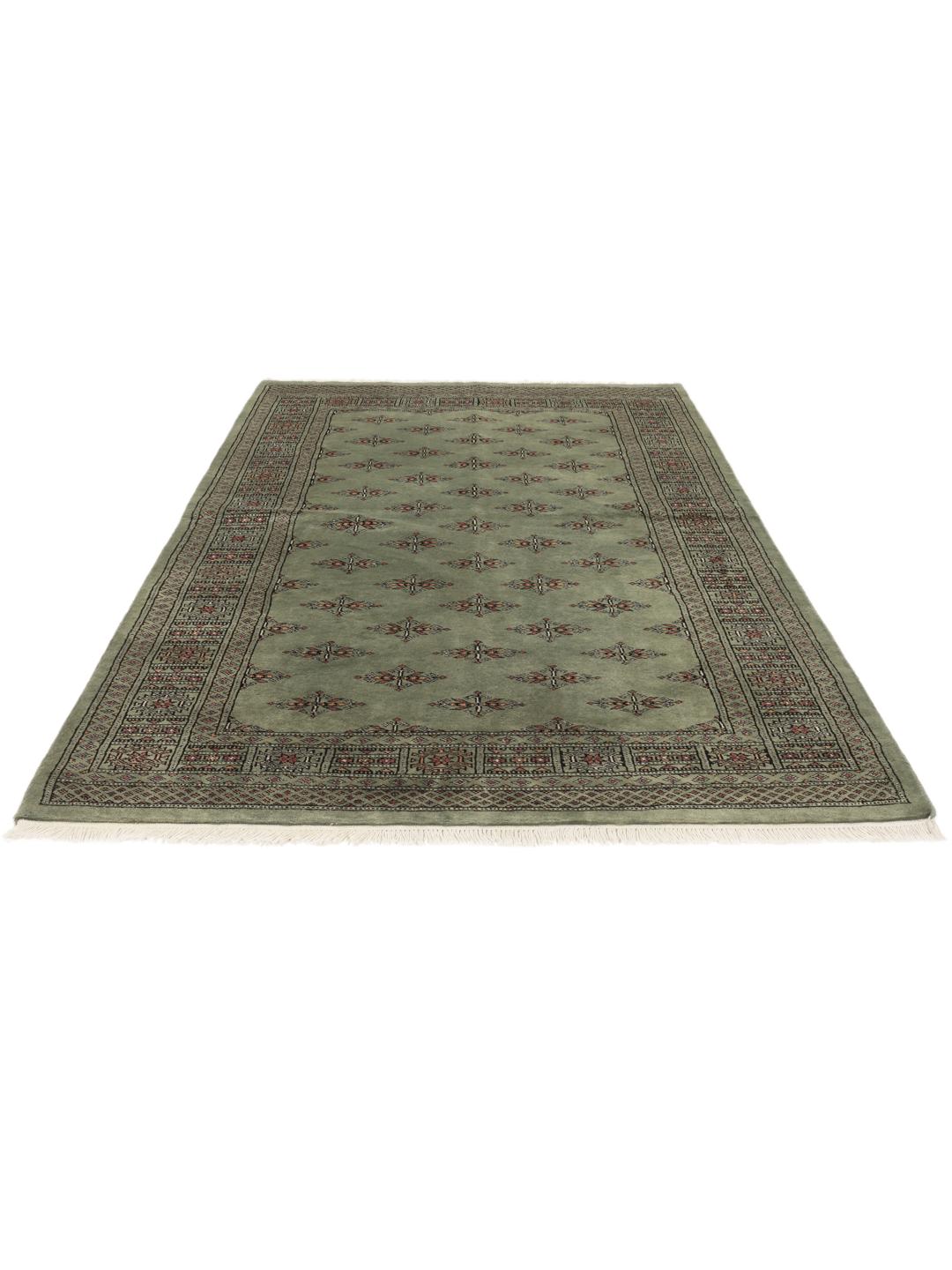
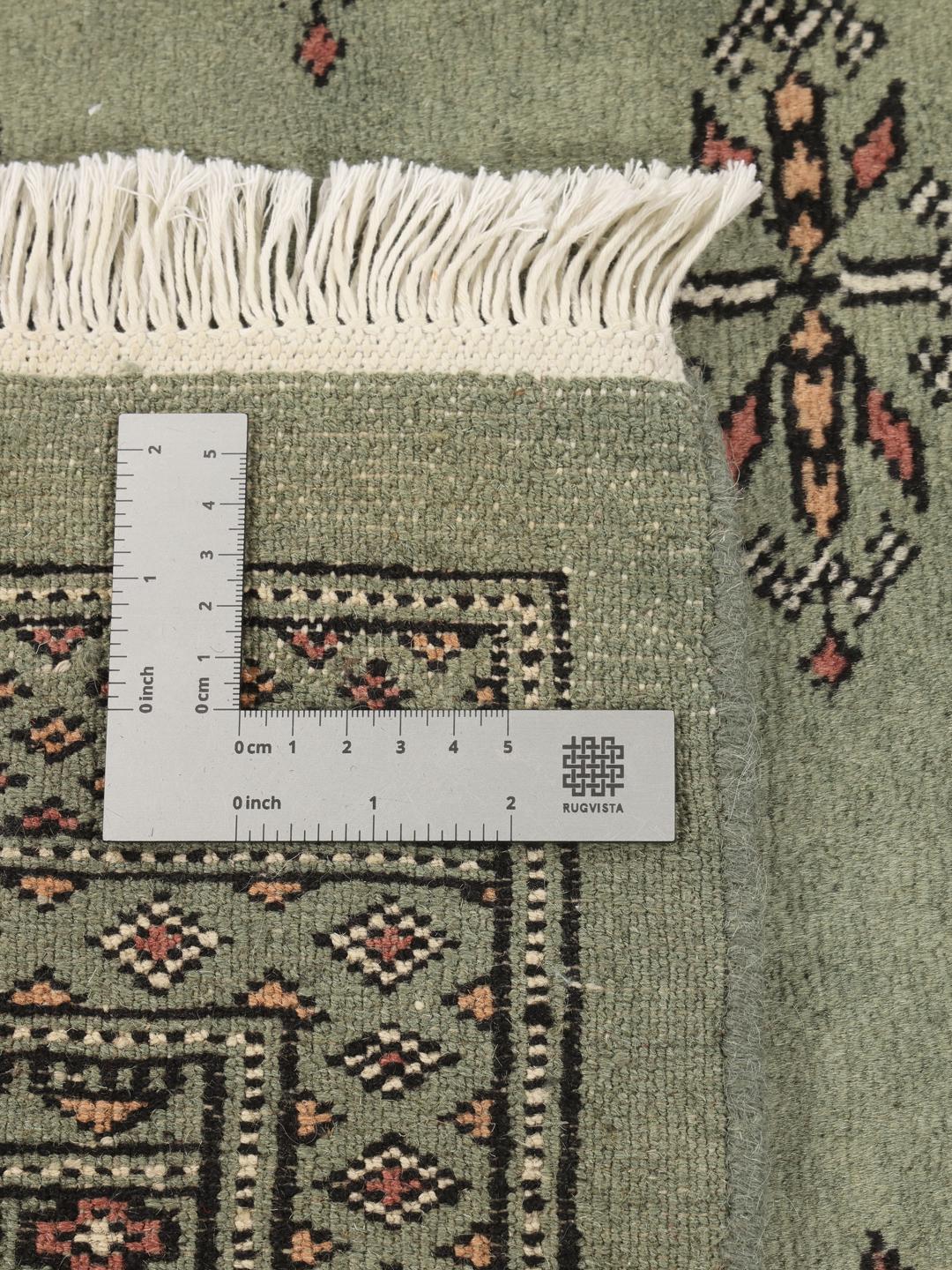
Visually, these rugs are defined by their iconic gul motifs, which are repeating, medallion-like shapes that represent tribal heritage. In this particular piece, the green field offers a sophisticated departure from the more common red tones, highlighting the versatility and artistic intent of the weavers. The formal borders further frame the field, creating a sense of balance and order that is a hallmark of the style.
Owning a hand-knotted Pakistan Bokhara is an opportunity to connect with a legacy of skill and patience. These rugs are highly prized by collectors not just for their aesthetic appeal, but for the human story woven into every inch. By bringing one into your home, you are preserving a cultural tradition and choosing an object of genuine quality that is intended to be enjoyed for many years to come.