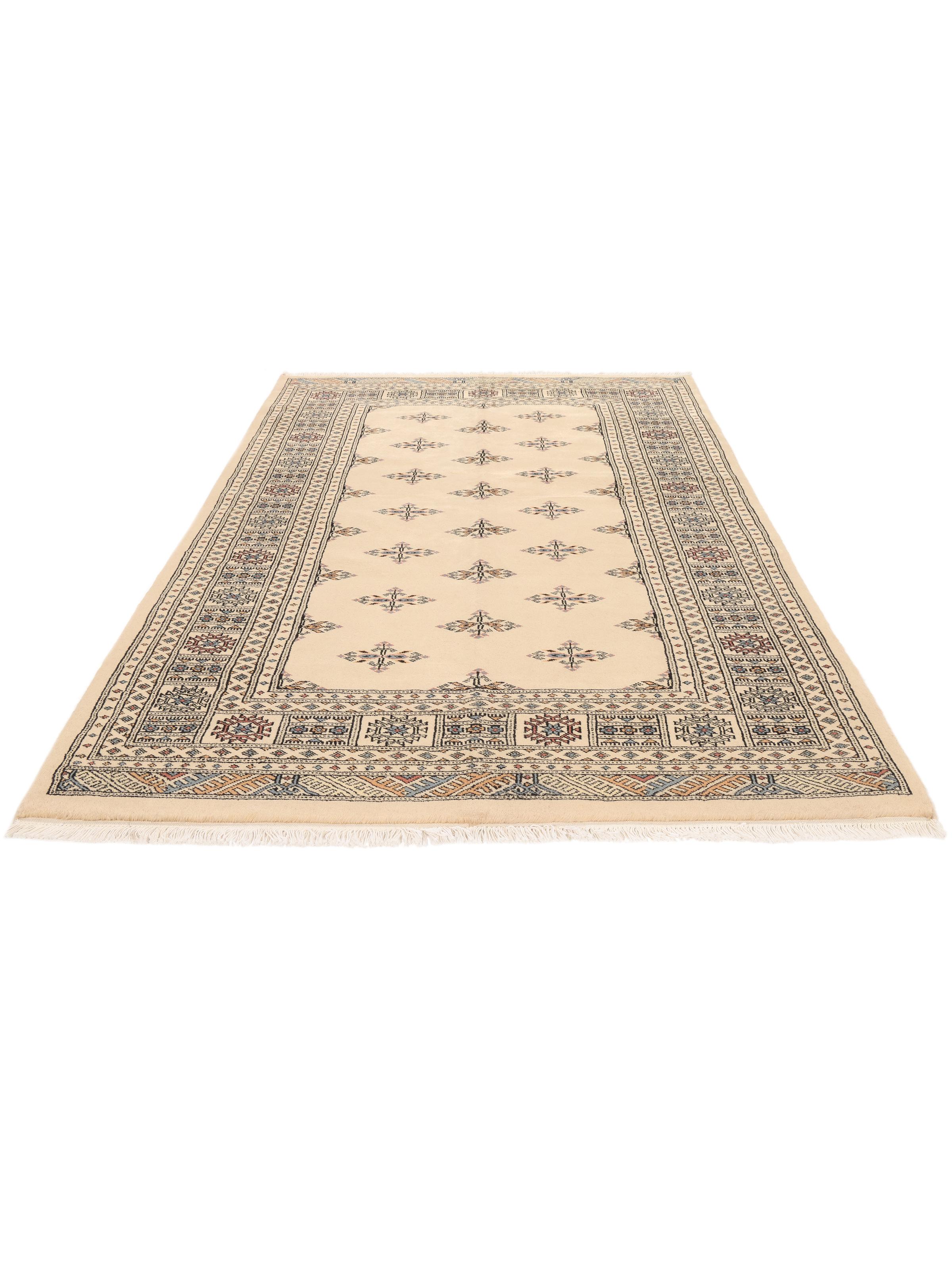
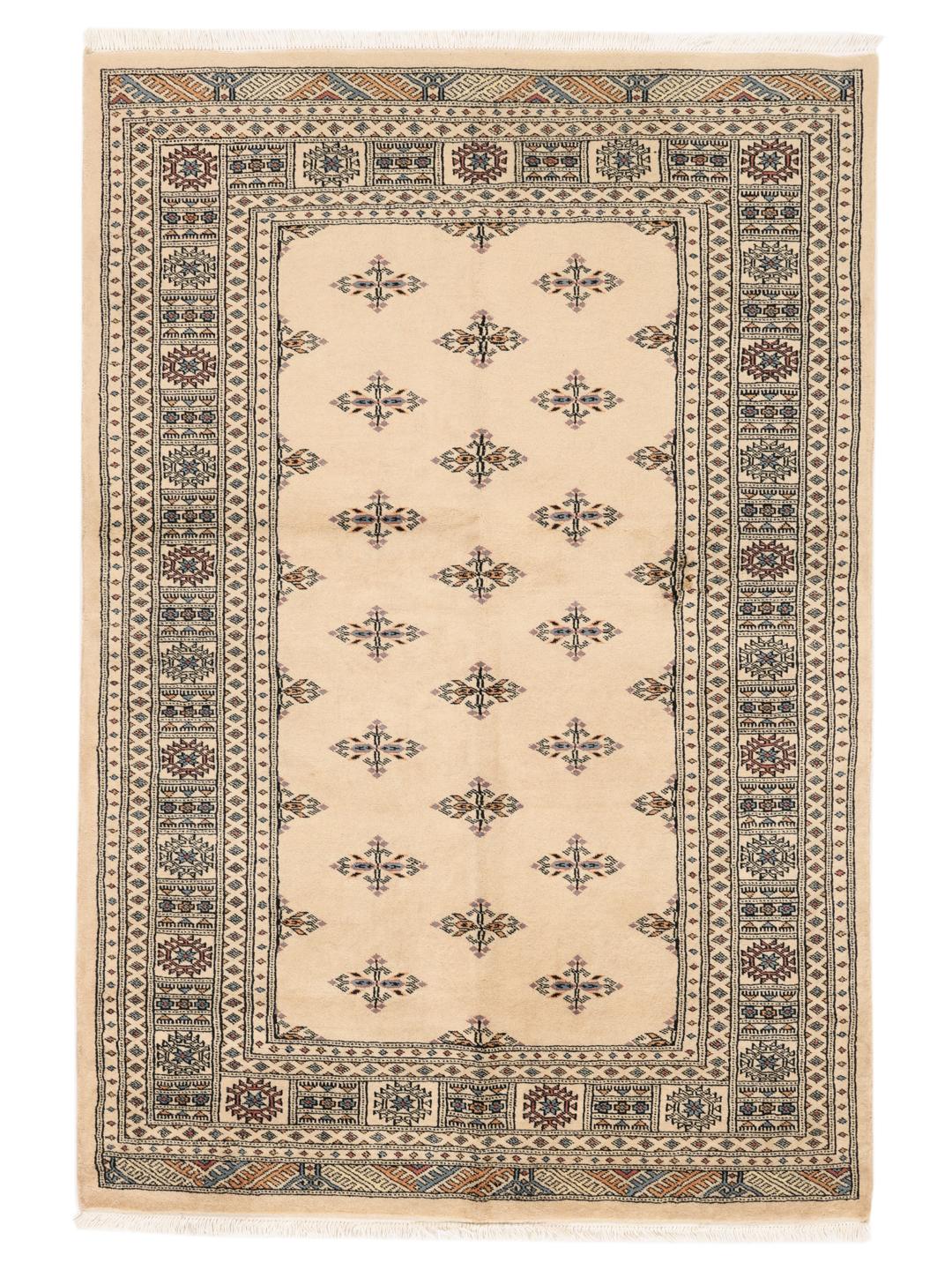
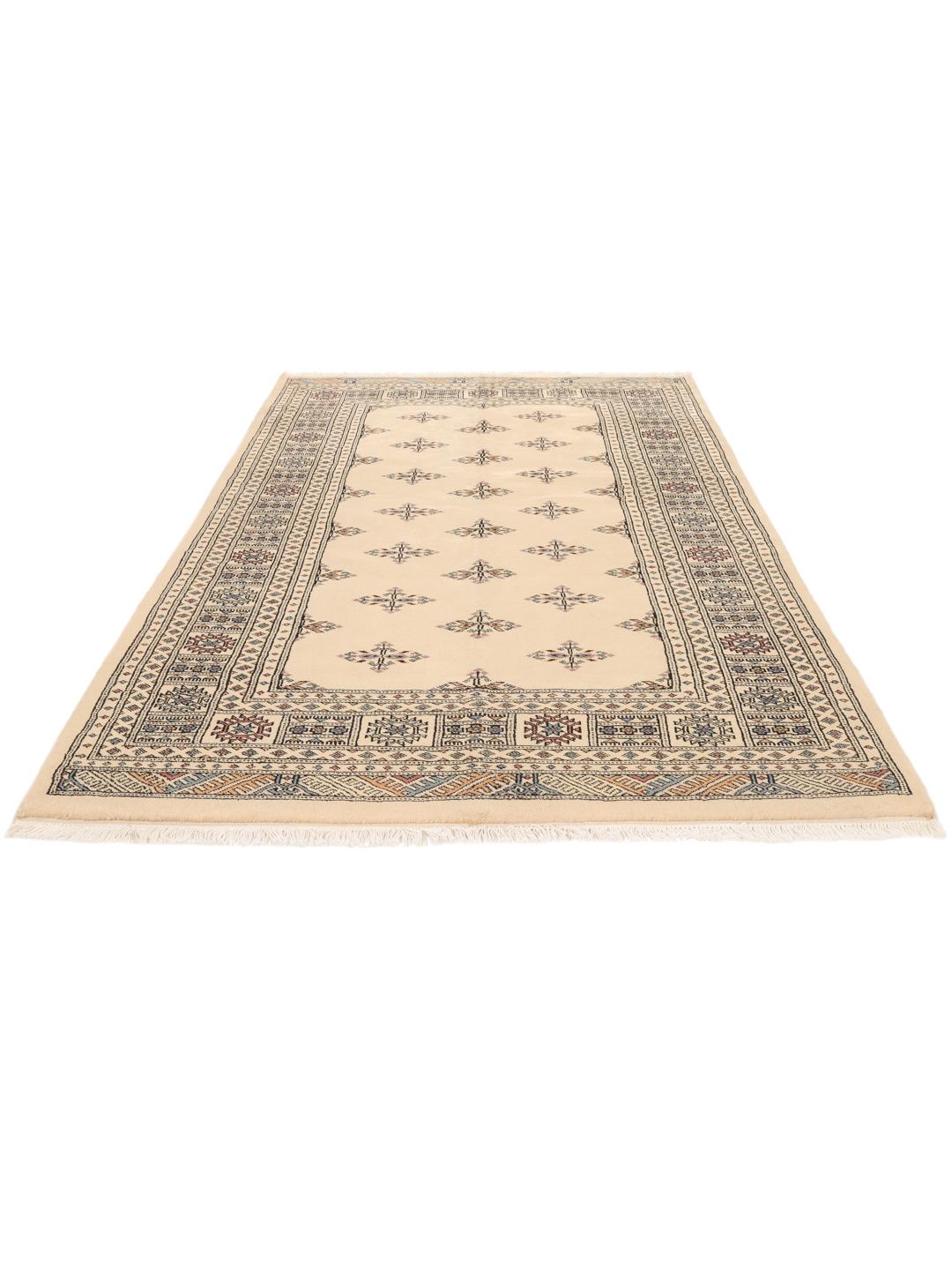
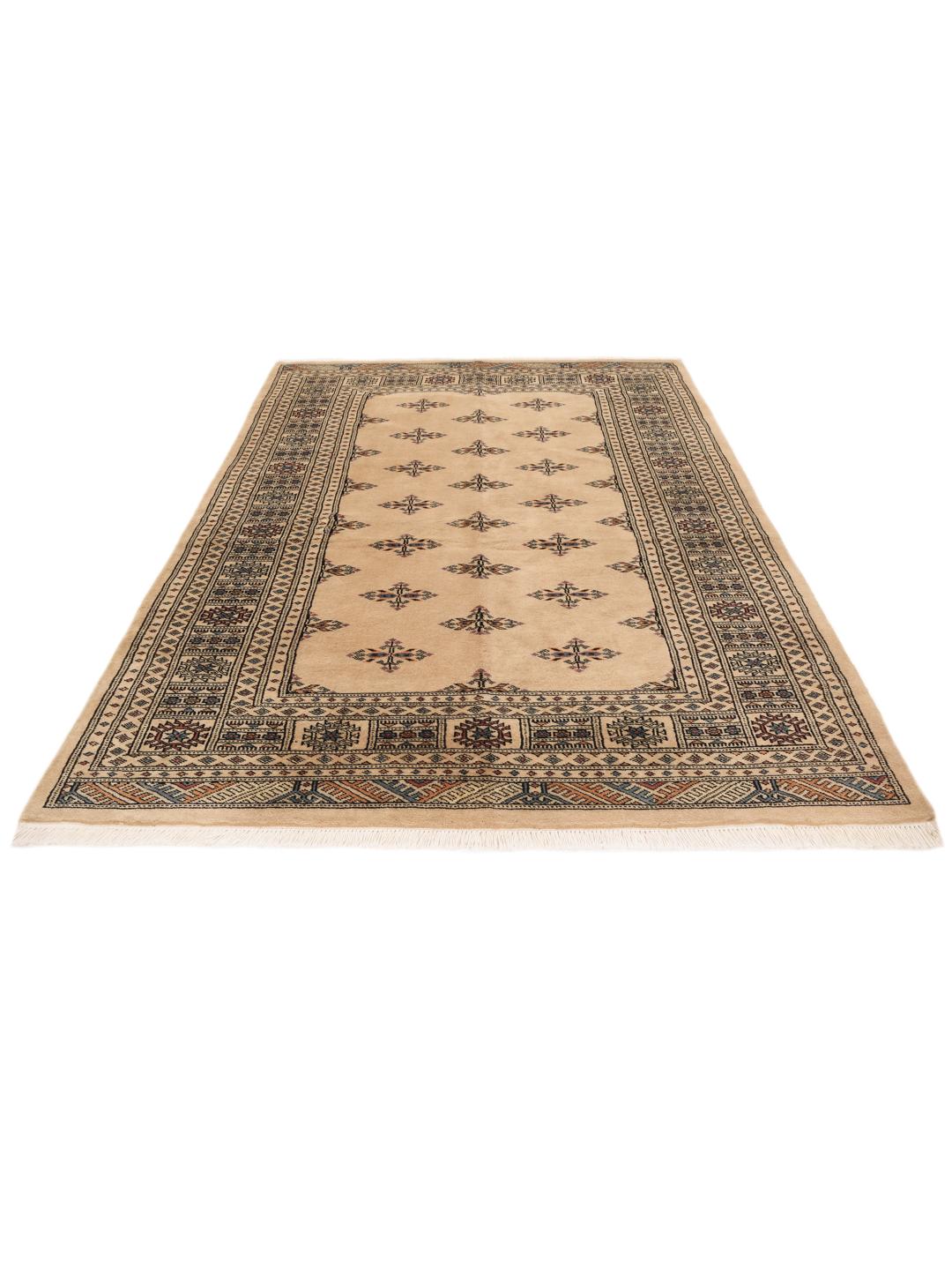
The Bokhara rug tradition is deeply rooted in the history of Central Asian nomadic tribes, who developed these distinct patterns over centuries. While the name originates from the ancient Silk Road city of Bukhara, the most refined examples today are produced in Pakistan, where artisans have perfected these classic designs with exceptional skill.
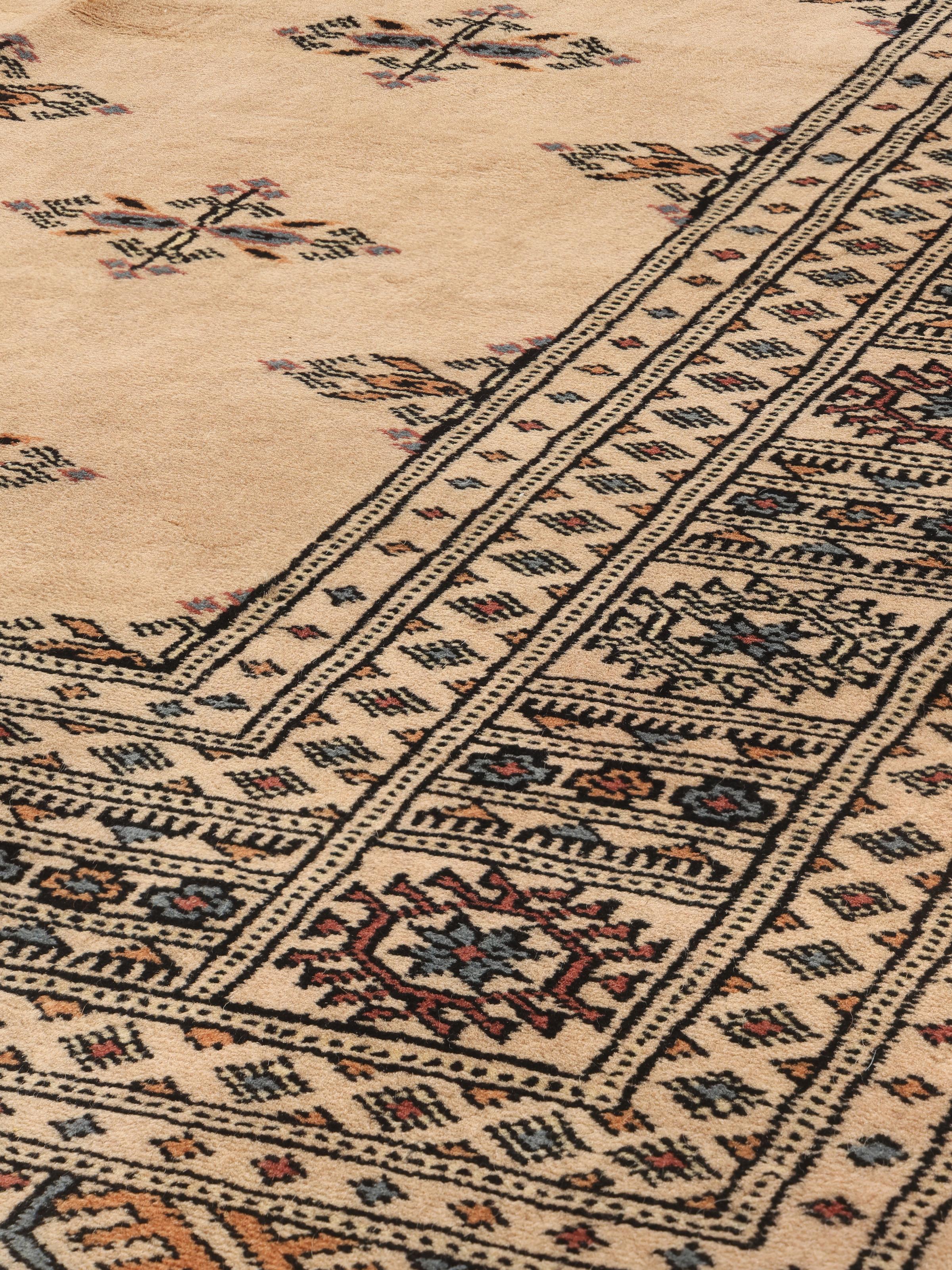
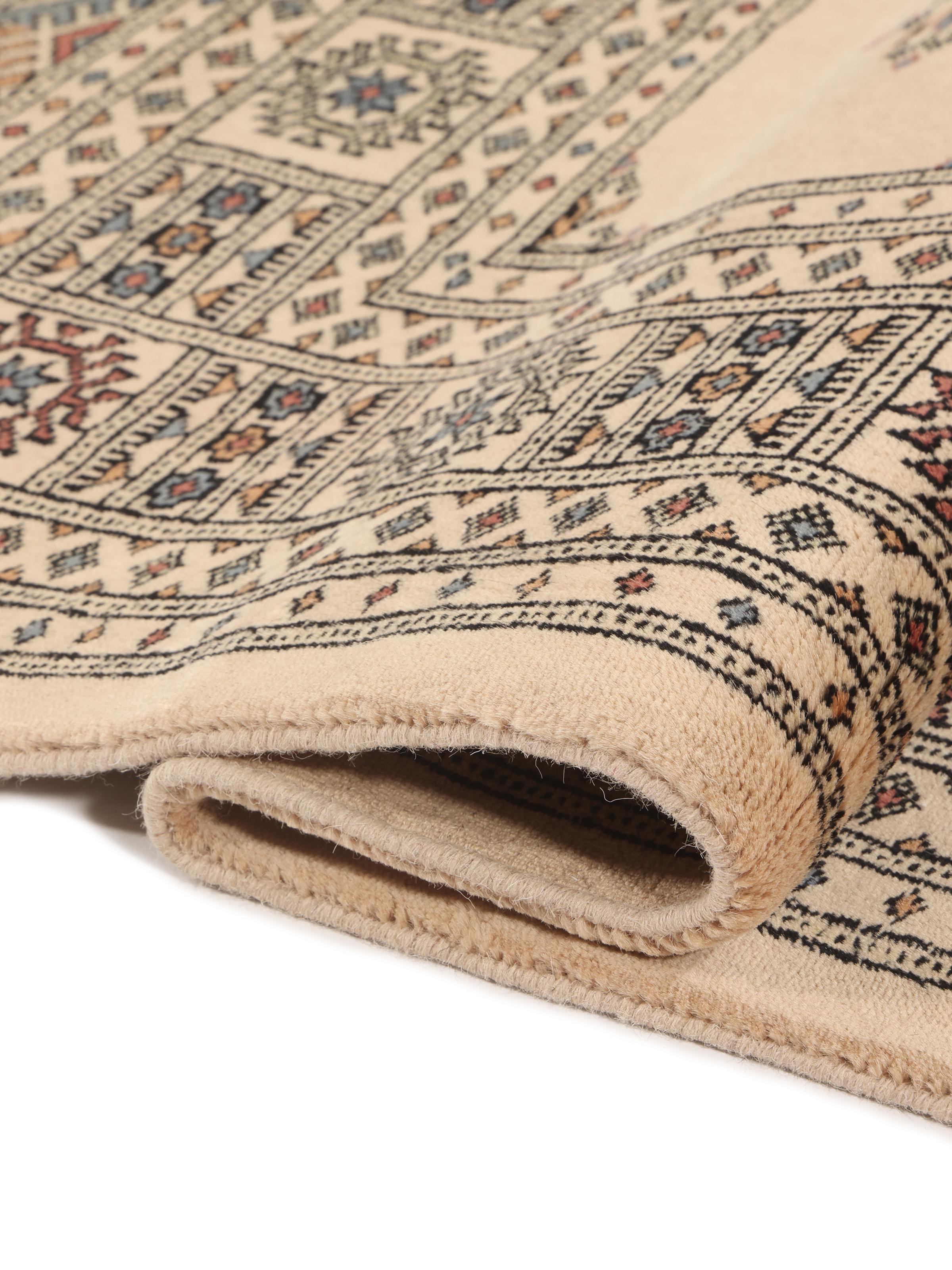
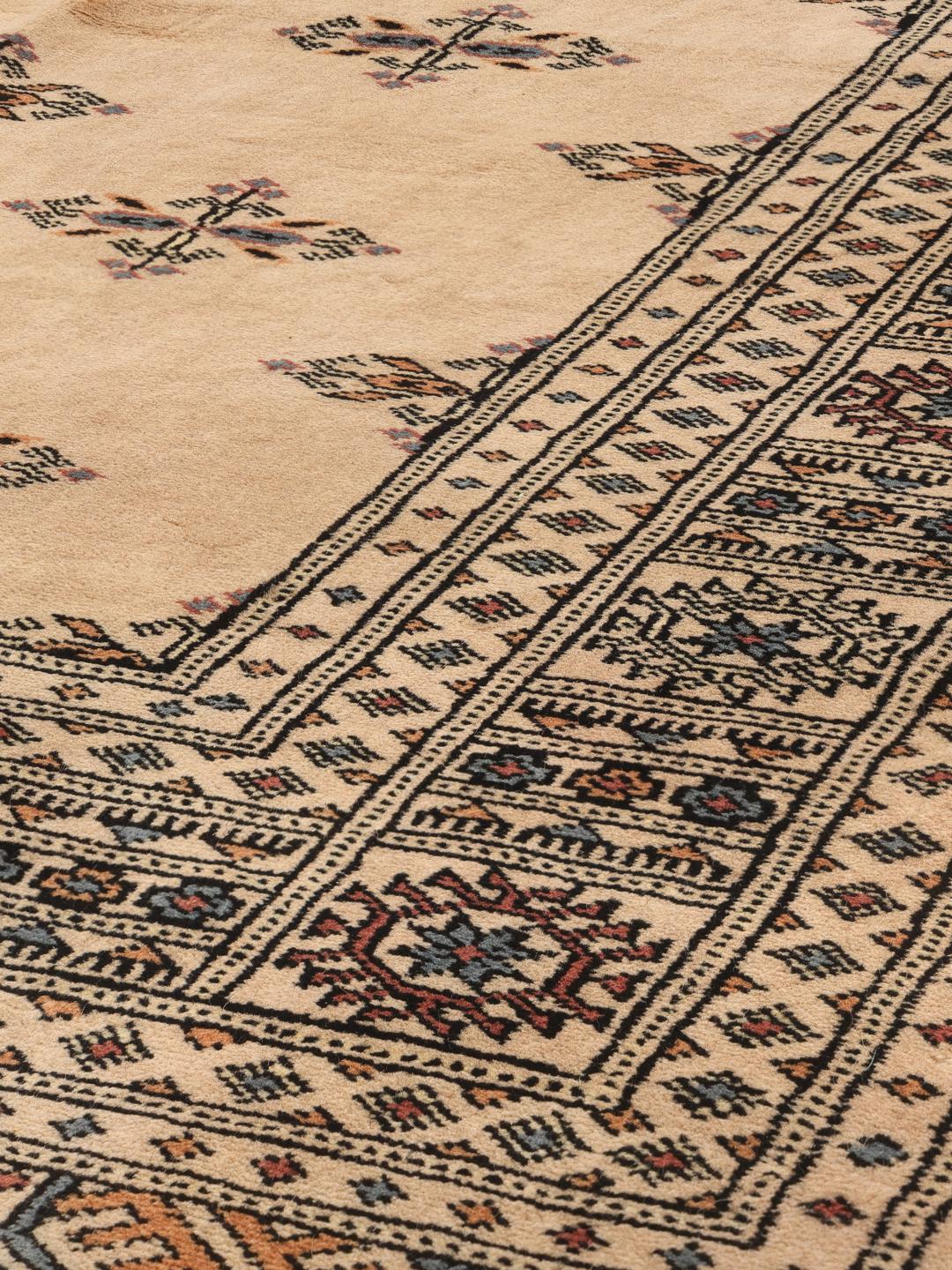
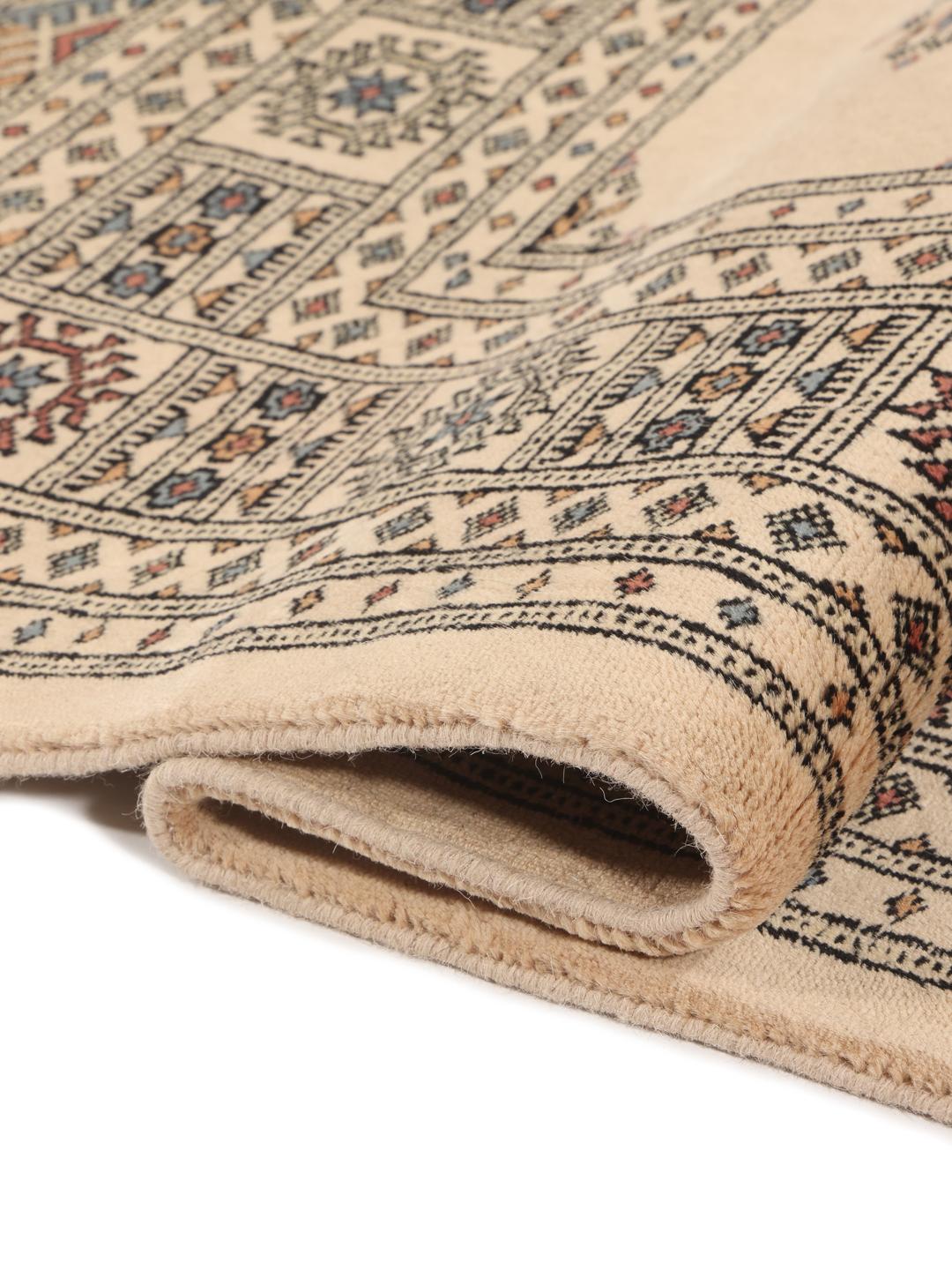
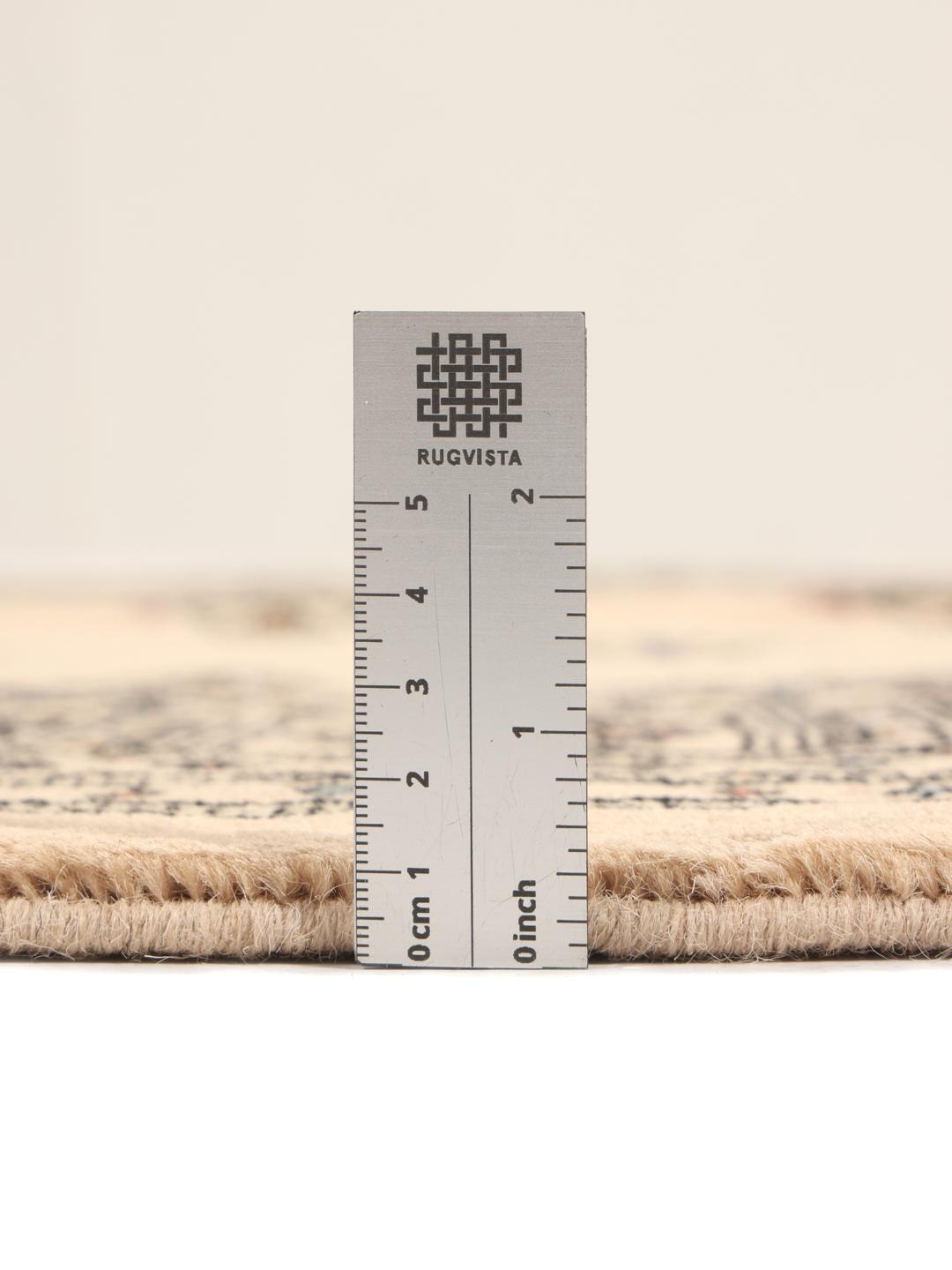
The term 3ply refers to the construction of the yarn, where three individual strands of wool are twisted together before being knotted. This process creates a thicker, more robust thread that produces a deeper, more lustrous pile. It is this specific technique that gives the rug its signature soft, dense feel and its impressive longevity.
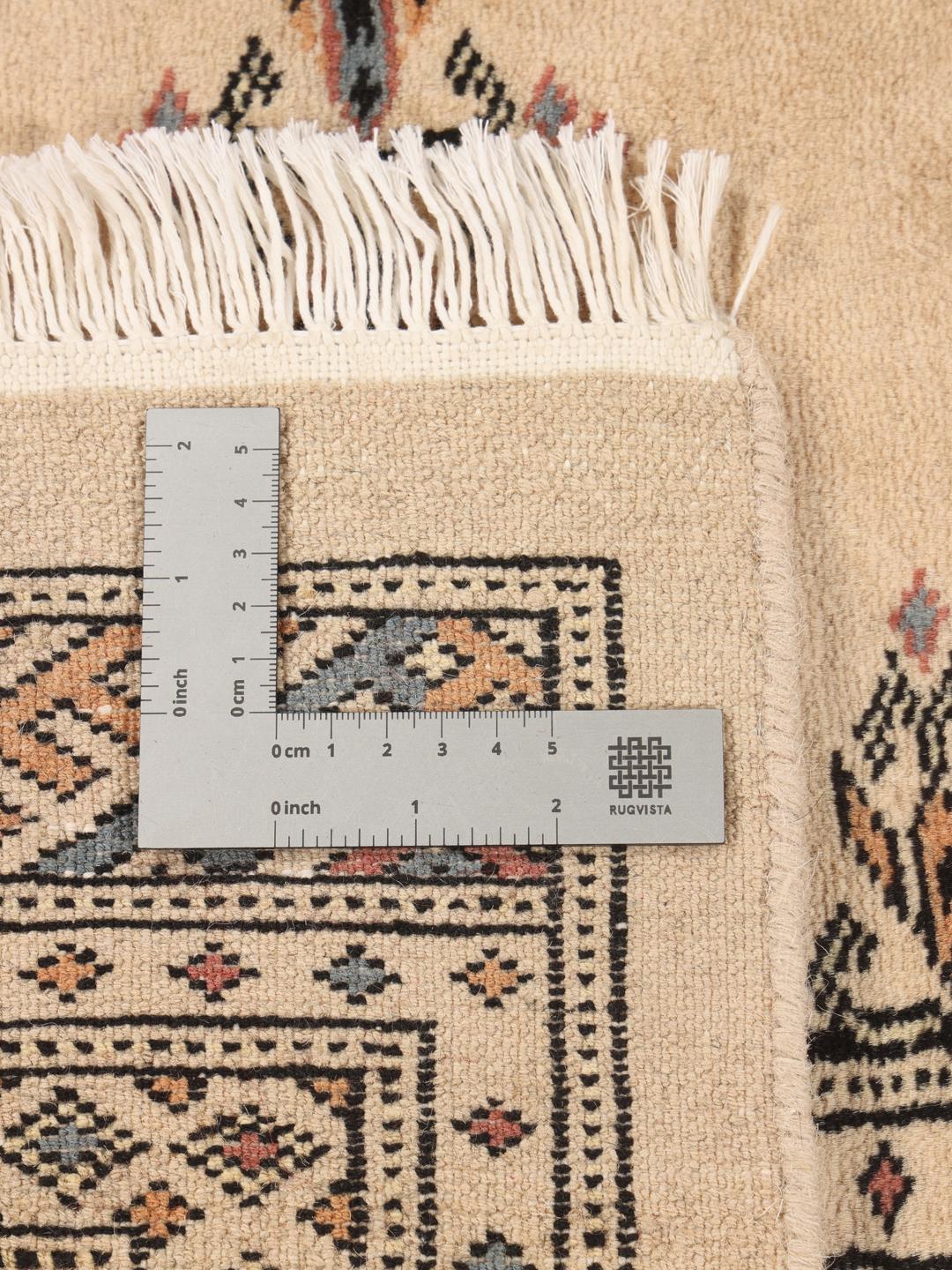
Visually, these rugs are defined by their repetitive, elegant motifs often resembling elephant footprints or soft, rounded medallions. The borders are typically formal and geometric, framing the field with precision. In this specific piece, the use of a neutral, calming field allows the detailed motifs to stand out with a sophisticated clarity.
Owning a hand-knotted piece like this is an investment in cultural heritage and human skill. These rugs are valued not only for their beauty but for the tradition they represent, serving as a bridge between ancient craftsmanship and modern living. They are designed to be enjoyed and passed down, gaining character and warmth throughout their long life.