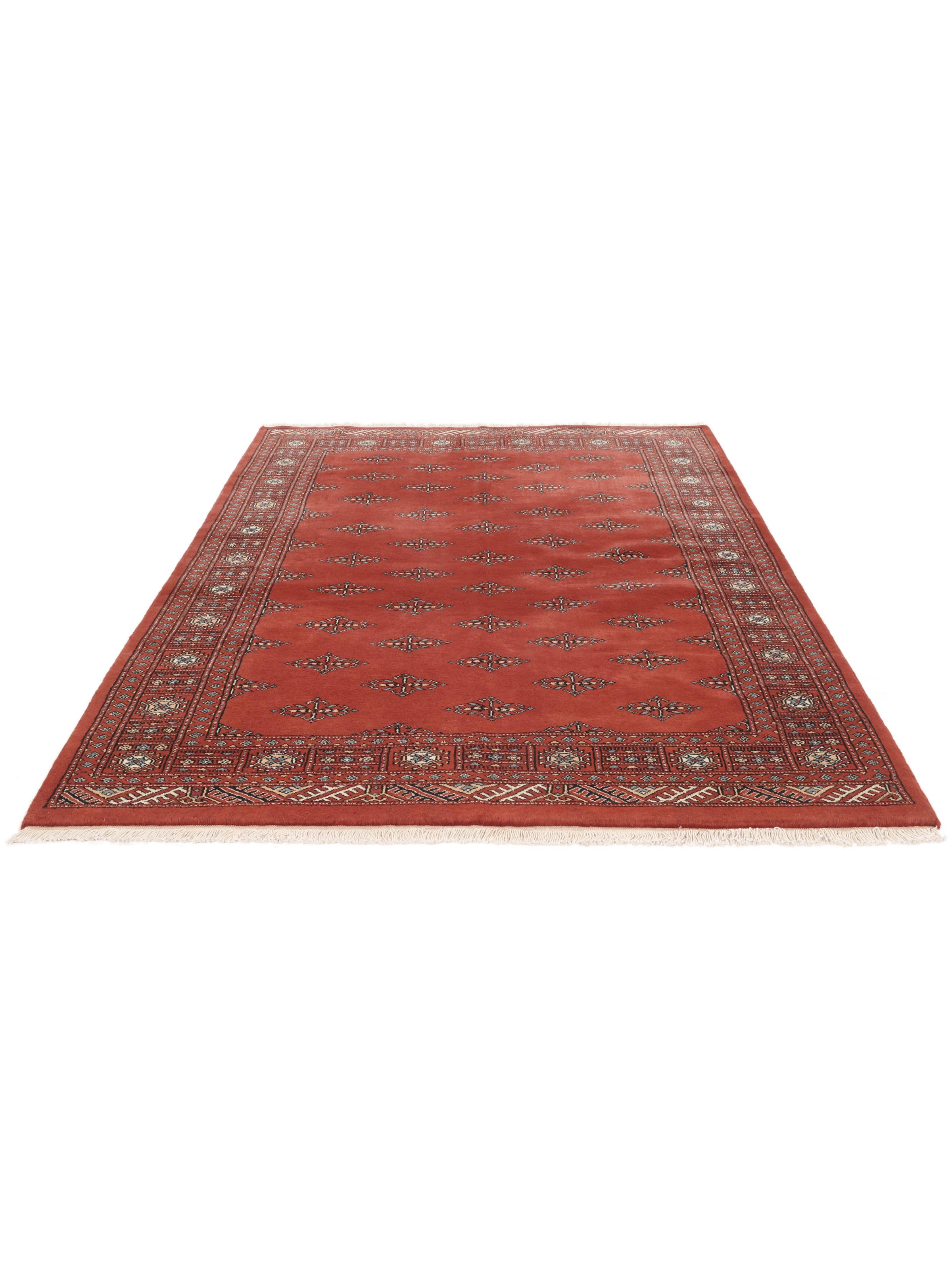
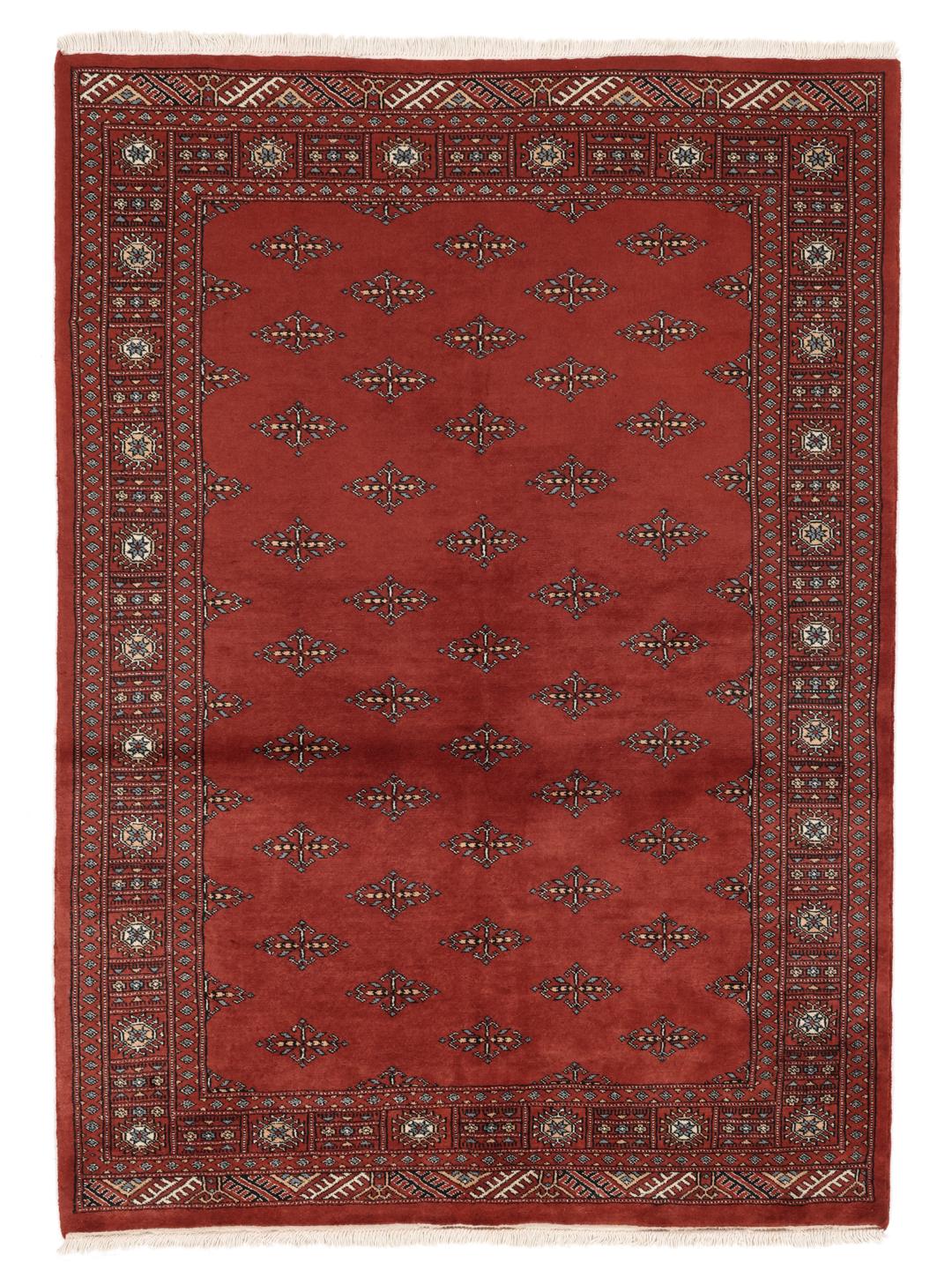
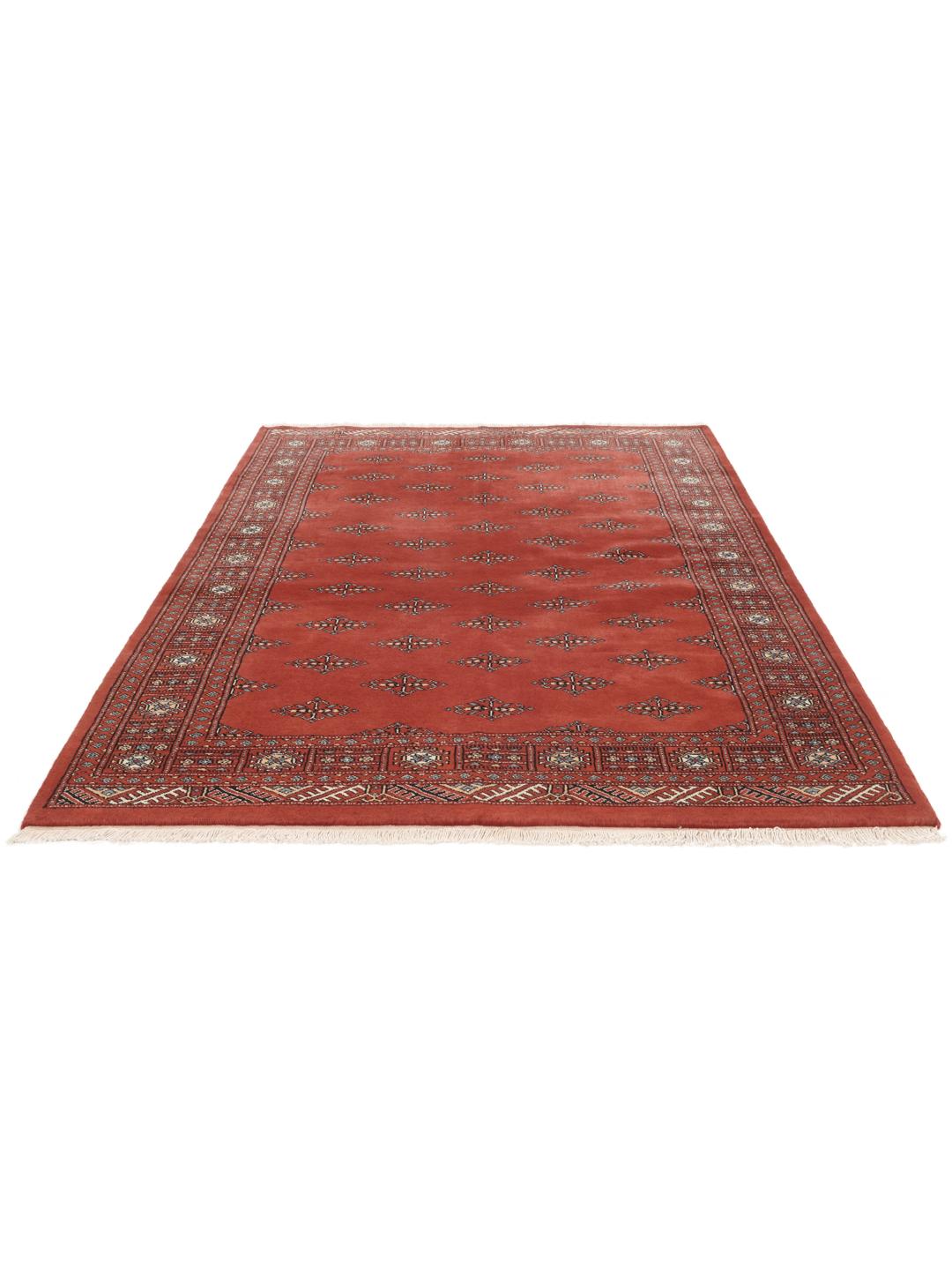
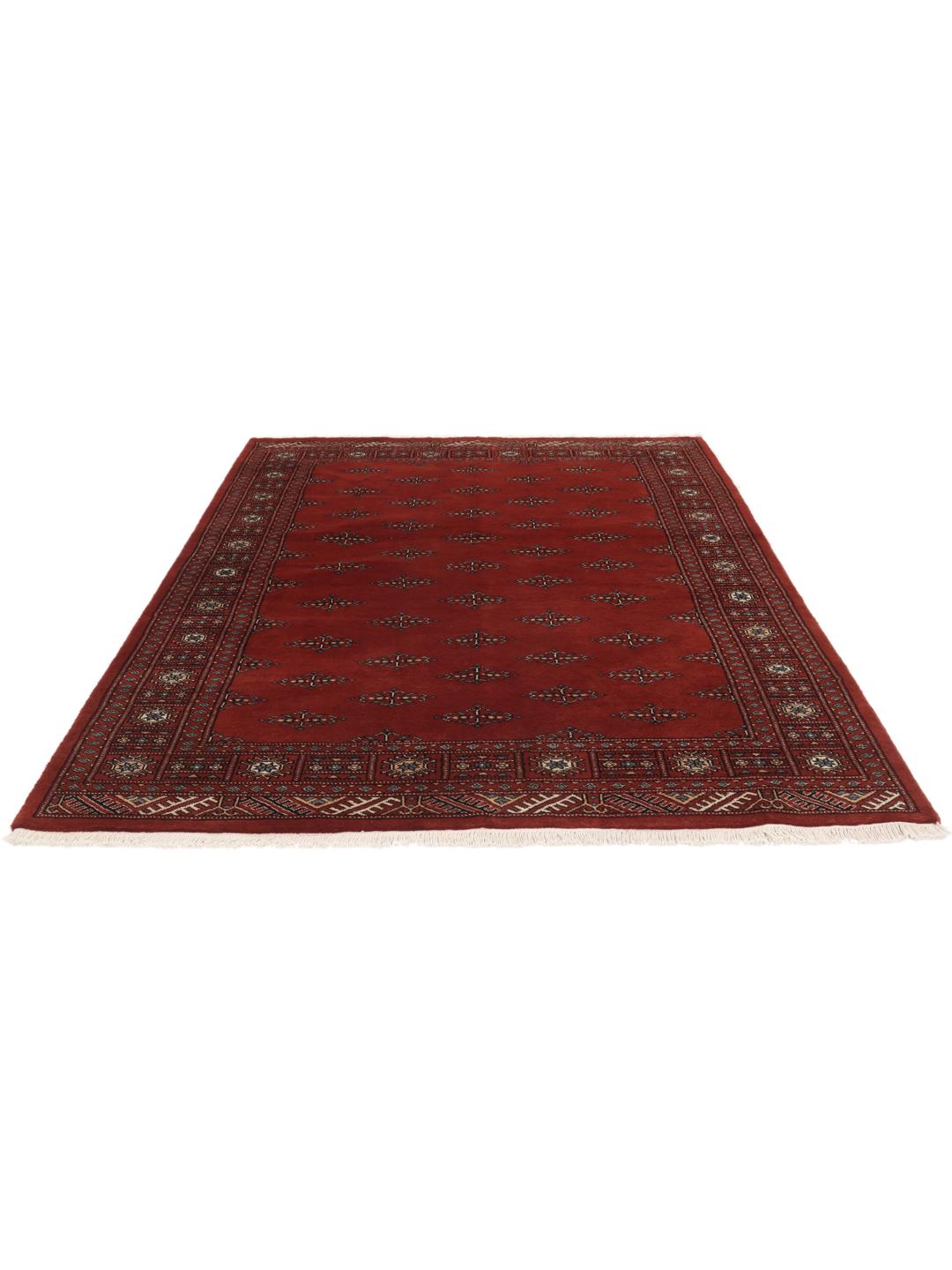
The Bokhara rug tradition is deeply rooted in the history of Central Asian weaving, drawing its name from the ancient Silk Road city of Bukhara. While these motifs originated among nomadic tribes who translated their cultural identity into woven textiles, the finest contemporary examples are now primarily produced in Pakistan, where the tradition has been refined and perfected over many decades.
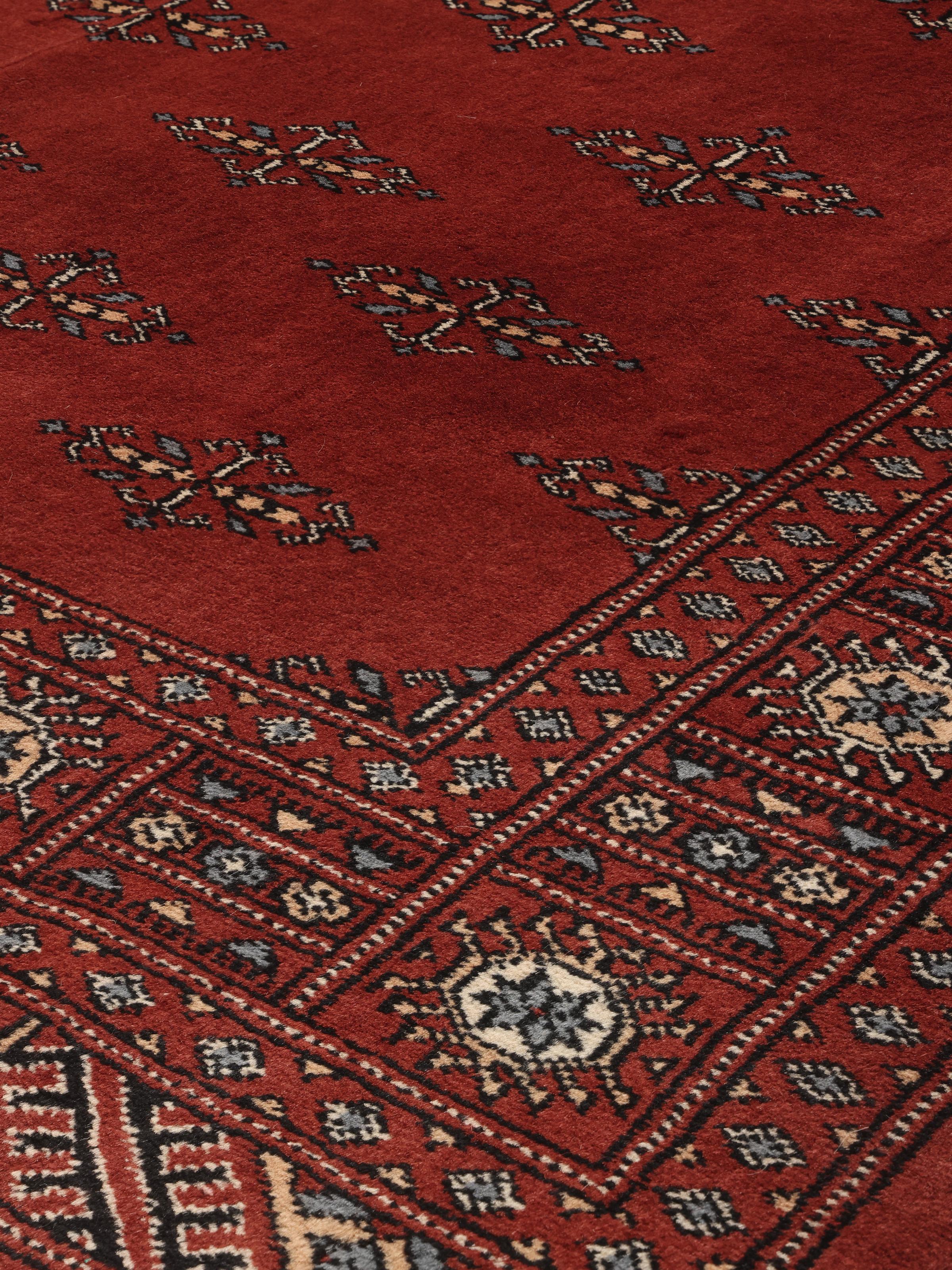
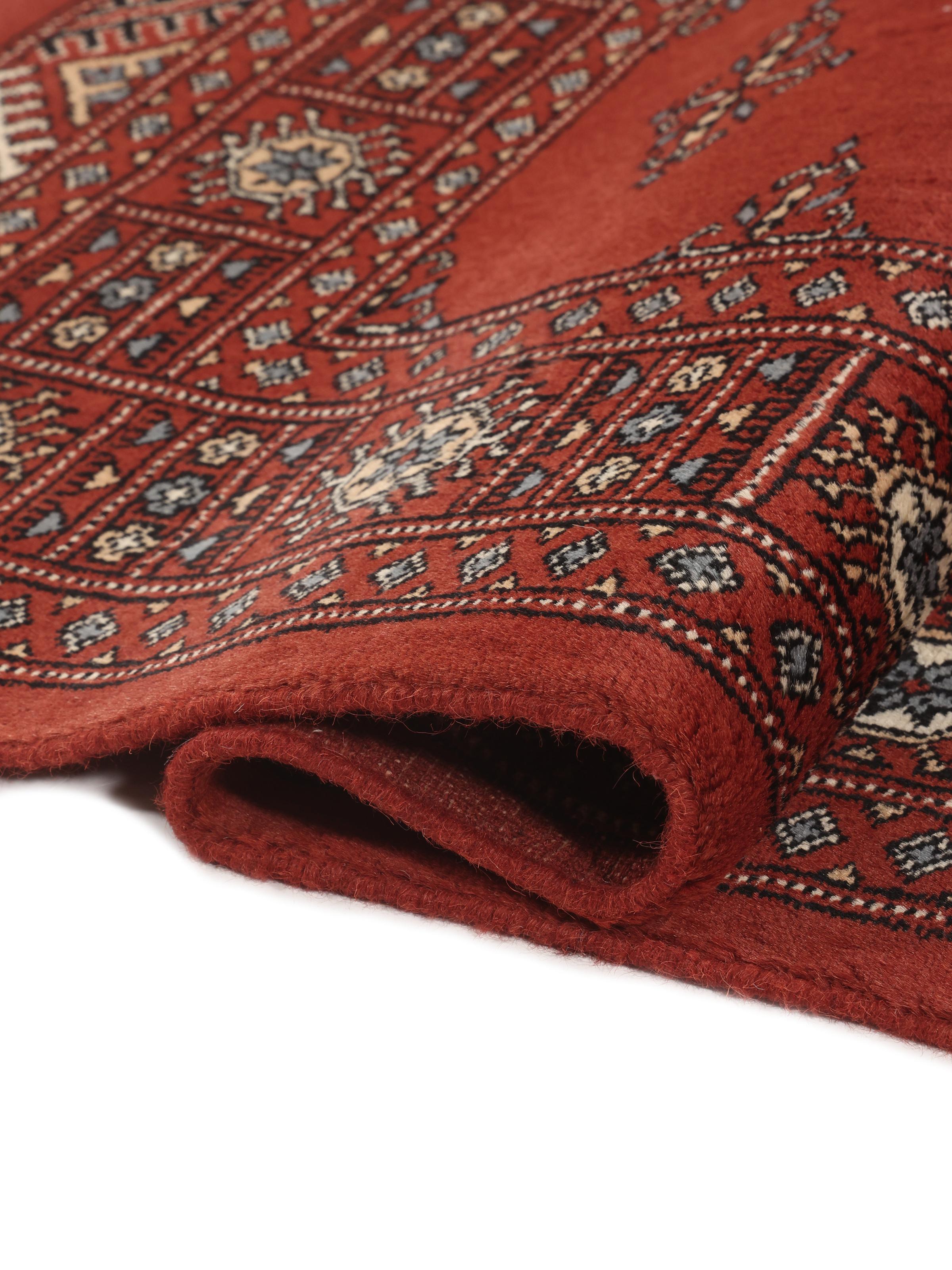
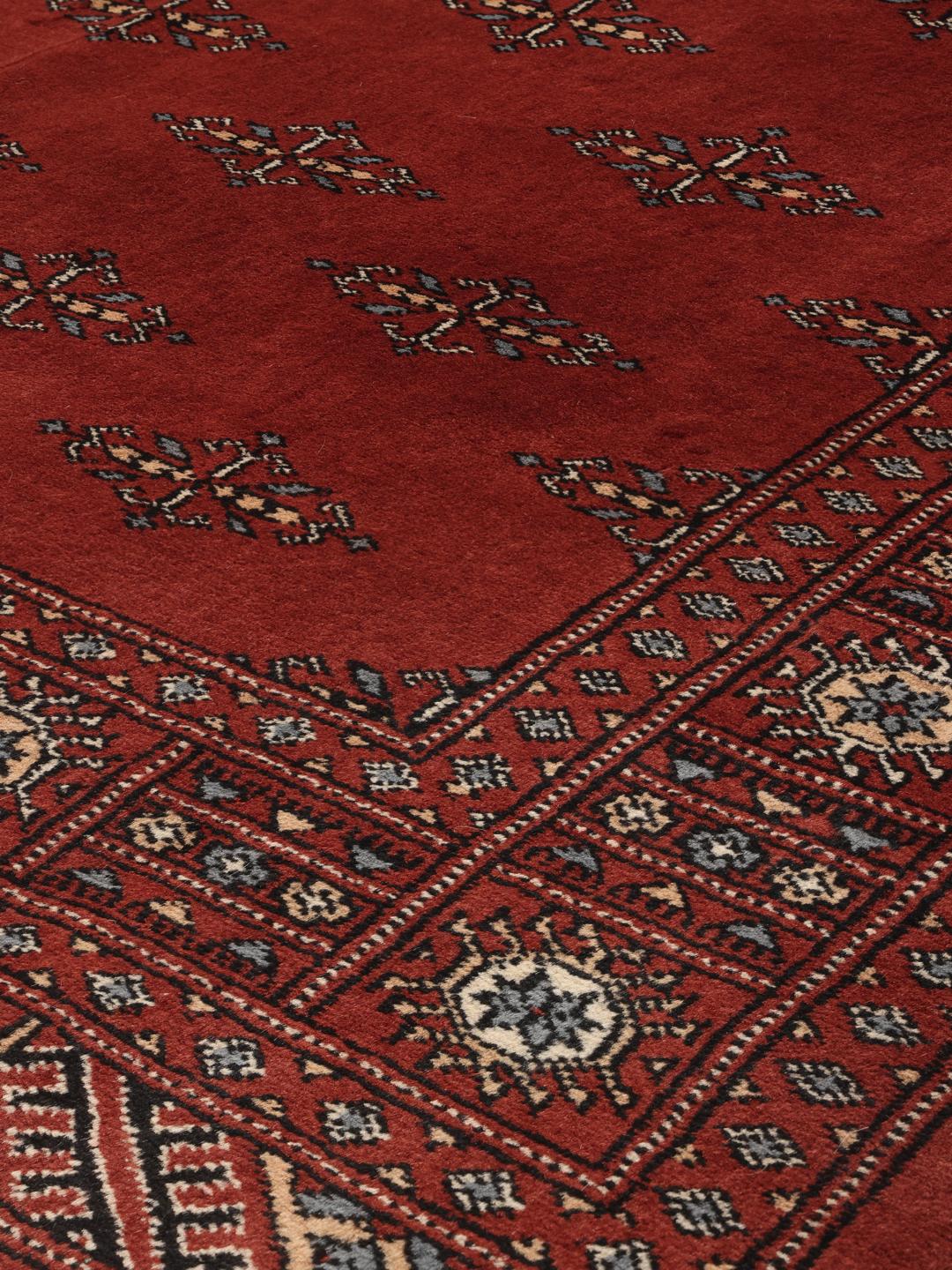
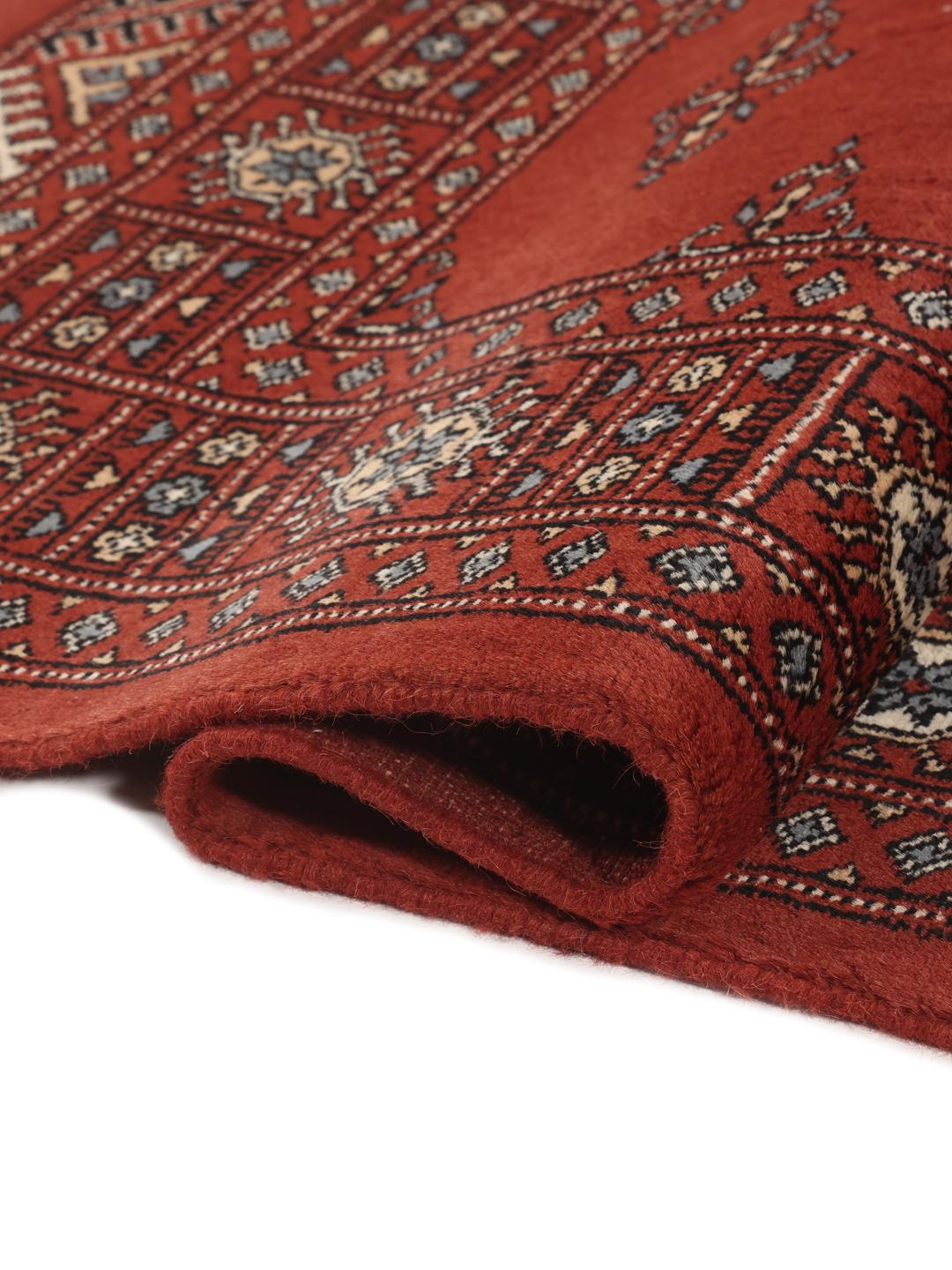
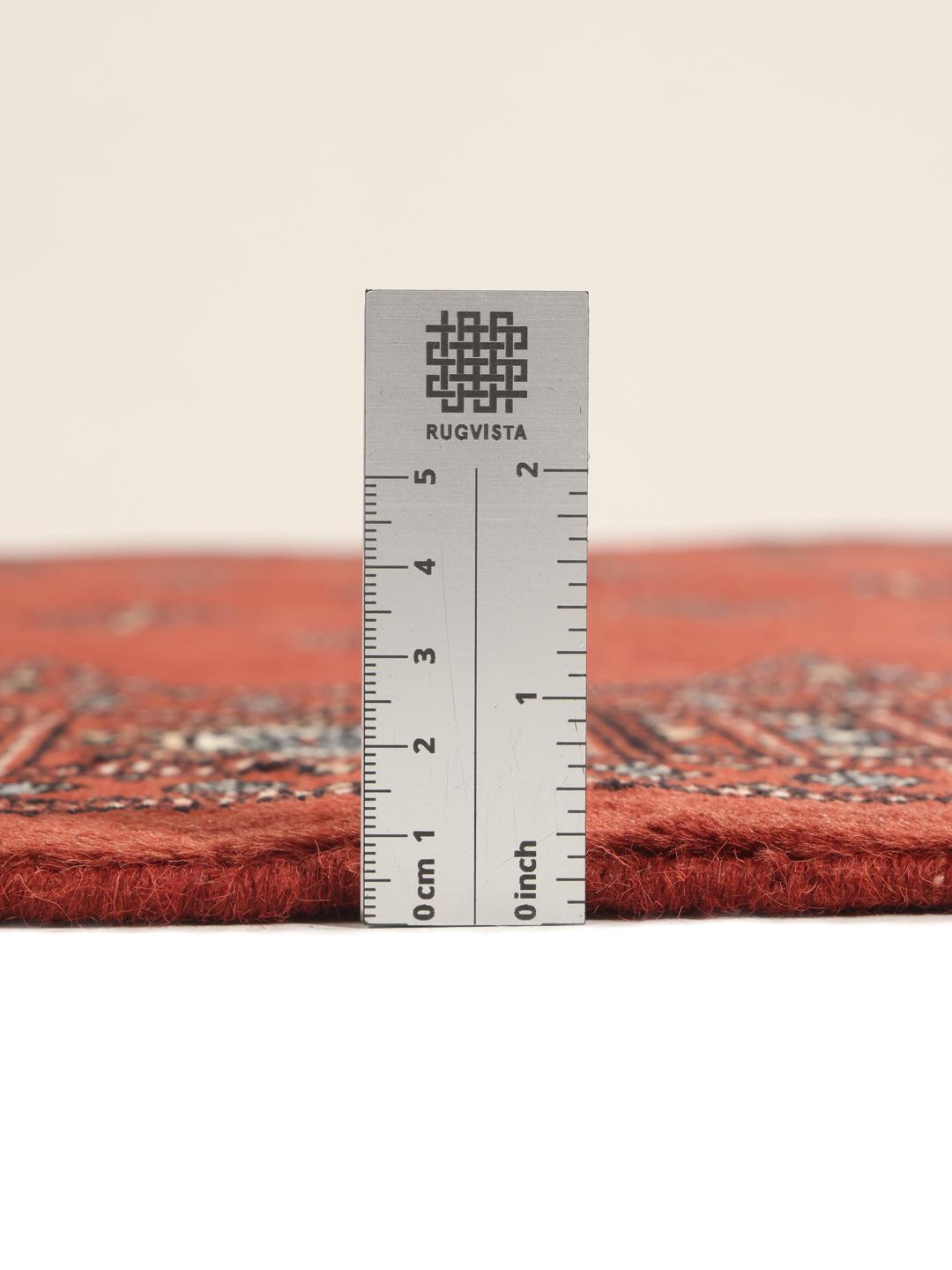
The 3ply construction mentioned in the specifications is a hallmark of high-quality Pakistani craftsmanship. By twisting three strands of wool together before knotting, the artisans create a pile that is thicker, more lustrous, and significantly more durable than rugs made with single-stranded yarns. This technical choice ensures that the rug not only looks luxurious but also stands up to the demands of everyday life.
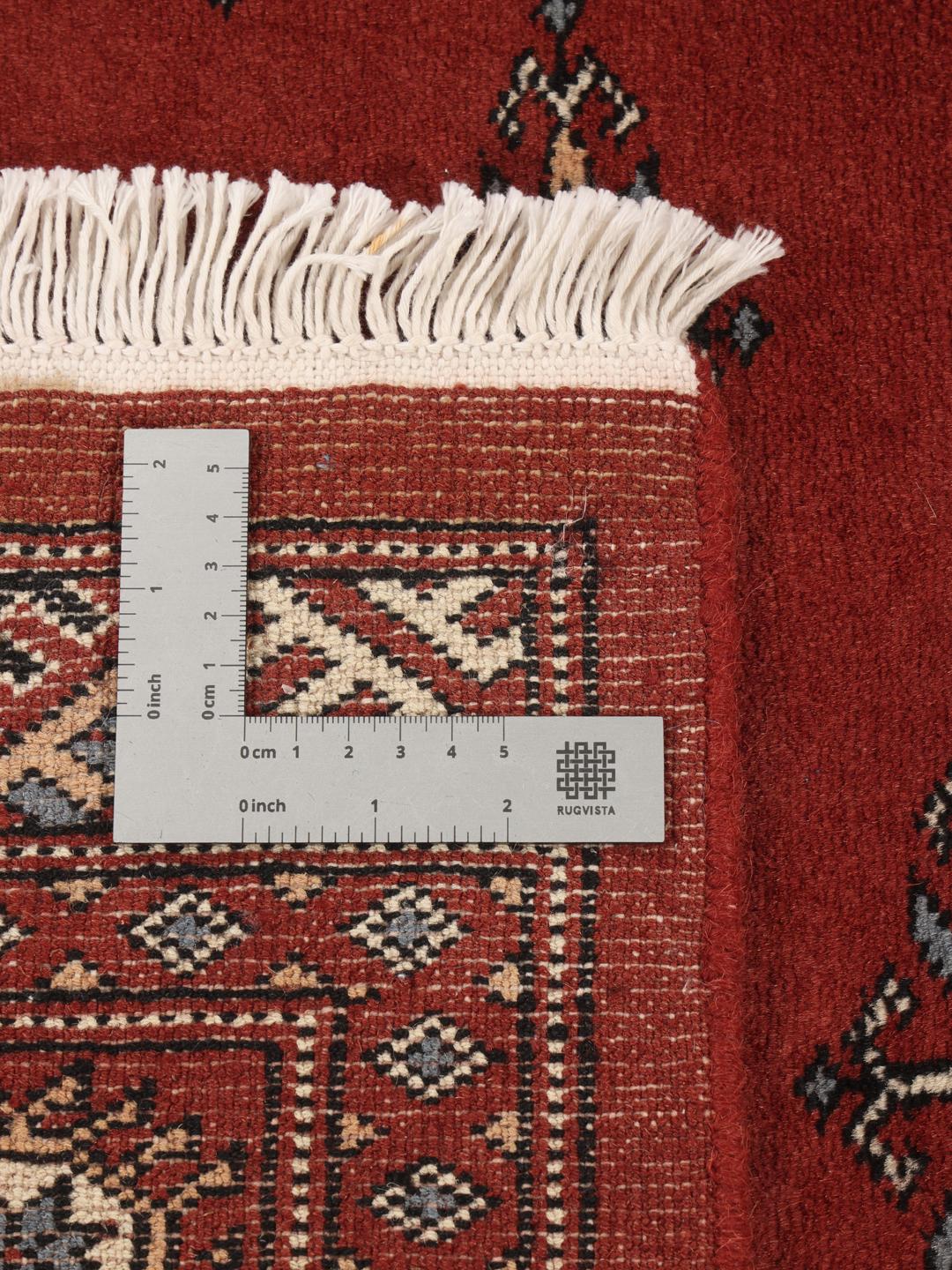
Visually, these rugs are defined by the repeating 'gul' motif, which often resembles a rounded or octagonal shape. These medallions are arranged in orderly rows across the field, framed by elaborate, geometric borders that demonstrate the weaver's control and sense of proportion. The deep red palette is the signature colour of the tradition, symbolising warmth and vitality.
Collectors value these rugs because they represent a living bridge to an ancient craft. Owning a piece from this tradition is an investment in cultural heritage, recognising the immense skill required to produce such intricate patterns entirely by hand. It is a choice for those who appreciate the intersection of artistry, patience, and home comfort.