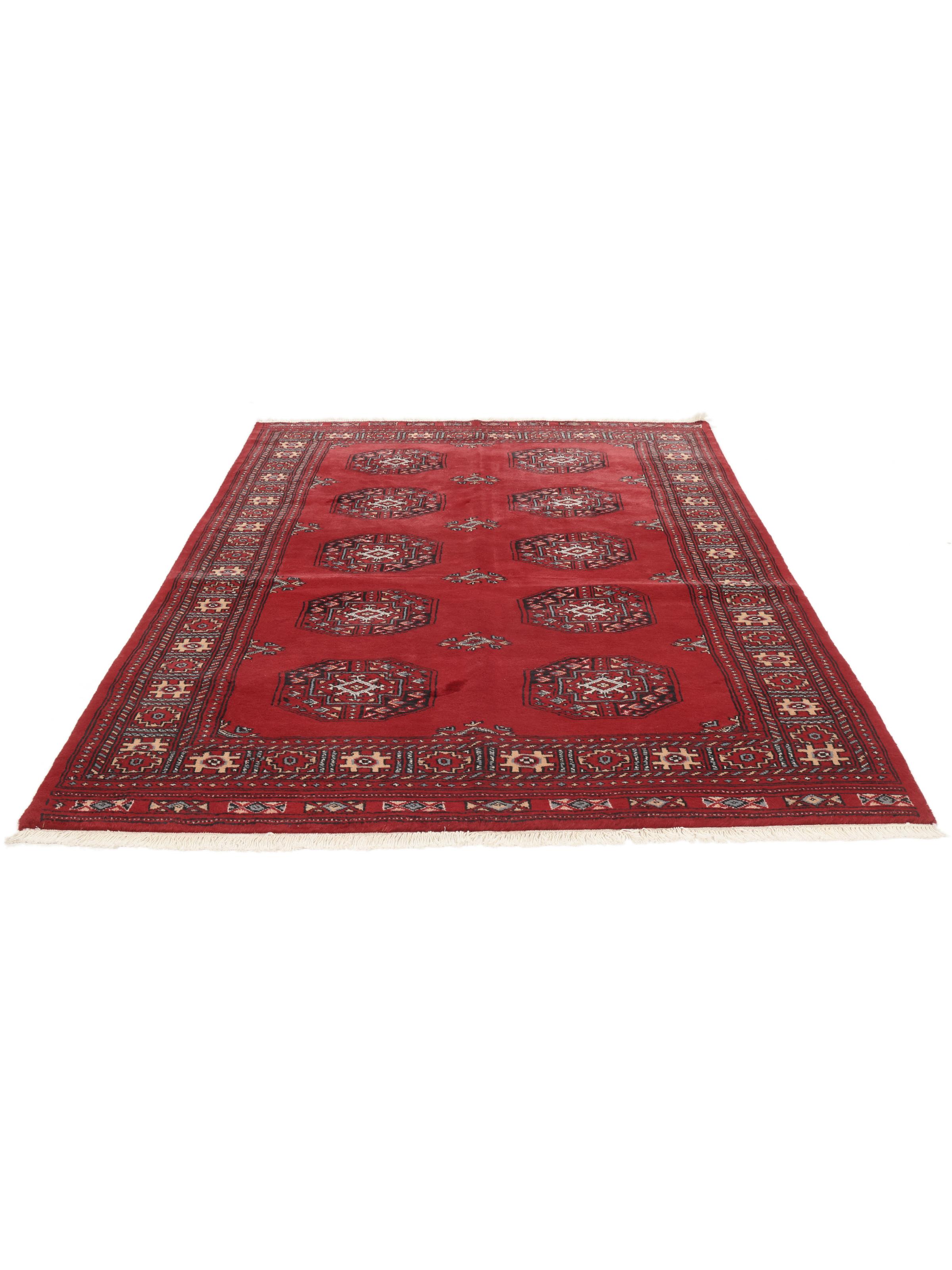
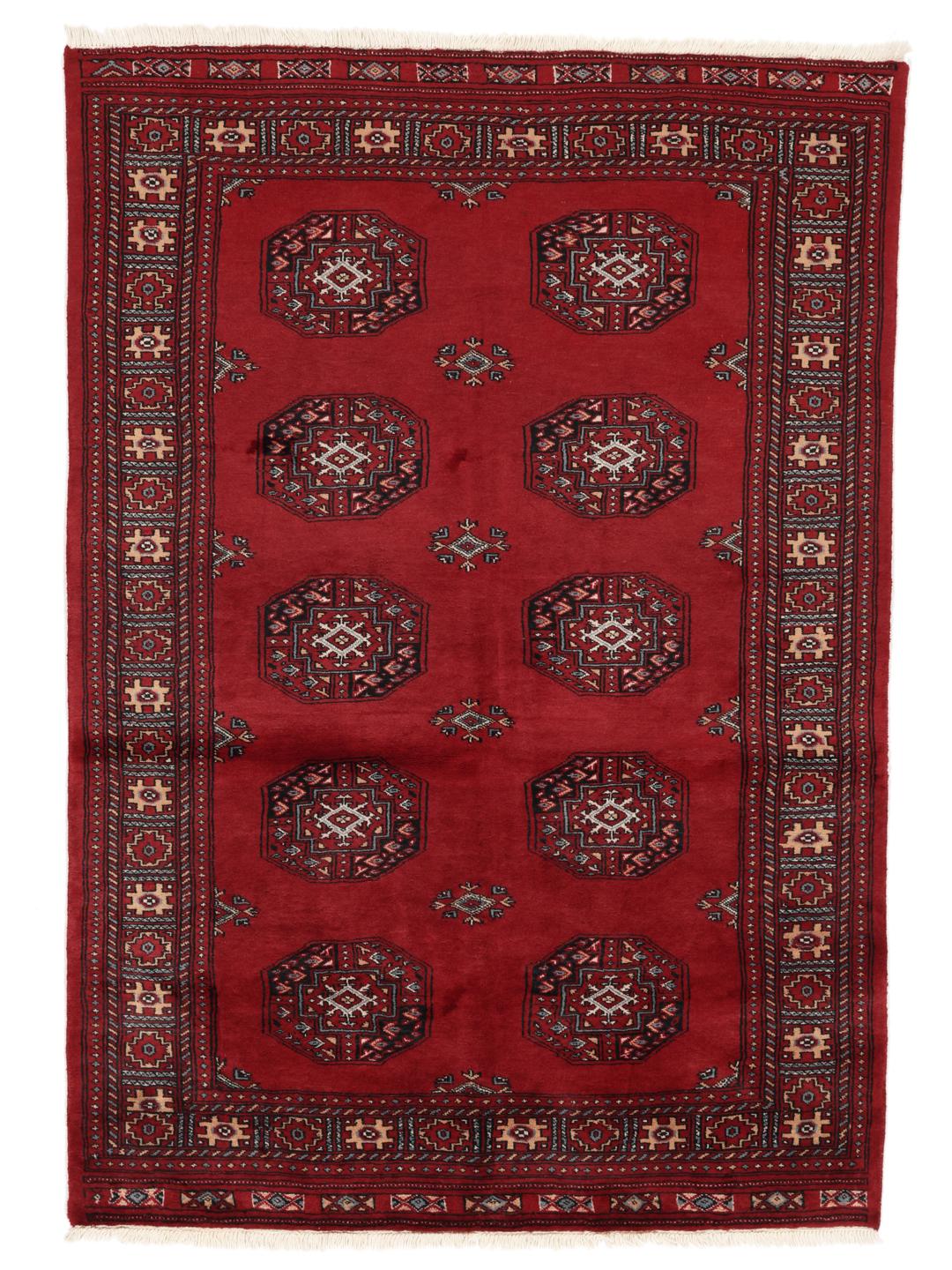
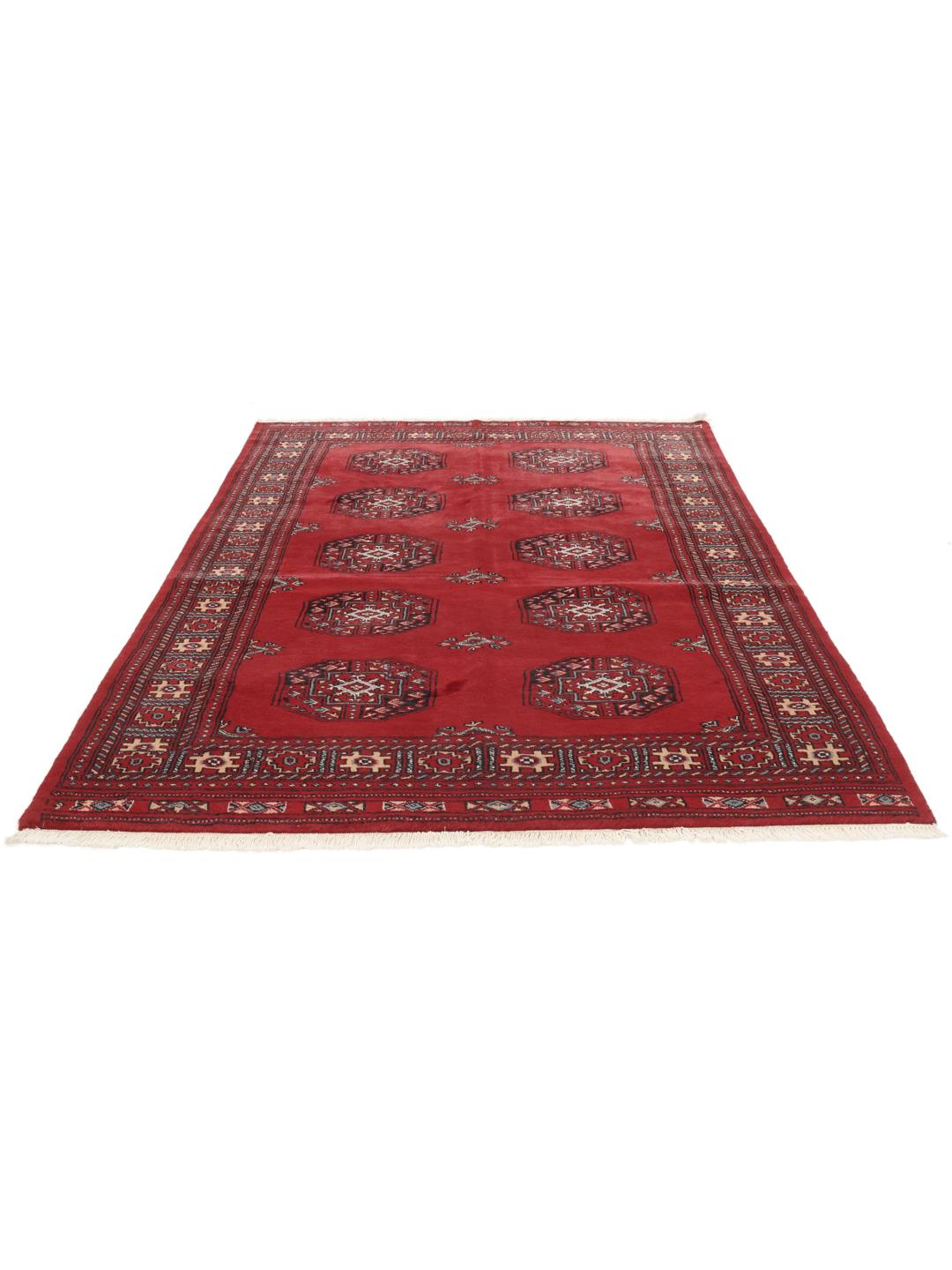
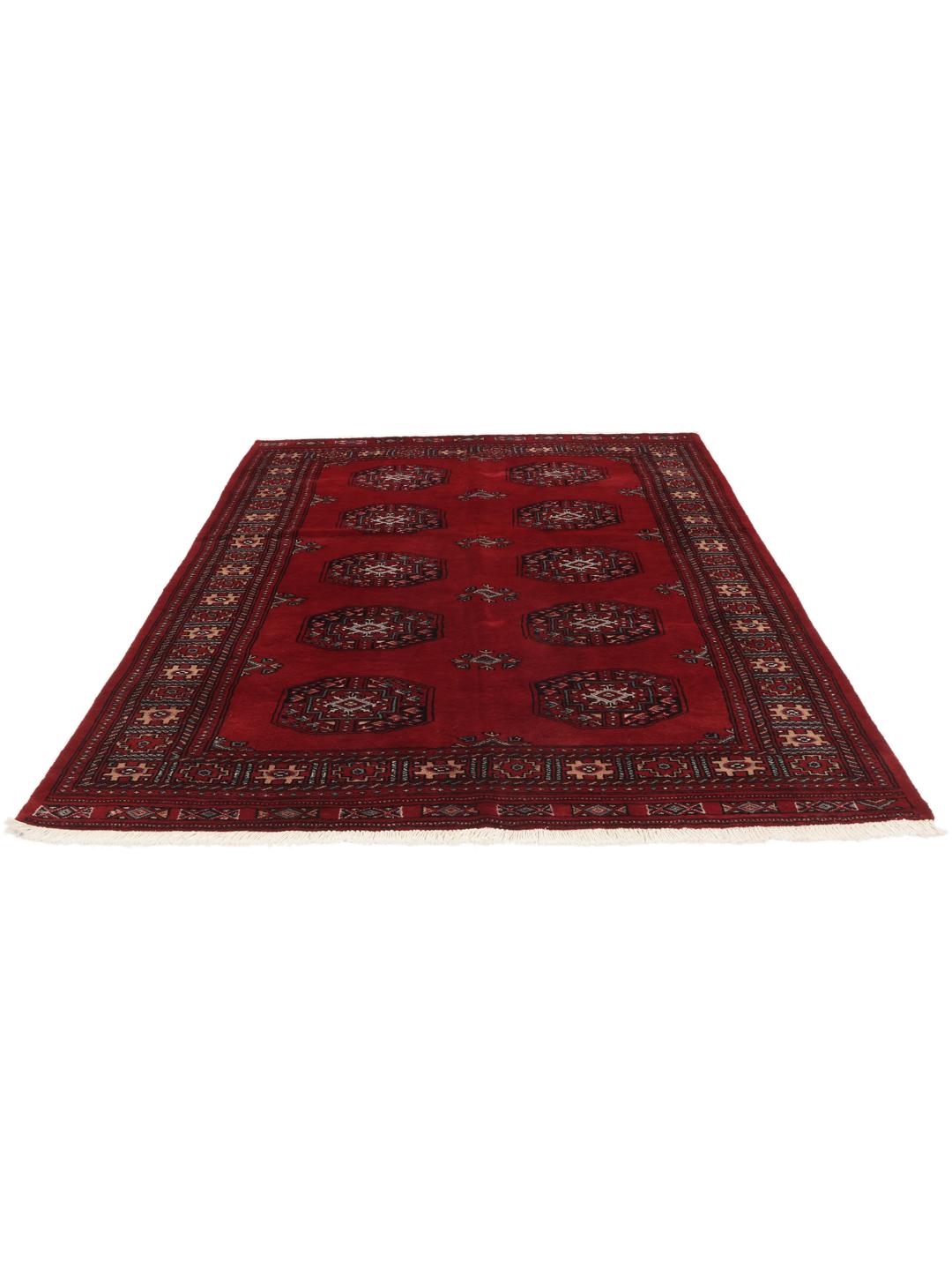
The Pakistan Bokhara rug is a fascinating example of how design traditions travel and evolve. While the name Bokhara refers to the ancient Silk Road city in modern-day Uzbekistan, the production of these rugs flourished in Pakistan, where weavers refined the style to create the soft, lustrous, and dense rugs that collectors value today.
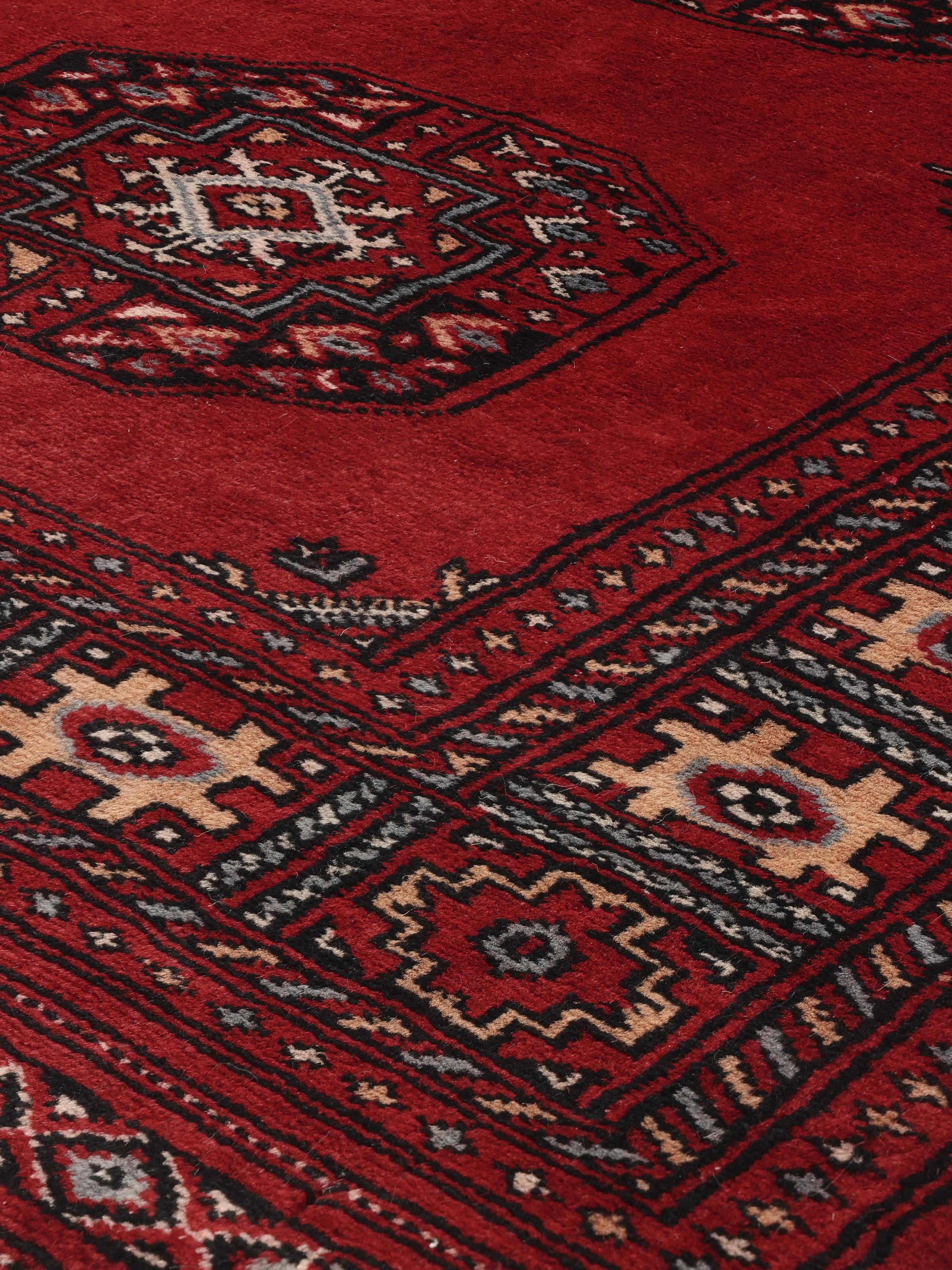
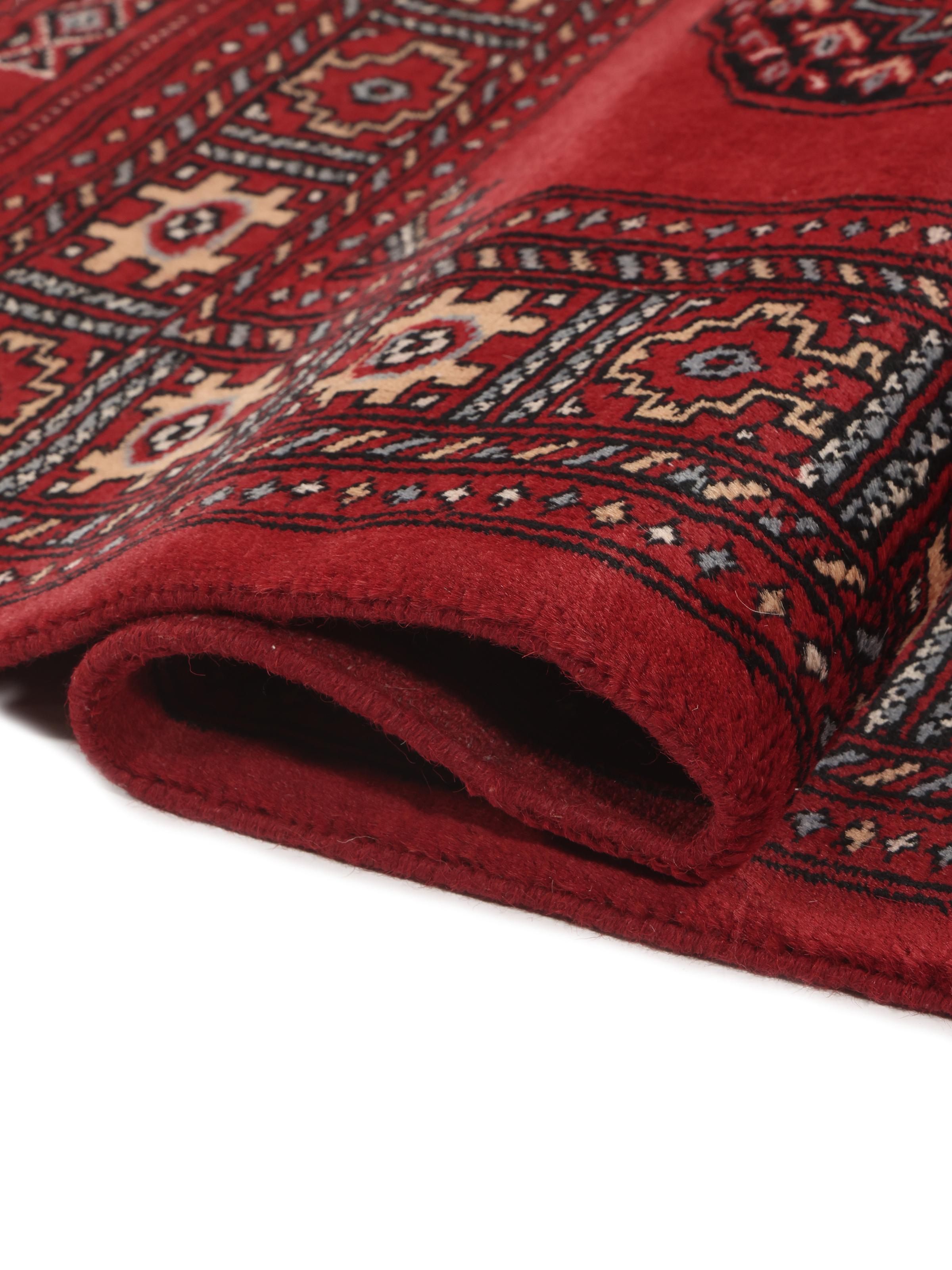
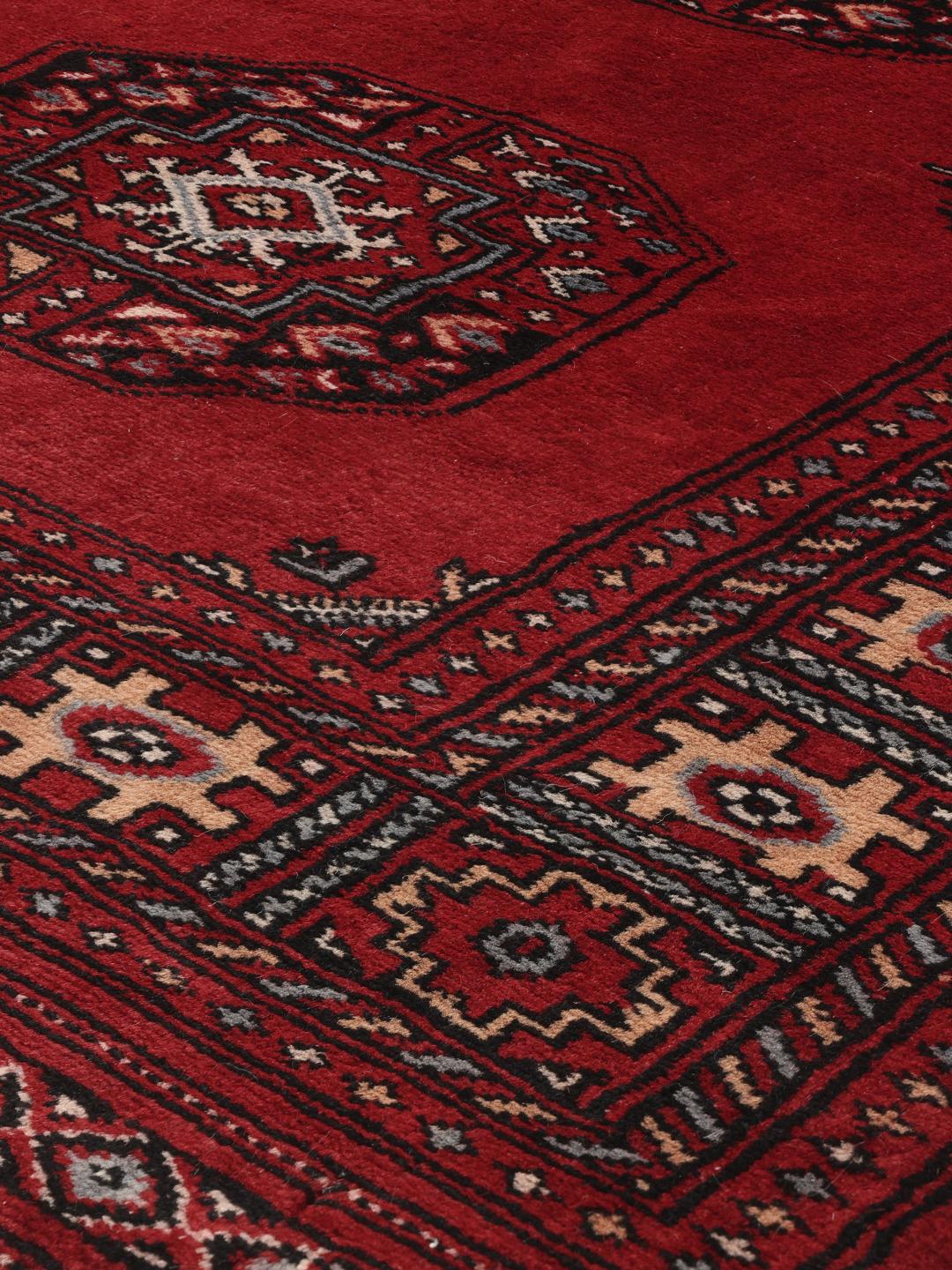
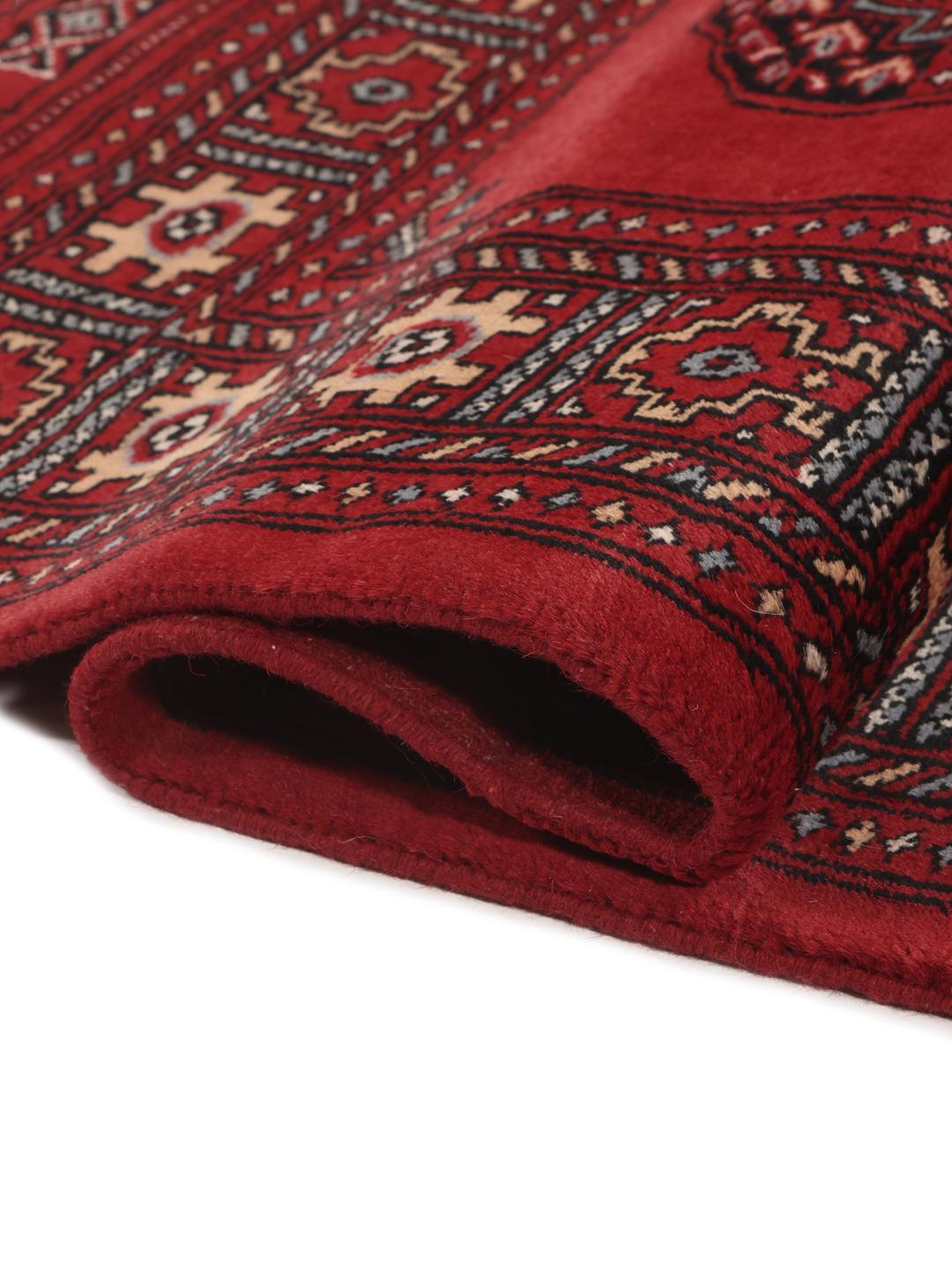
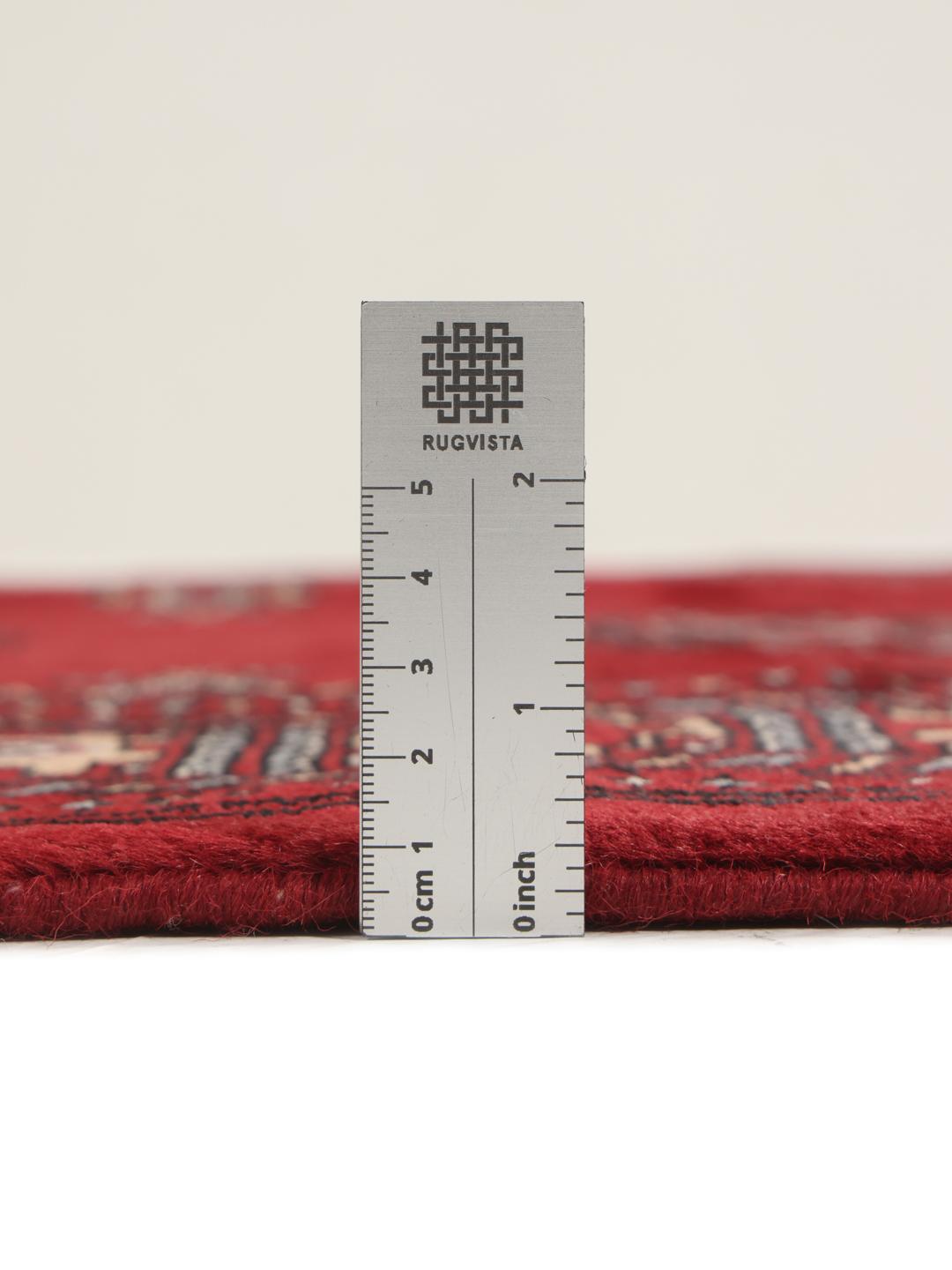
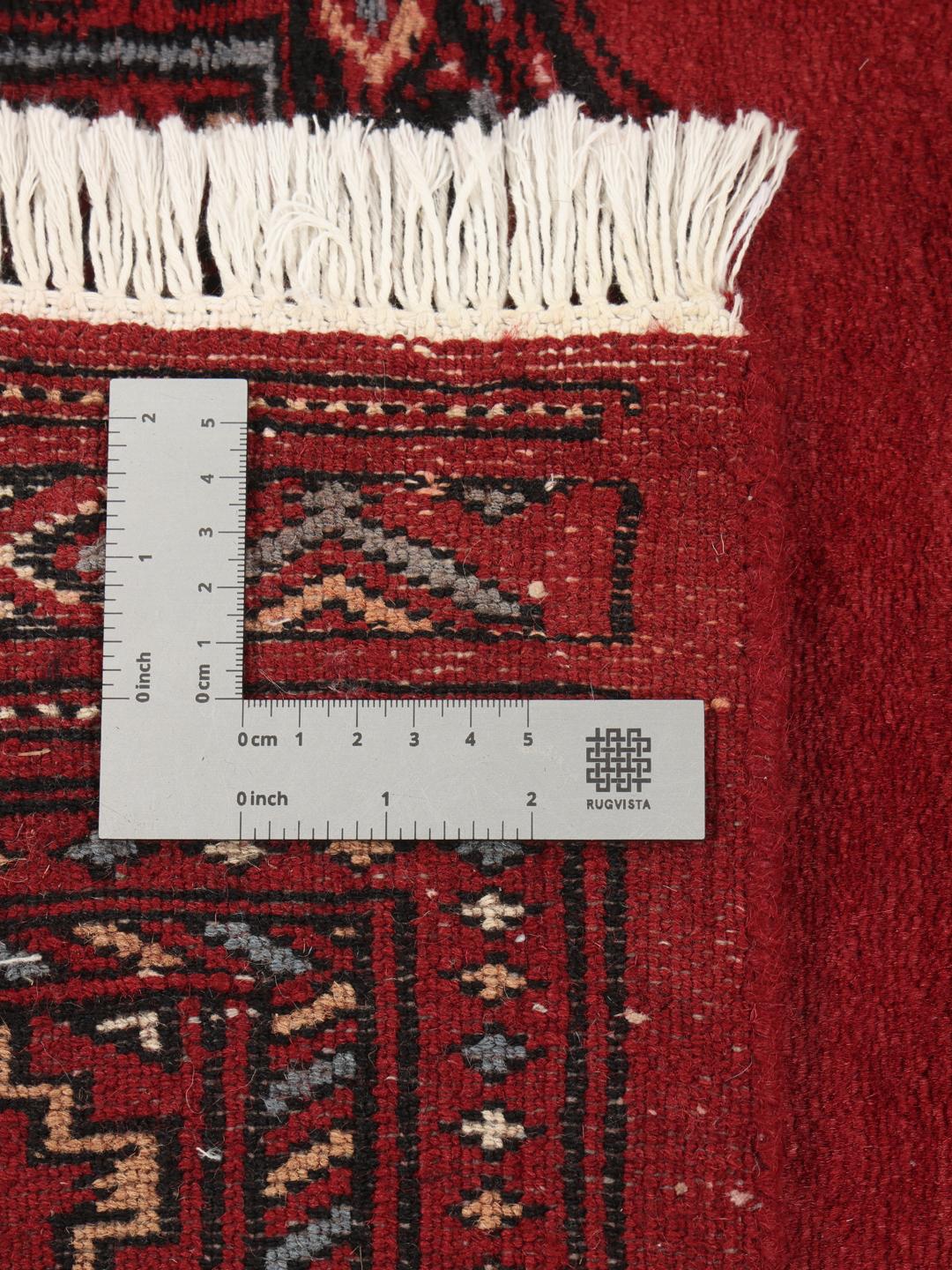
The 3ply construction is a hallmark of quality for this style. By twisting three strands of wool together before knotting, the weavers create a pile that is not only thicker and more luxurious but also significantly more durable. This construction method enhances the rug's ability to resist flattening, ensuring the intricate patterns remain clear and vibrant throughout the years.
Visually, these rugs are defined by the repeating gul motif, which are stylized, octagonal medallions that represent traditional tribal symbols. These motifs are typically arranged in clean, symmetrical rows across the field, framed by elaborate geometric borders. The use of deep, resonant red is a classic choice, though the specific execution of the motifs gives each rug its own unique character.
Owning a Pakistan Bokhara is an opportunity to connect with a long-standing heritage of textile art. These rugs are highly sought after because they balance formal, sophisticated design with a sense of warmth and history. They are not merely floor coverings, but pieces of cultural history that reward the owner with their enduring beauty and the high level of human skill required to produce them.