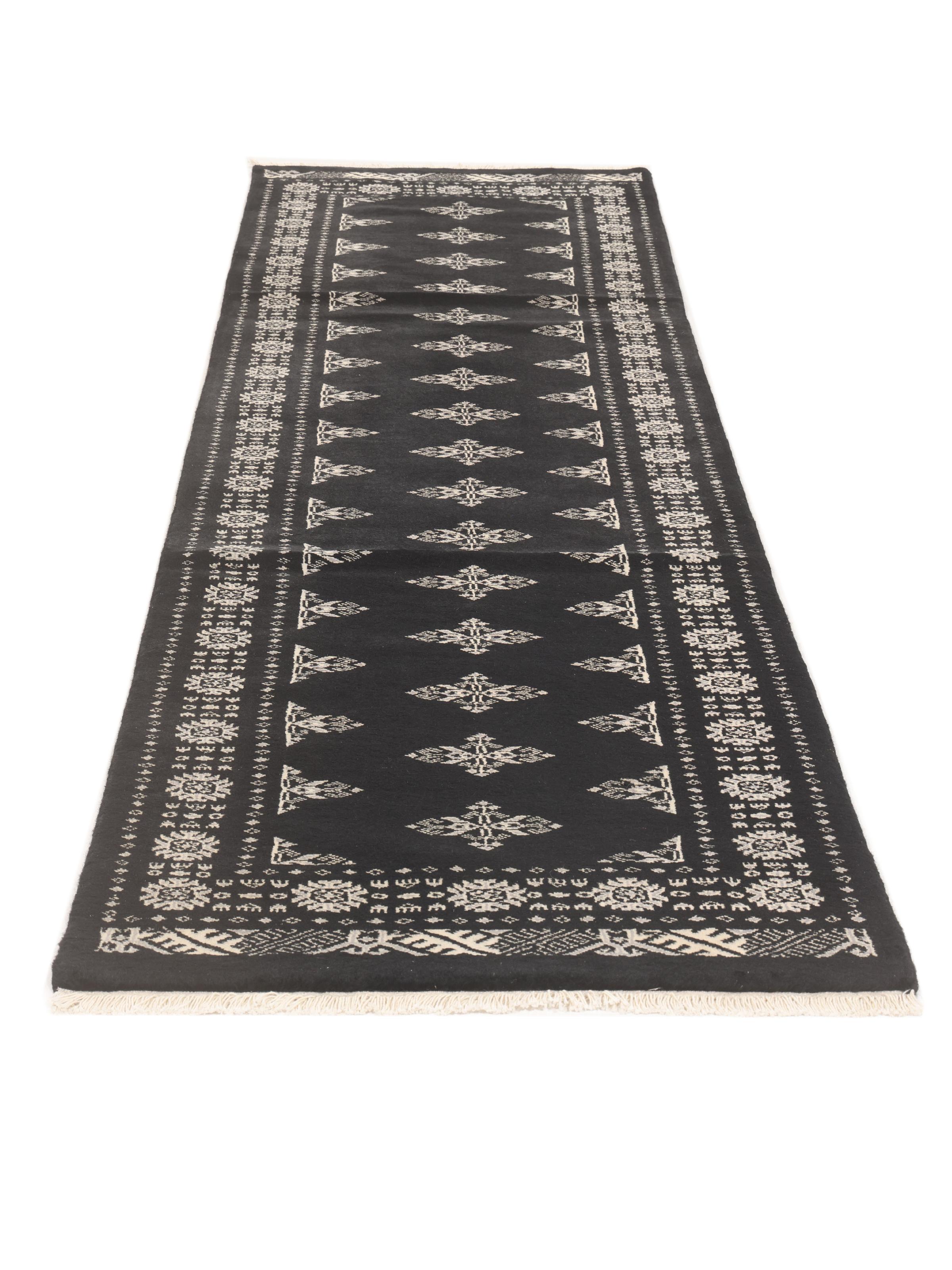
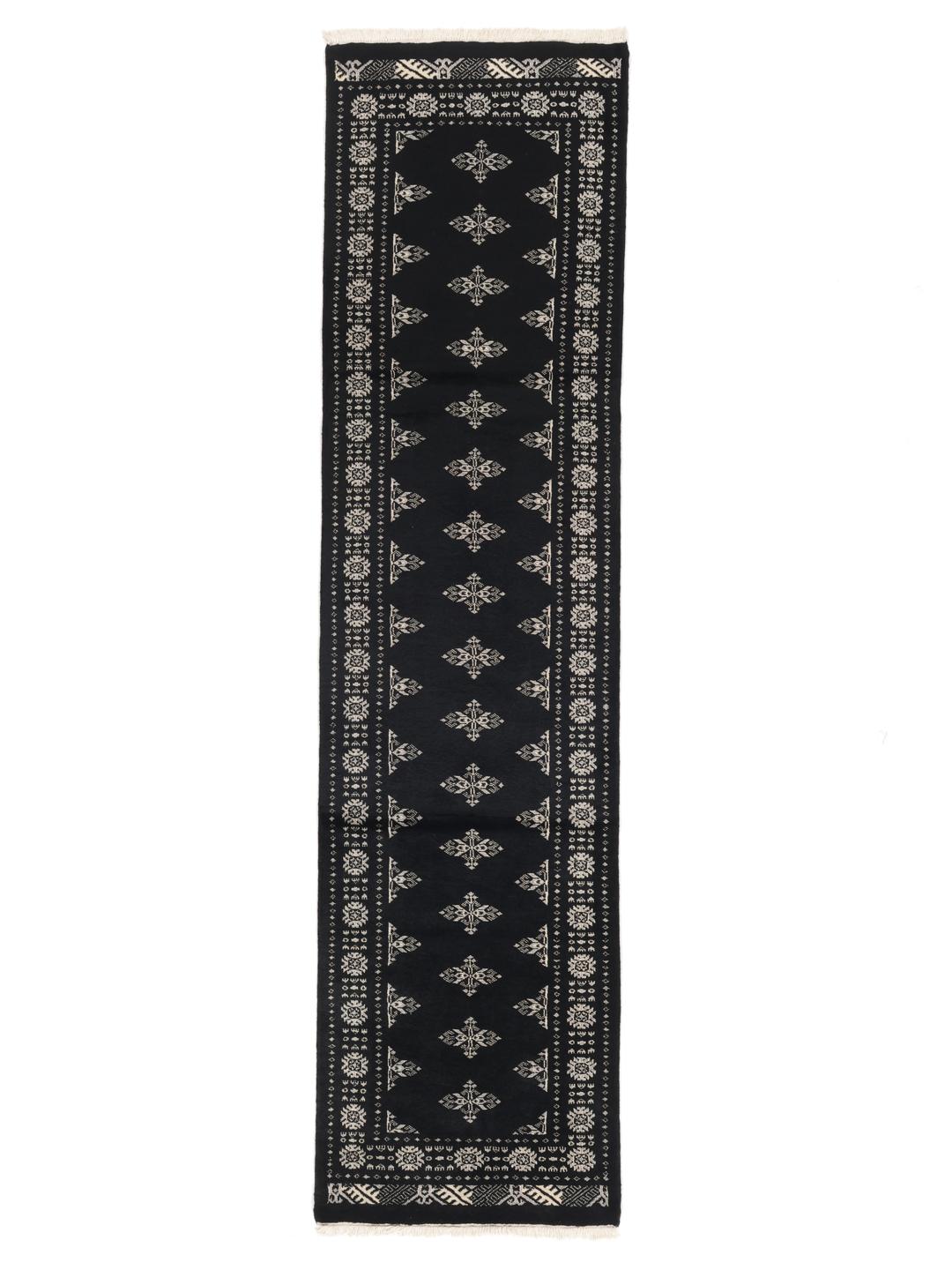
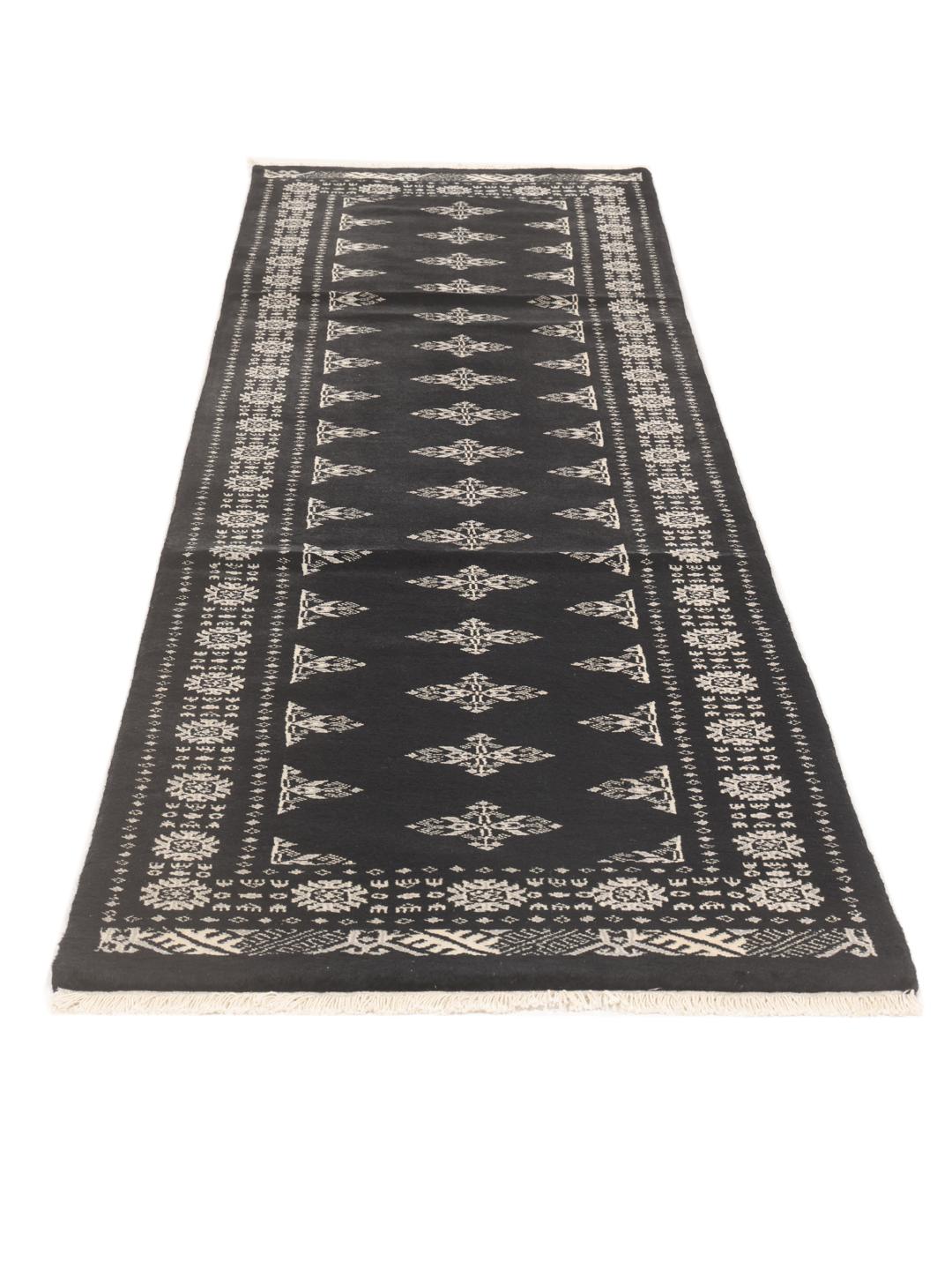
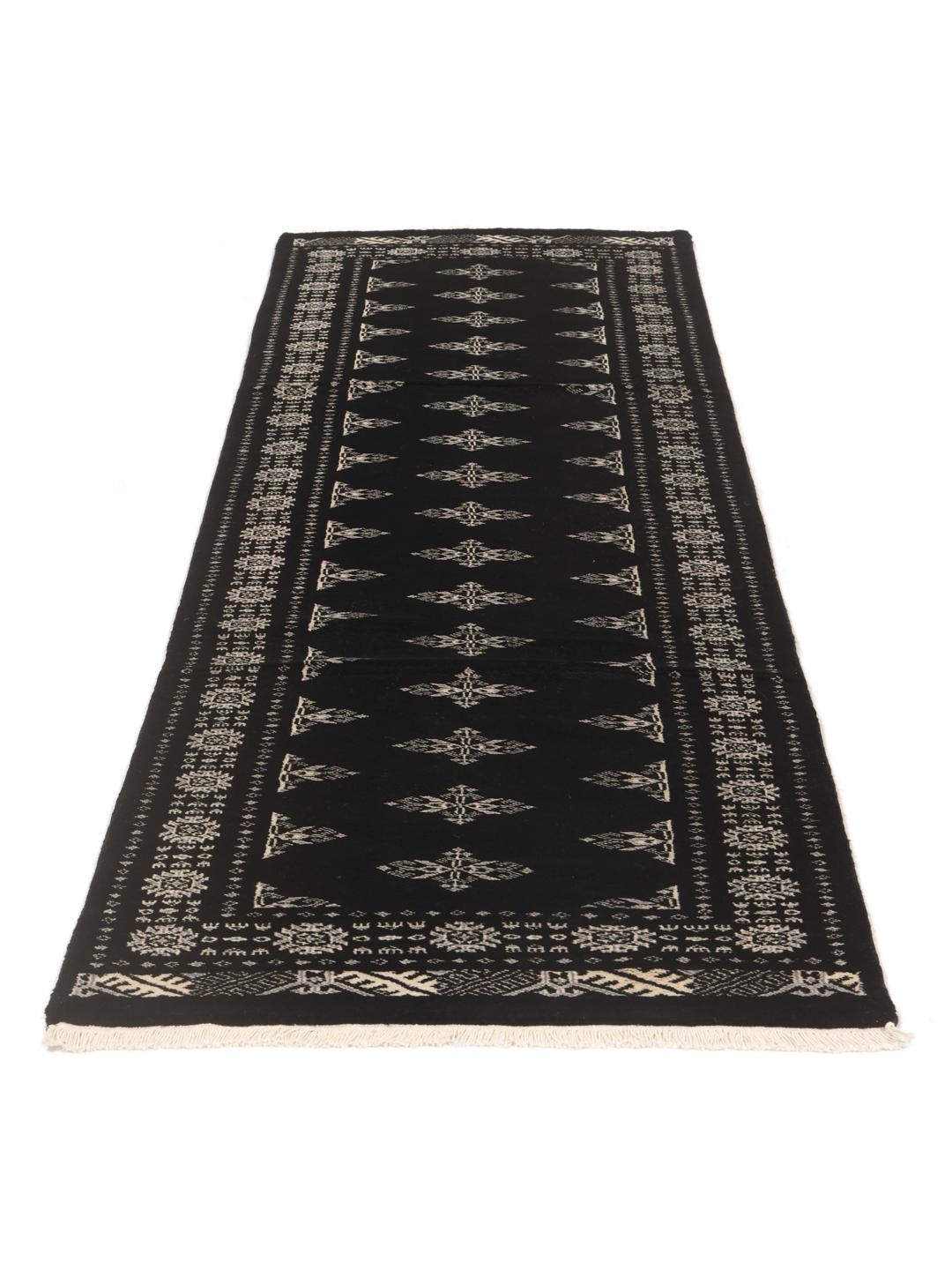
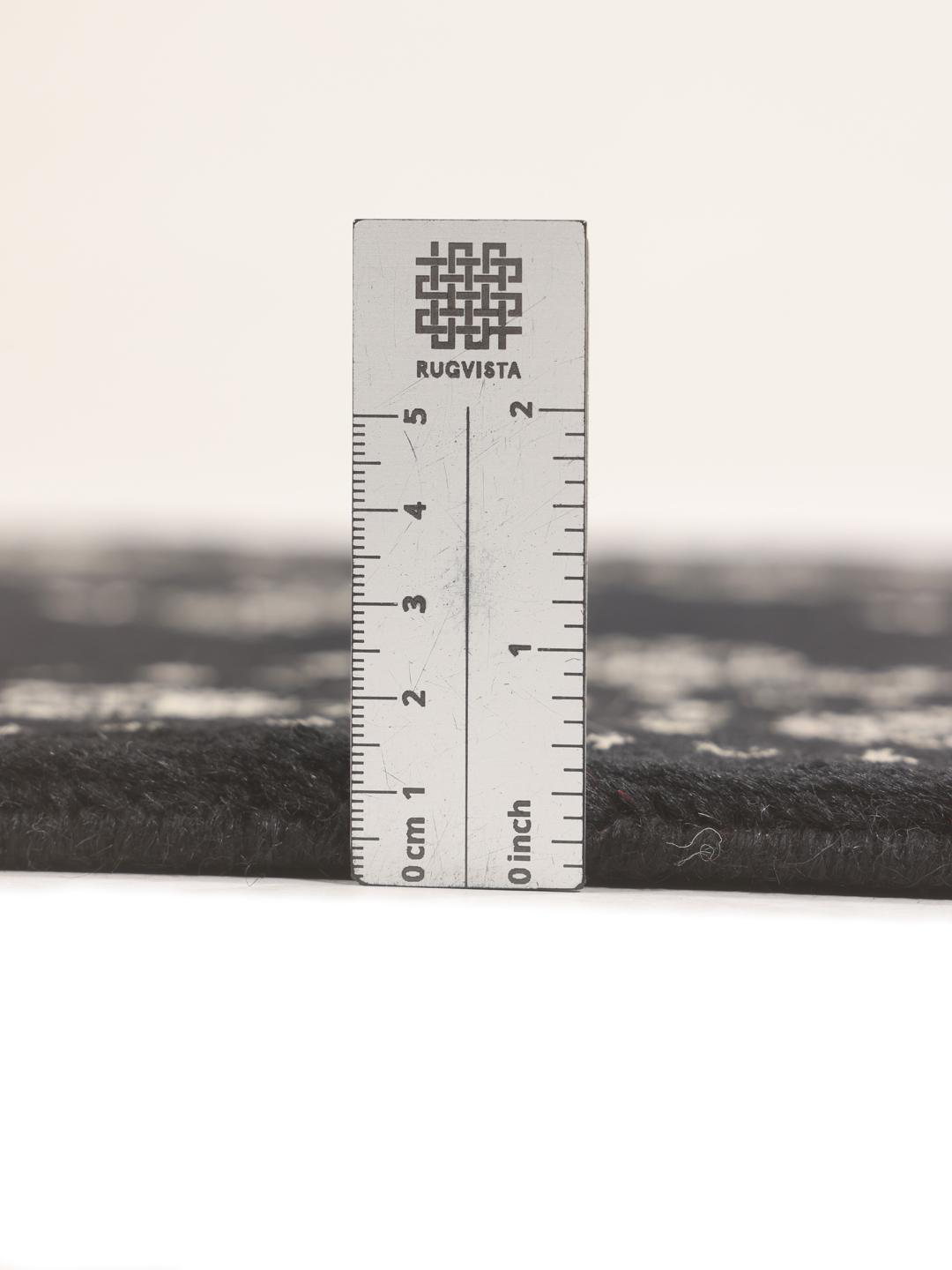
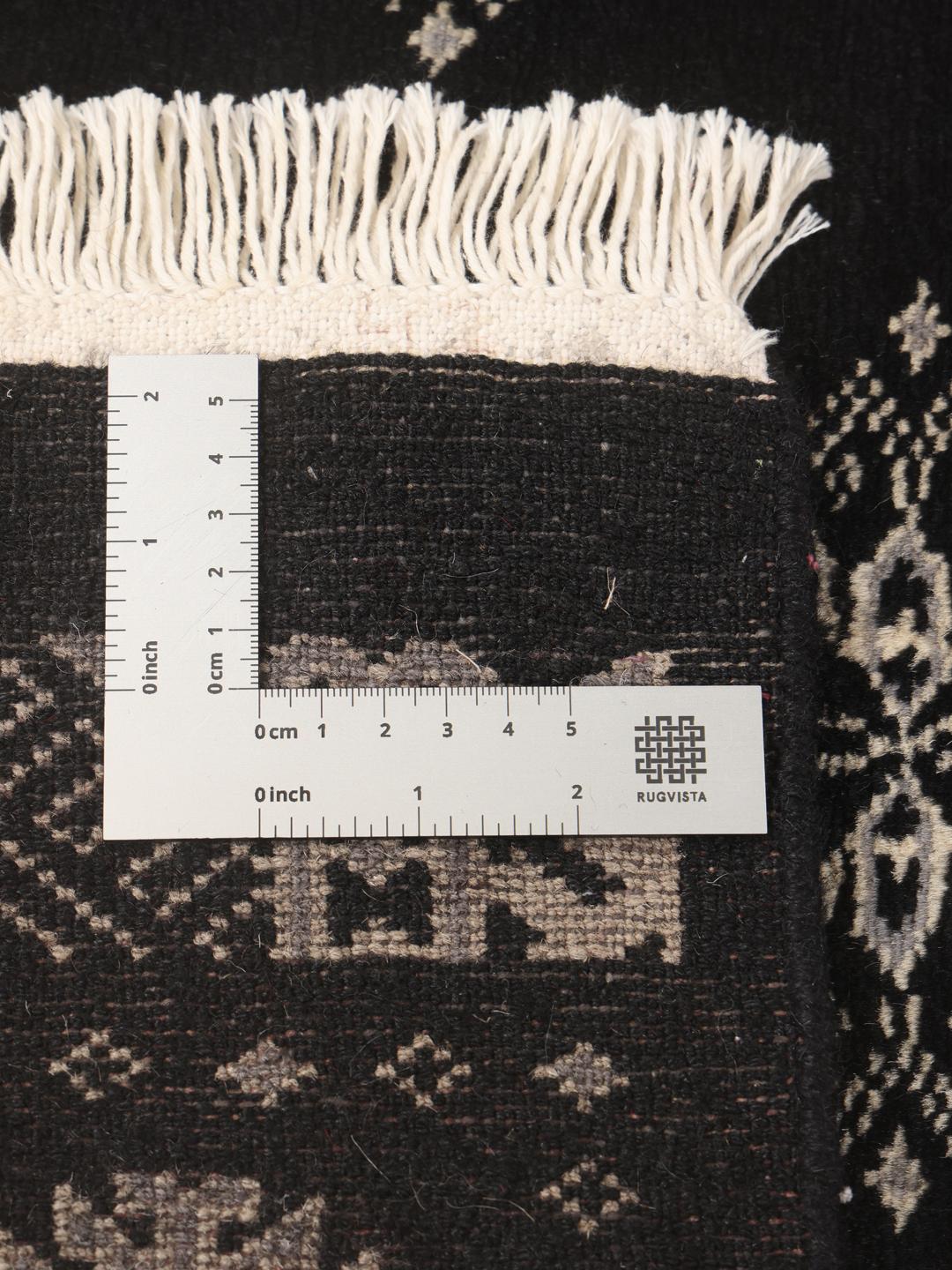
Bokhara rugs are deeply rooted in the traditions of Central Asia, taking their name from the historic Silk Road city of Bukhara. While they originated in the nomadic cultures of the region, the finest examples today are crafted in Pakistan, where artisans have perfected the art of recreating these complex, repeating patterns with remarkable consistency and finesse.
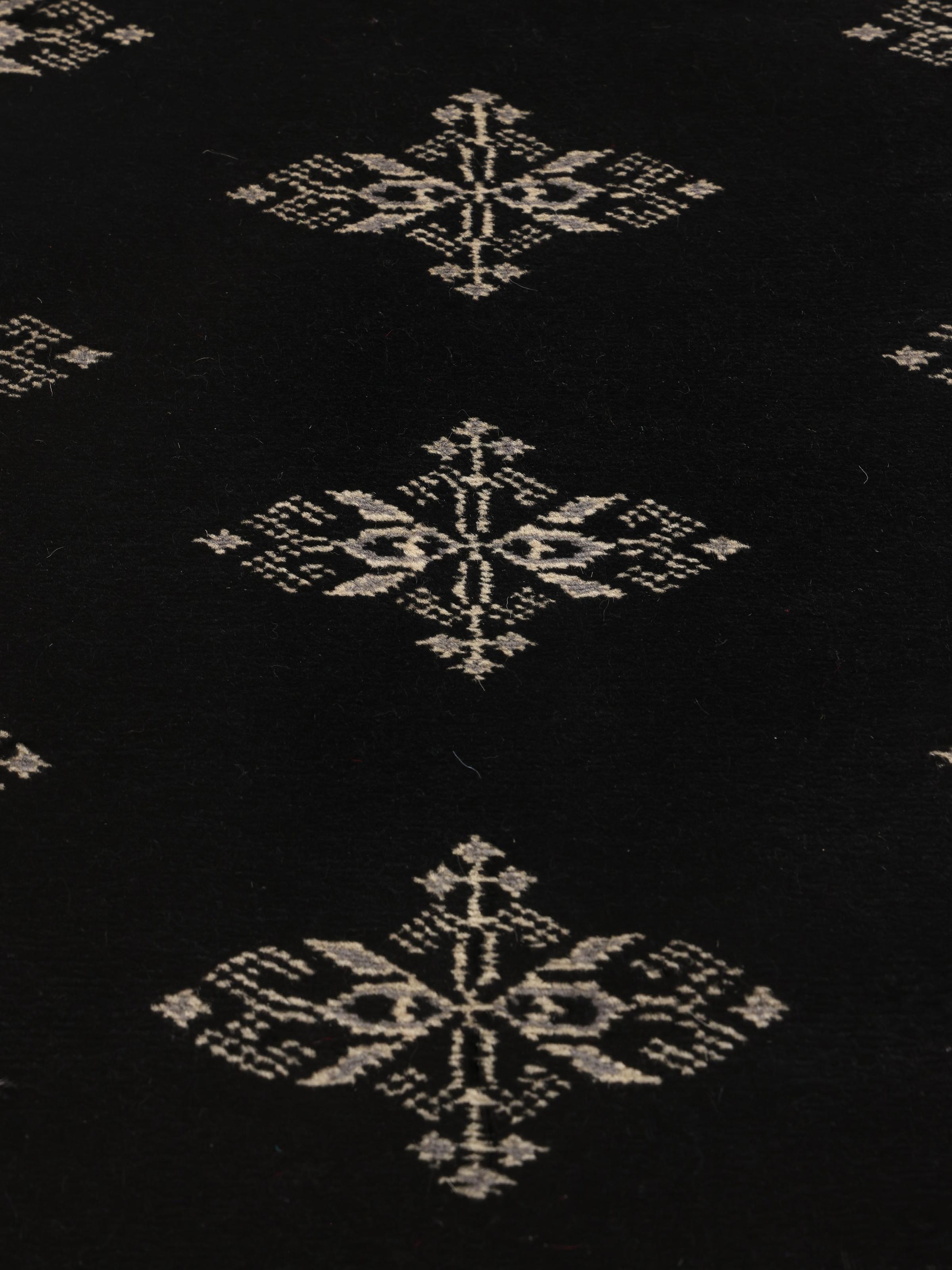
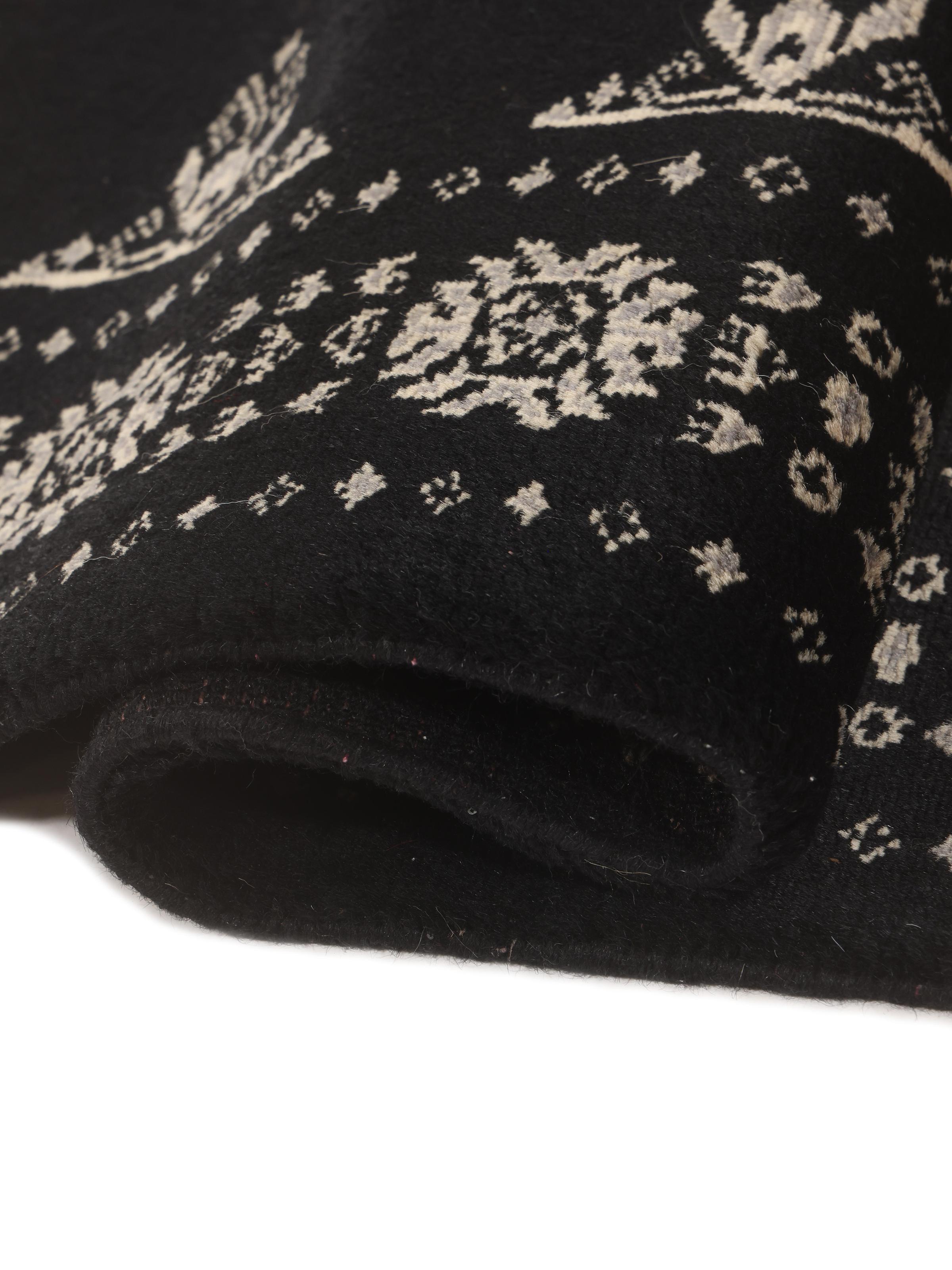
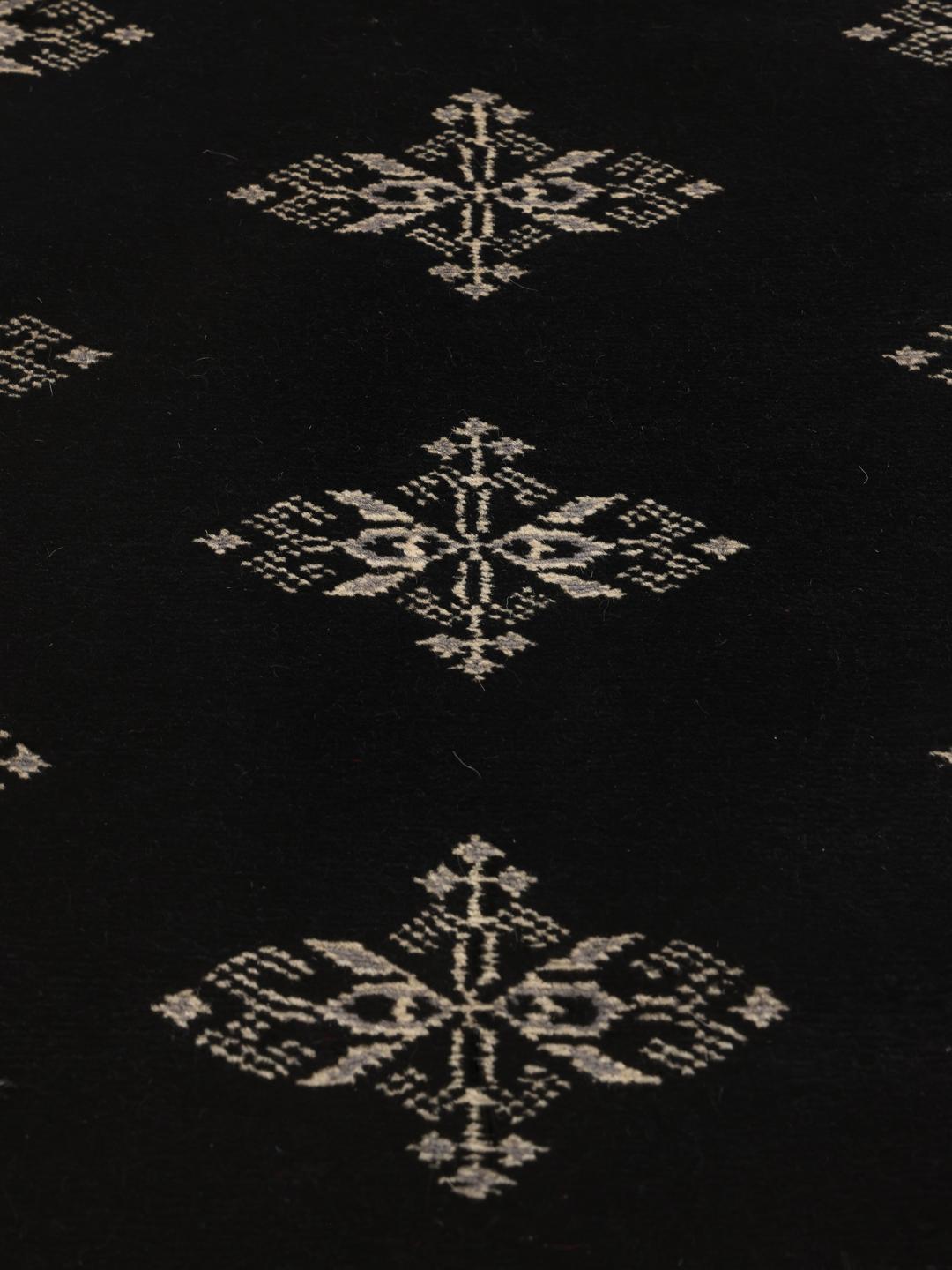
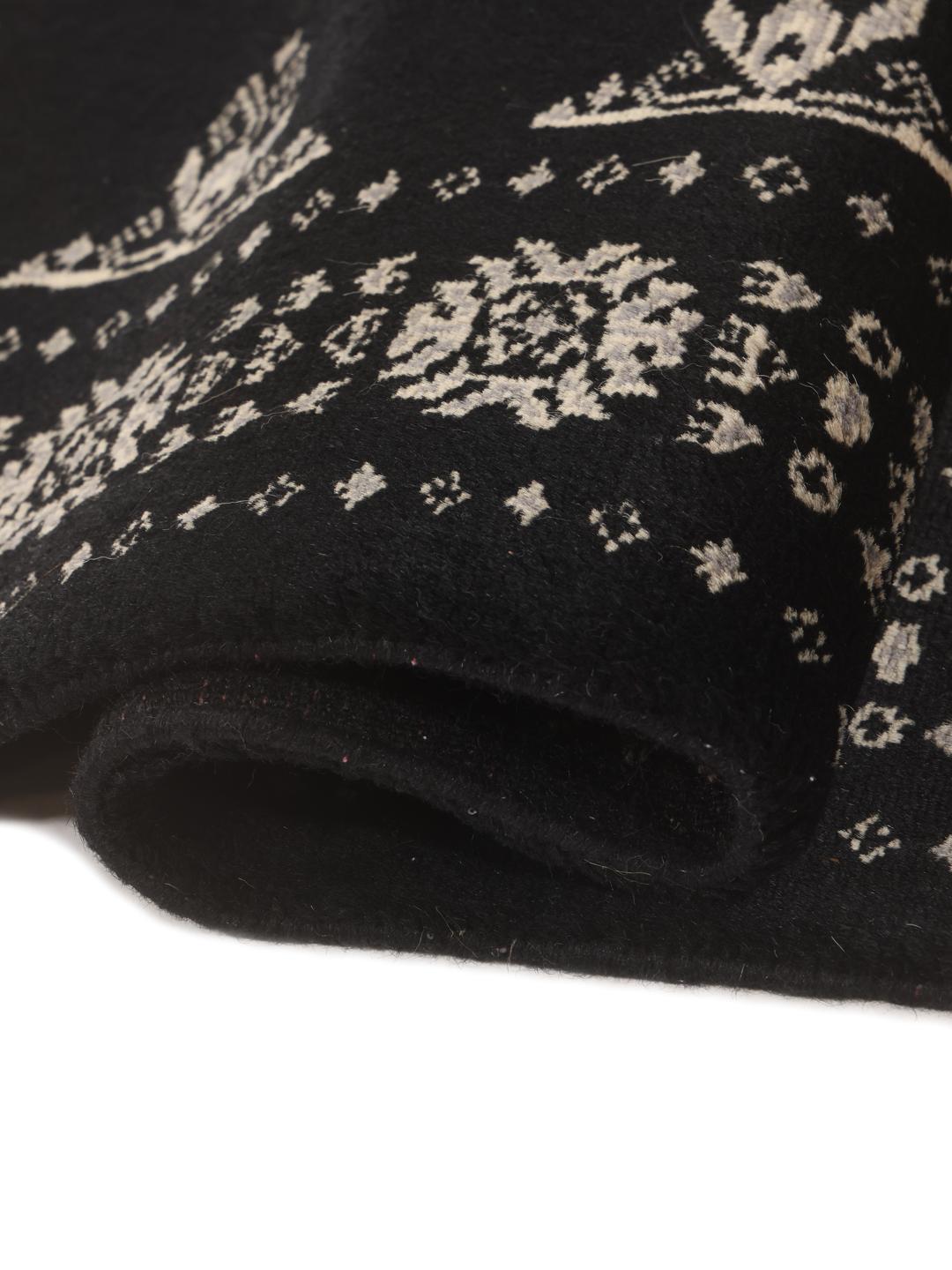
The '3ply' designation refers to the specific way the Wool is prepared before it is knotted. By twisting three strands of Wool together, the artisan creates a yarn that is significantly stronger, more resilient, and more lustrous than standard single-ply alternatives. This technique not only enhances the rug's longevity but also gives the pile a rich, light-catching quality that elevates the overall aesthetic.
The visual language of the Bokhara is defined by the gul, a repeating medallion motif that often resembles an elephant's footprint. These medallions are arranged in precise, rhythmic rows across the field, framed by elaborate geometric borders that draw the eye inward. This particular piece stands out for its bold black field, a contemporary departure from the traditional red tones, which makes the ivory patterns appear especially sharp and defined.
Collecting a rug from this tradition is an investment in cultural heritage and human skill. These pieces are valued for their ability to bring a sense of order and history into a modern home. By choosing a hand-knotted runner, you are participating in a lineage of craft that spans generations, ensuring that your space is anchored by something with genuine soul and substance.