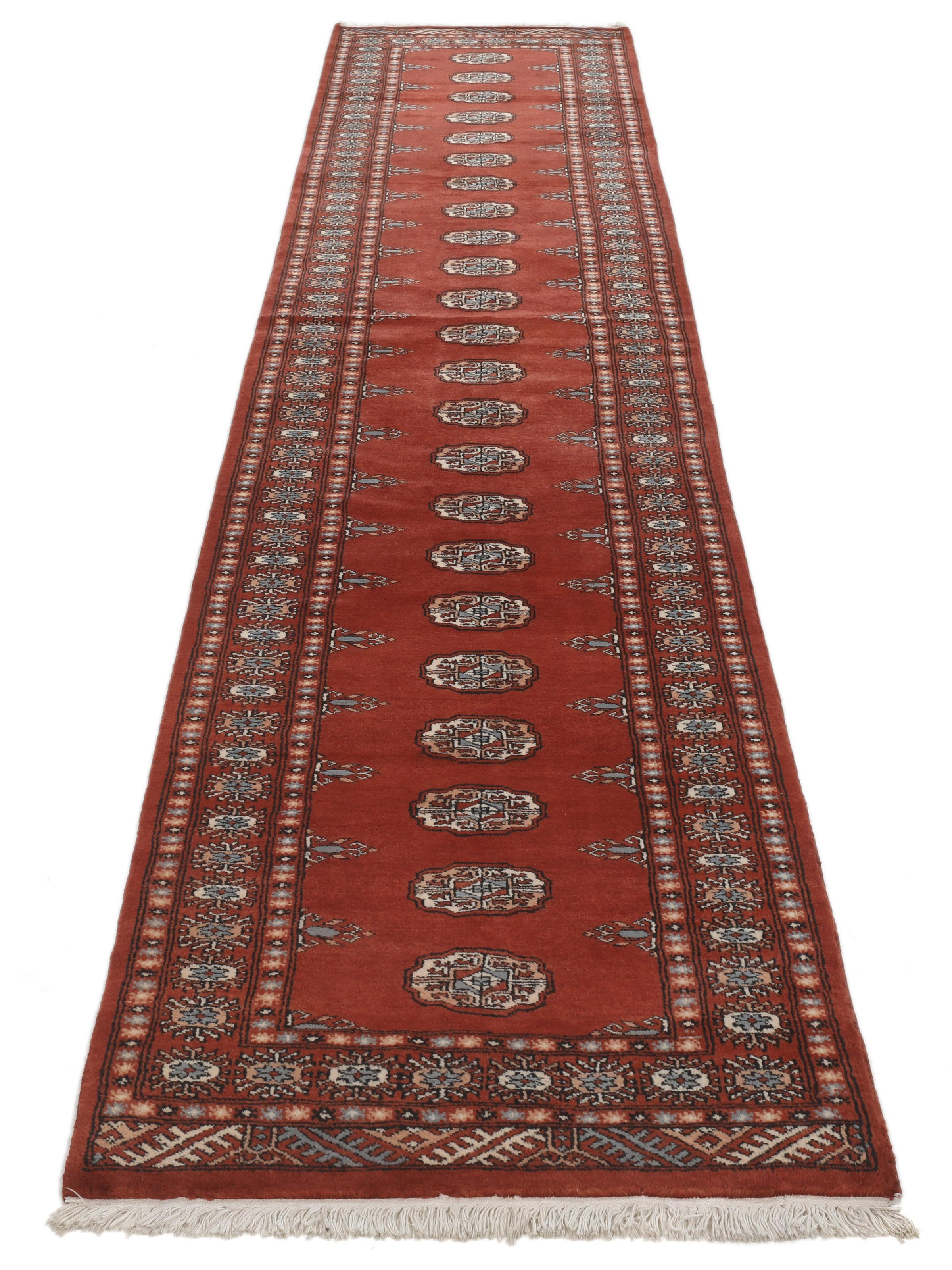
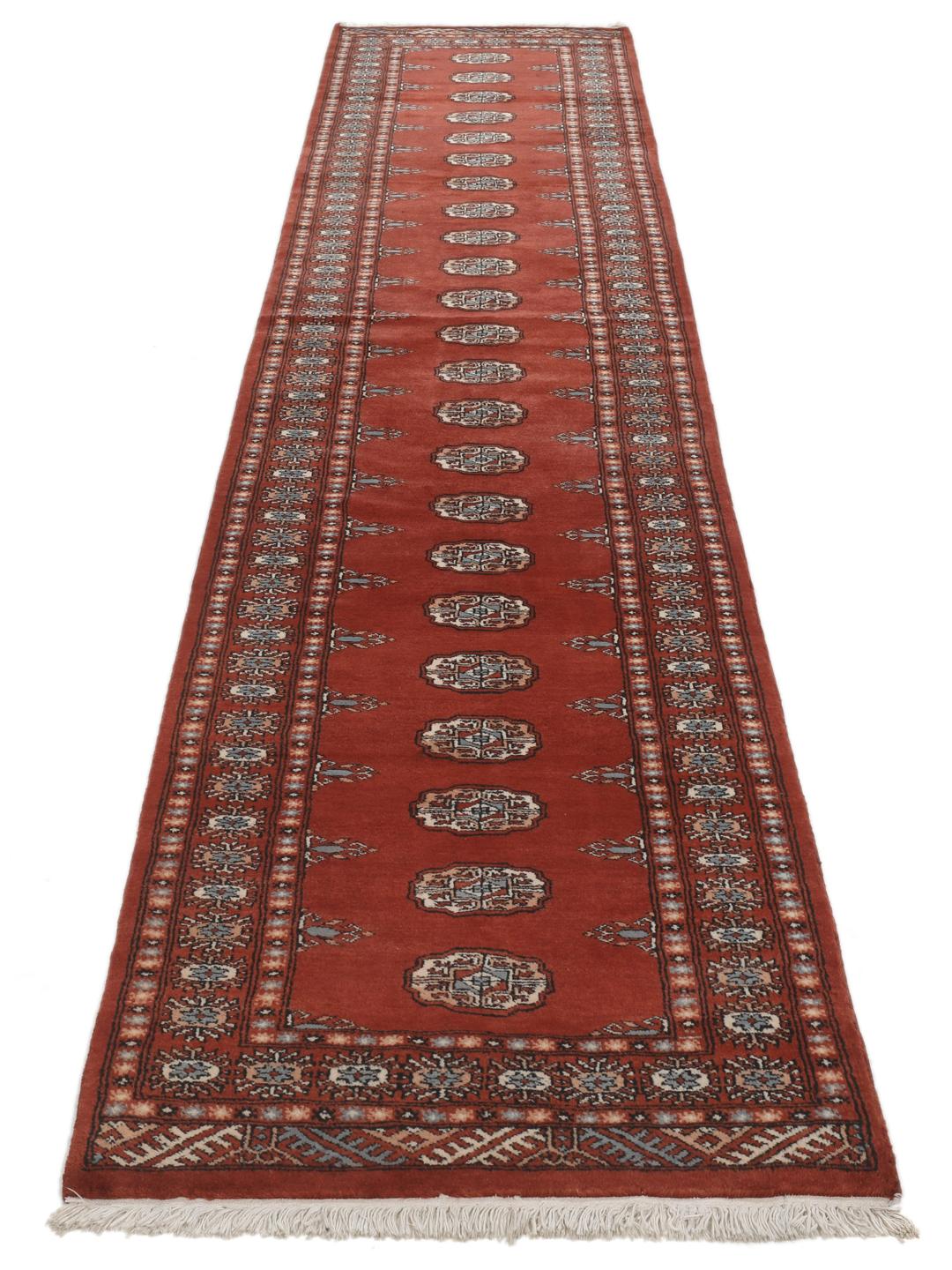
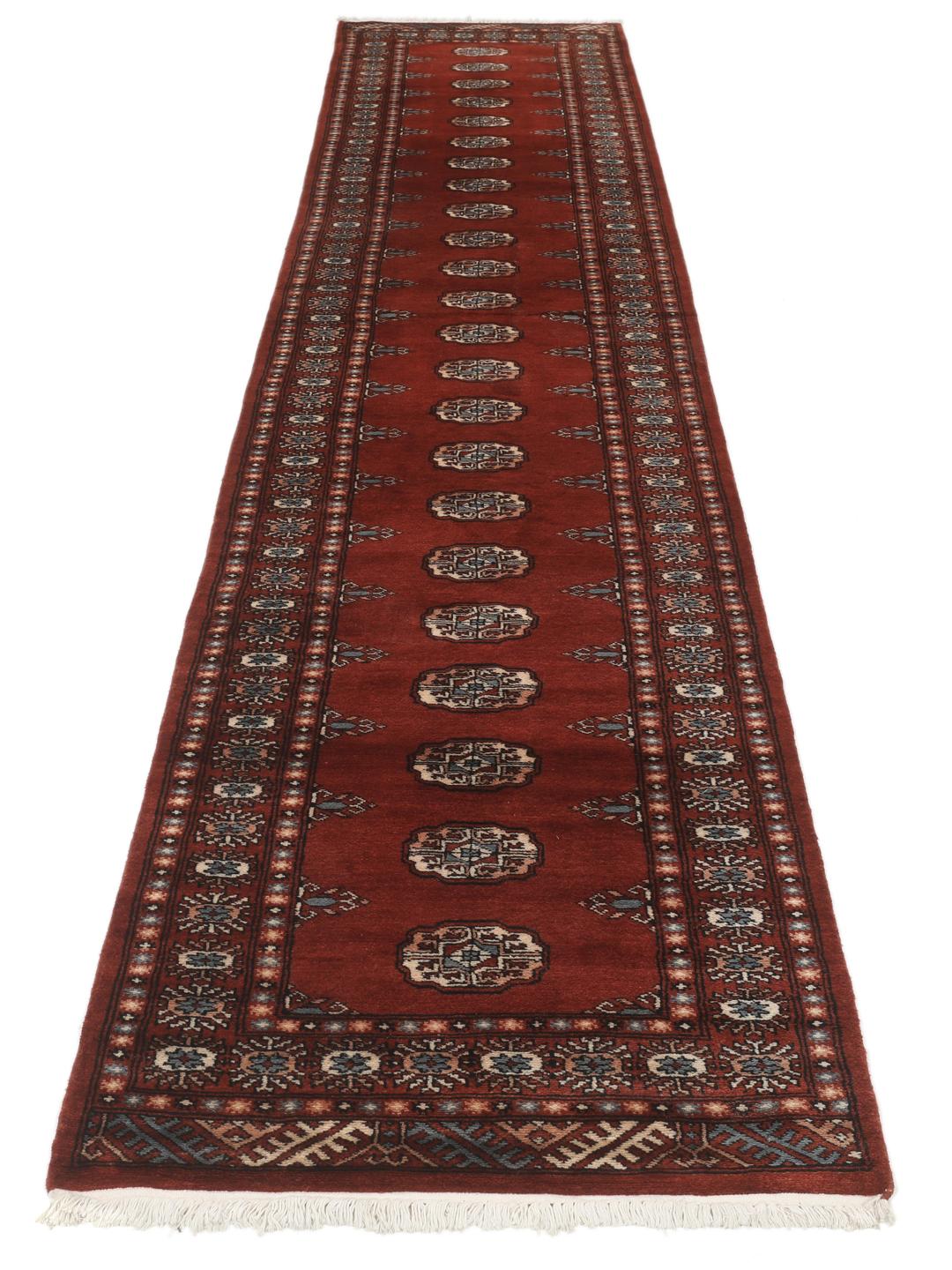
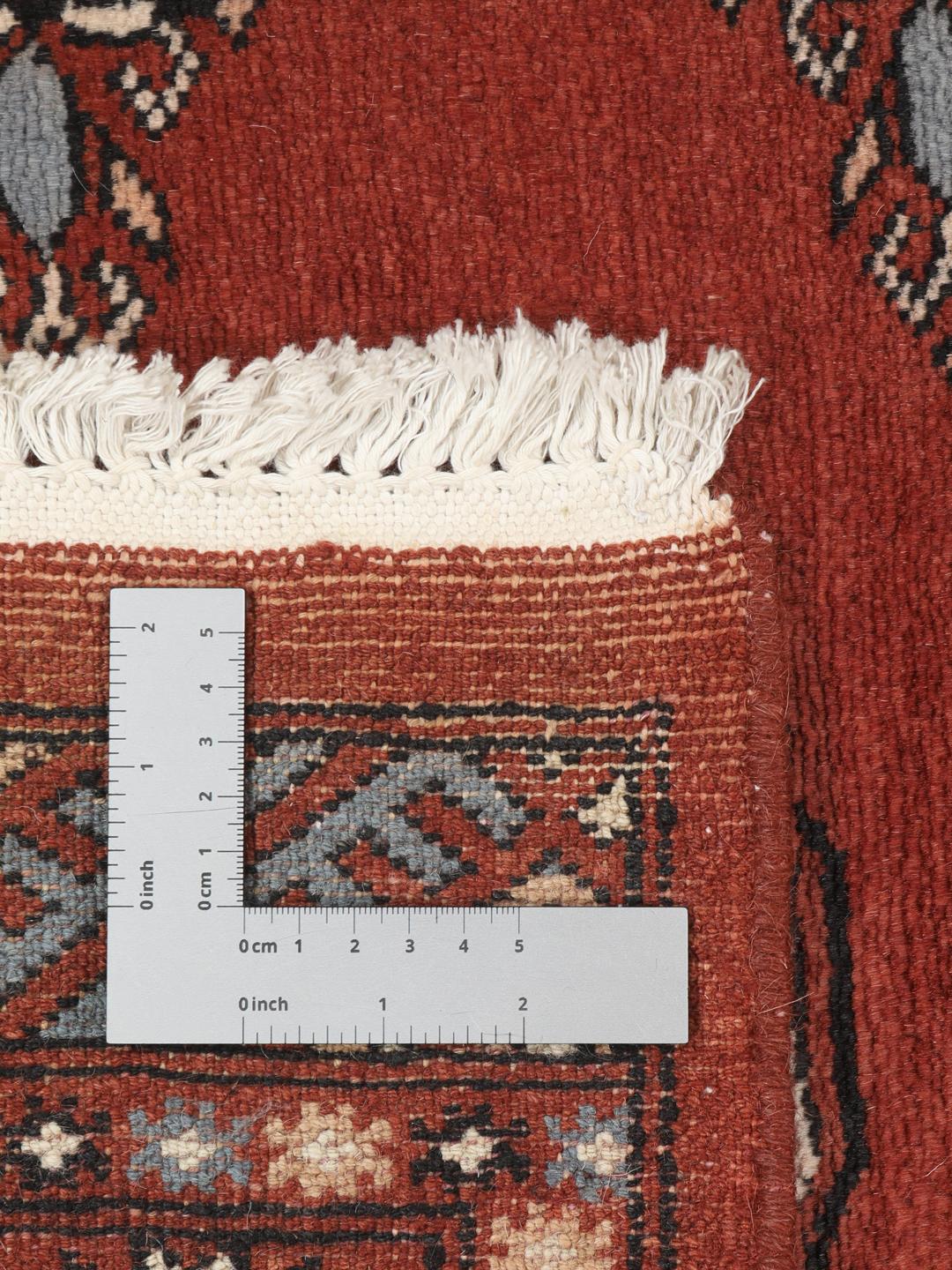
The Bokhara rug tradition is deeply rooted in the history of the Silk Road, taking its name from the ancient city of Bukhara in Central Asia. While these designs originated among nomadic tribes who sought to capture their cultural identity in woven form, the finest modern iterations are masterfully produced in Pakistan, where the craft has been refined for generations.
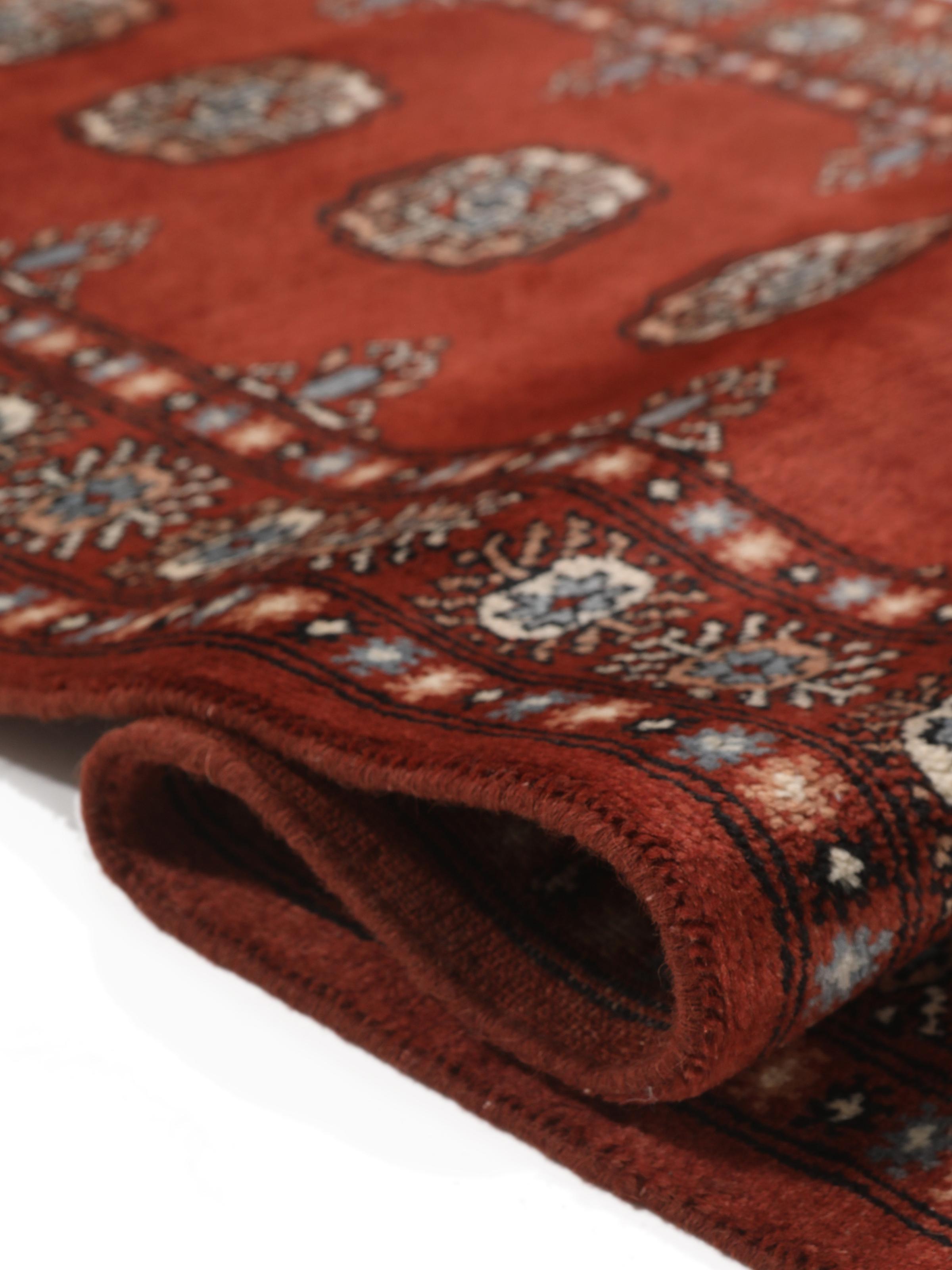
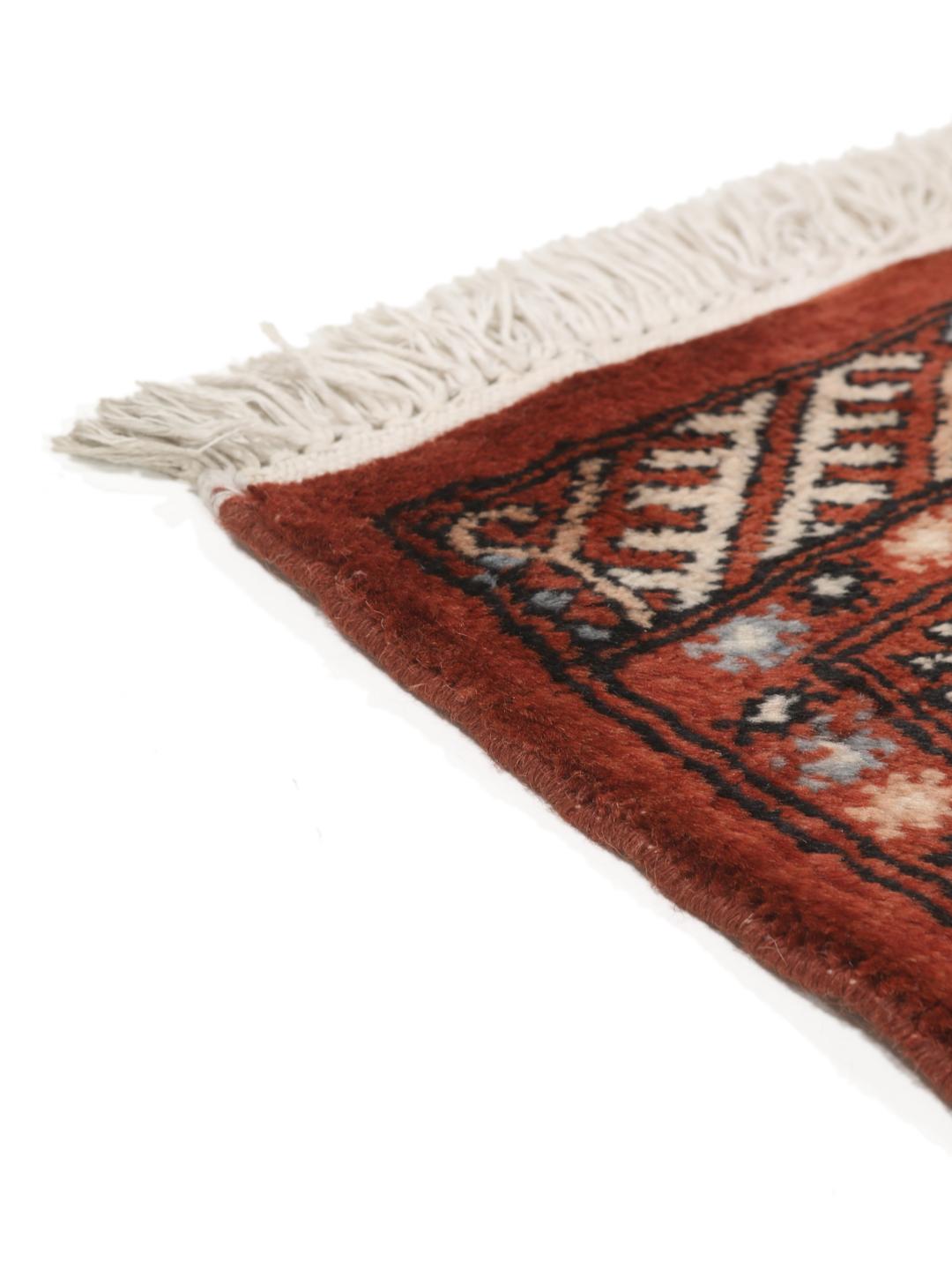
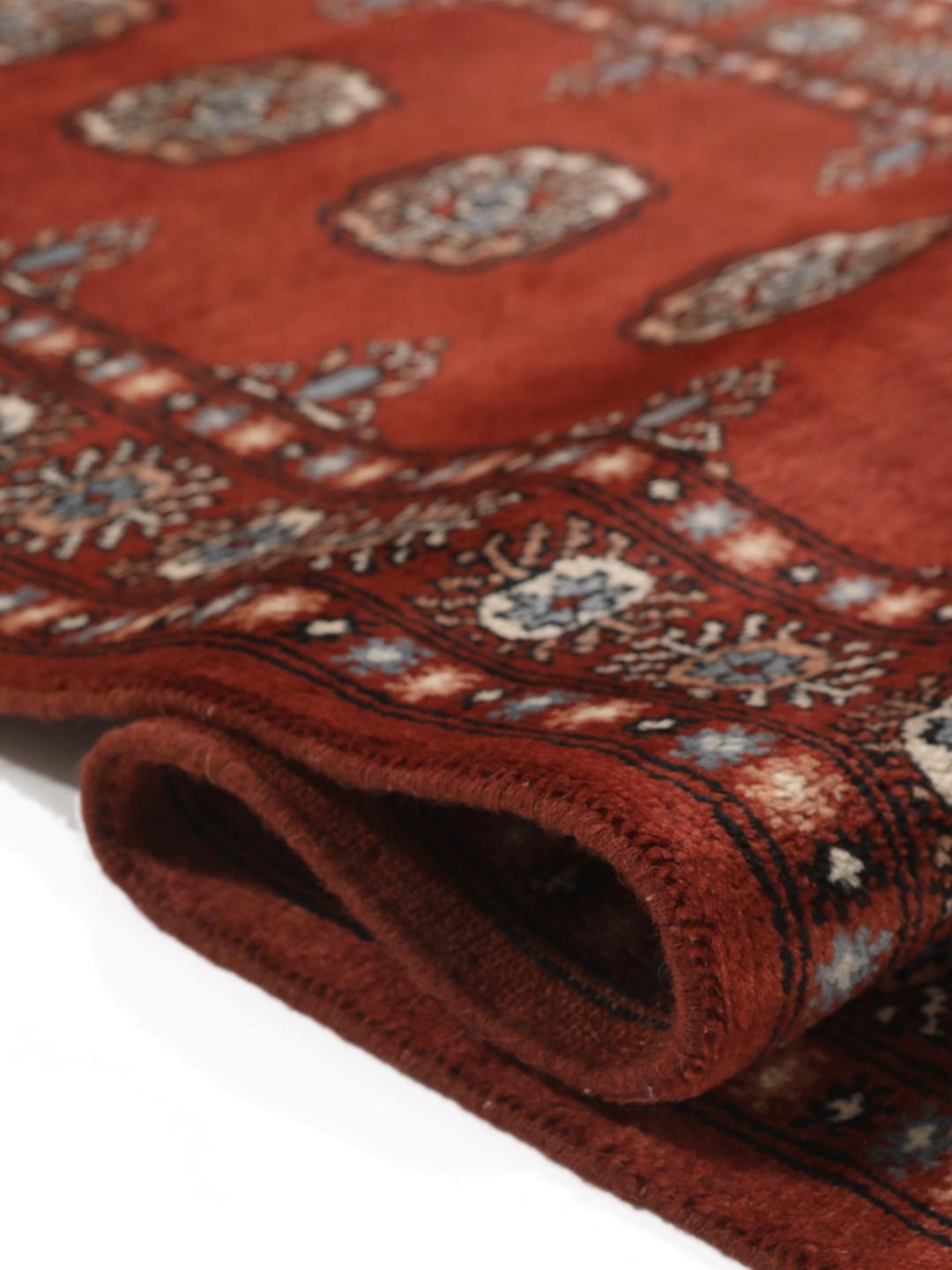
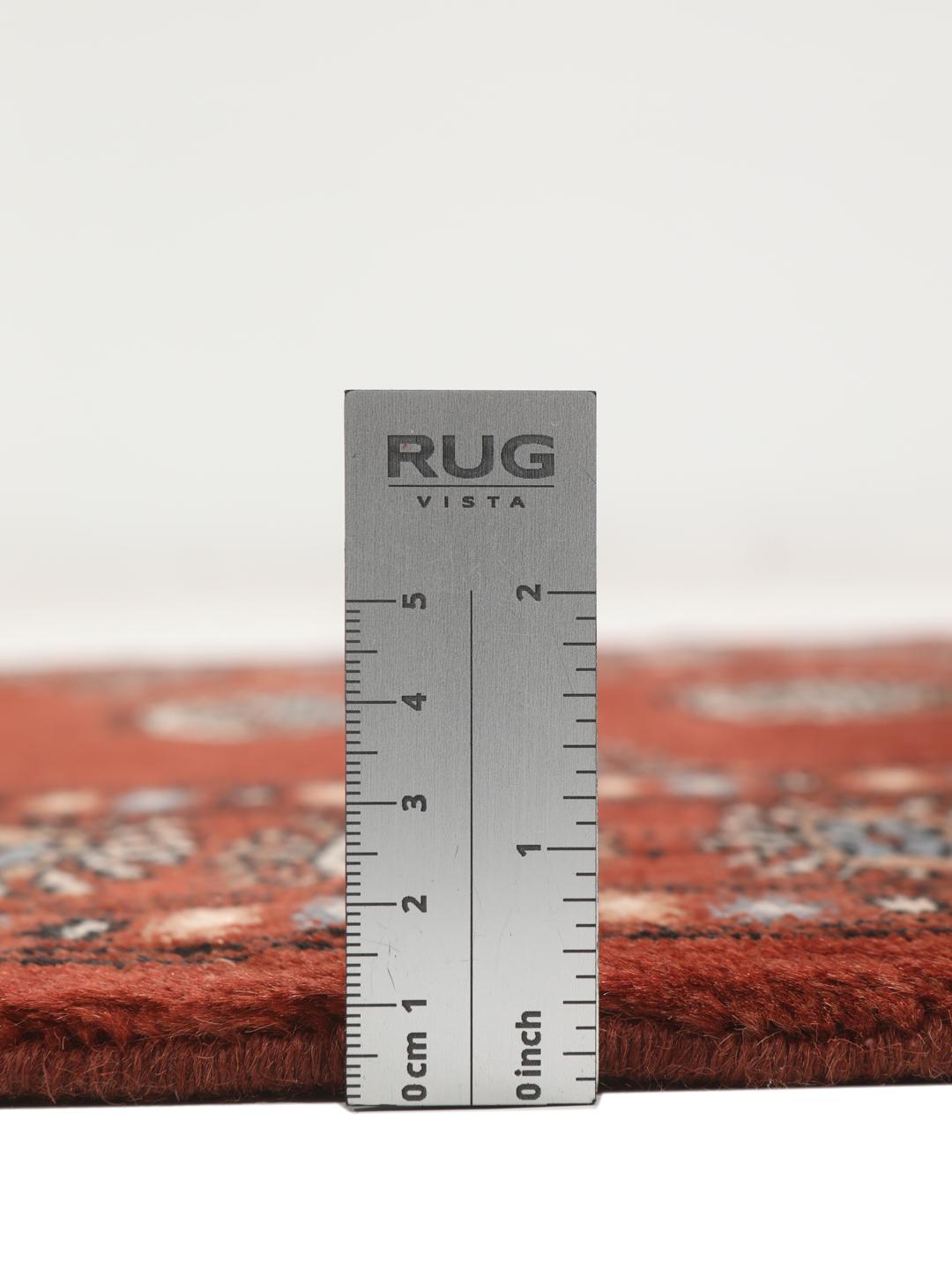
The term 3ply refers to the construction of the yarn, where three strands of Wool are twisted together before being knotted. This technique is significant because it creates a thicker, more lustrous, and exceptionally durable pile compared to single or double-ply constructions. It gives the rug a velvety feel and ensures it remains robust under daily use.
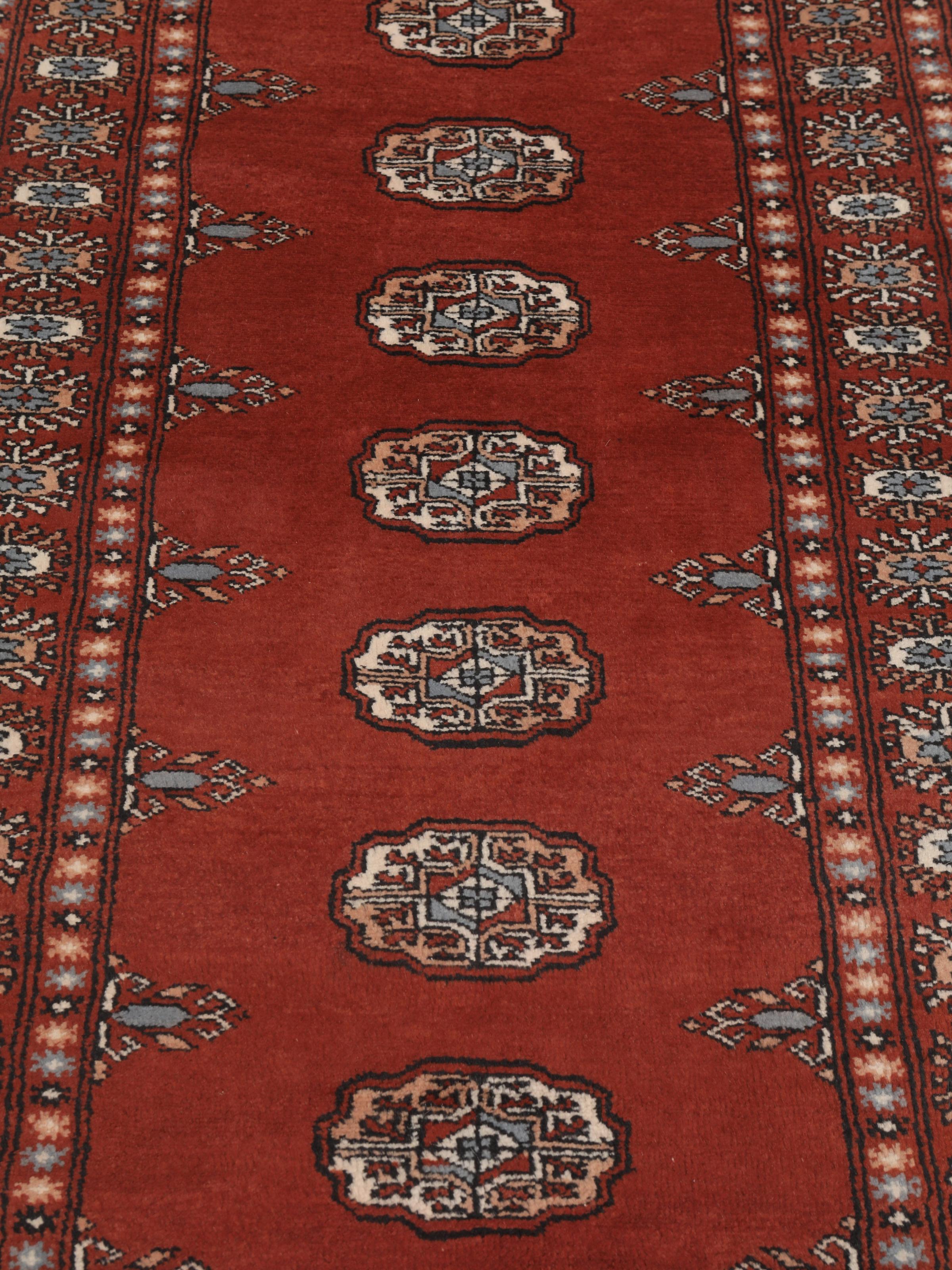
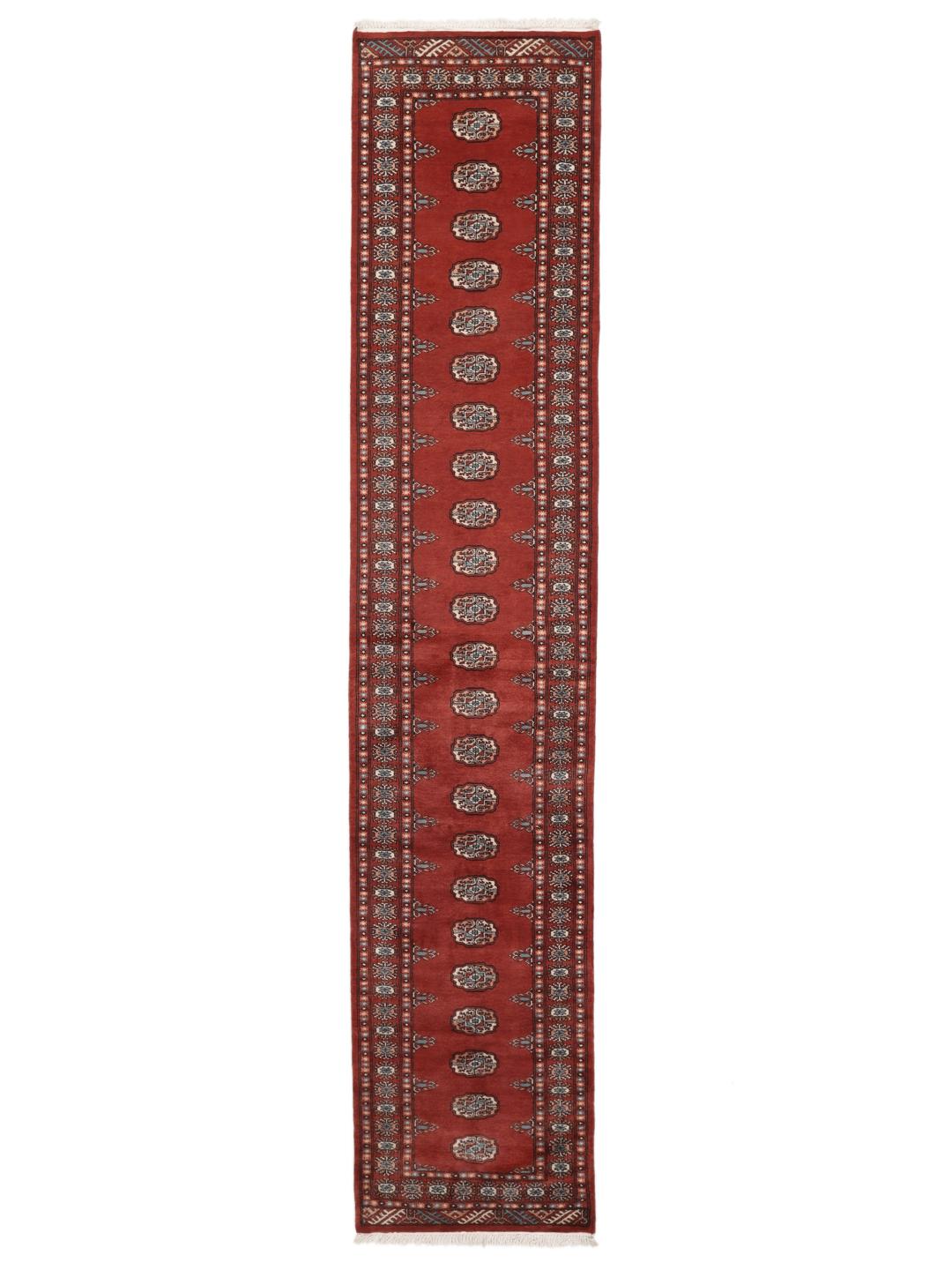
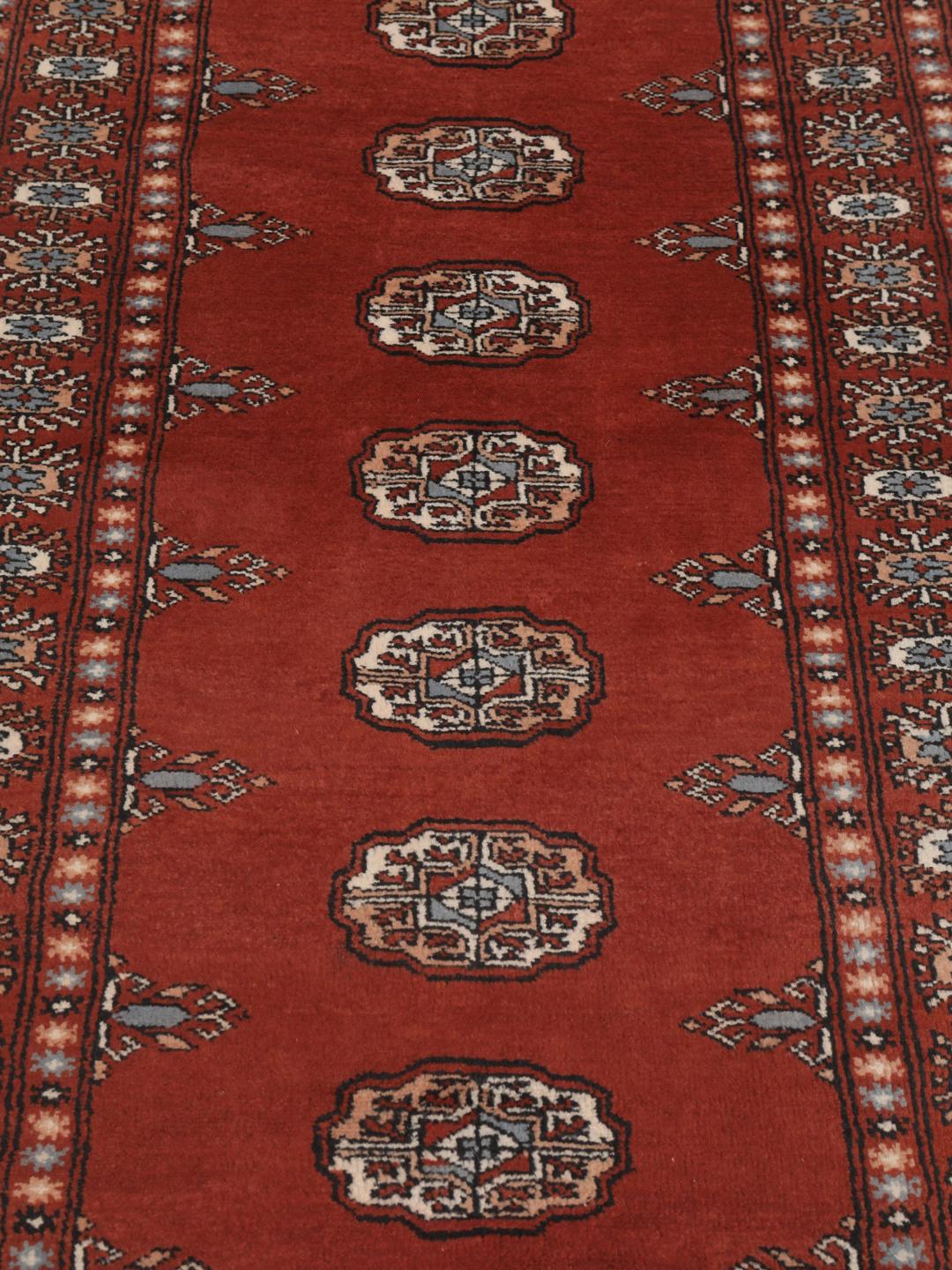
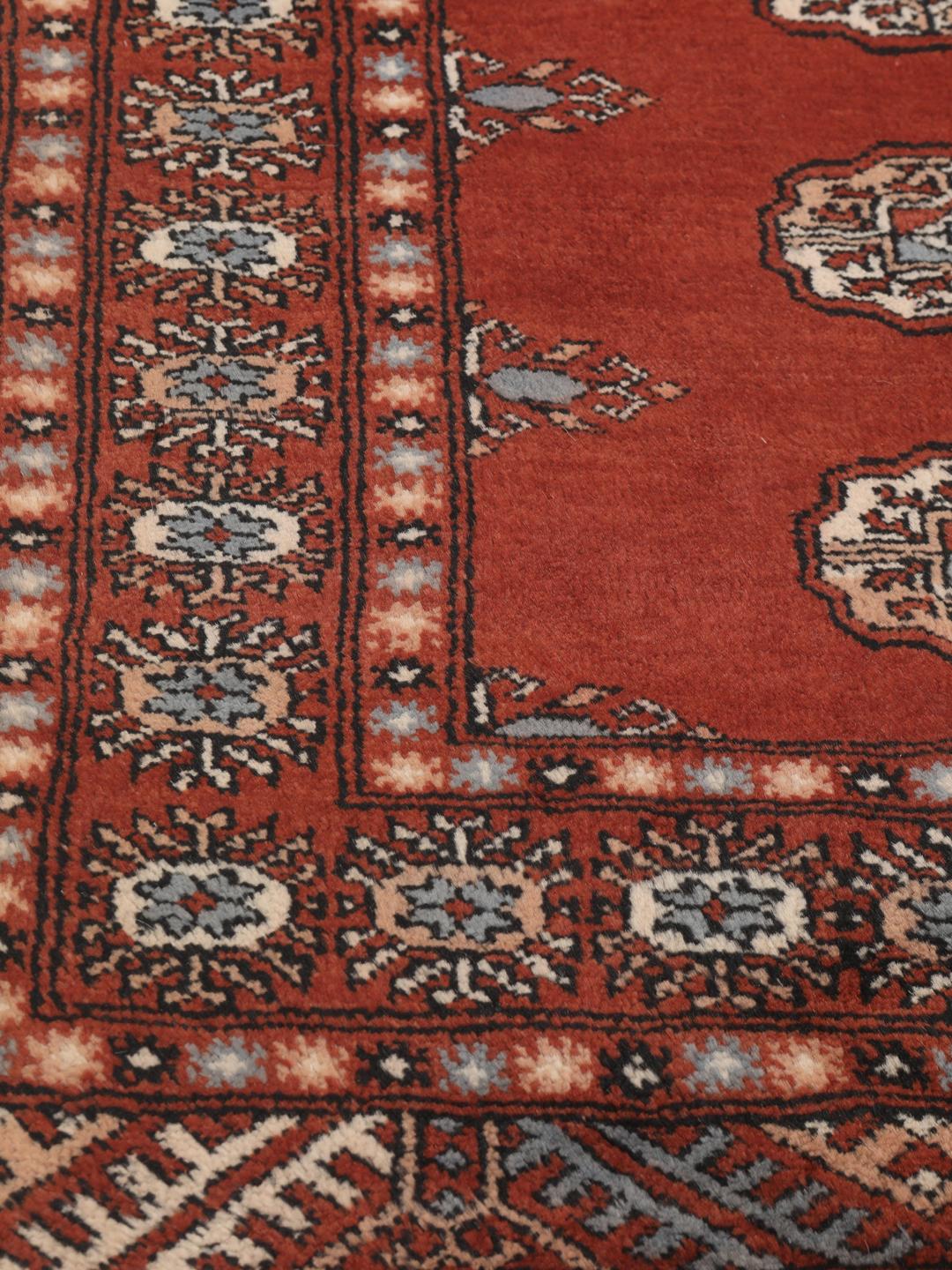
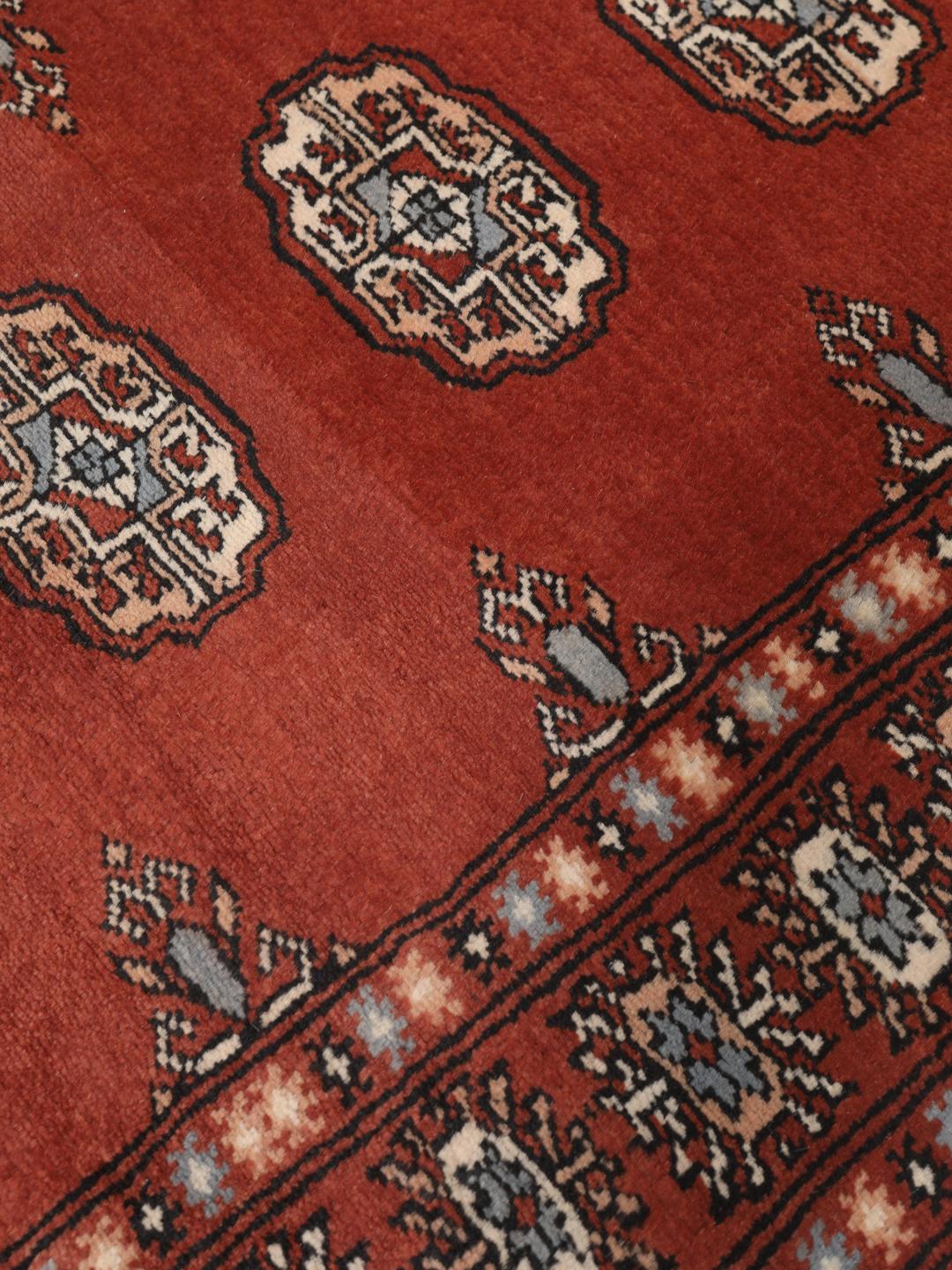
Visually, these rugs are defined by their repeating gul motifs, which are often described as elephant-foot medallions. These symmetrical shapes are arranged in precise rows, creating a rhythmic and harmonious field. The deep red palette is iconic to the style, representing warmth and vitality, while the intricate geometric borders provide a structured contrast to the softer, rounded shapes within the field.
Collecting a Pakistan Bokhara is an investment in cultural heritage. These rugs are highly valued for their consistent quality and the immense human effort required to create them. Owning one is an opportunity to connect with a long lineage of textile artistry, bringing a piece of history into your home that is both functional and deeply meaningful.