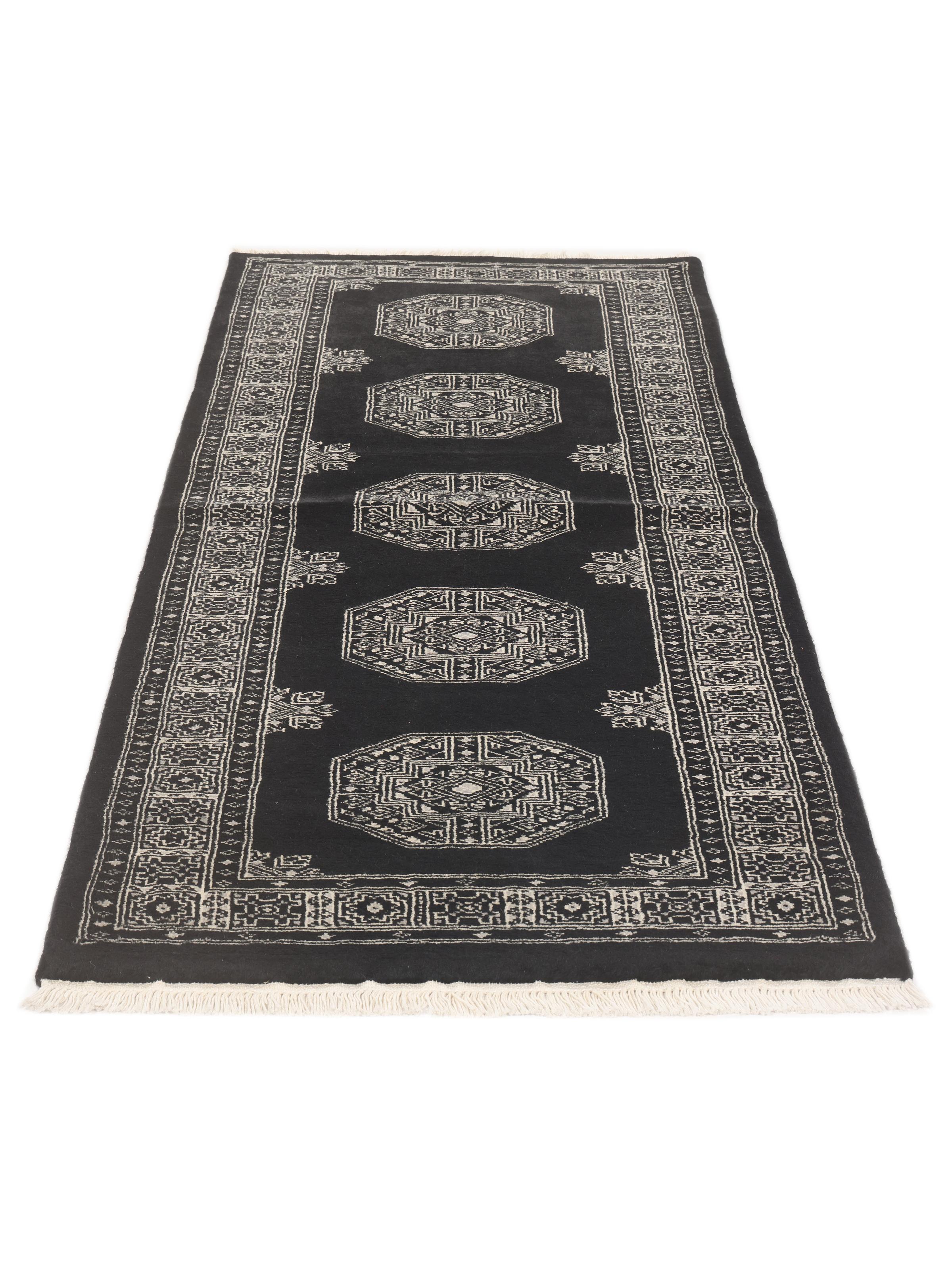
The Bokhara rug tradition is deeply rooted in the history of the Silk Road, taking its name from the ancient city of Bukhara. While these designs originated among nomadic tribes in Central Asia, the craft flourished and evolved as it moved into Pakistan. Today, Pakistan is renowned for producing some of the finest examples of these rugs, blending ancient techniques with a commitment to maintaining high standards of artistry.
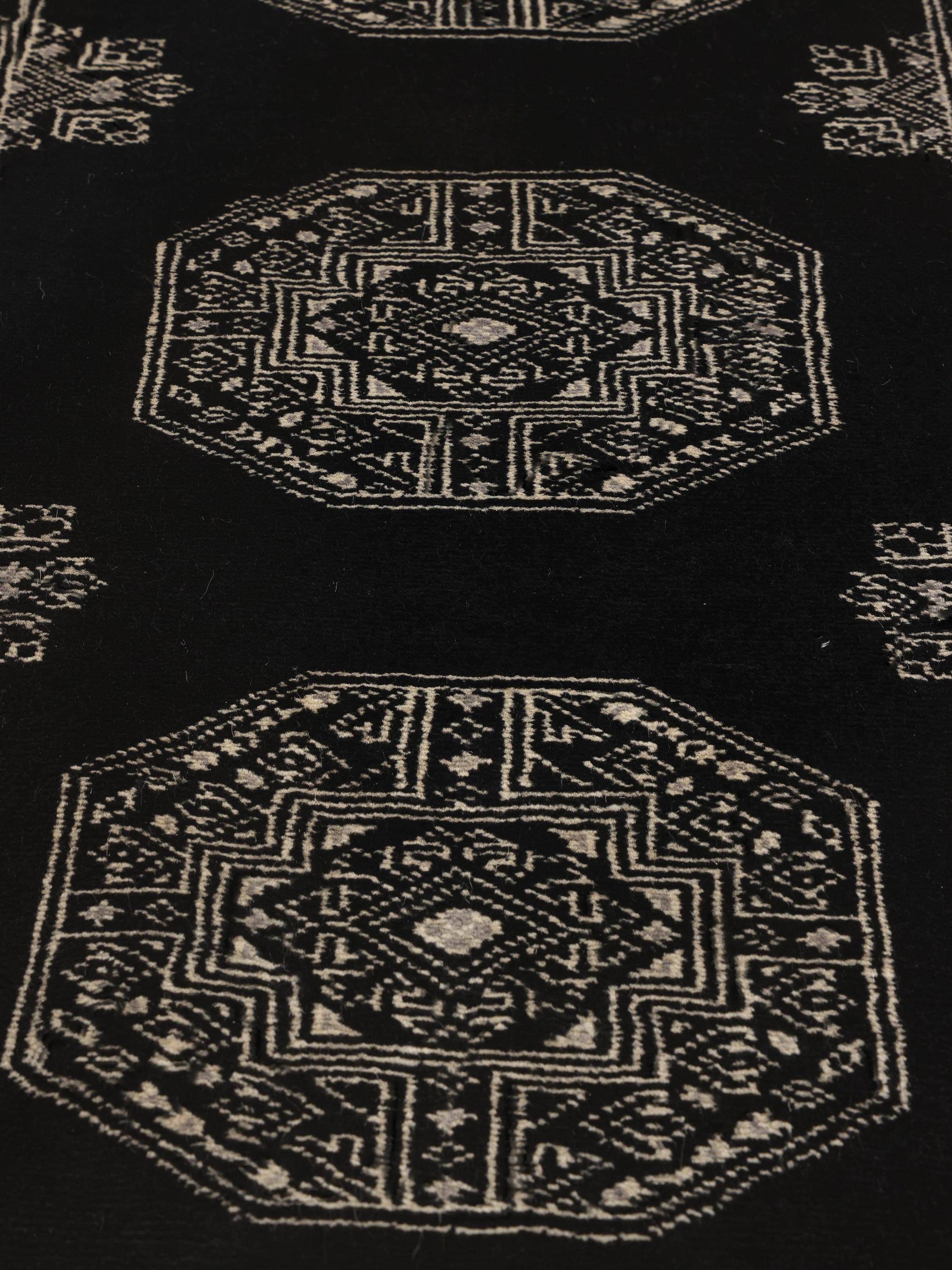
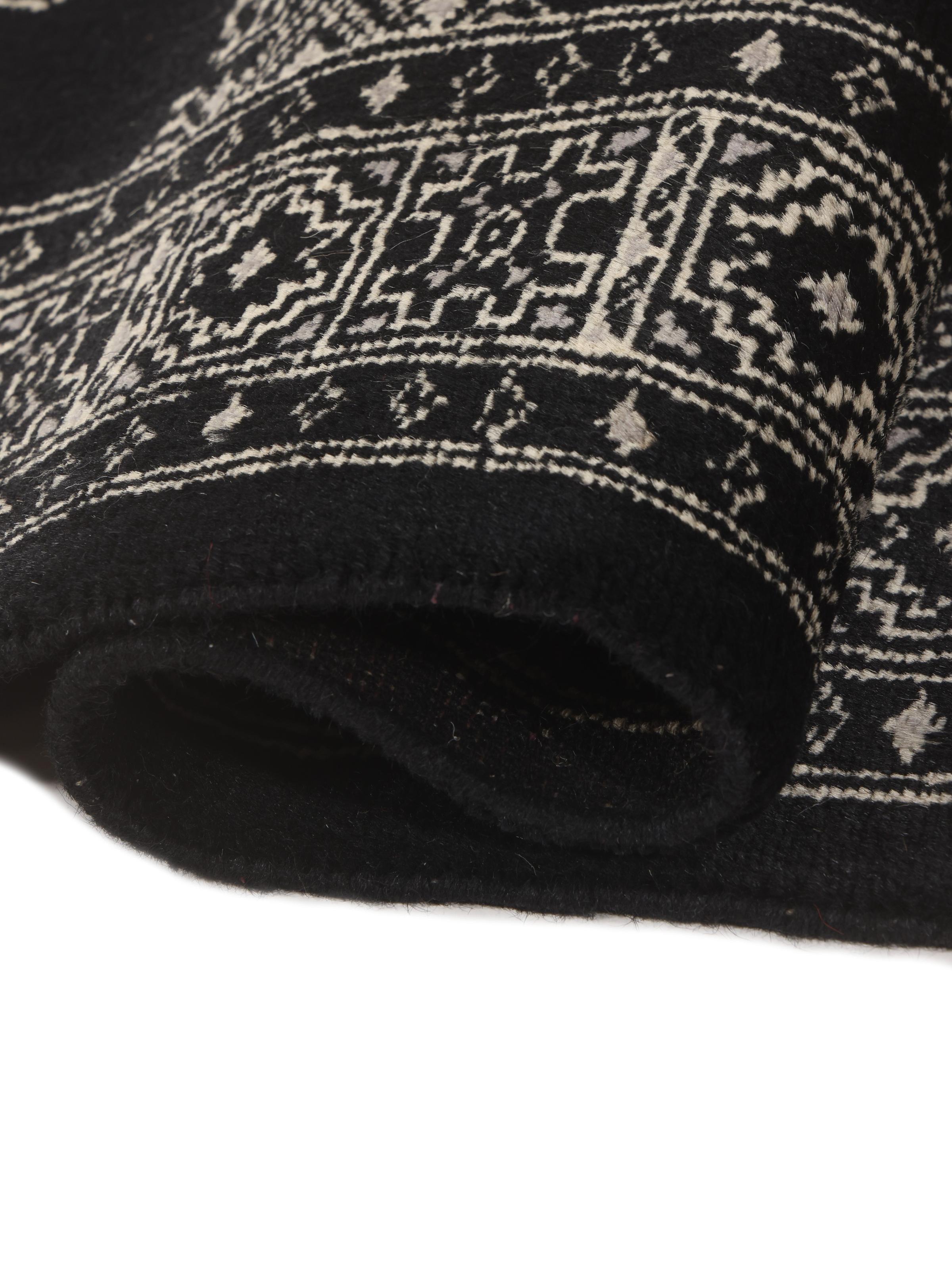
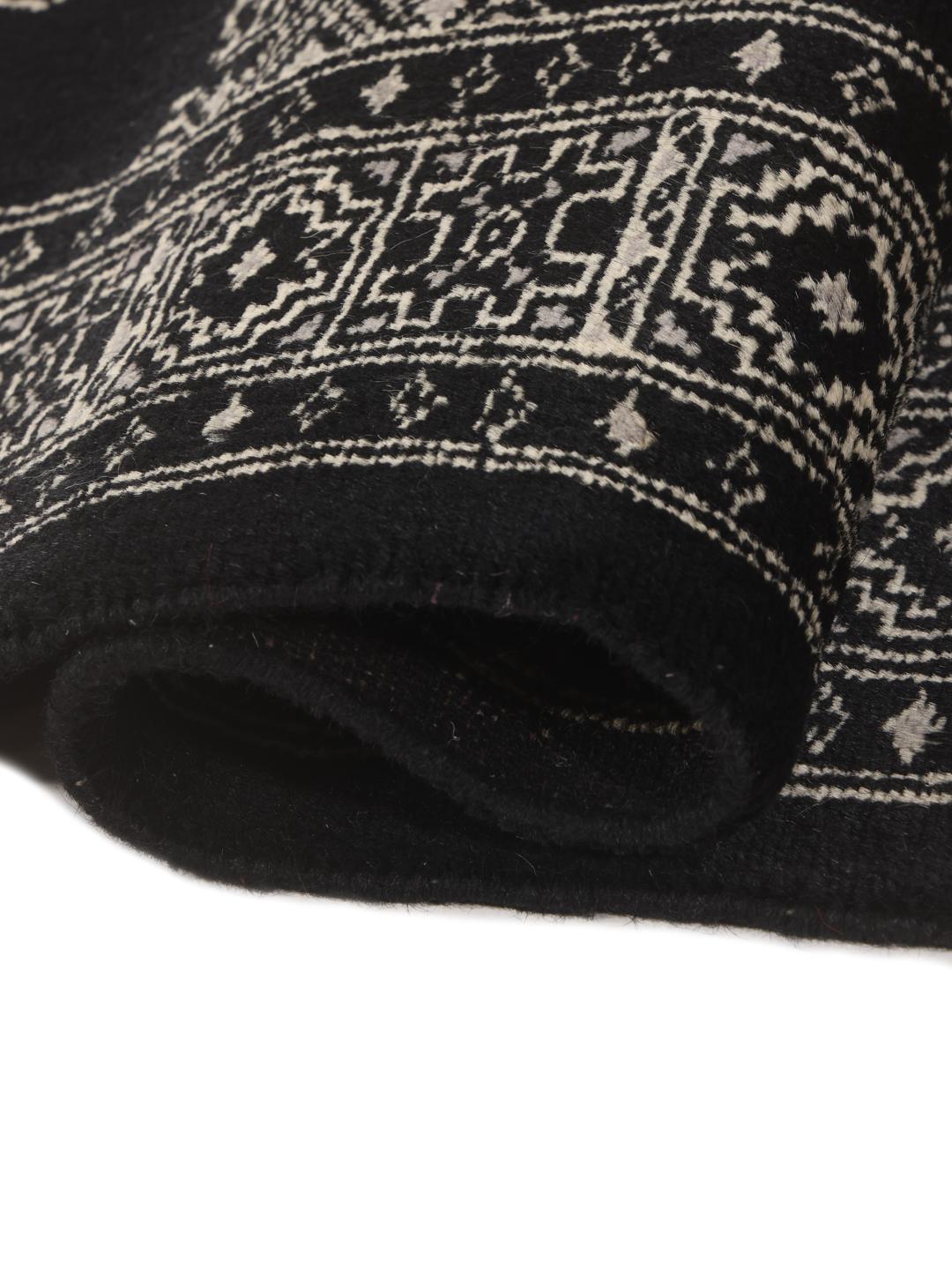
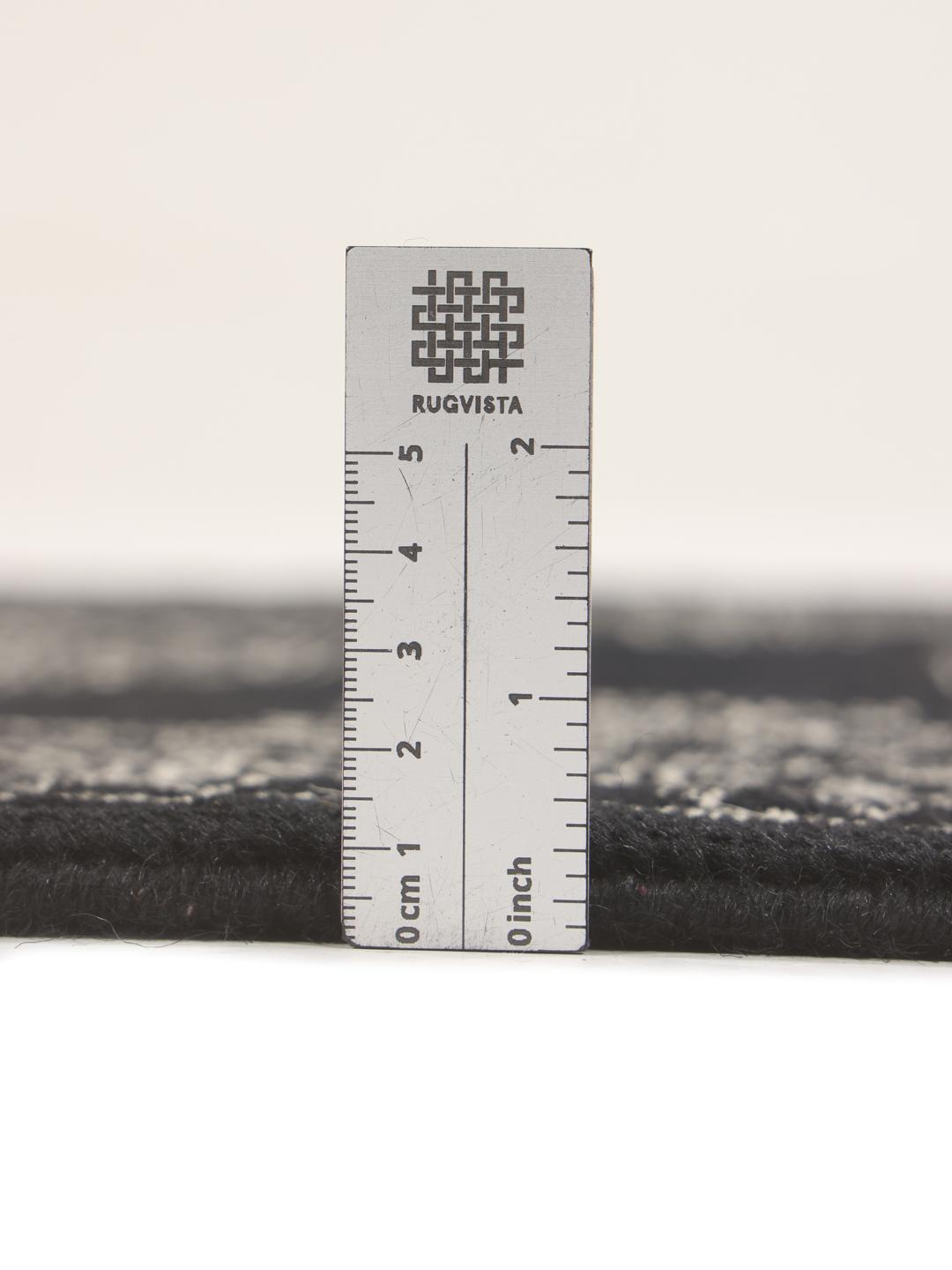
The designation '3ply' refers to the specific method of twisting three individual strands of wool to create the yarn for the pile. This process is essential for creating a rug that is not only denser and more luxurious but also significantly more durable. The 3ply yarn provides a fuller, more lustrous texture that enhances the depth of the colours and the longevity of the rug.
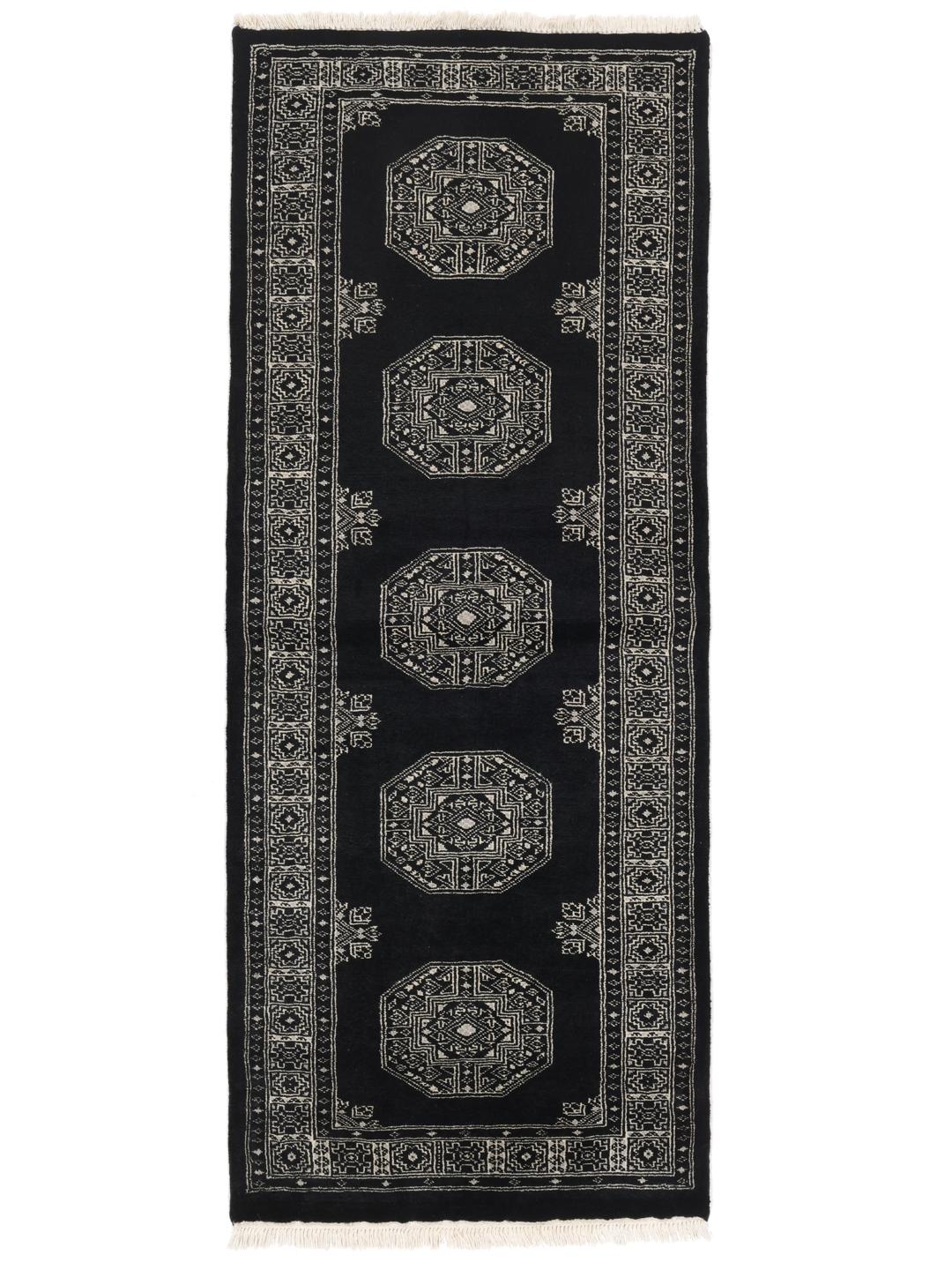
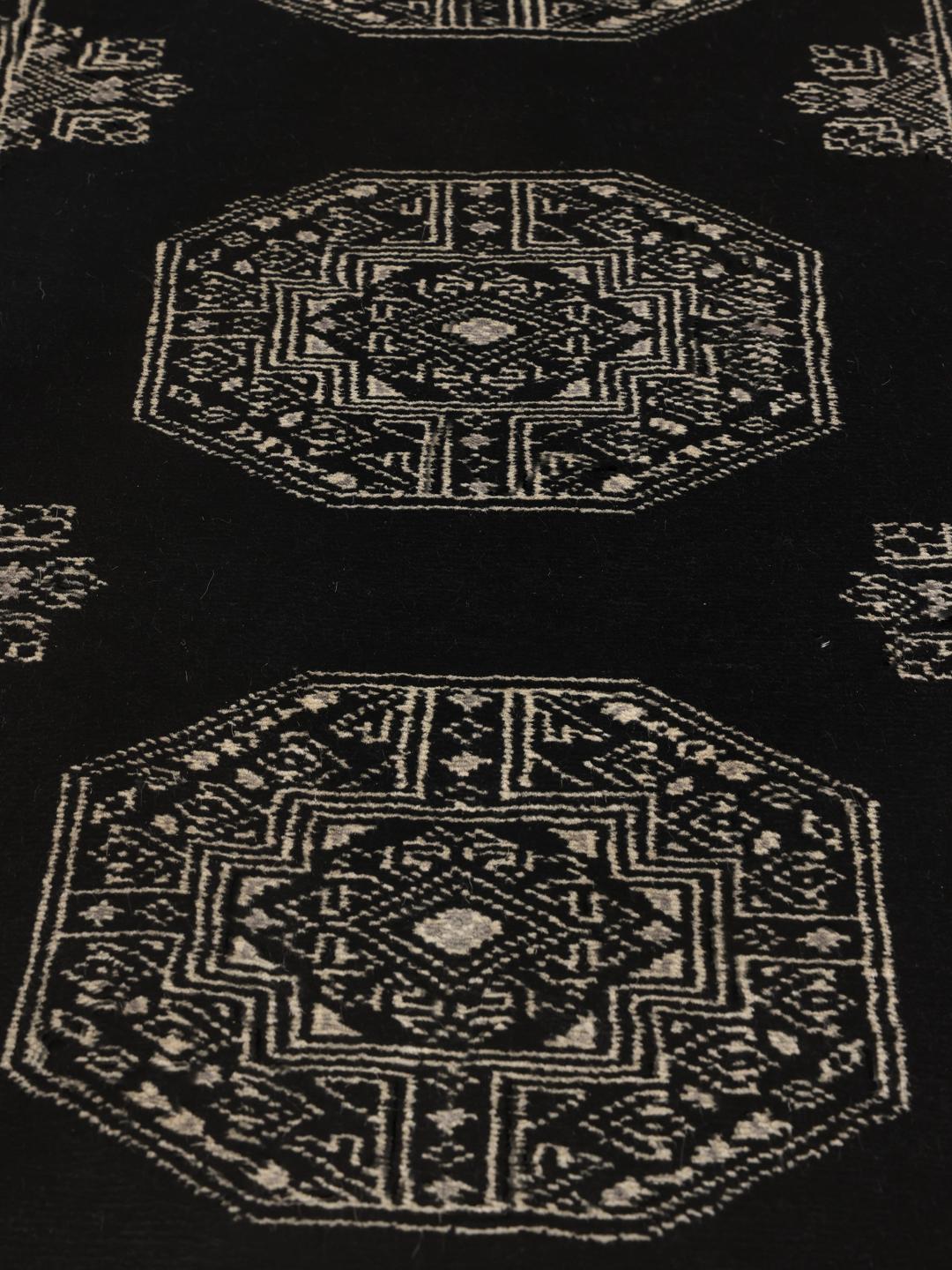
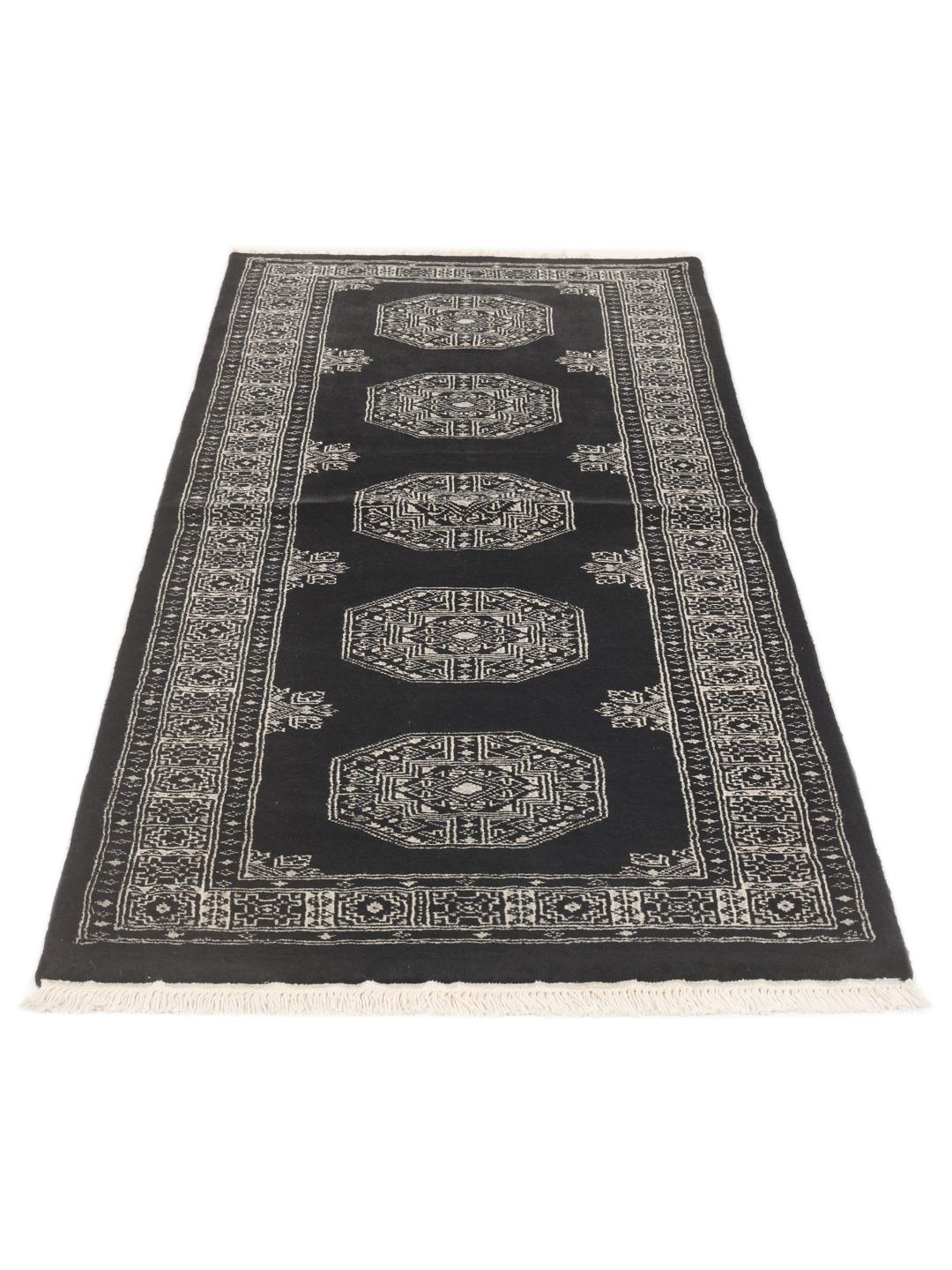
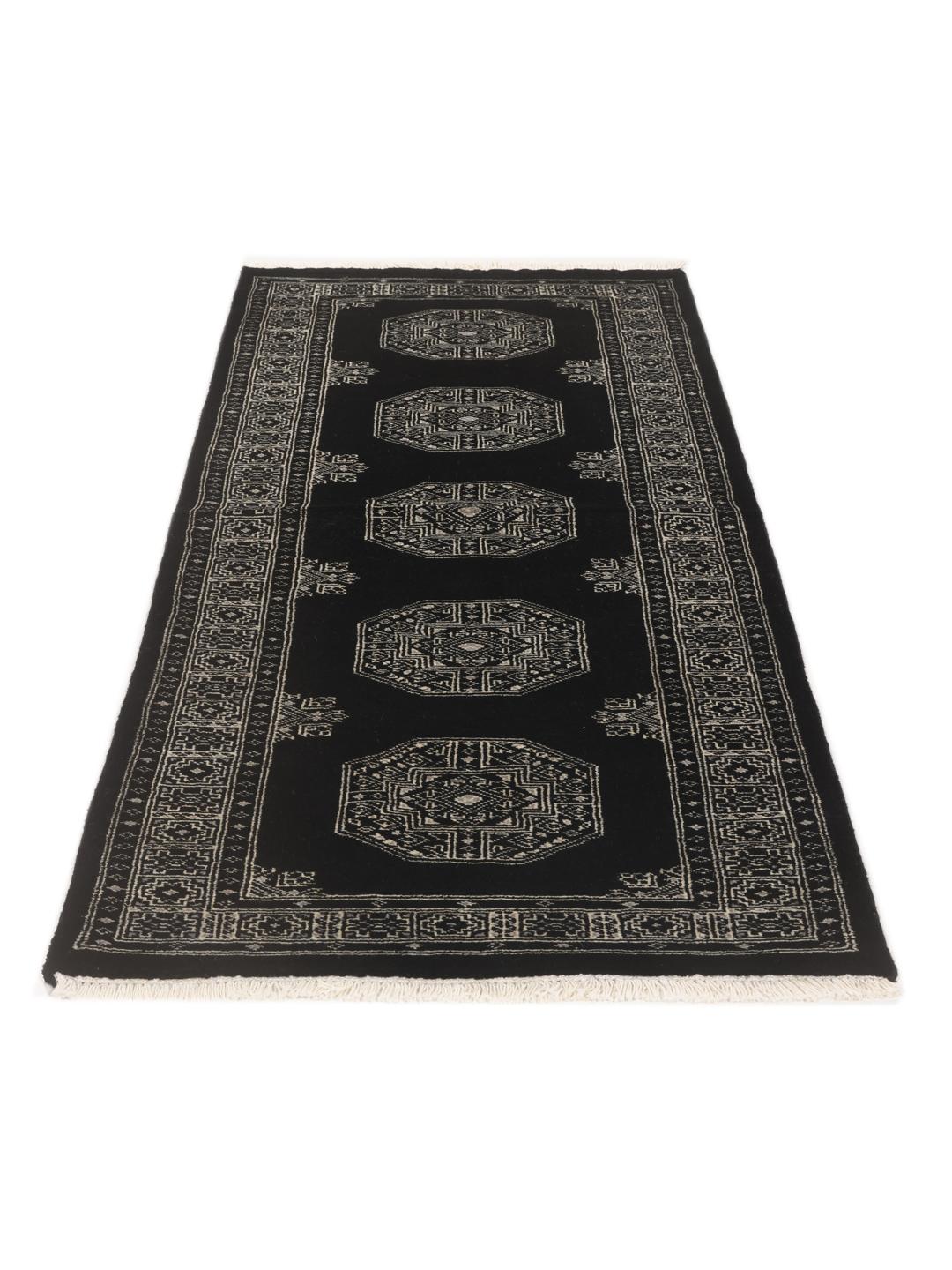
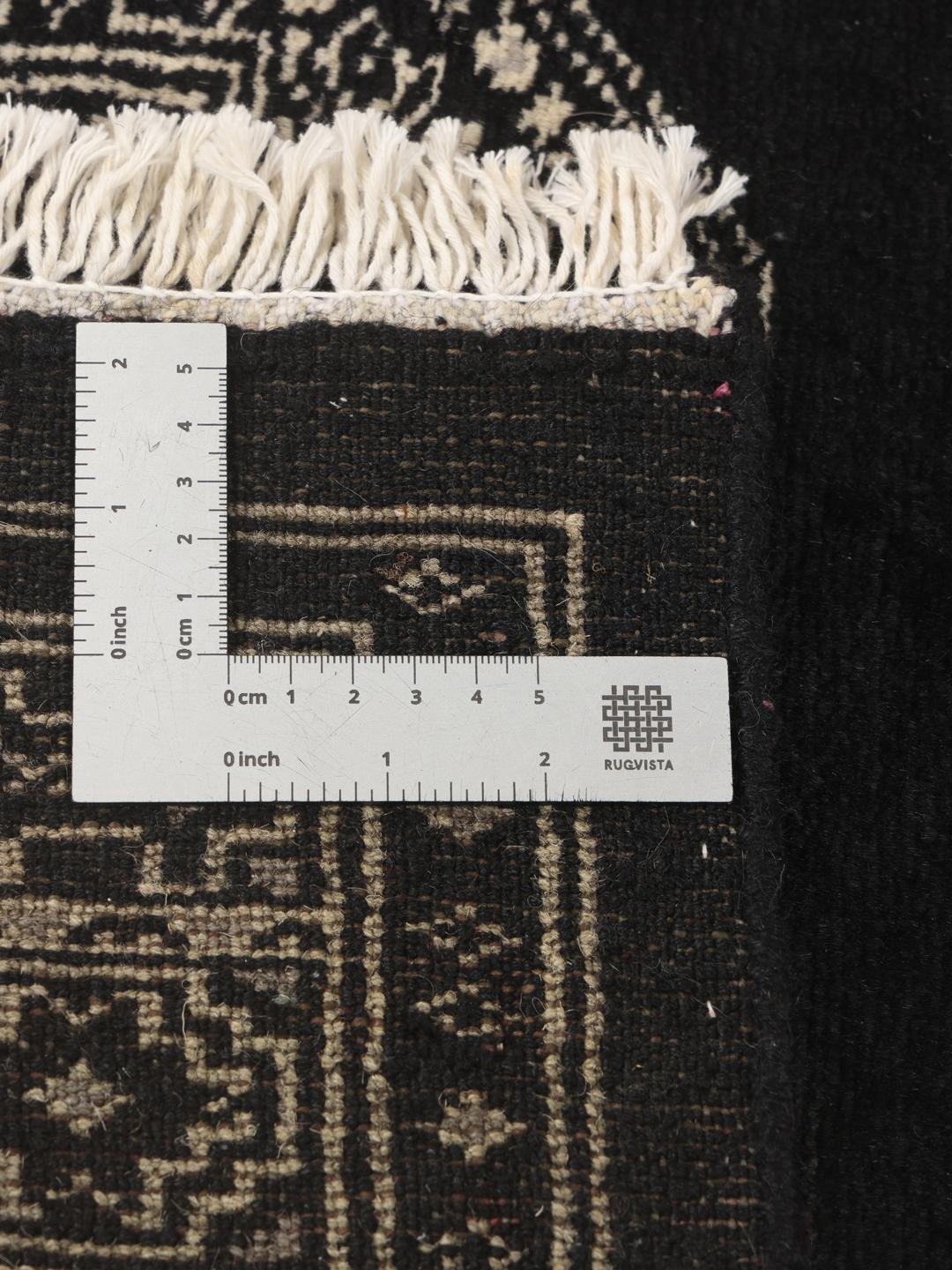
Visually, these rugs are defined by their repeating 'gul' motifs, often described as elephant-foot medallions, which are typically arranged in clean, symmetric rows. The borders are equally important, often featuring complex geometric patterns that frame the field. The use of a black field in this particular runner is a striking departure from more traditional red hues, showcasing the artistic freedom and modern sensibility often found in contemporary Pakistani weaving.
Collectors value these rugs for their combination of heritage, skill, and material quality. Owning a piece from this tradition is an investment in cultural history, representing countless hours of human effort and a design language that has been refined over centuries. It is more than just a floor covering; it is a testament to the enduring appeal of hand-knotted artistry.