Patchwork textiles have long been a celebrated tradition in the Middle East, emerging from the practical necessity of repurposing fragments from older, worn-out rugs and woven goods. By carefully selecting the best surviving sections of these textiles, artisans create new, functional pieces that preserve the rich artistic heritage of the region.
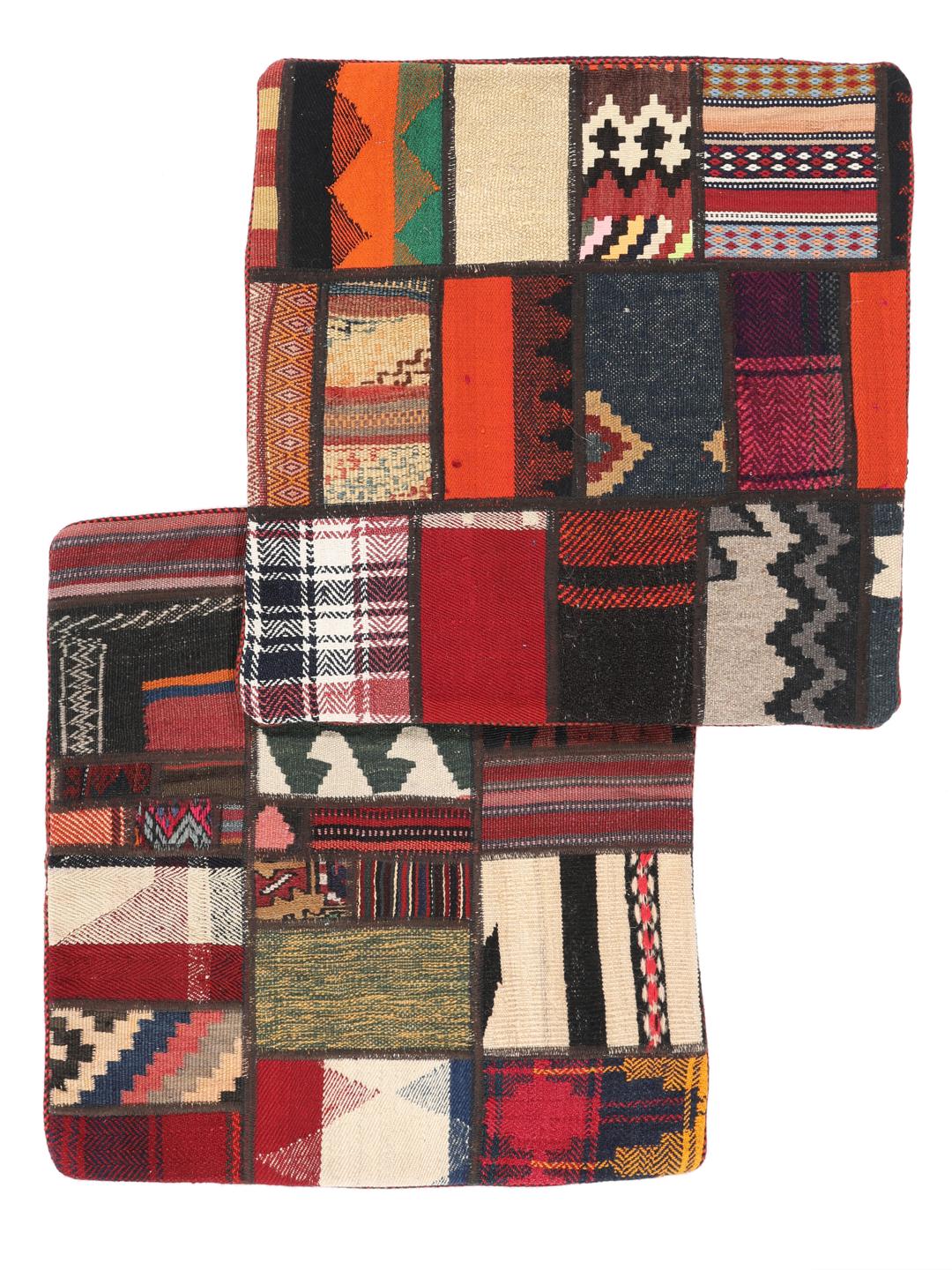
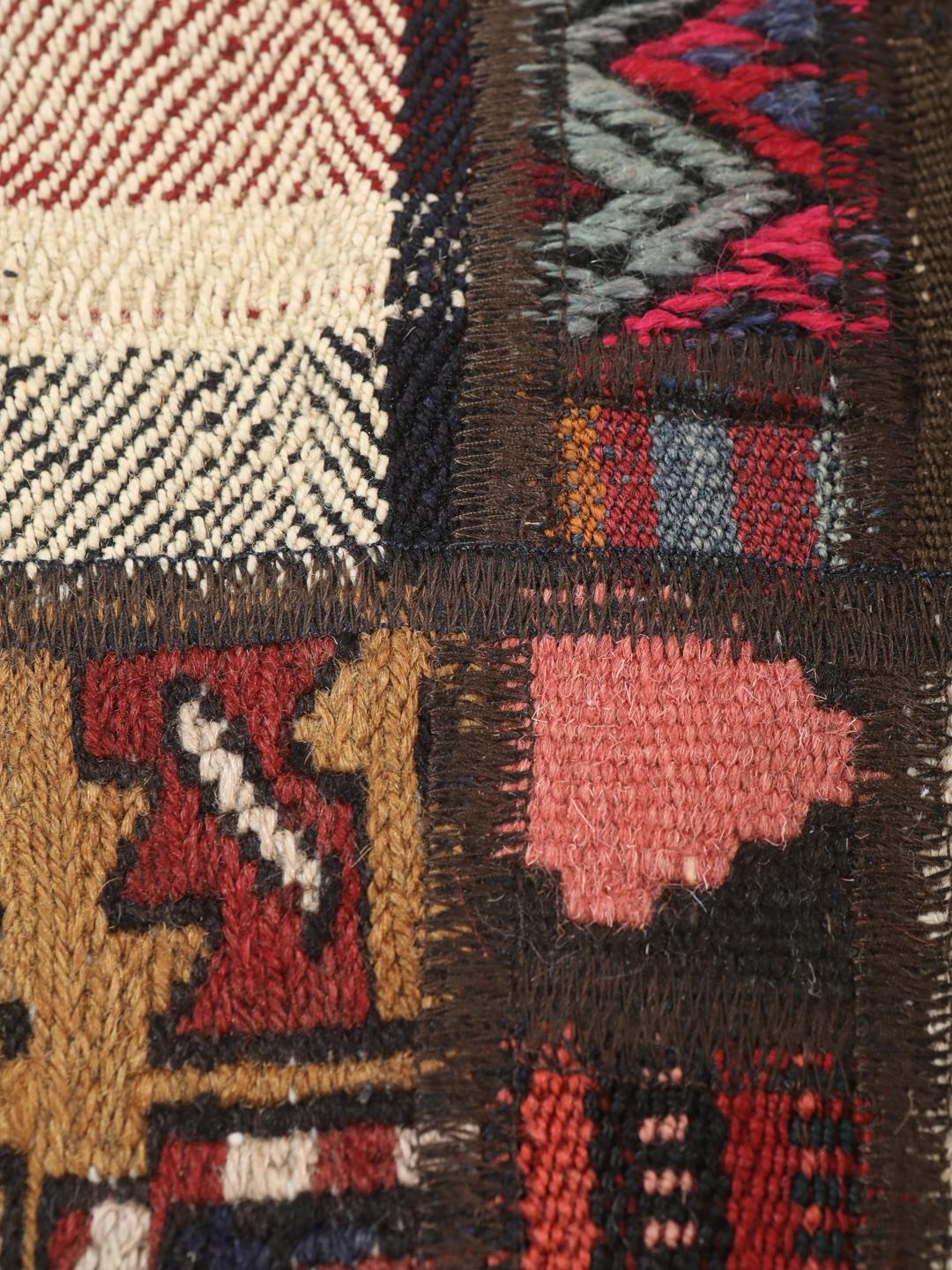
This method of construction is an exercise in both design and conservation. Each fragment carries its own history, often featuring traditional motifs that have been passed down through generations. When combined, these diverse patterns create a harmonious, mosaic-like effect that showcases the breadth of regional weaving styles.
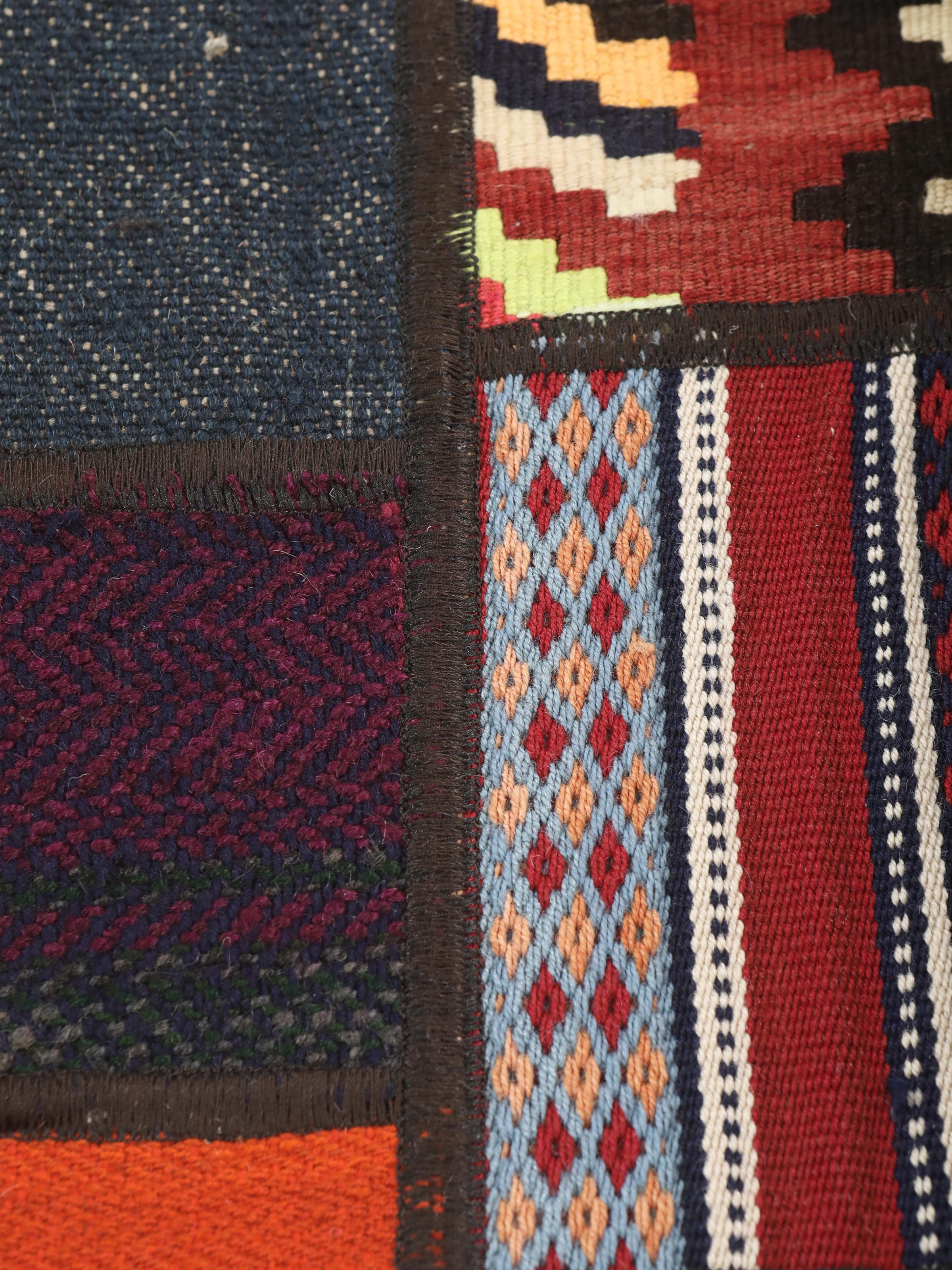
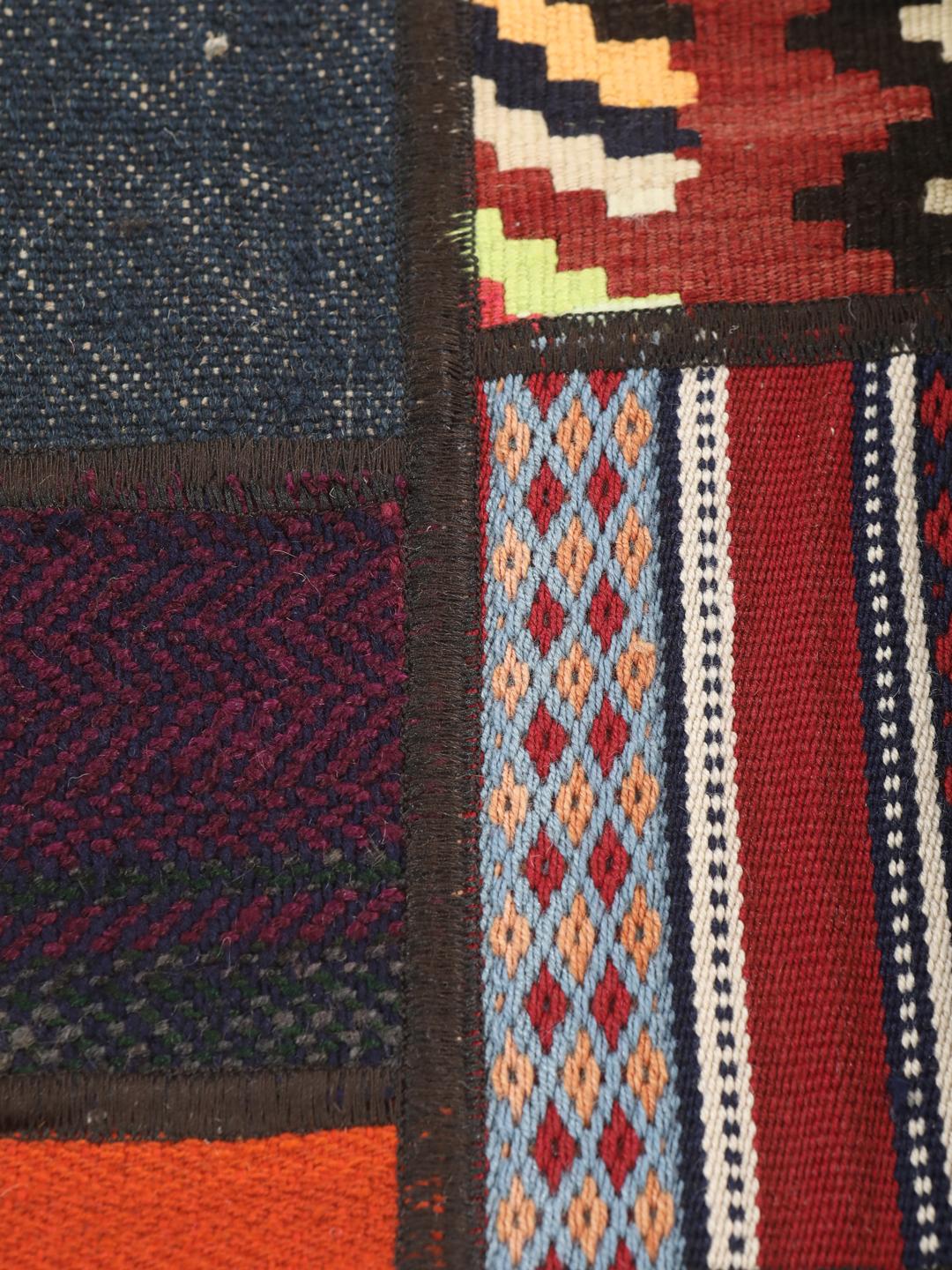
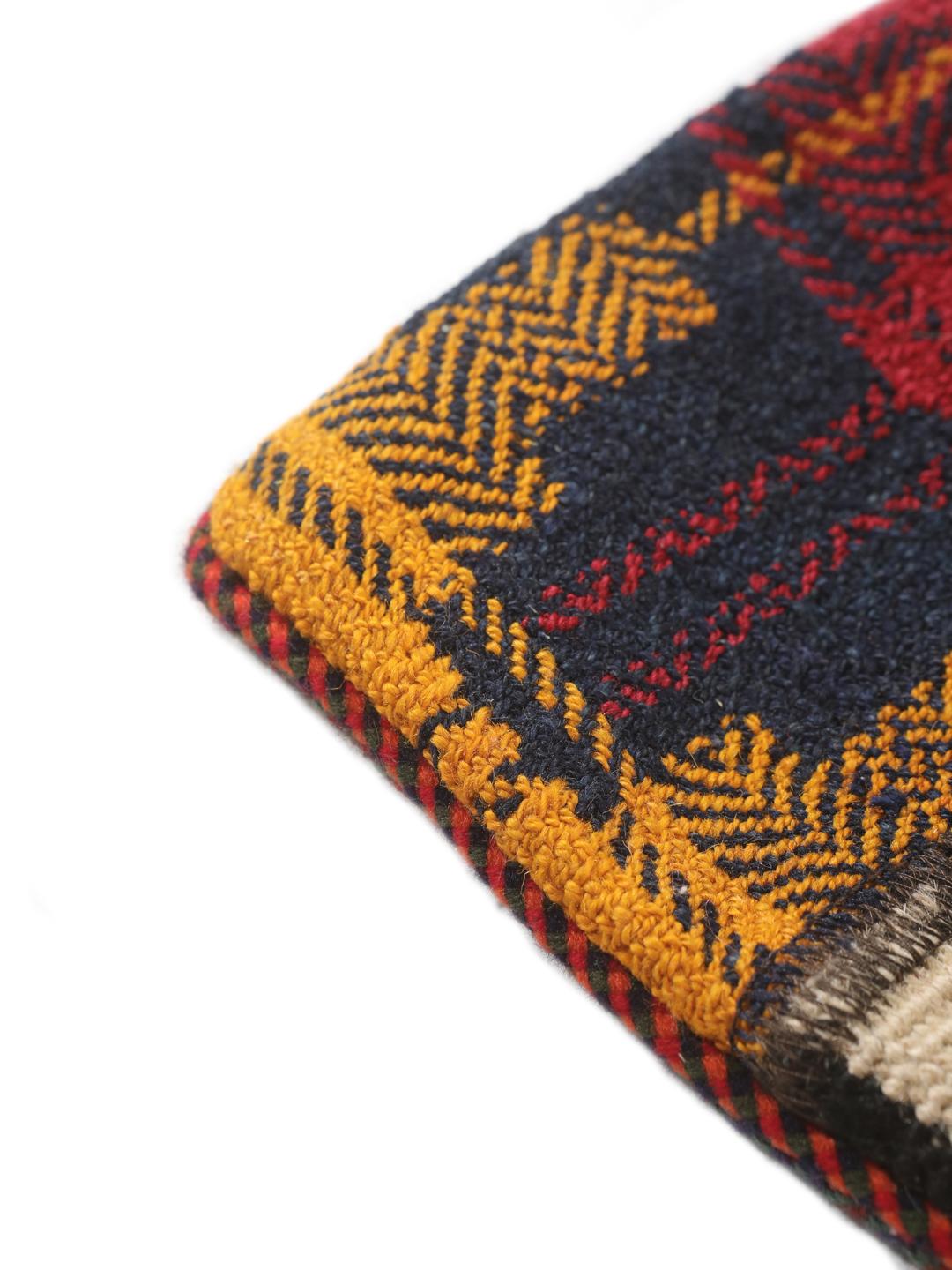
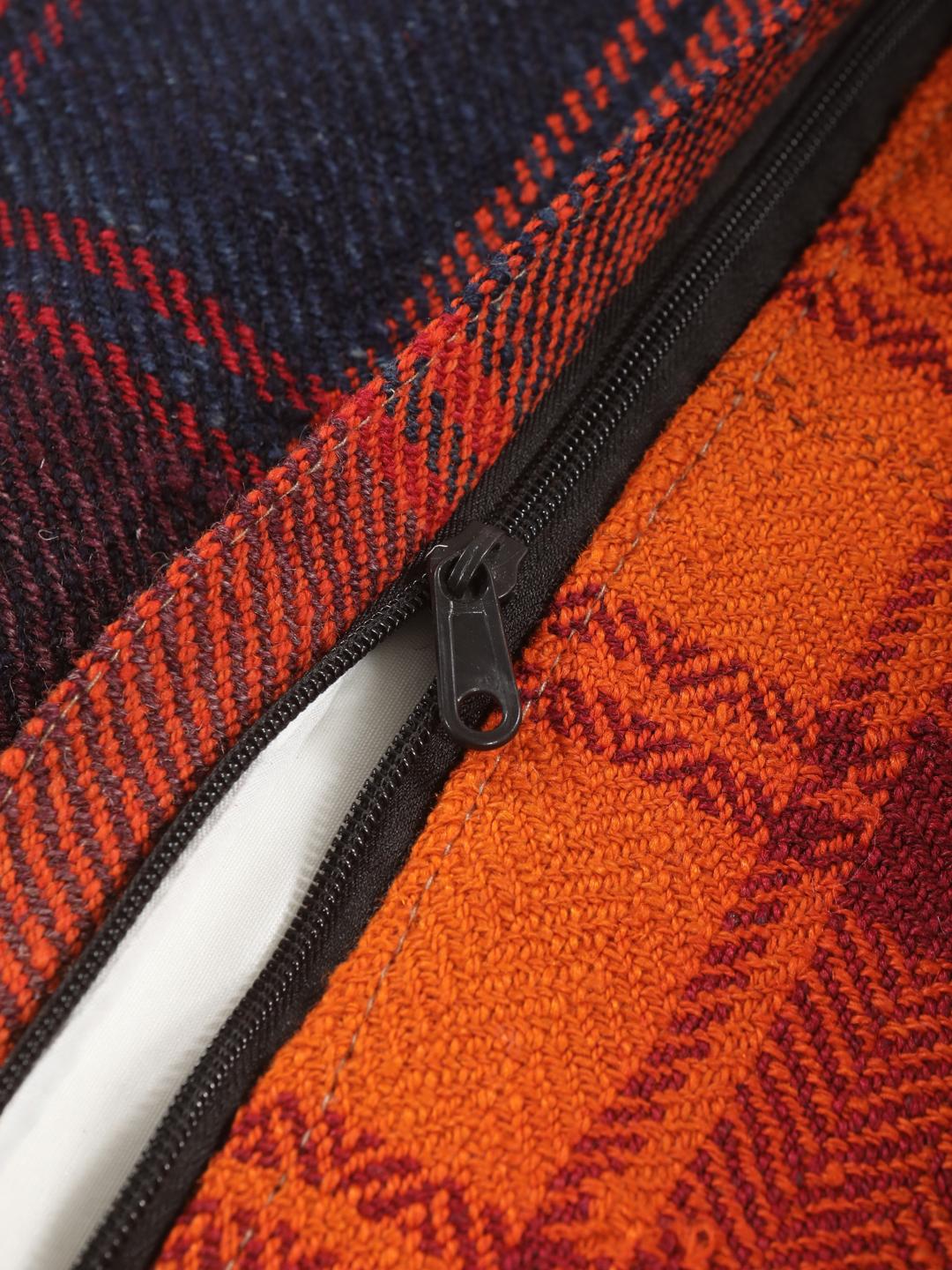
The visual language of this cushion cover is defined by a bold interplay of geometric shapes, stripes, and ornamental borders. The vibrant colour palette is achieved through the use of traditional natural dyes, which have been a hallmark of Middle Eastern textile production for centuries, lending the piece a depth and authenticity that modern synthetic dyes struggle to replicate.
Owning a piece like this is an act of supporting a long-standing craft tradition. It represents the skill of the artisan who visualises how disparate elements can form a cohesive whole. For collectors and design enthusiasts alike, these items serve as a bridge to the past, offering a meaningful way to incorporate cultural history into a modern home.