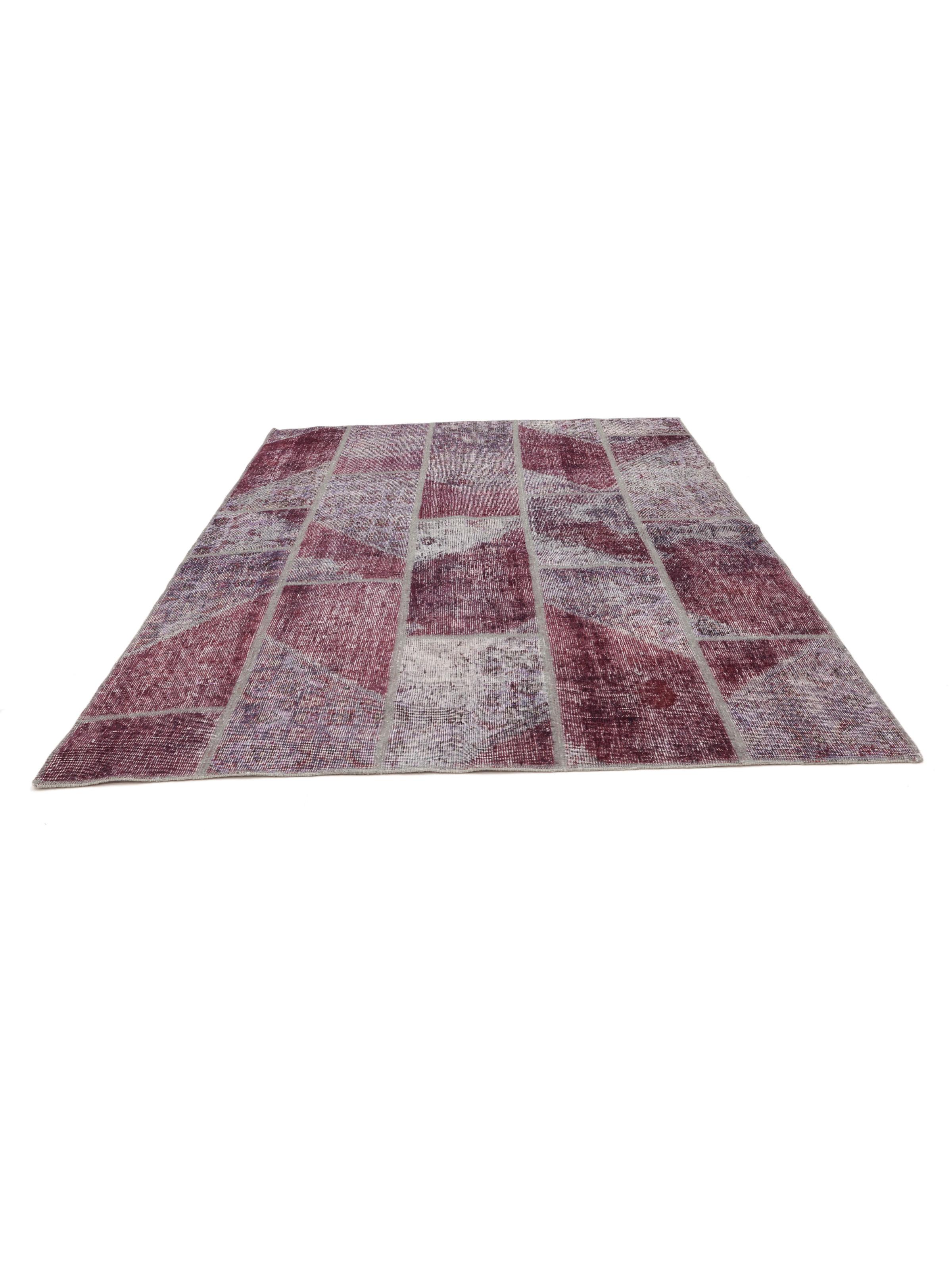
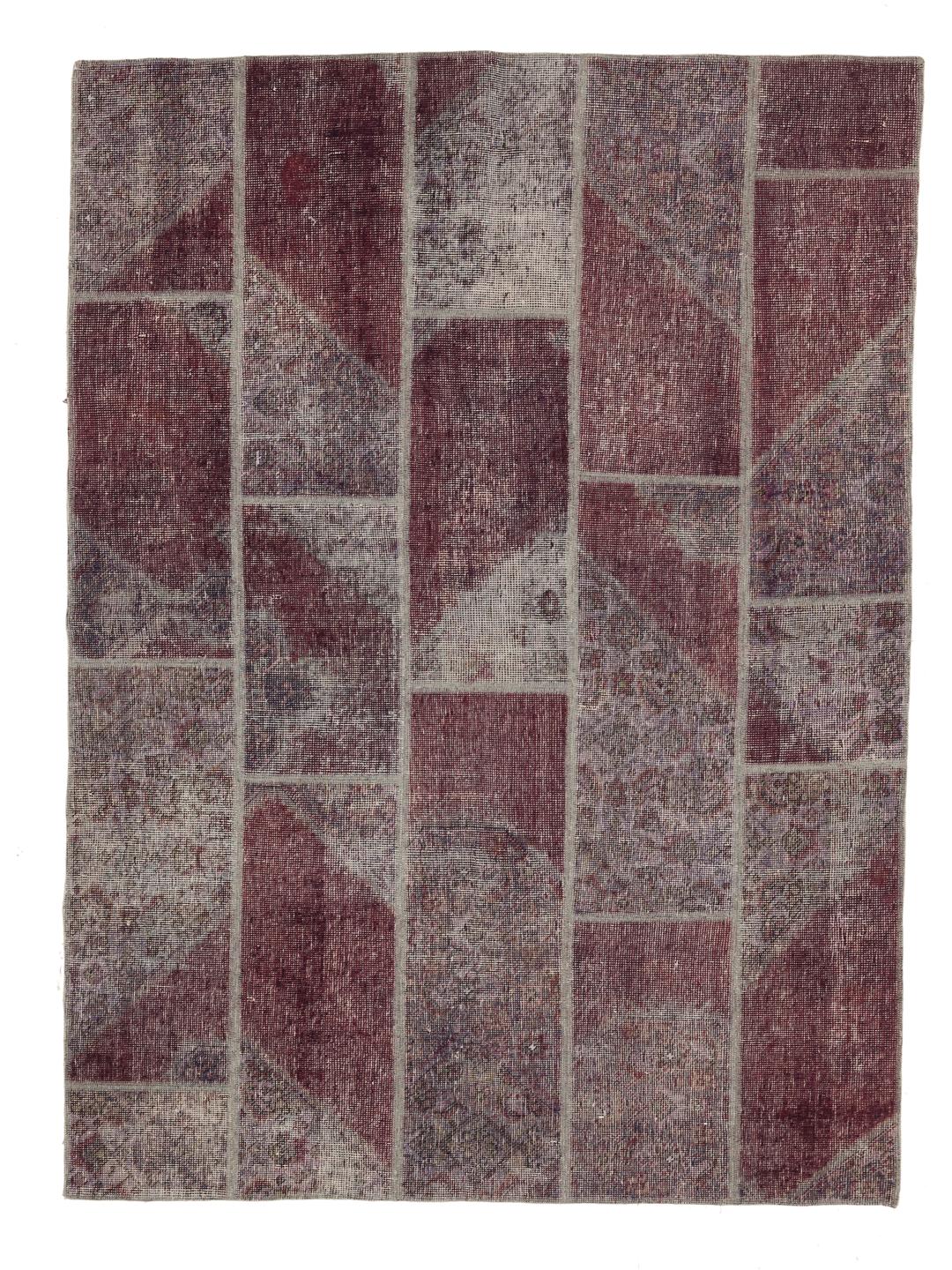
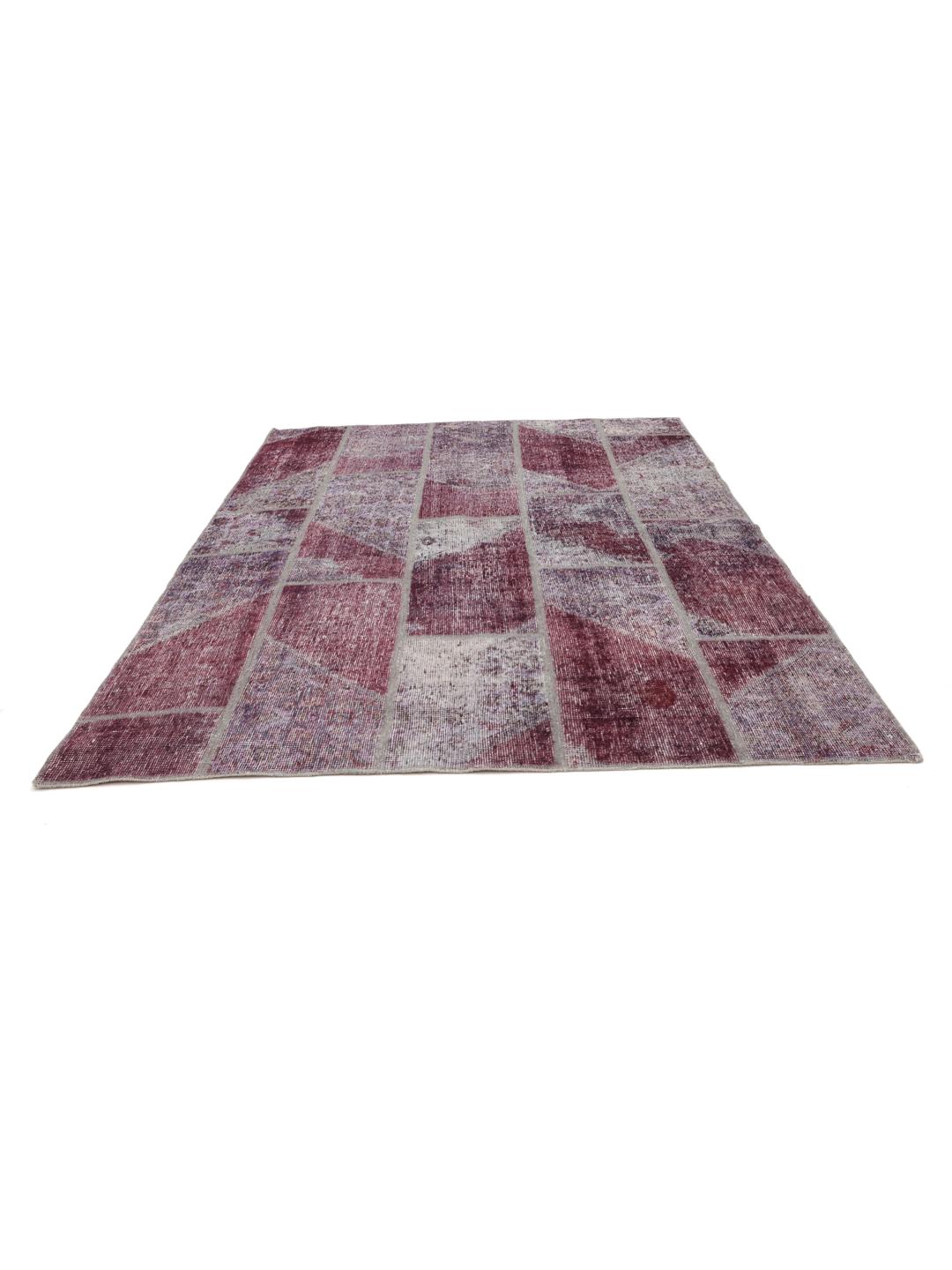
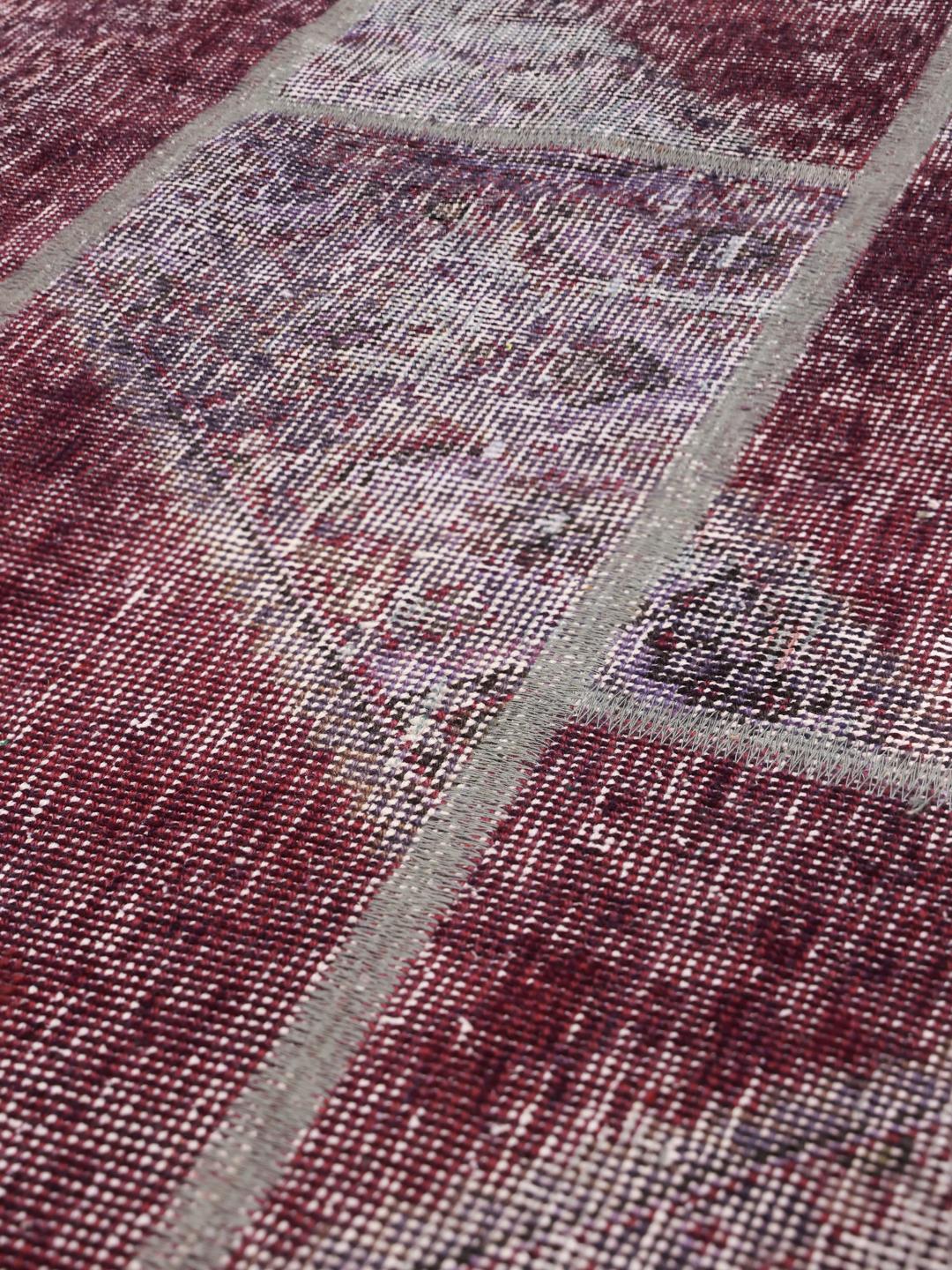
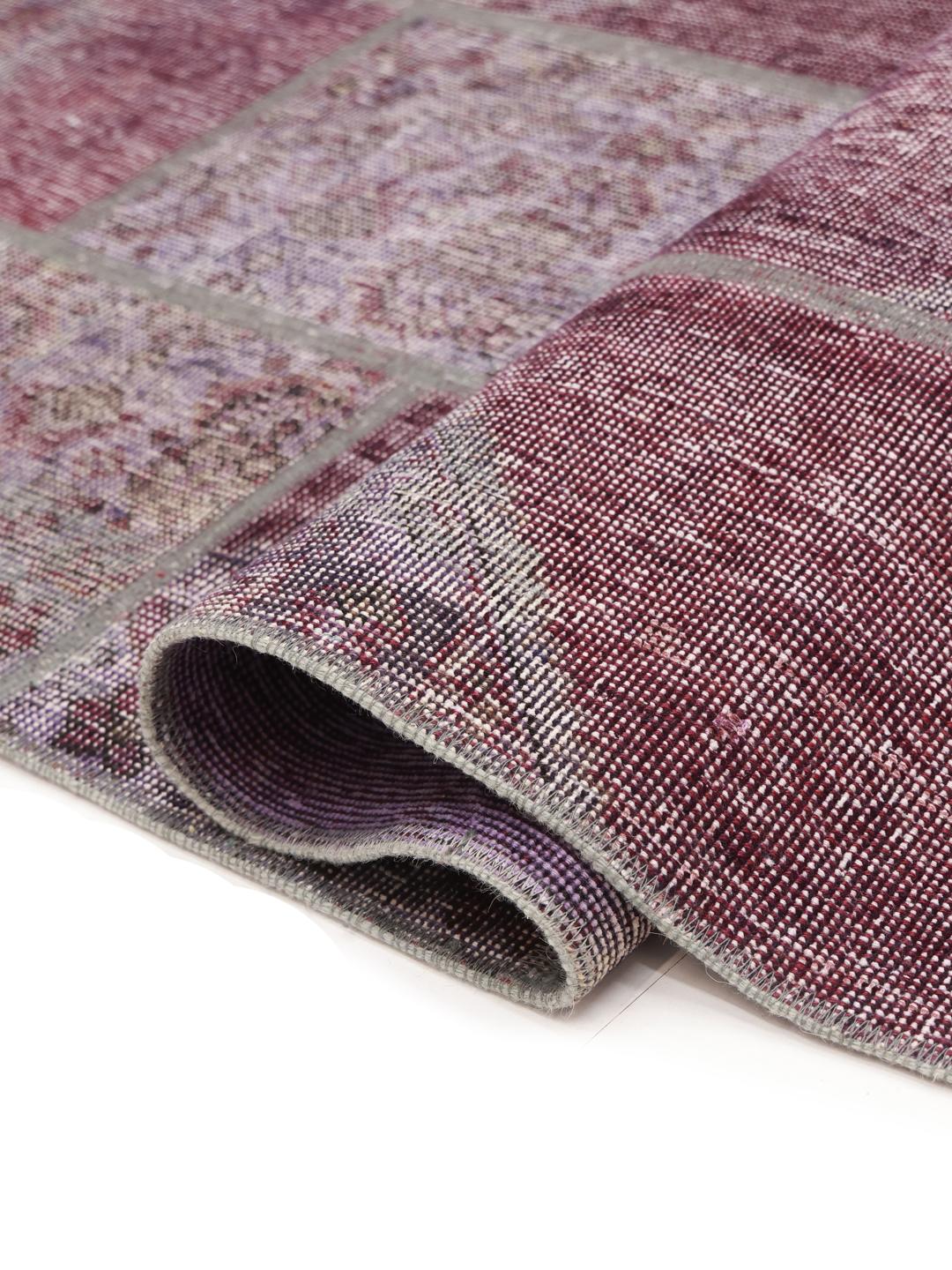
Patchwork rugs originated as a creative movement in Anatolia, Turkey, where historic hand-knotted rugs were gathered, restored, and reassembled. This technique allows mid-century and vintage carpets to find new life, blending traditional craftsmanship with modern design sensibility.
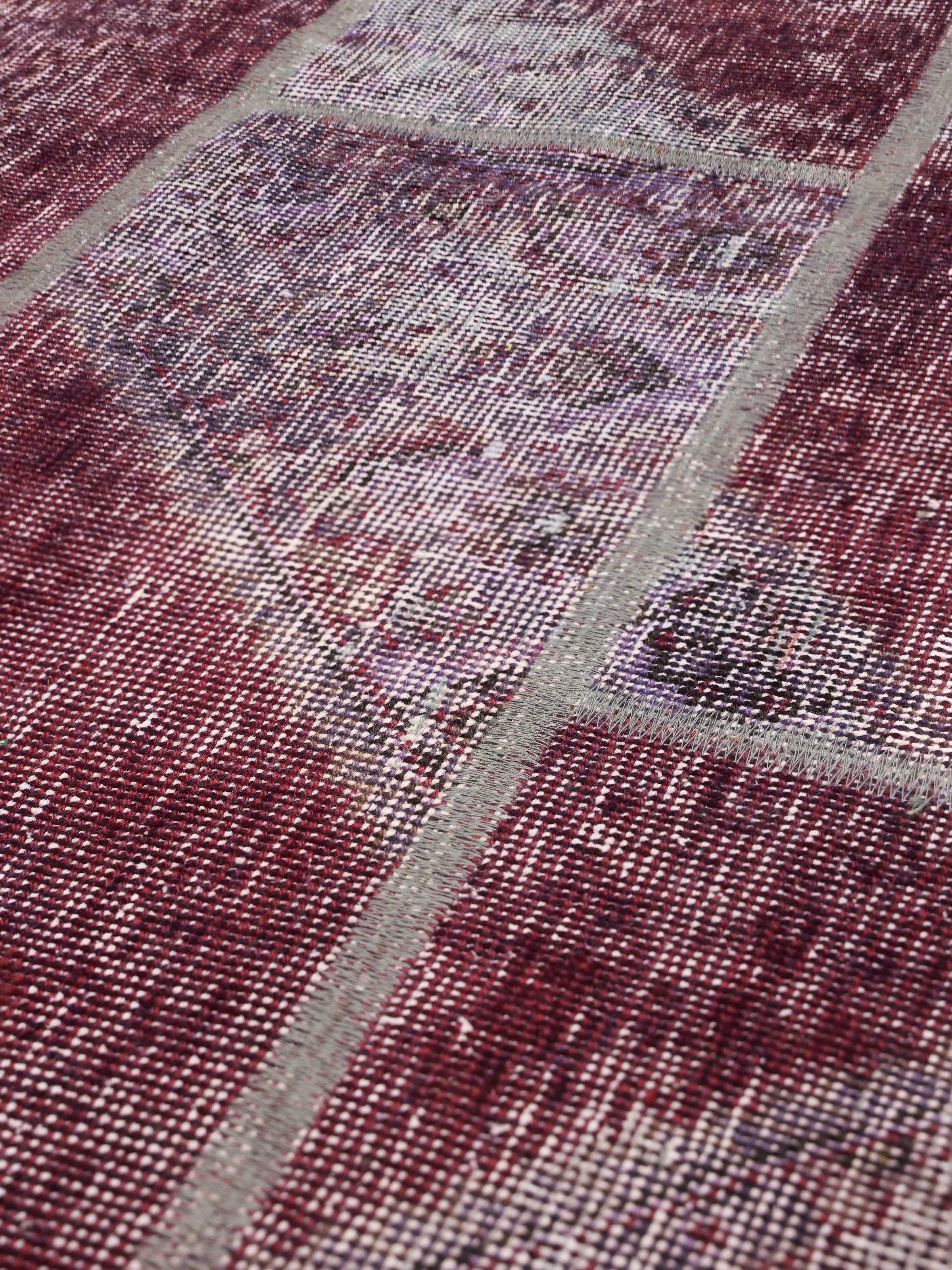
The term hand-knotted refers to the laborious process where individual knots of wool are tied around warp threads by hand. In a patchwork rug, these historic hand-knotted panels are selected for their color stability and pile integrity, then backed with cotton for stability and stitched together using heavy-duty thread.
The visual language of Turkish patchwork rugs combines classical floral medallions, geometric borders, and tribal motifs within structured rectangular grids. Traditional madder reds and muted grey tones reflect natural dye traditions from various Anatolian weaving centers, creating a harmonious tapestry of historic patterns.
Owning a vintage Turkish Patchwork rug means preserving a physical piece of textile heritage. Each section carries the handwork of mid-20th-century artisans, making these rugs highly valued by collectors and homeowners who appreciate sustainability, history, and unique character.