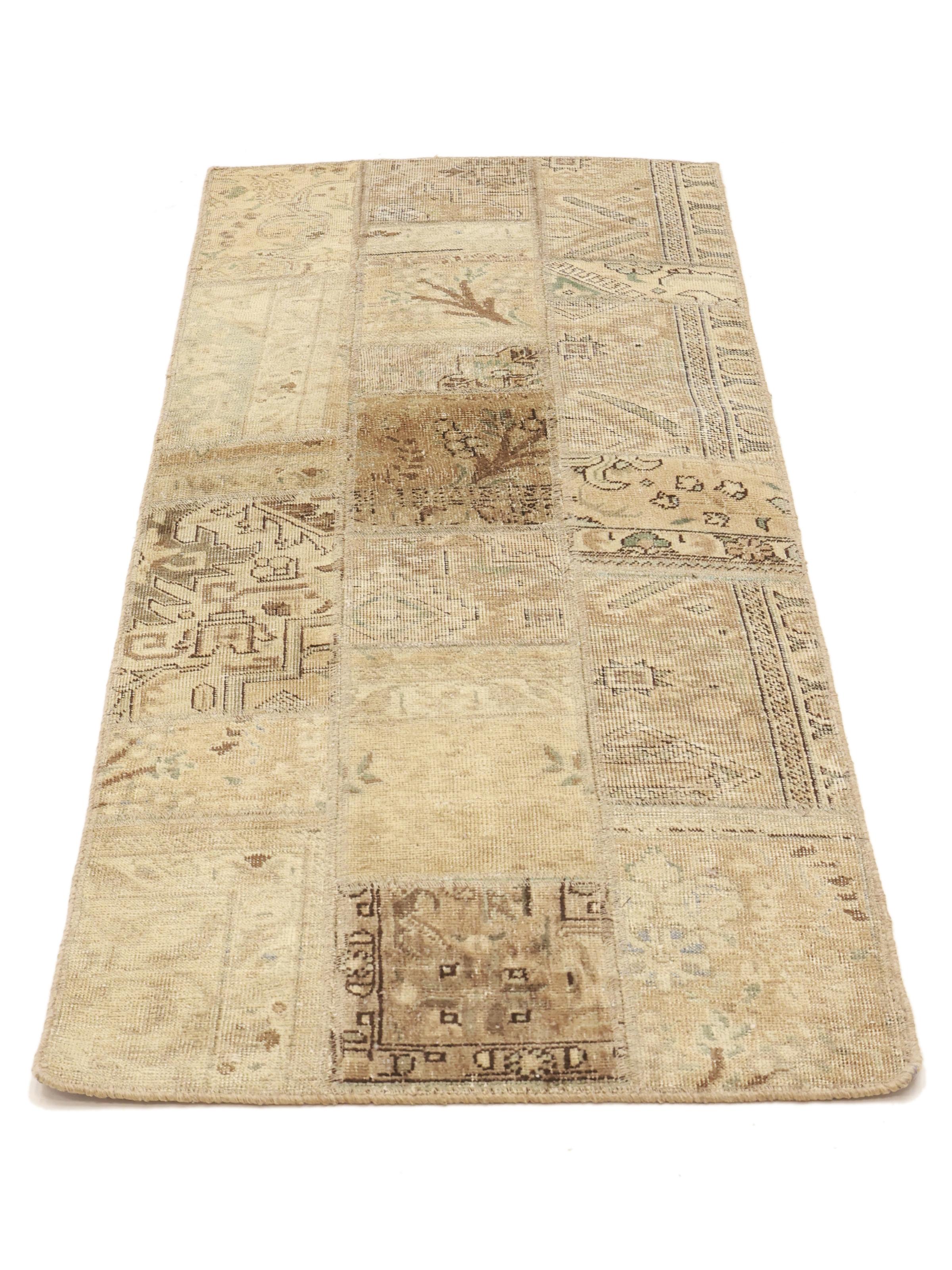
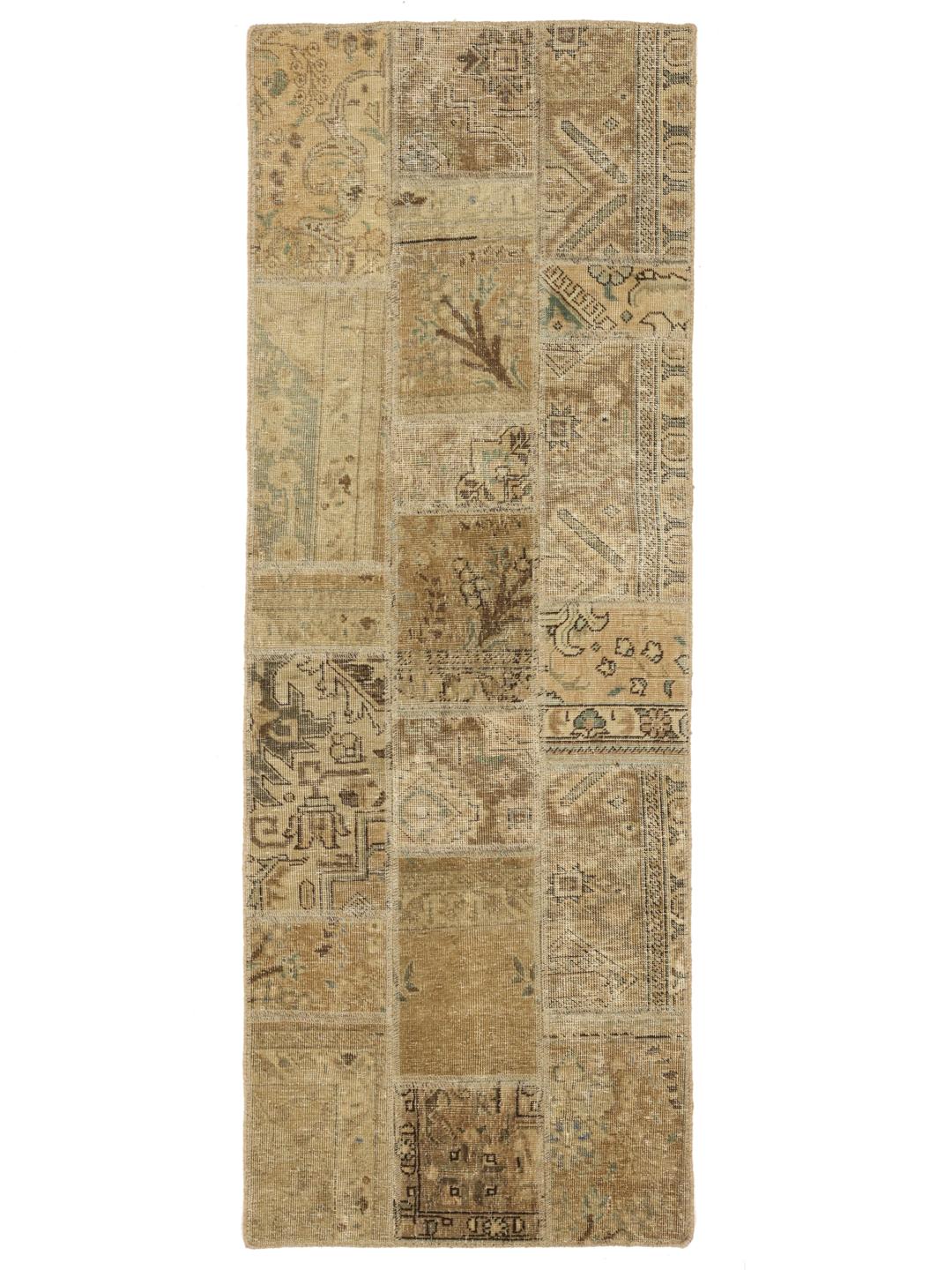
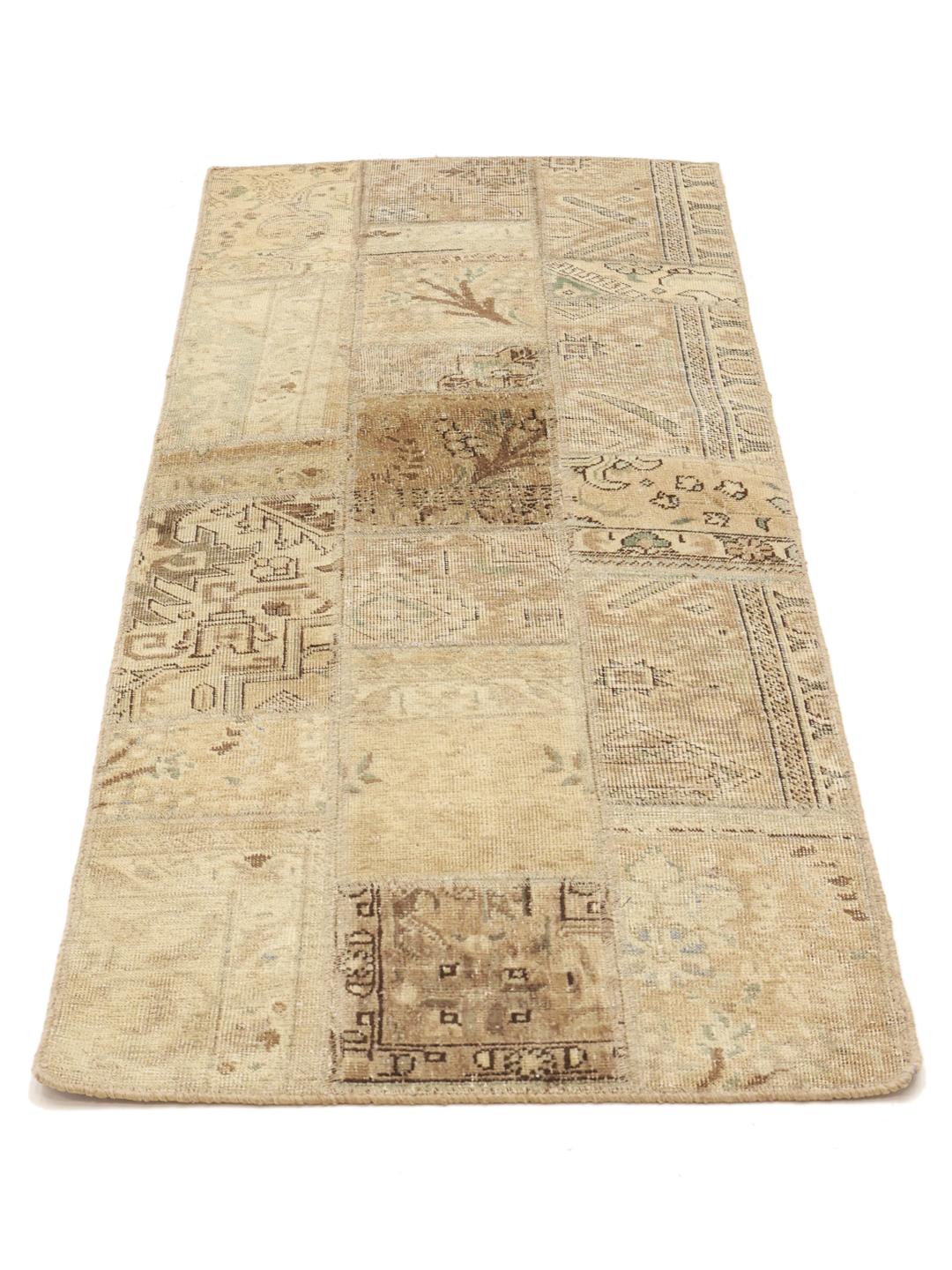
Patchwork rugs originated as a creative movement in Anatolia, Turkey, where historic hand-knotted rugs were gathered from homes and villages across the region. Rather than discarding worn or damaged vintage carpets, artisans realized that intact sections could be salvaged, reconditioned, and reimagined as contemporary floor coverings.
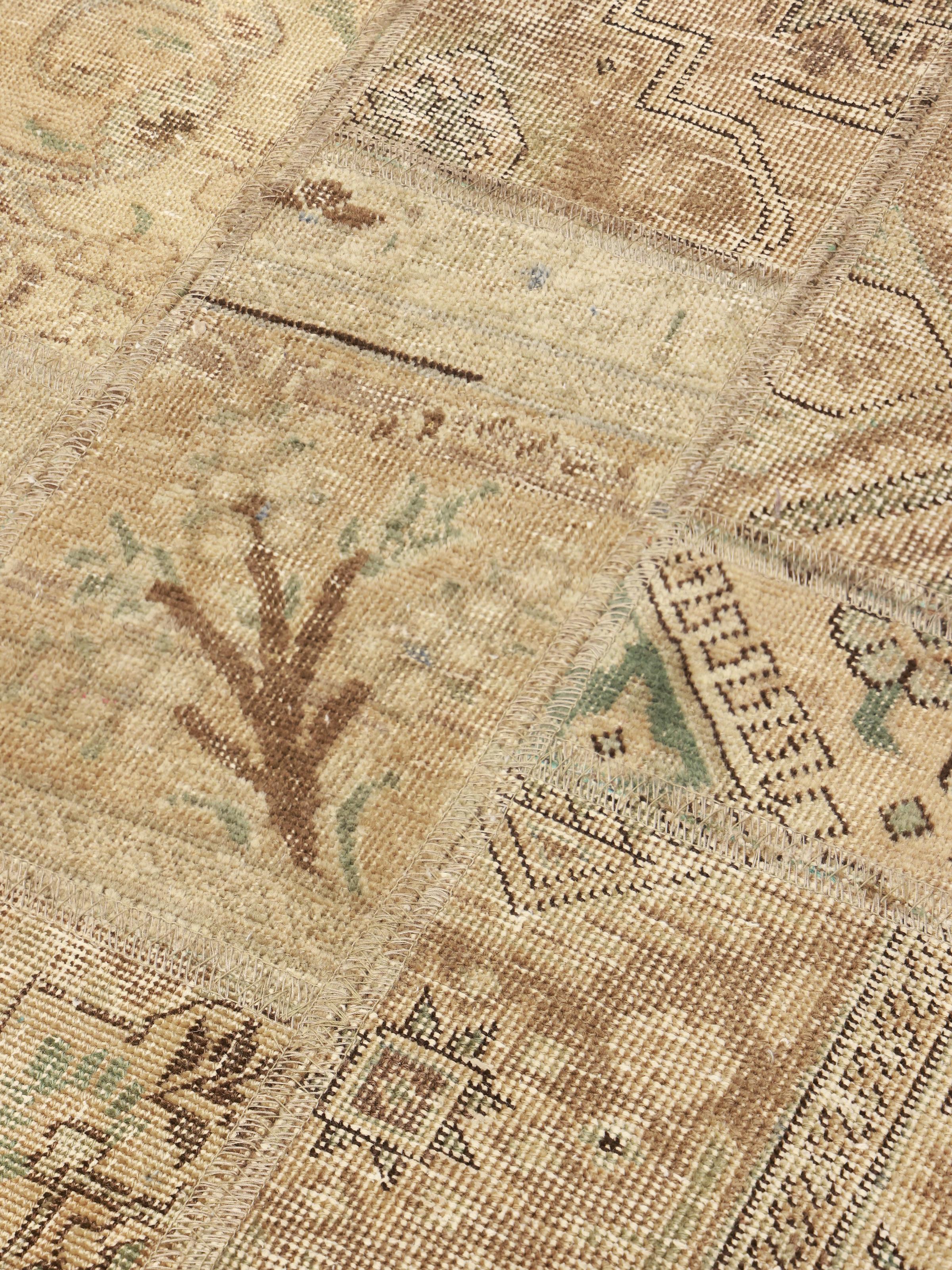
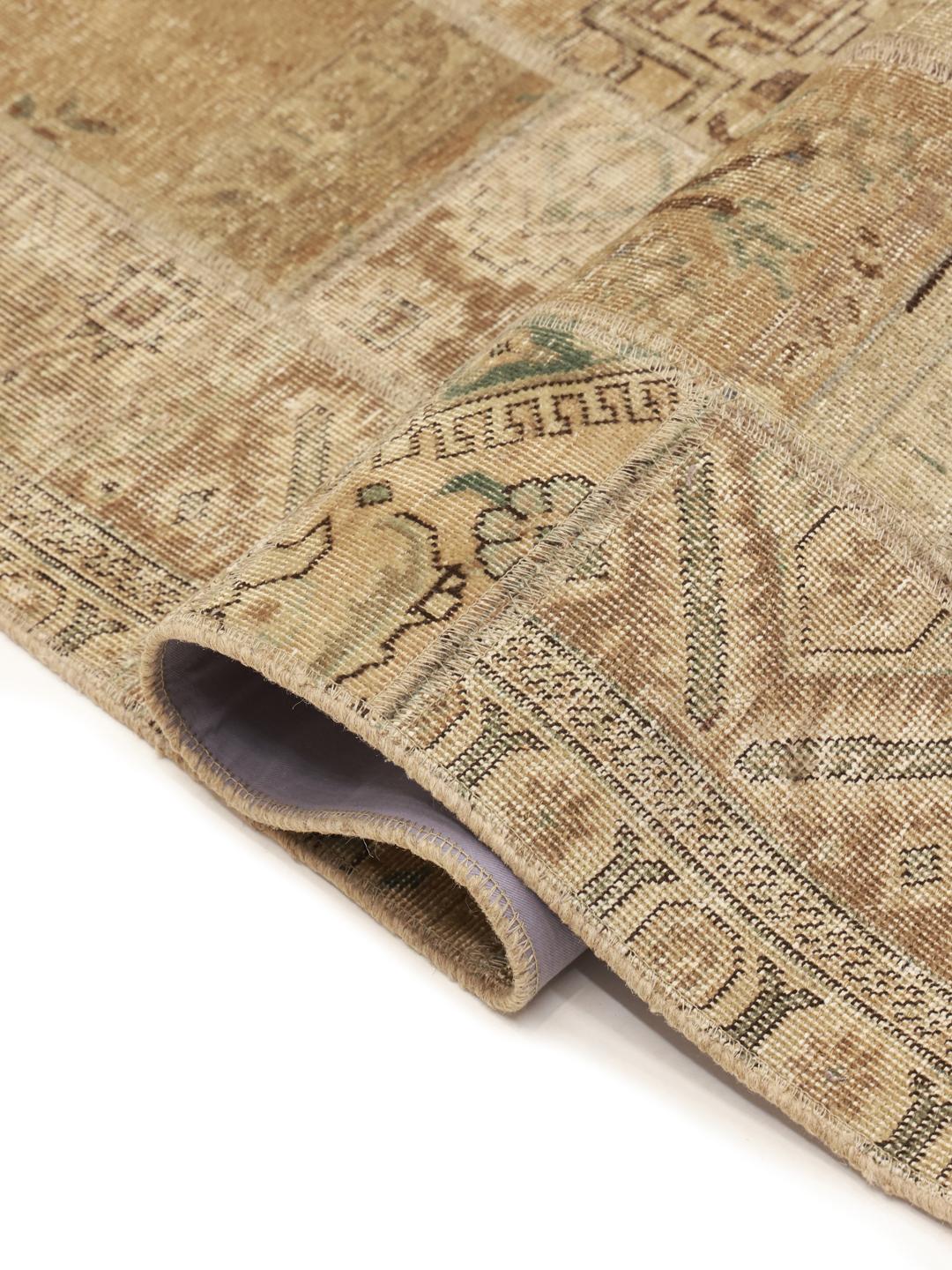
The technique involves neutralising or over-dyeing older wool textiles before cutting them into precise geometric pieces. Combining fragments from different weaving regions creates a fascinating visual dialogue between distinct regional styles, bringing centuries of Anatolian knotting heritage into a fresh design format.
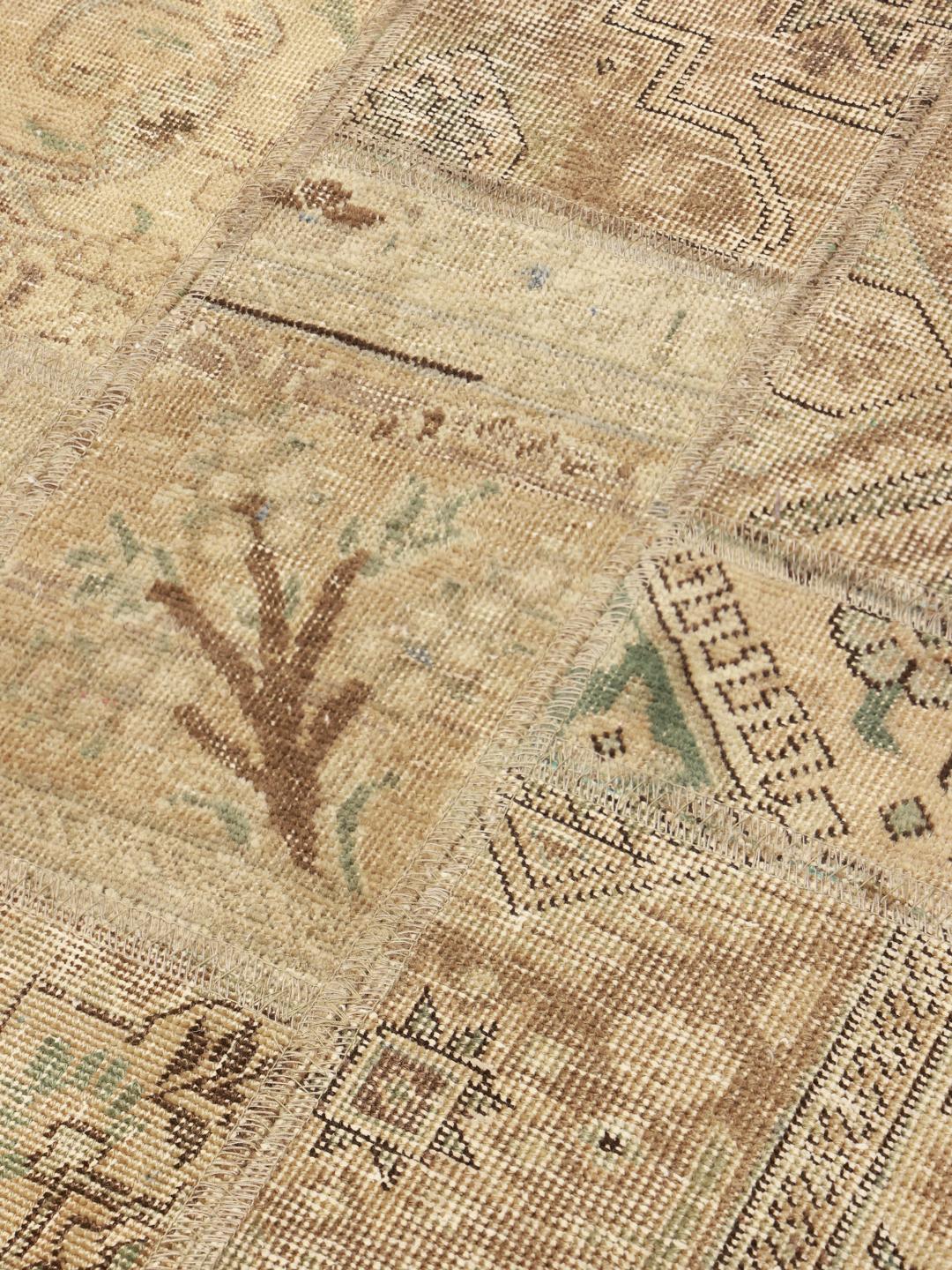
Visual motifs across the individual patches often feature geometric elements, stylized floral tendrils, and traditional tribal symbols. Because each segment comes from a different original carpet, the overall pattern relies on balanced asymmetry, allowing subtle tonal shifts in beige and brown to unify the diverse textures.
Valued by collectors and interior enthusiasts alike, vintage Turkish Patchworks celebrate sustainability and heritage. Owning one offers a rare combination of authentic mid-century craftsmanship and modern textile design, preserving historic hand-weaving traditions for decades to come.