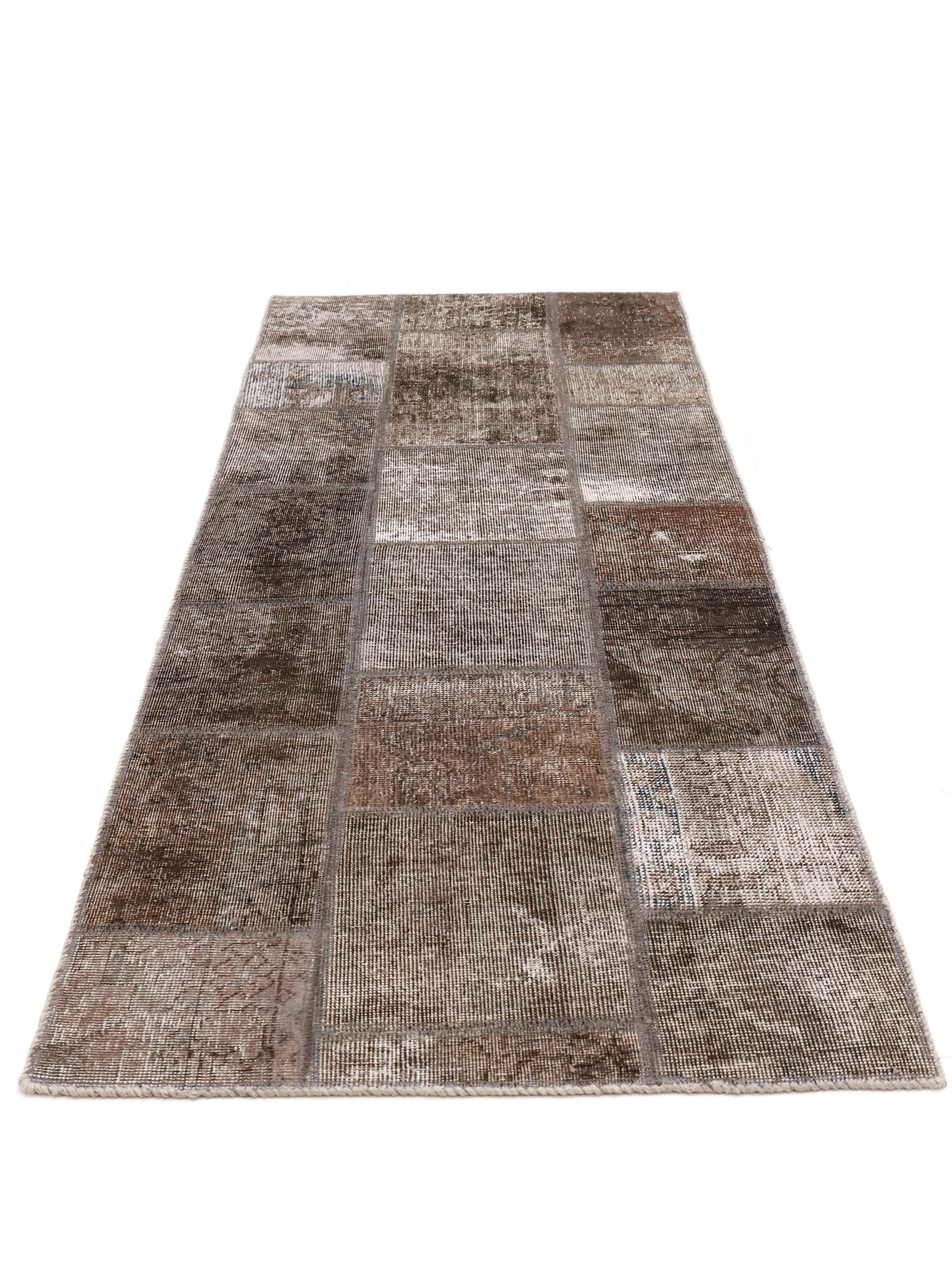
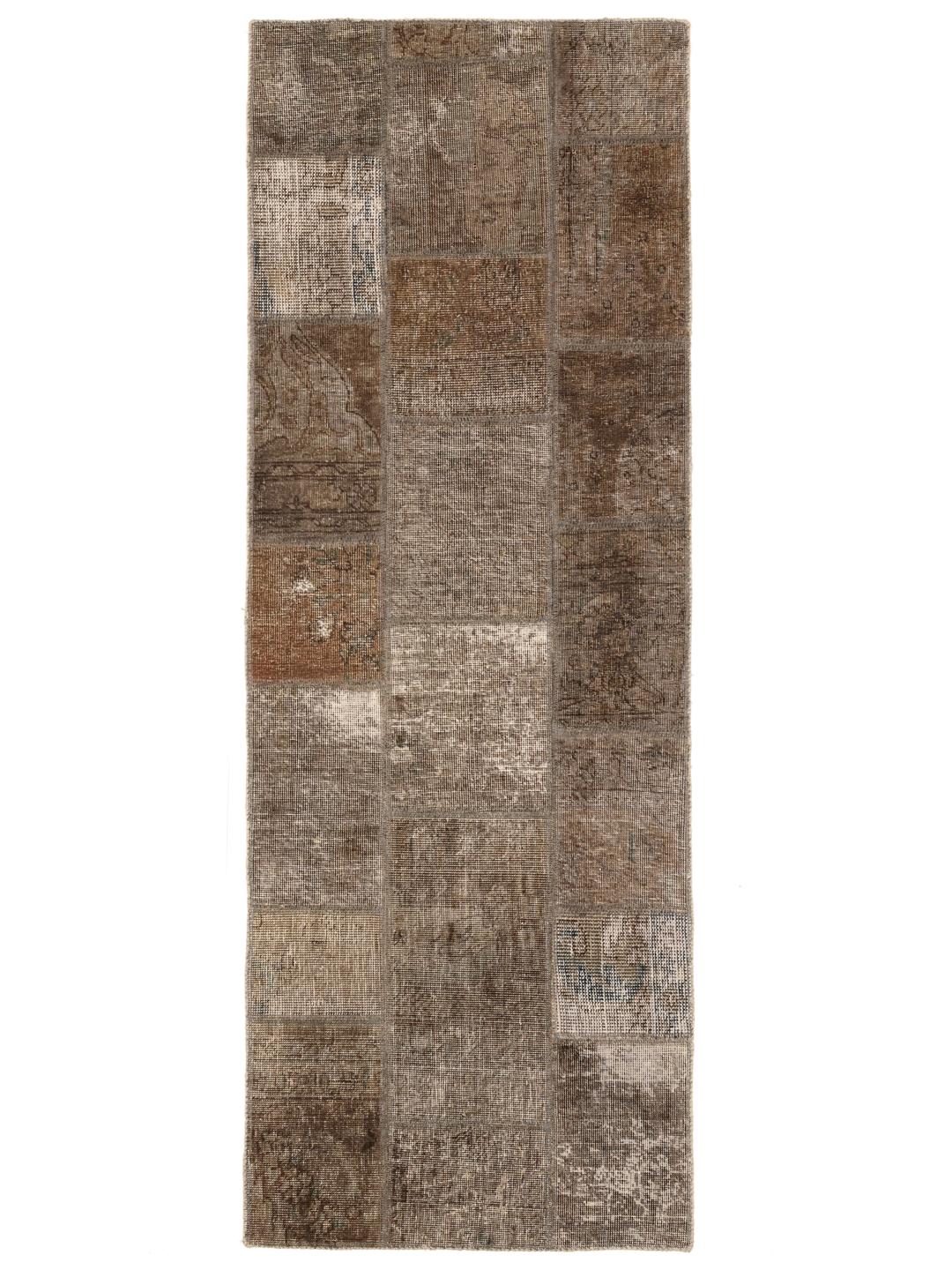
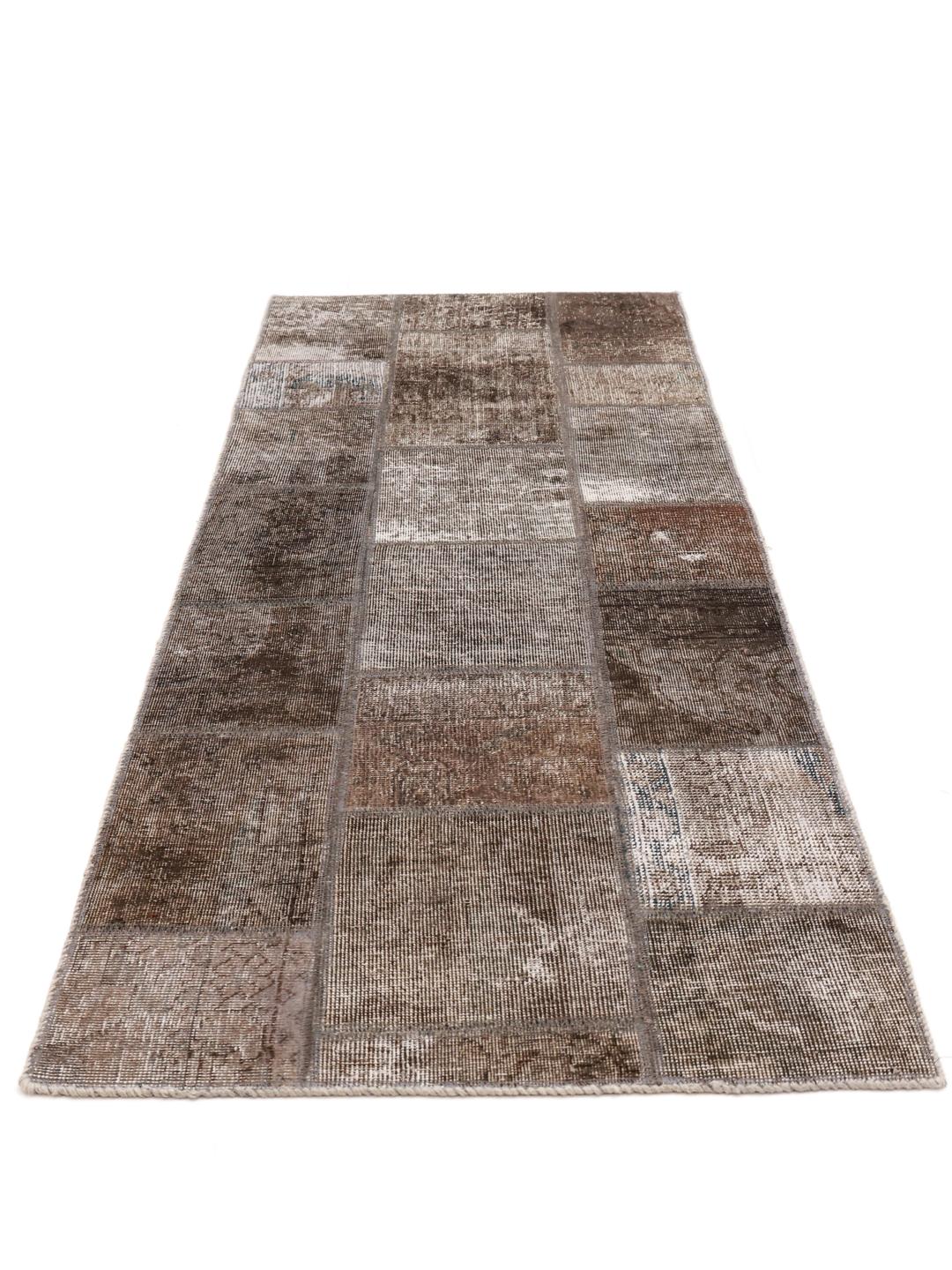
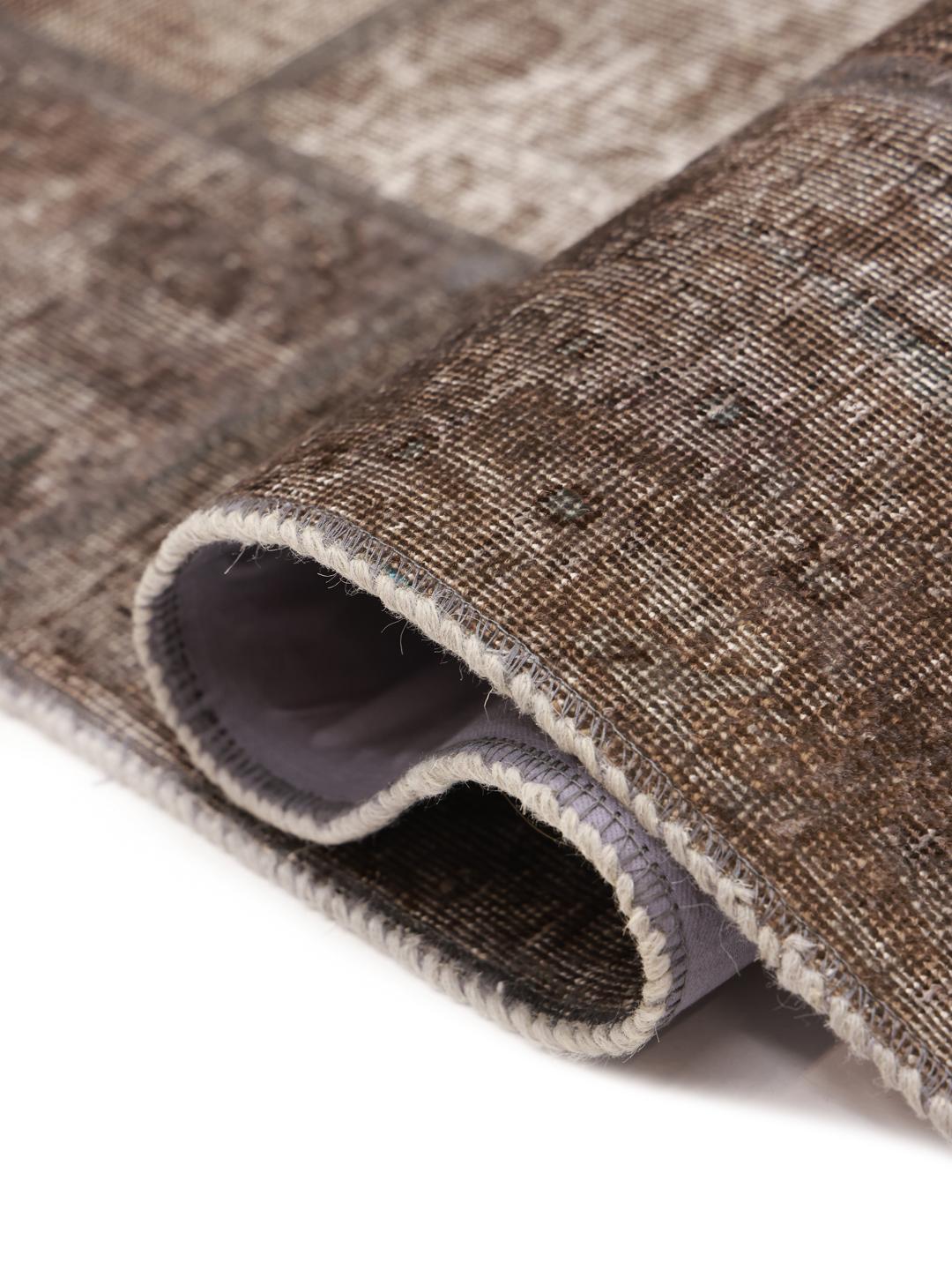
Patchwork rugs originated as a creative way to preserve historic, hand-knotted textiles from across Anatolia. Rather than discarding worn or damaged antique rugs, skilled craftspeople in Turkey began cutting the intact sections and sewing them into new, harmonious compositions. This tradition bridges past weaving heritage with modern design needs.
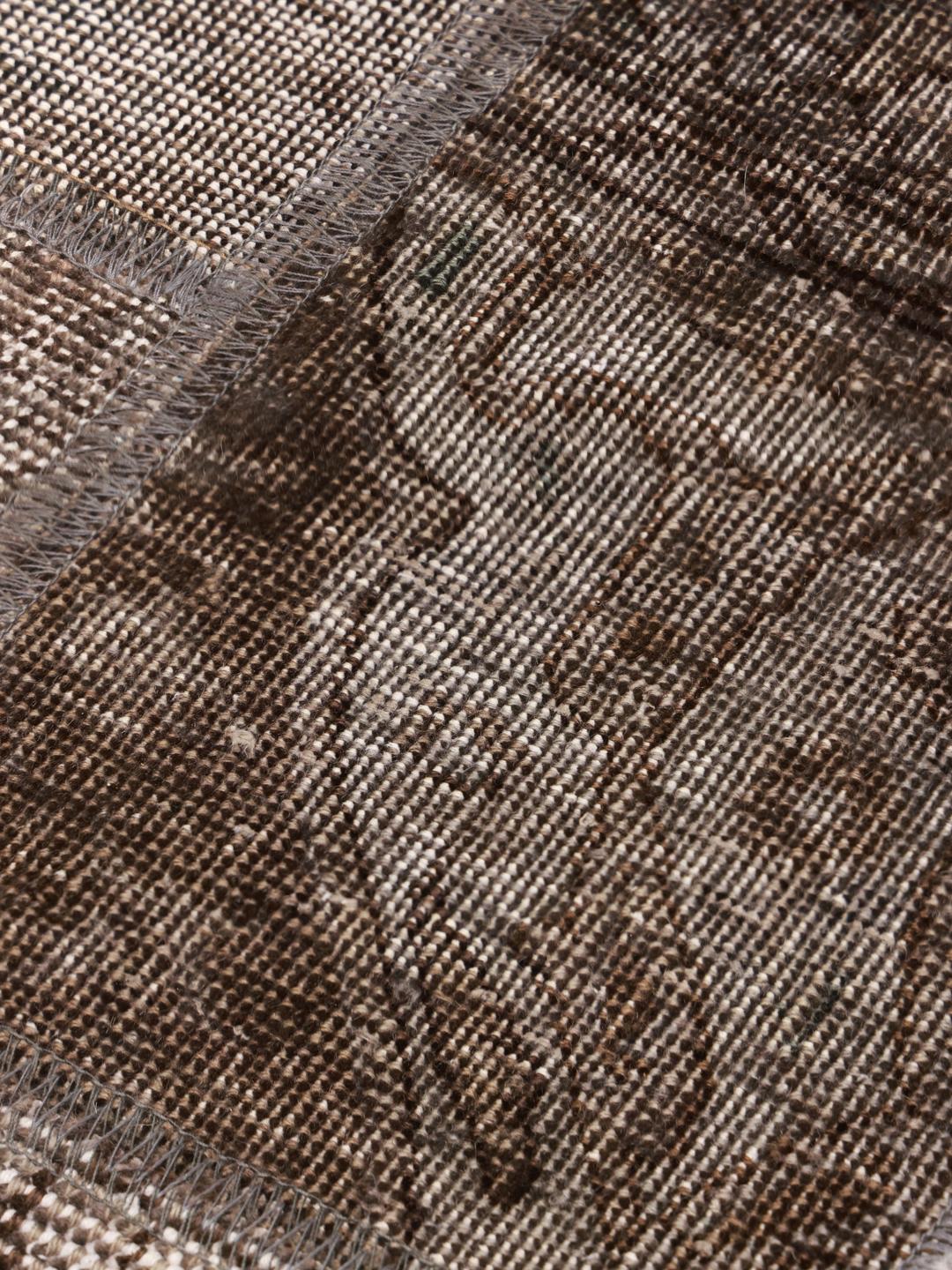
The process of creating a patchwork rug involves gathering vintage carpets that are often decades old. The pieces are washed, neutralized, and sometimes over-dyed to create a cohesive colour palette before being stitched together by hand with strong thread. This technique requires an experienced eye to balance varying patterns, pile heights, and tones into one balanced runner.
Visually, Turkish patchwork rugs offer a captivating dialogue between varied geometric panels. You can often spot subtle remnants of classical Anatolian motifs, such as geometric borders or softened floral elements, blending naturally alongside simpler, worn textures in quiet brown and grey shades.
Owning a vintage Turkish Patchwork runner means owning a real piece of textile history. Each individual panel carries decades of life and craft, making these rugs highly valued by those who appreciate authentic heritage, sustainability, and personal home decor.