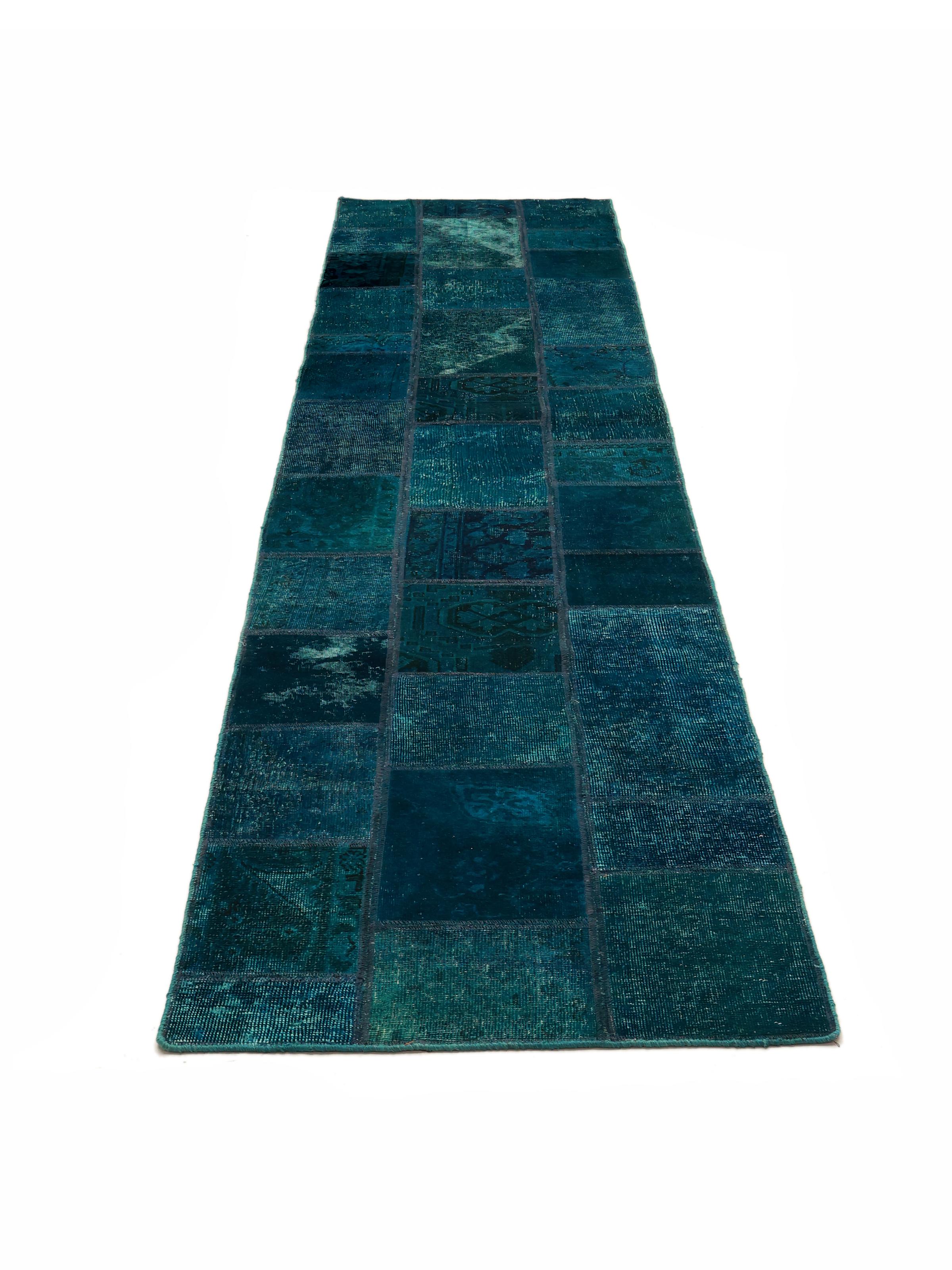
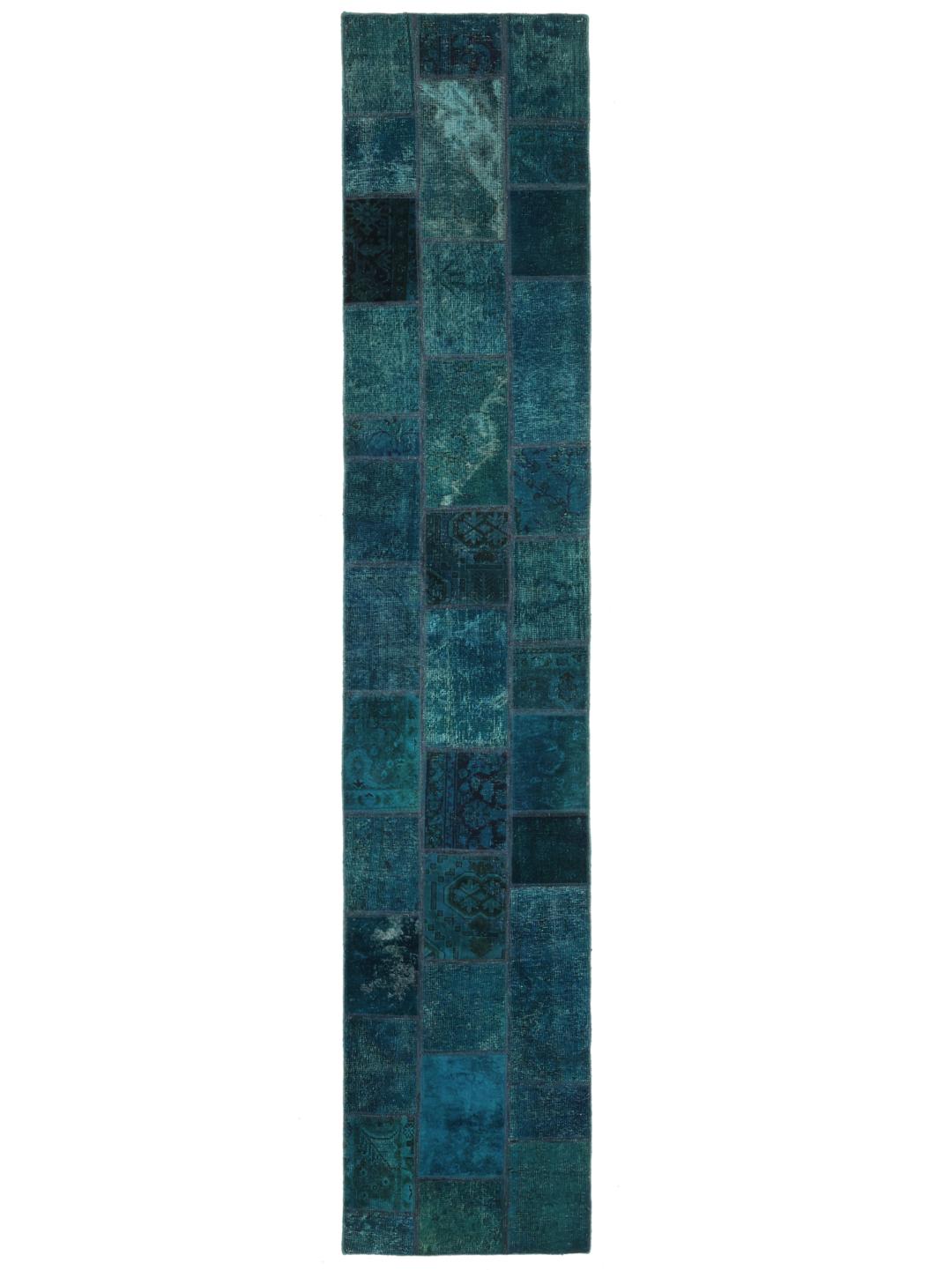
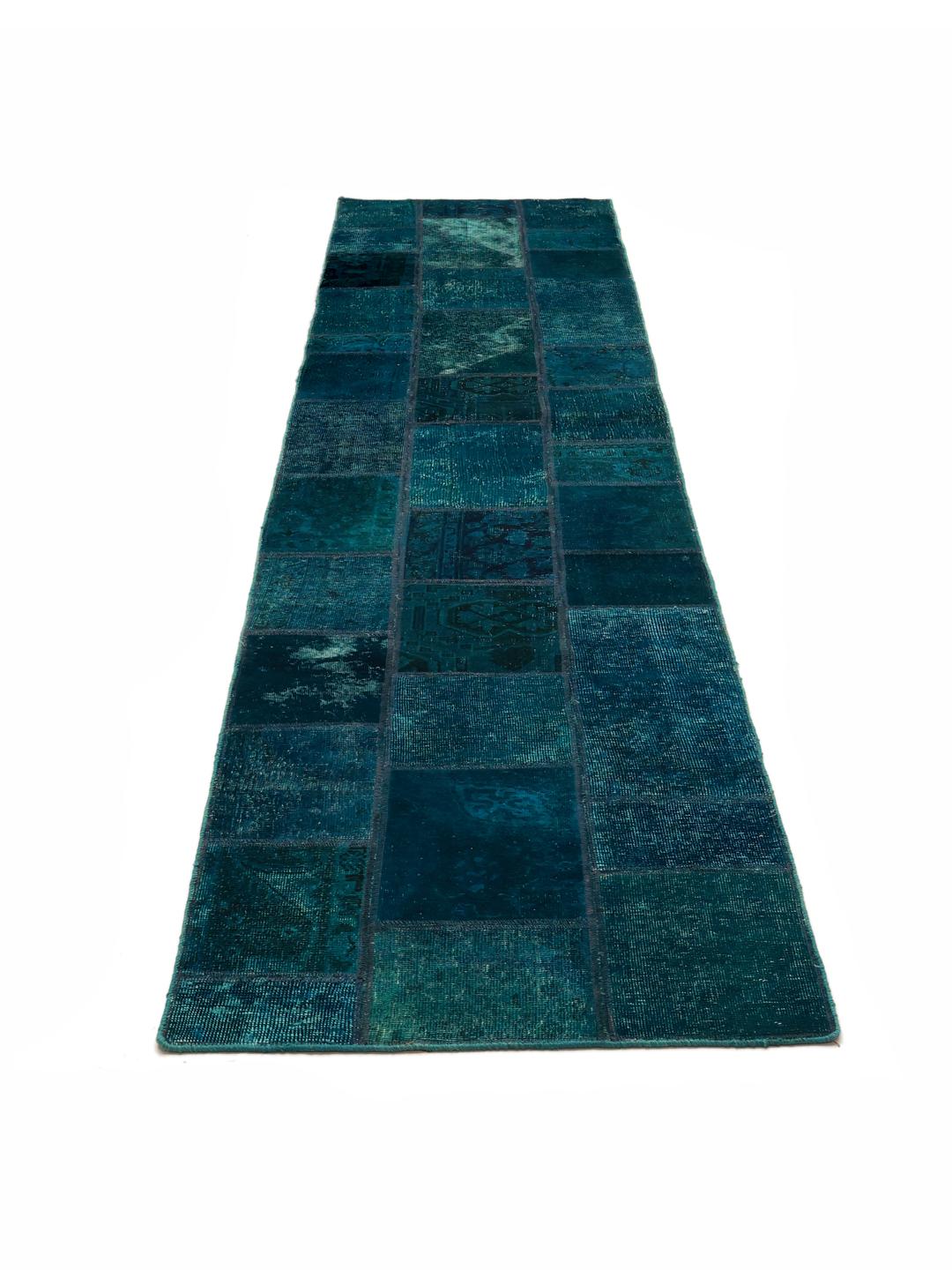
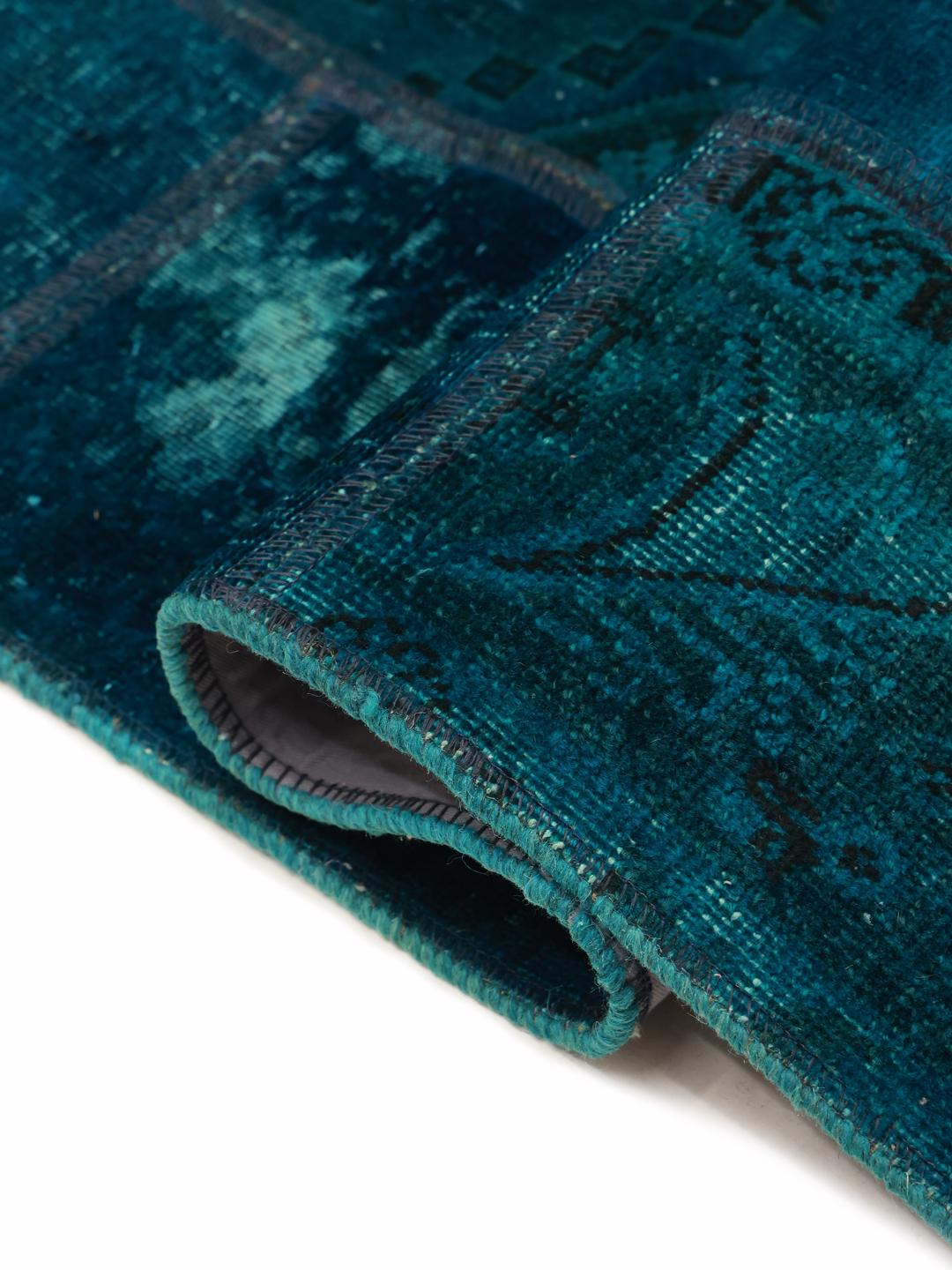
The tradition of Turkish patchwork rugs emerged as a creative way to preserve and reimagine vintage hand-knotted carpets. Older Turkish rugs, often 20 to 50 years old or more, are gathered from across Anatolia, washed, distressed, and re-dyed in cohesive modern shades before being hand-stitched into fresh compositions.
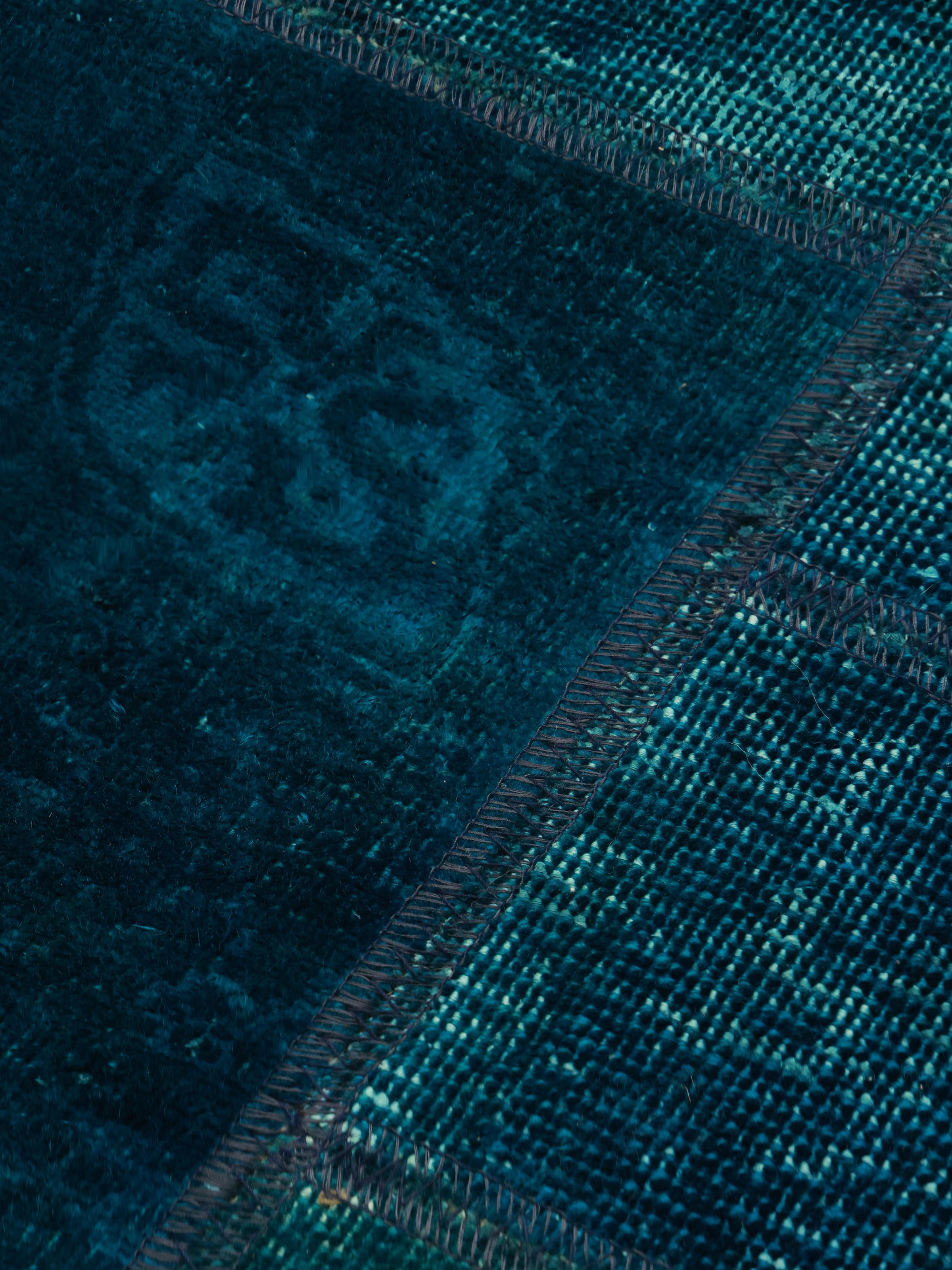
In rug making, the combination of a wool pile on a cotton warp provides both surface softness and structural stability. Cotton warp threads create a tight, square grid that holds the hand-tied wool knots firmly in place, ensuring the completed runner maintains its shape over decades of use.
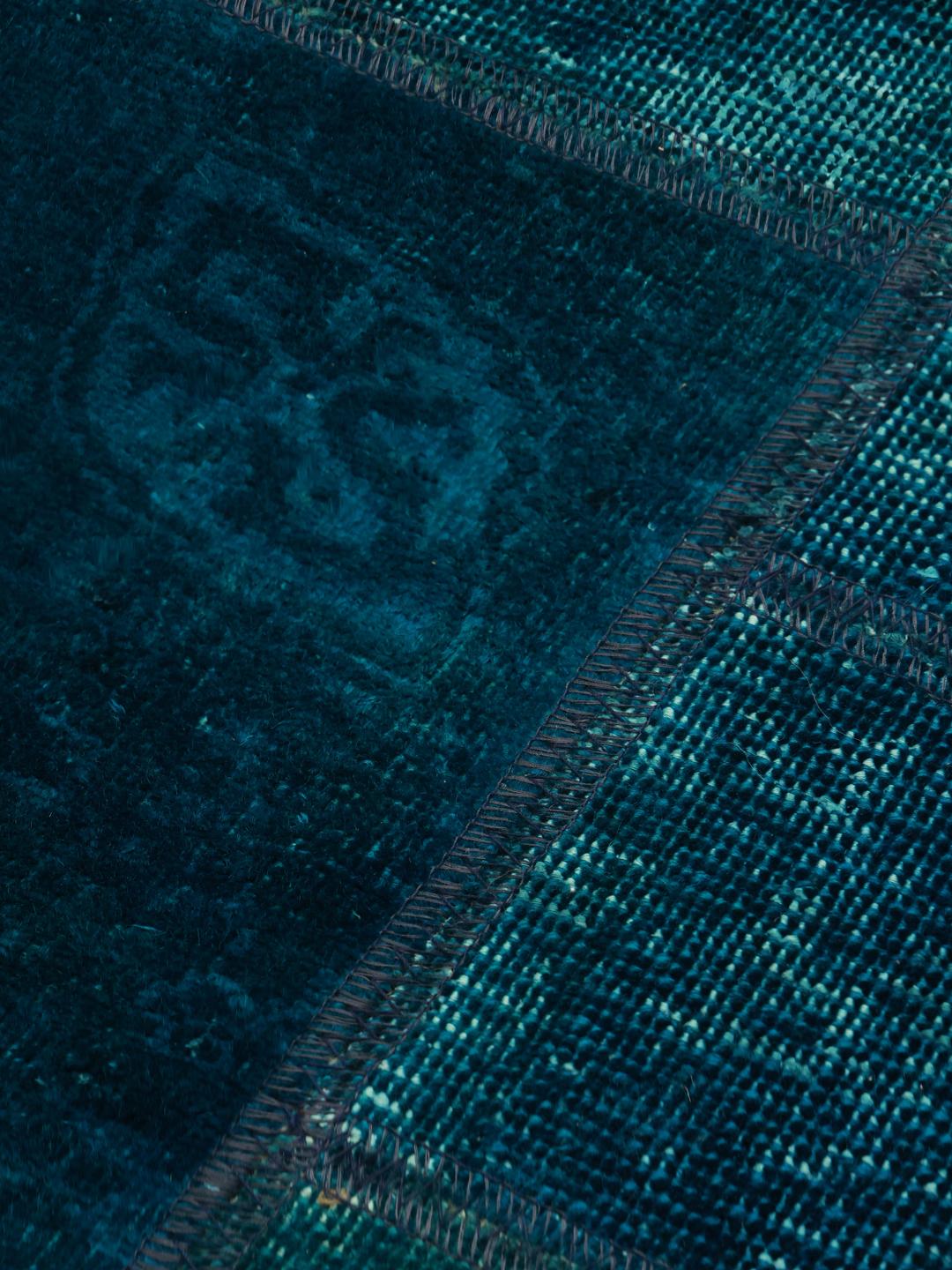
The design relies on the harmonious interplay of historical Anatolian motifs. Traditional geometric and floral borders, once part of larger carpets, are carefully aligned to form a new pattern. The subtle fading and re-dyed teal tones give a contemporary finish while keeping the original weaving visible underneath.
Vintage Turkish patchwork rugs are appreciated for their sustainability and cultural value. By giving historic hand-woven textiles a second life, each rug becomes a bridge between past weaving art and modern interior design, making it a meaningful addition for collectors and design enthusiasts alike.