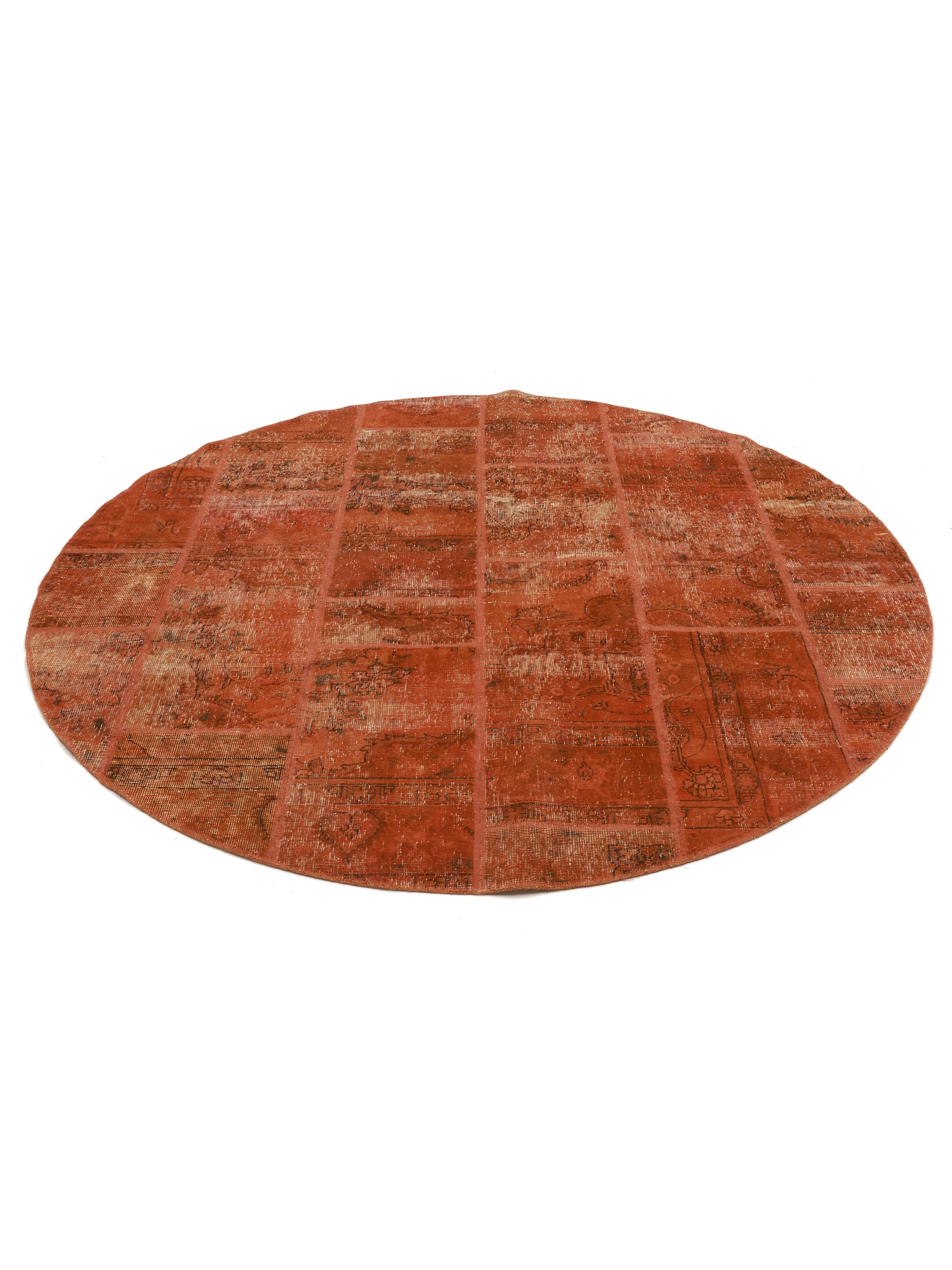
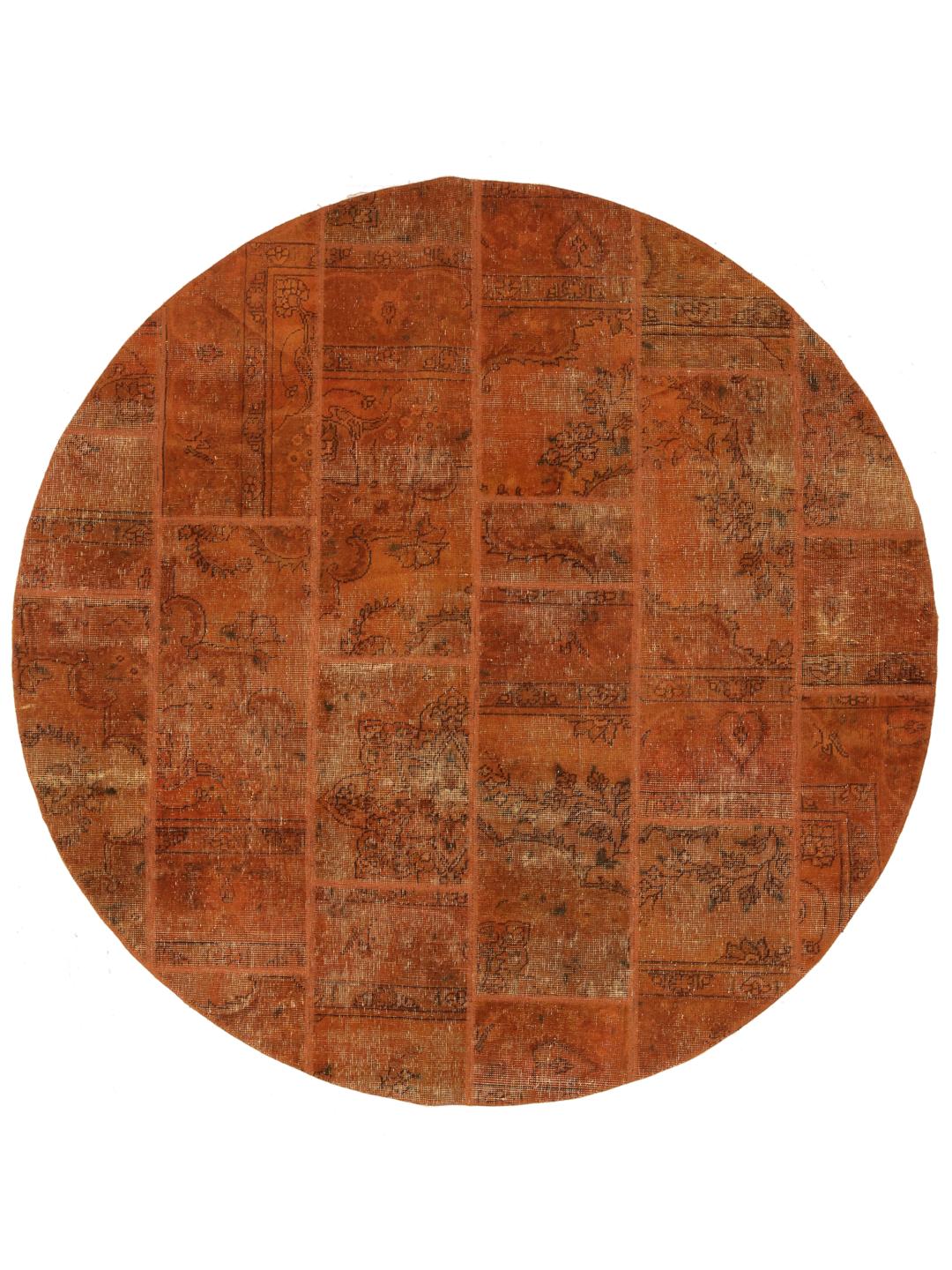
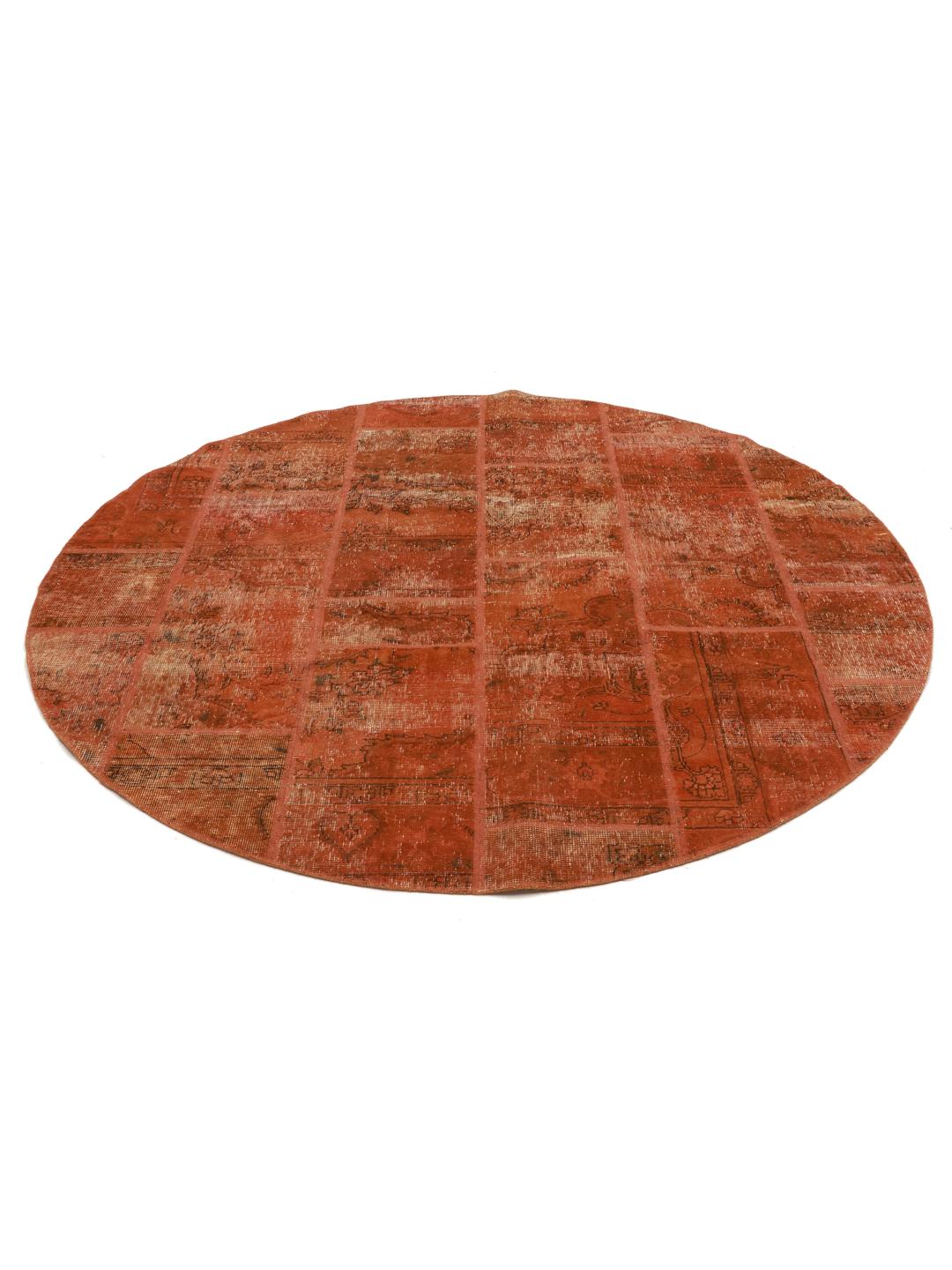
Patchwork rugs originated as a creative movement in Anatolia, Turkey, where master weavers began collecting older hand-knotted rugs to save them from being lost to time. By trimming, re-dyeing, and stitching sections together, artisans created a bridge between historical weaving arts and contemporary interior design.
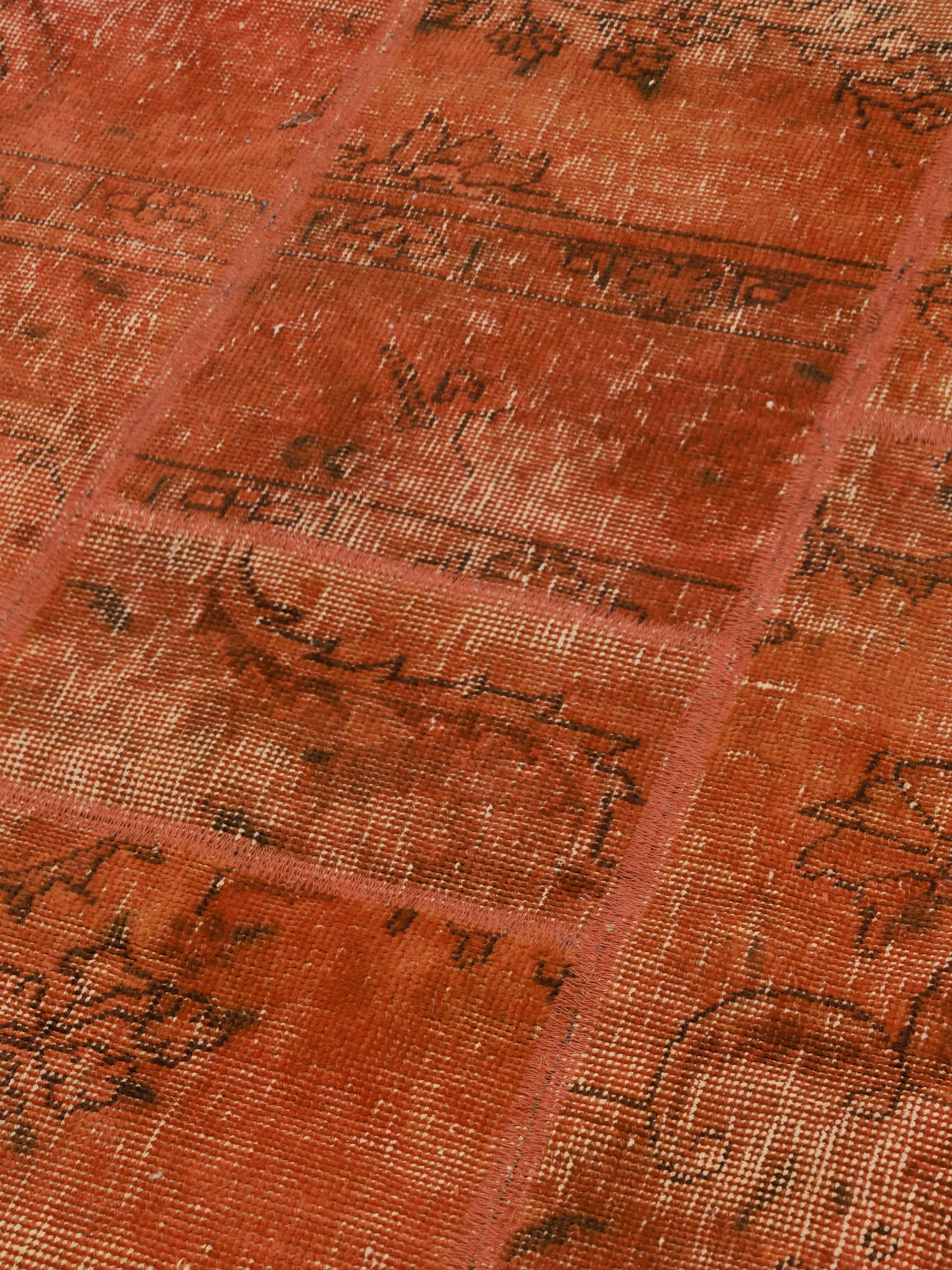
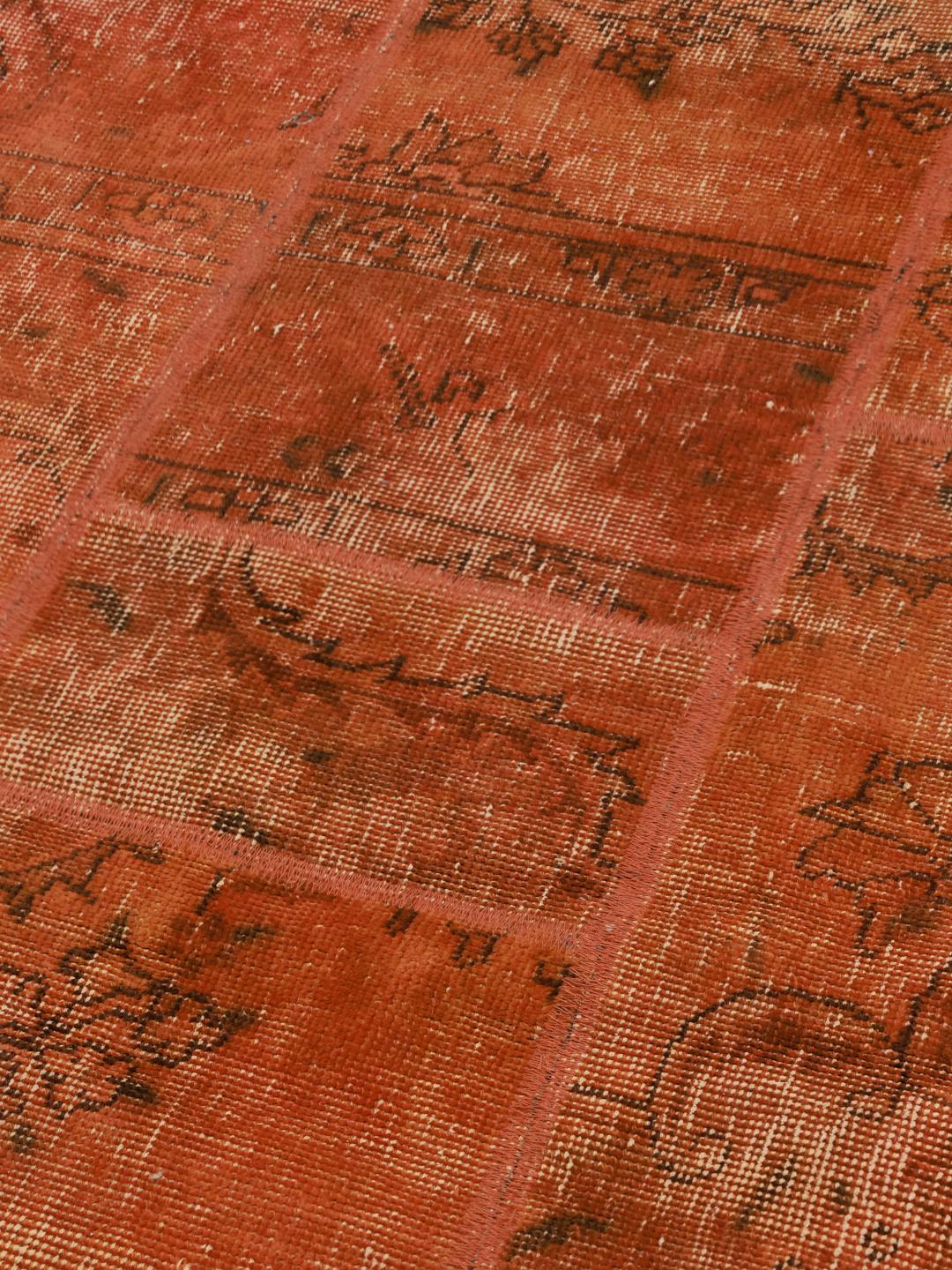
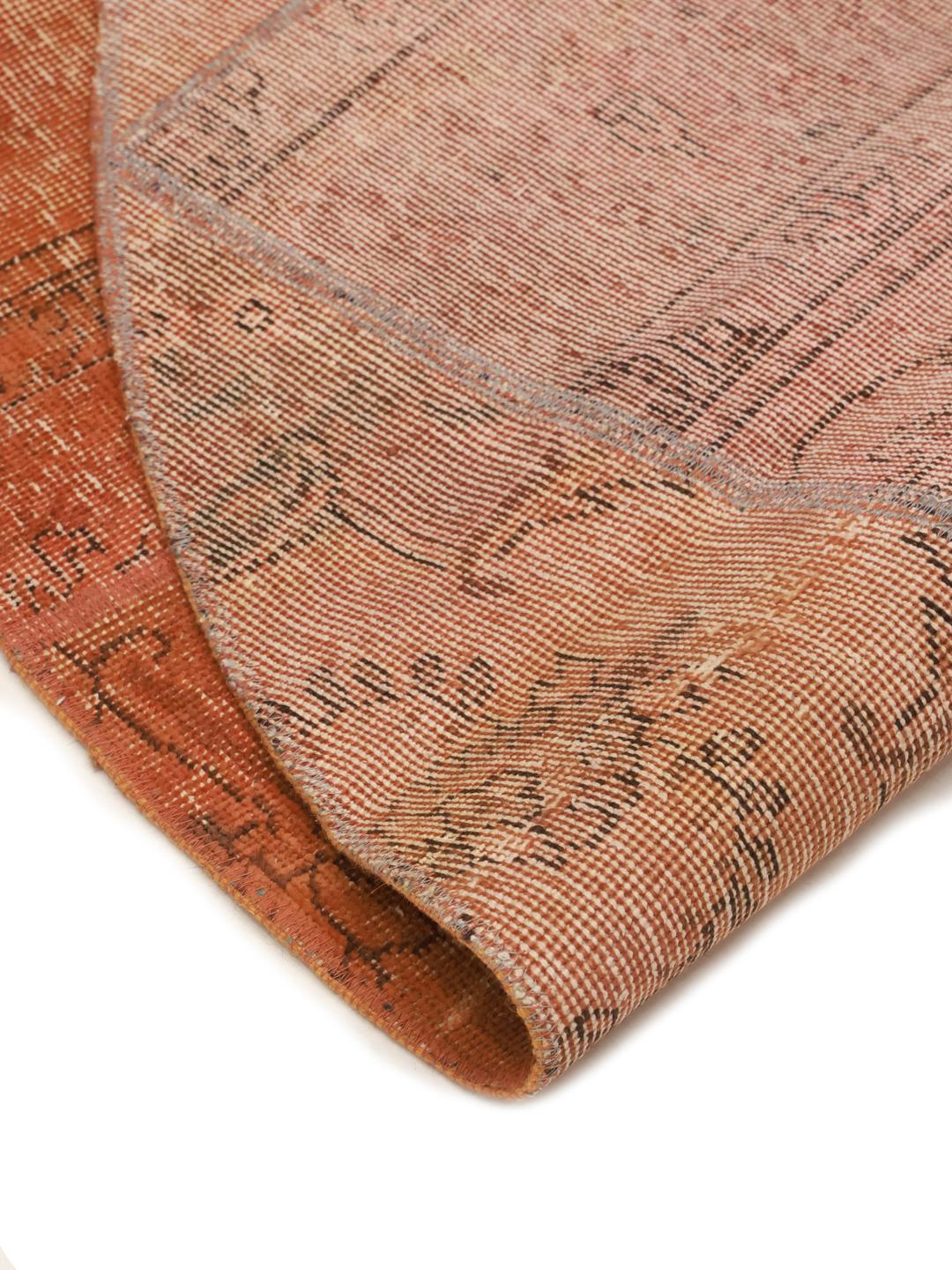
The process relies on traditional hand-knotting techniques unique to Turkey, where double knots create a robust structure. When these older hand-knotted rugs are assembled into patchworks, the varied pile directions and age-worn textures catch light differently across each panel, creating depth and visual interest.
Traditional Turkish motifs visible across the patches include stylized floral elements, intricate borders, and geometric shapes. In this piece, the original patterns remain softly visible beneath deep red and orange dyes, resulting in a rich surface that retains its historic roots while offering a modern, unified aesthetic.
Owning a Turkish Patchwork rug means preserving a fragment of regional history. Highly valued by collectors and interior lovers alike, these rugs combine individual stories from multiple hand-woven pieces into a single design with lasting cultural weight.